Thanksgiving Workout Challenge For Seniors
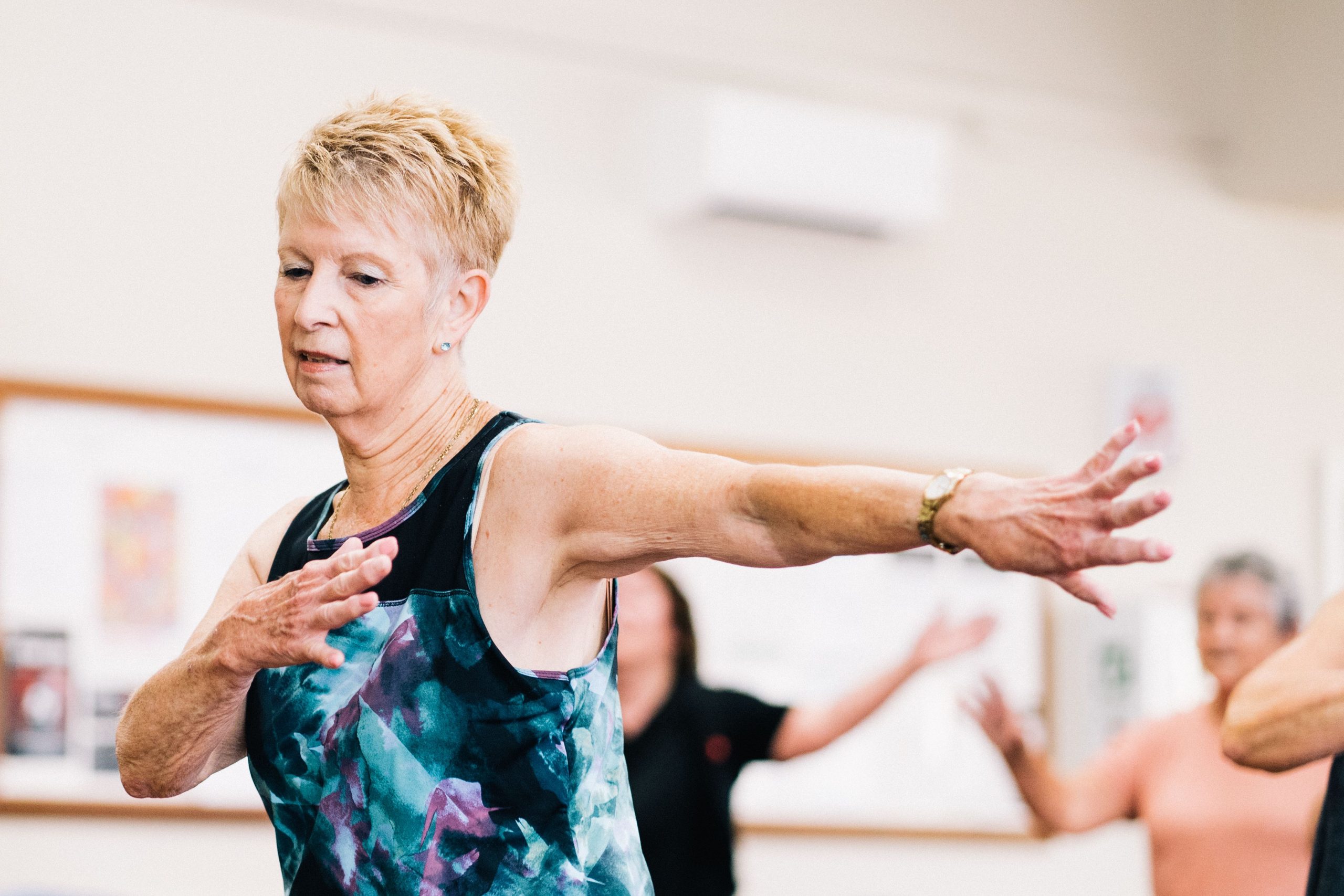
Thanksgiving disrupts more than your schedule—it disrupts the movement patterns that keep your muscles, bones, and balance sharp. Research shows that just one week of reduced activity in adults over 65 can measurably decrease strength and increase fall risk, changes that take significantly longer to reverse than the break itself.
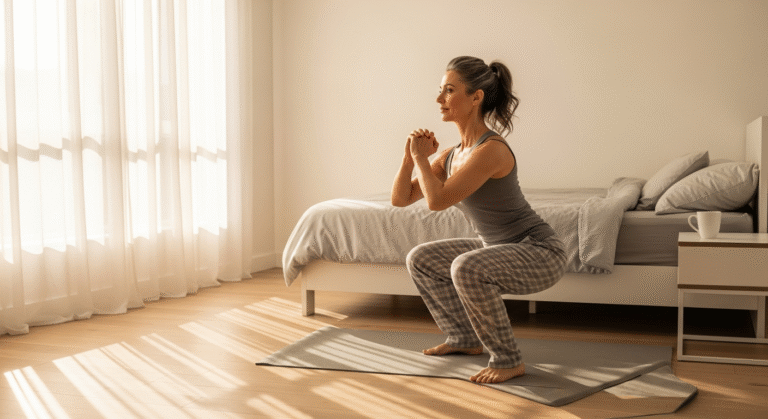
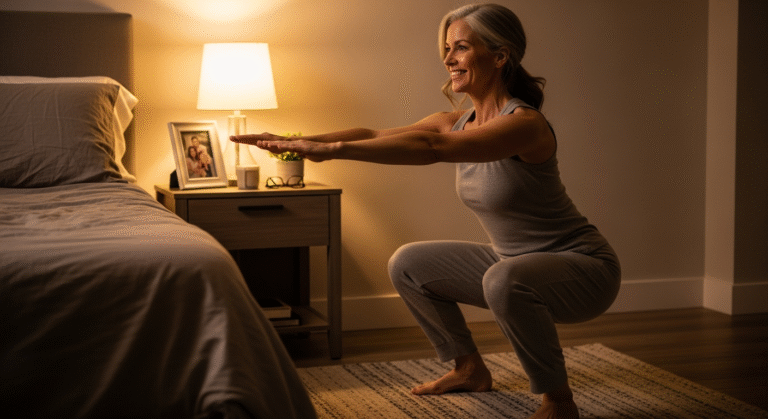
This challenge is built on a simple principle: you don’t need a gym or an hour to maintain fitness during the holidays. You need a plan that fits into your actual life—one that works in a small guest bedroom, doesn’t require equipment, and respects your body’s real needs, not Instagram promises.
Over the next seven days, you’ll get a gentle mobility sequence, ten chair-based strength exercises with exact form cues, and strategies for traveling or navigating crowded family homes. The payoff: you’ll return to your normal routine without the frustrating strength loss, stiffness, and confidence dip that usually follows holiday breaks.
In This Article
- Why Thanksgiving Disrupts Senior Fitness Routines (And Why That Matters)
- Medical Clearance and Safety Guidelines You Need to Know
- The 7-Day Gentle Thanksgiving Mobility Plan
- 10 Chair-Based Exercises with Step-by-Step Instructions
- Warm-Up and Cool-Down Protocols for Safe Movement
- Adapting Your Routine for Travel and Small Spaces
- Your Next Steps
Why Thanksgiving Disrupts Senior Fitness Routines (And Why That Matters)

Thanksgiving isn’t just a meal—it’s a routine-breaker. Travel, schedule changes, unfamiliar kitchens, and the gravitational pull of family gatherings create what researchers call “behavioral discontinuity,” and for seniors who rely on consistent movement patterns, this disruption hits harder than most realize.
Here’s what happens physiologically: when you skip your regular walking route or morning stretches for even a few days, your nervous system doesn’t simply pause. It begins to recalibrate. Muscle activation patterns weaken, proprioception (your sense of where your body is in space) dulls slightly, and balance reflexes become less responsive.
For someone over 65, this matters because fall risk doesn’t spike overnight—it creeps up through small gaps in consistency. A week of reduced movement can set back months of mobility work.
But there’s another layer: the psychological one. Many seniors view Thanksgiving as a legitimate reason to “take a break” from fitness. That sounds reasonable until you realize that breaks often become the new normal. The intention to “get back to it” after the holiday frequently gets derailed by inertia, seasonal weather changes, or simply the mental friction of restarting.
This isn’t about obsession or ruining the holiday. It’s about understanding that 30 minutes of gentle movement during Thanksgiving week isn’t punishment—it’s insurance. It maintains the neuromuscular adaptations you’ve built, keeps your cardiovascular system engaged, and honestly, it helps with digestion and sleep quality when you’re surrounded by pie and relatives.
The real opportunity here is seeing Thanksgiving as a test case: if you can maintain some version of your fitness routine during the most disruptive week of the year, you’ve built something sustainable. You’re not dependent on perfect conditions. That’s the mindset shift that separates people who stay active into their 80s from those who gradually slip into sedentary patterns.
Medical Clearance and Safety Guidelines You Need to Know

Before you do anything in this challenge—before you stand up from that chair or reach for your toes—you need to know your baseline. This isn’t caution for caution’s sake. It’s the difference between sustainable progress and a setback that derails you for weeks.
If you have any of these conditions, talk to your doctor first: heart disease, uncontrolled high blood pressure, recent surgery, joint replacements (especially within the last 6 weeks), balance problems that have worsened, or medications that make you dizzy. This list isn’t exhaustive—it’s a starting point. Your doctor knows your medical history better than any fitness plan does. A five-minute conversation beats a month of guessing.
Here’s what changes with age that directly affects how you should exercise: your proprioception—your body’s sense of where it is in space—naturally declines. Your joints have less synovial fluid. Your balance reflexes slow slightly. None of this means you can’t move. It means you move with intention and awareness. This is why the exercises in this challenge are chair-based and low-impact. They work with your physiology, not against it.
The most common mistake I see: seniors pushing through pain because they think “no pain, no gain” still applies. It doesn’t. Discomfort during movement is your body’s communication system. Sharp pain, dizziness, shortness of breath, or chest tightness are stop signs. Mild muscle fatigue or a gentle stretch sensation? That’s normal. Learn the difference, and you’ll stay consistent.
One practical safety rule: never exercise alone during Thanksgiving week if you’re trying something new. Have a family member nearby or do the workout via video call with a friend. It’s not about being cautious—it’s about having a witness to your progress and someone present if you need help. That accountability also makes you more likely to actually do the workout.
Your clearance to move is the foundation. Everything that follows builds on it.
The 7-Day Gentle Thanksgiving Mobility Plan
Mobility—the ability to move your joints through their full range of motion with control—is what keeps you independent. It’s not the same as flexibility. You can be flexible and still move poorly. Mobility is about quality movement patterns, and it deteriorates faster during disruptions like holiday travel and schedule changes. That’s why a structured 7-day plan works: it gives your body a predictable anchor point while everything else feels chaotic.
Here’s the framework. Spend 10–12 minutes each morning doing mobility work before breakfast. This primes your nervous system and lubricates your joints with synovial fluid—the body’s natural oil. You’re not trying to build strength or burn calories yet. You’re restoring movement quality so that when you do the chair exercises later, your body can actually perform them safely.
Days 1–3: Foundation Focus
Prioritize your hips, spine, and ankles. These three areas take the most abuse during travel and sitting. Perform 5 slow, controlled repetitions of each movement. Hold each position for 2 seconds at the end range. Move with intention—this isn’t cardio.
Days 4–6: Add Coordination
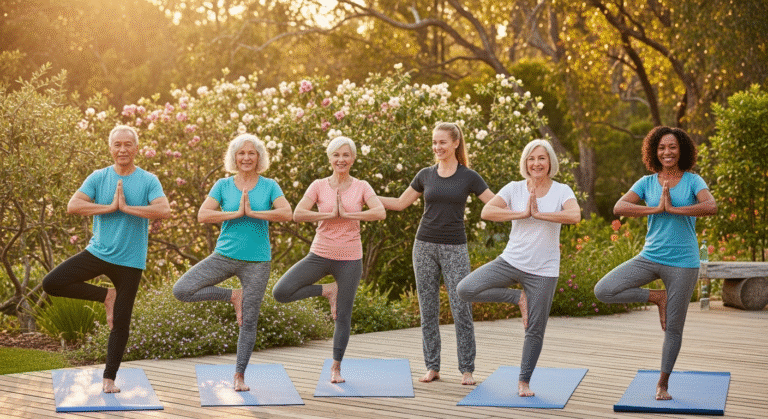
Introduce movements that combine two joints at once (like hip circles while standing on one leg). This challenges balance and proprioception—your body’s sense of where it is in space. This is the mechanism that prevents falls, which are the leading injury risk for seniors. Perform 8 repetitions per side.
Day 7: Consolidation
Repeat your favorite movements from Days 1–6. This reinforces neural pathways. Your nervous system needs repetition to encode movement patterns. One day of review cements the week’s work.
The common mistake: rushing through mobility work because it feels “too easy.” It’s supposed to feel easy. If you’re sweating and breathless, you’ve crossed into exercise territory and missed the point. Mobility work is about quality, not intensity. Do it slowly, breathe steadily, and notice how your body feels different by Day 4. That’s your signal it’s working.
10 Chair-Based Exercises with Step-by-Step Instructions
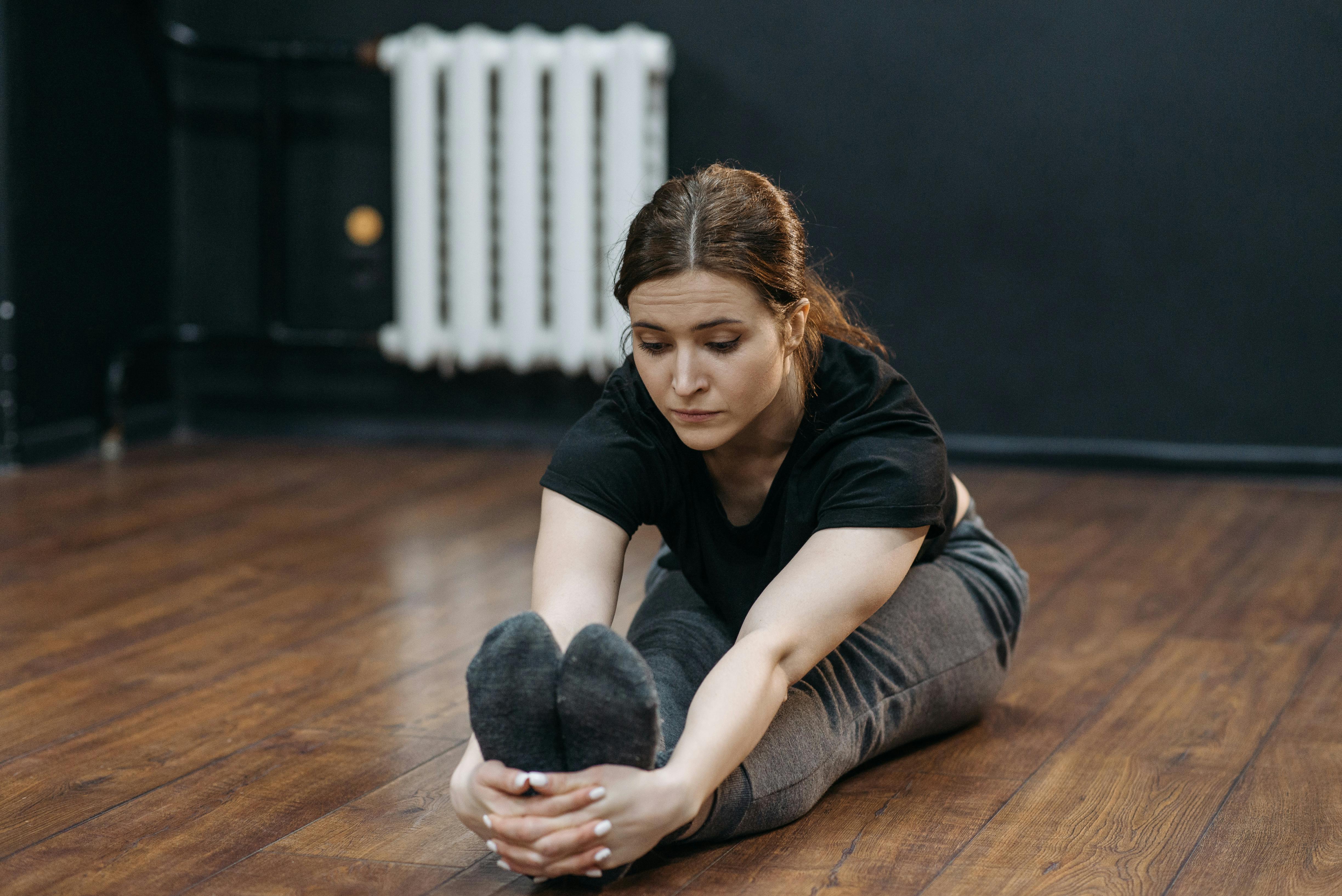
A sturdy chair is one of the most underrated fitness tools for seniors. It’s stable, accessible, and transforms your living room into a functional gym. The beauty of chair-based work is that it removes the balance challenge from the equation—so you can focus on building strength and mobility without the fear of falling.
Seated Marching (Quad and Hip Flexor Activation)
Sit upright with feet flat. Lift one knee toward your chest, lower it, then lift the other. Alternate for 30 seconds. This primes your hip flexors and wakes up your quads. Do 2 sets with 30 seconds rest between. Common mistake: slouching backward. Keep your chest upright; this engages your core and protects your lower back.
Seated Torso Twists (Spinal Mobility and Digestion)
Sit upright, cross your arms over your chest. Gently rotate your torso left and right, 20 reps per side. Move slowly—this isn’t about speed. Rotation is one of the most neglected movement patterns in aging, and it’s essential for daily life (looking over your shoulder, reaching for things). This also stimulates your digestive system, which is relevant after a Thanksgiving meal.
Seated Glute Squeezes (Posterior Chain Activation)
Sit upright, squeeze your glute muscles as hard as you can for 3 seconds, then release. Repeat 15 times. Hold each squeeze deliberately—don’t rush. Your glutes are the powerhouse of stability and standing, and they atrophy faster than any other muscle group in sedentary seniors. Two sets, daily if possible.
Seated Shoulder Rolls and Arm Circles
Roll your shoulders backward 10 times, forward 10 times. Then extend your arms out to the sides and make small circles forward (10 reps), then backward (10 reps). This mobilizes your shoulder joint and improves posture—critical after hours of sitting at the dinner table.
Seated Calf Raises
Feet flat on the floor, lift your heels while keeping your toes on the ground. Lower and repeat for 15 reps. Calves are your “second heart”—they pump blood back up your legs. Two sets. Rest 45 seconds between.
These five movements form your foundation. In the next section, we’ll layer in proper warm-up and cool-down protocols to maximize safety and results.
Warm-Up and Cool-Down Protocols for Safe Movement
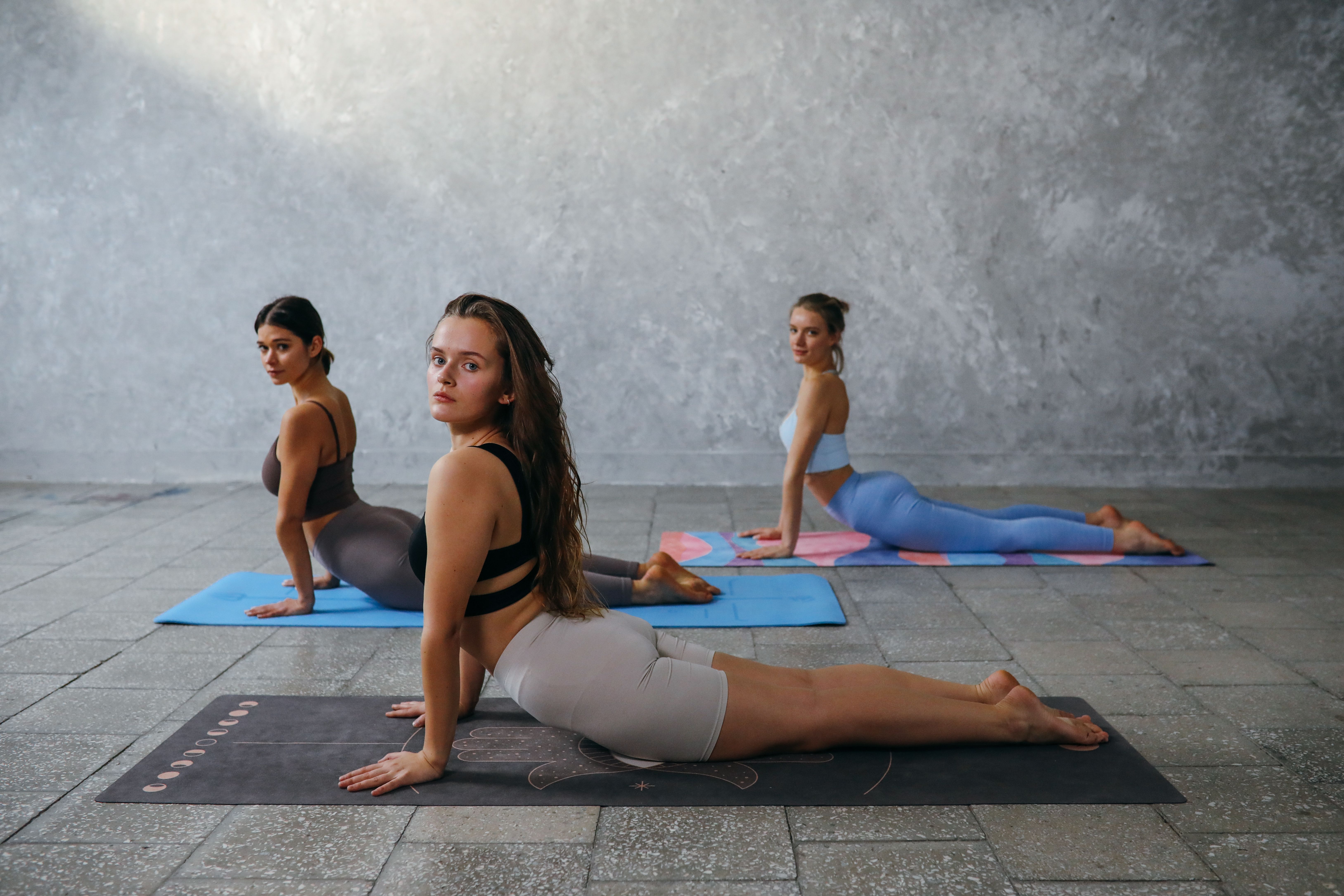
Here’s what most seniors skip: a proper warm-up. And here’s what happens when they do—their joints move more freely, their muscles respond better, and their risk of injury drops significantly. The physiology is straightforward: warming up increases synovial fluid in your joints (that’s your body’s natural lubricant), raises core temperature, and primes your nervous system. You’re not just preparing your body; you’re telling it, “We’re about to move intentionally.”
The 5-Minute Warm-Up Protocol
Start seated. Perform gentle neck rolls (10 circles each direction), then shoulder circles (10 forward, 10 backward). Move to ankle circles while seated—10 circles each ankle, each direction. Stand slowly using chair support, then do 10 slow marches in place, lifting knees gently.
Finish with 10 arm circles at shoulder height. This isn’t cardio; it’s activation. You should feel looseness, not breathlessness. The common mistake? Rushing through it or skipping it because “you feel fine today.” Thanksgiving chaos makes this tempting—don’t cave. A five-minute investment prevents weeks of recovery.
The 5-Minute Cool-Down Protocol
Cool-downs matter as much as warm-ups, especially for seniors. They allow your heart rate to return to baseline gradually, prevent dizziness from blood pooling, and give your nervous system a chance to shift from “active” to “recovered.” After your chair exercises, spend two minutes walking slowly around the room.
Then sit and perform gentle static stretches: hold each for 20–30 seconds without bouncing. Target your hip flexors (sit and gently pull one knee toward your chest), hamstrings (seated forward fold, only as far as comfortable), and shoulders (cross one arm across your chest). Breathe deeply throughout. This is where adaptation happens—muscle repair accelerates during this wind-down phase.
The honest truth: warm-ups and cool-downs feel less exciting than the main workout. They’re not. They’re the difference between sustainable fitness and a Thanksgiving injury that sidelines you for months. Treat them as non-negotiable.
Adapting Your Routine for Travel and Small Spaces

Here’s the reality: most seniors don’t have a home gym waiting for them at Aunt Linda’s house. You’re in a guest bedroom, a hotel room, or squeezing into a corner of someone’s living room. The temptation is to skip workouts entirely because “the conditions aren’t ideal.” But research on exercise adherence shows that consistency—even at 50% intensity—beats perfection abandoned. The goal isn’t to replicate your home routine; it’s to maintain movement and mobility during a disruptive week.
The good news: every exercise in this challenge is furniture-agnostic and space-efficient. A chair works the same way whether it’s in your living room or someone else’s dining room. Wall space for balance? Nearly every home has hallways.
Your body weight is portable equipment. Before you arrive at your destination, mentally map the space. Where can you stand safely without tripping? What sturdy furniture can you use for support? This five-minute mental rehearsal removes the friction that stops people from starting.
Common mistake: trying to do the full routine in one session because you’re worried about “missing days.” This backfires. Instead, break the 7-day plan into two shorter sessions daily—10 minutes in the morning, 10 at evening.
This fits into any schedule and keeps your nervous system engaged without overloading joints that are already stressed from travel and irregular sleep. Shorter sessions also mean better form. Fatigue is the enemy of safe movement, especially when you’re in an unfamiliar space where a fall is genuinely dangerous.
If travel includes flights or long car rides, add 2–3 minute walking breaks every two hours. This isn’t “exercise”—it’s damage control. Prolonged sitting increases blood clot risk and stiffens hips and ankles, making your workout feel harder when you finally get to it. Walk to the bathroom, around the terminal, down the hallway. Movement is medicine, and it costs nothing.
Pack one resistance tool if possible—a resistance band weighs ounces and opens up variations you can’t do with bodyweight alone. But don’t let its absence stop you. The chair-based work here is sufficient to maintain strength for a week.
Your Next Steps

Here’s what matters most: Thanksgiving doesn’t have to derail your fitness. You’ve now got a framework that works—medical clearance as your foundation, a gentle mobility plan that fits the holiday chaos, chair-based exercises you can do anywhere, and the knowledge to adapt when life gets messy.
The research is clear: seniors who maintain some form of movement during disruptions experience significantly less deconditioning than those who stop entirely. You’re not training for a marathon. You’re maintaining the strength and mobility that let you play with grandkids, get up from the couch without thinking about it, and feel capable in your own body. That’s the real win.
The biggest mistake I see isn’t skipping a workout—it’s the all-or-nothing thinking that follows. You miss three days, feel guilty, and then convince yourself the whole routine is ruined. It’s not. One missed session doesn’t erase your progress. Neither does a week of lighter movement. What matters is the pattern over time, and patterns are rebuilt with the next single decision you make.
Here’s your next step: Pick one thing from this guide and commit to it before Thursday. Not everything. One thing. Maybe it’s the 5-minute warm-up. Maybe it’s three of the chair exercises you felt most confident doing. Maybe it’s just the mobility plan on two mornings. Write it down—actually write it—and put it somewhere you’ll see it. Your phone, your bathroom mirror, your kitchen counter. Make it specific: “Monday and Wednesday morning, 10 minutes of mobility work before coffee.”
You don’t need perfection this Thanksgiving. You need consistency in small doses, safety as your non-negotiable, and the understanding that taking care of your movement is taking care of your independence. That’s not vanity. That’s wisdom. Start with one thing, and you’ve already won.
Pin this for later