15 full body workout at home no equipment
You don’t need a gym membership, fancy equipment, or even much space to build strength, burn calories, and transform your body.
Your own bodyweight provides all the resistance needed to sculpt muscle and see real results. The barrier isn’t what you have—it’s knowing exactly what to do with what you’ve already got.
Gym memberships cost hundreds of dollars annually, equipment clutters small apartments, and the commute eats into schedules that are already packed.
Starting a fitness journey feels overwhelming when you’re bombarded with conflicting advice and intimidated by gym culture.
Previous workout plans failed because they required equipment you didn’t have or time you couldn’t spare. This guide delivers exactly what changes that: 15 effective bodyweight exercises with step-by-step form instructions, beginner modifications, and advanced progressions. By the end, you’ll have a sustainable, results-driven fitness plan you can start today and progress with for months.
The science is clear: progressive resistance training—the process of gradually increasing the challenge your muscles face—builds strength and muscle regardless of whether that resistance comes from dumbbells or your own bodyweight.
Research from the American Council on Exercise confirms that bodyweight training activates the same muscle fibers and produces comparable strength gains to machine-based training when intensity and volume are matched. The key difference isn’t the tool; it’s understanding how to progress without adding weight.
Most people fail at home workouts not because they lack discipline, but because they lack structure. They do random exercises, can’t measure progress, and plateau within weeks.
This happens because progression requires a system: knowing your starting point, understanding which exercises target which muscles, having a realistic timeline for results, and knowing exactly how to make movements harder when your body adapts.
A full body workout at home doesn’t mean doing everything in one session. It means strategically selecting exercises that hit all major muscle groups—chest, back, shoulders, arms, core, and legs—in a way that’s sustainable and progressive.
The 15 exercises you’re about to learn form the foundation for this approach. Combined into the three routines included here, they’ll deliver measurable results: increased strength within 3-4 weeks, visible muscle definition within 6-8 weeks, and sustained progress for months when you follow the progression principles outlined.
Here’s what you need to know before starting: form matters more than speed or volume. A properly executed push-up beats ten sloppy ones every time. You’ll need a 6-by-6-foot space, a sturdy chair or low step, and a wall. That’s it. You can start today. Expect to feel sore for 24-48 hours after your first session—that’s normal and means your muscles are adapting. By week two, soreness drops significantly while strength gains accelerate.
Full Body Workout No Equipment: The 15 Essential Exercises

Upper Body Exercises: Push, Pull, and Stabilize
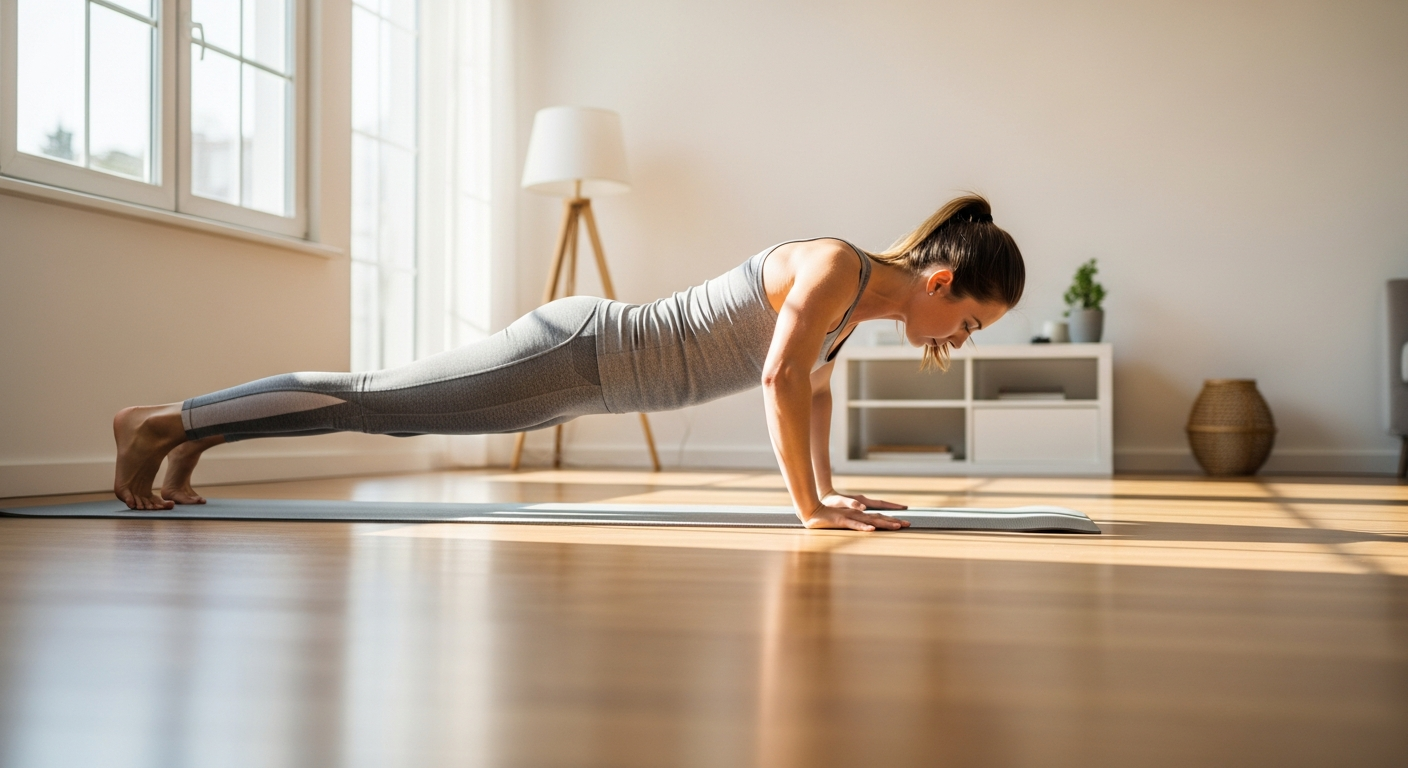
Push-Ups target your chest, shoulders, and triceps—the primary pressing muscles. Start in a high plank position with hands slightly wider than shoulder-width, core braced as if preparing for a punch, and your body forming a straight line from head to heels. Lower yourself until your chest nearly touches the ground, elbows tracking at a 45-degree angle from your body (not flared out to 90 degrees—that’s a common mistake that shifts stress away from chest). Push back up to the starting position. Beginners should do incline push-ups by placing hands on stairs or a low step, which reduces the load. Advanced lifters add tempo: three seconds lowering, one-second pause at the bottom, explosive push up. Aim for 8-12 reps per set.
Tricep Dips isolate the back of your arms using a sturdy chair or low step. Sit on the edge with hands gripping the seat, fingers pointing forward, and extend your legs in front of you. Lower your body by bending elbows until they reach roughly 90 degrees, keeping shoulders away from ears. Push through your hands to return to the starting position. The most common mistake is letting elbows flare outward; keep them tracking straight back. Beginners bend their knees to reduce load. Advanced variation: extend both legs straight out, or even elevate feet on another chair. Complete 8-12 reps.
Plank to Down Dog is a dynamic movement hitting shoulders, upper back, and core stability. Start in a high plank position, then push your hips up and back, moving into an inverted V position (downward dog). Your head stays neutral, looking slightly forward. Return to plank and repeat. This builds shoulder stability and teaches core control under movement, not just static holds. Do 8-10 reps at a controlled pace.
Superman Holds target your lower back, glutes, and rear shoulders—the often-neglected posterior chain. Lie face-down on the floor, arms extended overhead. Simultaneously lift your arms, chest, and legs off the ground, squeezing your glutes and lower back. Hold this position for 20-30 seconds. This exercise is critical for balancing the pushing emphasis of push-ups and dips. Do 2-3 sets of 20-30 second holds.
Lower Body Exercises: Squat, Lunge, and Hinge Patterns
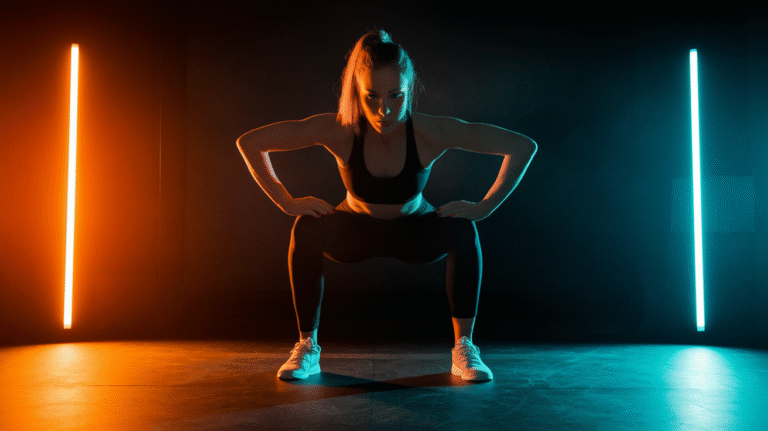
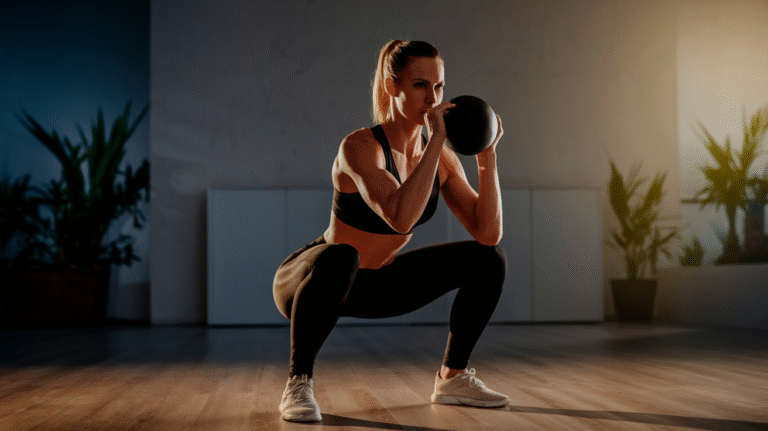
Bodyweight Squats are the foundation movement for quads, glutes, and hamstrings. Stand with feet shoulder-width apart, weight distributed through your heels, and chest up. Descend by pushing hips back and bending knees until thighs are parallel to the ground or lower if mobility allows. The most common mistake is knees caving inward—actively push knees outward throughout the movement. Another error: shifting weight onto toes, which reduces glute engagement and stresses knees. Complete 12-15 reps per set.
Forward Lunges emphasize quads and glutes unilaterally, meaning each leg works independently. This exposes imbalances and builds single-leg strength. Step forward with one leg until the front thigh is parallel to the ground and the back knee hovers just above the floor. Push through the front heel to return to standing. Progression: add pulses at the bottom position, or switch to reverse lunges (stepping backward instead), which are easier on the knees and emphasize glutes more. Do 10 reps per leg.
Reverse Lunges step backward instead of forward, reducing knee stress while shifting emphasis toward glutes. The mechanics are identical to forward lunges—both knees should reach roughly 90 degrees at the bottom. This variation is especially valuable if you have knee sensitivity. Complete 10 reps per leg.
Glute Bridges lie on your back with feet flat and hip-width apart. Drive through your heels to lift hips until shoulders, hips, and knees form a straight line. Squeeze glutes hard at the top. This movement directly targets glutes and lower back. Single-leg variation—lifting one foot off the ground—dramatically increases difficulty. Do 12-15 reps for standard version, 8-10 per leg for single-leg.
Jump Squats add explosive power and cardiovascular demand. Perform a regular squat, then explosively jump upward, landing softly with bent knees to absorb impact. This builds leg power and torches calories. Beginners do bodyweight squats and add calf raises instead of jumping. Advanced lifters add a pause at the bottom or clap hands at the top. Do 10-12 reps.
Core and Full-Body Cardio Exercises
Mountain Climbers combine core stability with cardiovascular demand. Start in a high plank, then drive knees toward chest alternately in a rapid motion while maintaining a rigid torso. Beginners move at a slow, controlled pace. Advanced lifters sprint the movement. Complete 30-45 seconds per set.
Burpees are the ultimate full-body exercise hitting chest, legs, core, and cardiovascular system. Squat down, place hands on the floor, jump feet back to a plank position, optionally perform a push-up, jump feet back toward hands, then explosively jump upward. Beginners step back instead of jumping. Do 8-12 reps per set.
Bicycle Crunches target obliques and rectus abdominis. Lie on your back with hands behind your head (not pulling your neck—just lightly supporting it). Bring opposite elbow to opposite knee while extending the other leg, then alternate in a continuous motion. Complete 15-20 reps total (alternating sides).
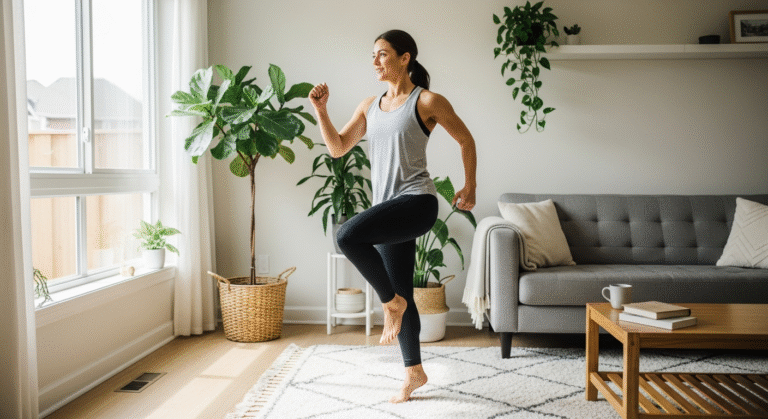
High Knees build hip flexor strength and cardiovascular endurance. Drive knees up toward chest rapidly while pumping arms, staying on the balls of your feet. Complete 30-45 seconds per set.
Bird Dogs teach core stability and anti-rotation strength. Start on hands and knees, then extend opposite arm and leg until parallel to the ground. Hold for 2-3 seconds, return, and switch sides. Complete 10 reps per side.
Wall Sits are an isometric quad burner. Position your back against a wall and slide down until thighs are parallel to the ground with knees at 90 degrees. Hold for 30-60 seconds. Advanced variation: single-leg wall sit. Complete 2-3 sets.
Workout Routines No Equipment: Three Complete Plans

Beginner Circuit Routine (20-25 Minutes)
This routine builds foundational strength and movement patterns. Structure: 3 rounds of the following exercises, 10-12 reps each (or 20-30 seconds for holds), 30 seconds rest between exercises, 90 seconds rest between rounds. Focus on mastering form over speed—this foundation makes everything that follows more effective.
- Bodyweight squats (12 reps)
- Push-ups incline or standard (10-12 reps)
- Glute bridges (12 reps)
- Plank hold (30 seconds)
- Forward lunges (10 each leg)
- Tricep dips (8-10 reps)
- Bird dogs (10 each side)
- Bicycle crunches (15 reps)
- Wall sits (30 seconds)
- High knees (30 seconds)
Expected results: 150-200 calories burned, full-body muscle engagement, improved movement patterns. Complete this routine 3 times per week with at least one rest day between sessions. By week 3, you’ll notice increased strength—movements that felt difficult become manageable. This is the moment to increase reps by 2-3 or decrease rest periods by 15 seconds.
Intermediate HIIT Format (25-30 Minutes)
High-intensity interval training maximizes calorie burn and cardiovascular adaptation. Structure: 4 rounds, 40 seconds work / 20 seconds rest per exercise, 1 minute rest between rounds. Maintain intensity during work intervals while preserving form—sloppy reps under fatigue create injury risk and reduce effectiveness.
- Jump squats (40 seconds)
- Push-ups (40 seconds)
- Mountain climbers (40 seconds)
- Reverse lunges (40 seconds)
- Superman holds (40 seconds)
- Burpees modified or standard (40 seconds)
- Plank to down dog (40 seconds)
- Bicycle crunches (40 seconds)
- Single-leg glute bridges (40 seconds each leg)
- High knees (40 seconds)
Expected results: 250-350 calories burned, elevated metabolism for hours post-workout, improved work capacity. This format works best 2-3 times per week, with lighter activity or rest days in between. The intensity is high, so recovery matters. You’ll feel the difference in energy levels and sleep quality within a week.
Advanced Challenge Routine (30-35 Minutes)
AMRAP (As Many Rounds As Possible) format pushes work capacity and mental toughness. Complete the following sequence as many times as possible in 30 minutes with minimal rest between exercises. Sustainable pace is key—you should be able to maintain movement throughout without stopping.
- 15 burpees
- 20 jump squats
- 15 push-ups (tempo: 3 seconds down, 1 second up)
- 20 mountain climbers each leg
- 15 single-leg glute bridges each side
- 20 bicycle crunches
- 30-second plank hold
- 15 tricep dips
- 20 high knees
- 15 bird dogs each side
Expected results: 350-450 calories burned, significant strength and endurance gains, measurable mental toughness development. Track rounds completed week-to-week—this becomes your progress metric. A realistic goal is 3-4 complete rounds in week one, advancing to 5-6 rounds by week four. This routine should be done once per week, with adequate recovery days surrounding it.
Progressive overload without weights means manipulating tempo, reps, rest periods, or range of motion—not adding more volume mindlessly.
Best Workout Without Equipment: Proper Warm-Up and Cool-Down

Dynamic Warm-Up (5-7 Minutes Pre-Workout)
A proper warm-up increases core temperature, activates muscles, elevates heart rate, and mentally prepares you for the session ahead. Cold muscles are injury-prone muscles. This takes 5-7 minutes and directly improves performance and safety.
Arm circles: 10 forward, 10 backward, gradually increasing diameter. This preps shoulders and increases blood flow to your upper body. Leg swings: 10 forward/back each leg, 10 side-to-side each leg, holding a wall for balance. This activates hip flexors, glutes, and hamstrings. Inchworms: 5-8 reps of standing forward fold, walking hands out to plank, walking feet toward hands, standing up. This mobilizes hamstrings, shoulders, and core simultaneously. Bodyweight squats: 10-12 slow, controlled reps focusing on full range of motion to activate glutes and prepare knees. High knees in place: 30 seconds at moderate pace to elevate heart rate and prepare the cardiovascular system.