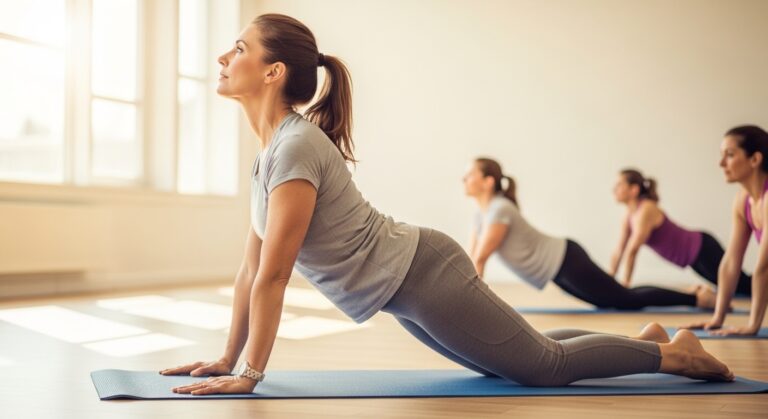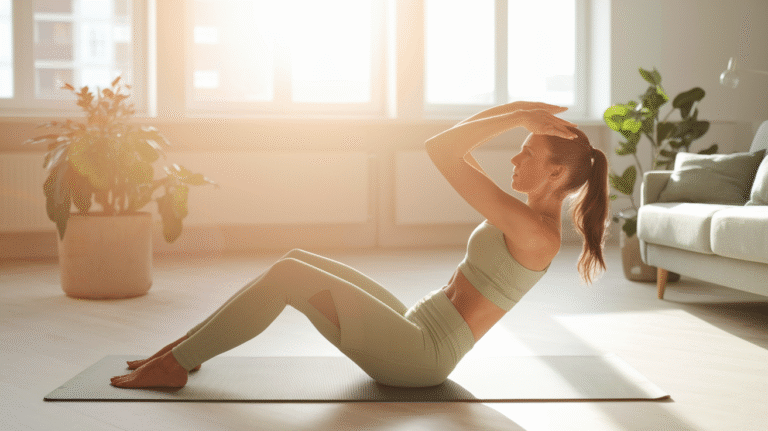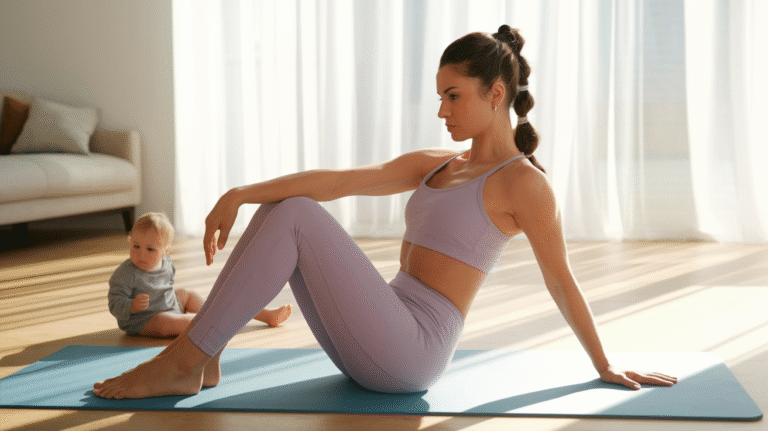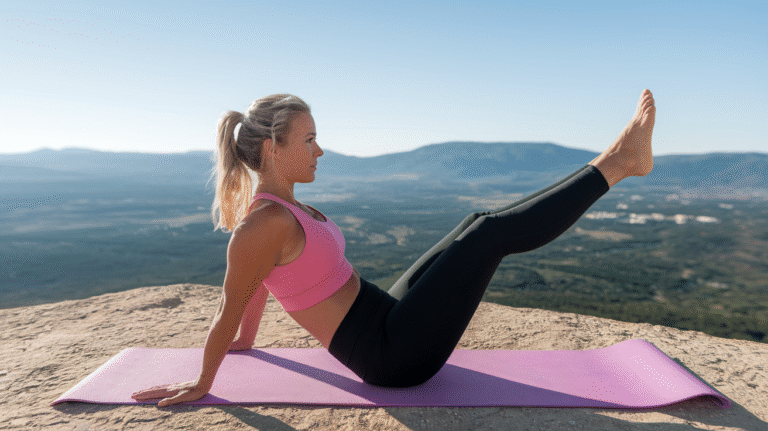
core workout for smaller waist
You don’t need a gym membership or fancy equipment to sculpt a defined waistline—just 15 minutes of floor space and the right exercises that target the muscles responsible for that cinched look.
Tired of generic ab workouts that leave you sore but don’t change your waist shape? Confused about which core exercises actually create visible definition versus just burning calories?
Frustrated by conflicting advice about spot reduction and whether waist-focused workouts even work? Intimidated by complicated gym machines or exercises that require a trainer to supervise? You’re not alone.
This guide breaks down the exact core exercises that build oblique and transverse abdominis strength—the muscles that pull your waist inward.
You’ll get two complete, proven workout routines (beginner and intermediate) you can start today in your living room, realistic timelines and expectations for results, and precise form cues to prevent common mistakes that waste effort and risk lower back pain.
Why Core Workouts Create a Smaller Waist (The Science You Need)

Not all core training is the same. To change how your waist looks you need to target the muscles that actually pull the abdominal wall inward: the transverse abdominis and the obliques. The rectus abdominis creates vertical bands (the “six-pack”), but the transverse abdominis acts like an internal corset and the internal/external obliques shape the sides. Consistent training of these muscles sculpts the underlying shape even before you change body fat levels.
Research shows that core stability and targeted activation reduce sway and improve posture, which immediately affects how your waist appears on camera or in clothing. In practical terms, a stronger transverse abdominis shortens the front of the abdomen, and a more developed oblique creates a visible inward curve at the sides—key elements of a smaller-looking waist.
This is why a Small Waist Workout focuses on anti-extension (keep the spine neutral), anti-rotation (resist twisting), lateral flexion, and targeted bracing.
Now the truth about spot reduction: you cannot selectively burn fat from your waist. Fat loss is systemic; hormones and genetics influence where you lose fat first.
That said, you can build muscle definition underneath the fat and improve your waist-to-hip ratio through strength work. The two-part approach is simple: core exercises sculpt the shape underneath, and a modest calorie deficit reveals the muscle. Combine both, and you see the most dramatic change.
Expectations matter. With consistent core training 3 times per week, most people notice improved posture and strength within 2–3 weeks and visible muscle definition around 6–8 weeks, provided body fat is reduced sufficiently through diet or overall activity.
Progress photos and measurements beat the scale for tracking waist changes because the scale doesn’t separate fat from muscle or water.
Small Waist Workout: 10-Minute Beginner Routine

The Proven Beginner Exercise Formula: focus on four movement categories—anti-extension, anti-rotation, lateral flexion, and controlled bracing.
These address the transverse abdominis and obliques directly. Ten minutes of focused effort with correct form beats longer, unfocused crunch sessions. Structure: 30–40 seconds work, 20 seconds rest. Repeat for two rounds.
Materials and prerequisites
- A mat or carpeted floor (optional)
- 1 water bottle for light resistance (optional)
- Timer—use phone or kitchen timer
Perform this Small Waist Workout 3 times per week on non-consecutive days. Warm up with 3–5 minutes of brisk walking or gentle dynamic stretches (cat-cow, arm circles, hip hinges).
Your Complete Beginner Small Waist Workout
- Dead Bugs — 40 seconds. Press lower back to floor, brace the belly, extend opposite arm and leg slowly; stop if the lower back lifts. Visual cue: keep the belly button drawn to the spine.
- Plank Hold — 30 seconds. Elbows under shoulders, squeeze glutes, keep hips level (no sag). Visual cue: imagine a straight line from head to heels.
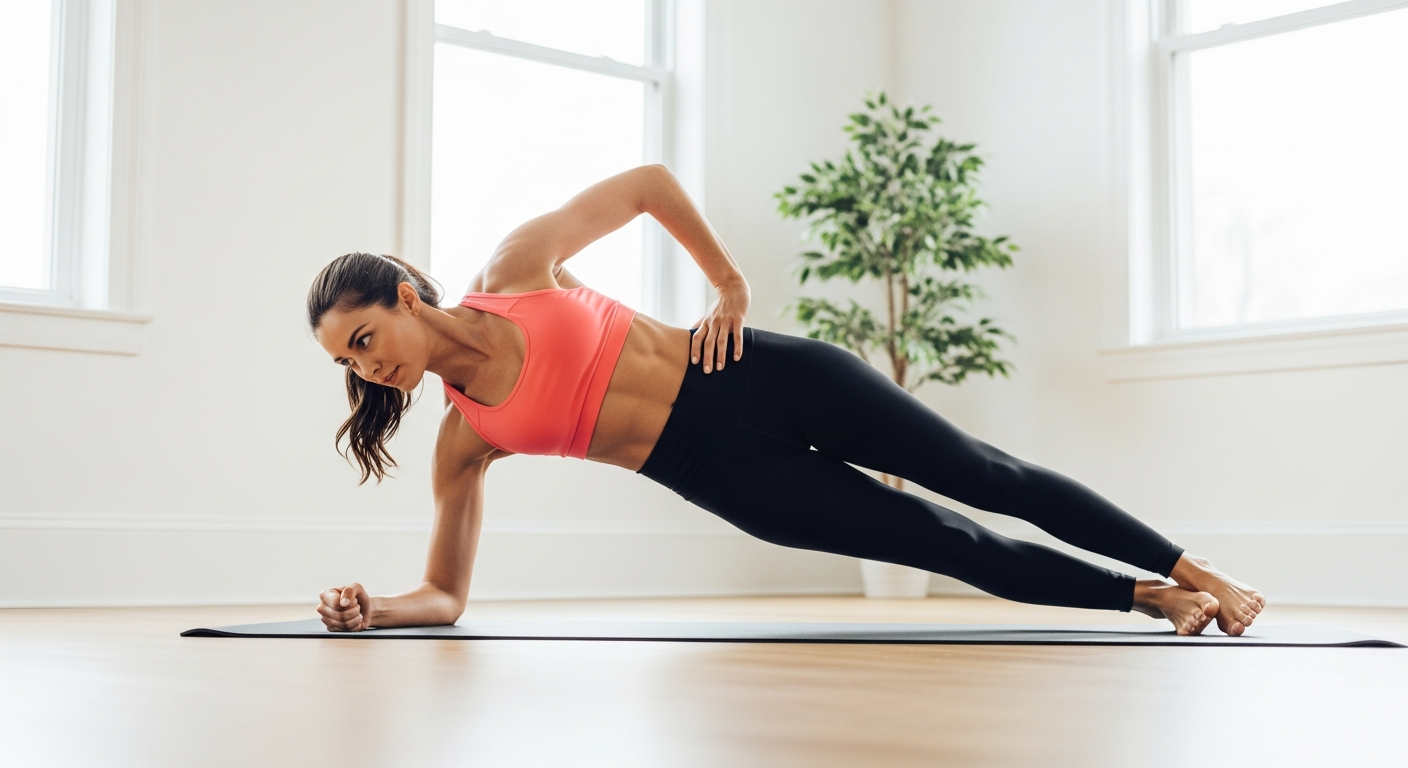
- Side Plank (each side) — 20 seconds. Stack feet or stagger for balance, lift hips high, square ribs to hips. Visual cue: reach the top arm toward the ceiling.
- Bird Dogs — 40 seconds. On hands and knees, extend opposite arm and leg while keeping hips level; avoid rotating the torso. Visual cue: maintain a neutral spine.
- Bicycle Crunches — 40 seconds. Slow and controlled, elbow to opposite knee, keep neck long. Visual cue: lead with the rib cage, not the head.
Repeat the circuit twice with 60 seconds rest between rounds. End with a 60-second child’s pose or gentle forward fold to relax the core. This routine trains both pulling-in actions and rotational control—two things most generic ab programs miss.
Beginner modifications that still build results
- Do knee planks instead of full planks to maintain a neutral spine while building transverse abdominis activation.
- Perform dead bugs with just leg movement first (arms stay by your sides) if coordination is difficult.
- Do side plank on the bottom knee for less load while training lateral core strength.
Takeaway: this Small Waist Workout trains the muscles that cinch your waist while keeping sessions short and efficient—perfect for busy schedules.
Slim Waist Workouts: 15-Minute Intermediate Routine

How to know you’re ready to progress: you can complete the beginner routine with good form and minimal rest, and planks feel challenging but manageable for 45+ seconds. If so, add rotational loading, more time under tension, and unilateral moves to produce greater hypertrophic and endurance stimulus in the obliques and transverse abdominis.
Structure this Slim Waist Workout as a circuit: 40–45 seconds work, 15–20 seconds rest. Complete two rounds with 45 seconds rest between rounds. Perform 3 sessions per week.
- Plank to Side Plank Rotations — 45 seconds. Start in forearm plank, rotate into right side plank, return to center, rotate into left. Visual cue: avoid rotating the hips forward; stack shoulders on top of each other when side-planking.
- Russian Twists — 45 seconds. Sit, knees bent, feet off the floor if possible; rotate the torso with control. Use a filled water bottle for added resistance. Visual cue: lead rotation from the ribs, not the arms.
- Mountain Climbers — 40 seconds. Maintain a plank line and drive knees toward chest quickly but with control. Visual cue: keep hips low and shoulders steady.
- Heel Touches — 45 seconds. Lying on back with knees bent, reach hands toward same-side heel, focus on oblique contraction. Visual cue: small range of motion with strong side contraction.
- Leg Raises — 40 seconds. Keep lower back pressed to the floor; lift to 90 degrees and lower slowly. Visual cue: stop if you feel lumbar arching.
- Side Plank with Hip Dips (each side) — 30 seconds. Lower hip a few inches and lift back up. Visual cue: move from the oblique, not from the hips, swinging.
Add progressive overload without equipment by increasing time under tension (hold the top of the movement 1–2 seconds), reducing rest by 5 seconds per week, or adding a third circuit when two rounds feel easy. The result: more targeted oblique and transverse abdominis fatigue, which builds definition over time.
Smaller Waist Exercise: Standing Ab Alternatives

Standing core work is an excellent option when you have wrist pain, mobility limits, or prefer to exercise in a small space. Standing moves still engage the transverse abdominis and obliques while recruiting stabilizers across hips and shoulders, making them efficient for busy people. These exercises are also perfect for office breaks or parents who need to move between tasks.
Why standing core work works
Standing ab work forces your core to stabilize the spine while the rest of your body moves, which is highly transferable to daily activities. It creates tension through the torso without compressing the spine, and it avoids positions that aggravate neck or lower-back issues common with floor crunching.
- Standing Oblique Crunches — 40 seconds each side. Hands behind head, bring elbow to same-side knee while lifting knee. Visual cue: pull the rib cage toward the hip.
- Wood Chops — 40 seconds each side. Use a water bottle, rotate from high to low while pivoting your feet. Visual cue: lead with the ribs and control the return.
- Standing Bicycle — 45 seconds. Alternate elbow-to-knee lifts while standing; emphasize rotation and balance. Visual cue: keep hips level and spine tall.
- Side Bends with Resistance — 40 seconds each side. Use a filled bottle or bag; bend straight down toward the hip and back up. Visual cue: move only in the frontal plane—no rotation.
- Standing Knee Raises with Twist — 45 seconds. Raise knee and twist torso to meet it for oblique engagement. Visual cue: keep standing leg slightly bent for balance.
Build a standing-only waist routine by selecting 3–4 of these exercises, performing each for 40 seconds with 15 seconds transition, and completing 3 rounds for a 12-minute session. This format is a powerful option when floor work is impractical.
Workout Routines for Beginners: Your 4-Week Progression Plan

A clear progression prevents plateaus and reduces the most common failure mode: doing the same routine without increasing challenge. The following 4-week plan is practical for busy people who want real change.
- Weeks 1–2: Do the Small Waist Workout 3x per week (Monday/Wednesday/Friday). Focus entirely on form and controlled breathing. Rest 20 seconds between exercises, two circuit rounds per session.
- Weeks 3–4: Keep the same exercises but reduce rest to 15 seconds and add a third circuit round on one of the three training days. Add 1–2 extra seconds of hold time on planks and side planks.
- Weeks 5–6 (transition): Move to the Slim Waist Workout 3x per week. Start with two circuits and full rest between rounds; emphasize slow eccentric lowering on leg raises and Russian twists for 2-second negatives.
- Weeks 7–8: Apply progressive overload—reduce rest, increase holds, add a third circuit, or introduce a light resistance object (water bottle/backpack) for rotational moves.
Track progress with a simple log: date, routine completed, seconds held, perceived difficulty (1–10). Take waist measurements weekly at the same time (first thing in the morning, relaxed breathing). Also track non-scale wins: improved posture, less low-back discomfort, clothes fitting differently. These are the earliest signs your core is changing.
On non-core days do light cardio (30 minutes walking or cycling) and one full-body strength session per week if possible. This supports a mild calorie deficit and helps retain muscle while you lean down—an essential partner to any Waist Workout aimed at visible results.
Common Mistakes That Sabotage Your Waist Goals

Many people work hard but miss the mark because of a few recurring errors. Here are the top mistakes and exactly how to fix them so your time produces results.
Form errors that waste effort
- Arching your lower back during planks: Why it fails — arching shifts load off the transverse abdominis and stresses the lumbar spine. Fix — tighten the glutes, draw the navel to the spine, and tuck the tailbone slightly. Visual cue: press a small imaginary book between your lower back and the floor when practicing bracing.
- Using momentum in rotational exercises: Why it fails — swinging lowers time under tension and reduces hypertrophic stimulus. Fix — slow the tempo, pause for 1 second at the end of the range, and control the return. Visual cue: rotate from the ribs, not from the hands.
- Holding your breath: Why it fails — breath-holding reduces core stability and increases intra-abdominal pressure unpredictably. Fix — exhale on exertion (when you crunch or twist) and inhale on return.
- Neglecting one side: Why it fails — imbalances create asymmetry. Fix — do unilateral moves with matched time/reps each side and track side-to-side differences in your log.
Programming mistakes that stall results
- Training abs every single day: Why it fails — muscles need roughly 48 hours to recover and grow. Fix — schedule 3 core sessions weekly and use standing or mobility work on other days.
- Only doing crunches: Why it fails — crunches are mostly rectus-focused and miss deep stabilizers. Fix — rotate anti-extension, anti-rotation, lateral flexion, and bracing work into each session.
- Skipping deep-core work: Why it fails — without planks and dead bugs you won’t train the transverse abdominis effectively. Fix — always include at least one anti-extension/anti-rotation move per workout.
- Not progressing difficulty: Why it fails — adaptation is inevitable. Fix — increase time under tension, reduce rest, or increase resistance every 2–3 weeks.
Nutrition and recovery are also frequent blind spots. A modest calorie deficit (for fat loss) plus sufficient protein (aim for roughly 0.6–0.8 grams per pound of bodyweight depending on activity) helps reveal the shape your core work builds. Hydration and sleep (7–8 hours) affect recovery and appearance; poor sleep raises cortisol and can blunt fat loss.
Train the deep corset first (dead bugs, planks), then add visible-shaping moves (oblique work); both are required to change how your waist looks, not just how it feels.
Troubleshooting / FAQ:
- My lower back hurts during leg raises: Stop if pain is sharp; regress by bending knees or doing dead bugs. Ensure your lower back stays pressed to the floor.
- I see no change after two weeks: That’s normal; power through correct programming for 6–8 weeks and pair training with calorie management to reveal muscle definition.
- Crunches cause neck strain: Bring your chin slightly away from your chest, use hands lightly behind the head (don’t pull), or replace with dead bugs.
Final takeaway in this section: avoid these common mistakes and your Waist Workout will deliver steady, provable progress instead of wasted sweat.
Where to start
The single most important takeaway: prioritize training the transverse abdominis and obliques with correct form and consistent progression while managing calories if you want visible change.
Your next action is specific and simple: pick the Small Waist Workout and do it tomorrow morning. Set a timer for 10 minutes, follow the exact sequence (Dead Bugs, Plank, Side Planks, Bird Dogs, Bicycle Crunches), and log your times and perceived difficulty.
Repeat that routine three times this week, reduce rest slightly in week two, then move into the 15-minute Slim Waist Workout in week three.
Track waist measurements weekly and take progress photos once every two weeks under the same lighting and clothing.
This plan is proven and efficient, but it requires consistency. If you can’t commit to 15 minutes, do one circuit—it’s better than skipping.
Expect early gains in strength and posture; expect visible sculpting in 6–8 weeks when you combine these workouts with modest dietary changes. That is the practical, realistic path to a smaller waist—no hype, just work that produces measurable results.