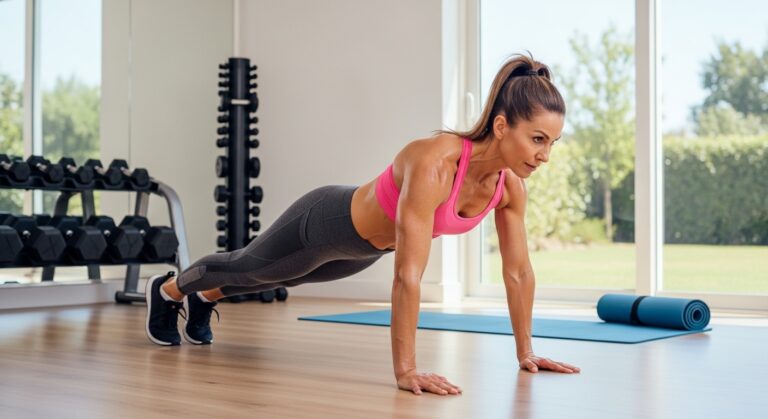
10 – minute mommy pooch workout for New Moms
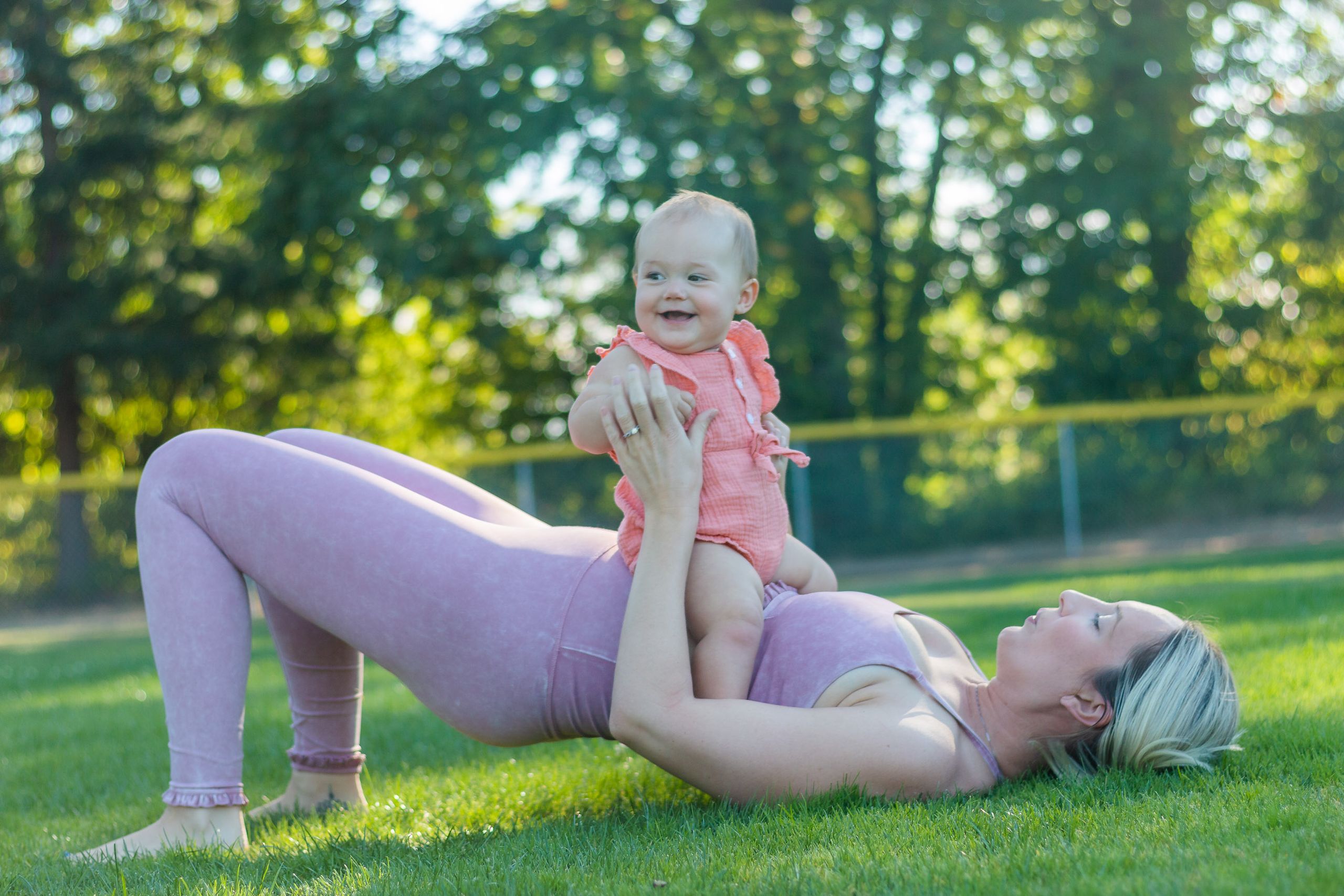
That soft pouch that won’t budge no matter how many crunches you do? It has a name—and it’s not a character flaw. The postpartum “mommy pooch” is a real physiological shift: your abdominal wall has been stretched, your core has been weakened, and spot-training won’t fix it. But here’s what will: a strategic 10-minute routine built on the actual science of core recovery, not Instagram fitness myths.
This workout is designed for new moms—whether you’re 6 weeks or 6 months postpartum, whether you had a vaginal delivery or C-section.
You’ll learn which exercises actually rebuild your deep core (hint: it’s not crunches), how to progress safely without aggravating diastasis recti, and the honest timeline for visible results. Because you deserve a plan that works with your body’s reality, not against it.
Mom Pooch Workout At Home: The 10-Minute Routine
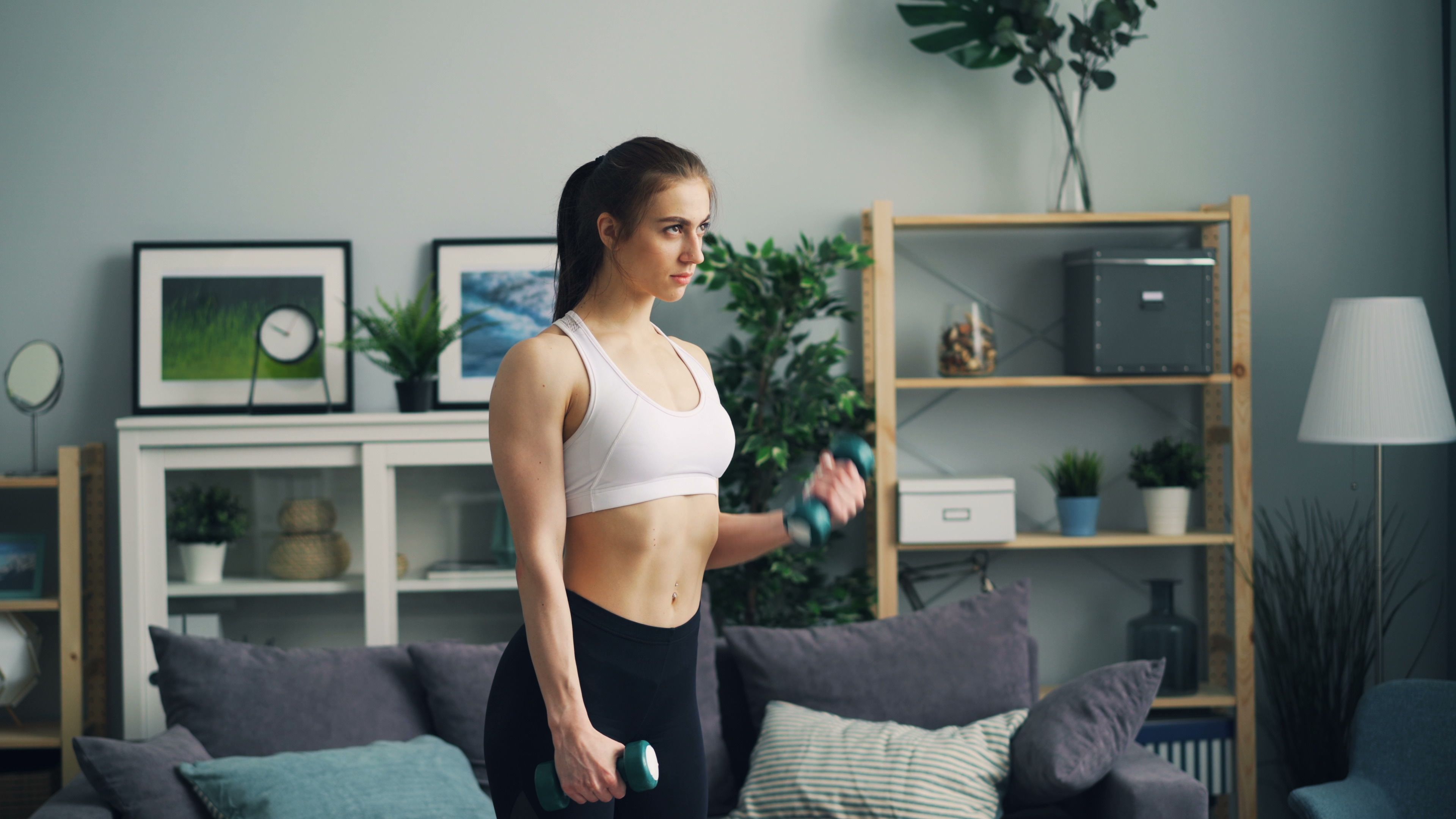
Here’s the truth: you don’t need an hour at the gym to see changes. Research on postpartum exercise shows that consistent, moderate-intensity work—even in short bursts—triggers the metabolic and hormonal shifts necessary for core recovery and fat loss. Ten minutes is enough if those minutes are intentional.
This routine targets your deep abdominal wall (the transverse abdominis) and your rectus abdominis while keeping intensity sustainable for a recovering body.
Do this 4–5 times per week, with at least one rest day between sessions. You’ll need a yoga mat and your bodyweight. No equipment, no excuses about finding time.
The 10-Minute Sequence (perform each exercise for 40 seconds, rest 20 seconds between):
1. Modified Dead Bug: Lie on your back, knees bent, feet flat. Slowly lower one arm overhead while straightening the opposite leg—just above the floor, not touching. Return and alternate. This teaches your core to stabilize without compression. Common mistake: holding your breath. Breathe steadily throughout; exhale as you extend.
2. Glute Bridge Hold: Lie on your back, knees bent, feet hip-width apart. Drive through your heels and lift your hips to create a straight line from knees to shoulders. Squeeze your glutes hard. This counteracts the anterior pelvic tilt that worsens mom pooch appearance.
3. Bird Dog: Start on hands and knees. Extend your right arm and left leg, creating one long line. Return and switch sides. Move slowly—this is a stability exercise, not cardio. Control matters more than speed.
4. Plank to Down Dog: From a plank position, press your hips up and back into downward dog, then return to plank. Five to eight reps per 40-second block. This builds endurance in your anterior core while gently mobilizing your spine.
5. Lying Marches: On your back, knees bent, lift one foot slightly off the floor and lower it. Alternate legs in a controlled march. Keep your lower back pressed to the mat—if it arches, you’ve lost core tension.
Repeat this circuit twice. That’s your 10 minutes. You’ll feel muscle engagement immediately, but real change—visible softening of the pooch and improved posture—takes 6–8 weeks of consistency. Expect soreness for the first few sessions; that’s normal and signals adaptation. If you had a C-section, check the next section before starting.
C Section Mom Pooch Workout: Special Considerations

If you delivered via cesarean section, your core isn’t just stretched—it’s been surgically divided. Your abdominal muscles were literally cut through, and the connective tissue (fascia) beneath them was disrupted. This changes everything about how you approach that 10-minute routine, at least initially.
The standard medical clearance is six weeks postpartum, but that’s the floor, not the finish line. Research on post-cesarean core recovery shows that surgical scar tissue continues remodeling for up to two years. Starting intense core work too early doesn’t just feel uncomfortable—it can compromise scar integrity and delay functional healing. I’ve seen too many women push through that discomfort thinking it’s “normal” soreness, only to experience setbacks weeks later.
Here’s the realistic timeline: Weeks 6-8, focus on breathing and gentle reconnection (we’ll cover this in the next section). Weeks 8-12, you can cautiously add the modified versions of the routine above—think 50% intensity. By week 12-16, if you’re pain-free and have no heaviness or bulging sensation, you can progress toward the full routine. If you’re breastfeeding or dealing with sleep deprivation, add another 2-4 weeks to this timeline. Your nervous system affects healing speed.
The most common mistake: Doing full planks or heavy crunches at week 8 because “the doctor said I’m cleared.” Medical clearance means you won’t tear your incision open—it doesn’t mean your core is ready for load. Watch for heaviness in the lower abdomen, a pulling sensation at the scar, or increased bleeding during exercise. These are stop signals, not push-through moments.
One specific modification that matters: avoid any exercise that creates downward pressure (like heavy squats or jumping) until you’ve rebuilt intra-abdominal pressure control. This is where breathing patterns become your foundation—more on that next. Your scar is strong, but your core’s ability to stabilize and distribute force needs rebuilding from the ground up.
Workout For Mommy Pouch: Understanding What You’re Actually Working
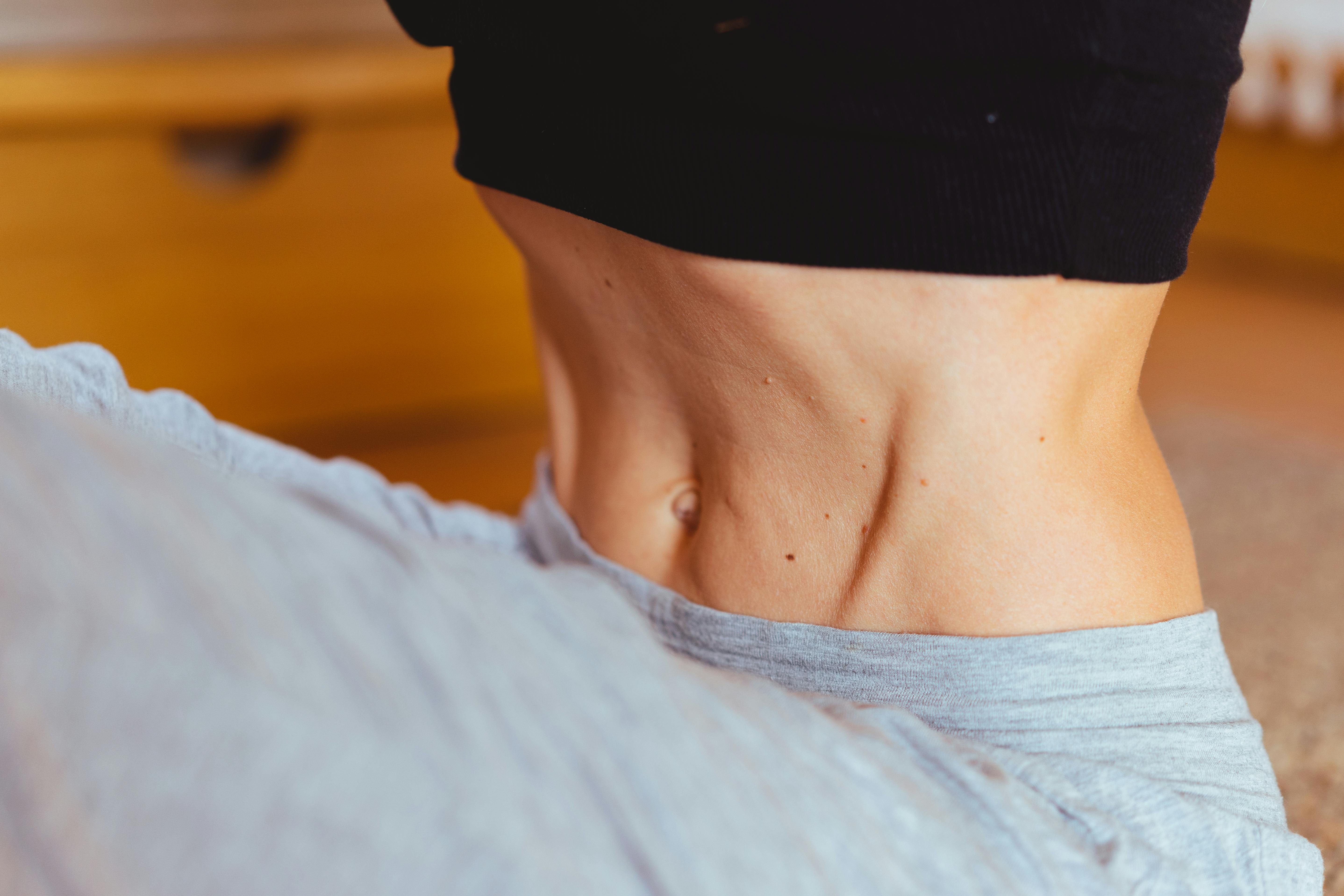
Before you start any routine, you need to understand what’s actually happening under your skin. The postpartum belly isn’t a single problem—it’s a combination of three distinct issues, and confusing them is why so many moms waste time on ineffective exercises.
First, there’s diastasis recti (DR)—the separation of your rectus abdominis muscles down the midline. During pregnancy, your linea alba (the connective tissue between your abs) stretches to accommodate your growing baby. This isn’t a tear; it’s a widening.
After birth, this gap doesn’t snap back immediately. Research shows that some degree of separation is present in nearly 100% of women in their third trimester, and about 40% still have measurable separation at 12 months postpartum. The good news: targeted core work actually closes this gap, but only if you’re doing the right movements.
Second, there’s loose skin and subcutaneous fat—the layer of fat directly under your skin that expanded to support pregnancy.
This responds to progressive strength training and calorie balance, not spot reduction. Crunches won’t touch this. Your body loses fat systematically based on genetics and hormones, not by doing ab exercises.
Third, there’s visceral fat—the deeper fat around your organs. This is metabolically active and responds best to consistent strength training combined with adequate sleep and stress management.
New moms are typically sleep-deprived and stressed, which elevates cortisol and makes visceral fat harder to lose. You can’t out-exercise poor recovery.
Here’s the critical mistake: most “mommy pooch” workouts focus only on the visible pouch without addressing the underlying separation.
You need exercises that create tension across the linea alba to stimulate healing, not just exercises that make you feel the burn.
The 10-minute routine ahead targets all three layers—connective tissue integrity, functional core strength, and metabolic demand—because that’s what actually works.
Workouts For Mom Pooch: What Actually Reduces the Belly
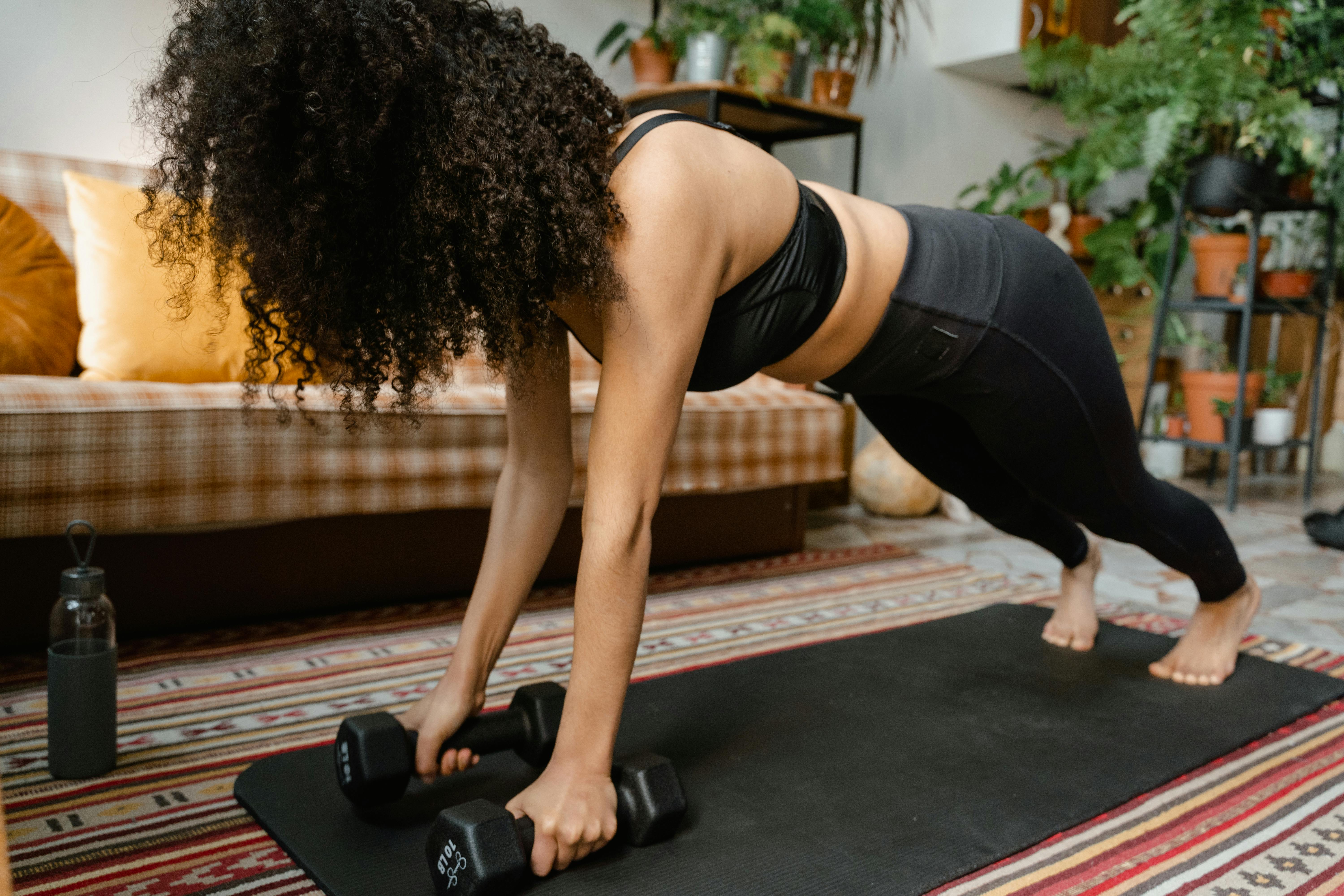
Here’s the uncomfortable truth: you cannot spot-reduce fat from your belly. No amount of crunches, planks, or ab-focused work will specifically melt the pooch if your overall body composition hasn’t shifted. This isn’t a personal failure—it’s basic physiology.
Your body decides where it stores and releases fat based on genetics, hormones, and total caloric balance, not on which muscle group you’re training.
What actually reduces belly fat is a combination of three things: progressive resistance training, metabolic demand, and consistent nutrition habits.
When you build lean muscle through strength work, you increase your resting metabolic rate—meaning your body burns more calories at rest.
Research published in the Journal of Applied Physiology shows that muscle tissue is metabolically active, burning roughly 6 calories per pound per day just to maintain itself. That matters over weeks and months.
The 10-minute routine in this post uses compound movements—squats, rows, push variations—because they recruit large muscle groups simultaneously. This creates what’s called “metabolic afterburn” or EPOC (excess post-exercise oxygen consumption).
Your body stays in an elevated calorie-burn state for hours after you finish. A single 10-minute session won’t change anything. But 3–4 of them per week, stacked with reasonable eating habits, absolutely will.
The second piece is consistency over intensity. New moms often expect rapid results because they’ve been told they “should” bounce back quickly.
The reality: it took nine months to build the pooch. Expect 3–6 months of consistent training and nutrition before you see meaningful changes in how your belly looks and feels.
Some women see shifts in 8–12 weeks; others take longer depending on how much volume they can realistically manage with a newborn.
Your core *will* get stronger and more functional during this time—that’s immediate and real. You’ll notice it when you pick up your baby, chase a toddler, or stand for longer periods without lower back pain.
That’s not vanity; that’s reclaiming your physical capacity. The visual change follows the functional one, not the other way around.
Pooch Workout: Exercises to Avoid (and When to Add Them Back)

Here’s what nobody tells you: some exercises can actually work against your postpartum recovery, especially in those first 6–12 weeks. Your core isn’t just weak—it’s been physically separated and stretched. Loading it incorrectly can delay healing and reinforce poor movement patterns that keep the pooch locked in place.
The exercises to pause (temporarily): Full sit-ups, crunches, and heavy planks top the list. These create intense intra-abdominal pressure that pushes downward and outward—the opposite of what you need. Burpees, double leg lowers, and high-impact jumping also fall into this category early on. If you’re 6 weeks postpartum and someone hands you a jump rope, politely decline. Your pelvic floor and linea alba (the connective tissue between your abdominal muscles) aren’t ready.
The mistake I see constantly: moms think “no exercise” means “no progress.” That’s the wrong frame. Modified movements—like dead bugs, breathing work, and single-leg variations—are *more* demanding on your core than a crunch ever was. They’re also building the foundation that makes harder exercises effective later.
When to add them back: Around 12–16 weeks postpartum (if you’ve had no complications), you can begin reintroducing planks and controlled crunches *if* you’re passing the doming test: when you engage your core, your belly shouldn’t bulge outward. That means your deep abdominals are firing. If it domes, you’re not ready—and that’s data, not failure.
High-impact movements (running, jumping, HIIT) typically come back around 16–20 weeks, depending on your pelvic floor recovery. This isn’t arbitrary caution—research on postpartum pelvic floor function shows that jumping too early significantly increases incontinence risk and core dysfunction down the road.
The real timeline? You’re not “behind” if you’re still doing modified work at 4 months. You’re building durability. The moms who rush back to intense exercise often plateau or regress. The ones who respect the progression see consistent results through 9–12 months postpartum.
Gym Workouts For Mom Pooch: When and How to Add Equipment
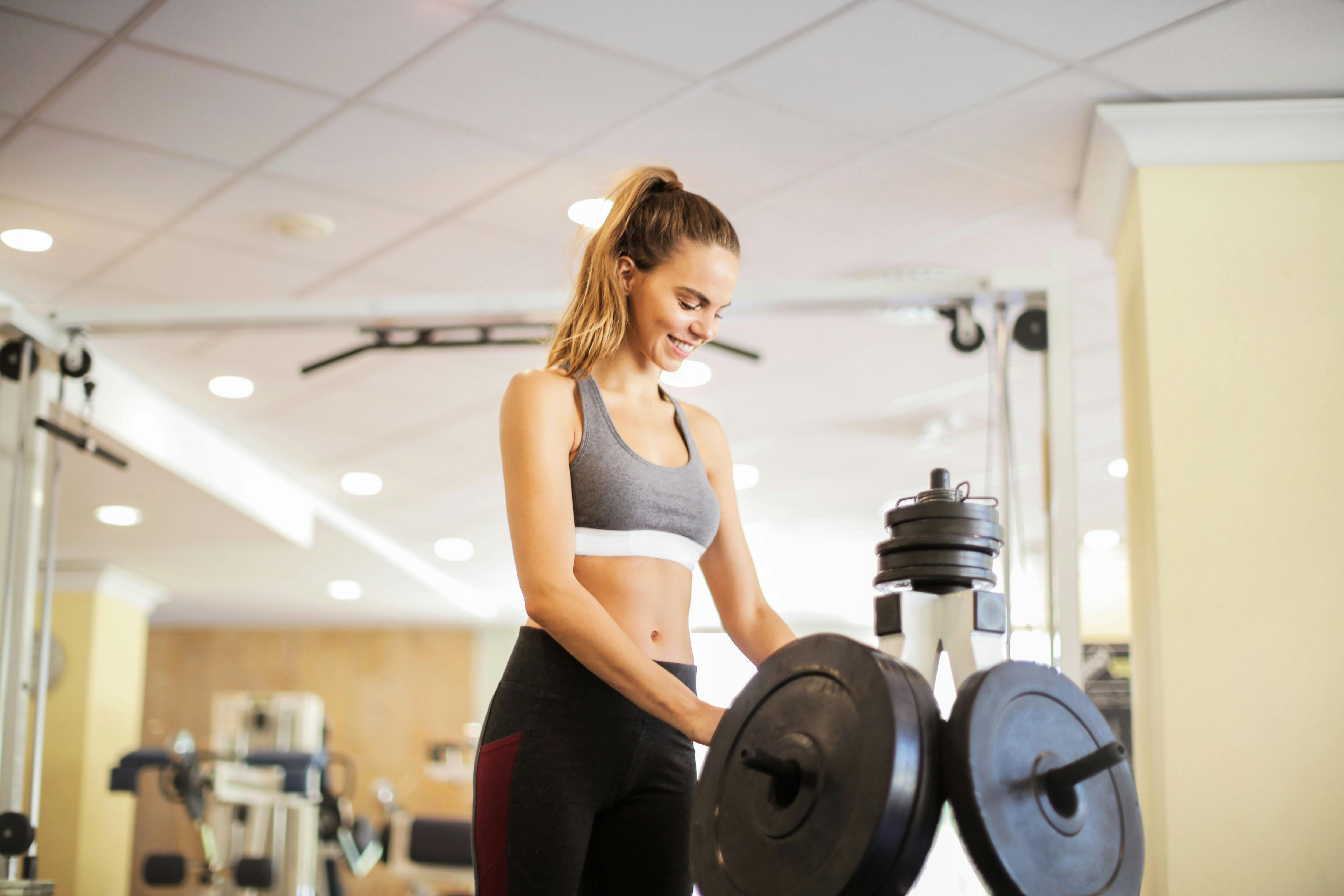
Here’s the truth: equipment doesn’t flatten your belly. But it does something more valuable—it makes progressive overload possible, which means your workouts stay challenging as your body adapts.
Around 8–12 weeks postpartum (or cleared by your doctor), when your core stability has improved and you’re consistently nailing bodyweight movements, adding equipment shifts your training into a phase where real strength builds.
Start with a resistance band loop or light dumbbell (5–8 lbs). These tools let you increase tension on movements like pallof presses, dead bugs with weight, and banded wood chops—exercises that demand core stabilization without the risky spinal flexion of traditional crunches.
The key: quality over load. A 5-lb dumbbell held during a farmer’s carry forces your deep core muscles to work harder to keep your spine neutral. That’s the mechanism that matters.
Kettlebells and cable machines come next (around 16–20 weeks postpartum if your recovery is solid). These allow for dynamic, rotational movements—like Pallof presses against cable tension or kettlebell halos—that train the transverse abdominis and obliques under load.
This is where you see real functional strength return: the ability to pick up your toddler without your back screaming, or carry groceries and a car seat simultaneously without compensation patterns kicking in.
The common mistake: jumping straight to heavy weighted sit-ups or machine crunches because you see results faster. You won’t. In fact, you’ll reinforce the anterior core dominance that created the pooch in the first place. Your rectus abdominis is already strong. What needs work is the deep stabilizer system underneath.
A realistic gym progression looks like this: weeks 1–8 bodyweight only, weeks 8–16 add bands and light dumbbells, weeks 16+ introduce kettlebells and cables.
This isn’t slow. This is sustainable. Your body rebuilds better when you respect the timeline, and you’re far less likely to regress or trigger pelvic floor issues down the road.
Final Thoughts
The mommy pooch isn’t a cosmetic problem you fix with crunches—it’s a legitimate postpartum recovery challenge that requires patience, progressive loading, and realistic expectations.
Your diastasis recti (if present) needs time to knit back together; your core needs to relearn how to stabilize under load; and your body needs permission to heal before it performs.
The 10-minute routine works because it’s sustainable, it respects your timeline, and it addresses the actual mechanism of change: progressive tension on your abdominal wall combined with whole-body metabolic work.
You can’t spot-reduce fat, but you can build the foundational strength that makes everything else feel more stable—and that’s where the real confidence shift happens.
Here’s what matters: consistency beats intensity at this stage. A 10-minute session you do four times a week will transform your core far more than sporadic 45-minute workouts that leave you sore and skipped.
The exercises we covered—dead bugs, bird dogs, modified planks, and integrated movements like farmer carries—aren’t flashy, but they’re proven to rebuild core function in postpartum bodies.
If you’ve had a C-section, honor that timeline. If you’re six months postpartum and haven’t started, that’s your starting point right now, not a reason to feel behind. Equipment doesn’t matter until your foundation is solid; adding dumbbells or resistance bands too early is how new moms end up frustrated and injured.
Your next move: Pick one day this week to do the 10-minute routine exactly as outlined—no modifications, no additions, no comparing yourself to pre-pregnancy fitness.
Do it three more times that week at least. After two weeks of consistency, reassess how your core feels during daily activities: picking up your baby, getting out of bed, walking up stairs. That’s your real progress metric, not how your stomach looks in a mirror.
The physique change follows the function change, not the other way around. You’ve already done the hardest part—you grew and delivered a human. This is just teaching your body what it’s capable of now.