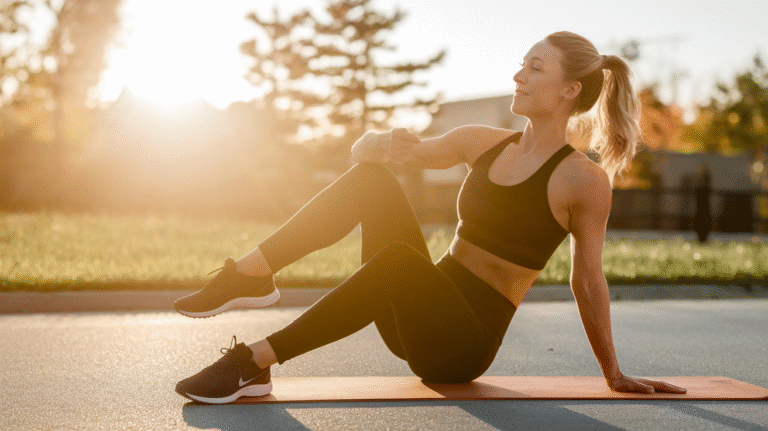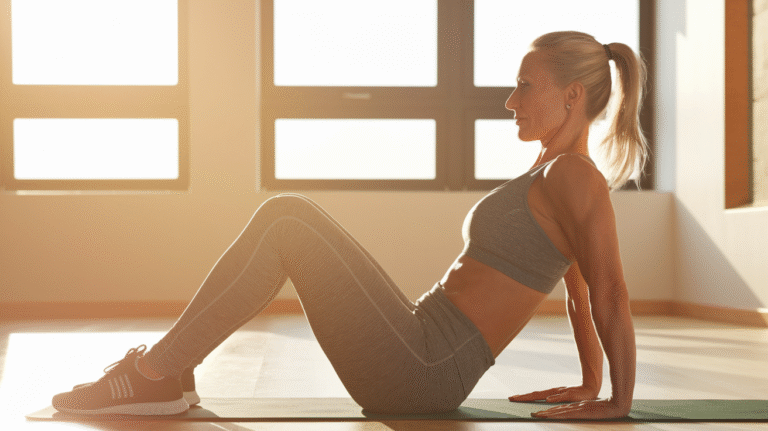
30 Day Shred Challenge for women over 40
“I’m over 40—is it too late to get in shape?”
I asked myself this exact question three years ago while folding laundry and catching my reflection in the bedroom mirror. My daughter’s old Jillian Michaels DVD sat on the shelf, and I remember thinking, “That’s for people in their twenties who still have metabolism on their side.”
I was wrong. Dead wrong.
If you’ve felt invisible scrolling through fitness transformations dominated by twenty-somethings with their perky metabolisms and endless energy, I understand that frustration completely. The fitness industry loves to pretend that women over 40 don’t exist, or worse—that we should just accept decline as inevitable.
Here’s what I’ve learned both personally and through coaching hundreds of women: your 40s can be your strongest, most powerful decade yet. But here’s the catch—you can’t train like you did at 25. Your body has evolved, and your approach needs to evolve with it.
The reality? Metabolism does slow by 2-8% per decade after 30. Hormones shift dramatically during perimenopause and menopause. Recovery takes longer. Joints need more respect. These aren’t excuses—they’re facts that require a smarter approach.
That’s where the 30 Day Shred Challenge, specifically adapted for women over 40, comes in. This isn’t about becoming someone else or chasing some Instagram influencer’s body. It’s about becoming your strongest, most energized self—with workouts that respect your body while delivering real, visible results.
What you can expect in 30 days: increased energy that carries you through your afternoon slump, better sleep quality, improved confidence in how your clothes fit, and yes—a leaner, more toned physique. But more importantly, you’ll establish a foundation of strength that protects your bones, balances your hormones, and makes everyday life easier.
The best part? No gym membership required. No complicated equipment. No feeling intimidated in a room full of people half your age. Just you, 20-30 minutes a day, and a commitment to showing up for yourself.
Why the 30 Day Shred Works Differently After 40

Understanding Your Body’s Evolution
Let’s address the elephant in the room: your body at 40+ is fundamentally different than it was at 25, and pretending otherwise sets you up for frustration and failure.
During perimenopause and menopause, estrogen levels decline significantly. This isn’t just about hot flashes—estrogen plays a crucial role in how your body builds muscle and stores fat. Lower estrogen means you naturally lose muscle mass faster (a process called sarcopenia) and tend to store more fat, particularly around your midsection. Research shows women can lose 3-5% of muscle mass per decade after 30 if they don’t actively work to maintain it.
Your metabolism naturally slows by approximately 2-8% per decade after 30. That means at 45, you might burn 200-300 fewer calories per day than you did at 25, even doing the exact same activities. This is why the old “eat less, move more” advice that worked in your twenties fails spectacularly now—you need to build and preserve muscle to keep your metabolic rate up.
Here’s what most fitness programs miss: women over 40 don’t need more cardio. You need more strength training. Muscle is metabolically active tissue—it burns calories even at rest. Every pound of muscle you build increases your resting metabolic rate and improves insulin sensitivity, which becomes increasingly important as we age.
The 30 Day Shred works because it prioritizes resistance training while incorporating strategic cardio intervals, rather than the reverse.
The Science Behind 30-Day Transformation Programs
The original 30 Day Shred uses the 3-2-1 interval method: 3 minutes of strength training, 2 minutes of cardio, and 1 minute of abs, repeated in circuits. This structure is brilliant for women over 40 because it builds muscle while burning fat without the excessive cortisol response that long cardio sessions can trigger.
When you’re over 40, managing stress hormones becomes critical. Extended cardio sessions (think 60-minute treadmill slogs) can elevate cortisol, which actually promotes belly fat storage and muscle breakdown—the exact opposite of what you want. Short, intense strength-focused workouts of 20-30 minutes provide enough stimulus to build muscle and burn fat without triggering that counterproductive stress response.
The 30-day timeframe isn’t arbitrary. Research on habit formation shows it takes approximately 21-66 days to establish a new behavior, with the average being around 30 days. This challenge gets you past the initial resistance and into a rhythm where working out becomes part of your routine rather than something you have to force yourself to do.
Progressive overload—gradually increasing the challenge to your muscles—is the key to continued results. For women over 40, this doesn’t mean jumping to heavy weights immediately. It means starting with bodyweight or light dumbbells (3-5 pounds), mastering form, then gradually increasing resistance as your strength improves. The three levels in the 30 Day Shred provide this progression built-in.
Why Shorter Workouts Beat Marathon Gym Sessions
I spent years thinking I needed to spend 60-90 minutes at the gym to see results. That belief kept me from working out more than it motivated me because I rarely had 90 free minutes.
The truth? Focused 20-30 minute sessions deliver better results for women over 40 than marathon gym sessions. Here’s why: intensity matters more than duration. A concentrated 25-minute workout where you’re fully engaged burns more calories and builds more muscle than an hour of half-hearted movement while scrolling your phone between sets.
Recovery needs increase with age. Your body needs more time to repair and rebuild muscle tissue. Shorter, more frequent workouts allow for better recovery between sessions compared to exhausting 90-minute marathons that leave you depleted for days.
And let’s be honest about real life: you have a career, possibly kids, aging parents, relationships, and about a thousand other responsibilities. A 20-30 minute commitment you can actually keep beats a 90-minute plan you abandon after two weeks. Consistency trumps intensity every single time.
The 30 Day Shred’s short format also fits perfectly into busy schedules. Morning person? Knock it out before your family wakes up. Night owl? Do it after dinner. Midday energy dip? Use it as a pick-me-up instead of reaching for coffee. The flexibility makes adherence actually possible.
What to Expect: Realistic Results for Women Over 40

Week-by-Week Transformation Timeline
Let me set realistic expectations because the fitness industry has conditioned us to expect overnight miracles that don’t exist.
Days 1-7: The Adaptation Phase Your body is learning new movement patterns and your muscles are experiencing novel stimulus. You’ll likely be sore—sometimes very sore. This is DOMS (delayed onset muscle soreness) and it’s completely normal. You might feel more tired than usual as your body adapts to the new energy demands. The scale might actually go up slightly due to water retention and inflammation from new exercise. Don’t panic—this is temporary.
What you will notice: better sleep quality, a sense of accomplishment, maybe some initial bloating reduction.
Days 8-15: The Strength Emergence The soreness decreases significantly. You’ll start noticing you can do more reps or hold planks longer. Your energy levels improve noticeably—that afternoon slump might disappear. Your clothes start fitting differently, even if the scale hasn’t moved much. You’ll sleep deeper. Many women report reduced joint stiffness and improved mood during this phase.
Days 16-23: The Visible Shift This is when people start asking if you’ve lost weight. You’ll see muscle definition in your arms and shoulders. Your posture improves naturally as your core strengthens. The mental fog lifts. You’ll have more patience with your family and better focus at work. The workouts that felt impossible in week one now feel challenging but doable.
Days 24-30: The Transformation Solidifies Your body has changed composition—less fat, more muscle. You’ve likely lost 4-8 pounds of actual fat (not just water weight). More importantly, you’ve built strength and established a habit. You feel capable and powerful. The confidence boost extends beyond fitness into other areas of your life.
What “Shred” Really Means After 40
Let’s talk about the word “shred” because it sets unrealistic expectations if we’re not careful. At 40+, shredding doesn’t mean looking like a fitness model in a magazine (who, by the way, is likely 23 years old, professionally lit, and photoshopped).
Shredding means reducing body fat percentage while building lean muscle. A realistic fat loss target is 4-8 pounds over 30 days—that’s 1-2 pounds per week, which is sustainable and healthy. You might lose more weight than this on the scale, but remember that includes water weight and you’re also building muscle, which weighs more than fat.
Body recomposition is the real goal: losing fat while simultaneously building muscle. This is why the scale can be misleading. You might “only” lose 5 pounds but drop a full dress size because muscle is denser than fat. Take measurements of your waist, hips, thighs, and arms—these often tell a more accurate story than the scale.
Focus on how you feel, not just how you look. Can you carry groceries without getting winded? Do you have energy at 3 PM instead of desperately needing caffeine? Can you get up from the floor without using your hands? These functional improvements matter more than any number.
Beyond Physical Changes
The physical transformation is just the surface. What happens beneath matters even more for women over 40.
Strength training increases bone density, which is critical for preventing osteoporosis. Women lose bone density rapidly after menopause—resistance training is one of the most effective interventions. Every time you do a weighted squat or push-up, you’re literally building stronger bones.
Exercise improves insulin sensitivity, helping your body regulate blood sugar more effectively. This becomes increasingly important as diabetes risk rises with age. Just 30 days of consistent strength training can measurably improve how your body processes glucose.
The mental health benefits are profound. Research consistently shows that resistance training reduces symptoms of anxiety and depression, often as effectively as medication for mild to moderate cases. The endorphin release improves mood, and the sense of accomplishment builds genuine confidence that extends far beyond the gym.
Many women report that this challenge transforms their relationship with their bodies—from frustration and disappointment to appreciation and respect for what their bodies can do.
The Complete 30 Day Shred Challenge Breakdown

Level 1 (Days 1-10): Building Your Foundation
Level 1 is about learning movement patterns and building a foundation of strength. Do not skip this phase, even if you’ve worked out before. Your body needs time to adapt, and rushing into Level 2 is how injuries happen.
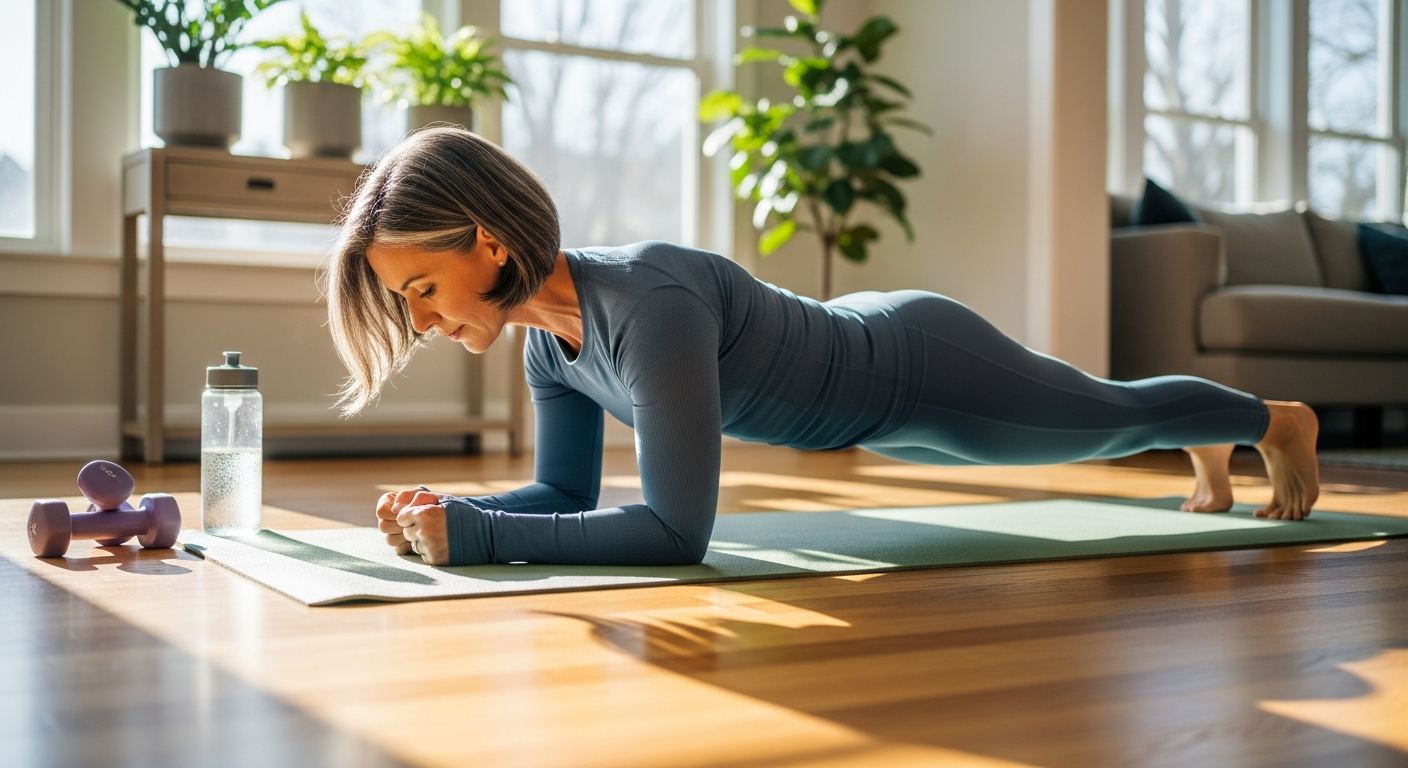
Equipment needed: – Pair of light dumbbells (3-5 pounds to start—you can always go heavier) – Yoga mat or towel for floor work – Water bottle – Supportive athletic shoes – Optional: resistance band for modifications
The workout structure: Six circuits of 3 minutes strength, 2 minutes cardio, 1 minute abs. Total time: approximately 20 minutes plus warm-up and cool-down.
Key exercises and form cues:
*Modified Push-ups:* Start on your knees if needed. Hands slightly wider than shoulders, core engaged, lower until your chest nearly touches the floor. Common mistake: letting your hips sag. Fix: squeeze your glutes and pull your belly button toward your spine. Aim for 10-12 reps.
*Bodyweight Squats:* Feet hip-width apart, weight in your heels, chest up. Lower as if sitting in a chair until thighs are parallel to the floor. Common mistake: knees caving inward. Fix: push your knees outward, imagine spreading the floor apart with your feet. Aim for 15-20 reps.
*Standing Oblique Crunches:* Standing (easier on your back than floor crunches), bring elbow to opposite knee. Focus on controlled movement, not speed. This protects your spine while working your core. Aim for 20 total reps (10 each side).
Cardio intervals: Jumping jacks (or modified step-jacks if jumping bothers your joints), high knees (or marching in place), butt kicks (or alternating heel taps). The goal is to elevate your heart rate, not destroy your joints.
What to focus on: Perfect form over speed or reps. Listen to your body—if something hurts (not burns, but hurts), modify or stop. Establish the routine: same time, same place every day. Your body will adapt faster than you think.
Level 2 (Days 11-20): Building Strength and Endurance
You’re ready for Level 2 when you can complete Level 1 without extreme fatigue and with good form throughout. Don’t rush this progression.
Progressive changes: – Increase dumbbell weight to 5-8 pounds – Add more complex movements (combination exercises) – Increase rep counts by 20-30% – Reduce rest time between circuits slightly
New exercises include:
*Walking Lunges:* Step forward, lower back knee toward the floor, push through front heel to step forward with opposite leg. This challenges balance and builds serious leg strength. Common mistake: front knee extending past toes. Fix: take a longer step forward. Aim for 10-12 per leg.
*Plank Rows:* In plank position with dumbbells, row one weight up while stabilizing with the other arm. This works your back, arms, and core simultaneously. Start with lighter weights (3-5 pounds) for this one. Aim for 10 per side.
*Bicycle Crunches:* More challenging core work. Lying on your back, bring opposite elbow to opposite knee. The key is slow, controlled movement—not speed. Aim for 20 total reps.
Joint-friendly modifications: If your knees protest lunges, do reverse lunges instead (step backward rather than forward—easier on the knees). If planks bother your shoulders, do them on an incline (hands on a bench or couch). If jumping still isn’t comfortable, stick with low-impact cardio alternatives.
Signs you’re getting stronger: You can lift heavier weights with good form. You recover faster between workouts. Daily activities feel easier—carrying groceries, playing with grandkids, climbing stairs. Your resting heart rate might decrease. You feel energized after workouts rather than depleted.
Level 3 (Days 21-30): Sculpt and Tone
Level 3 is where you really see definition emerge. You’ve built a foundation; now you’re refining and challenging that strength.
Advanced variations: – Increase weights to 8-10 pounds for most exercises – Full push-ups from toes (if you’ve been doing modified) – Jump variations if your joints tolerate it (jump squats, plyo lunges) – Longer plank holds (45-60 seconds)
Key exercises:
*Full Push-ups:* From toes, not knees. Everything from Level 1 applies, but the challenge increases significantly. If you can only do 3-5 with good form, that’s perfect—do those, then drop to your knees for the rest.
*Squat with Overhead Press:* Squat down, then as you stand, press dumbbells overhead. This compound movement works your entire body and burns serious calories. Aim for 12-15 reps.
*Mountain Climbers:* In plank position, quickly alternate bringing knees toward chest. This cardio move also works your core intensely. Aim for 30 seconds at high intensity.
Mental strategies for finishing strong: Days 21-30 are where mental fatigue can creep in. The novelty has worn off. This is where you prove to yourself you can finish what you started.
Remind yourself why you started. Look at your Day 1 photos. Notice how much stronger you are. You can do exercises now that seemed impossible three weeks ago. That’s not luck—that’s you showing up and doing the work.
Planning for post-challenge maintenance: Start thinking now about what comes after Day 30. Will you repeat the challenge at a higher intensity? Move to a different program? The worst thing you can do is hit Day 30 and stop completely. Your body thrives on consistency, not 30-day bursts followed by nothing.
Essential Nutrition Strategies to Maximize Your Shred

Eating for Energy and Fat Loss Over 40
You cannot out-train a bad diet. I learned this the hard way after weeks of consistent workouts with zero results because I was eating like a teenager.
Protein is your priority. After 40, your body becomes less efficient at building muscle from protein, so you need more of it. Aim for 25-30 grams per meal—that’s a palm-sized portion of chicken, fish, or tofu, or a protein shake with Greek yogurt. Research shows this amount triggers muscle protein synthesis more effectively in women over 40 than smaller, more frequent amounts.
Eat enough calories. This is counterintuitive but critical: extreme calorie restriction backfires spectacularly after 40. When you drastically cut calories, your body responds by slowing your metabolism further, breaking down muscle for energy, and disrupting hormones even more. You need fuel to build muscle and support recovery.
A reasonable target: your body weight in pounds × 12-14 calories for fat loss while preserving muscle. For a 150-pound woman, that’s 1,800-2,100 calories daily—not 1,200. Yes, you’ll lose fat slower than with extreme restriction, but you’ll actually keep it off and feel good in the process.
Pre-workout nutrition: Eat a small meal with carbs and protein 1-2 hours before your workout. A banana with almond butter, or oatmeal with protein powder. This gives you energy to push hard.
Post-workout nutrition: Within 45 minutes of finishing, eat protein and carbs. This is when your muscles are most receptive to nutrients. A protein shake with fruit, or chicken with sweet potato. This supports recovery and muscle building.
Hydration matters more than you think. Aim for half your body weight in ounces daily (150-pound woman = 75 ounces). Dehydration makes you feel fatigued, reduces strength performance, and slows fat loss. Add 8-16 ounces for every 20 minutes of exercise.
Foods That Support Hormonal Balance
Nutrition can either support or sabotage your hormonal balance during perimenopause and menopause.
Fiber is your friend. Aim for 25-30 grams daily from vegetables, fruits, and whole grains. Fiber helps your body metabolize and eliminate excess estrogen, reducing symptoms like bloating and mood swings. Berries, leafy greens, Brussels sprouts, and chia seeds are excellent sources.
Healthy fats support hormone production. Your body needs fat to produce hormones. Focus on avocado, nuts, seeds, olive oil, and fatty fish (salmon, sardines, mackerel). Aim for 2-3 servings daily. These also reduce inflammation and support joint health.
Calcium and vitamin D protect your bones. During the challenge and beyond, you need 1,200mg calcium and 1,000-2,000 IU vitamin D daily.