yin yoga outfit for women over 40
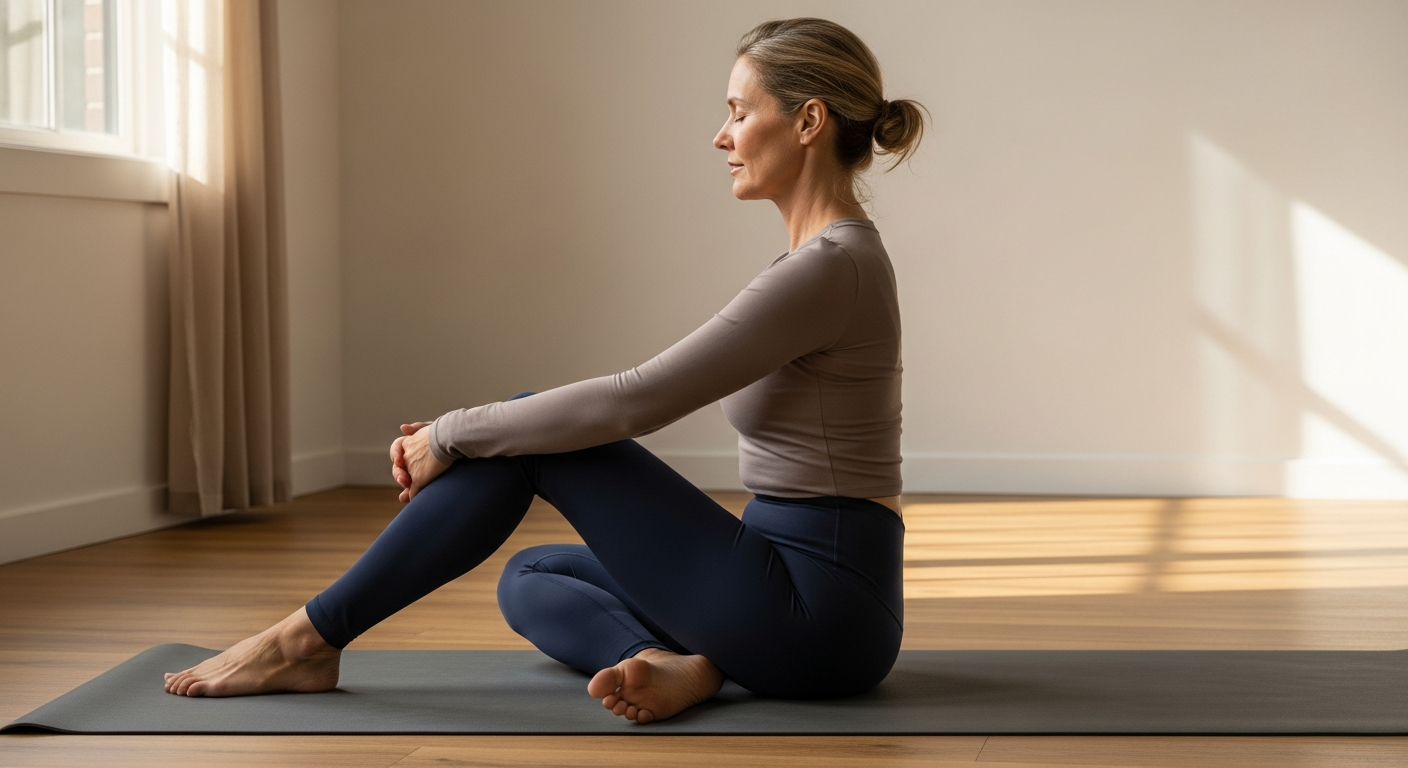
You’ve rolled out your mat, dimmed the lights, and queued up your favorite meditative playlist—but something feels off. Your yoga pants are cutting into your waist, your top keeps riding up during forward folds, and you’re spending more time adjusting your outfit than actually breathing into those deep yin poses.
Here’s what nobody tells you about yin yoga after 40: the activewear that worked perfectly for your power vinyasa classes in your thirties doesn’t cut it anymore.
Your body has changed, your priorities have shifted, and those compression leggings that made you feel invincible now make you feel uncomfortable during a five-minute pigeon pose.
The fashion industry wants you to believe that yoga wear is one-size-fits-all, but yin yoga demands something entirely different.
You’re holding poses for three to five minutes at a time, working deep into connective tissue, and spending most of your practice on the floor.
You need coverage that stays put, fabrics that don’t dig in during long holds, and styles that make you feel polished rather than frumpy.
I learned this the hard way during a weekend yin retreat, when my beloved high-performance leggings left an uncomfortable waistband indent after two hours that I couldn’t focus on anything else. That’s when I realized: different practices require different approaches to dressing.
This guide delivers exactly what you need to build a curated yin yoga wardrobe that honors both your practice and your personal style. You’ll discover why certain fabrics work better for restorative poses, which construction details actually matter, and how to invest smartly without sacrificing either comfort or elegance. No more wearing what doesn’t work just because it’s “activewear.”
Why Yin Yoga Requires Different Activewear Considerations

Understanding Yin Yoga’s Unique Movement Patterns
Yin yoga isn’t your typical flow class. While vinyasa has you moving through poses every few breaths, yin asks you to settle into positions for three to five minutes—sometimes longer. This fundamental difference changes everything about what you wear.
During those extended holds, you’re working with gravity rather than muscular effort. You’ll spend significant time in seated forward folds, reclined twists, and supine hip openers. Every seam, every waistband edge, every fabric fold becomes magnified when you’re holding still. That slight irritation you’d barely notice during a dynamic class becomes a major distraction when you’re trying to release into dragon pose for four minutes.
The sweating factor changes dramatically too. Yin practice generates minimal heat compared to power yoga, which means you don’t need aggressive moisture-wicking fabrics. In fact, those slick, technical materials often feel cold and uncomfortable during long floor-based holds. Your body temperature actually tends to drop during yin practice, especially in the final savasana, making layering options essential rather than optional.
Floor contact matters more than you think. You’ll be sitting, lying, and kneeling directly on your mat for the majority of class. This means your leggings need full coverage without any sheerness, your tops need length that won’t ride up when you’re inverted, and every piece needs to move with you through deep hip rotations without creating awkward bunching or gaps.
What Changes After 40 (And Why Your Old Yoga Clothes Might Not Work)
Let’s talk honestly about what happens to our bodies after 40. Hormonal shifts change how fat distributes, often moving it toward the midsection. Skin becomes more sensitive to pressure and friction. Muscle tone shifts even if you’re maintaining your fitness routine. These aren’t flaws—they’re natural changes that require smarter wardrobe choices.
The compression levels that felt supportive in your thirties might now feel restrictive during long holds. When you’re settling into a five-minute saddle pose, you need gentle support rather than aggressive compression. Your circulation patterns have changed, and cutting off blood flow to your legs during extended floor poses defeats the entire purpose of yin practice.
Skin sensitivity increases with age, making fabric choice critical. Those cute yoga pants with decorative seams running down the legs? They’ll create pressure points during reclined poses. The waistband that seemed fine for an hour-long class becomes uncomfortable during a 90-minute yin session. Tag-free construction isn’t just a nice feature anymore—it’s essential for sensitive skin that’s less tolerant of irritation.
Here’s what shifted for me: I stopped prioritizing how my yoga outfit looked in Instagram photos and started asking whether I could comfortably hold child’s pose for ten minutes without adjusting anything. That single question transformed my entire approach to yoga wear. Comfort and confidence became inseparable rather than competing priorities.
The Intersection of Style and Function for Mature Practitioners
The beauty of dressing for yin yoga after 40 is that you’ve earned the wisdom to know what actually matters. You’re not chasing trends or trying to look like the instructor half your age. You want pieces that make you feel elegant, capable, and present—and there’s absolutely no conflict between those goals and choosing comfortable, functional clothing.
Elevated basics become your foundation. A high-quality pair of buttery-soft leggings in classic black will serve you better than five trendy pairs that pill after three washes. A well-cut long-sleeve top in a flattering neutral creates more versatility than a drawer full of graphic tanks. This is where the curated capsule wardrobe approach truly shines.
The transition from studio to street matters more now too. You’re not spending your entire day in activewear, but you also don’t want to do a complete outfit change just to grab coffee after class. The right yin yoga pieces work seamlessly with a denim jacket and sneakers, creating an effortless, polished look that respects both your time and your personal style.
Quality over quantity isn’t just a shopping mantra—it’s a lifestyle choice that aligns perfectly with yin yoga’s philosophy of doing less, being more. When you invest in fewer, better pieces, you’re honoring both your practice and your budget in ways that feel sophisticated rather than sacrificial.
The Essential Yin Yoga Outfit Formula for Women Over 40

High-Waisted Leggings: Your Non-Negotiable Foundation
High-waisted leggings are the cornerstone of any yin yoga wardrobe, but not all high-rise styles work equally well. You need a waistband that sits comfortably at your natural waist—typically one to two inches above your belly button—without digging in or rolling down during forward folds.
The waistband width makes a significant difference during long holds. A wider waistband (at least 2.5 to 3 inches) distributes pressure more evenly across your midsection, preventing that dreaded waistband indent that can linger for hours after practice. Look for waistbands with a yoga-specific construction that includes a slight V-shape at the back, which prevents gapping when you’re seated.
Compression levels require careful consideration for yin practice. You want what the industry calls “medium compression”—enough support to feel held without restriction. Ultra-high compression leggings work against you during poses like sleeping swan, where you’re trying to release hip tension rather than fight against tight fabric. The fabric should have significant four-way stretch, recovering its shape after deep lunges without becoming baggy.
Length considerations matter more than most women realize. Full-length leggings provide the most versatility and coverage, but if you’re petite (under 5’4″), seven-eighth length often hits at a more flattering spot on your leg. The key is ensuring the hem doesn’t hit at the widest part of your calf, which creates an unflattering visual break. For yin practice specifically, avoid cropped styles—you’ll spend too much time on the floor with exposed legs feeling cold.
The Perfect Top: Coverage Meets Breathability
Your yin yoga top needs to pass the forward fold test: when you hinge at the hips and let your upper body hang, does your top stay in place or does it slide toward your face? This simple test eliminates about 70% of the yoga tops on the market.
Longer-length tanks and tees designed specifically for yoga typically measure 26 to 28 inches from shoulder to hem, which translates to hitting at your hip bone or slightly below. This length stays put during inversions like legs-up-the-wall while still looking proportional when you’re standing. Avoid boxy, oversized styles that bunch awkwardly when you’re lying on your back—you want a slightly fitted silhouette that skims your body without clinging.
Neckline choices directly impact your comfort during floor-based poses. Scoop necks and V-necks work beautifully for yin practice, providing coverage during child’s pose and forward folds without fabric pooling around your face. High crew necks can feel restrictive during long holds, while extremely low necklines create constant adjustment needs. A modest scoop neck hits the sweet spot.
The sleeve debate comes down to personal temperature regulation and studio climate. Sleeveless tanks work well in heated studios or if you tend to run warm, but many women over 40 prefer cap sleeves or long sleeves for additional coverage and warmth during the cooler phases of practice. Long-sleeve options in lightweight, breathable fabrics give you versatility across seasons without overheating during the active portions of class.
Layering Pieces That Elevate Your Look
The right layering piece transforms your yin yoga outfit from purely functional to genuinely stylish. A well-chosen wrap cardigan or lightweight hoodie serves multiple purposes: warmth during savasana, coverage during transitions, and an instant polish factor when you leave the studio.
Wrap cardigans in buttery-soft fabrics create an elegant silhouette that works beautifully over your yoga basics. Look for styles with a gentle drape rather than bulky thickness—you want something that folds easily into your yoga bag without adding significant weight. Neutral colors like charcoal, taupe, and soft gray mix effortlessly with any legging and top combination.
Hoodies designed for yoga differ significantly from athletic hoodies. Yoga-specific hoodies feature longer bodies that cover your backside, thumbholes that keep sleeves in place during arm movements, and lighter-weight fabrics that breathe rather than trap heat. A quality yoga hoodie in black or navy becomes your go-to piece for early morning classes and evening sessions when studios tend to run cooler.
Lightweight shackets—that perfect hybrid of shirt and jacket—work exceptionally well for transitional seasons. Choose styles in soft jersey or French terry fabrics rather than stiff denim or heavy cotton. The ability to button or zip your layer matters more than you’d think; open-front pieces can shift during certain poses, while a simple closure keeps everything in place.
Fabric & Feature Guide: What Actually Matters

Best Fabric Choices for Yin Yoga
The fabric conversation starts with understanding the difference between buttery-soft and compression materials. Buttery-soft fabrics—typically made from nylon and spandex blends with a brushed finish—feel luxurious against your skin and move effortlessly through yin poses. These fabrics work beautifully for yin practice because they provide gentle support without the aggressive compression that can restrict circulation during long holds.
Natural fiber blends deserve serious consideration for yin yoga. While 100% synthetic fabrics dominate the activewear market, blends incorporating organic cotton, bamboo, or modal offer superior breathability during extended floor work. A blend of 79% modal and 21% spandex, for example, delivers the stretch you need while feeling noticeably softer and more temperature-regulating than pure synthetics.
Four-way stretch is non-negotiable for yin practice. This means the fabric stretches both horizontally and vertically, recovering its original shape after deep hip openers and forward folds. Two-way stretch fabrics (stretching in only one direction) create resistance during poses like dragon or sleeping swan, fighting against the release you’re trying to achieve.
Moisture-wicking capabilities matter differently for yin than for hot yoga. You don’t need aggressive wicking that pulls moisture away instantly—you need fabrics that manage minimal perspiration without feeling clammy. Look for natural moisture management rather than chemical treatments, which can irritate sensitive skin and break down after repeated washing.
Pilling resistance determines whether your investment pieces last two months or two years. Higher-quality fabrics undergo processes that reduce pilling, and blends with nylon content typically resist pilling better than those heavy on polyester. Check reviews specifically for pilling complaints before purchasing—this single factor separates budget basics from investment pieces.
Construction Details That Make or Break Comfort
Flatlock seams lie completely flat against your skin rather than creating raised ridges like traditional stitching. During a five-minute forward fold with your forehead resting on a bolster, those flat seams make the difference between peaceful release and constant irritation. Quality yoga wear uses flatlock construction on all seams, particularly along the inseams and waistband.
Gusset construction—that diamond-shaped panel inserted at the crotch—provides unrestricted movement during wide-legged poses and deep squats. A well-constructed gusset eliminates the pulling sensation that occurs when fabric is stretched beyond its design limits. This feature becomes increasingly important after 40 when flexibility patterns shift and you need every advantage during hip-opening work.
Tag-free designs aren’t just about comfort—they’re about eliminating potential irritants during long holds. Even printed labels can create friction against sensitive skin during extended floor practice. The best yoga wear either uses heat-transferred labels or places tiny tags in locations that don’t contact your skin during any common yin pose.
Pocket placement requires thoughtful consideration. While pockets add functionality for studio-to-street transitions, poorly placed pockets create bulk exactly where you don’t want it during floor poses. Side pockets positioned slightly toward the back work better than front pockets, which can dig into your hip flexors during reclined poses. Drop-in pockets (where your phone slides into the waistband) work well for some body types but create an unflattering silhouette for others.
Features Worth Paying For (And Which to Skip)
Tummy control panels deserve honest evaluation. These reinforced front panels can smooth your silhouette under fitted tops, but during yin practice, they often create uncomfortable pressure during seated forward folds. If you choose leggings with tummy control, ensure the panel extends high enough that it doesn’t create a visible line under your top and low enough that it doesn’t dig in when you’re seated.
Seamless construction offers genuine benefits for sensitive skin and long-hold poses. Truly seamless garments are knitted in one piece rather than sewn together, eliminating friction points entirely. However, seamless doesn’t automatically mean comfortable—some seamless fabrics lack the structure needed for flattering support. The best seamless pieces combine the construction technique with thoughtful compression zones.
Reflective details make sense for outdoor running but serve zero purpose in a dimly lit yin yoga studio. Save your money and skip this feature when shopping specifically for yin practice. If you’re building a multi-purpose activewear wardrobe, choose pieces with minimal, subtle reflective elements that won’t look out of place in the studio.
Antimicrobial treatments sound appealing but often deliver minimal real-world benefits. These chemical treatments can irritate sensitive skin and typically wash out after 20 to 30 laundry cycles. Instead of relying on antimicrobial fabrics, focus on proper garment care: wash your yoga clothes promptly after practice, use the right detergent, and air dry when possible to prevent bacteria growth naturally.
Budget-Friendly Shopping Strategies

Investment Pieces vs. Affordable Basics
Your yin yoga wardrobe requires strategic investment in specific pieces while allowing smart savings on others. Allocate the majority of your budget to two or three exceptional pairs of high-waisted leggings. These foundation pieces will carry you through hundreds of practices, making their cost-per-wear remarkably low.
Quality leggings from brands like Lululemon’s Align collection (designed specifically for yoga) or Beyond Yoga’s Spacedye fabric typically range from $88 to $128. When you calculate cost-per-wear over two years of regular practice—assuming three wears per week—you’re looking at roughly $0.28 to $0.41 per wear. Compare that to $25 leggings that pill after ten washes, and the investment pieces deliver superior value.
Basic tank tops and tees represent your savings opportunity. Brands like Old Navy’s Breathe ON collection and Target’s All in Motion line offer perfectly functional tops in the $12 to $25 range. These pieces don’t require the same technical construction as leggings because they’re not under constant stretch and pressure during practice. Buy three to four quality basics in neutral colors, and you’ve created significant outfit variety without overspending.
The layering piece category allows moderate spending. A well-made wrap cardigan or yoga hoodie in the $45 to $75 range delivers both quality and versatility. This middle-ground investment gives you a polished piece that transitions seamlessly from studio to street without the premium pricing of luxury activewear brands.
Best Brands for Women Over 40 (All Price Points)
Luxury/Investment tier: Lululemon’s Align leggings deserve their cult following for yin practice—the buttery-soft Nulu fabric was specifically designed for yoga rather than high-impact activities. Beyond Yoga’s Spacedye collection offers similar softness with slightly more compression. Alo Yoga’s Airlift line provides a more structured option if you prefer gentle compression. These brands justify their $98 to $128 price tags through superior fabric quality, thoughtful construction, and genuine longevity.
Mid-range tier: Athleta hits a sweet spot for women over 40, offering sophisticated styles with features like higher rises and longer inseams. Their Elation and Salutation lines work beautifully for yin practice, typically priced $79 to $98. Prana delivers excellent value in the $65 to $85 range with sustainable fabrics and age-appropriate styling. Sweaty Betty’s Zero Gravity line offers European-inspired design at $98 to $118, with regular sales bringing prices down to the mid-range sweet spot.
Budget-friendly tier: Old Navy’s High-Waisted Powersoft leggings at $25 to $35 deliver surprising quality for the price point. Target’s All in Motion line offers buttery-soft fabrics in the $20 to $30 range with thoughtful features like wider waistbands. Amazon’s Core 10 and CRZ Yoga brands provide decent options in the $25 to $40 range, though quality varies—read recent reviews carefully before purchasing.
Sustainable options: Girlfriend Collective uses recycled materials to create compressive leggings in the $68 to $78 range, offering both environmental consciousness and quality construction. Threads 4 Thought delivers organic cotton blends perfect for yin practice at $58 to $88.