30 Day Walking Challenge For Women Over 40

I’ll never forget standing in my bathroom at 43, catching my reflection after yet another failed HIIT program left my knees aching and my motivation crushed. I’d spent two decades believing that “real” exercise meant sweating buckets and pushing through pain.
That morning, I made a decision that changed everything: I’d walk for 30 days. Just walk. No jumping, no equipment, no excuses.
That simple shift transformed not just my body, but my entire relationship with fitness. The walking challenge you’re about to start isn’t about punishing yourself into shape—it’s about proving that sustainable, effective results come from consistency, not intensity.
Research consistently shows that moderate-intensity walking produces comparable fat loss to high-intensity exercise for women over 40, with significantly lower injury rates and higher adherence.
This 30-day plan addresses every pain point you’ve faced: no gym required, no complicated moves to learn, no expensive equipment, and results you can actually maintain.
You’ll burn 150-300 calories per session, strengthen your legs and core, balance hormones that shift after 40, and build unshakable confidence. By day 30, you won’t just look different—you’ll move through the world differently.
Why Walking Is The Most Effective Exercise For Women Over 40
The Science Behind Walking and Women’s Changing Bodies
After 40, your body operates under different rules, and pretending otherwise leads to frustration and injury. Your metabolism naturally decreases by approximately 5% per decade after age 40, primarily due to muscle loss and hormonal changes. Here’s what most fitness advice gets wrong: high-impact exercise that worked in your twenties can actually be counterproductive now, spiking cortisol levels that encourage belly fat storage and triggering inflammation that slows recovery.
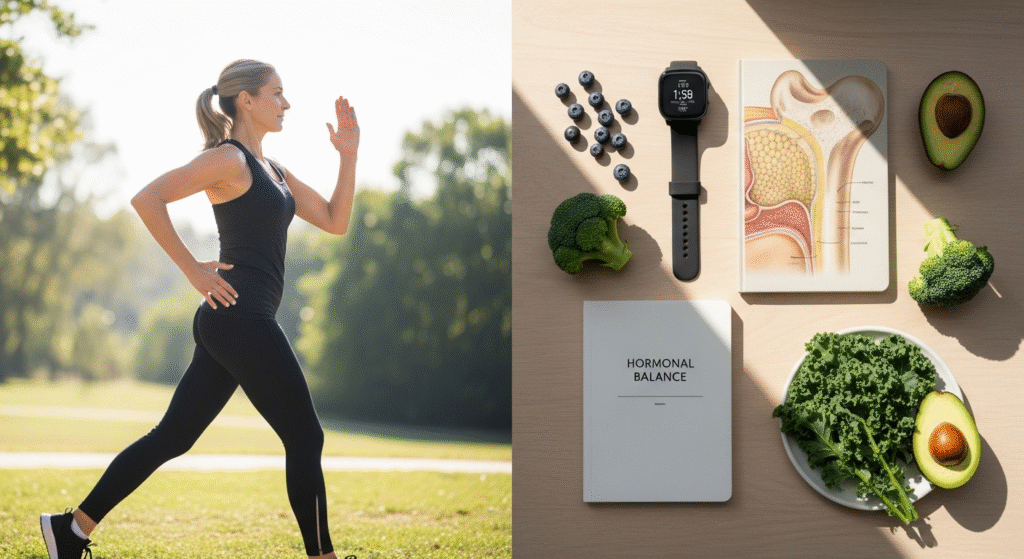
Walking works with your changing physiology, not against it. When you walk at a moderate pace—about 3-4 miles per hour—you activate the aerobic energy system that preferentially burns fat for fuel. Unlike intense exercise that can disrupt already-fluctuating hormones during perimenopause and menopause, walking helps regulate cortisol, insulin, and estrogen levels. A 2019 study published in the Journal of Women’s Health found that women over 40 who walked 30 minutes daily experienced significant improvements in hot flash frequency and sleep quality compared to sedentary peers.
The bone density benefits matter enormously. Walking is weight-bearing exercise that stimulates bone formation without the joint stress of running or jumping. Your cardiovascular system strengthens without the recovery demands of high-intensity training, meaning you can walk daily while your body actually repairs and builds.
The “no time” excuse dissolves when you realize 30 minutes delivers measurable results. That’s one episode of your favorite show, half your lunch break, or the time you’d spend scrolling social media. You’re not finding time—you’re choosing to invest it differently.
What Makes Walking Different From Other Workout Plans
Every January, I watched women sign up for intense programs, push hard for three weeks, then disappear. The pattern repeated because sustainability beats intensity every single time. Walking succeeds where other plans fail because it’s genuinely low-impact—your body can recover overnight, meaning you can maintain consistency without forced rest weeks.
There’s zero learning curve. You already know how to walk. You’re not watching tutorial videos, perfecting form on complex movements, or feeling intimidated by technique. This removes the biggest barrier for beginners: the paralysis of not knowing where to start.
Walking adapts to any fitness level without making you feel inadequate. Starting from a sedentary lifestyle? Fifteen minutes counts. Already active? Power intervals and inclines provide serious challenge. You’re never comparing yourself to the Instagram fitness model doing advanced moves—you’re walking your own path, literally.
The “anywhere” factor changes everything. Your neighborhood, a local park, walking in place in your living room during bad weather, a treadmill if you have one. No commute to a gym, no fighting for equipment, no monthly fees. When the gym environment intimidates you or previous memberships gathered dust, walking eliminates every obstacle between you and movement.
Real Results Women Over 40 Can Expect
Let’s talk numbers without hype. A 30-minute walk burns approximately 150-300 calories depending on your pace, weight, and terrain. That’s 1,050-2,100 calories per week, which translates to meaningful fat loss when combined with sensible eating. But the scale tells only part of the story.
Muscle tone develops in your legs, glutes, and core—especially when you walk with proper form and add intervals. Your quadriceps, hamstrings, and calves engage with every step. Your glutes activate when you push off and power up inclines. Your core stabilizes your torso throughout the movement. You’re building lean muscle that increases your resting metabolism.
Energy levels shift noticeably. Women consistently report feeling more energized throughout the day, not depleted like after intense workouts. Sleep quality improves because walking regulates circadian rhythms without the cortisol spike that evening HIIT sessions can trigger. Mental clarity sharpens—walking increases blood flow to the brain and reduces anxiety more effectively than many medications.
Here’s the realistic timeline: You’ll notice improved energy and mood within the first week. By week two, clothes fit differently even if the scale hasn’t moved dramatically. Week three brings visible body composition changes—leaner legs, more defined calves, reduced bloating. By day 30, you’ll see significant transformation in how you look, feel, and move.
The most powerful result? Proving to yourself that you can commit and follow through. That confidence transfers to every area of your life.
Preparing For Your 30-Day Walking Challenge (Days 1-3)
Essential Gear You Actually Need (And What You Don’t)
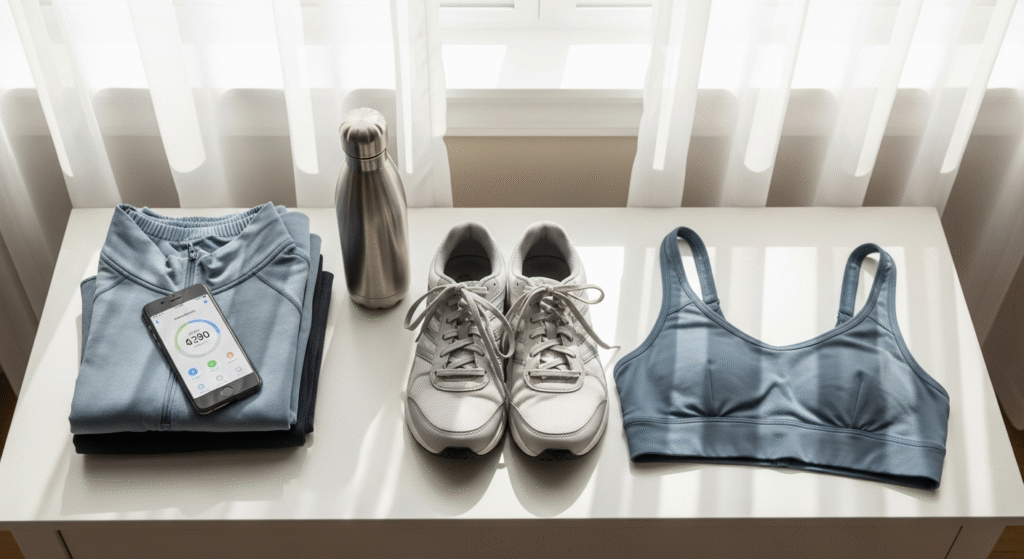
I’ve watched women spend hundreds on gear before taking a single step. Don’t. You need exactly three things: proper shoes, comfortable clothes, and a water bottle.
Walking shoes matter because they protect your joints and prevent injury. Look for shoes with good arch support, cushioned heels, and flexible forefoot. They should feel comfortable immediately—no “breaking in” required. Visit a running store where staff can analyze your gait, or choose established brands like Brooks, ASICS, or New Balance. Expect to spend $60-120. This is your only required investment.
Comfortable, moisture-wicking clothing means anything you can move in freely. You don’t need special athletic wear—cotton t-shirts and leggings work fine. If you walk in humid conditions, moisture-wicking fabric prevents chafing. A supportive sports bra matters for comfort, not performance.
Optional but helpful: A fitness tracker or smartphone app to log distance and time. Seeing your progress builds motivation. I use my phone’s built-in health app—free and effective. A reusable water bottle keeps you hydrated without derailing your walk for water fountains.
What you absolutely don’t need: gym membership, personal trainer, fancy equipment, or expensive activewear. Those are fine if you want them, but they’re not requirements. This challenge succeeds because it strips fitness down to the essential.
Setting Yourself Up For Success
Morning walks boost metabolism and set a positive tone for your day. Your body burns stored fat more readily in a fasted state, and you’ll feel accomplished before work starts.
Evening walks reduce stress and improve sleep, using movement to process the day’s tension instead of collapsing on the couch.
Choose based on your schedule and preference—consistency matters more than timing. Block the time on your calendar like any important appointment.
Plan your route now. Walk your neighborhood, find a nearby park, or map a safe, well-lit path. Have a backup plan for bad weather: walking in place while watching TV, mall walking, or a treadmill if accessible. Remove every excuse before it appears.
Take “before” measurements beyond the scale. Measure your waist, hips, and thighs. Take photos from front, side, and back. Rate your energy level, sleep quality, and stress on a 1-10 scale. These baseline metrics reveal progress the scale misses.
Find accountability. Tell a friend, join an online walking group, or recruit a walking partner. Social commitment dramatically increases adherence—you’re less likely to skip when someone expects you.
Proper Walking Form To Maximize Results
Form transforms walking from casual stroll to effective workout. Stand tall with shoulders back and down, not hunched forward. Engage your core by pulling your belly button toward your spine—this protects your lower back and tones abdominal muscles throughout your walk.
Keep your chin parallel to the ground, eyes looking ahead about 20 feet, not down at your feet. This maintains proper spine alignment and opens your chest for better breathing.
Swing your arms at a 90-degree angle, hands moving from hip to chest height. This engages your upper body, increases calorie burn, and helps propel you forward. Don’t cross your arms in front of your body—keep the swing straight forward and back.
Your foot strike should land heel-first, roll through the midfoot, and push off with your toes. This natural gait pattern maximizes efficiency and reduces impact. Take slightly shorter, quicker steps rather than overstriding, which stresses your knees.
Breathe rhythmically—inhale through your nose for three steps, exhale through your mouth for three steps. This pattern ensures adequate oxygen delivery and builds endurance. If you can’t maintain a conversation, you’re walking too fast for sustainable fat burning.
Your Complete 30-Day Walking Challenge Plan
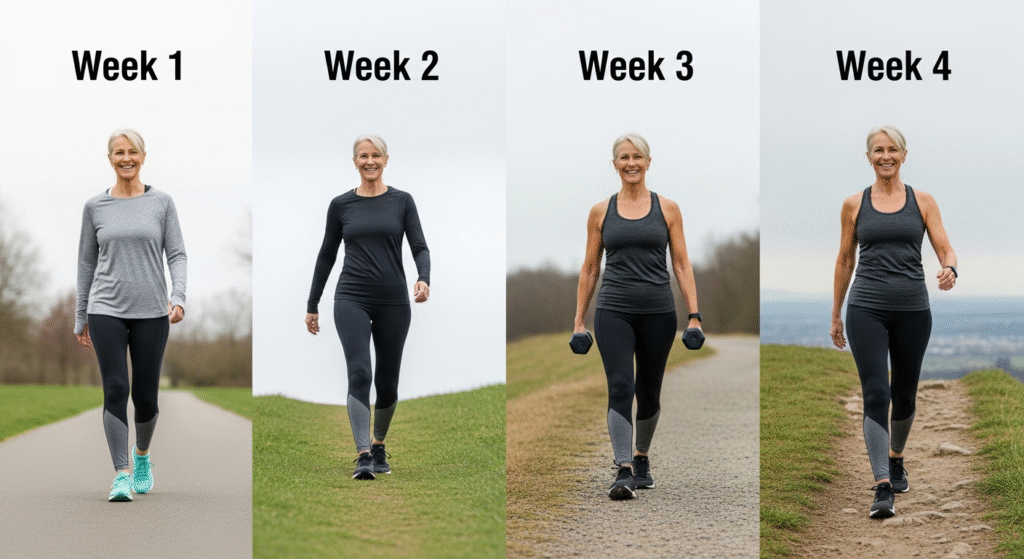
Week 1 (Days 1-7): Building Your Foundation
Days 1-3 establish the habit without overwhelming your body. Walk 15-20 minutes at a comfortable pace where you can hold a conversation. Focus entirely on showing up—consistency now builds momentum for later intensity. Your body needs time to adapt to regular movement, especially if you’ve been sedentary.
Days 4-7 increase to 20-25 minutes. Introduce slight pace variations: walk your normal pace for 3 minutes, then slightly faster for 1 minute, then back to normal. This isn’t intense—just enough variation to keep your body responsive.
Your only goal this week: establish the habit. Same time, same commitment, every day. Mark each completed walk on your calendar with a satisfying checkmark.
What to expect: Initial energy boost as endorphins kick in. Possible mild muscle soreness in your calves and thighs—completely normal and a sign your muscles are waking up. You might feel hungrier as your metabolism responds. Sleep often improves by day 3-4.
Week 2 (Days 8-14): Increasing Intensity
Days 8-10 extend to 25-30 minutes with structured intervals. Walk at moderate pace for 2 minutes, then brisk pace for 1 minute. Repeat this pattern throughout your walk. “Brisk” means walking fast enough that conversation becomes slightly challenging but still possible.
Days 11-14 maintain 30 minutes with increased intervals: 1 minute moderate, 1 minute brisk, alternating throughout. If you have access to hills or a treadmill with incline, add gentle slopes. Even a 2-3% incline significantly increases calorie burn and sculpts your glutes and hamstrings.
This week builds cardiovascular endurance—your heart and lungs adapt to sustained effort. You’re also creating metabolic adaptation that helps your body burn fat more efficiently.
What to expect: Clothes fitting differently, especially around your waist and hips. Improved mood and mental clarity become noticeable. Sleep quality continues improving. You might notice reduced bloating as walking aids digestion and reduces inflammation.
Week 3 (Days 15-21): Power Walking For Maximum Fat Burn
Days 15-21 are where transformation accelerates. Walk 30-35 minutes with power walking intervals. Power walking means fastest comfortable pace—arms pumping, breathing harder, but still able to speak in short sentences.
Introduce “power minutes”: After warming up for 5 minutes at normal pace, push to your fastest comfortable pace for 1 minute, then recover at moderate pace for 2 minutes. Repeat 6-8 times, then cool down for 5 minutes.
Consider adding arm movements or light hand weights (1-2 pounds maximum). Overhead presses while walking, bicep curls, or simply carrying the weights engages your upper body. Don’t go heavier—form and endurance matter more than weight.
This week maximizes calorie burn and builds lean muscle. You’re creating the metabolic conditions for significant body composition change.
What to expect: Noticeable energy increase that lasts all day. Visible body changes—leaner legs, more defined calves, reduced midsection. Increased confidence as you realize your body’s capability. You might need to adjust your eating slightly as hunger increases with activity.
Week 4 (Days 22-30): Peak Performance and Results
Days 22-26 push to 35-40 minutes with varied terrain and intensity. Mix flat walks with hills, incorporate stairs if available, vary your pace throughout. Your body adapts to predictable patterns, so variety challenges it in new ways.
Days 27-28 are challenge days. Push your personal best—longest distance, fastest pace, or most challenging route. Prove what you’ve built over the past three weeks.
Days 29-30 return to moderate pace to celebrate and assess. Walk 30 minutes at the comfortable pace you started with—notice how easy it feels now compared to day 1. This is your victory lap.
What to expect: Significant transformation in energy, body composition, and confidence. The scale might show 4-8 pounds lost, but measurements tell the bigger story—inches lost, muscle gained, posture improved. You’ll move differently, carry yourself with more confidence, and feel genuinely proud of what you’ve accomplished.
Boost Your Results: Nutrition Tips For Walking Women Over 40
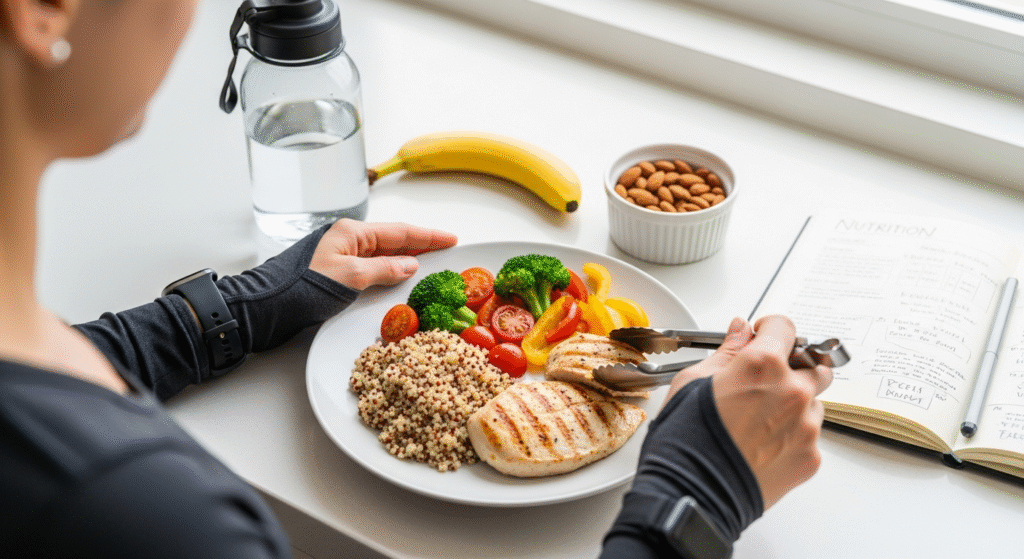
Fueling Your Walks Without Complicated Diets
Eat a small snack 30-60 minutes before morning walks: half a banana with a tablespoon of almond butter, or a small handful of nuts with a few berries. This provides quick energy without weighing you down. For evening walks after work, you likely have adequate fuel from lunch—just stay hydrated.
Post-walk protein matters enormously for women over 40. Within 30-60 minutes after walking, consume 15-25 grams of protein. Greek yogurt with berries, a protein smoothie, eggs with vegetables, or chicken with salad. Protein repairs muscle micro-tears from walking and supports the lean muscle growth that keeps your metabolism elevated.
Hydration guidelines: Drink 8-16 ounces of water 30 minutes before walking. Sip water during walks longer than 30 minutes. Drink 16-24 ounces after walking to replace fluids lost through sweat and breathing.
No restrictive eating required. You’re adding healthy movement, not punishing yourself with deprivation. Focus on eating real food—protein, vegetables, fruits, whole grains, healthy fats—in amounts that satisfy you.
Simple Nutrition Strategies That Amplify Fat Burning
Women over 40 need more protein than younger women—approximately 1.2-1.6 grams per kilogram of body weight daily. Protein preserves muscle mass that naturally declines with age and keeps you satisfied between meals. Easy sources: eggs at breakfast, Greek yogurt as snacks, chicken or fish at lunch and dinner, protein powder in smoothies.
Timing matters. Eating protein-rich breakfast within an hour of waking jumpstarts metabolism. Aligning your largest meal with your walking time maximizes the thermic effect of food—your body burns calories digesting while your metabolism is already elevated from exercise.
Fight inflammation with omega-3 fatty acids (salmon, walnuts, flaxseed), colorful vegetables rich in antioxidants, and adequate water intake. Chronic inflammation sabotages fat loss and worsens hormonal symptoms in women over 40.
The 80/20 rule keeps you sane: eat nutritious whole foods 80% of the time, enjoy treats 20% of the time without guilt. Consistency matters more than perfection. One indulgent meal doesn’t erase a week of healthy choices.
What To Avoid That Sabotages Your Results
Under-eating backfires spectacularly. Eating too few calories while increasing activity signals famine to your body, which slows metabolism and holds onto fat stores. Aim for a modest 300-500 calorie deficit from your maintenance needs, not aggressive restriction.
Skipping meals disrupts blood sugar and triggers overeating later. Eat three balanced meals or five smaller meals spread throughout the day—whatever pattern keeps your energy stable.
Processed “diet” foods full