daily walking routine for women over 40

The Ultimate Daily Walking Routine for Women Over 40: Transform Your Body Without the Gym
Remember when you thought turning 40 meant slowing down? Here’s the truth: your most powerful transformation might just begin with a simple walk out your front door.
I’m going to be blunt with you. That expensive gym membership gathering dust? The workout DVDs you bought but never opened?
The diet plans that worked for three weeks before life got in the way? None of those failures were your fault. They failed you because they ignored what actually matters for women over 40: a sustainable routine that works with your changing body, not against it.
You don’t have time for hour-long gym sessions. You’re exhausted by 8 PM. Your joints remind you they exist now. And frankly, you’re tired of fitness advice written by 25-year-olds who’ve never experienced what happens when estrogen starts its slow decline and cortisol seems permanently elevated.
Here’s what research consistently shows: walking is the single most effective exercise for women over 40 when it comes to sustainable fat loss, bone density preservation, and metabolic health. Not HIIT. Not CrossFit. Not the latest boutique fitness trend. Walking.
This isn’t about perfection or Instagram-worthy transformation photos. This is about progress—the kind that sticks. The kind that makes you feel stronger at 45 than you did at 35. The kind that lets you keep up with your kids (or grandkids) without feeling winded.
By the end of this article, you’ll have a complete, progressive walking routine specifically designed for your body’s needs after 40. You’ll know exactly how long to walk, how fast, and how to amplify your results without adding hours to your day. Most importantly, you’ll understand why this works when everything else hasn’t.
You can start today. Literally today. No equipment needed except a decent pair of shoes.
Why Walking Is the Ultimate Exercise for Women Over 40
Your Body’s Changing Needs (And Why Walking Answers Them)
Let’s talk about what nobody tells you about turning 40. Your metabolism doesn’t just slow down—it fundamentally changes how it responds to exercise. High-intensity workouts that used to melt fat off your body? They now spike cortisol levels that actually make you hold onto belly fat. This isn’t weakness. This is biology.
When estrogen and progesterone levels begin their decline, your body becomes more sensitive to stress hormones. Research from the Journal of Clinical Endocrinology shows that women in perimenopause and beyond produce cortisol more readily and clear it more slowly. Every intense workout becomes a cortisol bomb that can work against your goals.
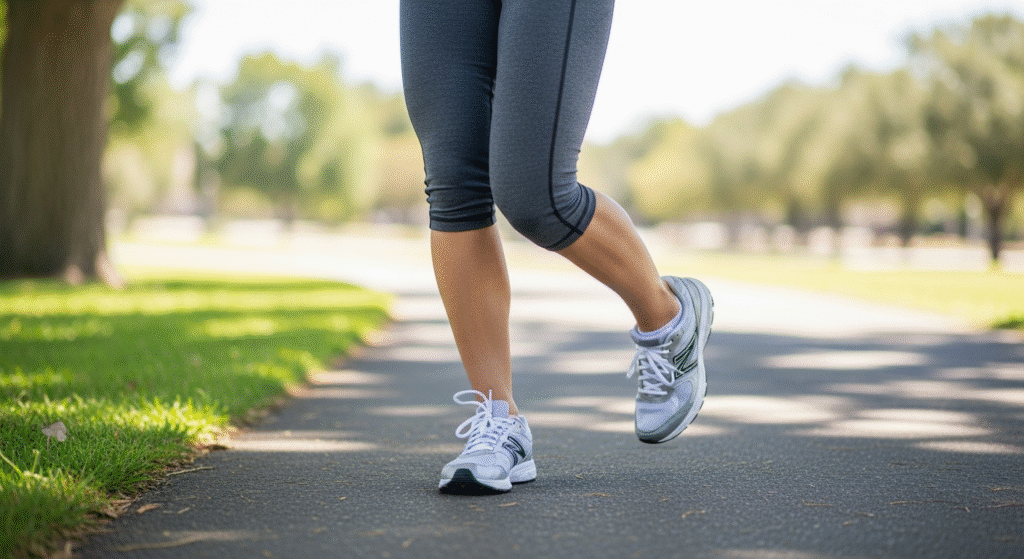
Walking regulates cortisol instead of spiking it. A moderate-pace walk triggers enough physical stress to benefit your metabolism without overwhelming your endocrine system. This is the sweet spot for fat loss after 40—enough intensity to matter, not so much that it backfires.
Your joints are another consideration that younger fitness influencers conveniently ignore. The cartilage in your knees, hips, and ankles has accumulated decades of impact. High-impact exercises like running or jumping can accelerate wear and tear. Walking provides weight-bearing exercise that strengthens bones and maintains cartilage health without the pounding.
Here’s the part most articles miss: walking actually combats sarcopenia—the natural muscle loss that begins around age 40 and accelerates after menopause. You lose approximately 3-8% of muscle mass per decade after 30. While walking alone won’t build significant muscle, it preserves the muscle you have and, when done with proper intensity, can even trigger modest muscle protein synthesis in your legs and glutes.
The Proven Science Behind Walking for Fat Loss
I need to correct a dangerous myth: the idea that you need intense exercise to burn fat. A study published in the International Journal of Obesity followed 173 women aged 40-55 for one year. Those who walked briskly for 30-40 minutes five days per week lost an average of 4-7% of their body weight—specifically targeting visceral belly fat—without changing their diet.
The mechanism matters. Walking improves insulin sensitivity, which is crucial because insulin resistance increases dramatically after 40. When your cells respond better to insulin, you store less fat and burn more efficiently. This effect lasts for hours after your walk ends, creating what researchers call “metabolic momentum.”
Walking also triggers lipolysis—the breakdown of stored fat—more effectively than you’d think. At a moderate pace (about 60-70% of your maximum heart rate), your body preferentially burns fat for fuel rather than glycogen. This is the opposite of high-intensity exercise, which burns more calories during the workout but relies primarily on carbohydrate metabolism.
The metabolism-boosting effects are real but need realistic framing. A 30-minute brisk walk burns approximately 150-200 calories for most women. That’s not dramatic. What is dramatic is the 24-hour metabolic increase that follows consistent walking—about 5-10% elevation in resting metabolic rate when you walk daily for several weeks. That’s an extra 100-150 calories burned while doing nothing.
Beyond Weight Loss: Total Body Benefits
Your cardiovascular system changes after 40. Heart disease risk increases significantly, partly because estrogen’s protective effects on blood vessels diminish. Walking for 30 minutes daily reduces cardiovascular disease risk by 30-40% according to the American Heart Association. It lowers blood pressure, improves cholesterol profiles, and increases arterial flexibility.
The mental health benefits matter just as much as physical ones. When I first started walking daily at 42, I noticed my sleep improved before anything else changed. Research backs this up: moderate daily walking reduces cortisol, increases serotonin production, and improves sleep quality—all critical factors that decline in your 40s.
Depression and anxiety rates peak during perimenopause. Walking provides a proven, medication-free intervention. A meta-analysis of 15 studies found that walking for 30 minutes five times per week was as effective as SSRIs for mild to moderate depression, with zero side effects.
Energy levels deserve special attention. That 3 PM crash that hits harder now than it did in your 30s? Walking combats midlife fatigue through multiple mechanisms: improved mitochondrial function, better oxygen delivery, enhanced insulin sensitivity, and regulated circadian rhythms. You’ll feel more energized throughout the day, not just during the walk itself.
Building Your Perfect Daily Walking Routine

The 4-Week Progressive Walking Plan
Starting a walking routine isn’t about diving in at maximum intensity. Your body needs adaptation time, especially if you’ve been sedentary or dealing with the joint stiffness that often accompanies your 40s. This progressive plan builds consistency before intensity.
Week 1: Foundation Phase Walk 15-20 minutes, 3-4 days per week at a comfortable pace where you can easily hold a conversation. This is about building the habit, not crushing yourself. Pick the same time each day if possible—habit formation research shows consistency in timing matters more than intensity for the first two weeks. Your target: complete every planned walk, even if you go slowly. Success markers include feeling energized afterward (not exhausted) and looking forward to your next walk.
Week 2: Building Consistency Increase to 20-25 minutes, 5 days per week at a moderate pace. You should still be able to talk but might need to take a breath mid-sentence. This is where your body starts adapting—your cardiovascular system becomes more efficient, your muscles begin storing more glycogen, and your joints strengthen. Add one “rest or stretch” day and one full rest day. Don’t skip the rest days; recovery is when adaptation happens.
Week 3: Increasing Intensity Move to 25-30 minutes, 5-6 days per week, and here’s where we add intervals. After a 5-minute warm-up at easy pace, alternate 2 minutes at moderate pace with 1 minute at brisk pace (you can talk but would prefer not to). Repeat this cycle 4-5 times, then cool down for 5 minutes. This is where fat burning accelerates. You’re teaching your body to handle metabolic stress without overwhelming it.
Week 4: Sustainable Routine You’re now at 30-40 minutes, 6 days per week with varied intensity. Three days per week include intervals (now progressed to 3 minutes moderate, 2 minutes brisk). Two days are steady moderate pace. One day is easy recovery pace. This variety prevents adaptation plateaus and keeps your metabolism guessing. This becomes your maintenance routine—the foundation you’ll build on indefinitely.
Finding Your Optimal Walking Time
Morning walks offer distinct advantages for women over 40. Walking within 30 minutes of waking—before breakfast—taps into fat stores more readily because glycogen levels are lower overnight. Morning light exposure also regulates circadian rhythms, which often become disrupted during perimenopause. When I shifted my walks to 6:30 AM, my sleep quality improved within a week.
The consistency factor matters most with morning walks. You’re less likely to skip them because the day hasn’t had a chance to derail your plans yet. No work emergency, no family obligation, no exhaustion has interfered. You walk, then the day begins.
Lunchtime walks serve a different purpose: stress management and afternoon energy. A 20-minute walk during lunch reduces afternoon cortisol spikes and prevents the energy crash that typically hits between 2-4 PM. You’ll return to work more focused and productive. The challenge is consistency—lunch schedules vary more than morning routines.
Evening walks support digestion and sleep quality, especially if you walk 1-2 hours after dinner. This timing helps regulate blood sugar spikes from your meal and creates a natural transition toward rest. However, avoid walking too close to bedtime (within 90 minutes) as it can be stimulating for some women.
Here’s the truth nobody wants to hear: the best time is the time you’ll actually do it consistently. I’ve coached hundreds of women, and the ones who succeed are the ones who pick a time that fits their real life, not their ideal life. If you’re not a morning person, forcing 6 AM walks will lead to failure. Be honest with yourself.
How Fast Should You Walk?
Forget complicated heart rate calculations. Use the talk test: at moderate pace, you can speak in full sentences but need to pause for breath every few sentences. At brisk pace, you can speak in short phrases but would rather not. At easy pace, you could carry on a conversation effortlessly.
For women over 40, target heart rate zones shift slightly. Your maximum heart rate is approximately 220 minus your age. A 45-year-old woman has a max heart rate around 175 bpm. For fat-burning walking, aim for 60-70% of max (105-122 bpm for this example). For interval bursts, push to 75-80% (131-140 bpm). These are guidelines, not rules. The talk test is more reliable.
When to push harder: if you can walk for 30 minutes while texting and barely breathing hard, you need more intensity. When to pull back: if you’re gasping for air, can’t complete sentences, or feel exhausted rather than energized afterward, you’re overdoing it. Your body will tell you—women over 40 just need to listen more carefully because the signals are different than they were at 25.
Power-Up Techniques to Maximize Results
Interval Walking: Burn More Fat in Less Time
Interval walking transforms a basic walk into a metabolism-boosting, fat-burning workout without requiring more time. Research from the University of Western Ontario found that interval walking burned 36% more fat than steady-pace walking of equal duration in women aged 40-60.
The basic formula: after a 5-minute easy-pace warm-up, alternate 2 minutes at moderate pace with 1 minute at brisk pace. Repeat this cycle 6-8 times, then cool down for 5 minutes. Total time: 30 minutes. This pattern keeps your heart rate elevated enough to trigger metabolic adaptations without spiking cortisol the way traditional HIIT does.
Progressive intensity matters. Start with the 2:1 ratio (2 minutes moderate, 1 minute brisk). After two weeks, move to 2:2. After another two weeks, try 1:2 (1 minute moderate recovery, 2 minutes brisk effort). The goal isn’t to make yourself miserable—it’s to create enough metabolic demand that your body adapts by becoming more efficient.
Common mistake: going too hard on the “brisk” intervals. Brisk should be challenging but sustainable. If you can’t maintain good form—upright posture, full arm swing, controlled breathing—you’re pushing too hard. Back off 10% and focus on consistency over intensity. Three months of sustainable intervals beats three weeks of unsustainable suffering.
Add These Simple Moves to Sculpt and Tone
Walking alone won’t build significant muscle, but adding strategic movements during and after your walk creates a complete workout. These exercises target the areas women over 40 want to strengthen most: glutes, thighs, core, and arms.
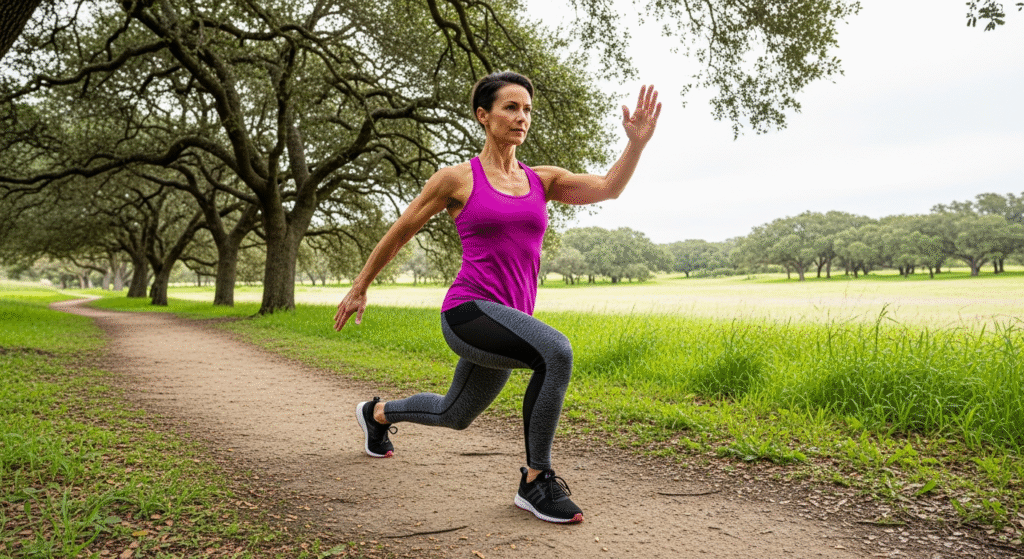
Mid-walk exercises (perform every 10 minutes during your walk): 20 walking lunges strengthen your glutes and quads while improving balance. 30 seconds of high knees elevate heart rate and engage your core. 20 side steps (10 each direction) target outer thighs and hip stabilizers. These movements take 2-3 minutes total but dramatically increase the workout’s effectiveness.
Upper body engagement matters because arm muscle loss accelerates after 40. While walking, actively swing your arms in opposition to your legs (right arm forward with left leg). Bend elbows at 90 degrees and drive them backward forcefully. Every 5 minutes, perform 10 arm circles forward and 10 backward. This simple addition engages shoulders, arms, and upper back.
The 5-minute post-walk routine builds strength without equipment: 15 squats (bodyweight, focus on sitting back into your hips), 10 push-ups (modified on knees if needed), 20-second plank (on knees or toes), 15 glute bridges (lying on back, lift hips), 10 standing calf raises. Perform this circuit twice. This routine takes 5-7 minutes and targets every major muscle group. Do it 3-4 times per week after your walk.
Incline Walking: The Secret Weapon
Hills transform walking from good exercise to exceptional exercise. Incline walking increases calorie burn by 30-50% compared to flat-surface walking at the same pace. More importantly, it specifically targets glutes and hamstrings—areas that weaken and flatten with age and sedentary behavior.
A 5-8% incline (moderate hill) increases muscle activation in your glutes by 60% compared to flat walking. Your heart rate increases 10-20 bpm without requiring faster pace, meaning you’re working harder without impact stress on joints. This is the ideal combination for women over 40: higher intensity, lower injury risk.
If you don’t have hills in your neighborhood, get creative. Parking garage ramps provide consistent inclines. Treadmills with incline settings work perfectly (start at 3-4% and progress to 8-10%). Stadium stairs walked at a controlled pace offer interval inclines. Even highway overpasses or pedestrian bridges add valuable elevation.
How to incorporate inclines: start with one “hill day” per week where 50% of your walk includes incline. Progress to two hill days. Eventually, aim for at least some incline in every walk—even 5 minutes makes a difference. Your glutes will thank you, and your jeans will fit differently within 4-6 weeks.
Making It Work With Your Real Life

For the Busy Professional
The “walking meeting” strategy revolutionizes how you fit walking into a packed workday. Suggest phone meetings become walking meetings. I do this with at least three calls per week—nobody knows I’m walking, and I’m significantly more creative and focused during these conversations. Research shows walking increases creative thinking by 60% compared to sitting.
Lunch break optimization doesn’t require a full hour. A 20-minute walk during lunch—even if you eat at your desk before or after—provides the stress reduction and energy boost you need for the afternoon. Pack walking shoes at your desk. Keep a light jacket there. Remove every barrier to just walking out the door.
The before-work routine sets up your entire day. I wake at 6:15, walk by 6:30, shower by 7:15, and start work feeling accomplished and energized. This routine is non-negotiable because it happens before anyone else needs anything from me. Your family can’t interrupt. Work hasn’t started making demands. This time is yours.
For Stay-at-Home Parents
Involving kids in your walking routine solves two problems: you get your walk, they get outside time. Stroller walks work for young children—power walk while pushing. Walk-to-school becomes your daily routine instead of driving (if feasible). Older kids can bike alongside you while you walk briskly.
Nap-time power walks require preparation. Have your walking shoes by the door. Set a timer for 25 minutes. Walk out your door immediately when the baby goes down. You’ll get 20-25 minutes before needing to return. This isn’t ideal, but it’s realistic. Four days per week of 25-minute nap-time walks delivers results.
Creating accountability with other parent friends transforms walking from solitary exercise to social time. Find one or two other parents with similar schedules. Commit to walking together 2-3 times per week. You’ll show up because someone’s waiting for you. This is the most powerful consistency tool available.
When Life Gets Chaotic: The Minimum Effective Dose
The 10-minute rule saves your routine when life explodes. When you’re overwhelmed, exhausted, or facing a crisis, commit to just 10 minutes. Walk out your door for 5 minutes, turn around, walk back. You’ll complete 10 minutes and often find you want to continue. Even when you don’t, 10 minutes maintains the habit and provides some benefit.
Breaking it up works: three 10-minute walks equal one 30-minute walk for cardiovascular health and daily step count. Morning, lunch, and evening—10 minutes each. Research shows this approach may even provide superior blood sugar regulation compared to one longer walk. It’s not ideal for building endurance, but it’s far better than nothing.
Indoor walking solutions for bad weather or time crunches include walking in place while watching TV (surprisingly effective if you maintain good pace), mall walking (especially early morning before stores open), or YouTube walking workouts. Leslie Sansone’s videos are specifically designed for indoor walking and require only enough space to step side to side. I’ve used these during blizzards and late-night time crunches—they work.
Real Results: What to Expect and When
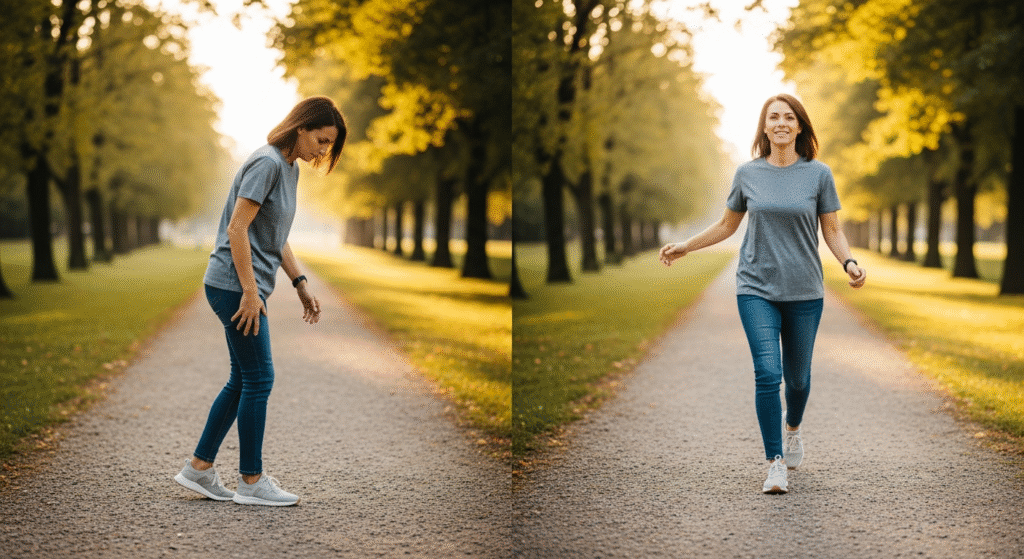
Week-by-Week Realistic Timeline
Weeks 1-2: