weight lifting workout plan for women over 40
Remember when you could eat whatever you wanted and bounce back from workouts in a day? Yeah, those days might be behind us—but here’s the truth nobody’s telling you: your 40s can actually be your strongest decade yet.
Let’s address the elephant in the room. Your body is changing. Your metabolism isn’t what it used to be. You might be dealing with perimenopause or menopause symptoms. Recovery takes longer. And every fitness magazine seems to suggest you should stick to gentle yoga or long walks.
Here’s what makes me frustrated: that advice is robbing you of your potential.
The research is crystal clear. Women over 40 who lift weights experience transformations that cardio alone simply cannot deliver. We’re talking about increased bone density, revved-up metabolism, better hormonal balance, and yes—the sculpted, strong body you thought was only possible in your 20s.
I know what you’re thinking. “I’m too old to start lifting heavy weights.” Or maybe, “I don’t have time for complicated gym routines.” Perhaps you’ve tried workout plans before and they didn’t stick.
This plan is different. It works WITH your changing body, not against it. Three to four days per week. Thirty to forty-five minutes per session. No Instagram-worthy acrobatics required. Just proven, effective exercises that deliver real results.
The women who discover weight lifting after 40 often tell me the same thing: they wish they’d started sooner. But here’s the powerful truth—today is the perfect day to start. Your strongest chapter doesn’t have to be behind you. In fact, it might just be beginning.
Why Weight Lifting Is a Game-Changer for Women Over 40
The Metabolic Magic You’re Missing
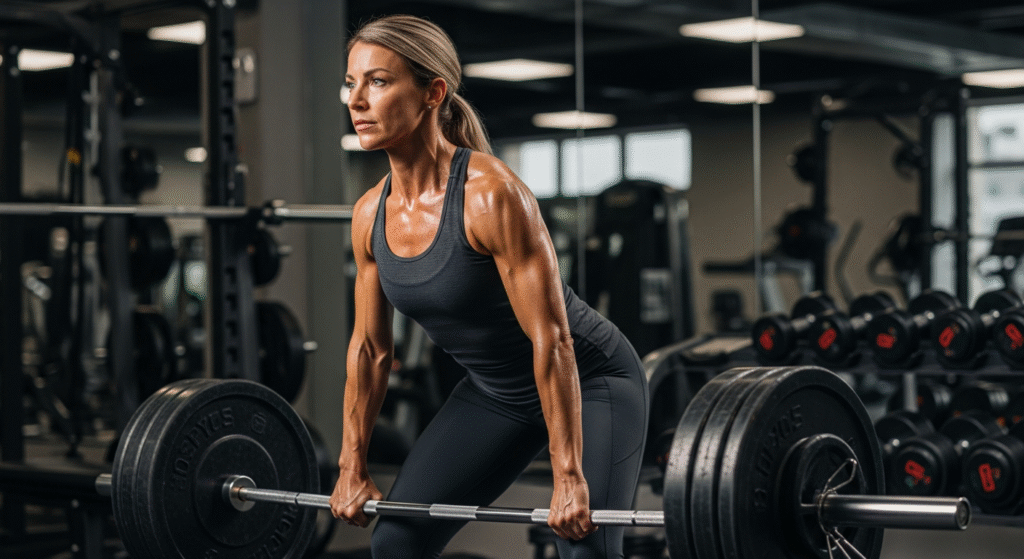
Your metabolism is slowing down, but not for the reason you think. Yes, hormonal changes play a role, but the real culprit is muscle loss. After age 30, women lose approximately 3-8% of muscle mass per decade. Less muscle means fewer calories burned at rest, which explains why you’re gaining weight despite eating the same way you always have.
Here’s where weight lifting becomes your secret weapon. Muscle tissue burns more calories than fat tissue—even when you’re sleeping, sitting at your desk, or binge-watching your favorite show. Build more muscle, and you literally transform your body into a more efficient calorie-burning machine.
Cardio burns calories during the workout and stops shortly after. Weight training creates an “afterburn effect” that keeps your metabolism elevated for up to 38 hours post-workout. That’s metabolic magic you can’t afford to miss.
Bone Density and the Strength You Can’t See
Let’s talk about something that doesn’t get enough attention: osteoporosis. After 40, bone density decreases significantly, especially during menopause when estrogen levels drop. One in two women over 50 will break a bone due to osteoporosis.
Weight-bearing exercises—particularly lifting weights—are proven to build bone density. When you stress your bones through resistance training, your body responds by making them stronger and denser. It’s like a superpower hiding in plain sight.
This isn’t just about preventing fractures decades from now. Strong bones mean better posture, reduced back pain, and the confidence to live actively without fear of injury. You’re literally building internal armor that will protect you for years to come.
Hormonal Balance Through Strength Training
Strength training helps manage the symptoms nobody wants to talk about: hot flashes, mood swings, sleep disruptions, and stubborn belly fat. Resistance training improves insulin sensitivity, which helps regulate blood sugar and reduces that midsection weight gain that seems to appear overnight after 40.
Studies show that women who lift weights experience better sleep quality, reduced anxiety, and improved mood. The stress-reducing benefits rival medication for mild to moderate depression. Your body produces feel-good endorphins during and after lifting sessions, creating a natural mood boost that lasts.
Weight training also supports your body’s natural hormone production, helping to balance estrogen, progesterone, and testosterone levels. This translates to better energy, improved libido, and a more stable mood throughout your cycle or during menopause.
Your Complete 12-Week Weight Lifting Workout Plan
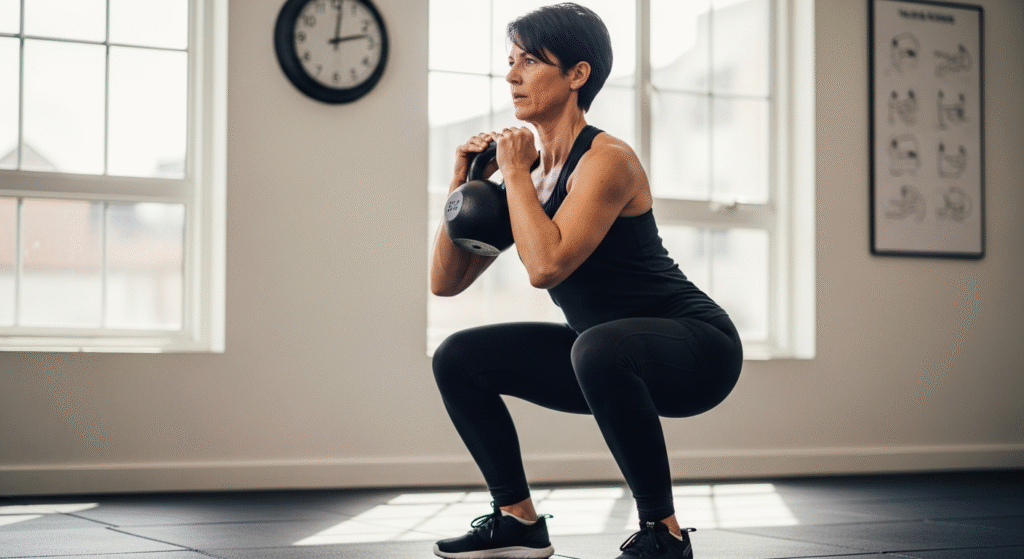
Phase 1: Foundation Building (Weeks 1-4)
This phase focuses on mastering movement patterns and building a solid base. You’ll perform two full-body workouts, alternating between Workout A and Workout B throughout the week.
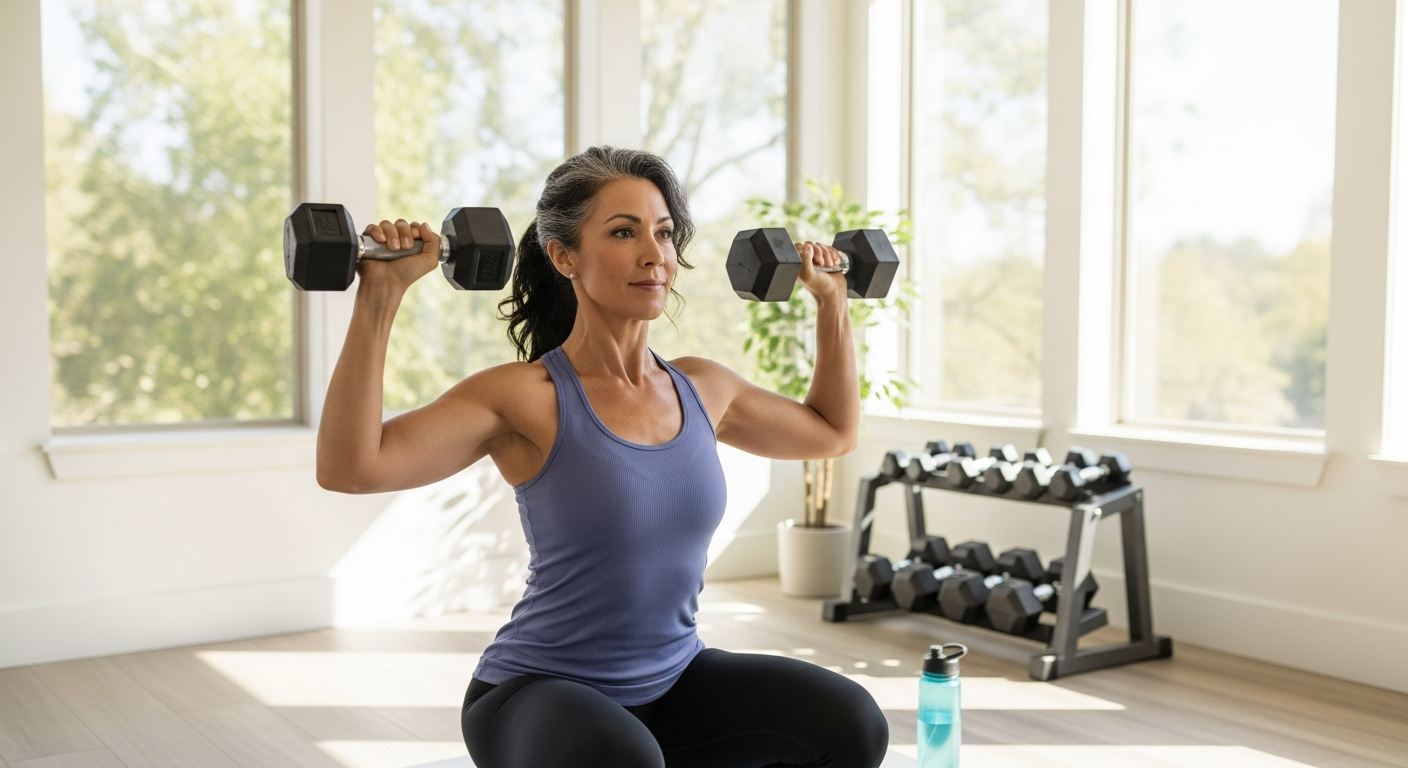
Full Body Workout A (Monday/Thursday): – Goblet Squats: 3 sets x 10-12 reps (hold a dumbbell at chest height) – Push-ups: 3 sets x 8-10 reps (modify on knees if needed—no shame in building strength) – Dumbbell Rows: 3 sets x 10-12 reps per side (support yourself on a bench) – Glute Bridges: 3 sets x 12-15 reps (squeeze those glutes at the top) – Plank Hold: 3 sets x 20-30 seconds (focus on form, not duration)
Full Body Workout B (Tuesday/Friday): – Dumbbell Deadlifts: 3 sets x 10-12 reps (this is a hip hinge, not a squat) – Overhead Press: 3 sets x 8-10 reps (standing or seated works) – Reverse Lunges: 3 sets x 10 reps per leg (stepping back is easier on the knees) – Lat Pulldowns or Band Pull-aparts: 3 sets x 12 reps – Dead Bug: 3 sets x 10 reps per side (core stability without crunches)
Start with weights that feel challenging but allow you to complete all reps with good form. For most women, this means 10-20 pound dumbbells for upper body and 15-30 pounds for lower body exercises. Rest 60-90 seconds between sets. This recovery time matters—your muscles need it to perform the next set effectively.
Phase 2: Strength Building (Weeks 5-8)
Time to level up. You’ll increase the weight by 5-10% and slightly reduce reps to the 8-10 range. This rep range is the sweet spot for building strength while still promoting muscle growth.
Keep the same exercise structure, but now you’re ready for compound movement variations. Replace regular goblet squats with front squats if you have access to a barbell. Swap standard push-ups for decline push-ups (feet elevated). Progress your planks to side planks or plank shoulder taps.
The key question everyone asks: how do you know when to increase weight? Simple. If you can complete all sets with perfect form and feel like you could do 2-3 more reps, it’s time to go heavier. Progressive overload—gradually increasing the challenge—is what transforms your body.
Phase 3: Power and Sculpt (Weeks 9-12)
This final phase introduces an upper/lower split for those ready to intensify their training. You’ll train four days per week, hitting each muscle group twice.
Upper Body Days (Monday/Thursday): Focus on chest, back, shoulders, and arms with 3-4 sets of 8-12 reps. Include exercises like bench press, bent-over rows, shoulder press, and bicep curls.
Lower Body Days (Tuesday/Friday): Target legs and glutes with 3-4 sets of 8-12 reps. Incorporate squats, deadlifts, lunges, and leg press variations.
Introduce tempo training: slow down the lowering phase of each exercise to 3-4 seconds. This time under tension creates serious muscle definition and strength gains. Week 12 is your deload week—reduce weights by 40% and focus on form. This recovery week prevents burnout and prepares your body for continued progress.
Essential Equipment and Nutrition Strategies
The Minimalist Home Setup
You don’t need a fully-equipped gym to transform your body. Start with adjustable dumbbells ranging from 5-25 pounds (you’ll outgrow these faster than you think—that’s a good thing). Add three resistance bands with different tension levels for variety and travel-friendly workouts.
A quality yoga mat or cushioned surface protects your joints during floor exercises. Optional but helpful additions include a stability ball for core work and a kettlebell for dynamic movements. Total investment? Under $200. Compare that to a year of gym membership, and you’ll see the value.
If you prefer the gym environment, focus on free weights and a few key machines. The leg press, lat pulldown, and cable machines are worth your time. Don’t be intimidated by the free weight area—you belong there just as much as anyone else. Most people are happy to share equipment or answer questions if you ask politely.
Protein: Your Secret Weapon
Here’s a nutrition truth that changes everything: women over 40 need MORE protein, not less. Aim for 0.8-1 gram per pound of body weight daily. If you weigh 150 pounds, that’s 120-150 grams of protein per day.
Why so much? Protein preserves muscle mass during weight loss, supports recovery after workouts, and keeps you feeling full longer. It’s also harder for your body to store protein as fat compared to carbohydrates or dietary fat.
Easy ways to hit your protein targets: Greek yogurt at breakfast (20g), chicken breast at lunch (30g), protein shake post-workout (25g), salmon at dinner (25g), and snacks like string cheese or hard-boiled eggs throughout the day. You don’t need to live on protein powder, but having a quality option makes life easier.
Timing matters too. Consume 20-30 grams of protein within two hours after your workout to maximize recovery and muscle growth. Pair it with some carbohydrates—yes, carbs—to replenish energy stores and support the recovery process.
Supplements Worth Considering
Creatine monohydrate is one of the most researched supplements available, and yes, it’s beneficial for women. It supports strength gains, improves workout performance, and may even offer cognitive benefits. Take 5 grams daily—no loading phase necessary.
Vitamin D and calcium support bone health, which becomes increasingly important after 40. Most women are deficient in vitamin D, especially if you live in northern climates or spend most of your time indoors.
Collagen peptides support joint health and may reduce exercise-related joint pain. Mix a scoop into your morning coffee or smoothie. What can you skip? Expensive fat burners, detox teas, and most “women’s formulas” that are just overpriced multivitamins with pink packaging.
Overcoming Mental Barriers and Recovery Essentials
“I’m Too Old to Start Lifting Heavy”
This belief is costing you your strongest years. Research from the University of Alabama shows that women in their 40s, 50s, and beyond can build muscle and strength at rates comparable to younger women when following a proper training program.
Reframe what “heavy” means. Heavy is relative to YOUR current strength level. The weight that challenges you today is your heavy—it doesn’t matter what anyone else is lifting. In six months, what feels heavy now will be your warm-up weight. That’s progress.
Success stories abound of women who started lifting after 40 and completely transformed their bodies. They’re not genetic outliers or former athletes—they’re regular women who decided to challenge the limiting beliefs society places on aging women.
Recovery and Injury Prevention
Rest days are when your muscles actually grow stronger. You need 48 hours between training the same muscle groups. This is why the workout plan alternates between different body parts or uses full rest days.
Active recovery—light walking, swimming, or gentle yoga—promotes blood flow without stressing your muscles. These activities actually speed up recovery compared to sitting on the couch all day.
Sleep is non-negotiable. Aim for 7-9 hours nightly. Your body releases growth hormone during deep sleep, which is essential for muscle recovery and fat loss. Poor sleep sabotages your results faster than a bad diet.
Mobility work makes a massive difference in how you feel. Spend five minutes before each workout doing dynamic stretches: leg swings, arm circles, and bodyweight squats. After your workout, hold static stretches for 30 seconds each. Once weekly, dedicate 20 minutes to a full mobility session focusing on hips, shoulders, and thoracic spine.
Learn the difference between good pain and bad pain. Muscle fatigue and that “burning” sensation during a set? Good pain. Sharp, shooting, or joint pain? Bad pain—stop immediately and modify the exercise. Your ego is not worth an injury that sidelines you for months.
Your Strongest Chapter Starts Now
You’ve just received a complete roadmap to building the strongest, most capable version of yourself. The 12-week plan you now have isn’t about turning back the clock—it’s about rewriting what’s possible for women over 40.
The transformation available to you goes beyond physical appearance. Yes, you’ll build lean muscle and burn fat. But you’ll also gain confidence, energy, and a sense of empowerment that radiates into every area of your life. You’ll move through the world differently when you know you’re strong.
Start this week. Not Monday. Not after the holidays. This week. Choose two days, grab some dumbbells or resistance bands, and complete Workout A from Phase 1. That’s it. That’s your only assignment.
Track your workouts in a simple notebook or phone app. Write down the exercises, weights used, and how you felt. In twelve weeks, you’ll look back at these first entries and be amazed at your progress.
Remember: every woman who has transformed her body after 40 started exactly where you are right now. They felt the same doubts, the same intimidation, the same uncertainty. The only difference between them and you is that they started.
Your strongest chapter doesn’t begin when you’re “ready” or when conditions are perfect. It begins the moment you decide you’re worth the investment. And you are. You absolutely are.
Now go lift something heavy and show the world what women over 40 are truly capable of.