6-6-6 walking challenge women over 40
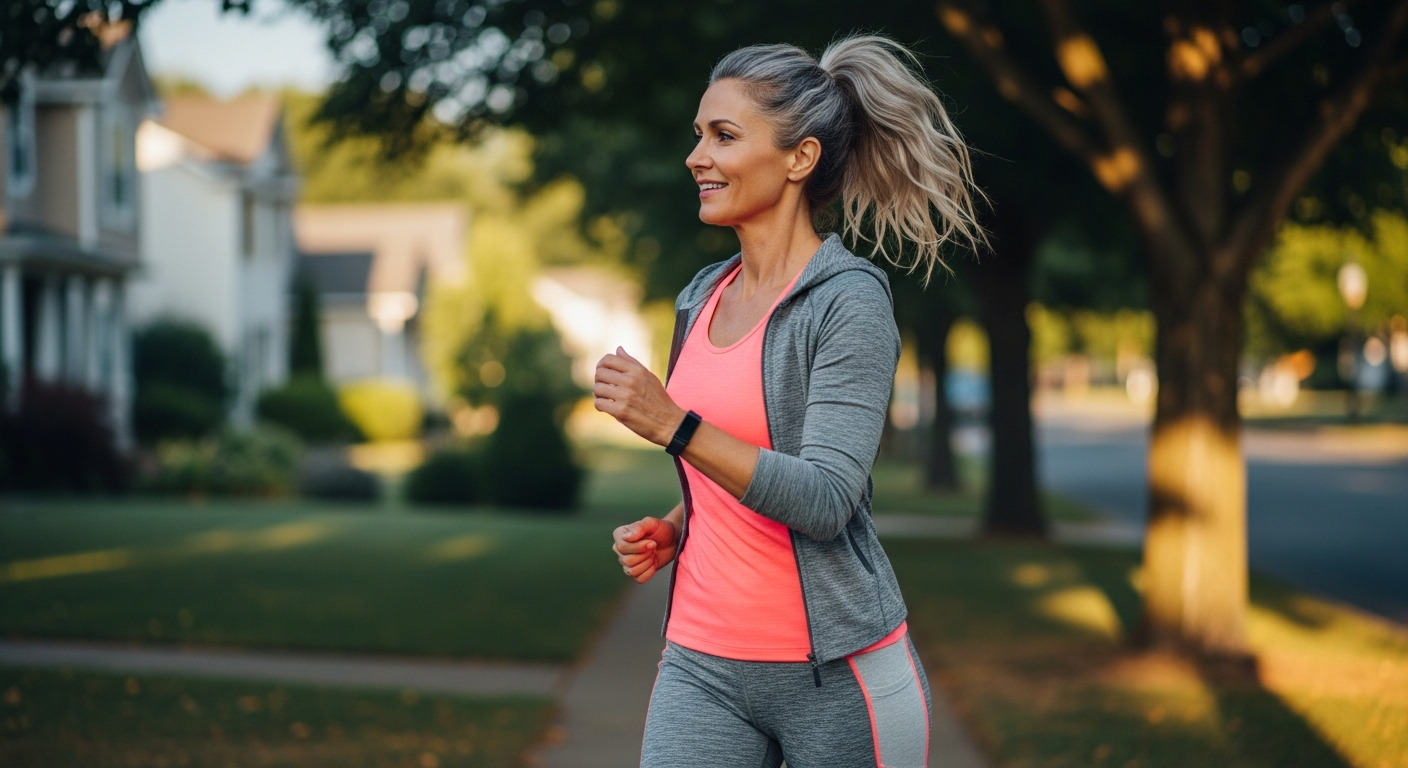
Now, do you know that just 72 minutes a day—no gym membership, no fancy equipment, no intimidating fitness classes—could transform your body, boost your energy, and help you finally break through that stubborn weight loss plateau?
You’ve tried everything. High-intensity workouts left you exhausted and nursing sore joints for days. Restrictive diets worked for a week before the cravings became unbearable.
The gym feels intimidating with all those complicated machines and twentysomethings who seem to know exactly what they’re doing. And honestly, who has time to drive there, work out, shower, and drive back when you’re juggling work, family, and everything else life throws at you?
Here’s the truth: Your body after 40 doesn’t respond the same way it did in your twenties. Those hormone shifts aren’t your imagination—perimenopause and menopause genuinely change how your body stores fat, builds muscle, and recovers from exercise.
Your metabolism has slowed down, your joints protest more loudly, and that stubborn belly fat seems impossible to shift no matter what you try.
That’s exactly why the 6-6-6 walking challenge is different. This isn’t another punishing workout that leaves you depleted. It’s a science-backed, proven method specifically designed to work WITH your body’s changing needs, not against them. The challenge is simple: a 6-minute warm-up, 60 minutes of brisk walking, and a 6-minute cool-down, repeated six days a week.
What are the results women over 40 experience? Powerful fat burning, improved mood and mental clarity, better sleep quality, increased bone density, reduced menopausal symptoms, and sustainable weight loss that actually stays off. We’re talking 8-15 pounds lost in 30 days when combined with sensible eating—not starvation, just smart choices.
But let me set realistic expectations right now: This isn’t a magic pill. You won’t see the transformation overnight. What you will see is consistent, sustainable progress that builds week after week. This challenge requires commitment and patience, but unlike those extreme programs you’ve tried before, you can actually maintain this for the long haul. And that’s where real transformation happens.
Why the 6-6-6 Walking Challenge Is Perfect for Women Over 40
Your Body After 40 Needs a Different Approach
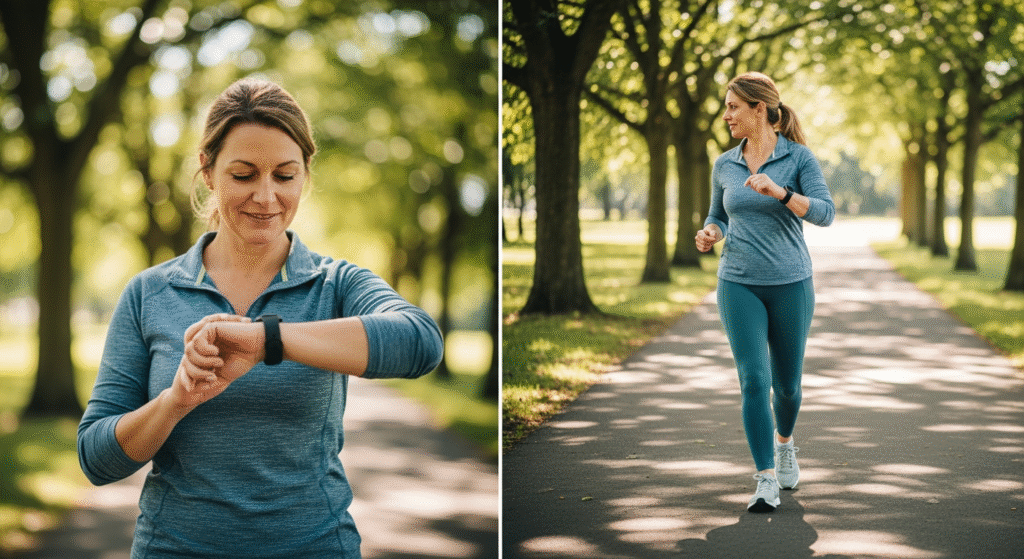
Let’s address the elephant in the room: your body has changed, and that’s completely normal. Between ages 40 and 60, women experience significant hormonal shifts that directly impact metabolism, fat storage patterns, and how your body responds to exercise. Estrogen levels fluctuate and eventually decline, which means your body tends to store more fat around your midsection. Your metabolic rate naturally slows by about 5% per decade after 40, making weight loss genuinely harder than it was in your twenties.
Here’s what makes the 6-6-6 challenge perfect for this stage of life: it provides effective cardio without the joint-jarring impact of running or high-intensity interval training. Your cartilage has experienced decades of wear, and recovery from intense exercise takes significantly longer now. Walking delivers cardiovascular benefits and fat burning without the injury risk that comes with jumping, sprinting, or heavy weightlifting.
The challenge also addresses a critical factor most fitness programs ignore: cortisol. High-intensity workouts spike your stress hormone levels, and when cortisol stays elevated, your body actually holds onto belly fat as a protective mechanism. Walking at a brisk but sustainable pace keeps you in the fat-burning zone without triggering that stress response.
The Science Behind Why This Challenge Works
The 60-minute duration isn’t random—it’s based on solid exercise science. Research shows that steady-state cardio in the moderate-intensity zone (about 60-70% of your maximum heart rate) optimizes fat oxidation, especially in women over 40. During the first 20-30 minutes, your body primarily burns glycogen (stored carbohydrates). After that threshold, your body shifts to burning stored fat as its primary fuel source.
This is why those quick 20-minute workouts, while better than nothing, don’t deliver the same fat-burning results. You need that sustained effort to tap into your fat stores effectively.
The consistency component—six days per week—builds the habit foundation that creates lasting transformation. Your body adapts to regular movement by becoming more efficient at burning fat, improving cardiovascular capacity, and strengthening bones through regular weight-bearing activity. This is crucial for preventing osteoporosis, which accelerates after menopause.
It Fits Your Real Life
Here’s the game-changer: this challenge works around your actual life. You don’t need a gym membership or the time to commute there. No childcare arrangements required.
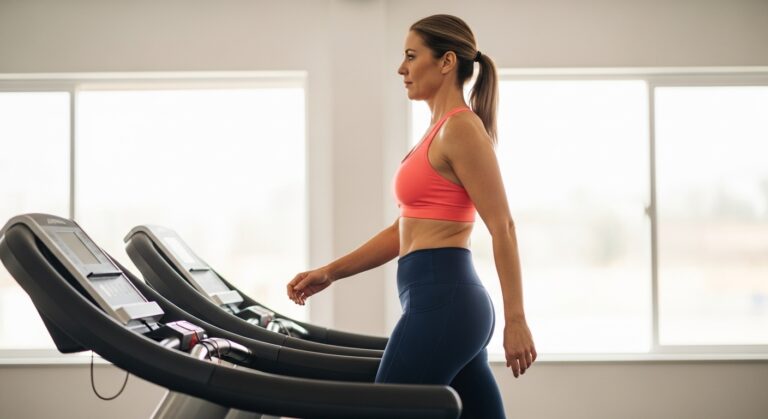
No expensive equipment to buy. You can walk in your neighborhood before work, during your lunch break, in a local park, on a treadmill while watching your favorite show, or even at the mall when the weather doesn’t cooperate.
The flexibility means you can actually maintain this long-term. Start at 6 a.m. before your household wakes up, or walk at 6 p.m. to decompress after work. Split it into two 36-minute sessions if your schedule demands it. The challenge adapts to your fitness level—whether you’re currently sedentary or already moderately active, you can customize the pace and gradually build your endurance.
Breaking Down the 6-6-6 Walking Challenge
Phase 1: The 6-Minute Warm-Up
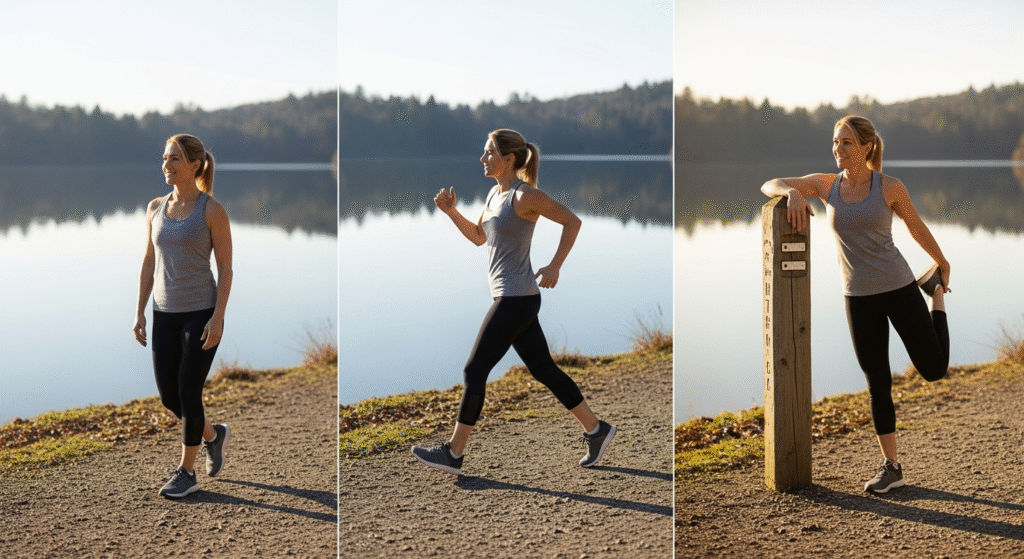
This isn’t optional—it’s essential. Your warm-up serves multiple critical functions that set you up for an effective, injury-free walk. Start at an easy, conversational pace around 2.5-3.0 mph. You should be able to chat comfortably with a walking partner or talk out loud to yourself without any breathlessness.
During these six minutes, your heart rate gradually elevates, blood flow increases to your muscles, and your joints release synovial fluid that acts as natural lubrication. This is especially important for women over 40, whose joints need that extra preparation time to prevent strain and injury.
Use this time intentionally. Focus on your breathing—inhale deeply through your nose, exhale fully through your mouth. Add gentle arm swings to engage your upper body and improve circulation. Roll your shoulders back and down, lengthening your spine. Set your mental intention for the walk ahead: maybe it’s stress relief, maybe it’s gratitude for what your body can do, maybe it’s simply claiming this time for yourself.
This warm-up phase transitions you from whatever chaos filled your day into focused movement time. It’s the mental shift that matters just as much as the physical preparation.
Phase 2: The 60-Minute Brisk Walk (The Fat-Burning Zone)
This is where the magic happens. Your target pace is 3.5-4.0 mph—brisk enough to elevate your heart rate into the fat-burning zone, but sustainable enough to maintain for the full hour. Use the “talk test” as your guide: you should be able to speak in short sentences but not sing or have an effortless conversation. If you’re gasping for air, slow down. If you could easily belt out your favorite song, pick up the pace.
Your heart rate should hover around 60-70% of your maximum heart rate. A simple calculation: subtract your age from 220, then multiply by 0.60 and 0.70 to find your target range. For a 45-year-old woman, that’s approximately 105-122 beats per minute.
What you’ll feel during this phase: slightly breathless but energized, not exhausted. Your body temperature will rise, you’ll likely break a sweat, and your legs will feel engaged but not burning. This is the sweet spot where your body efficiently burns fat without overtaxing your system or spiking cortisol.
The calorie burn during these 60 minutes varies based on your weight, pace, and terrain, but expect to burn 200-350 calories. More importantly, you’re training your body to become a more efficient fat-burning machine, improving insulin sensitivity, and building cardiovascular endurance that carries over into every aspect of your daily life.
Phase 3: The 6-Minute Cool-Down
Never skip this phase. Your cool-down prevents dizziness, reduces muscle soreness, and aids recovery—all increasingly important as you age. Spend the first three minutes gradually reducing your pace to 2.0-2.5 mph, allowing your heart rate to come down slowly rather than stopping abruptly.
Then dedicate three minutes to static stretching while your muscles are still warm and pliable. Focus on your calves (hold each for 30 seconds), hamstrings (gentle forward fold), hip flexors (low lunge position), and quadriceps (standing quad stretch). These are the muscles that worked hardest during your walk and need attention to prevent tightness and maintain flexibility.
Proper cool-down also signals to your nervous system that the workout is complete, helping you transition back into the rest of your day feeling accomplished rather than frazzled.
The “Six Days a Week” Component
Consistency trumps intensity every single time, especially for women over 40. Six days of moderate exercise delivers better results than three days of intense workouts that leave you depleted and sore. The daily habit builds momentum—each walk makes the next one easier, more automatic, and more enjoyable.
That one rest day isn’t laziness; it’s strategic recovery. Your body needs time to adapt, repair, and strengthen. Schedule your rest day intentionally—maybe after your longest or hilliest walk of the week, or on the day your schedule is most packed.
The compound effect is real: these small daily actions create massive results over time. One 72-minute walk burns calories and boosts your mood. Thirty consecutive days of walking transforms your body composition, cardiovascular health, mental resilience, and self-confidence.
The Proven Benefits Women Over 40 Are Experiencing
Weight Loss and Body Composition Changes
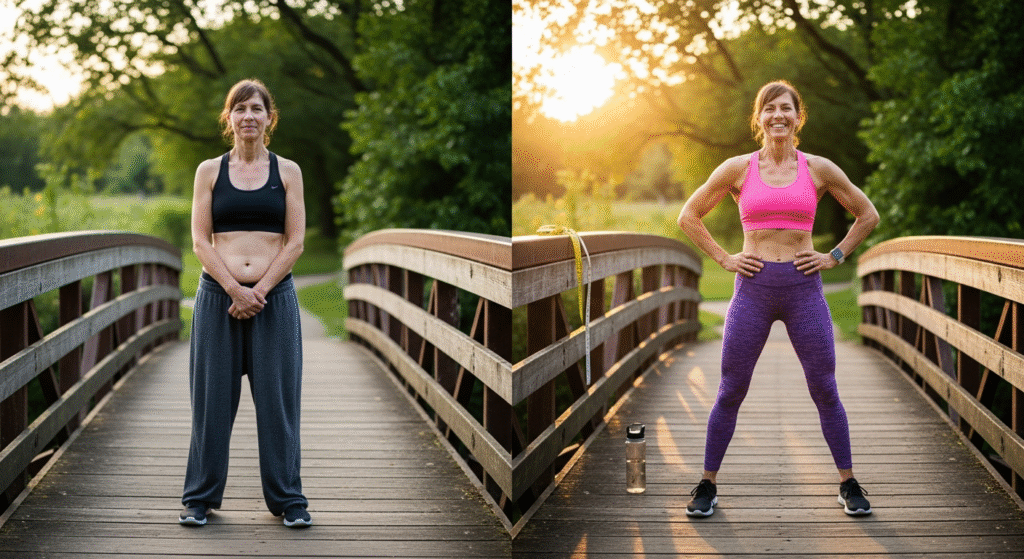
Let’s talk real numbers. Women consistently following the 6-6-6 challenge while maintaining sensible nutrition (not starvation diets, just smart choices) report losing 8-15 pounds in their first 30 days. More importantly, they’re losing the right kind of weight—body fat, not muscle mass.
The challenge specifically targets visceral fat, the dangerous belly fat that surrounds your organs and increases health risks. This type of fat is particularly stubborn after 40 due to hormonal changes, but sustained moderate-intensity cardio is one of the most effective ways to reduce it.
You’ll notice your legs becoming more toned and sculpted, your glutes firming up, and your core strengthening—all without building bulky muscle. Walking creates a leaner, more defined physique while preserving the muscle mass that keeps your metabolism running efficiently. Your clothes will fit differently before the scale shows dramatic changes, which is why measurements and progress photos matter more than the number on the scale.
Metabolic and Hormonal Improvements
The metabolic benefits extend far beyond calorie burn during the walk itself. Regular walking improves insulin sensitivity, meaning your body processes blood sugar more efficiently and you experience fewer energy crashes and carb cravings throughout the day. This is crucial for preventing type 2 diabetes, which risk increases after menopause.
The challenge helps balance cortisol levels naturally. Unlike high-intensity workouts that spike stress hormones, moderate-intensity walking actually reduces cortisol while still delivering fat-burning benefits. Lower cortisol means less stress-related weight gain, particularly around your midsection.
Sleep quality improves dramatically for most women. Regular exercise regulates your circadian rhythm, and the physical tiredness (the good kind) helps you fall asleep faster and sleep more deeply. Better sleep directly impacts weight management, as poor sleep disrupts hunger hormones and increases cravings for high-calorie foods.
Many women report reduced menopausal symptoms, including fewer hot flashes, better mood stability, and decreased night sweats. While walking isn’t a cure for menopause, regular exercise does help manage symptoms and improve overall quality of life during this transition.
Mental and Emotional Transformation
The mental health benefits rival the physical ones. Studies show regular walking reduces anxiety and depression symptoms by up to 30%. The rhythmic nature of walking has a meditative quality, and spending time outdoors (when possible) adds the additional benefits of fresh air, nature exposure, and vitamin D from sunlight.
Your energy levels throughout the day will increase—seems counterintuitive to spend energy to gain energy, but it’s true. Regular exercise improves mitochondrial function (your cells’ energy factories) and enhances oxygen delivery throughout your body, leaving you feeling more vibrant and alert.
The confidence boost is powerful. Every completed walk is a promise kept to yourself. That sense of accomplishment builds momentum and self-trust that extends into other areas of your life. You’re proving to yourself daily that you can commit to something and follow through.
This becomes your “me time”—72 minutes where you’re not answering emails, solving problems, or taking care of everyone else. It’s space for mental clarity, processing emotions, listening to podcasts or audiobooks, or simply being present with your thoughts.
Long-Term Health Benefits
The cardiovascular improvements are significant. Regular walking strengthens your heart muscle, improves circulation, and can lower blood pressure by 5-10 points. This reduces your risk of heart disease, which is the leading cause of death for women over 50.
Walking is weight-bearing exercise, which stimulates bone formation and slows bone loss. This is critical after 40 when bone density naturally declines, especially post-menopause. Maintaining strong bones reduces your risk of osteoporosis and fractures as you age.
The challenge reduces your risk of chronic diseases across the board: type 2 diabetes, certain cancers, stroke, and cognitive decline. Regular physical activity is one of the most powerful preventive medicines available, and walking is accessible, safe, and effective.
Perhaps most importantly, consistent exercise increases both longevity and quality of life. You’re not just adding years to your life—you’re adding life to your years, maintaining independence, mobility, and vitality well into your later decades.
How to Start the 6-6-6 Challenge (Even If You’re a Complete Beginner)
Week 1-2: The Foundation Phase
If you’re currently sedentary or haven’t exercised regularly in months (or years), jumping straight into 72 minutes daily will likely lead to burnout or injury.
Start smart instead. Begin with 30-40 minutes total, including your warm-up and cool-down. That might mean just 20-30 minutes of brisk walking in the middle, and that’s perfectly fine.
Add 5-10 minutes every 3-4 days as your body adapts. Your cardiovascular system, muscles, and joints need time to strengthen and adjust to this new demand.
Listen carefully to your body during this phase. General muscle soreness and slight fatigue are normal—they’re signs your body is adapting.
Sharp pain, joint pain that doesn’t improve with rest, or extreme exhaustion are red flags to back off and potentially consult a healthcare provider.
Focus on consistency over intensity during these foundation weeks. Showing up six days per week at a comfortable pace builds the habit foundation that will carry you through the entire challenge. You’re training your brain as much as your body.
Track your progress simply—use a fitness app, a basic pedometer, or just jot notes in your phone about each walk. Recording your efforts creates accountability and lets you see how far you’ve come.
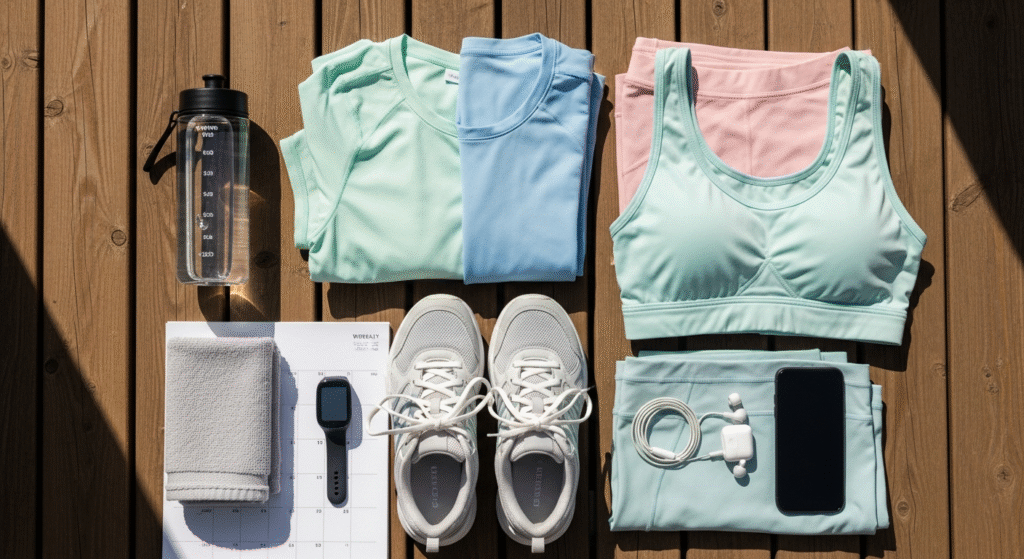
Essential Gear (You Don’t Need Much, But These Matter)
Invest in proper walking shoes—this is non-negotiable. Visit a specialty running or walking store where staff can analyze your gait and recommend shoes with appropriate support for your foot type.
Quality walking shoes typically cost $80-150, but they prevent injuries and make every walk more comfortable. Replace them every 300-500 miles (roughly every 6-8 months if you’re walking daily).
Wear comfortable, moisture-wicking clothing that allows free movement. Cotton holds sweat and can cause chafing; synthetic fabrics or merino wool wick moisture away from your skin. You don’t need expensive athletic wear—affordable options exist at Target, Old Navy, or Amazon.
A supportive sports bra is essential for comfort and preventing breast tissue damage. Get properly fitted—most women wear the wrong size.
Optional but helpful items: a fitness tracker or smartwatch to monitor heart rate and distance, a reusable water bottle (hydration matters), sunscreen and a hat for sun protection, and reflective gear if you’re walking early morning or evening in low-light conditions.
Budget-friendly truth: you can start this challenge with what you already have. Comfortable shoes and weather-appropriate clothing are enough to begin. Don’t let lack of fancy gear become an excuse not to start.
Finding Your Perfect Time
Morning walkers who hit the pavement at 6 a.m. report several benefits: it jumpstarts metabolism for the day, ensures the walk gets done before life gets chaotic, and provides energizing momentum that carries through the day. Many find that morning walks help them make better food choices all day long.
Evening walkers at 6 p.m. use their walk to decompress from work stress, aid digestion after dinner, and improve sleep quality. The physical tiredness helps them wind down naturally.
The honest truth: the best time is whenever you’ll actually do it consistently. If you’re not a morning person, don’t force 6 a.m. walks—you’ll quit within a week. Choose a time that fits your natural rhythm and schedule.
Can’t do 72 minutes straight? Split it into two 36-minute sessions if your schedule demands it. While one continuous walk is ideal for maximizing fat burn, two shorter walks are infinitely better than no walk at all. Life happens—flexibility keeps you consistent.
Tracking Your Progress the Right Way
Take “before” photos from front, side, and back angles in fitted clothing. Take measurements of your waist, hips, thighs, and arms. Do this before your first walk, then repeat every two weeks. These objective markers show progress the scale might not reflect, especially if you’re building muscle while losing fat.
Monitor non-scale victories religiously: increased energy levels, improved sleep quality, better mood, how your clothes fit, reduced joint pain, increased stamina climbing stairs, and overall sense of wellbeing. These victories are just as important as pounds lost.
Use the “talk test” to gauge intensity rather than obsessing over exact speed. Some days you’ll naturally walk faster; other days slower. Consistency matters more than perfection.
Keep a simple log—date, duration, route or location, and how you felt. Note any wins, no matter how small: “Walked the whole hour without stopping,” “Felt energized afterward,” “Finally made it up that hill without huffing.” These notes become powerful motivation when you need a reminder of your progress.
Celebrate weekly milestones. Completed six walks this week? That deserves recognition. Treat yourself to a new playlist, a fancy coffee, or simply acknowledge your commitment. Consistency deserves celebration.
Maximizing Your Results: Advanced Tips and Strategies
Nutrition Strategies That Support Your Walking Challenge
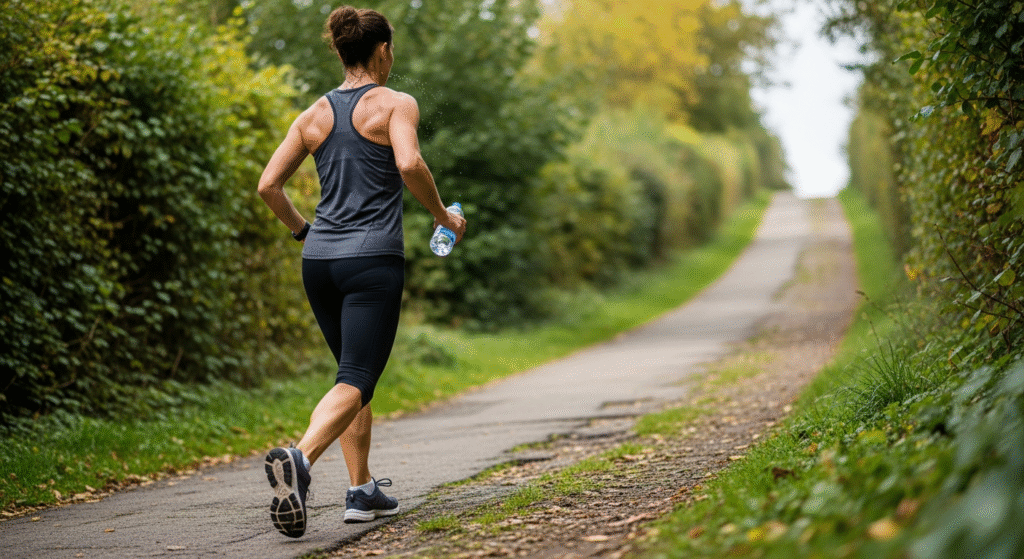
You can’t out-walk a bad diet—let’s be clear about that. But you also don’t need to follow some restrictive eating plan that makes you miserable. Focus on protein priority: aim for 25-30 grams of protein per meal. Protein supports muscle maintenance (critical as you age), controls hunger better than carbs or fats, and has a higher thermic effect (your body burns more calories digesting it).
Hydration directly impacts your walking performance and recovery. Drink 8-10 glasses of water daily, more on walking days. Dehydration causes fatigue, reduces fat burning, and makes exercise feel harder than it should. Start your walk well-hydrated.
Pre-walk fuel matters if you’re walking first thing in the morning or several hours after eating. Have a light snack 30-60 minutes before: a banana, apple with almond butter, or a slice of whole grain toast. This gives you readily available energy without feeling heavy.
Post-walk recovery nutrition helps your body repair and adapt. Within 30 minutes of finishing, eat something combining protein and carbohydrates: Greek yogurt with berries, a protein smoothie, or eggs with toast. This replenishes glycogen stores and supports muscle recovery.
Avoid the trap of “eating back” all your burned calories. Yes, you burned 250-300 calories during your walk, but that doesn’t mean you’ve earned a 500-calorie muffin. Create a moderate calorie deficit through sensible portions, not deprivation.
Terrain and Intensity Variations
Flat routes are perfect for beginners, recovery days, or when you simply need an easier walk. There’s no shame in choosing flat terrain—consistency matters most.
Hills and inclines are game-changers for results. Walking uphill burns approximately 50% more calories than flat walking and specifically targets your glutes, hamstrings, and calves. If you have access to hilly routes, incorporate them 2-3 times per week. On a treadmill, a 3-5% incline simulates outdoor hills effectively.
Add interval variations once you’ve built your base fitness (after 3-4 weeks of consistent walking). During your 60-minute brisk walk, include 5-10 minutes at a slightly faster pace—not sprinting, just pushing yourself a bit harder. This elevates calorie burn and improves cardiovascular fitness without the joint impact of running.
Treadmill benefits include controlled environment (no weather excuses), perfectly consistent pace, adjustable incline, and the ability to watch TV or read while walking. The downside: it’s slightly easier than outdoor walking because the belt assists your movement and there’s no wind resistance.
Outdoor walking advantages include varied terrain that engages more muscles, fresh air and nature exposure (proven mood boosters), vitamin D from sunlight, and the mental benefits of changing scenery. The downside: weather dependency and potential safety concerns in some areas.
Mix it up based on your preferences, schedule, and weather. Variety prevents boredom and challenges your body in different ways.
Building Mental Resilience and Staying Motivated
The first two weeks are the hardest—your body is adapting, your schedule is adjusting, and the novelty hasn’t worn off yet but the habit isn’t established either. Push through. Research shows it takes an average of 66 days to form a new habit, not the often-cited 21 days.
Create a motivating playlist that energizes you. Music with 120-140 beats per minute naturally encourages a brisk walking pace. Update your playlist regularly to maintain excitement.
Find an accountability partner—a friend doing the challenge with you, a supportive family member who checks in, or an online community of women pursuing the same goal. Accountability dramatically increases success rates.
Use audiobooks or podcasts to make the time fly. Many women report that their walking time becomes their favorite part of the day because it’s when they get to enjoy their favorite content guilt-free.
Set mini-challenges within the larger challenge: walk a new route this week, increase your average pace by 0.1 mph, add an extra hill, or walk in different weather conditions. These small goals maintain engagement.
Prepare for obstacles before they derail you. Bad weather? Have a backup plan (mall walking, treadmill, or home workout video). Feeling unmotivated? Commit to just the warm-up—usually you’ll continue once you start. Traveling? Research walking routes at your destination beforehand.
Remember your “why.” Why did you start this challenge? Write it down and review it when motivation wanes. Whether it’s health, confidence, energy, or longevity, reconnecting with your deeper purpose reignites commitment.
Recovery and Rest Day Strategies
Your one rest day per week is strategic, not optional. Your body needs time to repair muscle tissue, replenish energy stores, and adapt to the training stimulus. Skipping rest days leads to overuse injuries, burnout, and diminished returns.
Active recovery on your rest day is ideal: gentle stretching, yoga, leisurely swimming, or a casual 15-20 minute stroll (not your full challenge walk). This promotes blood flow for recovery without taxing your system.
Prioritize sleep—aim for 7-9 hours nightly. Sleep is when your body releases growth hormone, repairs tissues, and consolidates the fitness gains from your training. Poor sleep undermines your results and makes each walk feel harder.
Consider foam rolling or massage to address muscle tightness and prevent injury. Focus on your calves, hamstrings, IT bands, and hip flexors—the areas that work hardest during walking.
Listen to your body’s signals. If you’re experiencing persistent fatigue, declining performance, mood changes, or increased resting heart rate, you might need an extra rest day. There’s no prize for pushing through genuine overtraining—that path leads to injury and quitting entirely.
—
Your Next Step: Start Today
The 6-6-6 walking challenge isn’t another fitness fad that promises overnight transformation. It’s a sustainable, science-backed approach specifically designed for women over 40 who need effective results without destroying their joints or hijacking their entire schedule.
You don’t need to wait until Monday, or the first of the month, or until you have perfect weather and brand new walking shoes. You can start today—right now—with a simple 30-minute walk around your neighborhood. That’s how transformation begins: not with perfect conditions, but with imperfect action.
The women who succeed with this challenge aren’t superhuman. They’re busy professionals, tired moms, women juggling multiple responsibilities, and women who’ve tried and failed at fitness before. What makes them different is simple: they started, and they kept showing up.
Your body at 40, 50, or beyond is capable of incredible transformation. It deserves movement that honors its needs rather than punishes its limitations. The 6-6-6 walking challenge offers exactly that—a powerful, proven method that works with your changing physiology to deliver real, lasting results.
Seventy-two minutes a day. Six days a week. That’s your investment in energy, confidence, health, and longevity. The question isn’t whether you have time—it’s whether you’re worth the time.
You already know the answer. Now lace up those shoes and prove it to yourself.
Ready to start your transformation? Take your “before” photos and measurements today, schedule your first walk for tomorrow morning, and commit to showing up for yourself for the next 30 days. Your future self will thank you.