weighted walking for women over 40
# Weighted Walking for Women Over 40: The Science-Backed Workout That Builds Bone Density, Burns Fat, and Requires Zero Gym Time
Meta Description: Discover how weighted walking transforms fitness for women over 40. Proven strategies to burn fat, build bone density, and sculpt lean muscle—no gym required.
I’ll never forget the moment my doctor handed me my first bone density scan results at 43. “You’re heading toward osteopenia,” she said matter-of-factly.
“You need weight-bearing exercise.” I was already walking 10,000 steps a day, eating well, doing yoga twice a week. Apparently, it wasn’t enough. The truth hit hard: my body had different needs now than it did at 30, and my workout routine hadn’t caught up.
If you’re over 40, you’ve probably noticed your body doesn’t respond to exercise the way it used to. You can’t skip workouts for weeks and bounce back in days.
That stubborn belly fat doesn’t budge with cardio alone. Your energy dips faster. You’re losing muscle mass you didn’t even realize you had.
And if you’re like most busy women juggling work, family, and a million other responsibilities, the idea of adding heavy gym sessions to your schedule feels impossible.
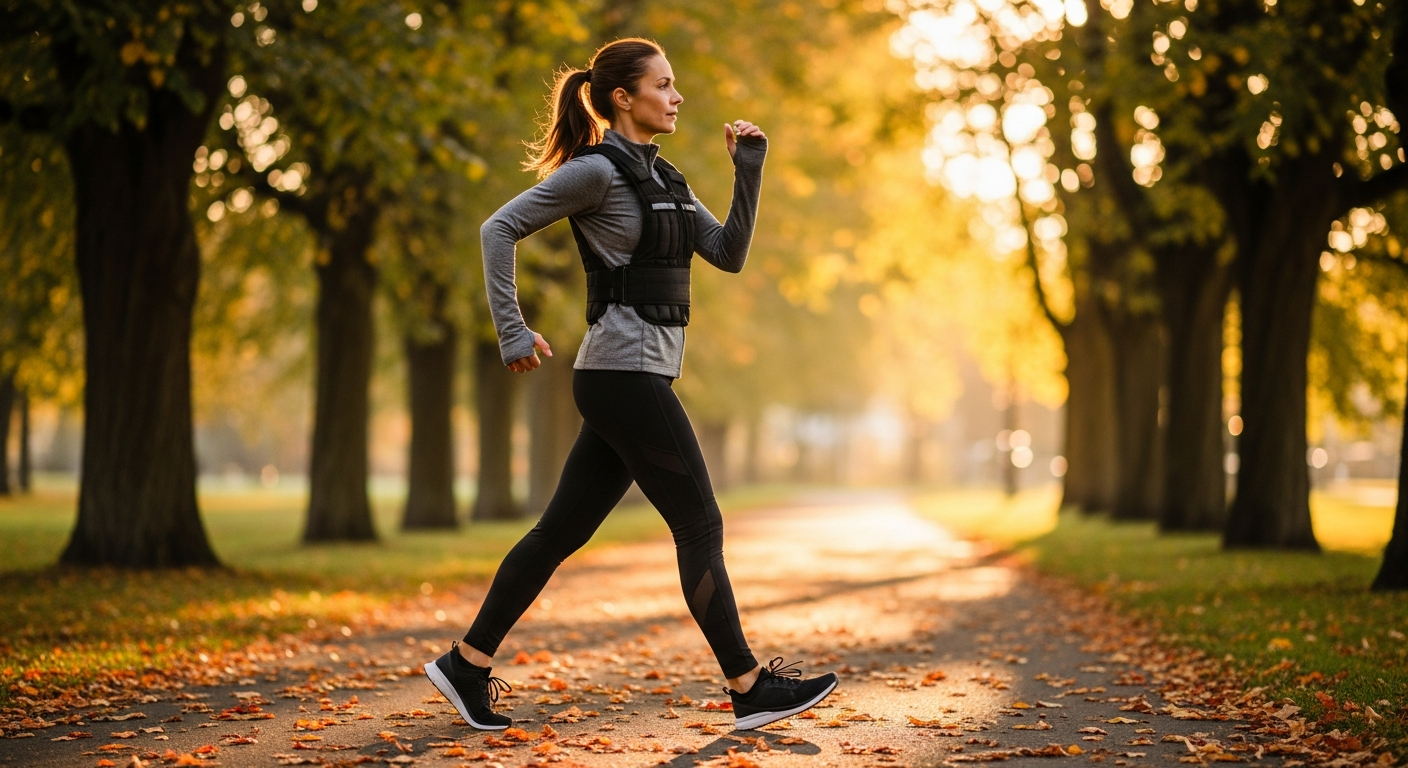
Here’s the powerful solution hiding in plain sight: weighted walking. It’s exactly what it sounds like—walking while wearing added weight, typically in a vest.
This isn’t some trendy fitness hack that’ll disappear next year. It’s a science-backed method that combines cardiovascular exercise with resistance training in one efficient, low-impact workout. No gym membership required. No intimidating equipment. No hour-long sessions you don’t have time for.
Research consistently shows that women lose 3-8% of muscle mass per decade after age 30, and our bone density starts declining in our 40s.
Traditional walking alone won’t reverse these changes. But weighted walking? That’s a different story. In this guide, I’ll show you exactly how to use weighted walking to build strength, protect your bones, burn fat, and reclaim the fitness confidence you thought was gone forever.
Why Women Over 40 Need Weighted Walking (Not Just Regular Walking)
Let’s address the elephant in the room: regular walking is fantastic exercise. It’s low-impact, accessible, and proven to improve cardiovascular health. But after 40, walking alone leaves critical gaps in your fitness foundation. Here’s why.
The Harsh Reality of Metabolic Changes
Starting around age 30, women begin losing muscle mass through a process called sarcopenia. By your 40s, this loss accelerates. You’re burning approximately 100-200 fewer calories per day than you did in your 20s, even if your activity level hasn’t changed. Your bone density decreases by about 1% annually after menopause begins, dramatically increasing your risk of osteoporosis and fractures. Meanwhile, hormonal shifts make it easier to gain fat and harder to build or maintain muscle.
Here’s the problem with relying solely on walking: it’s cardiovascular exercise, not resistance training. Your body adapts to regular walking quickly, meaning you stop challenging your muscles and bones. Without progressive overload—the principle of gradually increasing stress on your body—you won’t stimulate bone growth or muscle preservation. You’ll maintain some cardiovascular fitness, but you won’t address the metabolic slowdown or bone density decline that define this decade.
How Weighted Walking Bridges the Gap
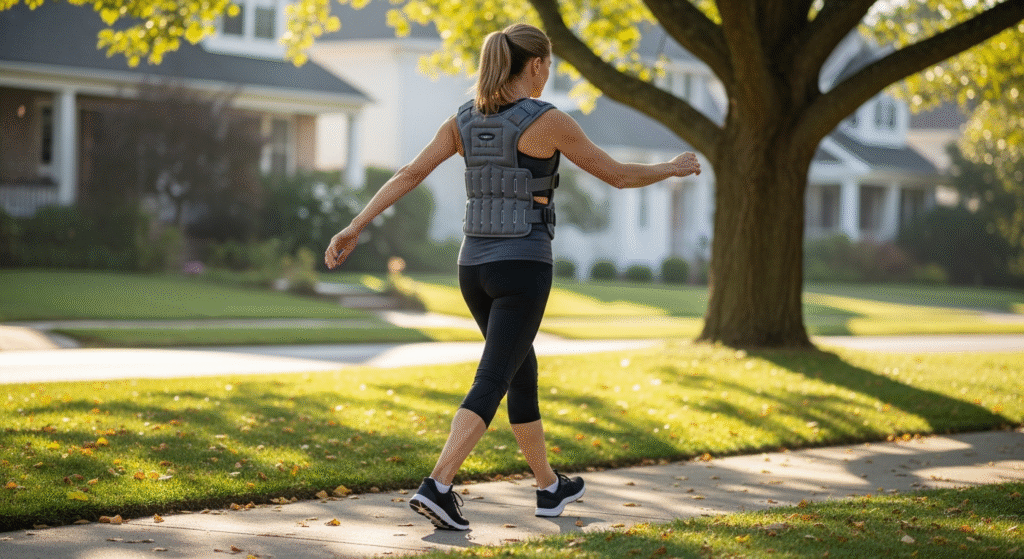
Weighted walking transforms a simple walk into a compound workout. When you add 10-20 pounds to your torso via a weighted vest, every step becomes a resistance exercise. Your legs push harder against the ground. Your core engages to stabilize the extra load. Your bones experience the mechanical stress they need to trigger new bone formation—a process called osteogenesis that only happens with weight-bearing impact.
A study in the Journal of Bone and Mineral Research found that postmenopausal women who performed weighted walking showed significant increases in hip bone density compared to those who walked without weight. The difference? The added load created enough mechanical stress to signal the body to strengthen bones rather than allow them to weaken.
You’re also burning 12-15% more calories per session compared to unweighted walking at the same pace. More importantly, the muscle engagement creates an after-burn effect (excess post-exercise oxygen consumption, or EPOC) that keeps your metabolism elevated for hours after your walk ends.
Real Results You Can Expect
Let’s set realistic expectations because overpromising is how previous workout plans failed you. In the first 4-6 weeks of consistent weighted walking (3-4 times per week), you’ll notice improved posture and core strength. Your clothes may fit better around your midsection even if the scale hasn’t moved much—that’s muscle replacing fat.
By weeks 8-12, you should see measurable fat loss if you’re maintaining a reasonable caloric deficit. More significantly, you’ll feel stronger during daily activities: carrying groceries, climbing stairs, playing with kids or grandkids. Your balance and stability will improve noticeably.
Bone density changes take longer—typically 6-12 months of consistent training to show measurable improvements on a DEXA scan. But the bone-building process starts immediately with each weighted session. This is a long-game investment in your future mobility and independence, not a quick-fix solution.
—
The Proven Benefits of Weighted Walking for Women Over 40
Beyond the basic metabolic advantages, weighted walking delivers specific benefits that directly address the challenges women face in their 40s, 50s, and beyond.
Build and Maintain Bone Density
One in two women over 50 will break a bone due to osteoporosis. That statistic should terrify you into action, not paralysis. Your bones are living tissue that responds to stress. When you apply controlled, progressive load through weighted walking, you trigger osteoblasts—cells that build new bone tissue. The impact forces from walking combined with the compressive load from the vest create the perfect stimulus for bone strengthening.
The most critical areas for bone density in women are the hips, spine, and femur—exactly the areas that weighted walking targets. Studies show that 10-15% of your body weight carried in a vest provides optimal bone-building stimulus without excessive joint stress. For a 150-pound woman, that’s 15-22 pounds. Start lighter and progress gradually, but understand that your bones need meaningful load to respond.
Sculpt Lean Muscle Without Bulking Up
Let’s destroy this myth right now: you will not accidentally get bulky from weighted walking. Women over 40 have declining testosterone levels, making significant muscle growth difficult even with dedicated strength training. What weighted walking does is preserve and tone the muscle you have while creating definition in your legs, glutes, and core.
Every step with added weight requires your quadriceps, hamstrings, glutes, and calves to contract harder. Your core muscles—rectus abdominis, obliques, transverse abdominis, and erector spinae—work continuously to stabilize your torso against the load. Over time, this creates the toned, defined look most women want without the intimidation factor of a weight room.
Here’s the metabolic bonus: muscle tissue burns approximately 6 calories per pound per day at rest, compared to 2 calories per pound for fat tissue. Preserving your muscle mass through weighted walking helps combat the metabolic slowdown that makes weight management harder after 40.
Burn More Calories and Boost Your Metabolism
A 150-pound woman walking at a moderate pace (3.5 mph) for 30 minutes burns roughly 140 calories. Add a 15-pound weighted vest, and that number jumps to approximately 160-165 calories for the same duration and pace. The real magic happens after your walk ends.
The EPOC effect from weighted walking keeps your metabolism elevated for 2-6 hours post-exercise. Your body works harder to return to homeostasis, repair muscle tissue, and replenish energy stores. This after-burn can add an extra 15-30 calories to your total expenditure—not massive, but it compounds over weeks and months.
More importantly, weighted walking is sustainable. You can do it 4-5 times per week without the joint destruction or recovery demands of high-intensity interval training. Consistency beats intensity when you’re playing the long game.
Improve Balance, Posture, and Functional Fitness
Falls are the leading cause of injury-related deaths in women over 65. Balance and proprioception—your body’s awareness of its position in space—decline with age, but they’re trainable. Walking with added weight on your torso challenges your balance systems, forcing constant micro-adjustments that strengthen stabilizer muscles and improve coordination.
I noticed my posture improving within three weeks of starting weighted walking. The vest forces you to engage your core and pull your shoulders back to maintain proper alignment. Over time, this neuromuscular pattern carries over to your daily life. You stand taller, move more confidently, and experience less lower back pain from the core strengthening effects.
Functional fitness—the ability to perform daily activities with ease—is what determines your quality of life as you age. Weighted walking directly translates to real-world strength: carrying groceries, lifting luggage, getting up from the floor, navigating uneven terrain. You’re training movements you actually use, not isolated exercises in a gym.
—
Choosing the Right Weighted Walking Equipment for Your Goals
Equipment selection makes or breaks your weighted walking practice. Choose wrong, and you’ll deal with chafing, poor posture, or injury risk. Choose right, and your vest becomes an invisible training partner.
Weighted Vests: The Gold Standard
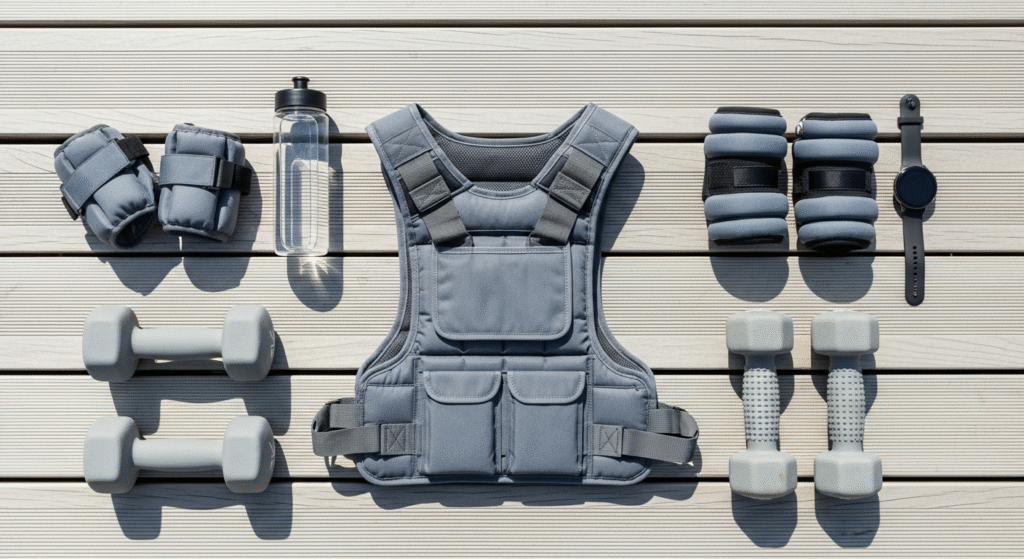
A quality weighted vest distributes load evenly across your torso, keeping your center of gravity close to your body’s natural position. This is critical. Wrist weights and ankle weights shift your gait pattern and create torque on joints, increasing injury risk. A vest keeps everything aligned.
Start with 5-10% of your body weight. For most women, this means beginning with a 10-12 pound vest and progressing to 15-20 pounds over 8-12 weeks. Look for adjustable vests that let you add weight gradually—fixed-weight vests limit your progression options.
Quality indicators matter: wide shoulder straps prevent digging and discomfort; a chest strap and waist belt keep the vest stable during movement; individual weight pockets allow customization; breathable mesh fabric prevents overheating. Expect to spend $60-120 for a vest that’ll last years. Cheaper options often shift during movement or fall apart within months.
I learned this the hard way with a $35 vest that seemed like a bargain. Within two weeks, the shoulder seams were tearing, and the weights shifted so badly I had bruises on my hips. I upgraded to an adjustable vest with proper padding, and the difference was night and day.
Alternatives: Wrist Weights, Ankle Weights, and Hand Weights
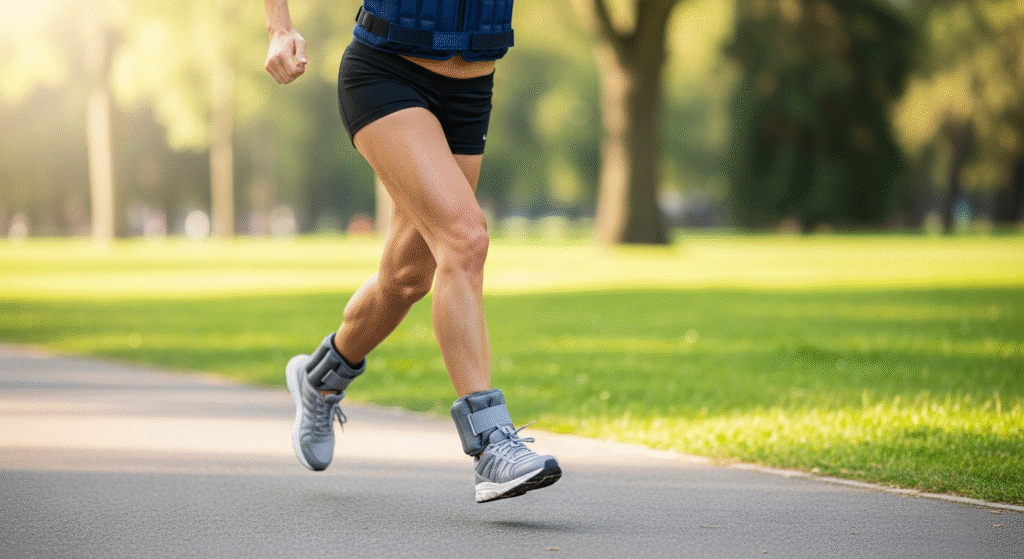
These have limited application for walking and significant downsides. Wrist weights (typically 1-3 pounds each) can be used for arm exercises during walking breaks, but wearing them throughout your walk alters your natural arm swing and can strain shoulder joints. Ankle weights create similar problems for your gait and put excessive stress on knee ligaments.
Hand weights might seem appealing, but they encourage tension in your hands, forearms, and shoulders. You’ll grip them tightly, creating unnecessary muscle fatigue in areas that should remain relaxed during walking.
If you absolutely cannot wear a vest due to shoulder or neck issues, a weighted backpack is your best alternative. Use a hiking backpack with a hip belt, place weights (dumbbells, weighted plates, or even water bottles) inside, and cinch it tight to your body. It’s not ideal—the load sits higher and farther back than a vest—but it’s better than wrist or ankle weights.
What to Avoid
Never start with more than 10% of your body weight, no matter how fit you feel. Your joints, tendons, and ligaments need time to adapt to the new stress. I’ve seen women jump straight to 20-pound vests because “I want faster results,” only to develop knee pain or hip discomfort within a week.
Avoid vests that sit too high on your shoulders or too low on your hips. High placement creates neck strain; low placement throws off your center of gravity. The weight should sit evenly distributed from your shoulders to mid-torso. Try on vests if possible, or buy from retailers with good return policies so you can test the fit during an actual walk.
Don’t combine multiple weighted items simultaneously—vest plus wrist weights plus ankle weights is excessive and dangerous. Pick one method (the vest) and progress it properly.
—
Your Step-by-Step Weighted Walking Workout Plan
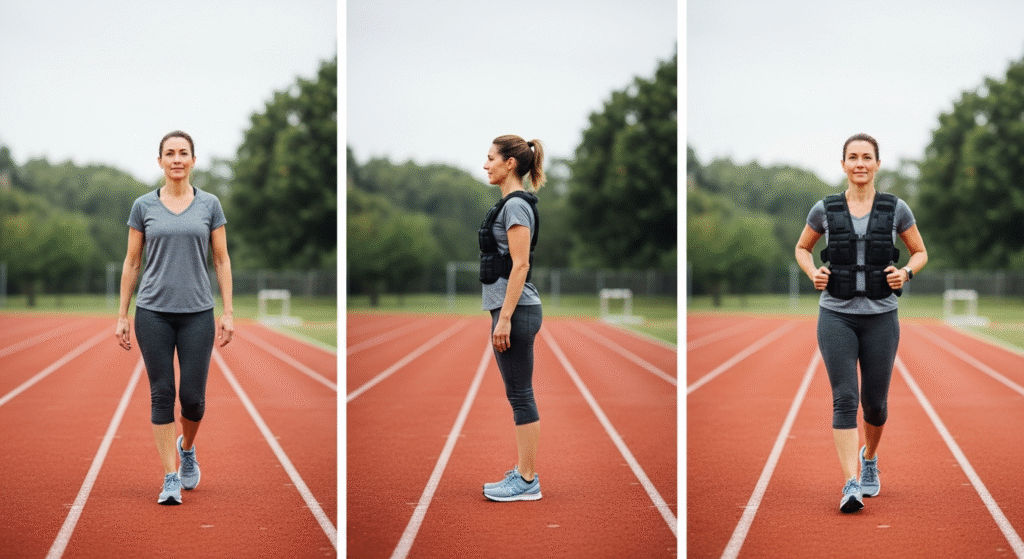
This progressive 12-week plan takes you from complete beginner to confident weighted walker. Adapt the schedule to your life—consistency matters more than perfection.
Beginner Phase: Weeks 1-4 (Building Your Foundation)
Before adding any weight, spend your first week perfecting unweighted walking form. This isn’t wasted time—it’s injury prevention. Walk for 20 minutes, 3-4 times this week, focusing on posture: head up, eyes forward, shoulders back and down, core gently engaged, arms swinging naturally at 90-degree angles, and heel-to-toe foot strike.
Week 2, continue unweighted walking but increase duration to 25 minutes per session. Pay attention to any joint discomfort. If your knees, hips, or lower back hurt, address these issues before adding weight. Consider seeing a physical therapist if pain persists—walking shouldn’t hurt.
Week 3, introduce your weighted vest at 5-8 pounds (or 5% of body weight, whichever is less). Walk for 15 minutes, 3 times this week. Yes, shorter duration than your unweighted walks. The added load is significant stress your body needs to adapt to gradually. Monitor how your body feels during and after each session.
Week 4, if you’re feeling strong and pain-free, increase to 20 minutes per weighted session, 3-4 times this week. Keep the weight the same. You’re building work capacity and conditioning your joints before progressing the load.
Success markers before moving to the intermediate phase: You complete all Week 4 sessions without joint pain; your breathing stays controlled (you can hold a conversation); you maintain good posture throughout each walk; you feel energized, not exhausted, after sessions.
Intermediate Phase: Weeks 5-8 (Building Strength and Endurance)
Week 5, increase your vest weight to 10-12 pounds (approximately 8% of body weight for a 150-pound woman). Walk for 25 minutes, 4 times this week. Maintain your conversational pace—you should still be able to talk in complete sentences without gasping.
Week 6, introduce basic intervals. Warm up for 5 minutes at an easy pace, then alternate 2 minutes at a brisk pace with 2 minutes at recovery pace for 20 minutes, then cool down for 5 minutes. Do this interval session twice this week, with two steady-pace weighted walks on other days.
Week 7, add terrain variation. Find a route with gentle hills or inclines. The uphill portions dramatically increase the training stimulus—your glutes, quads, and calves work significantly harder. Start with one hilly route this week, keeping your other 3 sessions on flat terrain.
Week 8, increase duration to 30 minutes per session, 4 times per week. Mix your sessions: one hilly walk, one interval walk, two steady-pace walks. Include at least one complete rest day between weighted sessions. Recovery is when your body builds strength, not during the workout itself.
Advanced Phase: Weeks 9-12+ (Maximizing Results)
Week 9, if you’ve progressed without pain or excessive fatigue, increase your vest weight to 15 pounds. Walk for 30-35 minutes, 4 times this week. You should feel challenged but not demolished by these sessions.
Week 10, implement a more aggressive interval protocol: 3 minutes brisk pace, 1 minute recovery pace, repeated 6-8 times after a 5-minute warm-up. This session should feel intense. Balance it with easier steady-pace walks on other days.
Week 11, add a longer weekend walk: 40-45 minutes at a steady, sustainable pace. This builds endurance and mental toughness. Keep your weekday sessions at 30 minutes to avoid overtraining.
Week 12 and beyond, you have options for continued progression: increase vest weight to 18-20 pounds (maximum 10% of body weight for most women); add more challenging terrain like stairs or steep hills; increase walking speed while maintaining proper form; extend your longest weekly session to 50-60 minutes.
Sample Weekly Schedule for Busy Women
Monday: 30-minute weighted walk, moderate steady pace (before work or during lunch break)
Tuesday: Rest day or gentle yoga/stretching (recovery is productive)
Wednesday: 25-minute weighted intervals (alternating brisk and recovery pace)
Thursday: Active recovery—light unweighted walk, mobility work, or complete rest
Friday: 30-minute weighted walk with hills if available
Saturday: 40-minute longer weighted walk at conversational pace
Sunday: Complete rest or gentle movement (stretching, easy yoga)
Adapt this to your life. If you can only manage 3 sessions weekly, do Monday, Wednesday, and Saturday. Consistency with three quality sessions beats sporadic attempts at five. Life happens—missed workouts don’t erase your progress. Just pick up where you left off.
—
Perfect Your Form and Avoid Common Mistakes
Proper technique maximizes results and prevents the joint pain that derails most beginners. These details matter more than you think.
Proper Weighted Walking Posture
Stand tall with your head in neutral position—imagine a string pulling the crown of your head toward the sky. Your ears should align over your shoulders, not jutting forward. Eyes look ahead at the horizon, not down at your feet. This head position keeps your spine aligned and prevents neck strain.
Pull your shoulders back and down, away from your ears. Engage your core by gently pulling your navel toward your spine—not a hard contraction, just enough to feel your abdominal muscles activate. This protects your lower back from hyperextension under the vest’s load.
Your arms swing naturally from the shoulders, bent at approximately 90 degrees. Hands stay relaxed, not clenched. The arm swing should be front-to-back, not crossing your body’s midline. This maintains balance and prevents unnecessary torso rotation.
Strike the ground with your heel first, then roll through your foot to push off with your toes. Avoid overstriding—taking steps that are too long forces your heel to land far in front of your body, creating braking forces that stress your knees. Instead, take slightly shorter, quicker steps that keep your feet landing closer to your center of gravity.
Common mistake: leaning forward from the waist to compensate for the vest’s weight. This crushes your lower back and defeats the core-strengthening benefits. If you find yourself leaning forward, your vest is too heavy or positioned incorrectly. Reduce the weight or adjust the vest’s fit.
Breathing and Pacing
Use rhythmic breathing patterns to maintain consistent effort. A common pattern: inhale for three steps, exhale for three steps. Adjust based on your pace and fitness level. If you’re gasping or can’t speak in complete sentences, slow down. Weighted walking should feel challenging but sustainable.
During interval training, your breathing will naturally accelerate during hard efforts. That’s expected. But if you’re wheezing or feeling dizzy, you’ve pushed too hard. Recovery intervals should bring your breathing back to a controlled rhythm before the next hard effort.
Safety Checkpoints and Red Flags
Learn the difference between productive muscle fatigue and problematic joint pain. Muscle fatigue feels like burning, heaviness, or tiredness in your quads, glutes, or calves during and after your walk. This is normal and indicates you’re challenging your muscles appropriately.
Joint pain feels sharp, stabbing, or aching in your knees, hips, ankles, or lower back. This is a red flag. Stop your session, remove the vest, and walk unweighted for a few minutes to see if the pain subsides. If it persists, you need to address the issue—reduce weight, check your form, or consult a physical therapist.
Overtraining signs in women over 40 include persistent fatigue that doesn’t improve with rest, disrupted sleep, increased resting heart rate, irritability, and plateaued or declining performance. If you experience these symptoms, take 3-5 days completely off from weighted walking. Your body needs recovery time to adapt and strengthen.
When to see a professional: sharp pain that doesn’t resolve with rest; swelling in joints; numbness or tingling in extremities; dizziness or chest pain during exercise. Don’t push through concerning symptoms—address them immediately.
If you have existing conditions like arthritis, osteoporosis, or previous joint injuries, consult your doctor or a physical therapist before starting weighted walking. They can provide modifications specific to your situation and ensure you’re training safely.
—
Weighted walking isn’t a magic bullet, and I’m not going to pretend it is. It requires consistency, progressive effort, and patience—three things our quick-fix culture doesn’t celebrate. But here’s what I know from my own experience and from coaching dozens of women through this exact process: it works if you work it.
Six months after starting weighted walking, my follow-up bone density scan showed improvement in my hip and spine measurements. Not dramatic, earth-shattering changes, but measurable progress in the right direction. More importantly, I feel stronger and more capable in my body than I have in years. I carry my groceries in one trip now. I hike with my kids without getting winded. I stand taller and move with confidence.
This is the workout that meets you where you are—no gym intimidation, no complicated equipment, no hour-long time commitments you can’t maintain. Just you, a quality weighted vest, and the commitment to show up consistently. Start with Week 1 of the beginner plan. Perfect your form. Progress the weight gradually. Listen to your body. Give it 12 weeks of honest effort before judging the results.
Your body at 40, 50, or beyond deserves training that addresses its actual needs: bone density, muscle preservation, metabolic health, and functional strength. Weighted walking delivers all of this in one efficient, sustainable practice. The question isn’t whether it works—the research confirms it does. The question is whether you’re ready to invest in your long-term strength and independence.
Start tomorrow. Put on comfortable shoes, grab whatever weight you can safely carry (even a backpack with books works initially), and walk for 15 minutes. That’s it. Build from there. Your future self—stronger, more mobile, and more confident—will thank you for starting today.