Walking Yoga For Stress Relief For Women 40+
Let’s be honest—if you’re a woman over 40, stress isn’t just an occasional visitor. It’s practically moved in and taken over the guest room.
Between hormonal changes that feel like your body’s playing pranks on you, caregiving responsibilities pulling you in seventeen directions, and career pressures that never seem to let up, finding a moment of peace can feel impossible.
Here’s what I know works: walking yoga. Not the complicated, pretzel-yourself-into-a-knot kind of yoga that makes you feel inadequate.
I’m talking about a simple, accessible practice that combines mindful walking with yoga principles—something you can do in your neighborhood, at the park, or even around your office building during lunch.
This isn’t about adding another overwhelming task to your already packed schedule. In just 15-20 minutes daily, walking yoga delivers real stress relief while improving flexibility and boosting your energy. No special equipment required. No gym membership needed. No judgment about whether you can touch your toes.
The best part? This practice was practically designed for your changing body. It respects where you are right now while gently helping you feel stronger, calmer, and more grounded.
You’ll discover how to turn any walk into a moving meditation that actually transforms how you handle daily stress—and you’ll learn exactly how to make it work with your real life.
What Is Walking Yoga and Why It’s Perfect for Women Over 40
Understanding the Basics of Walking Yoga
Walking yoga is exactly what it sounds like—and so much more. It’s a mindful practice that weaves together breathwork, gentle movement, and meditation while you’re walking. Instead of rushing from point A to point B with your mind racing about everything on your to-do list, you’re moving with intention and awareness.
Think of it as the sweet spot between a regular walk and traditional mat yoga. You’re not lying on the floor trying to fold yourself into positions that make your knees scream.
You’re also not just power-walking while mentally composing your grocery list. You’re walking with purpose, coordinating your breath with your steps, and bringing your full attention to the present moment.
What makes walking yoga different from regular walking? Three key elements: conscious breathing patterns, mindful body alignment, and present-moment awareness. You’re not just exercising your body—you’re calming your nervous system and clearing your mind simultaneously.
For women over 40, this is a game-changer. Your body is changing, and high-impact exercises might not feel as comfortable as they once did.
Walking yoga gives you a low-impact option that’s gentle on your joints while still delivering powerful benefits for your physical and mental health.
The Amazing Benefits Specifically for Women 40+
The stress relief alone makes walking yoga worth trying, but the benefits go way deeper. When you’re dealing with perimenopause or menopause, your hormones are doing their own unpredictable dance.
Walking yoga helps support hormonal balance naturally by reducing cortisol (your stress hormone) and encouraging your body’s relaxation response.
Your bones need attention during this life stage, and walking yoga delivers. The weight-bearing nature of walking helps maintain bone density, while the mindful movement improves balance—crucial for preventing falls as you age.
Research consistently shows that practices combining movement with mindfulness improve both physical stability and confidence.
Flexibility naturally decreases as we age, but walking yoga gently works against that decline. The stretches and poses you incorporate during your walk keep your muscles supple without the strain of trying to hold difficult positions on a mat for extended periods.
Mental clarity gets a major boost too. During life transitions—whether you’re dealing with empty nest syndrome, caring for aging parents, or navigating career changes—your mind needs support as much as your body does. Walking yoga provides that mental reset, helping you process emotions and gain perspective while you move.
The mood benefits are immediate and lasting. Every walking yoga session triggers the release of endorphins, those feel-good chemicals your brain produces during exercise.
Combined with the meditative aspects of the practice, you’re essentially giving yourself a natural antidepressant with zero side effects.
Why Traditional Yoga Might Not Work for You (But This Will)
Let me guess—you’ve thought about trying yoga but something always stops you. Maybe you don’t have time to drive to a studio, change clothes, take a class, and drive home.
That’s two hours you simply don’t have. Or perhaps you’ve tried a yoga class and felt intimidated by the super-flexible people around you or confused by the Sanskrit terms the instructor used.
Traditional mat yoga presents real barriers for busy women over 40. Your schedule is packed. Your body might have limitations—knee issues, back problems, or simply the reality that you can’t comfortably get up and down from the floor repeatedly. The intimidation factor is real, especially if you’re not naturally flexible or athletic.
Walking yoga removes every single one of these obstacles. You practice on your own schedule, at your own pace, in clothes you’re already wearing. No studio required. No special equipment. No audience watching you struggle with a pose.
The “anytime, anywhere” factor changes everything. You can practice walking yoga on your lunch break, in the morning before your family wakes up, or in the evening to decompress from your day. Bad weather? Walk in a mall or around your house. Traveling? Your practice travels with you.
This accessibility means you’ll actually do it consistently—and consistency is what delivers results. You’re not trying to force yourself into someone else’s definition of yoga. You’re creating a practice that fits your life exactly as it is right now.
Essential Walking Yoga Techniques for Stress Relief
Simple Breathwork While Walking
Your breath is the most powerful stress-relief tool you own, and learning to use it while walking transforms an ordinary stroll into a deeply calming practice. The beauty is that breathwork techniques are simple once you understand the basics.
Start with the 4-4-4 breathing pattern—it’s effective and easy to remember. Inhale deeply through your nose for four steps, hold your breath for four steps, then exhale slowly through your nose or mouth for four steps. This pattern immediately signals your nervous system to shift from “fight or flight” mode into “rest and digest” mode.
As you practice this pattern, you’ll notice your walking pace naturally slows. That’s exactly what should happen. You’re not trying to get anywhere quickly—you’re using movement as a vehicle for stress relief.
Belly breathing takes this further by activating your parasympathetic nervous system—the part of your nervous system responsible for relaxation.
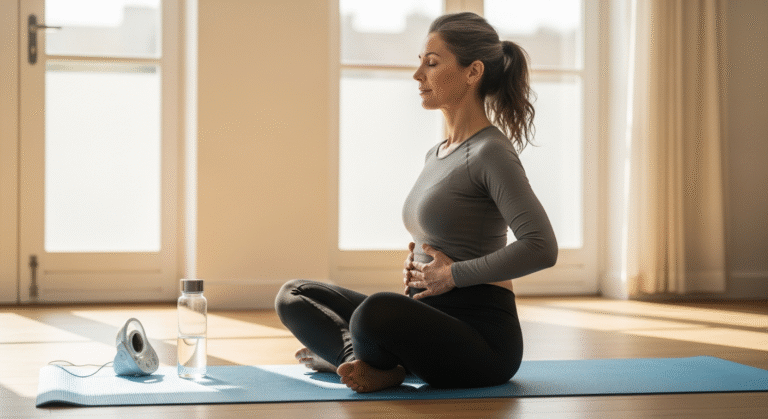
Place one hand on your belly as you walk (yes, it might look unusual, but who cares?). Feel your belly expand as you inhale and contract as you exhale.
This deep diaphragmatic breathing delivers more oxygen to your body and directly counters the shallow chest breathing that happens when you’re stressed.
For instant centering, try the breath awareness practice. Simply notice your natural breath without trying to change it. Count your breaths—inhale is one, exhale is two, and so on up to ten, then start over.
When your mind wanders (and it will), gently bring your attention back to counting. This simple technique interrupts the stress cycle and brings you into the present moment.
Mindful Walking Postures and Alignment
How you hold your body while walking makes a tremendous difference in the benefits you receive. Proper posture isn’t about rigidity—it’s about alignment that allows energy to flow freely while protecting your joints.
Start by imagining a string attached to the crown of your head, gently pulling you upward. Your shoulders naturally roll back and down, away from your ears.
Engage your core muscles slightly—not a tight clench, just a gentle activation that supports your lower back. Keep your chin parallel to the ground, not jutting forward or tucked down.
The “mountain walk” technique brings intention to every step. As your foot touches the ground, consciously feel the connection between your body and the earth.
Notice the heel striking first, then rolling through the middle of your foot to your toes. This grounding awareness turns walking into a moving meditation.
Gentle arm movements enhance the practice without making you look like you’re doing aerobics in the park. Let your arms swing naturally, or try these simple additions: raise your arms overhead for three steps while inhaling, then lower them while exhaling. Or clasp your hands behind your back for several steps to open your chest and shoulders.
Easy stretches integrate seamlessly into your walk. Pause to reach one arm overhead and gently lean to the side, stretching your obliques. Stop to place your hands on a bench or tree and fold forward slightly, stretching your hamstrings and back. These micro-stretches keep your body loose and your practice varied.
Incorporating Meditation and Mantras
Walking meditation might sound complicated, but it’s simply bringing meditative awareness to your movement. Try a body scan while walking—bring your attention to your feet, noticing every sensation as they touch the ground.
Slowly move your awareness up through your ankles, calves, knees, thighs, continuing all the way to the crown of your head.
Mantras provide a mental anchor that prevents your mind from spinning into stress spirals. Choose simple, present-tense affirmations that resonate with you. “I am calm” synchronized with your breath. “I release tension” as you exhale. “I am strong and capable” as you walk with intention. Repeat your chosen mantra silently, letting it become a rhythm with your steps.
The beauty of walking yoga is that nature itself becomes part of your practice. Use your surroundings as focal points for mindfulness.
Notice the colors of leaves, the texture of tree bark, the sound of birds, the feeling of sun or breeze on your skin. This sensory awareness pulls you out of your head and into the present moment—exactly where stress cannot survive.
When you notice your mind drifting to worries or to-do lists (and you will, repeatedly), don’t judge yourself. Simply acknowledge the thought and return your attention to your breath, your mantra, or your surroundings. This gentle redirection is the practice—not achieving some perfect state of mental emptiness.
Your Complete 15-Minute Walking Yoga Routine
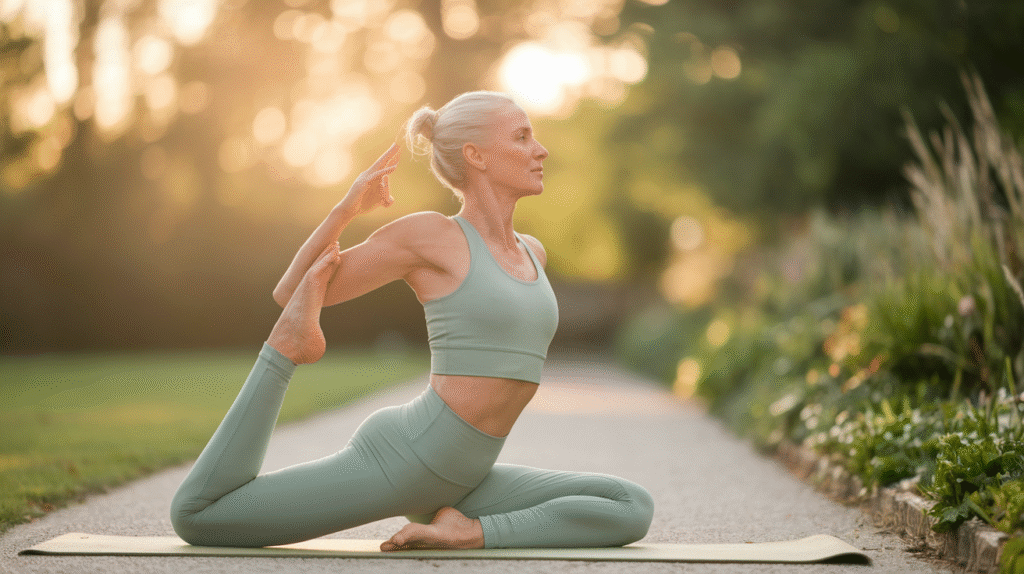
The Perfect Warm-Up (Minutes 1-3)
Before you take your first step, give your body a moment to transition from whatever you were doing into this intentional practice.
Stand tall and take three deep breaths, feeling your feet firmly planted on the ground. Roll your shoulders backward five times, releasing any tension you’re holding in your upper body.
Gently tilt your head to the right, bringing your right ear toward your right shoulder. Hold for three breaths, then repeat on the left side. This simple neck stretch releases one of the most common areas where we hold stress.
Now set your intention. This isn’t about achieving anything or checking a box on your to-do list. Ask yourself: “What do I need from this practice today?”
Maybe it’s peace. Maybe it’s energy. Maybe it’s simply a break from thinking about everything else. Whatever your answer, hold that intention as you begin walking.
Start walking slowly, much slower than your normal pace. These first steps are about transitioning your mind and body into the practice.
Notice how your feet feel against the ground. Feel the air moving in and out of your lungs. Let your arms hang naturally or begin a gentle swing.
The Main Practice (Minutes 4-12)
Now you’re ready to deepen the practice by coordinating your breath with your steps. Begin with the 4-4-4 pattern: inhale for four steps, hold for four steps, exhale for four steps. If this feels too long or too short, adjust to what feels comfortable—maybe 3-3-3 or 5-5-5. The key is finding a rhythm that you can maintain without strain.
After a few minutes of breath-coordinated walking, introduce your first standing pose. Slow to a stop and find your balance.
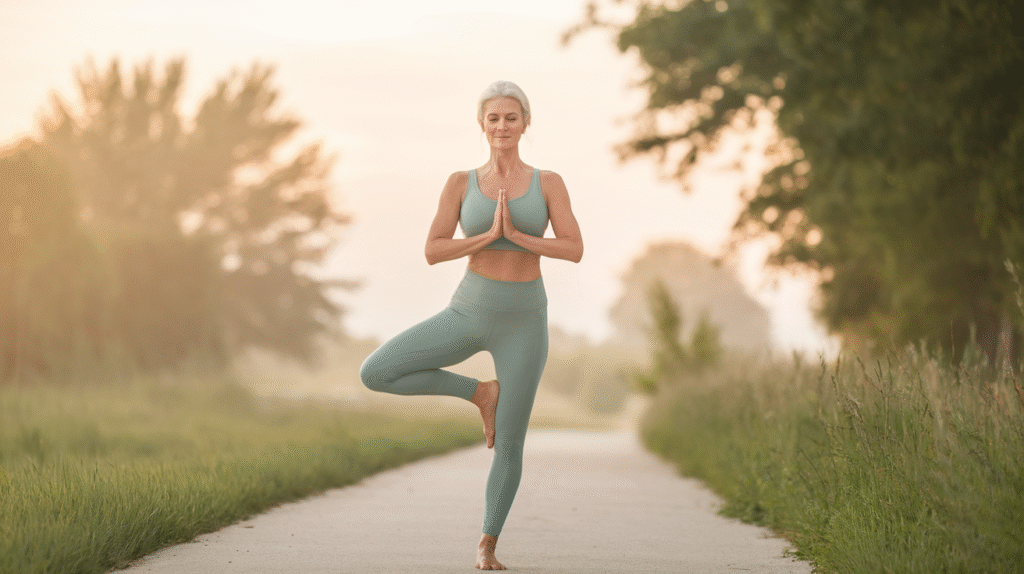
Try a modified tree pose: shift your weight onto your left foot and place your right foot against your left ankle (not your knee).
Bring your hands to your heart center or extend them overhead. Hold for three to five breaths, feeling your body strong and stable. Repeat on the other side.
Continue walking, maintaining awareness of your breath and posture. After another minute or two, stop for a standing forward fold.
Place your hands on your hips, engage your core, and hinge forward from your hips (not your lower back). Let your arms hang down, or hold opposite elbows.
Bend your knees as much as you need to—this isn’t about touching the ground. It’s about releasing tension in your back and hamstrings. Hold for five deep breaths.
As you resume walking, introduce a gentle twist. Every ten steps or so, pause and place your right hand on your left shoulder and your left hand on your right hip.
Gently rotate your torso to the left, looking over your left shoulder. Hold for two breaths, then repeat on the other side. These twists massage your internal organs and release tension in your spine.
For the remaining minutes of your main practice, find your optimal pace—the speed at which you feel energized but not breathless, moving but not rushing.
Continue your chosen breathing pattern and mantra. Let the rhythm of your movement become meditative. If your mind wanders, return to counting your breaths or noticing your surroundings.
Cool-Down and Integration (Minutes 13-15)
As you enter the final minutes of your practice, gradually slow your pace. Let each step become more deliberate, more conscious. This transition is important—you’re preparing to reenter your regular day while holding onto the peace you’ve cultivated.
Stop walking and stand still. Close your eyes if you feel comfortable doing so. Take five deep breaths, noticing how your body feels compared to when you started. What’s different? Maybe your shoulders are lower. Maybe your jaw is relaxed. Maybe your mind feels clearer.
Finish with a simple gratitude practice. Bring to mind three things you’re grateful for in this moment. They can be profound or ordinary—your health, the ability to walk, the sunshine, a comfortable pair of shoes, or simply these 15 minutes you gave yourself. Gratitude shifts your brain chemistry, reinforcing the stress-relief benefits of your practice.
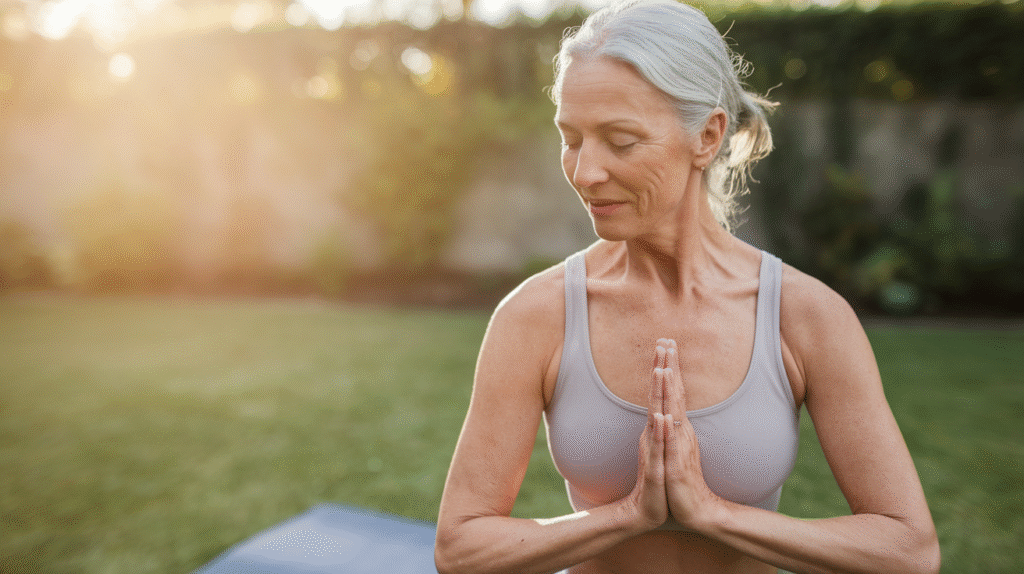
Place your hands in prayer position at your heart center and take one final deep breath. Acknowledge yourself for showing up and completing this practice. This moment of self-recognition matters—you’re reinforcing the habit and honoring your commitment to your wellbeing.
Making Walking Yoga Work for Your Real Life
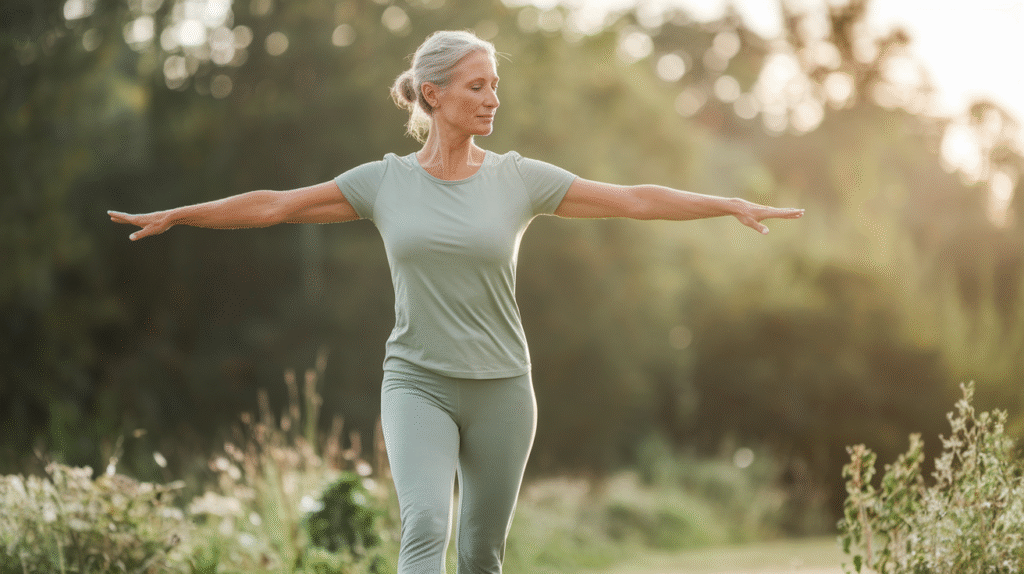
Easy Ways to Fit It Into Your Daily Schedule
The most effective practice is the one you’ll actually do consistently, which means it needs to fit seamlessly into your existing life.
Morning practice offers distinct advantages—you’re setting the tone for your entire day before demands and distractions pile up.
Even waking up just 20 minutes earlier gives you this gift of intentional movement before your family needs you or work calls.
If mornings feel impossible, your lunch break provides the perfect midday reset. Instead of scrolling through your phone while eating at your desk, take your walking yoga practice outside. You’ll return to your afternoon tasks with renewed energy and clarity.
Many women report that this midday practice helps them avoid the 3 p.m. energy crash that usually sends them reaching for coffee or sugar.
Evening walking yoga serves a different purpose—releasing the accumulated stress and tension of your day. This practice helps you transition from work mode to home mode, or from caregiving responsibilities to personal time. The stress you’ve been carrying doesn’t have to follow you into your evening or disrupt your sleep.
The key is consistency over duration. A 15-minute practice you do five times a week delivers far more benefits than a 45-minute practice you do once a month.
Start by choosing the time slot that feels most realistic for your schedule, then protect that time like you would any important appointment.
Adapting the Practice for Your Fitness Level
Walking yoga meets you where you are—no previous yoga experience or fitness level required. If you’re just starting or dealing with mobility limitations, begin with shorter sessions.
Even five minutes of mindful walking with breath awareness provides benefits. Gradually increase your duration as the practice becomes more comfortable.
For those with joint issues or balance concerns, use support when needed. Walk near a wall or railing you can touch for stability.
Skip the standing poses initially and focus solely on the walking meditation and breathwork. As your strength and confidence build, you can add more elements.
Weather shouldn’t stop your practice. Rain or extreme temperatures simply mean adapting your location. Indoor walking yoga works beautifully in shopping malls, large stores, or even around your own home.
The principles remain the same regardless of your environment—conscious breathing, mindful movement, and present-moment awareness.
As you build consistency, challenge yourself gradually. Increase your duration by five minutes every two weeks. Add more complex breathing patterns or additional poses. Try walking on varied terrain like gentle hills or nature trails. This progressive approach keeps your practice engaging while respecting your body’s limits.
Tracking Your Progress and Staying Motivated
Tracking your walking yoga practice helps you see patterns and progress that might otherwise go unnoticed. Keep a simple journal—nothing elaborate required.
After each session, jot down the date, duration, and one or two sentences about how you felt before and after. Over time, you’ll see clear evidence of how this practice affects your stress levels and overall wellbeing.
Notice the subtle changes that indicate progress. Are you sleeping better? Handling difficult situations with more patience? Feeling less overwhelmed by your responsibilities?
These improvements matter more than any physical metric. Walking yoga’s primary goal is stress relief and enhanced quality of life—and those benefits show up in how you feel and respond to daily challenges.
Technology can support your practice without complicating it. Use a simple timer app to track your 15 minutes. Some women enjoy fitness trackers that count steps and distance, while others prefer to keep the practice completely tech-free. Choose what helps you stay consistent without adding pressure.
Building a sustainable habit requires releasing perfectionism. You’ll miss days. Life will interrupt. You might go a week without practicing.
That’s normal and completely okay. The practice is always there waiting for you—no judgment, no catching up required. Simply return to it when you’re ready, starting exactly where you are.
Consider finding an accountability partner—a friend who also wants to reduce stress through walking yoga. Share your experiences, celebrate your consistency, and support each other through the inevitable challenges of maintaining any new habit. Community makes every practice more sustainable.
Transform Your Stress, Transform Your Life
Walking yoga delivers exactly what women over 40 need most: accessible, effective stress relief that respects your changing body and fits your real life. This isn’t another complicated wellness trend requiring expensive equipment or hours of free time you don’t have. It’s a simple practice that combines mindful walking, conscious breathing, and gentle movement into a powerful tool for managing stress.
The benefits extend far beyond those 15 minutes of practice. You’re supporting hormonal balance during a challenging life transition. You’re maintaining bone density and flexibility naturally. You’re improving your balance and reducing fall risk. You’re boosting your mood and mental clarity precisely when you need it most. All of this happens while you’re simply walking with intention and awareness.
This practice acknowledges that your life is full and demanding. It doesn’t ask you to become someone different or achieve some impossible standard. It meets you exactly where you are and helps you feel better in your own body, in your own life, right now.
Your next step is simple: Commit to just one 15-minute walking yoga session this week. Not seven sessions. Not a month-long commitment. Just one session to experience how this practice feels in your body and affects your stress level. Put it in your calendar like any important appointment. Choose your time, set your intention, and show up for yourself.
Start small and build gradually. Consistency matters infinitely more than perfection. Some days your practice will feel amazing, flowing and peaceful. Other days your mind will wander constantly and your body will feel stiff. Both experiences are completely valid and equally valuable. You’re showing up, and that’s what counts.
You deserve this time for self-care. The stress relief you’re seeking isn’t some distant goal requiring months of dedication—it’s available to you in your very next walking yoga session. Your body is capable. Your schedule can accommodate 15 minutes. And the peace you’ll cultivate through this practice will ripple out into every area of your life.
The path to better wellbeing doesn’t have to be complicated or overwhelming. Sometimes the most powerful practices are the simplest ones—like walking with intention, breathing with awareness, and giving yourself permission to move in a way that feels good. Walking yoga offers you exactly that: a gentle, proven path to reduced stress and enhanced vitality.
Start today. Your calmer, more grounded self is just a walk away.