The 5-Minute Daily Glute Routine for Busy Women 35+
Let’s talk about something most women over 35 know all too well: that feeling when your favorite jeans don’t fit quite the same, when climbing stairs leaves you winded, or when your lower back aches by midday. These aren’t just random annoyances—they’re signals that your glutes need attention.
Here’s the truth bomb nobody wants to hear: after 35, your body starts losing muscle mass at an accelerating rate. Your metabolism shifts. Hormones change. And your glutes—the largest muscle group in your body—bear the brunt of these changes.
But here’s the good news: you don’t need a gym membership, fancy equipment, or hour-long workout sessions to turn this around. You need exactly 5 minutes a day.
I know what you’re thinking. “Five minutes? That’s not enough time to make a difference!” That’s exactly what I thought too, until I discovered that consistency beats intensity every single time. The women who see real, lasting results aren’t the ones doing grueling 90-minute gym sessions twice a week. They’re the ones showing up for themselves daily, even when it’s just for a few minutes.
This simple routine will strengthen your glutes, improve your posture, boost your energy levels, and yes—give you that lifted, toned look you’re after. But more importantly, it will make everyday activities easier. You’ll climb stairs without huffing. You’ll pick up your kids or groceries without straining. You’ll sit at your desk without that nagging back pain.
The secret? These five targeted exercises work all three glute muscles in the most efficient way possible. No wasted movements. No complicated choreography. Just proven exercises that deliver results when you do them consistently.
Why Your Glutes Matter More After 35 (And It’s Not Just About Looks)
The Science Behind Aging Glutes
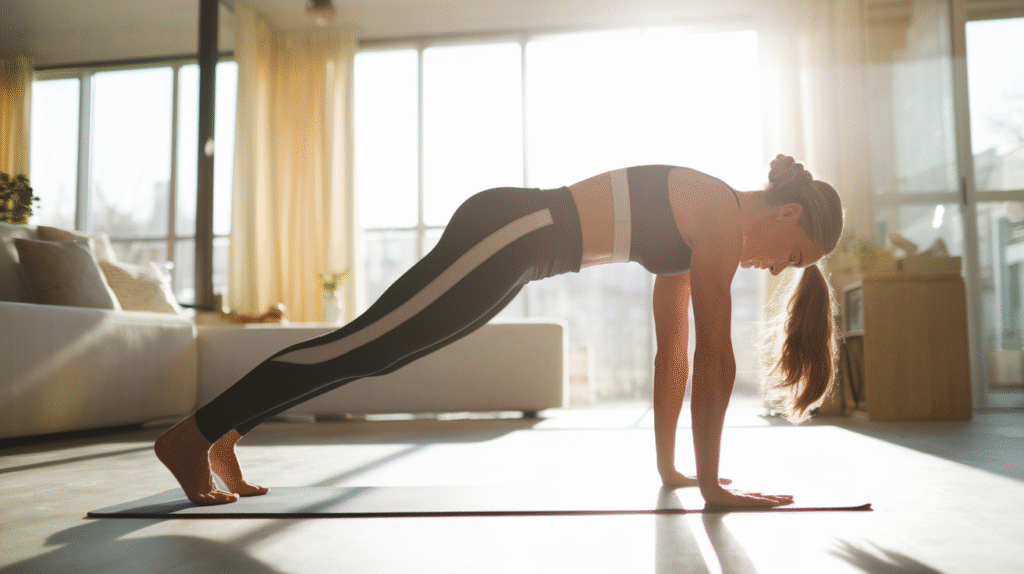
Around age 35, something called sarcopenia kicks in—the natural process of muscle loss that happens as we age. You lose approximately 3-5% of your muscle mass per decade after 35, and this accelerates after 50. Your glutes, being the largest muscle group, are particularly vulnerable to this decline.
Add hormonal changes to the mix—declining estrogen and progesterone—and you’ve got a perfect storm for muscle loss and fat redistribution. Estrogen plays a crucial role in maintaining muscle mass and bone density. As it decreases, your body becomes less efficient at building and maintaining muscle tissue.
But here’s what really matters: weak glutes create a domino effect throughout your entire body. When your glutes aren’t firing properly, other muscles compensate. Your lower back picks up the slack, leading to chronic pain. Your knees take on stress they weren’t designed to handle, causing discomfort and potential injury. Your hip flexors tighten, pulling your pelvis forward and creating that “duck butt” posture that ages your appearance.
Research shows that women with weak glutes are significantly more likely to experience lower back pain, knee problems, and hip issues. Your glutes are literally the foundation of your body’s movement patterns.
The Amazing Benefits You’ll Notice Quickly
Within the first two weeks of consistent glute training, you’ll notice functional improvements that transform your daily life. Climbing stairs becomes effortless. Getting up from a chair requires less effort. Carrying groceries or lifting your kids feels easier. These aren’t small wins—they’re quality-of-life improvements that matter every single day.
Your metabolism gets a boost too. Muscle tissue burns more calories at rest than fat tissue, so building your glutes means you’re burning more calories throughout the day, even while sitting at your desk or watching TV. This metabolic advantage compounds over time, making it easier to maintain a healthy weight.
Then there’s the confidence factor. When your glutes are strong and toned, your clothes fit better. You stand taller. You move with more confidence. That psychological boost affects every area of your life, from work presentations to social situations.
And the pain relief? That’s often the most dramatic change. Women report significant reductions in lower back pain within 3-4 weeks of consistent glute training. Your posture improves naturally because your glutes can finally do their job of stabilizing your pelvis and supporting your spine.
Why Traditional Workouts Don’t Work for Busy Women
The fitness industry has sold us a lie: that we need 60-minute gym sessions, complex equipment, and elaborate routines to see results. For busy women juggling careers, families, and a million other responsibilities, this approach is a setup for failure.
Long gym sessions aren’t sustainable when you’re already stretched thin. The mental energy required to plan gym time, pack a bag, drive there, work out, shower, and drive back is exhausting. Most women quit within weeks because the barrier to entry is too high.
Complex routines create overwhelm. When you need to remember 15 different exercises with specific rep schemes and rest periods, you’re adding cognitive load to an already overloaded brain. Simplicity wins every time.
The proven power of short, consistent daily habits beats sporadic intense efforts. Research on habit formation shows that daily practices, even brief ones, create stronger neural pathways and better adherence than weekly marathon sessions. Five minutes every single day outperforms 35 minutes once a week, both in results and sustainability.
Your Complete 5-Minute Glute Routine (No Equipment Needed)
Exercise 1: Glute Bridges (60 seconds)
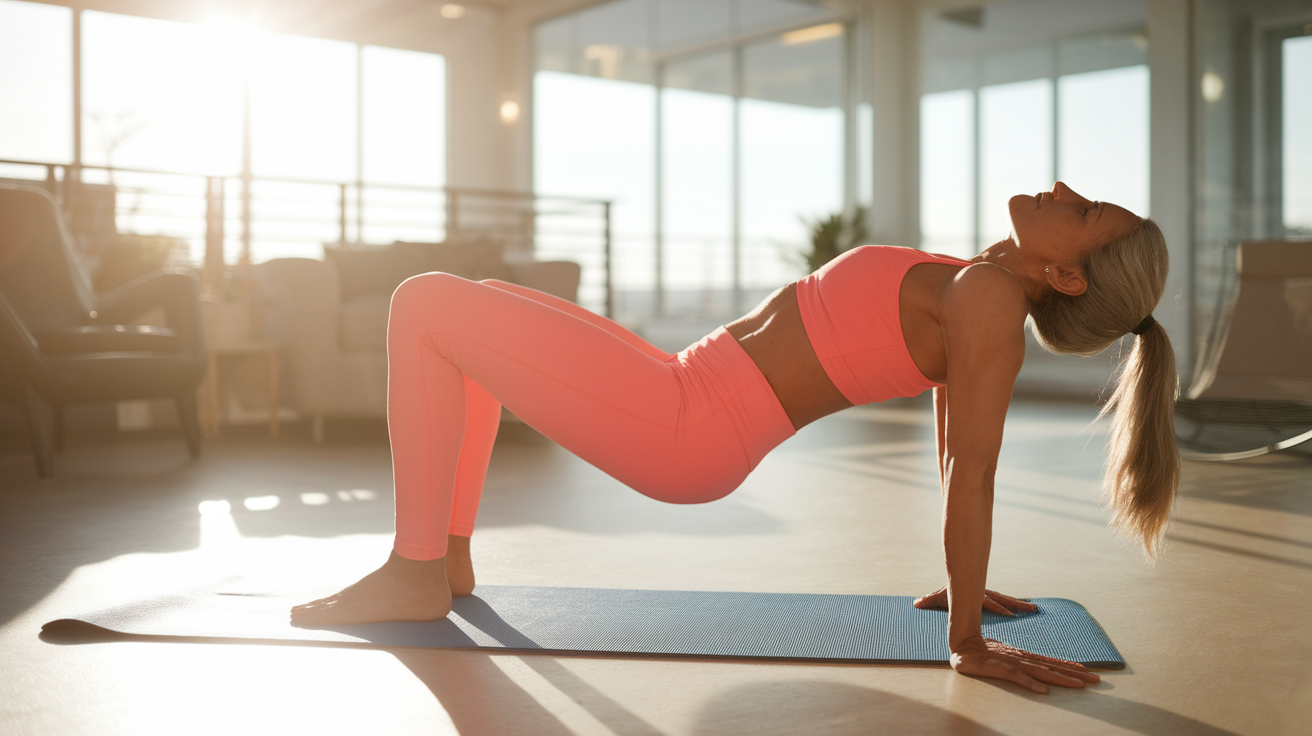
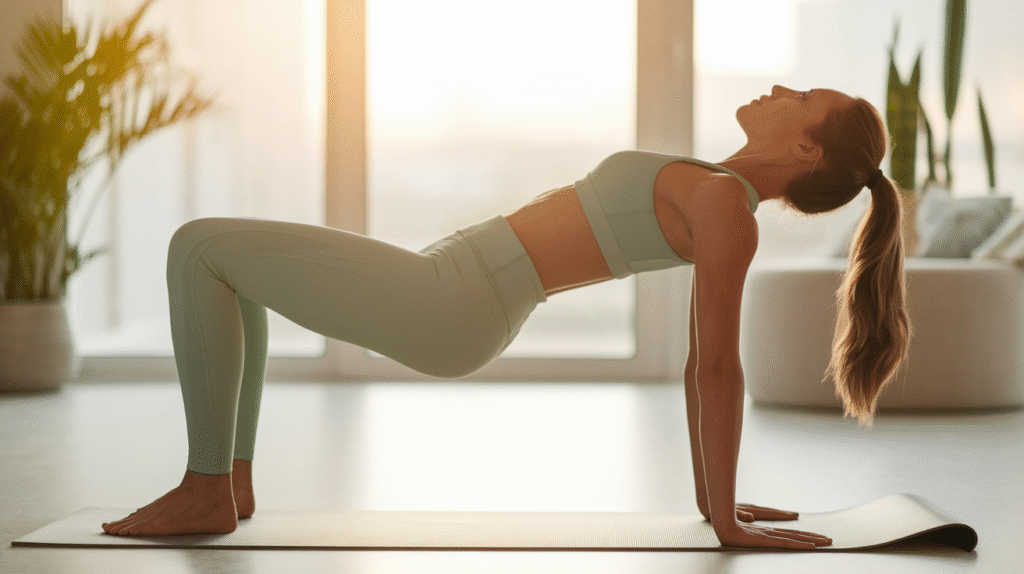
Start by lying on your back with your knees bent and feet flat on the floor, hip-width apart. Your feet should be close enough that you can almost touch your heels with your fingertips when your arms are by your sides.
Press through your heels and lift your hips toward the ceiling, squeezing your glutes at the top. Your body should form a straight line from your shoulders to your knees. Hold for a second at the top, really squeezing those glutes, then lower back down with control. Don’t let your hips touch the floor between reps—keep the tension on your glutes.
The key to perfect form: keep your ribs down and core engaged. Don’t arch your lower back at the top. The movement should come entirely from your glutes, not your back. You should feel this working in your glutes and hamstrings, not your lower back.
Common mistakes to avoid: pushing through your toes instead of heels (this shifts the work to your quads), lifting your hips too high and arching your back, and letting your knees fall inward or outward.
This exercise is essential because it teaches your glutes to activate properly—something many women struggle with after years of sitting. It’s the foundation of glute training.
Exercise 2: Fire Hydrants (60 seconds, 30 seconds per side)
Get on all fours with your hands directly under your shoulders and knees under your hips. Keep your core engaged and back flat—imagine balancing a cup of water on your lower back.
Keeping your knee bent at 90 degrees, lift your right leg out to the side until your thigh is parallel to the floor. Your knee should stay bent throughout the movement. Squeeze at the top, then lower back down with control. Complete 30 seconds on the right side, then switch to the left.
This exercise is amazing for targeting your gluteus medius—the side glute muscle that creates that rounded, lifted appearance. It’s also crucial for hip stability, which affects everything from walking to running to simply standing on one leg.
The benefits extend beyond appearance. Strong gluteus medius muscles prevent your knees from caving inward during movement, reducing knee pain and injury risk. They also stabilize your pelvis during walking, improving your gait and reducing lower back stress.
If you have knee sensitivity, place a folded towel under your knees for cushioning. Focus on the squeeze at the top rather than how high you can lift your leg—quality over quantity wins here.
Exercise 3: Donkey Kicks (60 seconds, 30 seconds per leg)
Stay on all fours in the same starting position as fire hydrants. Keep your right knee bent at 90 degrees and lift your heel toward the ceiling, pressing through your foot like you’re stamping the ceiling with your heel.
Squeeze your glute at the top, hold for a second, then lower back down with control. Your knee shouldn’t touch the floor between reps. Keep your core tight and don’t let your lower back arch. Complete 30 seconds on the right leg, then switch to the left.
This exercise perfectly targets the upper portion of your glutes—the area that creates that lifted, rounded look. It’s also excellent for building the mind-muscle connection with your glutes, teaching you to really feel them working.
The proper technique is crucial here. Keep your hips level—don’t rotate your hip up as you kick back. The movement should be controlled, not a swing. Think about driving your heel straight up toward the ceiling rather than kicking back behind you.
As you get stronger, make it harder by pausing for 2-3 seconds at the top of each rep or by pulsing small movements at the top position. These variations increase time under tension, accelerating your results.
Exercise 4: Curtsy Lunges (90 seconds, 45 seconds per side)
Stand with your feet hip-width apart, hands on your hips or clasped in front of your chest for balance. Step your left leg back and across your body, as if curtsying. Your left foot should land about a foot behind and to the right of your right foot.
Bend both knees and lower down, keeping your chest upright and core engaged. Your right knee should stay aligned over your right ankle. Press through your right heel to return to standing. Complete 45 seconds on the right side, then switch to the left.
This exercise sculpts the outer glutes and creates that lifted, rounded appearance from the side view. It targets the gluteus medius and minimus while also working the larger gluteus maximus. The crossing motion engages muscles that standard lunges miss.
The curtsy lunge is also functional—it mimics the rotational movements you do in daily life, like reaching across your body or turning while carrying something.
If you struggle with balance, start by holding onto a chair or wall with one hand. You can also reduce the range of motion, not going as deep into the lunge until your strength and balance improve. Focus on control rather than speed—this isn’t a race.
Exercise 5: Single-Leg Glute Bridges (90 seconds, 45 seconds per leg)
Lie on your back in the same starting position as regular glute bridges. Lift your right leg straight up toward the ceiling, keeping a slight bend in your knee. Your left foot stays planted on the floor.
Press through your left heel and lift your hips up, keeping them level. Don’t let your right hip drop lower than your left. Squeeze your glutes at the top, hold for a second, then lower with control. Complete 45 seconds on the left leg, then switch to the right.
This ultimate finisher challenges your glute strength and stability simultaneously. Single-leg exercises reveal and correct strength imbalances between sides—something almost everyone has but doesn’t realize.
Quick tips for maintaining balance: keep your core super tight, focus your eyes on a fixed point on the ceiling, and press firmly through your entire foot, not just your heel. Your arms can spread wider on the floor for more stability.
You’re doing it right when you feel intense burning in the glute of your planted leg and your hips stay level throughout the movement. If you’re wobbling excessively or your lower back is doing the work, drop back to regular glute bridges until you build more strength.
Making It Stick: Your Ultimate Success Strategy
The Best Time to Do Your 5-Minute Routine
The best time to do your glute routine is the time you’ll actually do it. That said, strategic timing increases your success rate dramatically.
Morning routines work beautifully for many women. Do your glute routine right after you brush your teeth and before your morning coffee. This “habit stacking” technique—linking a new habit to an established one—creates powerful consistency. Your morning coffee becomes your reward for completing your workout. Plus, morning exercise boosts your energy and mood for the entire day.
Lunchtime offers another perfect window, especially if you work from home. Set a daily alarm for 12:30 PM. Change into comfortable clothes, do your 5-minute routine, and return to work energized. This midday movement break improves afternoon focus and productivity while breaking up long periods of sitting.
Evening wind-down routines work well too. Do your glute routine right before your shower or while dinner is cooking. This signals the transition from work mode to personal time and helps release the physical tension accumulated throughout the day.
The key is anchoring your new habit to something you already do every single day without fail. This removes the need for willpower and decision-making—you simply follow your established routine.
Tracking Your Progress the Simple Way
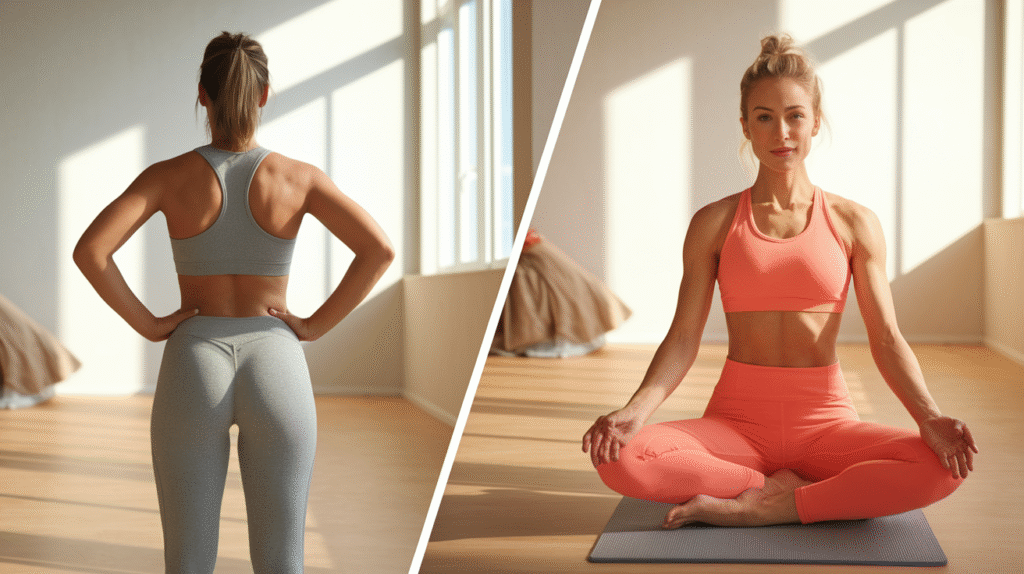
Take before photos from three angles: front, side, and back. Wear form-fitting clothes and use the same lighting and location each time. Take new photos every two weeks, not daily. Daily photos won’t show noticeable changes and can be discouraging.
Track strength improvements by noting how each exercise feels. Week one, single-leg bridges might feel impossible. Week four, they’re challenging but doable. These functional improvements matter more than appearance changes.
Celebrate non-scale victories that transform your daily life: climbing stairs without getting winded, picking up your kids without back pain, sitting at your desk with better posture, feeling more energized throughout the day. These wins prove your routine is working, even before visible changes appear.
Keep a simple journal or use your phone’s notes app. Rate each workout 1-10 based on how you felt. Note any exercises that felt easier or harder. This creates accountability and helps you see patterns over time.
What to Expect Week by Week
Week 1 focuses on getting comfortable with the movements. You’ll feel sore—that’s normal and good. Your muscles are adapting to new stimulus. The exercises might feel awkward or challenging. That’s okay. Focus on form over speed or reps.
Weeks 2-3 bring noticeable changes. The soreness decreases as your muscles adapt. The movements feel more natural. You’ll start feeling stronger during everyday activities. Your energy levels improve. You might notice your posture improving automatically.
Week 4 and beyond is when visible results appear. Your glutes feel firmer. Your clothes fit differently. The exercises that felt impossible in week one now feel manageable. You might find yourself naturally doing more reps or holding positions longer. Your confidence soars because you’ve proven to yourself that you can commit to something and see it through.
Most women report visible changes around week 4-6, but functional improvements—the ones that actually matter for daily life—appear much sooner. Trust the process and stay consistent.
Common Questions and Quick Solutions
“I’m Too Sore—Should I Skip a Day?”
Understanding the difference between good and bad soreness is crucial. Good soreness—delayed onset muscle soreness (DOMS)—feels like a deep, achy sensation in the muscle belly. It’s uncomfortable but not sharp or painful. This soreness peaks 24-48 hours after your workout and gradually improves.
Bad soreness is sharp, localized pain, especially around joints. Pain that worsens with movement or doesn’t improve after a few days needs attention. This isn’t normal muscle soreness—it’s potential injury.
For good soreness, keep moving. Active recovery—doing your routine with lighter intensity or fewer reps—actually speeds recovery by increasing blood flow to sore muscles. Completely resting often makes soreness worse and last longer.
When to modify: if you’re experiencing good soreness, do your routine but reduce the range of motion or number of reps. When to rest: if you have sharp pain, joint discomfort, or soreness that hasn’t improved after 72 hours, take a rest day and consider consulting a healthcare provider if it persists.
The proven benefits of active recovery include faster healing, maintained momentum with your habit, and improved long-term consistency. Pushing through appropriate soreness teaches mental toughness and builds the discipline that creates lasting results.
“Can I Really See Results in Just 5 Minutes?”
Yes, absolutely—but let’s set realistic expectations. Daily consistency beats longer, sporadic workouts every single time. Five minutes daily (35 minutes weekly) with perfect consistency outperforms three 60-minute workouts weekly that you only do sporadically.
The science supports this: muscle protein synthesis—the process of building muscle—is triggered by exercise and remains elevated for 24-48 hours. By training daily, you’re keeping this process constantly activated, leading to better overall results than training just 2-3 times weekly.
Real expectations for body changes over 4-6 weeks: you’ll notice improved muscle tone, better definition, and a lifted appearance. You won’t transform from flat to Instagram model glutes—that’s unrealistic and requires months or years of progressive training. But you will see noticeable, meaningful changes that make you feel stronger and more confident.
To amplify results, focus on protein intake. Aim for 0.7-1 gram of protein per pound of body weight daily. Protein provides the building blocks your muscles need to recover and grow. Simple nutrition tweaks—adding Greek yogurt to breakfast, including chicken or fish at lunch, having a protein shake as a snack—support your training efforts significantly.
Stay hydrated, get adequate sleep (7-9 hours), and manage stress. These factors affect your body’s ability to build muscle and recover from exercise just as much as the workout itself.
“What If I Need to Make It Easier or Harder?”
Simple modifications for beginners or those with limitations: reduce the range of motion on all exercises, decrease the time for each exercise (start with 30-45 seconds instead of 60), or take short breaks between exercises. You can also do exercises from a higher surface—glute bridges on a couch, for example—to reduce the difficulty.
For fire hydrants and donkey kicks, place your hands on an elevated surface like a couch or chair instead of the floor. This reduces the core stability requirement and makes the exercises more accessible.
Effective ways to progress without equipment: increase time under tension by slowing down each rep (3 seconds up, 3 seconds down), add pulses at the top of each movement, or increase the total time for each exercise. You can also add a second round of the entire circuit once the first round feels easy.
Adding resistance bands for the next level: place a mini resistance band just above your knees for glute bridges, fire hydrants, and donkey kicks. This creates constant tension on your glutes and dramatically increases the difficulty. Start with a light band and progress to medium or heavy as you get stronger.
The key is progressive overload—gradually increasing the challenge over time. Your muscles adapt to stress, so you need to continually increase that stress to keep seeing results. Even small progressions—one more rep, one more second of hold time—add up significantly over weeks and months.
“How Do I Fit This Into My Crazy Schedule?”
The perfect “stack” strategy for busy mornings: wake up → bathroom → brush teeth → glute routine → shower → coffee. This sequence takes the same amount of time as your current morning routine plus five minutes. Set your alarm five minutes earlier if needed, but most women find they can fit it in without changing wake-up time.
Quick ideas for sneaking it in during work-from-home days: do your routine during your first conference call of the day (camera off, muted), use it as a break between tasks, or do it while your lunch is heating in the microwave. Working from home provides flexibility—use it.
Make it a family activity and model healthy habits for your kids. Children learn by watching. When they see you prioritizing your health daily, you’re teaching them that self-care matters. Turn on fun music and let them join you. They’ll think it’s playtime while you’re building strength and teaching valuable life lessons.
The truth is, everyone has five minutes. You scroll social media longer than that. You wait for your coffee to brew longer than that. This isn’t about finding time—it’s about making it a non-negotiable priority, just like brushing your teeth or eating breakfast.
Start Building Stronger Glutes Today
You’ve just learned everything you need to transform your glutes, reduce pain, and feel stronger in just five minutes a day. No gym required. No equipment needed. No complicated routines to memorize. Just five proven exercises that work all three glute muscles effectively when you do them consistently.
Women over 35 gain essential benefits that extend far beyond appearance. You’re building strength that makes daily life easier. You’re reducing lower back pain that’s been nagging you for months or years. You’re improving your posture, boosting your metabolism, and increasing your confidence. These changes ripple through every area of your life.
The simple routine you just learned can start today, right where you are. You don’t need to wait until Monday or the first of the month. You don’t need to buy anything or prepare anything. You can literally do this routine in your pajamas in your bedroom right now.
Here’s your action plan: start tomorrow morning with just one round. Set your alarm five minutes earlier. Do the routine before you can talk yourself out of it. Prove to yourself that you can do this. That first completion is the hardest—after that, momentum builds naturally.
Save this routine and set a daily phone reminder. Make it specific: “5-minute glute routine” at the exact time you’ve chosen. When the reminder goes off, drop everything and do it immediately. Don’t negotiate with yourself. Just do it.
Share your commitment with a friend for accountability. Text someone right now: “I’m starting a 5-minute daily glute routine tomorrow morning. Hold me accountable!” Public commitment dramatically increases follow-through. Even better, invite them to join you and check in with each other daily.
Remember this truth: every strong woman you admire started with a single simple step. They weren’t born with perfect glutes or unwavering discipline. They decided to start, they showed up consistently, and they trusted the process. You can do exactly the same thing.
Your future self—the one who climbs stairs effortlessly, who stands taller, who feels confident in her clothes, who doesn’t experience daily back pain—is waiting for you to take this first step. She’s counting on you to start today.
Five minutes. That’s all it takes. You’ve got this.