strength training exercises for beginner women Over 40
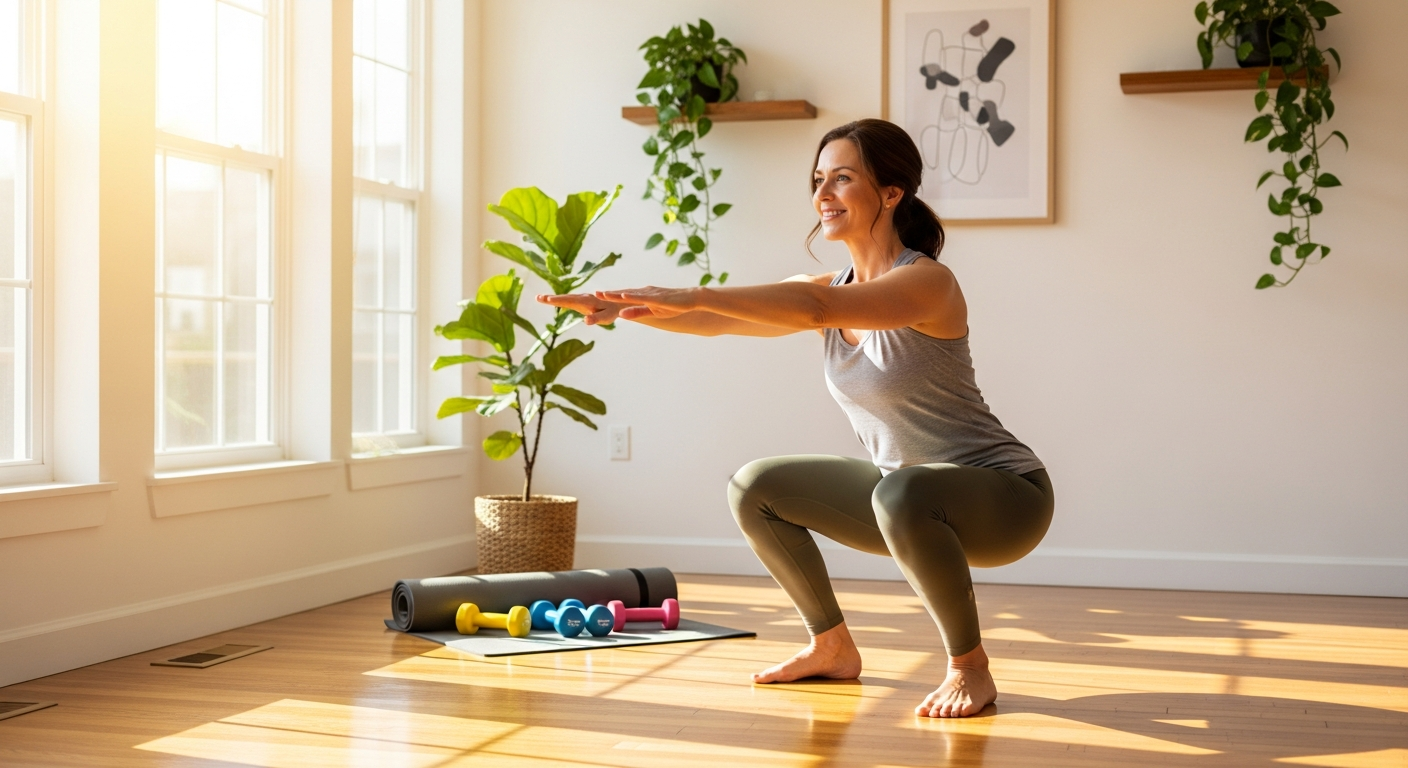
You’re Not Too Old—You’re at the Perfect Age to Start
You’re not too old to start strength training—you’re actually at the perfect age to begin.
Let’s demolish that myth right now: women over 40 don’t need to stick to gentle cardio or yoga alone. Your body is craving resistance training more than ever, and I’m going to show you exactly how to start safely and effectively.
I know what’s holding you back. You’re worried about getting injured. You don’t know where to begin. The gym feels intimidating, and those Instagram fitness influencers doing advanced moves make you feel like strength training isn’t for you.
After 40, strength training becomes MORE important, not less. Your bones are losing density. Your muscles are naturally decreasing by 3-8% per decade. Your metabolism is slowing down. But strength training directly combats all three of these changes.
This guide gives you a clear, doable plan with exercises specifically chosen for beginner women over 40. No complicated equipment. No confusing jargon. Just eight foundational exercises that will transform your body, boost your confidence, and make daily activities easier.
You can start this in your living room with minimal equipment. You’ll learn proper form to protect your joints. You’ll follow a progressive 4-week plan that builds strength without overwhelming your body. And you’ll discover why the best time to start was yesterday—but the second best time is right now.
Starting strength training at 40, 45, 50, or beyond isn’t just possible—it’s one of the most powerful decisions you can make for your health. Women who begin resistance training in their 40s report feeling stronger, more energetic, and more confident than they have in years. That can be you.
Why Strength Training Is a Game-Changer for Women Over 40
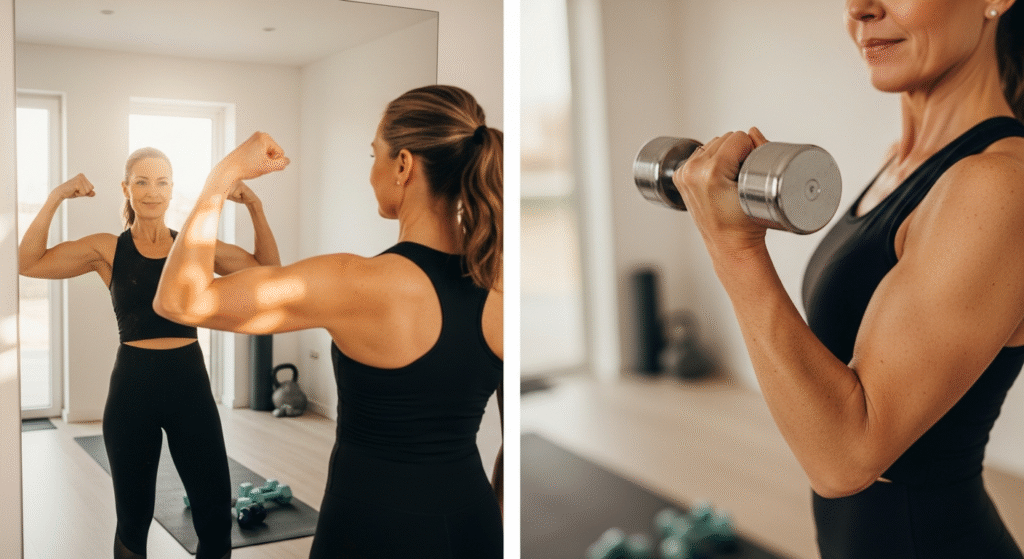
The Physical Changes Happening in Your Body Right Now
Your body is going through significant changes right now, whether you feel them or not. Muscle loss, called sarcopenia, begins around age 30 and accelerates after 40. Without intervention, you’ll lose 3-8% of your muscle mass per decade. That means less strength for carrying groceries, playing with grandkids, or simply getting up from the floor.
Bone density decreases too, especially during perimenopause and menopause when estrogen levels drop. This puts you at higher risk for osteoporosis and fractures. One in two women over 50 will break a bone due to osteoporosis—that’s a statistic we can change.
Your metabolism naturally slows by 2-8% per decade after 30. This isn’t just about weight gain—it’s about your body burning fewer calories at rest, making weight management increasingly difficult.
Strength training directly combats all three issues. When you lift weights, you send powerful signals to your body to maintain and build muscle. You stress your bones in healthy ways that trigger them to become denser and stronger. You increase your resting metabolic rate, burning more calories even while you sleep.
The Proven Benefits You’ll Experience
The benefits of strength training extend far beyond aesthetics. You’ll build and maintain lean muscle mass, which keeps you functional and independent as you age. Research shows that women who strength train twice weekly can increase their bone density by 1-3% annually—reversing the natural decline.
Your metabolism gets a significant boost. Muscle tissue burns more calories than fat tissue, so every pound of muscle you add increases your daily calorie burn. This makes maintaining a healthy weight easier and more sustainable.
You’ll improve balance, coordination, and functional strength for daily life. Opening jars becomes easier. Carrying laundry upstairs feels effortless. You’ll move through your day with more energy and less fatigue.
The mental health benefits are equally powerful. Strength training reduces anxiety and depression, improves sleep quality, and builds genuine confidence. There’s something deeply empowering about getting physically stronger—it changes how you see yourself and what you believe you’re capable of.
Why Traditional Workout Advice Doesn’t Work for You
Most workout programs aren’t designed with your hormonal changes in mind. Your recovery needs are different than they were in your 20s and 30s. You need more rest between intense sessions. Your joints require more attention and proper warm-ups.
Generic fitness advice ignores these realities. That’s why you need a program specifically designed for women over 40—one that respects your body’s current needs while challenging you to grow stronger.
Getting Started: What You Actually Need
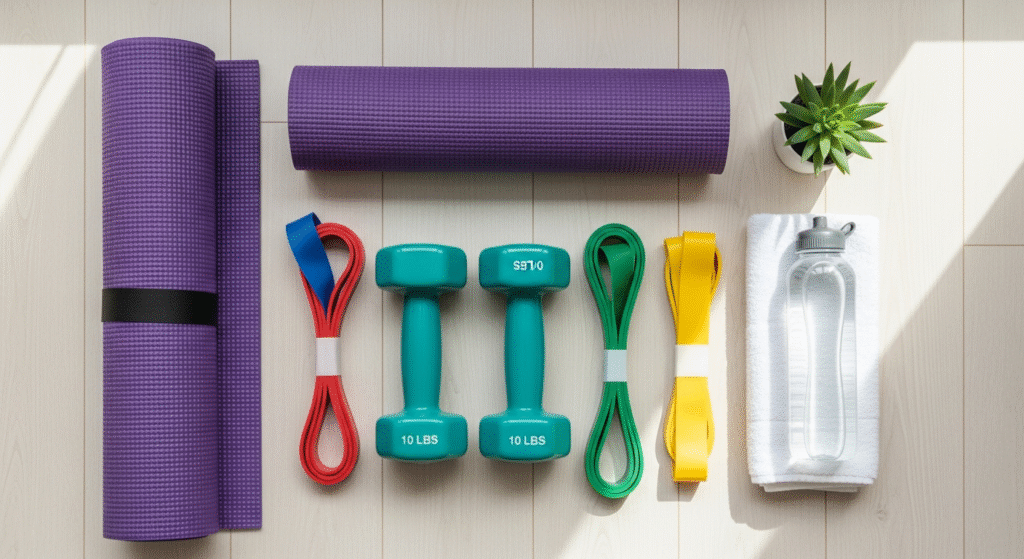
Minimal Equipment, Maximum Results
You don’t need a gym membership or a room full of equipment. Start with a set of dumbbells in the 5-15 pound range. If you’re truly new to strength training, begin with 5 and 8-pound pairs. As you progress, add 10, 12, and 15-pound options.
Resistance bands are optional but helpful for adding variety and working muscles from different angles. They’re inexpensive, portable, and joint-friendly.
A yoga mat provides cushioning for floor exercises. A sturdy chair or bench opens up exercise variations and modifications. That’s it. You can build serious strength with these simple tools.
Creating Your Safe Workout Space at Home
Designate a small area in your home as your workout zone. This doesn’t need to be a full room—a corner of your bedroom or living room works perfectly. Clear enough space to extend your arms and legs in all directions.
Ensure proper lighting so you can see what you’re doing and maintain good form. Open a window or turn on a fan for ventilation. Keep water and a towel nearby.
Set yourself up for success by scheduling your workout time like any other important appointment. Consistency beats intensity, and having a designated time makes it easier to follow through.
The Mindset Shift You Need to Make
Embrace progress over perfection. Your first workout won’t be perfect, and that’s completely okay. Every rep you complete is building strength and establishing the habit.
Consistency beats intensity every time. Two 30-minute workouts per week, done consistently for months, will transform your body more than sporadic intense sessions.
Learn the difference between listening to your body and pushing through pain. Muscle fatigue and mild discomfort are normal. Sharp pain, joint pain, or anything that feels wrong means stop and reassess.
Celebrate small wins along the way. Did you complete all your reps today? Celebrate. Did you add two more pounds to your deadlift? That’s worth acknowledging. These small victories compound into major transformations.
The 8 Most Effective Strength Training Exercises for Beginner Women Over 40
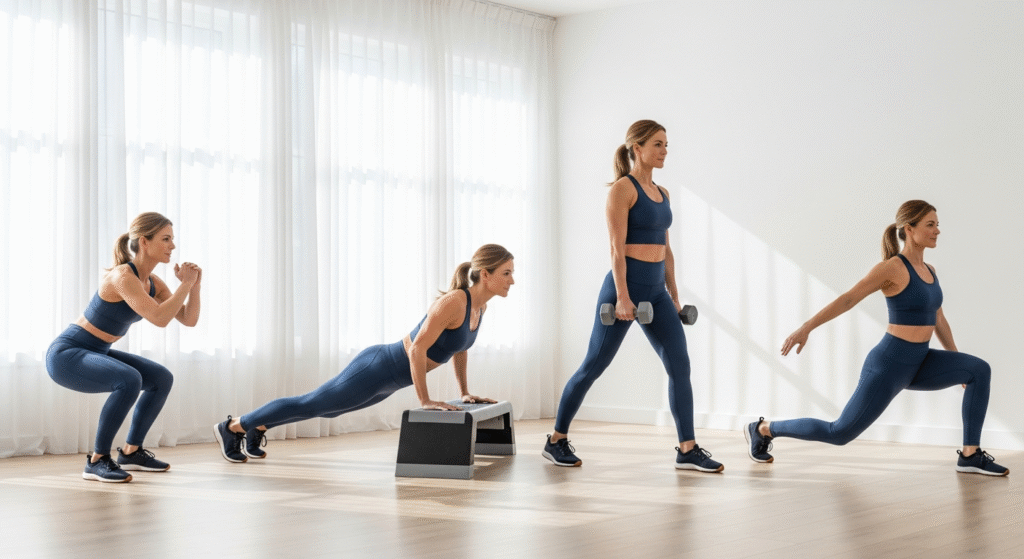
1. Bodyweight Squats (The Foundation Movement)
Squats are the foundation of functional strength. They work your quadriceps, hamstrings, glutes, and core while mimicking movements you do every day—sitting down, standing up, picking things up from the floor.
Stand with feet shoulder-width apart, toes slightly turned out. Keep your chest up and core engaged. Push your hips back as if sitting into a chair, lowering until your thighs are parallel to the floor (or as low as comfortable). Drive through your heels to stand back up, squeezing your glutes at the top.
Common mistakes include knees caving inward (push them out), rounding your back (keep chest proud), and lifting your heels (weight stays in your heels).
Modifications: Start with chair squats—lower until you barely touch a chair, then stand. Wall squats build strength isometrically. Progress to goblet squats holding a dumbbell at your chest.
Start with: 2-3 sets of 10-12 reps
2. Modified Push-Ups (Upper Body Strength Builder)
Push-ups sculpt your chest, shoulders, triceps, and core. They’re one of the most effective upper body exercises, and modifications make them accessible for every fitness level.
Start with wall push-ups: Stand arm’s length from a wall, place hands on the wall at shoulder height. Lean in, bending elbows to bring your chest toward the wall, then push back. Progress to counter push-ups using your kitchen counter, then to knee push-ups on the floor.
Keep your body in a straight line from head to knees (or heels). Don’t let your hips sag or pike up. Keep elbows at a 45-degree angle from your body, not flared straight out.
Start with: 2-3 sets of 8-10 reps
3. Dumbbell Deadlifts (Posterior Chain Power)
Deadlifts strengthen your entire back side—hamstrings, glutes, lower back, and upper back. They improve posture, reduce back pain, and build serious functional strength.
Stand with feet hip-width apart, holding dumbbells in front of your thighs. Keep a slight bend in your knees. Hinge at your hips, pushing them back as you lower the weights down your legs. Keep the weights close to your body and your back flat. Feel the stretch in your hamstrings, then drive your hips forward to return to standing.
Never round your spine. Keep your shoulders back and core tight throughout. Start with light weights—5 to 10 pounds—to master the hip hinge pattern.
Start with: 2-3 sets of 8-10 reps
4. Stationary Lunges (Balance and Leg Strength)
Lunges build single-leg strength, improve balance, and address muscle imbalances between your left and right sides. They’re incredibly functional—think climbing stairs or stepping up onto a curb.
Stand with feet hip-width apart. Step one foot back about two feet. Lower your back knee toward the floor, keeping your front knee over your ankle. Push through your front heel to return to the starting position. Complete all reps on one leg before switching.
Your front knee should stay behind your toes. Keep your torso upright—don’t lean forward. If balance is challenging, hold onto a chair with one hand.
Progress to reverse lunges, then walking lunges with dumbbells.
Start with: 2-3 sets of 8-10 reps per leg
5. Dumbbell Shoulder Press (Upper Body Sculptor)
Shoulder presses build strong, defined shoulders while improving overhead mobility—essential for reaching high shelves or putting luggage in overhead bins.
Sit or stand holding dumbbells at shoulder height, palms facing forward. Press the weights straight up until your arms are extended overhead. Lower with control back to shoulder height.
Don’t arch your back—engage your core to protect your spine. Avoid using momentum or bouncing the weights. If standing feels unstable, sit in a sturdy chair with back support.
Start with: 2-3 sets of 10-12 reps
6. Bent-Over Dumbbell Rows (Back Strength and Posture)
Rows counteract the forward posture we develop from sitting and computer work. They strengthen your upper back, lats, and rear shoulders while improving posture.
Hinge at your hips with a flat back, knees slightly bent, holding dumbbells with arms extended toward the floor. Pull the weights up toward your ribcage, squeezing your shoulder blades together. Lower with control.
Keep your back flat throughout—don’t round your spine. Pull your elbows straight back, not out to the sides. Start light to master the movement.
For an easier variation, do single-arm rows with one hand on a chair for support.
Start with: 2-3 sets of 10-12 reps
7. Glute Bridges (Hip and Core Strength)
Glute bridges activate your glutes, support your lower back, and improve hip mobility. They’re excellent for counteracting the effects of sitting all day.
Lie on your back with knees bent, feet flat on the floor hip-width apart. Press through your heels to lift your hips toward the ceiling, squeezing your glutes at the top. Lower with control.
Don’t overarch your back—the movement comes from your glutes, not your lower back. Squeeze your glutes hard at the top and hold for a second. Keep your core engaged throughout.
Progress to single-leg bridges or add weight by placing a dumbbell on your hips.
Start with: 2-3 sets of 12-15 reps
8. Plank Holds (Core Foundation)
Planks build core strength without stressing your spine. A strong core protects your back, improves balance, and makes every other exercise easier and safer.
Start on your forearms and knees (or toes for more challenge). Your body should form a straight line from head to heels (or knees). Don’t let your hips sag or pike up. Keep your core tight and breathe normally.
If forearm planks are too challenging, do them on your hands (like the top of a push-up position) or against a counter. Focus on quality over duration—perfect form for 15 seconds beats sloppy form for 60 seconds.
Start with: 2-3 sets of 15-30 seconds
Your 4-Week Beginner Strength Training Plan
Week 1-2: Foundation Phase
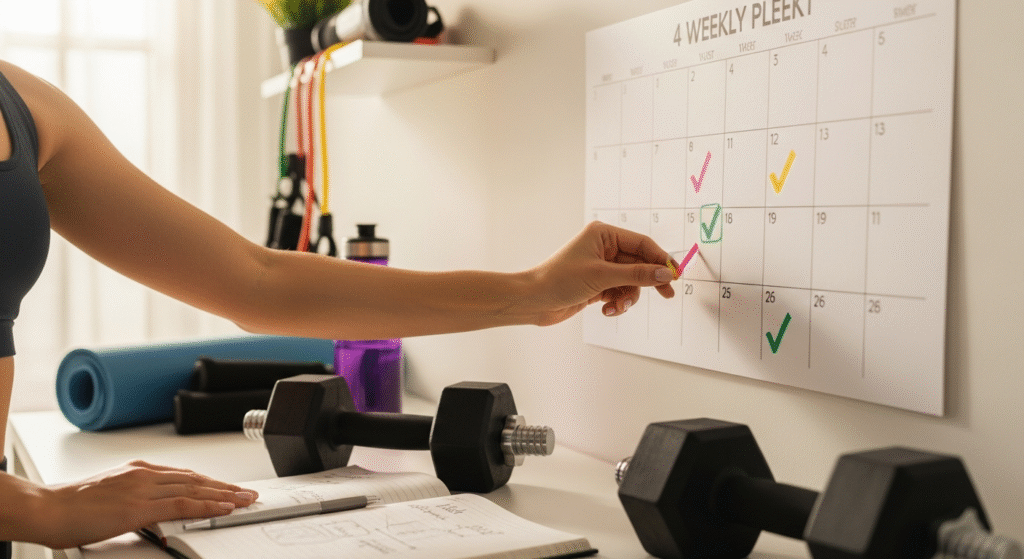
Your first two weeks focus on learning proper form and establishing the habit. Workout 2-3 days per week with at least one rest day between sessions. Your body needs recovery time to adapt and grow stronger.
Workout A: – Bodyweight Squats: 2 sets of 10 reps – Wall or Incline Push-Ups: 2 sets of 8 reps – Dumbbell Deadlifts: 2 sets of 8 reps (light weight) – Plank Holds: 2 sets of 15 seconds
Workout B: – Stationary Lunges: 2 sets of 8 reps per leg – Dumbbell Shoulder Press: 2 sets of 10 reps – Bent-Over Rows: 2 sets of 10 reps – Glute Bridges: 2 sets of 12 reps
Alternate between Workout A and B. Rest 60-90 seconds between sets. Focus on moving slowly and deliberately—this isn’t about speed.
Expect muscle soreness, especially after your first few sessions. This is normal and will decrease as your body adapts. You might feel fatigued as your body learns new movement patterns.
Week 3-4: Building Momentum
Now you’re ready to increase volume and intensity. Move to 3 days per week if you’re recovering well. Add a third set to each exercise and increase weight by 2-5 pounds where comfortable.
Progressive Workout A: – Bodyweight Squats: 3 sets of 12 reps (or add light dumbbells) – Modified Push-Ups: 3 sets of 10 reps (progress to harder variation) – Dumbbell Deadlifts: 3 sets of 10 reps (increase weight) – Plank Holds: 3 sets of 20-25 seconds
Progressive Workout B: – Stationary Lunges: 3 sets of 10 reps per leg – Dumbbell Shoulder Press: 3 sets of 12 reps – Bent-Over Rows: 3 sets of 12 reps – Glute Bridges: 3 sets of 15 reps (try single-leg variation)
Track your workouts in a notebook or app. Note the weights you used and how the exercises felt. This helps you progress systematically.
You should feel noticeably stronger by week 4. Movements that felt challenging in week 1 now feel manageable. You might notice improved energy throughout your day and better sleep at night.
Beyond Week 4: How to Keep Progressing
Progressive overload is the key to continued results. This means gradually increasing the challenge to your muscles. Add weight in small increments (2-5 pounds). Increase reps before adding weight. Slow down your tempo to increase time under tension.
When an exercise feels easy for all sets and reps, it’s time to progress. If you can complete 3 sets of 12 reps with perfect form, add weight or try a harder variation.
Every 4-6 weeks, take a deload week where you reduce volume by 30-40%. This gives your body time to fully recover and come back stronger.
Critical Form Tips and Injury Prevention
The Warm-Up You Should Never Skip
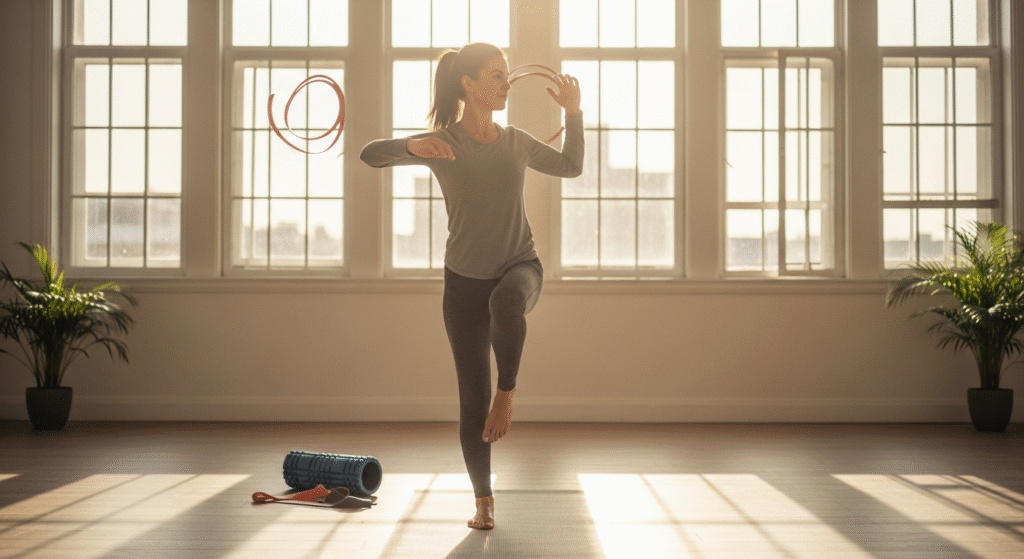
Never start lifting cold. A 5-10 minute dynamic warm-up increases blood flow, lubricates joints, and prepares your nervous system for work.
Simple Warm-Up Routine: – Arm circles: 10 forward, 10 backward – Leg swings: 10 per leg, forward and sideways – Bodyweight squats: 10 reps – Hip circles: 10 per direction – Cat-cow stretches: 10 reps – March in place: 1 minute
Joint mobility becomes increasingly important after 40. Spend extra time on areas that feel stiff—hips, shoulders, and spine typically need the most attention.
Listening to Your Body: Pain vs. Discomfort
Learn the difference between productive discomfort and harmful pain. Muscle fatigue and burning during the last few reps is normal—that’s your muscles working. Sharp pain, joint pain, or anything that makes you wince means stop immediately.
You should feel challenged but capable. If form breaks down, reduce weight or take a longer rest. Quality always beats quantity.
Recovery takes longer after 40. Honor that by taking rest days seriously. Sleep 7-9 hours per night. Stay hydrated. Eat adequate protein to support muscle repair.
Your Strongest Chapter Starts Now
You now have everything you need to start building strength safely and effectively. These eight exercises form the foundation of a powerful practice that will serve you for decades to come.
The women who see the best results are those who start simple, stay consistent, and trust the process. You don’t need to be perfect. You just need to begin and keep showing up.
Strength training after 40 isn’t about recapturing your youth—it’s about building your most capable, confident, powerful self yet. Your body is ready for this challenge. The question is: are you ready to give yourself this gift?
Start with Workout A this week. Just one session. See how it feels. Notice how accomplished you feel afterward. That’s the beginning of your transformation.
Your strongest body is waiting for you to build it. Let’s get started.