Self-guided Beginner Yoga Workouts
I get it. You’ve thought about trying yoga, but the idea of walking into a studio filled with pretzel-flexible practitioners makes your stomach flip.
The monthly membership costs more than your gym, and honestly, you’re not even sure if you can touch your toes. Maybe you’ve watched Instagram yogis flowing effortlessly through poses and thought, “That’s never going to be me.”
Here’s the truth: You don’t need a fancy studio, an expensive membership, or the flexibility of a gymnast to start yoga. Self-guided practice at home is not only possible—it’s actually the perfect entry point for beginners.
This guide gives you everything you need to build an effective, sustainable yoga practice from your living room. You’ll discover proven sequences that deliver results, learn how to avoid common mistakes, and understand why starting at home might be your secret weapon.
The benefits waiting for you—increased strength, better flexibility, reduced stress, improved sleep, and a powerful mind-body connection—are just 15 minutes away.
Every expert yogi you admire started exactly where you are right now, and their journey began with a single breath and one simple pose.
Why Self-Guided Yoga Is Perfect for Beginners

Freedom to Learn at Your Own Pace

II. Why Self-Guided Yoga Is Perfect for Beginners
When you practice yoga at home, you eliminate the single biggest barrier that stops beginners: comparison anxiety. In a studio class, you’re constantly aware of the person next to you folding themselves in half while you’re struggling to reach your knees. That pressure to keep up? It vanishes when you practice solo.
Self-guided yoga means you control the pause button. Didn’t quite understand how to position your hips in Downward Dog? Rewind and watch again. Need to hold Child’s Pose for three minutes instead of thirty seconds? Do it. This is your practice, and there’s zero judgment when you’re the only person in the room.
Research shows that beginners who learn at their own pace develop better form and body awareness than those who rush through poses trying to match a class. You’re building a foundation, and foundations require time. Every mistake becomes a learning opportunity rather than a source of embarrassment. You’ll develop confidence in your body’s abilities without the mental noise of wondering if everyone’s watching you wobble in Tree Pose.
Cost-Effective and Time-Efficient Solution

III. Essential Elements to Start Your Yoga Journey
Studio yoga classes typically cost $20-35 per session, with unlimited monthly memberships ranging from $100-200. Factor in commute time, and a single class consumes 90-120 minutes of your day. That’s not sustainable for most busy professionals or parents juggling multiple responsibilities.
Self-guided practice demolishes these barriers. Your investment? A quality yoga mat ($20-50) and comfortable clothes you probably already own. Free YouTube channels and apps provide world-class instruction without the recurring costs. You’ll save thousands annually while getting equally effective results.
The time efficiency is transformative. Practice at 6 AM before your kids wake up, during your lunch break, or at 10 PM after everyone’s asleep. Research proves that consistent 15-30 minute daily sessions deliver better results than sporadic 90-minute classes. Your body responds to regular movement patterns, not marathon sessions. I’ve watched countless beginners transform their flexibility, strength, and stress levels with just 20 minutes each morning—no commute required.
Build a Sustainable, Lifelong Practice

IV. Proven Beginner Yoga Sequences You Can Start Today
Here’s what most beginners don’t realize: depending on an instructor for every session actually slows your progress. Self-guided practice forces you to develop body awareness and intuition. You learn to feel when your alignment is correct, when to push deeper into a stretch, and when to back off. This internal guidance system becomes your most powerful tool.
You’ll sculpt your practice around your unique body. Maybe you have tight hamstrings from years of desk work, or your shoulders carry stress from daily life. Self-guided practice lets you spend extra time on poses that address your specific needs rather than following a one-size-fits-all class sequence.
This personalization creates sustainability. You’re not locked into a studio schedule or dependent on a specific teacher. Your practice travels with you—hotel rooms, parks, beach vacations. You’re building a lifelong skill, not a gym membership you’ll eventually cancel. The yogis who maintain their practice for decades? They all learned to guide themselves eventually. You’re just starting there from day one.
Essential Elements to Start Your Yoga Journey
Setting Up Your Home Yoga Space

VI. Conclusion
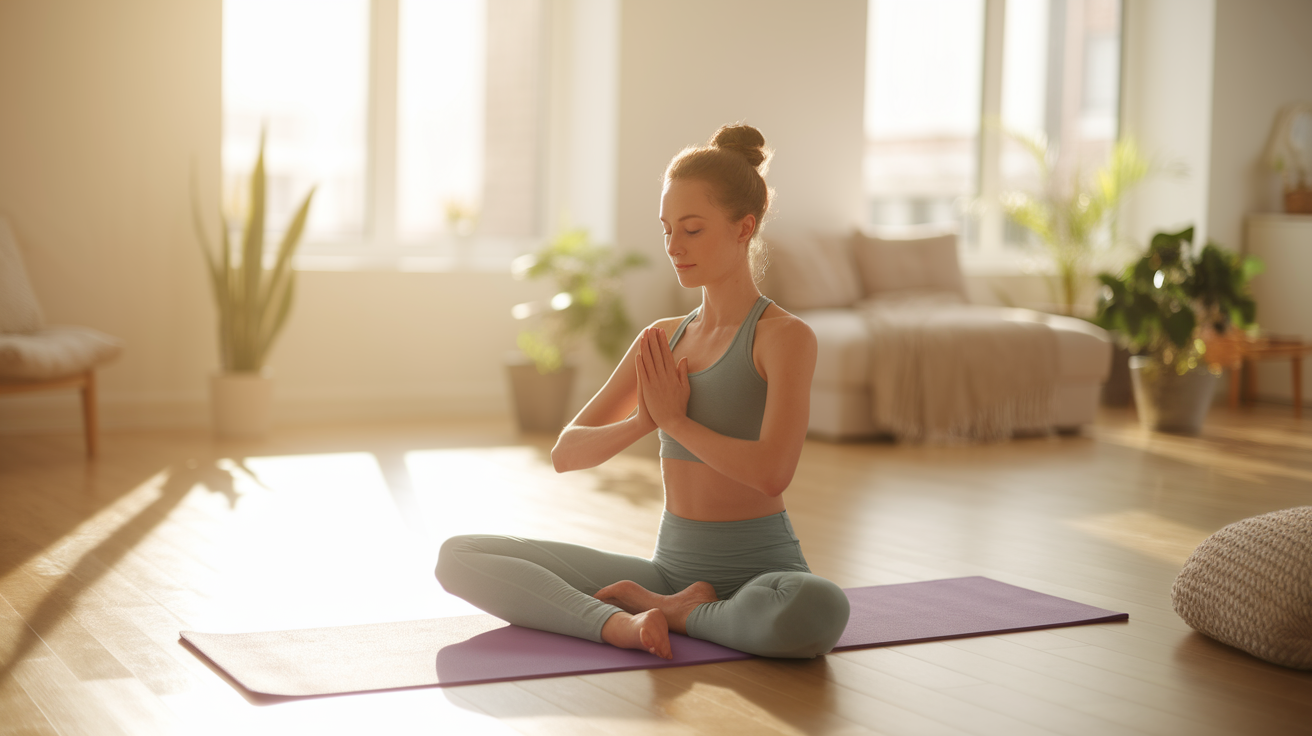
You don’t need a dedicated yoga room or Instagram-worthy setup to build an effective practice. You need approximately 6 feet by 3 feet of clear floor space—about the size of your yoga mat. That’s it. I’ve practiced in tiny apartments, hotel rooms, and even office break rooms. The space matters less than the consistency.
Your most important investment is a quality yoga mat with good grip and cushioning. Cheap mats slip during poses and compress too much, creating instability and potential injury. Spend $30-50 on a reputable brand like Manduka, Liforme, or Jade. This mat will last years and provide the stable foundation every pose requires.
Comfortable, stretchy clothing is essential. You need to move freely without fabric bunching or restricting. Avoid baggy shirts that fall over your head in Downward Dog—fitted athletic wear lets you check your alignment. Props like blocks and straps are helpful but not immediately necessary. Two thick books can substitute for blocks, and a belt works as a strap.
Create your distraction-free zone. Turn off your phone notifications, tell family members you’re unavailable, and close the door if possible. Lighting should be natural or soft—harsh overhead lights create tension. Keep the room temperature comfortable (68-72°F is ideal). Some practitioners add candles or essential oils, but these are personal preferences, not requirements.
Understanding Basic Yoga Principles
Breath is the engine that powers every yoga pose. This isn’t just poetic language—it’s science-backed physiology. Proper breathing activates your parasympathetic nervous system, reducing cortisol and increasing oxygen delivery to working muscles. In yoga, you breathe through your nose using ujjayi breath: a slight constriction in the back of your throat that creates an ocean-like sound.
Match each movement to your breath. Inhale when expanding or lifting, exhale when folding or twisting. This synchronization transforms yoga from simple stretching into a powerful mind-body practice. When you hold a challenging pose, your breath becomes your anchor—if you can maintain steady breathing, you can hold the pose.
Alignment trumps flexibility every single time. I’d rather see you in a modified pose with perfect alignment than forcing yourself into an advanced variation with compressed joints and misaligned spine. Proper alignment protects your body while maximizing each pose’s benefits. Your knees should track over your ankles in lunges, your spine should maintain its natural curves, and you should never feel sharp pain in your joints.
Learn to distinguish between productive discomfort and harmful pain. Muscles should feel challenged and stretched—that burning sensation means you’re building strength and flexibility. Joints should never hurt. Sharp, shooting, or pinching sensations signal you’ve gone too far. Back off immediately. Your body communicates clearly when you learn to listen.
Choosing the Right Resources and Guidance
The internet offers overwhelming options for beginner yoga instruction. Focus on established platforms with certified instructors. Yoga With Adriene on YouTube provides excellent free beginner-friendly sequences with clear instruction. Down Dog app offers customizable practices for all levels. Alo Moves and Glo provide premium subscription content with comprehensive beginner programs.
Quality instruction includes these elements: clear verbal cues describing proper alignment, demonstrations of modifications for different skill levels, emphasis on breath-movement connection, and warnings about common mistakes. Avoid instructors who rush through poses, skip alignment details, or make yoga feel like a competition.
Build your progression plan strategically. Week one should focus on foundational poses: Mountain Pose, Child’s Pose, Cat-Cow, Downward Dog, and basic standing poses. These teach fundamental alignment principles that apply to every advanced pose you’ll eventually learn. Week two adds simple flows connecting these poses. Week three introduces balance poses and longer holds.
Don’t jump to advanced classes because you’re bored or impatient. Research shows beginners who master fundamentals before progressing experience fewer injuries and better long-term results. Spend at least 4-6 weeks on beginner content before exploring intermediate practices. Your body needs time to build the strength, flexibility, and neuromuscular patterns that make advanced poses accessible and safe.
Proven Beginner Yoga Sequences You Can Start Today
The 15-Minute Morning Energizer Flow
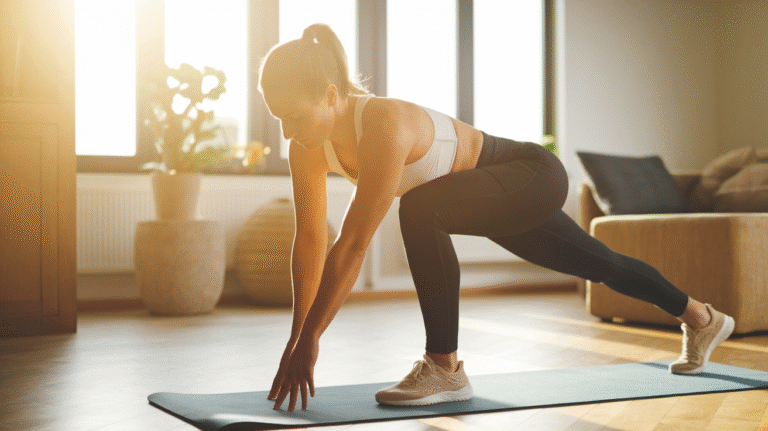
Sun Salutations (Surya Namaskar) form the foundation of most yoga practices. This powerful sequence wakes up every muscle group, increases circulation, and builds heat in your body. Start in Mountain Pose at the front of your mat, feet hip-width apart, hands at your heart center.
Inhale, sweep your arms overhead, reaching toward the ceiling. Exhale, hinge at your hips and fold forward, bringing your hands toward the floor (bend your knees as much as needed). Inhale, lift halfway up with a flat back, hands on shins. Exhale, plant your hands and step back to Plank Pose—shoulders over wrists, body in one straight line from head to heels.
Lower down to the floor with control (or drop your knees first), then inhale into Cobra Pose: hands under shoulders, lift your chest while keeping your hips grounded. Exhale, press back to Downward Dog: hips high, heels reaching toward the floor, creating an inverted V-shape with your body. Hold for five breaths.
Step your feet forward between your hands, inhale halfway lift, exhale fold. Inhale, sweep arms overhead as you rise to standing. Exhale, hands to heart. That’s one Sun Salutation. Repeat 5-10 rounds, moving with your breath.
Add Warrior I after your third Sun Salutation: from Downward Dog, step your right foot forward between your hands, spin your back heel down at 45 degrees, and rise up with arms overhead. This pose builds leg strength, opens your hip flexors, and improves balance. Hold for five breaths per side.
This 15-minute sequence transforms your energy levels by increasing blood flow and oxygen to your brain. Research shows morning yoga improves focus and productivity throughout the day. You’re not just stretching—you’re priming your nervous system for peak performance.
The Stress-Relief Evening Wind-Down
After a demanding day, your body holds tension in predictable places: shoulders, neck, lower back, and hips. This gentle 20-minute sequence releases that accumulated stress while preparing your body for deep, restorative sleep.
Begin in Child’s Pose: knees wide, big toes touching, hips sinking toward your heels, arms extended forward. This pose activates your parasympathetic nervous system, signaling your body to shift from fight-or-flight to rest-and-digest mode. Hold for 2-3 minutes, breathing deeply into your back body.
Move through gentle Cat-Cow spinal flexion: on hands and knees, alternate between arching your back (cow) on inhales and rounding your spine (cat) on exhales. This mobilizes your spine and releases lower back tension. Continue for 1-2 minutes.
Reclined Twist detoxifies your organs and stretches your spine: lie on your back, draw your right knee to your chest, then guide it across your body to the left while extending your right arm out. Turn your head right. Hold for 2-3 minutes per side. This pose releases deep tension in your back and hips.
Legs-Up-The-Wall is your secret weapon for better sleep: sit sideways next to a wall, then swing your legs up as you lie back, creating an L-shape with your body. This gentle inversion reduces leg swelling, calms your nervous system, and prepares you for sleep. Hold for 5-10 minutes.
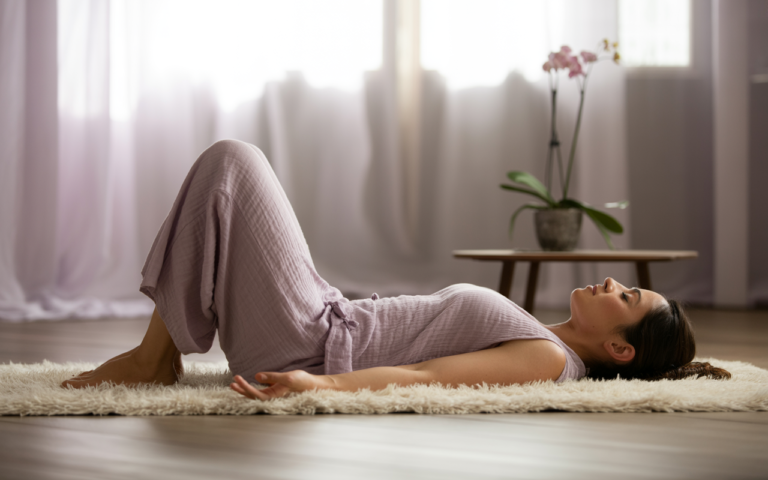
End in Savasana (Corpse Pose): lie flat on your back, legs extended, arms at your sides with palms up. Close your eyes and consciously relax every muscle. This final relaxation integrates all the benefits of your practice. Stay for 5-10 minutes.
Research confirms that evening yoga improves sleep quality by reducing cortisol levels and activating your relaxation response. You’ll fall asleep faster and wake up more refreshed.
The Full-Body Strength Builder (30 Minutes)
This sequence proves yoga builds serious strength. You’ll sculpt lean muscle, burn calories, and challenge your entire body. Start with 3-5 Sun Salutations to warm up your muscles and joints.
Core-sculpting poses transform your midsection: Boat Pose holds your body in a V-shape, balancing on your sit bones with legs lifted and arms extended forward. Your core muscles engage intensely to maintain this position. Start with 20-30 second holds, building to one minute. Rest in Child’s Pose, then repeat 3-5 times.
Side Plank builds oblique strength and shoulder stability: from Plank, shift your weight onto your right hand and outer edge of your right foot, stacking your left foot on top. Lift your left arm toward the ceiling. Your body forms one straight line from head to feet. Hold for 30-60 seconds per side, repeat 2-3 times.
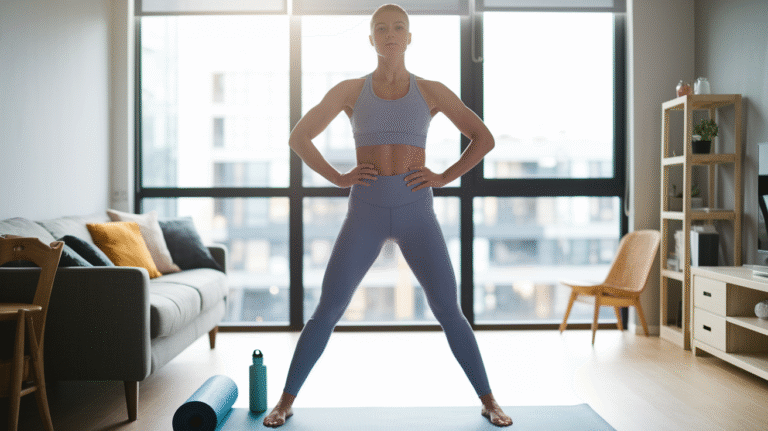
Lower body strength comes from holding standing poses: Chair Pose (Utkatasana) mimics a squat, firing up your quads, glutes, and core. Sink your hips back and down as if sitting in a chair, arms overhead. Hold for 1-2 minutes. Warrior II strengthens your legs while opening your hips: front knee bent at 90 degrees, back leg straight, arms extended over your legs. Hold for 1-2 minutes per side.
Crescent Lunge adds intensity: step your right foot forward into a lunge, back heel lifted, arms overhead. Your back leg stays straight and strong. Hold for 1-2 minutes per side. Feel your legs shaking? That’s your muscles building strength.
Balance poses like Tree Pose develop stabilizer muscles and mental focus: stand on your right leg, place your left foot on your inner right thigh (or calf, never on the knee), hands at heart center or overhead. Hold for 1-2 minutes per side.
End with 5 minutes in Savasana to allow your muscles to recover. This 30-minute practice delivers full-body toning without any equipment. Repeat 3-4 times weekly for visible results within 4-6 weeks.
Overcoming Common Beginner Challenges
“I’m Not Flexible Enough for Yoga”
This belief stops more beginners than any other obstacle. Here’s the reality: saying you’re too inflexible for yoga is like saying you’re too dirty to take a shower. Flexibility is the result of yoga practice, not a prerequisite.
Your tight hamstrings, stiff hips, and limited range of motion are exactly why you need yoga. Every single person who now flows effortlessly through advanced poses started with the same limitations. Flexibility develops through consistent practice—your connective tissues gradually adapt to regular stretching, increasing your range of motion over time.
Science shows that flexibility improvements follow a predictable timeline. You’ll notice small changes within 2-3 weeks: bending slightly deeper in forward folds, feeling less restriction in twists. Significant improvements appear around 8-12 weeks with consistent practice. After six months, you’ll barely recognize your body’s capabilities.
Modifications and props make every pose accessible regardless of your current flexibility. Can’t reach the floor in a forward fold? Place blocks under your hands. Hamstrings too tight for seated forward bends? Sit on a folded blanket and bend your knees. Struggling in Downward Dog? Bend your knees generously. These modifications aren’t cheating—they’re intelligent practice that meets your body where it is today.
Your flexibility will never match someone else’s, and that’s perfectly fine. Bodies have different bone structures, muscle insertions, and natural ranges of motion. Some people will always fold deeper in forward bends; others will naturally excel at backbends. Your practice is about maximizing your unique body’s potential, not matching someone else’s.
Staying Motivated Without a Class Structure
Self-guided practice requires self-discipline, and motivation naturally fluctuates. The solution isn’t willpower—it’s systems. Build structures that make practice automatic rather than optional.
Habit stacking is your most powerful tool: attach your yoga practice to an existing habit. Practice immediately after your morning coffee, right before your shower, or as soon as you put your kids to bed. This piggybacks on established routines, making your new habit feel natural. Research shows habits linked to existing behaviors stick 3-4 times better than standalone commitments.
Schedule your practice like any important appointment. Block 15-30 minutes on your calendar and protect that time fiercely. Morning practice works best for most people—fewer distractions and decision fatigue. You’re also more likely to complete morning commitments before daily chaos derails your plans.
Track your progress visually: mark an X on a calendar for each practice session, creating a chain you won’t want to break. Apps like Streaks or simple paper calendars work equally well. This visual reminder creates accountability and satisfies your brain’s reward system.
Set achievable milestones beyond weight loss or flexibility: “Practice 10 minutes daily for 30 days,” “Master Sun Salutations without modifications,” “Hold Plank for 60 seconds.” Specific, measurable goals maintain motivation better than vague aspirations.
Join online communities for support: Reddit’s r/yoga, Facebook groups, or Instagram hashtags connect you with practitioners worldwide. Share your progress, ask questions, and celebrate others’ achievements. This virtual community replaces the in-person accountability of studio classes.
On days when motivation vanishes, commit to just five minutes. Tell yourself you can stop after five minutes if you want. You’ll almost always continue once you start—the hardest part is unrolling your mat. This “just five minutes” rule eliminates the mental barrier that stops practice.
Avoiding Injury and Knowing Your Limits
Yoga injuries among beginners typically result from three mistakes: pushing too hard too fast, ignoring pain signals, and practicing with poor alignment. Understanding these patterns prevents 90% of common injuries.
Never force yourself deeper into a pose. Flexibility and strength develop gradually as your body adapts to new demands. Forcing creates micro-tears in muscles and connective tissue, leading to inflammation and injury. Instead, find your edge—the point where you feel significant sensation but can maintain steady breathing—and hold there. Your edge will deepen naturally over weeks and months.
Distinguish between productive discomfort and warning pain. Muscles should feel stretched, challenged, and possibly shaky in strength-building poses. This sensation means you’re working effectively. Joints should never hurt. Sharp, shooting, pinching, or stabbing sensations signal you’ve exceeded your body’s current capacity. Back off immediately, modify the pose, or skip it entirely.
Common beginner mistakes include: locking joints (keep a micro-bend in elbows and knees), holding your breath (breathe steadily throughout), rounding your spine in forward folds (hinge from hips with a flat back), and collapsing in Plank (maintain one straight line from head to heels).
Wrist pain in poses like Downward Dog often indicates you’re dumping too much weight forward. Press evenly through your entire palm, especially the base of your fingers, and engage your arms to lift weight out of your wrists. If pain persists, practice on your forearms instead.
Lower back pain usually signals you’re overextending in backbends or not engaging your core in poses. Always activate your abdominal muscles to protect your spine. In backbends, focus on opening your chest and upper back rather than cranking your lower back.
Consult a healthcare provider before starting yoga if you have: recent or chronic injuries, joint problems, herniated discs, severe osteoporosis, uncontrolled high blood pressure, or pregnancy. A medical professional can identify modifications or contraindications specific to your situation. Most conditions don’t prevent yoga practice—they just require intelligent modifications.
Listen to your body’s signals consistently. Soreness 24-48 hours after practice is normal (especially initially). Sharp pain during practice is not. Fatigue after a challenging sequence is expected. Exhaustion that prevents daily activities suggests you’re overdoing it. Your body communicates clearly when you pay attention.
Conclusion
Self-guided beginner yoga practice offers something traditional studio classes can’t: complete freedom to build a practice perfectly suited to your body, schedule, and goals. You’ve learned that flexibility isn’t required to start—it’s the reward for consistent practice. You understand that 15-30 minutes daily delivers better results than sporadic longer sessions. You have proven sequences that energize your mornings, relieve evening stress, and build full-body strength.
The transformation waiting for you extends beyond physical benefits. Research confirms that regular yoga practice reduces anxiety, improves sleep quality, increases focus, and builds resilience to daily stress. You’ll develop body awareness that carries into every activity. You’ll move with more confidence, carry less tension, and handle challenges with greater calm.
Perfection isn’t the goal—consistency is. Some days you’ll flow effortlessly through sequences; other days you’ll struggle with poses you’ve mastered before. Both experiences are part of the journey. Your practice will evolve as your body changes, your life shifts, and your understanding deepens. That evolution is the beauty of a sustainable, lifelong practice.
Your first step is simple: choose one 15-minute sequence from this guide and practice it tomorrow morning. Don’t overthink it, don’t wait for the perfect moment, and don’t worry about doing it perfectly. Unroll your mat, take a deep breath, and move through the poses. That’s all it takes to begin.
Every expert yogi you admire started exactly where you are right now—uncertain, inflexible, and wondering if they could really do this. They took that first step anyway. Years later, they can’t imagine life without their practice. Your journey starts with the same choice: one breath, one pose, one practice at a time.
Your transformation begins today. Take that first step, and discover what your body can become.