Rebuild Bone Density After 40: Try These 8 Gentle Pilates Moves
You’ve probably noticed it—that slight stiffness when you get out of bed, the way your posture isn’t quite what it used to be, or maybe you’ve even heard the words “osteopenia” or “low bone density” from your doctor. Here’s the truth: after 40, our bones naturally start losing density. But here’s the better truth: you can absolutely do something about it.
I’m going to share eight gentle Pilates moves that rebuild bone strength without beating up your joints or requiring expensive gym memberships. These exercises work because they combine weight-bearing movement with controlled resistance—exactly what your bones need to stay strong and healthy.
You don’t need fancy equipment or hours at the gym. What you need is a mat, a bit of wall space, and about 20-30 minutes three times a week. These moves simultaneously improve your posture, build strength throughout your entire body, and stimulate the bone-building process that keeps you active and independent for decades to come.
The best part? Gentle doesn’t mean easy or ineffective. These exercises deliver proven results by working with your body’s natural ability to adapt and strengthen. Whether you’re just noticing changes or you’ve been told you have low bone density, starting today makes a real difference. Your future self—the one who moves confidently, stands tall, and lives without fear of fractures—will absolutely thank you.
Why Bone Density Matters After 40 (And Why Pilates Is Your Secret Weapon)
Understanding Bone Loss After 40
Let’s talk about what’s actually happening inside your bones. Throughout your life, your body constantly breaks down old bone tissue and builds new bone—it’s a natural remodeling process. But around age 40, and especially during perimenopause and menopause, this balance shifts. Your body starts breaking down bone faster than it builds it back up.
For women, this process accelerates significantly. In the first five to seven years after menopause, you can lose up to 20% of your bone density. That’s not just a number on a scan—it translates to real-world consequences. Weaker bones mean higher fracture risk from simple falls, loss of height as vertebrae compress, and that forward-hunched posture that makes you look and feel older than you are.
The most vulnerable areas? Your spine, hips, and wrists. These are the bones that bear weight and absorb impact during daily activities. When they weaken, everything from carrying groceries to playing with grandchildren becomes riskier.
How Pilates Rebuilds Stronger Bones
Here’s where Pilates becomes your secret weapon. Your bones respond to stress—the good kind of stress. When you place controlled, progressive load on your skeleton through weight-bearing and resistance exercises, your bones get the signal: “We need to be stronger!” This triggers your body to deposit more minerals into the bone matrix, increasing density over time.
Pilates delivers this bone-building stimulus through precise, controlled movements that challenge your muscles and bones simultaneously. Unlike high-impact exercises that can be risky for aging joints, Pilates uses your own body weight, gravity, and sometimes light resistance to create the perfect amount of challenge.
The magic lies in the method’s focus on proper alignment and core stability. When you perform a Pilates bridge or plank with correct form, you’re not just going through the motions—you’re creating optimal loading patterns that stimulate bone growth exactly where you need it most. The controlled nature means you build strength without the jarring impact that could cause injury.
Beyond bone density, Pilates improves balance and coordination, which directly reduces your fall risk. Since 90% of fractures in older adults result from falls, this protective benefit is enormous.
What Makes These Moves “Gentle” Yet Effective
When I say “gentle,” I’m not talking about easy or ineffective. I’m talking about intelligent, sustainable exercise that respects your body while challenging it appropriately. These moves are low-impact, meaning they don’t pound your joints or spike your injury risk. But they’re high-value for bone building.
The effectiveness comes from proper form and progressive resistance. A wall plank performed with perfect alignment and full-body engagement stimulates bone adaptation just as effectively as more aggressive exercises—but without the risk. You’re working against gravity, creating muscle tension that pulls on bones, and building strength through controlled movement patterns.
The gentle approach also means you can practice consistently. You’re not so sore you can’t move the next day. You’re not injured and forced to stop. Consistency wins when it comes to bone health—and gentle, effective movements keep you showing up week after week, which is exactly how you build lasting results.
Preparing for Your Bone-Building Pilates Practice
Essential Safety Tips Before You Start
Before you roll out your mat, let’s talk safety. If you’ve been diagnosed with osteopenia, osteoporosis, or any bone density concerns, check with your healthcare provider before starting any new exercise program. This isn’t just legal disclaimer stuff—it’s genuinely important. Your doctor can tell you if you need any specific modifications based on your individual bone health status.
There are certain movements you’ll want to avoid or modify significantly if you have low bone density. Deep forward bending (flexion) combined with twisting puts excessive stress on vertebrae and increases fracture risk. Think sit-ups with a twist or touching your toes with rotation—these aren’t part of our program, but it’s important you know why.
Listen to your body throughout every movement. Sharp pain is always a stop signal. Mild muscle fatigue and effort? That’s normal and good. But pain in your joints, spine, or anywhere else means you need to modify or skip that particular exercise. There’s no prize for pushing through pain—only increased injury risk.
Start conservatively. If an exercise offers modifications, begin with the easiest version. You can always progress to more challenging variations once you’ve mastered the basics. Building a strong foundation protects you and ensures you’re actually getting the bone-building benefits rather than just going through the motions.
What You’ll Need (Spoiler: Not Much!)
One of the beautiful things about Pilates is its simplicity. You need a comfortable exercise mat—something with enough cushioning to protect your spine and joints but firm enough to maintain stability. A yoga mat works perfectly.
Clear wall space is essential for several of these moves. You’ll use the wall for support, alignment feedback, and as a tool for certain exercises. Make sure you have about six feet of clear wall with enough room to lie down perpendicular to it.
Optional but helpful: a set of light hand weights (2-5 pounds) or a resistance band. These add challenge to certain moves as you progress. But honestly, you can do every single exercise effectively with just your body weight when you’re starting out.
Create your practice space somewhere you actually want to be. Good lighting, a pleasant temperature, and minimal distractions help you stay consistent. Some people love practicing in the morning before the day gets busy. Others prefer evening sessions to decompress. The best time is the time you’ll actually do it.
Setting Realistic Expectations and Goals
Let’s get real about what to expect. You won’t rebuild years of bone loss in two weeks. Bone remodeling is a slow process—it takes about three to six months for new bone tissue to fully form and mineralize. But here’s what you will notice quickly: better posture, improved strength, more confidence in your movement, and often reduced back pain.
Research shows that consistent weight-bearing and resistance exercise can increase bone density by 1-2% per year and significantly slow bone loss. That might sound small, but it’s the difference between maintaining independence and facing fracture risk. Over several years, these gains compound into meaningful protection.
Aim to practice these moves three to four times per week. Each session takes 20-30 minutes once you know the exercises. Consistency matters far more than intensity. Three 25-minute sessions weekly will deliver better results than one marathon 90-minute session.
Track your progress in ways that matter to you. Maybe it’s how many repetitions you can complete with good form. Maybe it’s standing taller or feeling more stable on your feet. Maybe it’s the confidence to try activities you’d been avoiding. These real-world improvements are just as important as the bone density numbers on your next scan.
The 8 Gentle Pilates Moves to Rebuild Bone Density
Move 1: Wall Roll-Down (Spine Strengthening)
Stand with your back against a wall, feet hip-width apart and about six inches from the wall. Your entire spine should touch the wall—head, shoulders, mid-back, and sacrum. Take a deep breath, then slowly roll down one vertebra at a time, peeling your spine away from the wall as your chin drops to your chest.
Roll down as far as comfortable—maybe just to your mid-back at first. Your hips and sacrum stay connected to the wall. Pause at the bottom, take a breath, then slowly roll back up, restacking each vertebra until you’re tall against the wall again.
This move decompresses your spine while building strength in the deep stabilizing muscles that support your vertebrae. It’s perfect for combating the forward posture that often accompanies bone loss and aging. The wall provides feedback, helping you feel each segment of your spine moving independently.
Start with 5-6 repetitions, focusing on smooth, controlled movement. As you get stronger, you can roll down further and add more repetitions. Common mistake: rushing through the movement. Slow is strong here. Each roll-down should take 6-8 seconds.
Move 2: Standing Leg Lifts (Hip and Leg Bones)
Stand tall beside a wall or sturdy chair, lightly touching it with one hand for balance. Ground through your standing leg, engaging your core and maintaining perfect posture. Slowly lift your outside leg straight out to the side, keeping your hips level and your toes pointing forward.
Lift only as high as you can while maintaining perfect alignment—probably 12-18 inches at first. Hold for two seconds at the top, then slowly lower with control. Complete 10-12 lifts, then switch sides.
This exercise builds bone density in your hips and femur (thigh bone)—two of the most fracture-prone areas as we age. The standing leg also benefits as it supports your full body weight. You’re simultaneously improving balance, which protects you from falls.
Progression: Once you master the basic lift, try it without touching the wall, or add a small ankle weight (1-2 pounds maximum to start). The key is maintaining perfect form—never sacrifice alignment for height or added weight.
Move 3: Pilates Plank (Full Body Strength)
The plank is the ultimate bone-density builder because it loads your entire skeleton with resistance. Start with a wall plank if you’re new to this. Stand arm’s length from a wall, place your hands flat against it at shoulder height, and walk your feet back until your body forms a straight line from head to heels.
Engage everything—your core pulls in, your glutes squeeze, your legs are active, and you’re pushing the wall away. Hold for 15-30 seconds, breathing steadily. This loads your wrists, arms, shoulders, spine, hips, and legs all at once.
As you build strength, move to a countertop plank (hands on a kitchen counter), then a low table or sturdy coffee table, and eventually to the floor. A floor plank on your hands or forearms is the ultimate progression, but there’s no rush to get there.
The beauty of planks is they create compression through your bones—exactly the stimulus needed for bone building. They also strengthen your core profoundly, which protects your spine and improves every other movement you do.
Start with 2-3 holds of 15-20 seconds. Rest between holds. As you get stronger, work up to 45-60 seconds. Never let your hips sag or your shoulders hunch—proper alignment is everything.
Move 4: Bridge with Leg Extension (Spine and Hips)
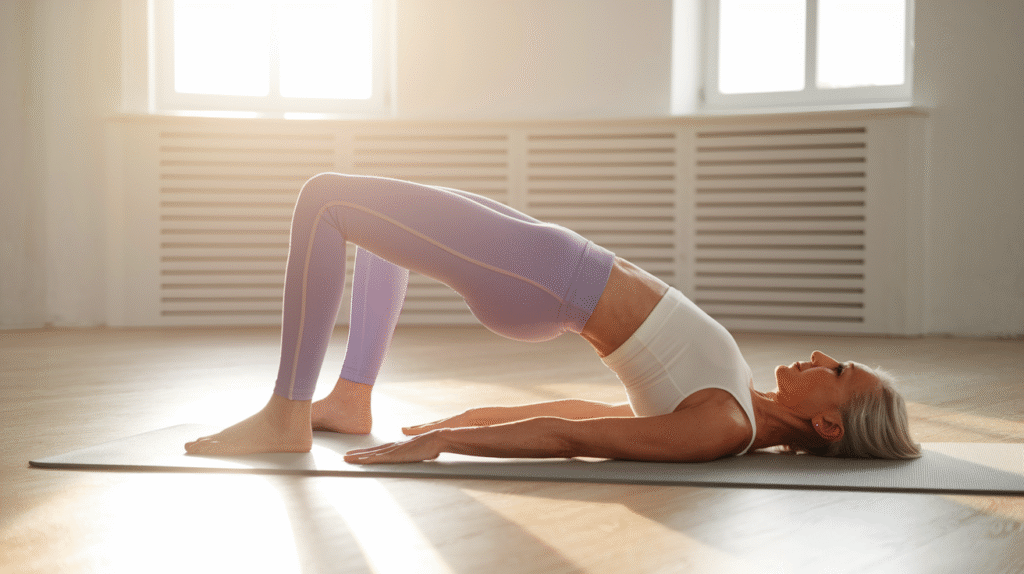
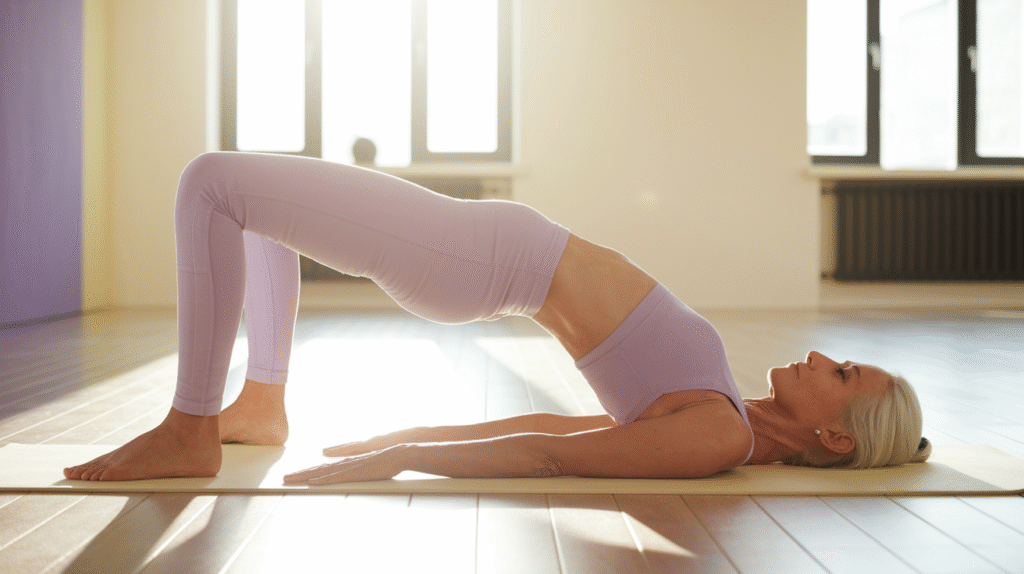
Lie on your back with knees bent, feet flat on the floor hip-width apart, arms by your sides. Press through your feet and lift your hips toward the ceiling, creating a straight line from shoulders to knees. This is your basic bridge—hold it while breathing steadily.
Once you’re comfortable with basic bridges, add the leg extension. From your bridge position, extend one leg straight out, keeping your hips level. The challenge is maintaining your hip height without tilting. Hold for 3-5 seconds, lower the foot back down, then extend the other leg.
This move strengthens your entire posterior chain—glutes, hamstrings, and all the muscles along your spine. It creates compression through your spine and hips, stimulating bone growth. It also opens your hip flexors, which tend to get tight from sitting.
Start with 8-10 basic bridges, holding each for 5-8 seconds. Once those feel strong, add 3-4 single-leg extensions per side. Common mistake: letting your hips drop when you extend your leg. Keep those hips high and level—that’s where the strength-building happens.
Move 5: Side-Lying Leg Series (Hip Strengthening)
Lie on your side with your bottom arm extended under your head, your body in a straight line from head to feet. Stack your hips and shoulders vertically. This is your starting position for three simple but powerful variations.
First variation: Lift your top leg straight up toward the ceiling, keeping it in line with your body. Lower with control. Do 10-12 repetitions. Second variation: Bring your top leg slightly forward and make small circles—8 circles forward, 8 circles back. Third variation: Small pulses at the top of your leg lift—lift, pulse-pulse-pulse at the top, lower. Do 10 sets.
These moves target your hip abductors and external rotators—muscles that stabilize your pelvis and protect your hip bones. They also improve balance and prevent the hip weakness that contributes to falls. The side-lying position removes impact while still creating the resistance your bones need.
Focus on control and precision rather than speed or height. You’re building strength through the full range of motion, which translates to better stability in daily activities like climbing stairs or walking on uneven surfaces.
Move 6: Chest Expansion (Upper Body and Posture)
Stand or kneel tall with perfect posture—shoulders back, chest open, core engaged. Hold your arms straight back behind you, hands in gentle fists or holding light weights (2-3 pounds). Squeeze your shoulder blades together and pulse your arms back in small movements—pulse, pulse, pulse—for 8-10 repetitions.
This exercise combats the forward shoulder posture that weakens upper spine bones and makes you look older. It strengthens the muscles between your shoulder blades and creates beneficial stress through your upper spine and shoulder bones.
The standing version challenges your balance and core. The kneeling version (on your knees with hips extended) adds hip flexor opening. Choose the version that allows you to maintain perfect form throughout.
Breathe naturally—don’t hold your breath. The temptation is to hunch forward or lose your tall spine. Keep lifting through the crown of your head. Think about creating space between each vertebra as you pulse your arms back.
Start without weights for the first week or two. Once the movement pattern feels natural, add light weights. Progress by increasing repetitions (up to 15-20) rather than using heavy weights. Quality movement builds bones—heavy, sloppy movement risks injury.
Move 7: The Hundred (Modified Core Work)
Lie on your back with knees bent, feet flat on the floor. Lift your head and shoulders off the mat, reaching your arms long by your sides, hovering a few inches off the floor. Begin pumping your arms up and down in small, controlled movements while breathing in for five pumps and out for five pumps.
This modified version (bent knees, feet down) is perfect for building core strength safely. Your deep abdominal muscles work to stabilize your spine, and the sustained contraction builds endurance. Strong core muscles protect your spine and improve the effectiveness of every other exercise you do.
The breathing pattern is essential—it keeps you from holding your breath and adds an extra challenge to your core stability. Count in your head: pump-pump-pump-pump-pump (inhale), pump-pump-pump-pump-pump (exhale). That’s one set of ten. Work up to ten sets (100 total pumps).
Start with 30-50 pumps if 100 is too much. Rest when you need to. The key is maintaining your head and shoulder lift with your core—not straining your neck. If your neck gets tired, lower your head, rest briefly, then continue.
As you get stronger, you can lift your feet off the floor (tabletop position with knees bent) for an added challenge. But master the basic version first. Core strength directly correlates with better bone health because it protects your spine during all activities.
Move 8: Mermaid Stretch with Resistance (Spine Mobility)
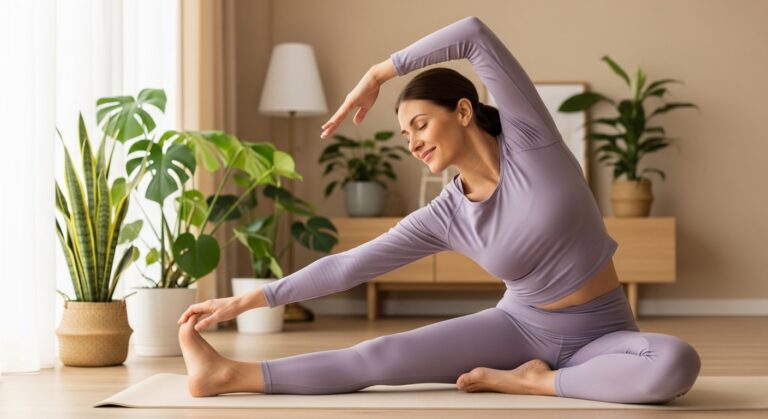
Sit with your legs folded to one side (like a mermaid tail). Place one hand on the floor beside you for support. Reach your opposite arm up and over your head, creating a beautiful side bend. Feel the stretch along your entire side body.
To add bone-building resistance, hold a light resistance band or weight in your reaching hand. The added resistance means your muscles work harder to control the movement, which stimulates bone strengthening along your spine.
Breathe deeply into the stretched side—this enhances the mobility benefit. Hold for 15-20 seconds, then slowly return to center. Switch sides. Do 2-3 repetitions per side.
This move combines flexibility with strengthening—a perfect combination for spine health. Mobility keeps your spine moving well, which reduces injury risk and maintains the space between vertebrae. The resistance component ensures you’re building strength, not just stretching.
If sitting in the mermaid position is uncomfortable for your knees or hips, try this standing against a wall instead. The principle remains the same: side bending with control and optional resistance for added bone-building benefit.
Creating Your Complete Bone-Building Routine
How to Structure Your Weekly Practice
Now that you know the eight moves, let’s talk about putting them together into a sustainable routine. The ideal schedule for bone building is three to four sessions per week, with at least one rest day between sessions. This gives your bones time to respond to the stimulus and rebuild stronger.
A complete session flows like this: Start with the Wall Roll-Down (2-3 repetitions) to warm up your spine. Move to Standing Leg Lifts (10-12 per side) to activate your hips. Progress to your Pilates Plank (2-3 holds), then down to the mat for Bridges with Leg Extensions (8-10 total). Continue with the Side-Lying Leg Series (complete all three variations on one side, then switch). Sit up for Chest Expansion (10-15 repetitions), then lie back for The Hundred (50-100 pumps). Finish with the Mermaid Stretch (2-3 per side) to restore mobility.
This sequence takes 20-30 minutes once you know the moves. In your first week, expect it to take longer as you learn proper form. That’s perfect—this is an investment in your long-term health, not a race.
On your non-Pilates days, add other bone-healthy activities. Walking is excellent—aim for 30 minutes of brisk walking on most days. The impact of walking stimulates leg and hip bones differently than Pilates does. If you enjoy it, add light weight training once or twice weekly, focusing on upper body exercises that complement these Pilates moves.
Progression Strategy: From Beginner to Strong
Your first two weeks are about learning the movements and building consistency. Focus on showing up and performing each exercise with the best form you can manage. Don’t worry about how many repetitions you complete or whether you can do the hardest variations. You’re building the foundation.
Weeks three through six, start refining your form and gradually increasing repetitions. If you started with 5 Wall Roll-Downs, work up to 8. If your planks were 15 seconds, aim for 25-30 seconds. Progress gradually—add just one or two repetitions per week, or hold positions 5 seconds longer.
After two months of consistent practice, you’re ready for progressions. Take your Wall Plank to a lower surface. Add light weights to your Chest Expansion. Lift your feet during The Hundred. These progressions keep challenging your bones with increasing resistance, which is how you continue building density over time.
Signs you’re ready to advance: The current version feels manageable throughout your entire set. Your form remains excellent even on your last repetition. You finish the session feeling worked but not destroyed. If you’re struggling to maintain form or you’re exhausted, stay at your current level a bit longer.
Remember, progression isn’t just about making exercises harder. It’s also about moving more efficiently, feeling more confident, and noticing improvements in daily life. Can you stand taller? Carry groceries more easily? Feel more stable on your feet? These are real progressions that matter.
Complementary Lifestyle Habits for Maximum Results
Exercise is powerful, but it’s not the whole story. Your bones need raw materials to rebuild stronger, which means nutrition matters enormously. Calcium is the obvious one—aim for 1,000-1,200mg daily from sources like dairy, leafy greens, fortified plant milks, and canned fish with bones. But calcium alone isn’t enough.
Vitamin D helps your body absorb calcium and plays a direct role in bone health. Most people over 40 need supplementation—talk to your doctor about testing your levels and finding the right dose. Aim for 15-20 minutes of sunlight exposure several times weekly, which helps your body produce vitamin D naturally.
Protein is equally essential. Your bones are living tissue that requires protein to rebuild. Aim for 25-30 grams of protein at each meal. Good sources include lean meats, fish, eggs, Greek yogurt, legumes, and tofu. Adequate protein also helps maintain the muscle mass that protects your bones.
Other bone-supporting habits: Limit alcohol to no more than one drink daily. Quit smoking if you currently smoke—it dramatically accelerates bone loss. Manage stress through activities like meditation, deep breathing, or gentle yoga. Chronic stress elevates cortisol, which interferes with bone building.
Finally, prioritize sleep. Your body does most of its repair and rebuilding work while you sleep. Aim for 7-9 hours nightly. Good sleep supports bone health, helps you recover from exercise, and gives you the energy to stay consistent with your practice.
In Closing
You now have eight proven, gentle Pilates moves that rebuild bone density after 40. These exercises work because they create the precise stimulus your bones need—controlled resistance, weight-bearing load, and progressive challenge—all without the high impact that risks injury.
The Wall Roll-Down strengthens your spine. Standing Leg Lifts build hip bone density. Planks load your entire skeleton. Bridges target your posterior chain. The Side-Lying Series protects your hips. Chest Expansion combats forward posture. The Hundred builds core stability. And the Mermaid Stretch maintains mobility while adding strengthening resistance.
Together, practiced consistently three to four times weekly, these moves deliver real results. You’re not just preventing further bone loss—you’re actively rebuilding stronger bones. You’re improving your posture, balance, and confidence. You’re protecting yourself from fractures and maintaining the independence that makes life enjoyable.
Here’s the empowering truth: you have more control over your bone health than you might think. Yes, aging and hormonal changes affect your bones. But your daily choices—the exercises you do, the foods you eat, the habits you maintain—make an enormous difference. Taking action today protects your future.
Start with just one session this week. Learn the moves, feel how your body responds, and notice the immediate benefits of standing taller and moving with more control. Then do it again in a few days. And again. Consistency transforms these simple movements into powerful bone-building medicine.
Your stronger, more confident future self will absolutely thank you. The version of you five years from now who moves freely, stands tall, and lives without fear of fractures—she’s counting on the choices you make today. It’s never too late to build stronger bones. Your journey to better bone health starts right now, right here, with these eight gentle yet effective Pilates moves.
Roll out your mat. Stand tall. And take the first step toward rebuilding the strong, resilient bones that will carry you confidently through all the years ahead.