quick glute activation exercises For women over 30
Let’s talk about something that affects nearly every woman over 30: glutes that just don’t fire the way they used to. You’re doing squats, lunges, and deadlifts, but you feel everything *except* your glutes working. Your lower back aches, your knees complain, and despite your best efforts, your backside seems to be staging a quiet rebellion.
Here’s the truth: After 30, our bodies change. Hormonal shifts begin, muscle mass naturally decreases, and if you’re like most women juggling career, family, and life, you’re probably sitting way more than you’d like. All of this creates the perfect storm for what fitness professionals call “gluteal amnesia”—when your glutes essentially forget how to do their job.
But here’s the amazing news: You can wake those glutes up with just 5-10 minutes of targeted activation exercises. We’re talking simple moves you can do anywhere—no gym membership, no fancy equipment, no hour-long workout sessions. These proven exercises deliver real benefits: better posture, reduced back pain, improved workout performance, and yes, a perkier, stronger backside.
I’m going to show you exactly how to activate your glutes effectively, why it matters more after 30, and how to avoid the common mistakes that keep women from feeling results. By the end of this guide, you’ll have a complete routine that fits seamlessly into your busy schedule and transforms how your body moves and feels.
Why Your Glutes Stop Working (And Why It Matters More After 30)
Understanding “Gluteal Amnesia”
Your glutes are the largest, most powerful muscle group in your body. They’re designed to extend your hips, stabilize your pelvis, and power nearly every lower body movement. But when you sit for hours each day—at your desk, in your car, on the couch—these muscles essentially go to sleep. The hip flexors at the front of your body tighten and shorten, while your glutes lengthen and weaken. Over time, your nervous system forgets the proper activation pattern, and other muscles compensate.
This phenomenon, called gluteal amnesia, creates a cascade of problems. Your lower back takes over movements your glutes should handle, leading to chronic pain and tension. Your knees rotate inward during movement because the gluteus medius (side glute) isn’t stabilizing your hip. Your hamstrings work overtime, getting tight and fatigued. The result? You experience pain, reduced performance, and increased injury risk.
After 30, this problem accelerates. Hormonal changes, particularly declining estrogen, affect muscle mass and recovery. Research shows women can lose 3-5% of muscle mass per decade after 30 if they’re not actively maintaining it. Your metabolism slows, making it harder to maintain muscle tone. Plus, lifestyle factors compound the issue—many women in their 30s and beyond have desk jobs, drive more, and have less time for movement throughout the day.
The Hidden Cost of Inactive Glutes
When your glutes aren’t working properly, your entire kinetic chain suffers. One of the most common issues is anterior pelvic tilt—when your pelvis tips forward, creating an exaggerated arch in your lower back. This posture not only looks unflattering but causes chronic lower back pain and makes your stomach protrude, regardless of how strong your abs are.
Inactive glutes also sabotage your metabolism. Strong, active muscles burn calories even at rest, and your glutes represent a massive amount of potential metabolic activity. When they’re dormant, you’re missing out on significant fat-burning potential. This matters even more after 30 when metabolic rate naturally declines.
The impact extends to everyday activities you probably take for granted. Climbing stairs becomes harder. Picking up your kids or groceries strains your back. Even walking loses its natural, powerful stride. You might notice you tire more easily during workouts or that certain exercises that used to feel natural now feel awkward or ineffective.
The Complete Benefits of Glute Activation
Here’s what changes when you properly activate your glutes: First, your workouts become dramatically more effective. Those squats and lunges you’ve been doing? You’ll finally feel them where you should—in your glutes, not just your quads and lower back. This means better results from the same effort.
Second, you prevent injuries. Strong, active glutes protect your knees from valgus collapse (that inward rotation that causes ACL tears and knee pain). They stabilize your pelvis, reducing stress on your lower back. They even improve ankle stability and reduce plantar fasciitis risk.
Third, your athletic performance improves across the board. Whether you’re running, cycling, playing tennis, or just chasing your kids at the playground, powerful glutes generate speed, power, and endurance. Your daily functional movement becomes easier and more efficient, giving you energy for the things that matter most.
The Essential Pre-Workout Routine: 5 Quick Glute Activation Exercises
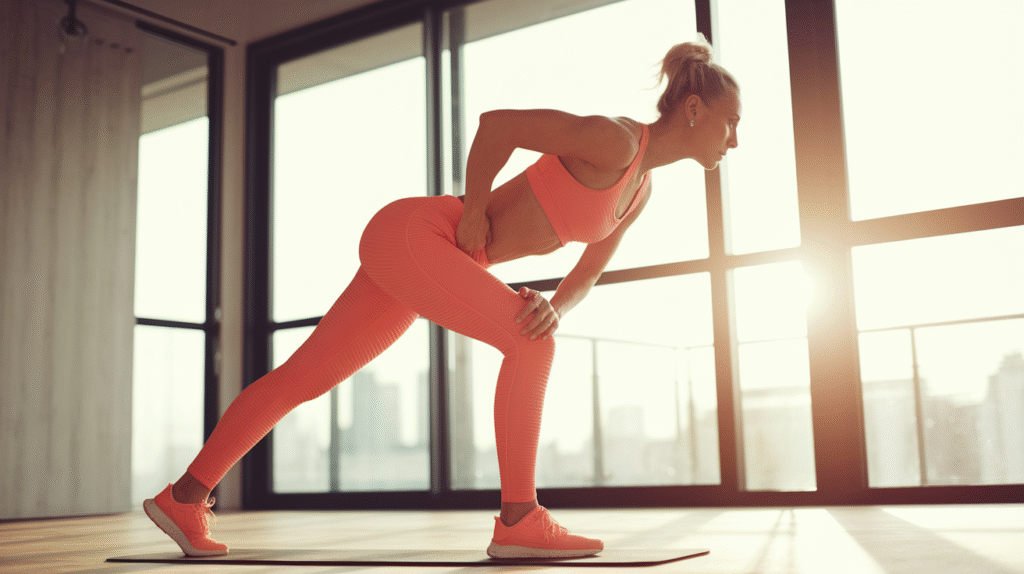
Exercise 1: Glute Bridges (The Ultimate Foundation Move)
Glute bridges are the gold standard for glute activation, and for good reason—they’re simple, effective, and nearly impossible to do wrong once you understand the key cues.
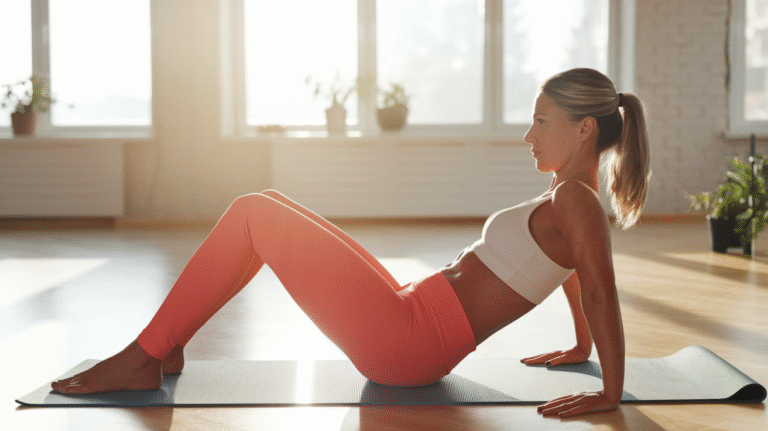
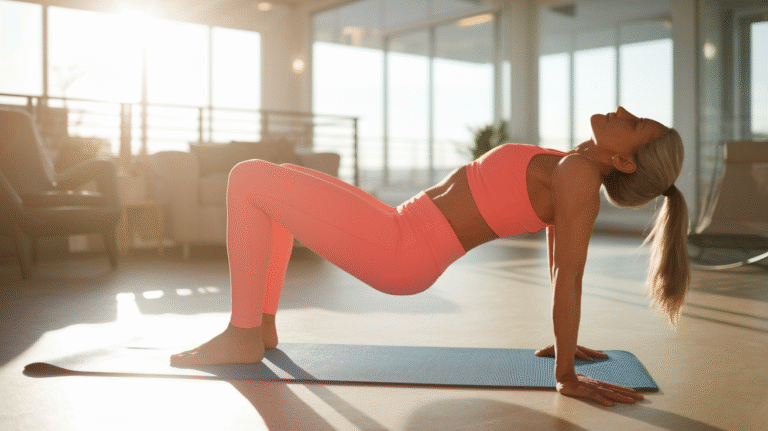
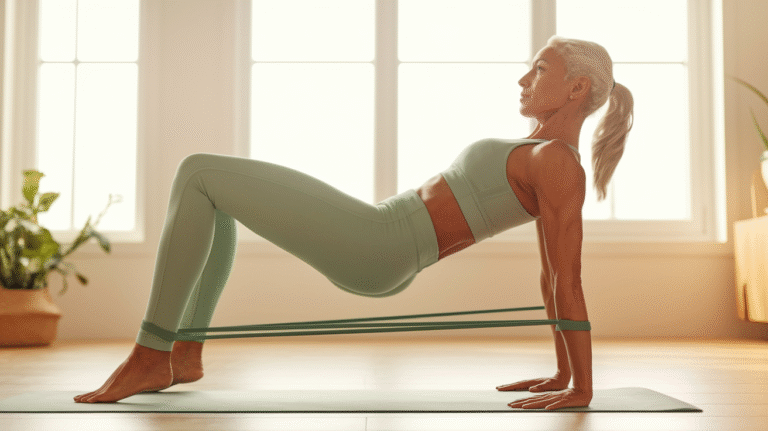
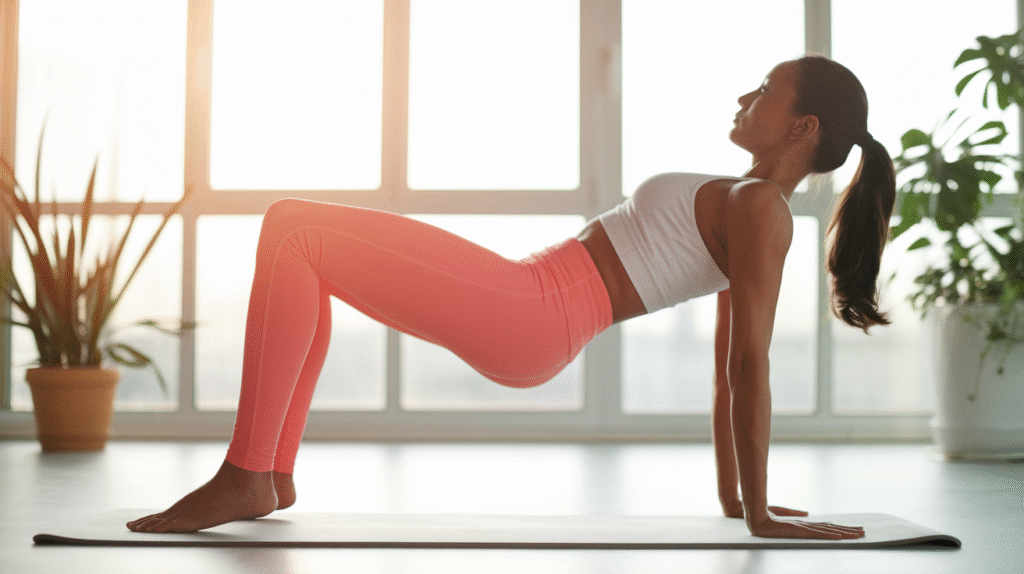
Start by lying on your back with your knees bent and feet flat on the floor, hip-width apart. Position your feet close enough that you can graze your heels with your fingertips. Press your arms into the floor beside you for stability. Now, here’s the crucial part: Before you lift, engage your core and think about tilting your pelvis slightly backward (imagine tucking your tailbone under).
Drive through your heels—not your toes—and lift your hips until your body forms a straight line from knees to shoulders. At the top, squeeze your glutes hard for two full seconds. This squeeze-and-hold technique is what separates effective glute bridges from wasted effort. Lower with control and repeat.
Common mistakes to avoid: Don’t push through your toes, which shifts the work to your quads. Don’t arch your back excessively at the top—this means you’re using your lower back instead of your glutes. Don’t rush through reps without the squeeze at the top.
Perform 2 sets of 15-20 reps. The proven technique here is quality over speed—really focus on that mind-to-muscle connection and the powerful contraction at the top of each rep.
Exercise 2: Clamshells (Simple But Incredibly Effective)
Clamshells specifically target your gluteus medius, the muscle on the side of your hip that’s essential for hip stability and preventing knee injuries. Many women neglect this muscle, focusing only on the larger gluteus maximus, but the medius is crucial for balanced glute development.
Lie on your side with your hips stacked, knees bent at 90 degrees, and feet together. Rest your head on your arm or prop it up with your hand. Keeping your feet touching, lift your top knee as high as you can without rotating your pelvis backward. You should feel this on the side of your hip, not in your lower back or hip flexor.
The key is maintaining perfect alignment—your hips shouldn’t rock backward as you open your knee. This is where many women lose the glute activation and start compensating with other muscles. Start without a band to master the movement pattern, then add a mini resistance band around your thighs for increased challenge.
Perform 2 sets of 12-15 reps per side. If you’re new to this exercise, you might be surprised how quickly your gluteus medius fatigues—that’s exactly what you want. This muscle often needs serious wake-up work.
Exercise 3: Fire Hydrants (Your Quick Side Glute Solution)
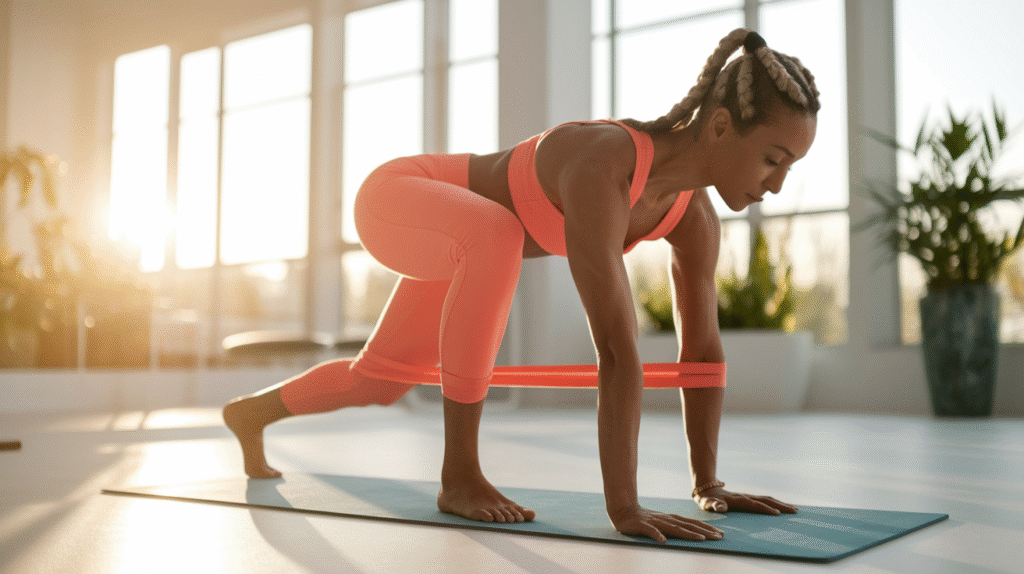
Fire hydrants might look simple, but they’re incredibly effective for activating the entire glute complex, especially the medius and minimus. Start on all fours with your hands directly under your shoulders and knees under your hips. Engage your core to keep your back neutral—no sagging or arching.
Keeping your knee bent at 90 degrees, lift one leg out to the side until your thigh is parallel to the floor. The movement should come purely from your hip, not from leaning your torso to the opposite side. At the top, pause and squeeze your glute for one second before lowering with control.
The mind-to-muscle connection is essential here. Focus on feeling your glute doing the work rather than just moving your leg through space. If you feel this in your lower back, you’re leaning too much—keep your torso stable and move only your leg.
Perform 2 sets of 10-12 reps per side. For easy progression, add a resistance band around your thighs or strap on light ankle weights. The pulse technique works amazingly well here too—at the top of the movement, add three small pulses before lowering.
Exercise 4: Banded Side Steps (Perfect for Hip Stability)
Banded side steps are dynamic, meaning they activate your glutes while you’re moving, which translates beautifully to real-world activities and sports. Place a mini resistance band around your legs, either just above your knees or around your ankles (ankle placement is more challenging).
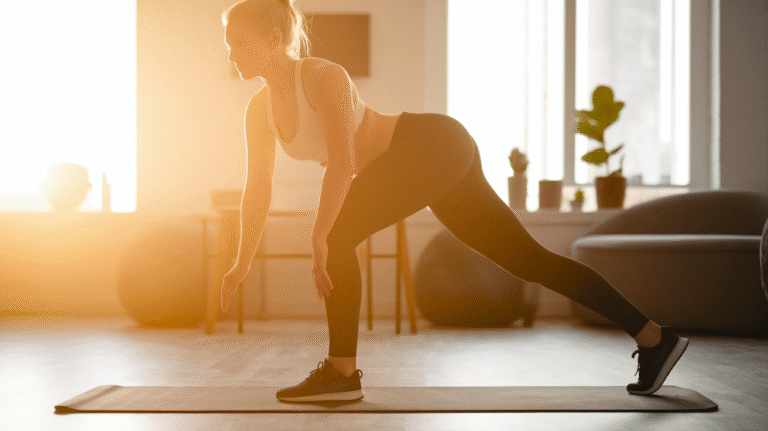
Stand with feet hip-width apart, creating tension in the band. Bend your knees slightly and hinge forward just a bit at the hips—think athletic stance. Step to the side with one foot, maintaining tension in the band, then follow with the other foot. Keep your feet parallel and your knees tracking over your toes, not collapsing inward.
The key is maintaining constant tension in the band and keeping your hips level—don’t let them bob up and down as you step. You should feel this burning on the sides of your hips and glutes. This exercise is amazing for knee health because it strengthens the exact muscles that prevent the knee collapse that causes injuries.
Perform 2 sets of 10 steps in each direction. Choose a resistance band that’s challenging but allows you to maintain good form throughout all reps.
Exercise 5: Glute Kickbacks (The Complete Posterior Chain Wake-Up)
Glute kickbacks finish your activation routine by targeting the gluteus maximus and waking up your entire posterior chain. You can perform these standing (holding onto a wall or chair for balance) or on all fours—both variations work effectively.
For the all-fours version, start in the same position as fire hydrants. Keeping your knee bent at 90 degrees, lift one leg straight back and up, driving your heel toward the ceiling. The key is isolating your glute—not arching your lower back or letting your hamstring take over. Think about pushing through your heel and squeezing your glute at the top.
To ensure you’re using your glute and not your hamstring or lower back, keep the movement controlled and focus on the muscle doing the work. If you feel this primarily in your hamstring, you’re kicking too high or too fast. Scale back and focus on the glute contraction.
Perform 2 sets of 12-15 reps per side. The quick tip that makes this exercise even more effective: Add three small pulses at the top of each rep before lowering. This creates an incredible burn and ensures maximum glute activation.
Creating Your Perfect 5-Minute Glute Activation Warm-Up
The Proven Quick Sequence
Now that you know the five essential exercises, let’s structure them into an effective 5-minute warm-up that you can use before any workout—or as a standalone morning routine.
Here’s the flow: Start with glute bridges (1 minute), move immediately to clamshells on both sides (1.5 minutes), transition to fire hydrants (1.5 minutes), add banded side steps (1 minute), and finish with glute kickbacks (1 minute). This circuit takes you through different movement patterns and planes of motion, ensuring complete glute activation.
The beauty of this sequence is that it progressively wakes up your glutes. Bridges establish the basic hip extension pattern, clamshells activate the side glutes, fire hydrants add rotation, side steps introduce dynamic movement, and kickbacks finish with powerful posterior chain activation.
You don’t need rest between exercises—the transitions give different muscle fibers time to recover while keeping your heart rate slightly elevated. This makes the routine time-efficient and effective. Five minutes is the sweet spot because it’s long enough to truly activate your glutes but short enough that you’ll actually do it consistently.
Making the Mind-to-Muscle Connection
This is the game-changer that separates women who get results from those who just go through the motions. The mind-to-muscle connection means consciously focusing on the muscle you’re working, feeling it contract and engage, rather than just moving your body through space.
Before each exercise, take a moment to actually think about your glutes. Visualize them contracting and doing the work. During the movement, ask yourself: “Do I feel this in my glutes?” If the answer is no, adjust your form, slow down, or reduce resistance until you do.
The essential squeeze-and-hold method works like this: At the peak of each contraction, pause for 1-2 seconds and actively squeeze your glute as hard as you can. This deliberate contraction reinforces the neural pathways between your brain and your glutes, making activation easier over time. It might feel awkward at first, but this technique delivers results faster than anything else.
When and How Often to Activate
The non-negotiable timing is before any lower body workout. Whether you’re doing leg day at the gym, a home workout, or going for a run, spend 5 minutes activating your glutes first. This ensures they fire properly during your main workout, preventing compensation patterns and maximizing results.
Beyond pre-workout activation, consider this routine as a morning habit to combat sitting. Doing these exercises first thing wakes up your glutes for the entire day ahead, improving your posture and movement patterns from the moment you start your day.
If you work a desk job, quick desk breaks for glute activation can be life-changing. Even just 2-3 minutes of bridges and clamshells during your lunch break counteracts hours of sitting and prevents that end-of-day lower back pain.
For ideal frequency, aim for daily activation if possible, especially on workout days. Your glutes respond well to frequent stimulation, and these exercises are low-intensity enough to do every day without overtraining concerns.
Common Mistakes and Easy Fixes for Women Over 30
Form Errors That Kill Results
The biggest mistake I see is rushing through reps without proper muscle engagement. You’re not trying to complete a certain number of reps as fast as possible—you’re trying to wake up dormant muscles. Slow down, focus on the squeeze, and prioritize quality over quantity every single time.
Compensating with your lower back or hamstrings instead of glutes is another common issue. If you feel these exercises primarily in your lower back, you’re arching too much or lifting too high. The fix: Reduce your range of motion, engage your core throughout each movement, and focus on the glute squeeze rather than how high you can lift.
Using too much or too little resistance throws off the activation pattern. Too much resistance forces you to use momentum and compensation patterns. Too little provides insufficient challenge to wake up the muscle. The simple fix: Choose resistance that allows you to complete all reps with perfect form while feeling a solid burn in your glutes by the last few reps.
Not engaging your core during glute exercises is a sneaky mistake that reduces effectiveness and increases injury risk. Your core and glutes work together to stabilize your pelvis and spine. Before each exercise, take a breath and brace your core as if someone might poke your stomach—maintain this engagement throughout.
Listening to Your Body After 30
Your body after 30 requires more attention and care than it did in your 20s. There’s a clear difference between productive muscle activation (a burning sensation in the target muscle, mild fatigue) and strain (sharp pain, joint discomfort, pain that persists after the exercise).
If you have hip or knee sensitivity, modifications are essential. For bridges, try placing your feet on an elevated surface. For clamshells, reduce your range of motion or remove the band. For fire hydrants and kickbacks, keep the movements smaller and more controlled. Listen to your body’s feedback and adjust accordingly.
Knowing when to progress and when to stick with basics is crucial. Progress when you can complete all sets with perfect form, strong glute activation, and no compensation patterns. Stick with basics if you’re still learning to feel your glutes work or if you’re experiencing any joint discomfort.
Essential recovery considerations for hormone changes include recognizing that you might need more recovery time between intense workouts. Your sleep quality, stress levels, and where you are in your menstrual cycle all affect muscle recovery and activation. Be flexible with your routine and give yourself grace on days when your body needs extra rest.
Troubleshooting: “I Still Don’t Feel My Glutes!”
If you’re doing everything right but still not feeling your glutes, start with this quick assessment: Are you really engaging your core? A weak or disengaged core forces your body to compensate with your lower back, preventing proper glute activation. Before each exercise, consciously brace your core and maintain that engagement.
The effective pre-activation trick is this: Before you even start the movement, squeeze your glutes hard for 3-5 seconds. This “wakes up” the neural pathways and makes it easier to maintain activation during the actual exercise. It sounds simple, but this technique works remarkably well.
Lighter resistance often works better than heavy for activation purposes. You’re not trying to build maximum strength here—you’re trying to establish a neural connection. Use the lightest band or no resistance at all until you can genuinely feel your glutes firing, then gradually increase resistance.
When to consider professional guidance: If you’ve tried everything for 2-3 weeks and still can’t feel your glutes working, or if you experience pain during these exercises, consult a physical therapist or qualified personal trainer. Sometimes underlying mobility issues, old injuries, or structural imbalances require professional assessment and individualized programming.
Transform Your Movement Starting Today
Glute activation isn’t a luxury or an optional add-on for women over 30—it’s essential for maintaining strength, preventing injury, and moving through life with confidence and ease. Your glutes are the foundation of your lower body strength, and when they’re working properly, everything from your workouts to your daily activities becomes easier and more enjoyable.
The amazing truth is that just 5 minutes can transform how your body moves and feels. These simple exercises prevent the cascade of problems that inactive glutes create: lower back pain, knee issues, poor posture, and reduced workout effectiveness. They’re your secret weapon for maintaining the strong, capable body you deserve.
Consistency beats intensity every single time. You don’t need to do these exercises perfectly or for long periods—you just need to do them regularly. Daily practice yields amazing results that compound over time. In just one week of consistent activation, you’ll notice improved workout performance, reduced discomfort, and better awareness of your glutes throughout the day.
Here’s your action plan: Start tomorrow morning with just two exercises—glute bridges and clamshells. Set a timer for 3 minutes and focus on really feeling those muscles work. Add this quick routine before your next workout, paying attention to how much better your squats and lunges feel. Track how you feel after one week—note any changes in lower back discomfort, workout performance, or daily movement. Gradually build to the complete 5-minute routine as these movements become second nature.
Your glutes want to work for you—they just need a wake-up call. Give them these 5 minutes, and they’ll repay you with strength, stability, and confidence for years to come. The best time to start was ten years ago. The second best time is right now.