Quick Full Body Workout For 40+ busy moms

Let me guess: You wake up, get the kids ready, rush through your day juggling work and family, and by the time you have a moment to yourself, you’re too exhausted to even think about working out. Then you scroll through social media and see fitness influencers spending two hours at the gym, and you think, “That’s never going to be me.”
Here’s the truth: Those hour-long gym sessions aren’t realistic for your life, and honestly? You don’t need them.
I know what you’re thinking—another fitness article promising quick results. But this is different. After 40, your body responds differently to exercise. The good news? When you work *with* your changing physiology instead of against it, you can actually get more powerful results in less time than you did in your 20s.
This article delivers exactly what you need: proven, science-backed workout strategies designed specifically for women over 40 who are juggling real life. We’re talking 20-30 minutes, no gym required, and routines that respect your body’s changing needs while delivering the strength, energy, and confidence you deserve.
You’ll discover why traditional workouts fail busy moms, the specific exercises that transform your body efficiently, and realistic schedules that fit into your actual life—not some fantasy version where you have unlimited time and energy. Whether you’re a complete beginner or getting back into fitness after years away, this complete guide gives you everything you need to start seeing results this week.
The promise is simple: Effective workouts that work around your schedule, not against it. No complicated equipment. No unrealistic time commitments. Just strategic, powerful movements that sculpt your body and boost your energy in the time you actually have available.
Ready to prove that being 40+ and busy doesn’t mean settling for less than your best? Let’s get started.
Why Women 40+ Need a Different Workout Approach
Understanding Your Changing Body
Your body after 40 operates on different rules than it did at 25, and pretending otherwise wastes your precious time. Declining estrogen levels fundamentally change how your body builds muscle, stores fat, and recovers from exercise. Research shows that women lose approximately 3-5% of muscle mass per decade after 40 if they don’t actively work to maintain it. This isn’t just about appearance—this muscle loss directly impacts your metabolism, bone density, and functional strength for daily activities.
Here’s what’s really happening: Lower estrogen means your body preferentially stores fat around your midsection instead of your hips and thighs. Your metabolism slows by roughly 2-4% per decade. Your bones lose density faster, making strength training absolutely non-negotiable for preventing osteoporosis. The workouts that kept you lean in your 20s—endless cardio and light weights—won’t deliver the same results now because your hormonal environment has fundamentally shifted.
The powerful truth? When you understand these changes, you can work with them. Your body still responds incredibly well to the right stimulus. You can build strength, burn fat, and increase bone density—you just need to train smarter, not longer.
The Busy Mom Factor: Time-Efficient Training That Works
You don’t have 90 minutes for the gym, and you shouldn’t need them. Science proves that shorter, strategic workouts can actually burn more calories and build more muscle than long, steady-state cardio sessions. High-intensity interval training (HIIT) and compound strength movements create an “afterburn effect” called excess post-exercise oxygen consumption (EPOC), where your body continues burning calories for hours after you finish working out.
A 20-minute full-body strength circuit can elevate your metabolism for up to 38 hours afterward. Compare that to a 60-minute walk, which stops burning extra calories the moment you stop moving. For time-crunched moms, this efficiency is everything.
But here’s the critical balance: Your recovery needs have changed. You can’t crush high-intensity workouts six days a week like you might have in your 20s. Your body needs adequate rest to repair and build stronger. This means strategic programming—alternating intense days with lighter movement—delivers better results than daily exhaustion.
What Makes This Workout Different
This routine focuses on compound movements that work multiple muscle groups simultaneously. Instead of isolating your biceps for 10 minutes, you’ll perform exercises like rows and push-ups that engage your arms, back, shoulders, and core all at once. This approach burns more calories, builds functional strength, and respects your limited time.
You won’t need a gym membership or expensive equipment. These exercises work with just your bodyweight, or you can add minimal equipment like dumbbells or resistance bands if you have them. Every exercise includes modifications for different fitness levels, so whether you’re just starting out or you’ve been active for years, you’ll find the right intensity for your current abilities.
The Complete 20-Minute Full Body Workout Routine
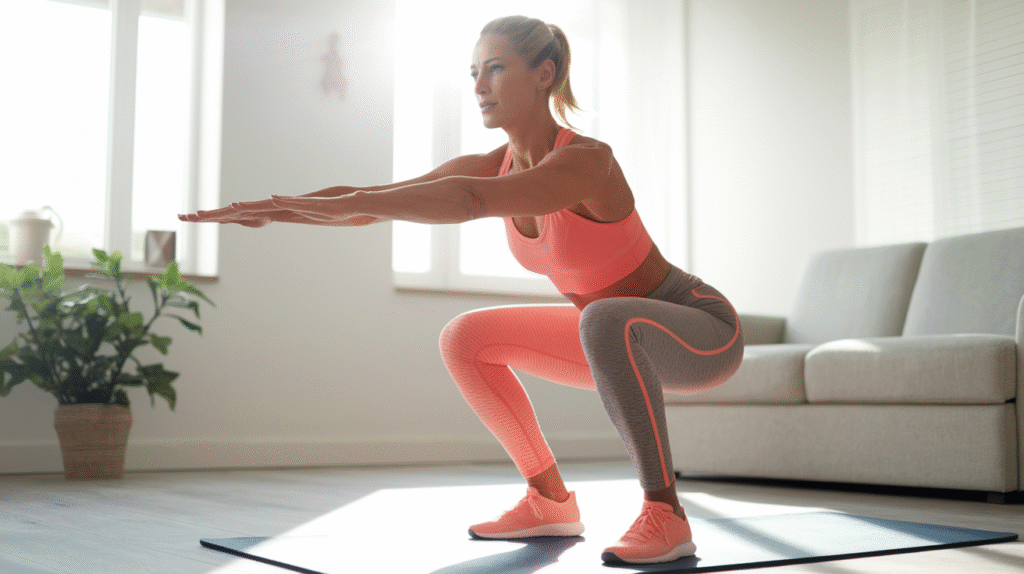
Warm-Up: 3 Minutes (Never Skip This!)
Your joints need preparation, especially after 40. Jumping straight into intense exercise without warming up increases injury risk and reduces workout effectiveness. These three minutes aren’t optional—they’re the foundation that makes everything else work.
Dynamic warm-up sequence: – Hip circles (30 seconds): Stand on one leg, lift the other knee, and draw large circles with your knee. This lubricates your hip joints and activates stabilizer muscles. Switch legs halfway through. – Arm circles and swings (30 seconds): Make big circles with your arms, then swing them across your body. This prepares your shoulders and upper back for pushing and pulling movements. – Torso twists (30 seconds): With hands on hips, gently rotate your upper body side to side. This warms up your spine and core muscles. – Bodyweight squats (1 minute): Perform slow, controlled squats focusing on form. This activates your glutes, quads, and core while raising your heart rate gradually. – March in place with high knees (30 seconds): Bring your knees up toward your chest while pumping your arms. This final push elevates your heart rate and prepares you for work.
The Main Circuit: 15 Minutes of Proven Exercises
Perform each exercise for 45 seconds, followed by 15 seconds of rest. Complete the entire circuit three times through. This structure keeps your heart rate elevated while allowing brief recovery between movements.
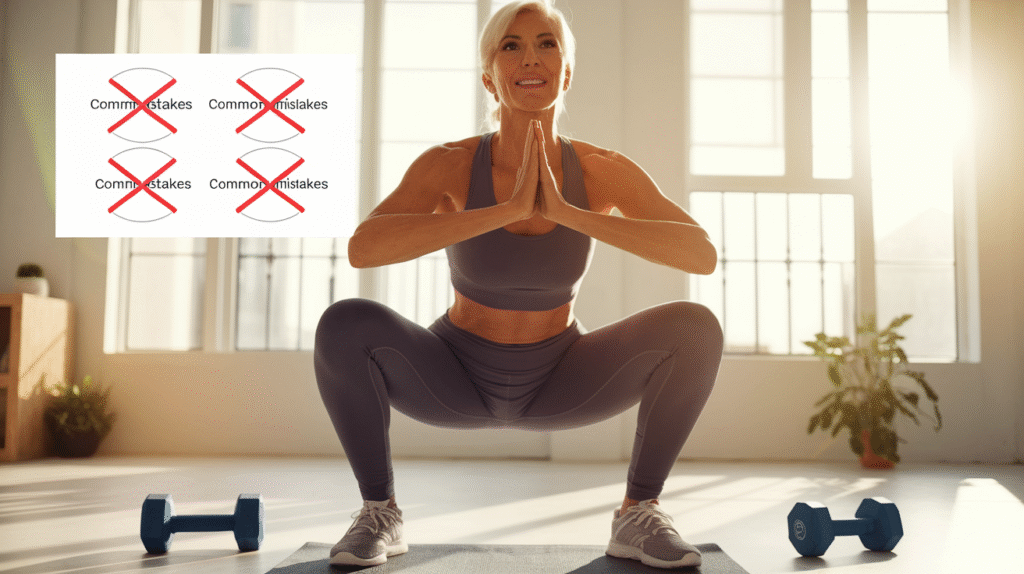
Exercise 1: Bodyweight Squats (or Goblet Squats) Stand with feet shoulder-width apart, toes slightly turned out. Lower your hips back and down as if sitting in a chair, keeping your chest up and weight in your heels. Press through your heels to stand. This builds powerful legs and glutes while burning serious calories—squats engage over 200 muscles simultaneously. If you have dumbbells, hold one at chest level for added resistance.
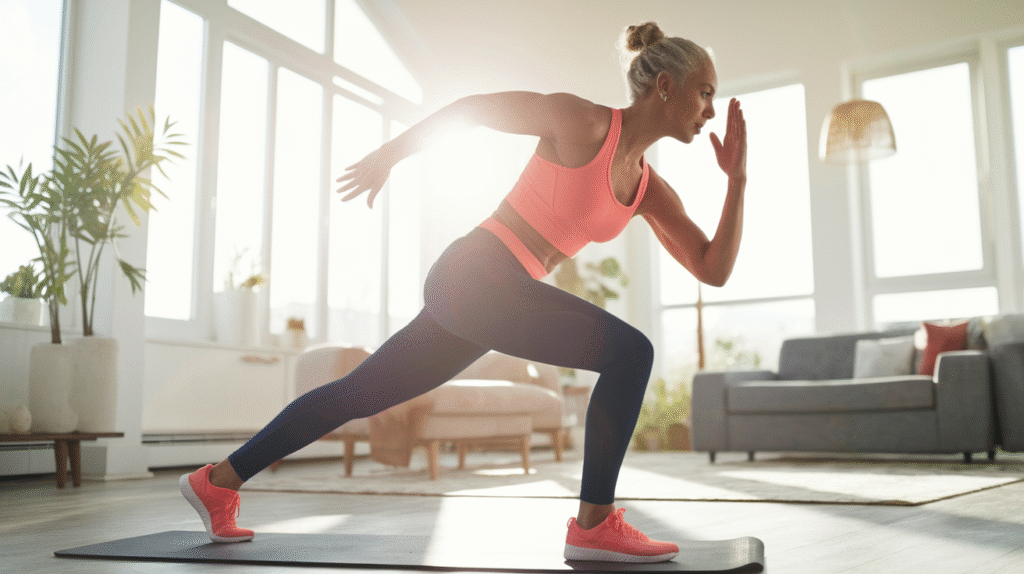
Exercise 2: Reverse Lunges Step one foot backward, lowering your back knee toward the ground while keeping your front knee over your ankle. Push through your front heel to return to standing. Alternate legs. Reverse lunges are gentler on your knees than forward lunges while effectively sculpting your legs and improving balance—critical for preventing falls as you age.
Exercise 3: Glute Bridges Lie on your back with knees bent and feet flat on the floor hip-width apart. Squeeze your glutes and lift your hips until your body forms a straight line from shoulders to knees. Lower with control. This strengthens your posterior chain, supports lower back health, and directly combats the hip flexor tightness from sitting all day.
Exercise 4: Modified Push-Ups Start on your hands and knees (or against a wall for easier modification, or on your toes for more challenge). Lower your chest toward the ground, keeping your body in a straight line. Press back up. Push-ups tone your arms, chest, and shoulders while engaging your core—you’re getting four muscle groups in one efficient movement.
Exercise 5: Bent-Over Rows Hold water bottles, cans, or dumbbells in each hand. Hinge forward at your hips with a flat back. Pull the weights toward your ribcage, squeezing your shoulder blades together. Lower with control. Rows build back strength and improve posture, counteracting the forward slouch from computer work and carrying kids.
Exercise 6: Overhead Press Stand holding weights at shoulder height. Press them straight overhead until your arms are extended. Lower with control. This sculpts your shoulders while engaging your core for stability—functional strength that helps with everything from putting luggage in overhead bins to reaching high shelves.
Exercise 7: Plank Hold Hold a plank position on your forearms and toes (or knees for modification) with your body in a straight line. Engage your core by pulling your belly button toward your spine. Planks build the deep core stability that protects your back during daily activities and prevents the lower back pain that plagues so many moms.
Exercise 8: Mountain Climbers (Modified) From a plank position, bring one knee toward your chest, then switch legs in a running motion. Move at a controlled pace—this isn’t about speed. This provides an effective cardio burst that elevates your heart rate while engaging your full body. Modify by stepping instead of jumping if needed.
Exercise 9: Dead Bugs Lie on your back with arms extended toward the ceiling and knees bent at 90 degrees. Slowly lower your right arm overhead while extending your left leg, keeping your lower back pressed to the floor. Return to start and switch sides. Dead bugs strengthen deep core muscles without the neck strain of crunches—perfect for building a strong, functional midsection.
Cool-Down: 2 Minutes of Essential Stretching
These stretches prevent soreness and improve flexibility. Hold each for 30 seconds.
Hip flexor stretch: Kneel on one knee with the other foot forward, gently push your hips forward to feel a stretch in the front of your hip. This counters the tightness from sitting.
Chest and shoulder stretch: Clasp your hands behind your back and gently lift your arms, opening your chest. This counteracts daily forward posture.
Child’s pose: Sit back on your heels with arms extended forward, forehead to the ground. This gently stretches your back and promotes recovery.
Deep breathing: Finish with four deep breaths—inhale for four counts, exhale for six. This activates your parasympathetic nervous system, signaling your body to begin recovery.
Making It Work: Realistic Schedules for Real Moms
The 3-Day Per Week Plan (Minimum Effective Dose)
If you can only commit to three workouts weekly, Monday/Wednesday/Friday delivers excellent results. This schedule provides 48 hours of recovery between sessions—critical for women over 40 whose bodies need more time to repair and rebuild than they did at 25. Research confirms that three full-body strength sessions per week effectively builds muscle and burns fat when you’re consistent.
Rest days aren’t lazy days—they’re when your muscles actually grow stronger. During workouts, you create microscopic tears in muscle fibers. During rest, your body repairs these tears, building the muscle back stronger and more resilient. Without adequate recovery, you’re just breaking down tissue without allowing the rebuilding that creates results.
On your “off days,” gentle movement like walking, stretching, or playing actively with your kids keeps blood flowing without overtaxing your recovery systems. A 15-minute walk boosts circulation, which actually speeds muscle recovery while burning a few extra calories. The key word is gentle—save the intensity for your three workout days.
The 5-Day Accelerated Plan (For Faster Results)
When you want to accelerate fat loss and strength gains, five workouts weekly works beautifully—if you structure them correctly. Alternate between higher-intensity days and active recovery days. For example: Monday (full workout), Tuesday (light yoga or walking), Wednesday (full workout), Thursday (gentle stretching), Friday (full workout), Saturday (active recovery), Sunday (complete rest).
This pattern prevents overtraining while maximizing results. Your body adapts to exercise during recovery periods, not during the workouts themselves. Push too hard without adequate rest, and you’ll actually see worse results—plus increased injury risk and exhaustion that makes you want to quit entirely.
Structure your week around family commitments. If weekends are chaotic, do your three main workouts Monday/Wednesday/Friday and add two active recovery days Tuesday/Thursday. If mornings are your only free time, schedule workouts then and protect that time fiercely. The best workout schedule is the one you’ll actually follow consistently.
Adding 10-minute walks on rest days provides additional fat-burning benefits without interfering with recovery. Walking is low-intensity enough that it doesn’t stress your system, but it keeps your metabolism elevated and helps manage stress—a huge factor in weight management for busy moms.
Micro-Workout Strategy: When You Only Have 10 Minutes
Life happens. Kids get sick, work explodes, and suddenly your planned 20-minute workout isn’t happening. This is where the micro-workout strategy saves you. Break the main circuit into three mini-sessions throughout the day: 10 minutes in the morning, 10 minutes at lunch, 10 minutes in the evening.
Research shows that accumulating exercise throughout the day provides similar benefits to one continuous session. Three 10-minute workouts deliver the same metabolic boost and strength gains as one 30-minute session. This “exercise snacking” approach removes the all-or-nothing mentality that derails so many busy moms.
When you’re extremely time-crunched, prioritize compound movements that deliver maximum return: squats, push-ups, rows, and planks. These four exercises alone work every major muscle group. Even 10 minutes of these movements maintains your strength and momentum when life gets crazy.
Fitting Workouts Into Your Actual Life
Early morning before kids wake up: This is my personal favorite. You get it done before the day derails, and you start your day with an energy and mood boost that carries through. The con? You need to actually get up, which requires going to bed earlier—not always easy for moms who use evening as their only personal time.
Lunch break power sessions: If you work outside the home, a 20-minute lunch workout is perfectly feasible. Change quickly, do the workout, and you’re back at your desk in 30 minutes total. The midday exercise boost combats the afternoon energy slump more effectively than another coffee.
Evening wind-down workouts: Using exercise to transition from “mom mode” to evening helps many women decompress. The challenge is summoning motivation when you’re already tired. Solution? Change into workout clothes right after dinner—you’re much more likely to follow through once you’re dressed for it.
Weekend warrior approach: When you have a partner or family member to watch the kids, longer 30-40 minute sessions on weekends can supplement shorter weekday workouts. Just don’t fall into the trap of only working out on weekends—consistency beats intensity every time.
Maximizing Results: Nutrition and Recovery for 40+ Moms

Fueling Your Workouts Without Complicated Meal Plans
You don’t need to count macros or follow restrictive diets, but protein intake matters more after 40 than most women realize. Research shows that women over 40 need approximately 0.7-1 gram of protein per pound of body weight daily to maintain and build muscle—significantly more than general recommendations suggest. This protein supports muscle recovery, keeps you satisfied between meals, and helps maintain your metabolism.
Easy protein sources that fit busy mom life: Greek yogurt with breakfast, a handful of almonds as a snack, eggs however you like them, rotisserie chicken for quick dinners, and protein shakes when you’re rushed. You don’t need perfection—just consistent, adequate protein throughout the day.
Pre-workout energy: If you exercise first thing in the morning, you can work out fasted or have a small snack like half a banana or a few crackers 30 minutes before. If you work out later in the day, eat a light snack with protein and carbs 1-2 hours before—like apple slices with peanut butter or a small smoothie.
Post-workout recovery: Within an hour after exercising, eat a meal or snack combining protein and carbohydrates. This supports muscle recovery and replenishes energy stores. A protein shake with fruit, a turkey sandwich, or eggs with toast all work perfectly. This isn’t complicated—just don’t skip eating after you work out.
The Sleep-Fitness Connection You Can’t Ignore
Poor sleep sabotages your workout results in ways that surprise most women. When you’re sleep-deprived, your body produces more cortisol (stress hormone) and less growth hormone—the exact opposite of what you need for fat loss and muscle building. Sleep deprivation also increases hunger hormones and decreases satiety hormones, making you crave sugar and overeat.
I know—telling a mom to “just sleep more” is laughable. You can’t control when kids wake up or when life demands your attention. But you can optimize the sleep you do get. Keep your bedroom cool and dark, avoid screens for an hour before bed, and consider magnesium supplementation (check with your doctor first), which helps many women sleep more deeply.
Here’s the positive feedback loop: Regular exercise actually improves sleep quality. The same workout that builds your strength also helps you fall asleep faster and sleep more deeply. Most women notice improved sleep within two weeks of consistent exercise—giving you more energy for workouts, which improves sleep further.
Recovery Strategies That Fit Your Schedule
The 5-minute foam rolling routine: After workouts, spend five minutes rolling major muscle groups—quads, hamstrings, calves, and upper back. This increases blood flow, reduces muscle soreness, and prevents the tightness that leads to injury. You can foam roll while watching TV with your kids—multitasking at its finest.
Active recovery: On rest days, gentle movement like walking, easy stretching, or light yoga speeds recovery by increasing circulation without stressing your system. A 15-minute gentle yoga flow or a neighborhood walk with your kids counts as active recovery.
When to push through vs. when to rest: Listen to your body. General muscle soreness is normal—work through it with lighter intensity. Sharp pain, joint pain, or exhaustion that doesn’t improve with rest means you need a break. Pushing through genuine fatigue leads to injury and burnout, setting you back weeks or months.
Tracking Progress Beyond the Scale
The scale is a liar. It doesn’t distinguish between muscle gain and fat loss, doesn’t account for water retention, and fluctuates based on dozens of factors unrelated to your actual progress. Stop letting it determine your self-worth.
Measurements that matter more: – Energy levels throughout the day – Strength gains—can you do more reps or use heavier weights than last month? – How your clothes fit, especially around your waist and hips – Quality of sleep – Mood and stress management – Ability to keep up with your kids without getting winded
Take progress photos monthly—you’ll see changes your eyes miss in the mirror. Track your workouts in a simple notebook, noting exercises and reps. Celebrate when you complete your planned workouts consistently, regardless of other metrics.
Non-scale victories are real victories: climbing stairs without huffing, carrying all the groceries in one trip, having energy to play with your kids after work, feeling confident in your body. These matter infinitely more than a number on a scale.
In Closing
Your Transformation Starts With One Workout
You’ve just discovered that transforming your body and energy levels doesn’t require hours at the gym or complicated programs you can’t sustain. The proven formula is straightforward: consistent 20-30 minute full-body workouts, 3-5 times per week, using compound movements that respect your changing physiology.
This isn’t about perfection. You’ll miss workouts sometimes. Life will interfere. That’s normal, expected, and completely fine. What matters is the pattern over time—the consistent effort that accumulates into real, lasting change. One missed workout doesn’t derail your progress. Quitting does.
Here’s what you need to hear: You deserve to prioritize your health. Taking 20 minutes for yourself isn’t selfish—it’s essential. You can’t pour from an empty cup, and exercise fills your cup with energy, confidence, and strength that overflows into every area of your life. Your family benefits when you’re healthy, energized, and feeling good in your body.
The mental game matters more than the physical one. Your thoughts about exercise—whether it feels like punishment or self-care, obligation or opportunity—determine whether you’ll stick with it. Reframe these 20 minutes as your daily investment in being the strong, energized woman you want to be.
Your Next Steps
Week 1 challenge: Complete the 20-minute routine three times this week. That’s it. Don’t worry about perfection or pushing yourself to exhaustion. Just show up three times and do the work. Mark it on your calendar, set phone reminders, and protect this time like you would any important appointment.
Find your community. Connect with other 40+ moms on the same journey through online groups or local fitness classes. Having support and accountability increases your success rate dramatically. Share your struggles and victories—you’ll discover you’re not alone in this challenge.
Remember this truth: Progress over perfection. Every workout counts, even the ones where you modified every exercise or only made it through two circuits instead of three. You showed up, you moved your body, and that matters more than any perfect performance.
The Bottom Line
You have everything you need to start right now. This article gave you the complete workout, realistic schedules, nutrition basics, and recovery strategies. No more excuses about needing special equipment or more time. You can do this workout in your living room while your kids watch TV, before anyone else wakes up, or during your lunch break.
Your age isn’t a limitation—it’s an opportunity to build the strongest, most capable version of yourself. The women who start strength training after 40 often discover they’re stronger and more fit than they ever were in their 20s. Your body is incredibly capable of transformation when you give it the right stimulus and adequate recovery.
Small, consistent efforts create lasting transformation. You don’t need dramatic overhauls or extreme programs. You need sustainable habits that fit your real life. This 20-minute workout three times weekly, maintained consistently over months, will transform your body, energy, and confidence more than any crash program ever could.
Your call to action is simple: Set your timer for 20 minutes right now. Do the warm-up, work through as many exercises as you can, and finish with the cool-down. Don’t wait for Monday, for the perfect moment, or until you “feel ready.” Start today with one imperfect workout.
You’re not just working out for yourself—you’re modeling healthy habits for your children. They’re watching you prioritize your health, push through challenges, and take care of your body. That’s a gift that will influence them for life.
The strongest version of yourself is waiting. She’s just 20 minutes and one decision away. Start today.