
perimenopause workout routine for women 45+

You’re doing everything right—eating well, staying active, getting enough sleep—yet the scale keeps creeping up. Your favorite jeans don’t fit the same way. You’re exhausted after workouts that used to energize you. Sound familiar?
Here’s what nobody tells you: your body has fundamentally changed, and the workout routine that sculpted your 30-year-old body won’t deliver the same results now. This isn’t about working harder—it’s about working smarter with a strategy designed specifically for your perimenopausal body.
The good news? You absolutely can transform your body during perimenopause. You can build lean muscle, boost your metabolism, and feel stronger than you have in years. You don’t need a fancy gym membership or hours of free time. What you need is the right approach backed by science and proven results.
This guide delivers exactly that—a complete, realistic workout plan that works *with* your changing hormones instead of fighting against them. We’ll break down the essential strategies, give you a proven 12-week plan, and show you how to make it work in your busy life. Let’s get started.
Why Your Body Needs a Different Approach After 45

Understanding Perimenopause and Exercise
Your body is going through a massive hormonal shift, and pretending it isn’t happening won’t help you reach your goals. During perimenopause, estrogen and progesterone levels fluctuate wildly before declining. This hormonal roller coaster directly impacts your muscle mass, metabolism, and where your body stores fat.
Estrogen plays a crucial role in building and maintaining muscle tissue. As it decreases, you naturally lose muscle mass—about 3-8% per decade after age 30, accelerating during perimenopause. Less muscle means a slower metabolism, which explains why you’re gaining weight even when your diet hasn’t changed.
The fat storage pattern shifts too. Instead of distributing evenly, fat increasingly accumulates around your midsection. This isn’t just frustrating aesthetically—visceral belly fat increases health risks.
Here’s the critical insight: cardio-only routines that worked in your 30s won’t cut it anymore. That hour on the treadmill burns calories during the workout, but it doesn’t build the muscle tissue that keeps your metabolism elevated 24/7. Your perimenopausal body needs resistance training to counteract muscle loss and rev up your metabolic engine.
The powerful connection between strength training and hormonal balance goes beyond muscle building. Resistance training helps regulate insulin sensitivity, reduces cortisol (stress hormone) levels, and supports better sleep—all crucial for managing perimenopausal symptoms.
The Biggest Workout Mistakes Women 45+ Make
Mistake #1: Doing too much cardio and not enough resistance training. I see this constantly—women logging endless hours on cardio machines while avoiding the weight section. You’re burning calories but simultaneously losing the muscle that would keep your metabolism strong. It’s like trying to fill a leaky bucket.
Mistake #2: Following workout plans designed for younger women. Those intense bootcamp classes and aggressive HIIT programs? They spike cortisol levels that are already elevated during perimenopause. High cortisol promotes fat storage (especially around your belly) and interferes with sleep. Your 25-year-old self could recover from daily high-intensity workouts. Your perimenopausal body needs a different strategy.
Mistake #3: Ignoring recovery and rest periods. During perimenopause, recovery becomes just as important as the workout itself. Your body needs adequate rest to repair muscle tissue, regulate hormones, and replenish energy stores. Pushing through fatigue and skipping rest days leads to burnout, injury, and stalled progress.
What Actually Works: The Science-Backed Solution
Resistance training is your most effective tool during perimenopause—period. Research consistently shows that strength training preserves bone density, builds lean muscle mass, and burns fat more effectively than cardio alone for women over 45.
Here’s why it works: When you lift weights, you create micro-tears in muscle fibers. Your body repairs these tears during recovery, building stronger, denser muscle tissue. More muscle mass means higher resting metabolic rate—you burn more calories even while sitting on the couch.
Strength training also triggers beneficial hormonal responses. It increases growth hormone and testosterone (yes, women need testosterone too), both crucial for maintaining muscle mass and burning fat during perimenopause.
The key is consistency over intensity. You don’t need to lift like a bodybuilder or spend two hours in the gym. Three to four focused resistance sessions per week, combined with strategic cardio and proper recovery, delivers transformative results.
The Essential Components of Your Perimenopause Workout Routine
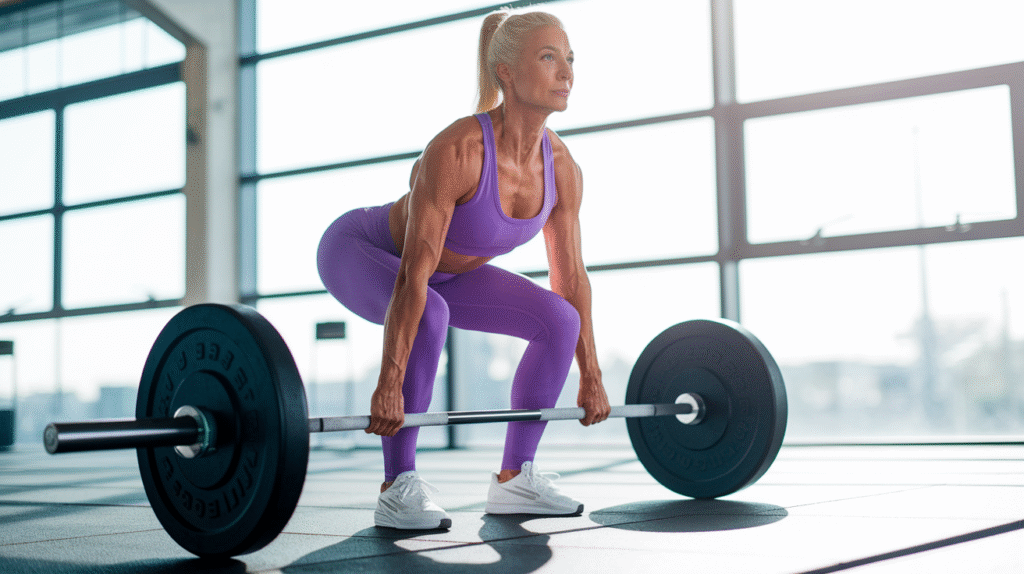
Strength Training: Your Non-Negotiable Foundation
Aim for 3-4 resistance sessions per week. You can do longer 60-90 minute sessions or break it into shorter 30-45 minute workouts—whatever fits your schedule and energy levels. The critical factor is showing up consistently.
Focus on compound movements that work multiple muscle groups simultaneously. These exercises build functional strength that translates to daily life—carrying groceries, lifting grandchildren, moving furniture. Think squats, lunges, deadlifts, rows, and presses rather than isolated bicep curls.
Progressive overload sounds complicated but it’s simple: gradually increase the challenge to your muscles over time. This might mean adding more weight, doing more repetitions, or slowing down the movement to increase time under tension. Your muscles adapt to stress by getting stronger, but they need that increasing challenge to keep progressing.
Start with weights that feel manageable—you should be able to complete your target reps with good form while feeling challenged on the last few reps. When those weights feel easy, it’s time to increase the resistance.
Strategic Cardio for Fat Burning
Cardio still has a place in your routine, but the type and amount matter. Zone 2 cardio—moderate intensity where you can hold a conversation but feel slightly breathless—is incredibly effective for fat burning. Aim for 20-30 minutes, 2-3 times per week.
This could be brisk walking, cycling, swimming, or using an elliptical. The key is maintaining that moderate intensity sweet spot where you’re burning fat for fuel without spiking cortisol levels.
HIIT (high-intensity interval training) should be limited to 1-2 times weekly maximum during perimenopause. While HIIT is effective for cardiovascular fitness and calorie burning, it’s also a significant stressor on your already-stressed system. Too much HIIT elevates cortisol, disrupts sleep, and can actually promote fat storage.
Never underestimate the power of walking. A daily 30-minute walk reduces stress, supports fat loss, improves mood, and doesn’t tax your recovery capacity. It’s the perfect complement to your strength training sessions.
Flexibility and Recovery Work
Incorporate yoga or stretching 2-3 times weekly. This isn’t just about touching your toes—flexibility work reduces injury risk, alleviates joint stiffness, improves posture, and activates your parasympathetic nervous system (your body’s relaxation response).
Gentle yoga styles like Hatha or Yin yoga are particularly beneficial during perimenopause. They combine stretching with breathwork and stress reduction—addressing multiple perimenopausal challenges simultaneously.
Rest days are non-negotiable. Your body builds muscle and regulates hormones during recovery, not during the workout itself. Plan at least 1-2 complete rest days per week where you focus on gentle movement like walking or stretching.
Sleep deserves equal priority with your workouts. During deep sleep, your body releases growth hormone, repairs muscle tissue, and regulates hunger hormones. Aim for 7-9 hours of quality sleep nightly. If you’re training hard but sleeping poorly, you’re sabotaging your results.
Your 12-Week Perimenopause-Proof Workout Plan

Weeks 1-4: Building Your Foundation
The first month focuses on establishing proper form, building baseline strength, and creating sustainable habits. You’ll split your training into upper and lower body days, training each twice weekly.
Upper Body Days (2 per week): – Push-ups (wall or knee variations to start): 3 sets of 8-12 reps – Resistance band rows: 3 sets of 12-15 reps – Overhead press (light dumbbells or cans): 3 sets of 10-12 reps – Tricep dips (using a chair): 3 sets of 8-10 reps – Bicep curls: 3 sets of 12-15 reps
Lower Body Days (2 per week): – Bodyweight squats: 3 sets of 12-15 reps – Glute bridges: 3 sets of 15-20 reps – Lunges (alternating legs): 3 sets of 10 reps per leg – Calf raises: 3 sets of 15-20 reps – Wall sits: 3 sets of 20-30 seconds
Additional weekly activities: – Zone 2 cardio: 2-3 sessions of 20-30 minutes – Stretching or yoga: 2 sessions of 15-20 minutes – Rest days: 1-2 complete rest days
Start with lighter resistance—even bodyweight only if needed. Perfect your form before adding weight. Film yourself or work with a trainer initially to ensure proper technique. Good form prevents injury and delivers better results than heavy weights with poor form.
Weeks 5-8: Progressive Strength Building
Month two increases the challenge through added resistance and exercise variations. You’ll progress from bodyweight to weighted exercises, gradually building strength.
Upper Body Days: – Push-ups (progress to full push-ups): 3 sets of 10-15 reps – Bent-over dumbbell rows: 3 sets of 10-12 reps – Dumbbell chest press: 3 sets of 10-12 reps – Overhead dumbbell press: 3 sets of 8-10 reps – Dumbbell pullovers: 3 sets of 10-12 reps
Lower Body Days: – Goblet squats (holding dumbbell): 3 sets of 10-12 reps – Romanian deadlifts: 3 sets of 10-12 reps – Weighted lunges: 3 sets of 10 reps per leg – Step-ups (using stairs or bench): 3 sets of 12 reps per leg – Single-leg glute bridges: 3 sets of 12 reps per leg
Optional addition: If your energy levels permit, add one HIIT session this month. Keep it short—15-20 minutes maximum—with a 2:1 rest-to-work ratio (example: 20 seconds work, 40 seconds rest).
Focus on progressive overload. When you can complete all sets and reps with good form, increase the weight by 2-5 pounds. Track your workouts in a simple notebook or app to monitor progress.
Weeks 9-12: Sculpting and Toning Results
The final month emphasizes muscle definition through varied rep ranges and training techniques. You’ll mix heavy lifting days (lower reps, higher weight) with sculpting days (higher reps, moderate weight).
Heavy Day Example (Upper Body): – Dumbbell bench press: 4 sets of 6-8 reps – Pull-ups or assisted pull-ups: 4 sets of 4-6 reps – Overhead press: 4 sets of 6-8 reps – Dumbbell rows: 4 sets of 8-10 reps
Sculpting Day Example (Upper Body): – Push-up variations: 3 sets of 15-20 reps – Resistance band pulls: 3 sets of 20 reps – Lateral raises: 3 sets of 15 reps – Tricep extensions: 3 sets of 15-20 reps
Heavy Day Example (Lower Body): – Barbell or dumbbell squats: 4 sets of 6-8 reps – Deadlifts: 4 sets of 6-8 reps – Bulgarian split squats: 3 sets of 8 reps per leg
Sculpting Day Example (Lower Body): – Jump squats or pulse squats: 3 sets of 20 reps – Walking lunges: 3 sets of 15 reps per leg – Glute kickbacks: 3 sets of 20 reps per leg – Banded lateral walks: 3 sets of 15 steps each direction
Incorporate functional movements that improve daily life: farmer’s carries (walking while holding weights), Turkish get-ups, medicine ball slams. These exercises build real-world strength and coordination.
Celebrate non-scale victories: Can you lift heavier weights than month one? Do you have more energy? Are your clothes fitting differently? These indicators matter more than the number on the scale, which fluctuates with water retention, hormones, and muscle gain.
Making It Work for Your Busy Life (Plus Common Challenges Solved)
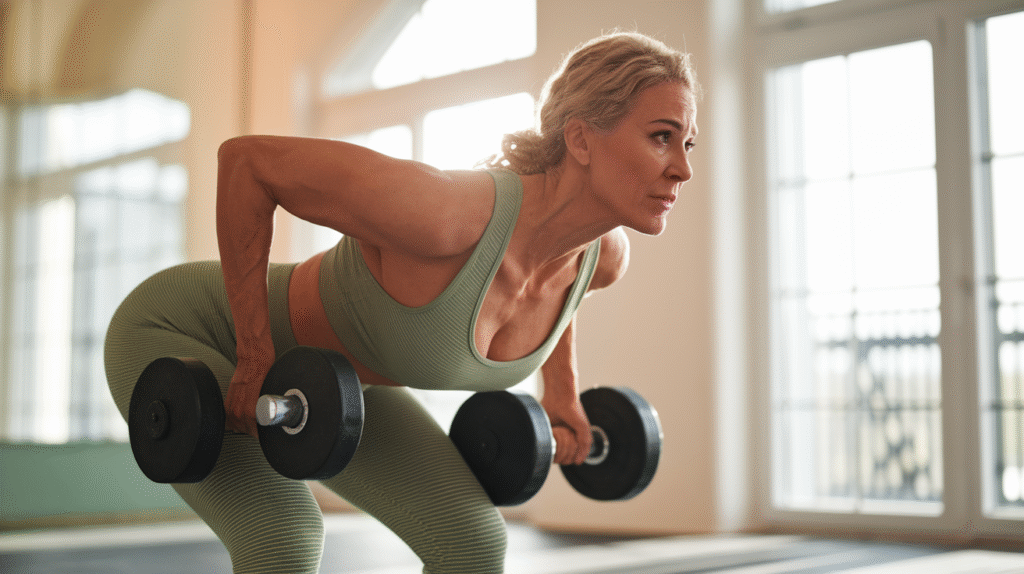
Home Workout Solutions That Actually Work
You don’t need a gym membership to transform your body. A basic home setup costs less than two months of gym fees: a set of resistance bands ($20-30), adjustable dumbbells or a few fixed-weight pairs ($50-100), and a yoga mat ($20-30). That’s it.
Your living room, bedroom, or garage becomes your workout space. Clear a 6×6 foot area, keep your equipment accessible, and you’re ready to train. No commute time, no waiting for equipment, no gym intimidation.
30-minute express workouts for time-crunched days: – 5-minute warm-up (jumping jacks, arm circles, bodyweight squats) – 20 minutes of circuit training (4 exercises, 4 rounds, 45 seconds work/15 seconds rest) – 5-minute cool-down and stretching
Example circuit: Squats, push-ups, lunges, rows. Simple, effective, complete.
Use what you have. Filled water bottles replace dumbbells for beginners. Stairs become a cardio and strength tool. A sturdy chair supports dips, step-ups, and incline push-ups. Your bodyweight provides plenty of resistance for squats, lunges, planks, and push-ups.
Overcoming Perimenopause-Specific Obstacles
Fatigue and low energy: Don’t skip your workout—adjust it instead. On low-energy days, reduce the weight, decrease the reps, or shorten the session to 20 minutes. Movement often boosts energy, but pushing too hard when exhausted leads to burnout. Listen to your body.
Joint pain and stiffness: Modify exercises to reduce joint stress. Replace jumping movements with stepping variations. Use resistance bands instead of heavy weights on tender days. Prioritize proper warm-ups—spend 10 minutes preparing your joints and muscles before training.
Low-impact alternatives deliver results without aggravating joints: swimming, water aerobics, cycling, elliptical training. These options maintain cardiovascular fitness while protecting your knees, hips, and ankles.
Hot flashes during exercise: Time your workouts strategically—many women find morning sessions work best before hot flashes intensify. Wear moisture-wicking, breathable clothing in layers you can remove. Exercise in a cool environment with good airflow. Keep cold water and a damp towel nearby.
Motivation fluctuations: Build systems that don’t rely on motivation. Schedule workouts like important appointments. Lay out your workout clothes the night before. Start with just five minutes—you’ll often continue once you begin. Find an accountability partner or join an online community.
Track your workouts and celebrate consistency. Missing one session doesn’t derail your progress—skipping a week does. Aim for 80% consistency rather than perfection.
Nutrition Timing for Maximum Results
Exercise is only part of the equation. Your protein requirements increase after 45—aim for 25-30 grams per meal to support muscle building and recovery. Include protein at breakfast (Greek yogurt, eggs, protein smoothie), lunch (chicken, fish, tofu), and dinner (lean meat, legumes, tempeh).
Pre-workout fuel matters. Eat a small meal with protein and carbs 1-2 hours before training: banana with almond butter, Greek yogurt with berries, or a slice of whole-grain toast with egg. This provides energy without causing digestive discomfort.
Post-workout nutrition supports recovery and muscle growth. Within 30-60 minutes after training, consume protein and carbs: protein shake with fruit, chicken and sweet potato, or cottage cheese with whole-grain crackers.
Crash diets sabotage perimenopause fitness goals. Severe calorie restriction slows your metabolism, triggers muscle loss, and disrupts already-fluctuating hormones. Focus on nutrient-dense whole foods, adequate protein, and moderate portions rather than extreme restriction.
Stay hydrated—dehydration worsens fatigue, joint pain, and hot flashes. Aim for half your body weight in ounces daily (example: 150 pounds = 75 ounces water).
In Closing
Perimenopause demands a different approach to fitness, but the results you want are absolutely achievable. Your body hasn’t betrayed you—it’s simply following new rules. Strength training 3-4 times weekly is your most effective tool for building muscle, boosting metabolism, and transforming your body composition during this transition.
Consistency matters more than perfection. You won’t nail every workout, and that’s okay. Progress happens through accumulated effort over weeks and months, not individual perfect sessions. Be patient with yourself and trust the process.
You don’t need a gym membership, expensive equipment, or hours of free time. You need the right strategy: resistance training as your foundation, strategic cardio for fat burning, adequate recovery for hormonal balance, and proper nutrition to fuel your transformation.
Start this week with just one strength training session. Choose 4-5 exercises from the Week 1-4 plan and complete them at home. Use bodyweight, resistance bands, or light dumbbells. Focus on form and consistency rather than intensity.
You’re not starting over—you’re starting smarter with an approach designed specifically for your perimenopausal body. Track your strength gains (can you do more reps or lift heavier weights?), energy levels (do you feel more energized?), and how your clothes fit (are they looser?) rather than obsessing over scale weight.
Your strongest, most powerful body can be built after 45. The women who succeed don’t have more willpower, better genetics, or more free time. They have the right plan and the commitment to show up consistently. You have that plan now. All that’s left is taking that first step.
Start today. Your future self will thank you.