oblique exercises for women over 40
Let’s get real for a second. Fitness after 40 feels different, doesn’t it?
Your metabolism has shifted gears. Those hormonal changes are making your body store fat in places it never did before. And between work deadlines, family obligations, and just trying to keep your head above water, the idea of adding another workout to your schedule sounds exhausting.
Here’s the good news: oblique training is your secret weapon. These exercises are efficient, doable at home, and deliver visible results without requiring you to become a gym rat.
You don’t need fancy equipment or hours of free time. What you need are proven exercises designed specifically for women over 40 that work *with* your body’s changes, not against them.
In this guide, you’ll discover safe techniques and effective movements that target your obliques—those powerhouse muscles that wrap around your waist. I’ll show you a realistic approach that fits into your actual life, not some fantasy version where you have unlimited time and energy.
Your strongest core isn’t behind you. It’s still ahead, and we’re going to build it together.
Why Obliques Matter More After 40 (And What They Actually Do)
The Science Behind Your Side Abs
Your obliques are the unsung heroes of your core. Think of them as two layers of muscle that wrap diagonally around your waist like a natural corset. The external obliques run from your ribs down toward your hips, while the internal obliques sit underneath, running in the opposite direction.
These muscles do way more than create definition. They control rotation when you twist to grab something from the backseat. They stabilize your spine when you bend sideways. They support your posture throughout the day, preventing that forward slump that makes your back ache.
Here’s what matters for women over 40: muscle mass naturally decreases by 3-8% per decade after age 30. This process, called sarcopenia, accelerates if you’re not actively building and maintaining muscle. Weaker obliques mean less core stability, which translates to back pain, balance issues, and that frustrating “soft middle” even when you’re eating well.
Benefits Beyond Aesthetics
Sure, strong obliques create a defined waistline. But the real benefits run deeper.
These muscles provide functional strength for everything you do. Carrying groceries from the car? Your obliques stabilize your torso. Playing with grandkids? They help you twist and move without injury. Getting up from the floor? Strong obliques make it effortless instead of a struggle.
Balance and stability become crucial in your 40s and beyond. Falls are the leading cause of injury for women over 40, and core strength—especially oblique strength—is your first line of defense. When you strengthen these muscles, you improve your body’s ability to catch itself when you trip or stumble.
And yes, there’s the waist-defining effect. Strong, developed obliques create natural curves and help you feel confident in your clothes. But unlike the vanity goals of your 20s, this confidence comes from knowing your body is capable and strong.
What Changes After 40
Perimenopause and menopause bring hormonal shifts that change how your body distributes fat. Estrogen decline means you’re more likely to store fat around your midsection. This isn’t a character flaw—it’s biology.
Traditional ab exercises like endless crunches won’t cut it anymore. You need targeted oblique work that builds lean muscle mass in this area. Why? Because muscle is metabolically active tissue. The more you have, the more calories you burn at rest. Building your obliques isn’t just about appearance—it’s about boosting your metabolism when it needs help most.
The science-backed truth: you can’t spot-reduce fat, but you can build muscle underneath. As you lose overall body fat through nutrition and consistent movement, those strong obliques you’re developing will emerge. It takes patience, but the results are worth it.
The 7 Most Effective Oblique Exercises for Women Over 40
Beginner-Friendly Bodyweight Exercises
Standing Side Crunches are your perfect starting point. Stand with feet hip-width apart, hands behind your head. Lift your right knee toward your right elbow as you crunch sideways.
The beauty of this move? Zero impact on your joints, and you can do it while watching TV or during a work break. Aim for 12-15 reps per side.
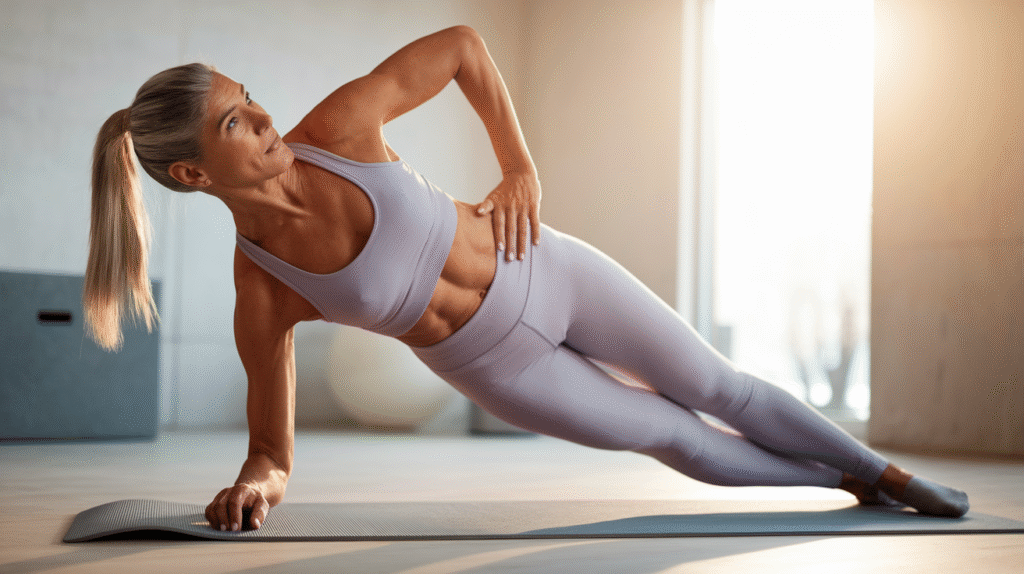
Side-Lying Oblique Crunches let you build strength while your back stays supported. Lie on your right side, right hand behind your head, left hand on the floor for balance.
Crunch your ribs toward your hip, feeling the contraction in your side. This controlled movement prevents strain while effectively targeting the obliques. Perform 10-12 reps before switching sides.
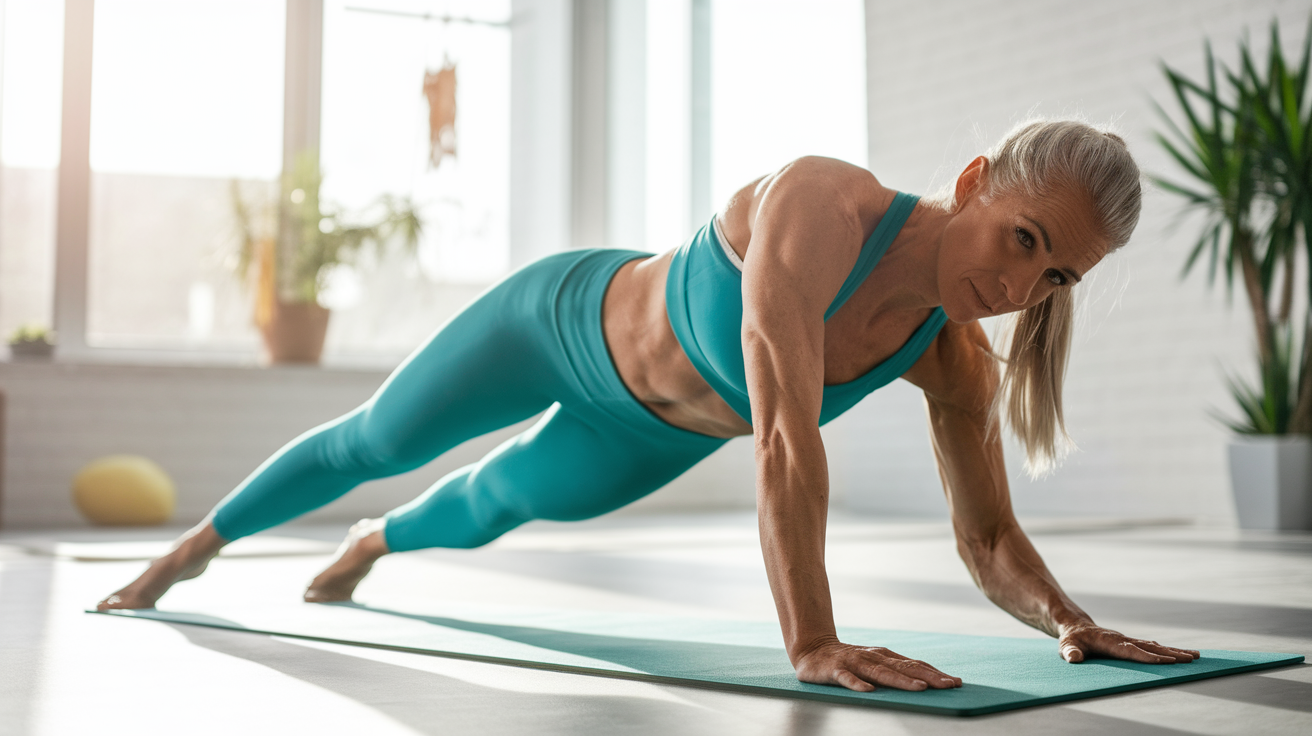
Modified Plank Hip Dips combine core stability with oblique engagement. Start in a forearm plank position with knees down (not full plank—we’re being smart here). Rotate your hips to dip your right hip toward the floor, then left. The key is control, not speed. This move transforms your waistline without putting excessive pressure on your lower back.
Intermediate Strengthening Moves
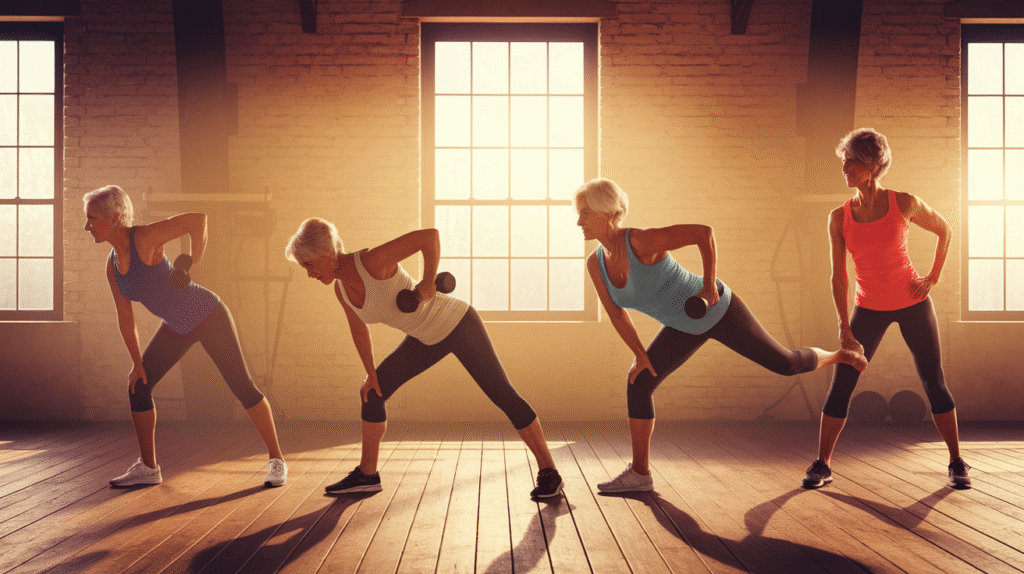
Kneeling Wood Choppers deliver functional rotation that mimics real-life movements. Kneel on your right knee, left foot forward. Clasp your hands together (or hold a light dumbbell) and rotate from high right to low left, engaging your obliques through the full range of motion. This exercise sculpts while building rotational strength you’ll use every day.
Bicycle Crunches (Modified) are a classic for a reason—they work. Lie on your back, hands behind your head, knees bent at 90 degrees. Instead of the frantic cycling you see in fitness videos, move slowly and deliberately. Bring your right elbow toward your left knee, extending your right leg. Pause. Return to center. Repeat on the other side. Quality over speed delivers results.
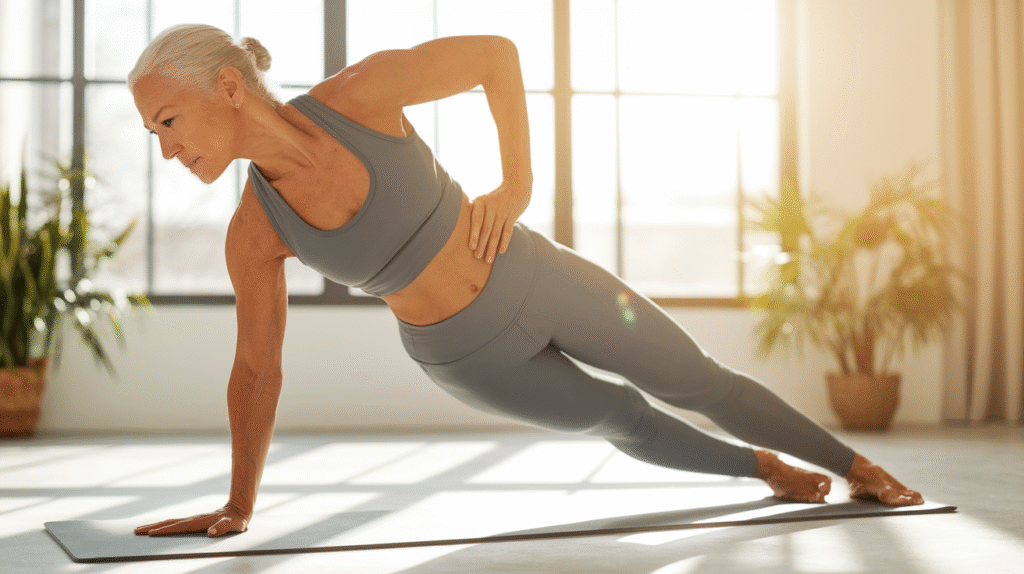
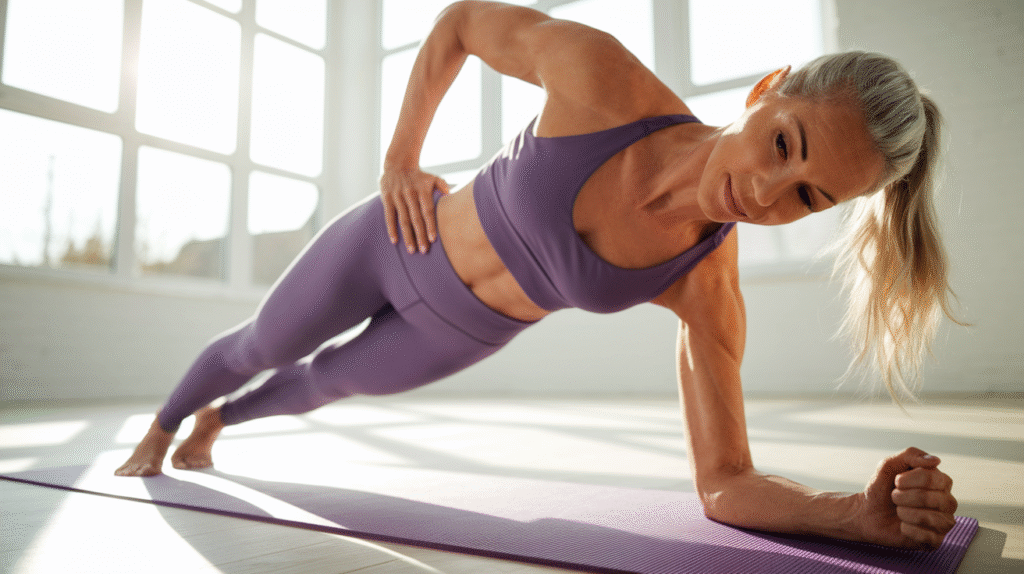
Side Plank Hold (Bent Knee) is an isometric powerhouse. Lie on your right side, prop yourself up on your right forearm, and bend your knees at 90 degrees. Lift your hips so your body forms a straight line from head to knees. Hold for 20-30 seconds. This builds serious oblique strength and stability without dynamic movement that might strain your joints.
Advanced Challenge Options
Windshield Wipers (Bent Knee) are for when you’re ready to level up. Lie on your back, arms out to the sides for stability, knees bent and lifted. Lower your knees to the right, hovering just above the floor, then to the left. This controlled rotation challenges your obliques through their full range while protecting your spine.
Side Plank with Rotation combines stability and dynamic movement. Start in a side plank (on your forearm, knees down for modification). Reach your top arm toward the ceiling, then thread it underneath your body, rotating through your obliques. Return to start. This advanced variation delivers maximum results for sculpting a defined waistline.
Form Tips for Safety and Effectiveness
Protect your lower back by maintaining a neutral spine. Don’t pull on your neck during crunches—your hands are there for light support, not to yank your head forward. Imagine a string pulling the crown of your head toward the ceiling.
Breathe. Exhale during the exertion phase (the crunch or twist), inhale as you return to start. This breathing pattern enhances core engagement and prevents you from holding your breath, which spikes blood pressure.
Common mistakes? Moving too fast, using momentum instead of muscle, and doing too many reps with sloppy form. Ten perfect reps beat twenty rushed ones every single time.
Your Complete At-Home Oblique Workout Plan
The 15-Minute Express Routine
When time is tight, this powerful routine delivers results. Perform 3 sets of 10-12 reps for each exercise, resting 30 seconds between sets:
1. Standing Side Crunches (both sides) 2. Side-Lying Oblique Crunches (both sides) 3. Modified Plank Hip Dips 4. Kneeling Wood Choppers (both sides)
This routine fits perfectly into busy mornings before work or during lunch breaks. Low on energy? Drop to 2 sets. Feeling strong? Slow down your tempo for increased intensity without adding time.
The 30-Minute Deep Sculpt Session
This comprehensive routine targets your obliques from every angle:
Warm-up (5 minutes): Gentle torso twists, side bends, and cat-cow stretches to prepare your spine for rotation.
Main workout (20 minutes): – Standing Side Crunches: 3 sets x 15 reps per side – Bicycle Crunches (Modified): 3 sets x 12 reps per side – Side Plank Hold (Bent Knee): 3 sets x 20-30 seconds per side – Kneeling Wood Choppers: 3 sets x 12 reps per side – Side-Lying Oblique Crunches: 3 sets x 12 reps per side
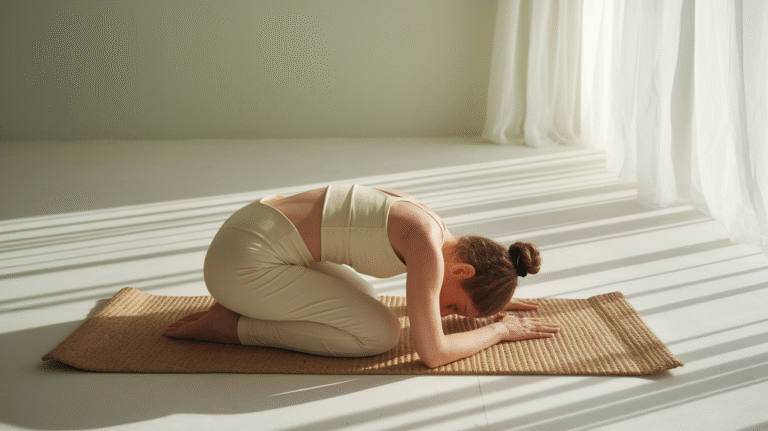
Cool-down (5 minutes): Child’s pose, gentle spinal twists, and side stretches.
Schedule this session 2-3 times per week, with at least one rest day between oblique workouts. Your muscles need recovery time to build strength and definition.
Progressive Overload for Continued Results
Your body adapts to exercise, so you need to progressively challenge it. Start with bodyweight exercises and perfect your form. After 3-4 weeks, add resistance using light dumbbells (3-5 pounds), resistance bands, or even water bottles.
Track your progress by noting how exercises feel, not just what the scale says. Can you hold that side plank longer? Do 12 reps feel easier than they did two weeks ago? These are real indicators of strength gains.
Ready to advance? Move from bent-knee variations to straight-leg versions. Increase your hold times on isometric exercises. Add a second set before adding weight—building endurance matters as much as building strength.
Recovery Strategies That Matter More After 40
Rest days aren’t optional—they’re when your muscles actually build and strengthen. Aim for at least 48 hours between oblique-focused workouts. This doesn’t mean being sedentary; it means doing different activities like walking, swimming, or yoga.
Gentle stretching after workouts prevents tightness. Try this sequence: child’s pose (30 seconds), seated spinal twist (30 seconds per side), and side-lying quad stretch (30 seconds per side).
Nutrition timing supports your results. Eat protein within 2 hours post-workout to support muscle recovery. Aim for 20-30 grams from sources like Greek yogurt, eggs, or a protein shake. Stay hydrated—your muscles are 75% water, and dehydration sabotages recovery.
Common Mistakes and How to Avoid Them
Training Errors That Sabotage Results
The biggest mistake? Cranking out high reps with terrible form. Your obliques respond better to 10-12 controlled, deliberate repetitions than 30 sloppy ones. Each rep should be intentional, with you actively thinking about contracting those side muscles.
The mind-muscle connection isn’t woo-woo—it’s science-backed. Research shows that consciously focusing on the muscle you’re working increases activation and results. During each oblique exercise, visualize those muscles contracting and working. This mental engagement makes a measurable difference.
Training obliques every day prevents the toned look you want. When you work a muscle, you create tiny tears that repair during rest, coming back stronger. No rest means no repair, which means no results. Overtraining also increases cortisol, the stress hormone that encourages belly fat storage. Ironic, right?
Lifestyle Factors You Can’t Ignore
Here’s the belly fat truth you need to hear: you cannot spot-reduce fat from your midsection. No amount of oblique exercises will melt fat from your waist if your overall body fat percentage is high. But—and this is important—you can build strong, defined obliques underneath. As you reduce overall body fat through nutrition and consistent movement, those muscles will show.
Sleep and stress management have a surprising impact on your waist measurements. Poor sleep (less than 7 hours) increases cortisol and ghrelin (the hunger hormone), making fat loss harder. Chronic stress does the same. Prioritize sleep hygiene and stress-reduction techniques like deep breathing or meditation. These aren’t luxuries—they’re essential for results.
Set realistic expectations. At 40+, your results might look different than they did at 25, and that’s actually better. You’re building sustainable strength, not chasing an unrealistic ideal. Visible oblique definition might take 8-12 weeks of consistent work combined with nutrition changes. That timeline is normal and healthy.
When to Modify or Stop
Learn the difference between muscle burn and pain. Muscle burn—that burning sensation during the last few reps—is normal and productive. Sharp pain, especially in your lower back or joints, is a red flag. Stop immediately and reassess your form.
Pre-existing conditions require modifications. If you have diastasis recti (abdominal separation common after pregnancy), avoid exercises that create a “doming” effect in your belly. Hernias and back issues mean you should consult a physical therapist before starting any core program. There’s no shame in getting professional guidance—it’s smart.
Work with your cycle and hormonal fluctuations. During certain phases of your menstrual cycle or perimenopause, you might feel stronger or weaker. Honor that. Some days, the 15-minute routine is enough. Other days, you’ll crush the 30-minute session. This flexibility is strength, not weakness.
Conclusion
Your obliques are more than just “side abs”—they’re the foundation of functional strength that makes daily life easier, prevents injuries, and yes, creates that defined waistline you want. The key benefits are clear: you’ll build real strength for carrying, twisting, and moving through life. You’ll prevent injuries and improve balance. And you’ll reveal visible definition as you consistently work these powerful muscles.
Here’s what makes being 40+ an advantage: you have the wisdom to know that quick fixes don’t work. You have the patience to commit to a sustainable approach. You have realistic goals that aren’t about fitting into your high school jeans but about feeling strong and capable in your own skin.
Your action step is simple: choose ONE exercise from the beginner-friendly section and try it today. Not tomorrow, not Monday—today. Do one set of 10 reps. That’s it. You’re building momentum, not perfection.
Your strongest core is still ahead of you, not behind you. The changes happening in your body after 40 aren’t obstacles—they’re opportunities to build the kind of strength that lasts. Be patient with the process. Sustainable results beat quick fixes every single time.
You’ve got this. Now go show those obliques what you’re made of.