japanese walking for menopause weight loss

Let’s be honest—losing weight during menopause feels like trying to run uphill in quicksand. Your metabolism has slowed down, your favorite jeans suddenly don’t fit, and that stubborn belly fat seems to appear overnight.
Traditional exercise routines that used to work now leave you exhausted, and the thought of high-intensity workouts makes your joints ache before you even start.
Here’s the good news: There’s a proven method that works specifically for your changing body, and it doesn’t require a gym membership, expensive equipment, or grueling workouts that leave you drained.
It’s called Japanese walking, or interval walking training, and it’s transforming how women approach weight loss during menopause.
This isn’t another fad diet or impossible exercise program. Japanese walking is a scientifically-backed method that alternates between fast and slow walking intervals.
Women using this approach report losing stubborn menopause weight, reducing belly fat, and feeling more energized—all while doing something as simple as walking. The best part? You can do it right from your home, in just 15-30 minutes, without ever stepping foot in a gym.
You’re about to discover exactly how this easy method works, why it’s perfect for your menopausal body, and how to start seeing results this week. No complicated routines, no expensive trainers—just a straightforward approach that respects where your body is right now.
What Is Japanese Walking and Why It’s Perfect for Menopause
Understanding the Japanese Walking Method
Japanese walking, officially known as interval walking training (I.W.T.), originated from research conducted in Japan studying how to help aging populations maintain health and lose weight effectively. The method is beautifully simple: you alternate between periods of faster-paced walking and slower recovery walking, typically in 3-minute intervals.
Unlike regular walking where you maintain a steady pace throughout, Japanese walking challenges your body in short bursts. You walk fast for 3 minutes—not running, just a brisk pace that gets your heart rate up—then slow down for 3 minutes to recover. This pattern repeats throughout your session, creating a workout that’s both effective and sustainable.
What makes this different from your typical neighborhood stroll? Regular walking burns calories, yes, but your body quickly adapts to that steady pace. Japanese walking keeps your metabolism guessing, forcing your body to work harder during those fast intervals while still giving you recovery time. For menopausal women dealing with hormonal changes that slow metabolism, this variation is exactly what your body needs.
The Science Behind Why It Works for Menopausal Women
Research proves that interval walking training specifically targets the type of fat that accumulates during menopause—visceral belly fat. A study published in the Journal of Applied Physiology found that women who practiced interval walking lost significantly more abdominal fat compared to those who walked at a steady pace for the same duration.
During menopause, declining estrogen levels cause your body to store fat differently, particularly around your midsection. Traditional steady-state cardio becomes less effective because your metabolism has fundamentally changed. Japanese walking works because those fast intervals trigger what’s called “excess post-exercise oxygen consumption” (EPOC)—your body continues burning calories even after you’ve finished walking.
The metabolic boost from interval training also counteracts the natural metabolic slowdown that happens during menopause. When you push yourself during those fast intervals, you’re building lean muscle mass, which burns more calories at rest than fat tissue. This becomes crucial during menopause when you’re naturally losing muscle mass as part of the aging process.
Why It’s the Ultimate Low-Impact Solution
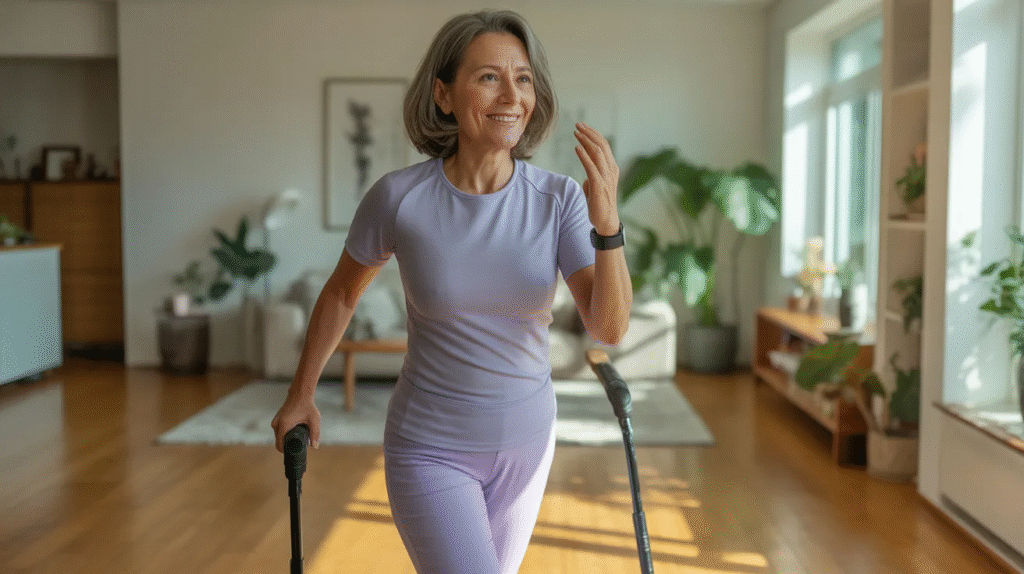
Your knees, hips, and joints don’t need the pounding that comes with running or high-impact aerobics. Japanese walking delivers results without the joint stress that makes traditional exercise feel impossible during menopause. You’re in control of your intensity—”fast” is relative to your current fitness level, not some arbitrary speed you need to hit.
The time efficiency factor matters too. You don’t need to walk for hours to see results. A 20-30 minute Japanese walking session delivers more fat-burning benefits than an hour of steady-paced walking. For women juggling work, family, and the physical challenges of menopause, this efficiency is game-changing.
You can do this anywhere—in your living room, around your neighborhood, at a local park, or even in a mall during bad weather. No gym membership required, no special equipment needed beyond comfortable shoes. This accessibility removes every excuse that typically derails exercise plans.
The Complete Japanese Walking Method: How to Get Started

The Essential 3-Minute Cycle Formula
The foundation of Japanese walking is the 3×3 method: 3 minutes of fast walking followed by 3 minutes of slow walking. This creates one complete cycle that you’ll repeat throughout your session. Start with just 3-4 cycles (18-24 minutes total) when you’re beginning, then gradually build up to 6-8 cycles as your fitness improves.
What does “fast” actually mean? It’s a pace where you’re breathing harder and could talk but not easily carry on a full conversation. You should feel like you’re working—maybe a 7 out of 10 effort level. “Slow” means returning to a comfortable pace where you can breathe easily and recover, around a 3-4 out of 10 effort.
You don’t need a fancy fitness tracker to gauge your intensity. Pay attention to your breathing and how your body feels. During fast intervals, you should feel your heart rate increase and maybe break a light sweat. During slow intervals, your breathing should return to normal and you should feel ready for the next fast interval.
Here’s your starter formula: Begin with a 2-minute easy warm-up walk, then do 3 minutes fast, 3 minutes slow, repeating this pattern 3 times. Finish with a 2-minute cool-down walk. That’s 20 minutes total—completely manageable and highly effective.
Proper Form and Technique for Maximum Results
Form matters more than speed. During your fast intervals, focus on taking longer strides—not running or jogging, but extending your step length naturally. This engages more muscle groups and increases the intensity without joint impact.
Your arms are secret weapons for burning more calories. Bend your elbows at 90 degrees and pump your arms naturally as you walk. During fast intervals, pump them more vigorously—this increases your heart rate and engages your core muscles. During slow intervals, let your arms relax and swing naturally.
Posture protects your back and maximizes results. Stand tall with your shoulders back and down, not hunched forward. Engage your core by gently pulling your belly button toward your spine. Look forward, not down at your feet. This alignment helps you breathe better and prevents the back pain that many menopausal women experience.
Your foot should strike heel-first, then roll through to push off with your toes. This natural walking motion becomes more pronounced during fast intervals. Avoid landing flat-footed or on your toes, which can cause strain.
Creating Your Perfect Weekly Schedule
Consistency beats intensity every time. Aim for 4-5 Japanese walking sessions per week. This frequency gives your body enough stimulus to change while allowing adequate recovery time—crucial for menopausal bodies that need more recovery than younger bodies.
Start with 15-20 minute sessions for the first week. If that feels comfortable, increase to 25-30 minutes in week two. By week three or four, you can work up to 40-45 minute sessions if you want maximum results. But here’s the truth: even 20 minutes of interval walking beats 60 minutes of steady walking for fat loss.
Schedule your rest days strategically. Your body builds strength and burns fat during recovery, not during the workout itself. Take at least two full rest days per week, or do gentle stretching and yoga on those days. This prevents burnout and reduces injury risk.
Morning sessions work well for many women because they boost metabolism for the entire day and help regulate hormones. But the best time is whenever you’ll actually do it consistently. If evenings work better for your schedule, that’s perfect. Consistency matters more than timing.
Amazing Benefits Beyond Weight Loss

Physical Health Improvements You’ll Notice
Many women report fewer and less intense hot flashes after starting regular interval walking. The improved cardiovascular fitness helps regulate your body temperature better, and the endorphin release seems to moderate the hormonal fluctuations that trigger hot flashes. You might notice this benefit within just 2-3 weeks.
Bone density becomes a major concern during menopause as estrogen levels drop. Walking is a weight-bearing exercise that stimulates bone growth, and the faster intervals provide even more stimulus than regular walking. This helps prevent osteoporosis and reduces fracture risk as you age.
Sleep quality improves dramatically for most women. The physical activity helps regulate your circadian rhythm, and the stress reduction helps quiet the racing thoughts that keep you awake. Women consistently report falling asleep faster and staying asleep longer after establishing a regular Japanese walking routine.
Your energy levels will increase rather than decrease. This seems counterintuitive—how does exercise give you more energy? But interval walking improves your cardiovascular efficiency, meaning your heart doesn’t have to work as hard to pump blood. You’ll notice climbing stairs becomes easier, and that afternoon energy slump diminishes.
Mental and Emotional Wellness Benefits
Mood swings and anxiety often intensify during menopause, but regular interval walking acts as a natural mood stabilizer. The rhythmic movement combined with the endorphin release creates a powerful antidepressant effect without medication. Many women describe feeling calmer and more emotionally balanced after just one week of consistent walking.
Stress melts away during those 20-30 minutes. The repetitive nature of walking combined with the focus required during fast intervals gives your mind a break from worrying. You can’t ruminate about problems when you’re concentrating on maintaining your pace and breathing. This mental break becomes as valuable as the physical benefits.
Confidence builds with every completed session. When you’re dealing with a changing body that feels out of control, accomplishing something concrete—like completing a 25-minute walk—gives you back a sense of agency. As you see results and feel stronger, that confidence expands into other areas of your life.
Long-Term Health Protection
Heart disease risk increases dramatically after menopause, becoming the leading cause of death for women over 50. Interval walking training improves your cardiovascular health more effectively than steady-state cardio. Research shows it lowers blood pressure, improves cholesterol levels, and increases heart efficiency—all protective factors against heart disease.
Blood sugar control becomes more challenging during menopause, increasing diabetes risk. Japanese walking improves insulin sensitivity, meaning your cells respond better to insulin and regulate blood sugar more effectively. This benefit continues even on rest days, as your improved muscle mass helps regulate glucose around the clock.
Cognitive function gets a boost too. The increased blood flow to your brain during exercise, combined with the new neural pathways created by learning and maintaining the interval pattern, helps protect against cognitive decline. Women who exercise regularly during and after menopause show better memory and processing speed than sedentary women.
Quick Tips to Maximize Your Results
Simple Nutrition Tweaks That Amplify Results
Hydration timing matters more than you might think. Drink 8-16 ounces of water about 30 minutes before your walk. This ensures you’re properly hydrated without feeling sloshed around during your fast intervals. Keep water handy during longer sessions, taking small sips during your slow intervals.
A light pre-walk snack can improve your performance without weighing you down. About 30-60 minutes before walking, have a small portion of easily digestible carbs with a little protein—half a banana with a tablespoon of almond butter, or a few whole grain crackers with cheese. This gives you energy without causing digestive discomfort.
Post-walk protein supports muscle maintenance and growth, which becomes crucial during menopause when you’re naturally losing muscle mass. Within 30-60 minutes after your walk, have a protein-rich snack or meal. Greek yogurt, a protein smoothie, or eggs are perfect options. This helps your body repair and build lean muscle tissue that burns calories even at rest.
Don’t slash calories drastically while starting Japanese walking. Your body needs adequate nutrition to fuel your workouts and build muscle. Extreme calorie restriction during menopause backfires by slowing your metabolism further. Focus on eating whole, nutrient-dense foods rather than counting every calorie.
Tracking Progress the Easy Way
Your phone’s built-in step counter or free apps like Google Fit or Apple Health work perfectly for tracking. You don’t need expensive fitness trackers. These apps automatically count your steps, estimate distance, and track your progress over time. Watching your weekly step count increase provides tangible proof of your consistency.
The scale doesn’t tell the whole story—especially during menopause when hormonal fluctuations cause water retention that can mask fat loss. Measure progress by how you feel: Do you have more energy? Are your clothes fitting better? Can you walk up stairs without getting winded? These non-scale victories often appear before the scale moves.
Take progress photos every two weeks in the same outfit and lighting. Visual changes often show up before you notice them in the mirror. Many women report that their midsection looks noticeably smaller after 4-6 weeks even when the scale hasn’t moved much.
Track your interval times and how they feel. When 3 minutes of fast walking that felt challenging in week one becomes comfortable in week four, that’s measurable progress. Your increasing fitness level is just as important as pounds lost.
Staying Motivated and Overcoming Common Obstacles
Finding a walking buddy transforms this from a chore into social time. Whether it’s a neighbor, friend, or family member, having someone to walk with increases accountability and makes the time pass faster. You can even connect with online communities of women doing Japanese walking for menopause weight loss—sharing progress and challenges keeps you motivated.
Create a dedicated playlist that matches your interval pattern. Put energizing, upbeat songs for your fast intervals and slightly slower, calming songs for your recovery intervals. Music makes the time fly and can actually improve your performance by distracting you from fatigue.
Bad weather doesn’t have to derail your progress. Walk inside your home—up and down hallways, around your living room, or follow along with YouTube videos designed for walking workouts at home. Mall walking works great too, especially in extreme temperatures. The key is maintaining consistency regardless of weather.
Work around menopause symptoms rather than letting them stop you. Feeling fatigued? Do a shorter 15-minute session instead of skipping entirely. Joint stiffness? Start with a longer warm-up and make your fast intervals less intense. Adjust the method to fit your body’s needs on any given day—some movement always beats no movement.
Take Control of Your Menopause Journey Today
Japanese walking isn’t a magic solution, but it’s as close as you’ll find to an exercise method designed perfectly for your menopausal body. The science backs it up, the results speak for themselves, and the simplicity makes it sustainable long-term. You don’t need to suffer through brutal workouts or starve yourself to lose weight during menopause.
The women seeing the best results are the ones who start small and stay consistent. They’re not perfect—they miss days occasionally, they adjust their intensity based on how they feel, and they give themselves grace during the learning process. But they keep showing up, and their bodies respond.
Small, consistent efforts compound into remarkable results. That 20-minute walk today might not feel significant, but twenty walks over four weeks create real metabolic changes. Forty walks over eight weeks reshape your body composition. Consistent action over time beats sporadic intensity every single time.
Your action step for this week is simple: Schedule three Japanese walking sessions. Put them in your calendar like important appointments. Start with just 15-20 minutes using the 3×3 method—3 minutes fast, 3 minutes slow, repeated 3 times. That’s it. Don’t overthink it, don’t wait for the perfect time, just start.
You have more power over your health during this transition than you might believe. Menopause doesn’t mean accepting weight gain and declining fitness as inevitable. Japanese walking gives you a proven, accessible tool to take control. Your body is capable of amazing changes—you just need to give it the right stimulus and consistent effort.
Start today. Your future self will thank you for taking this first step toward reclaiming your health, energy, and confidence during menopause and beyond.