flat belly workout routine for busy 30+ moms

Let’s be real—motherhood after 30 comes with unexpected changes, and that stubborn belly fat is probably one you didn’t sign up for. You’ve tried squeezing into your pre-baby jeans, attempted those marathon workout sessions you see on Instagram, and maybe even convinced yourself that “mom bod” is just your new reality.
Here’s the truth: Traditional workout advice doesn’t work for busy moms like you. Those fitness influencers posting hour-long gym sessions?
They don’t have a toddler hanging on their leg while trying to make dinner. They’re not running on four hours of sleep or juggling school pickups, work deadlines, and bedtime routines.
You don’t need hours at the gym to see amazing results. In fact, that approach sets you up for failure before you even start. What you need is a simple, proven routine that actually fits into your already packed day—not some fantasy schedule that requires a live-in nanny and a personal chef.
This guide offers exactly that: quick, effective, proven exercises designed specifically for YOUR schedule and YOUR body. We’re talking 15 minutes, three times a week.
No fancy equipment. No gym membership. Just you, a small space in your home, and exercises that target the exact areas where busy moms over 30 struggle most.
I promise you this: A flat belly isn’t about finding more time in your day—it’s about using the time you have more effectively. These targeted movements deliver results because they work with your post-30 body, not against it. Ready to feel strong and confident again? Let’s make it happen.
Why Your Belly Changed After 30 (And Why It’s Not Your Fault)

Understanding Your Post-Baby Body
Your body went through an incredible transformation during pregnancy, and those changes didn’t magically reverse the moment you gave birth. After 30, your hormones shift in ways that make belly fat more stubborn than ever. Estrogen levels fluctuate, progesterone changes, and your metabolism slows down—it’s biology, not laziness.
Diastasis recti affects up to 60% of postpartum women. This separation of your abdominal muscles creates that persistent “pooch” that won’t disappear no matter how many crunches you do. Your core muscles literally separated to make room for your baby, and they need specific exercises to reconnect properly.
The stress-cortisol-belly fat connection is especially real for busy moms. When you’re constantly running on adrenaline—managing tantrums, meeting work deadlines, and functioning on minimal sleep—your body produces excess cortisol.
This stress hormone directly tells your body to store fat around your midsection. It’s a survival mechanism that worked great for our ancestors but works against you when trying to flatten your belly.
The Time Crunch Reality Check
Those 60-minute workout videos? Not realistic and definitely not necessary. Research shows that short, focused 10-15 minute sessions can be just as effective for core strengthening and fat loss when done consistently. The key is quality over quantity—targeted movements that engage your deep core muscles deliver better results than an hour of random exercises.
Your body responds to consistency, not marathon sessions. Three 15-minute workouts per week will transform your core faster than sporadic hour-long attempts that leave you exhausted and inconsistent. This approach fits into naptime, early mornings before the kids wake up, or even during your lunch break.
Common Mistakes That Keep You Stuck
Doing endless crunches without seeing results happens because traditional crunches don’t address diastasis recti or engage your deep core muscles effectively. You’re working the surface muscles while ignoring the foundation that creates a truly flat belly.
Skipping core work because you think you need cardio is another trap. While cardio burns calories, targeted core exercises rebuild the muscle structure that creates a tight, toned midsection. You need both, but core work is non-negotiable for belly transformation.
The all-or-nothing mindset sabotages more moms than anything else. You miss one workout and decide the whole week is ruined. You eat one cookie and throw away the entire day’s healthy eating. Progress happens with imperfect consistency, not perfect execution.
The Ultimate 15-Minute Flat Belly Routine for Busy Moms
Essential Core-Strengthening Exercises (No Equipment Needed)
Modified Planks: The Complete Guide for Rebuilding Core Strength
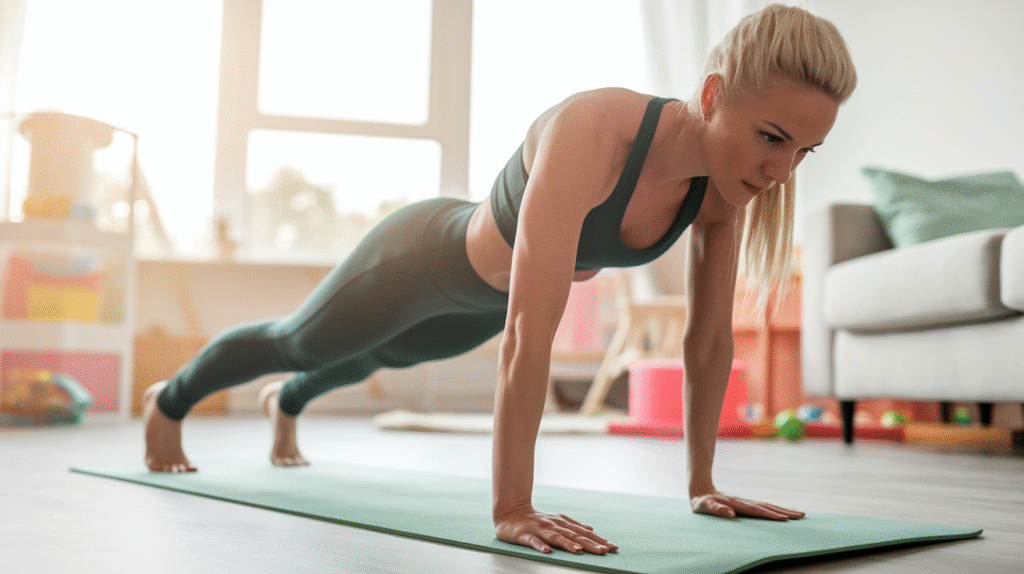
Planks are the ultimate core rebuilder because they engage every abdominal muscle simultaneously while protecting your back. Start on your knees instead of your toes—this isn’t cheating, it’s smart progression for your post-baby body.
Proper form protects your back and maximizes results. Keep your shoulders directly over your elbows, engage your core by pulling your belly button toward your spine, and maintain a straight line from head to knees. Don’t let your hips sag or pike upward.
Begin with 20-second holds and gradually increase to 45 seconds as you build strength. Fit planks into your morning routine right after brushing your teeth—it takes less time than scrolling social media and delivers actual results. Progress to full planks on your toes only when you can hold a knee plank for 60 seconds with perfect form.
Dead Bugs: The Proven Exercise for Diastasis Recti Recovery
Dead bugs look simple but deliver powerful results for reconnecting separated abdominal muscles. Lie on your back with arms extended toward the ceiling and knees bent at 90 degrees. Slowly lower your right arm overhead while extending your left leg, keeping your lower back pressed into the floor. Return to start and repeat on the opposite side.
The breathing cue makes this exercise effective: Exhale as you extend, inhale as you return. This breathing pattern engages your transverse abdominis—the deep muscle layer that acts like a corset around your midsection.
Start with 8 repetitions per side, focusing on control rather than speed. Modify by keeping your extended leg higher if maintaining back contact feels challenging. This simple move rebuilds core stability from the inside out.
Bird Dogs: Perfect for Balance and Deep Core Activation
Bird dogs strengthen your entire core while improving balance and posture. Start on hands and knees with your wrists under shoulders and knees under hips. Extend your right arm forward and left leg back simultaneously, creating a straight line. Hold for three seconds, then return to start.
Engage your entire core by preventing your hips from rotating or tilting. Common mistakes include rushing through repetitions and allowing your lower back to arch. Move slowly and deliberately—this isn’t a race.
Quick variations prevent boredom and challenge different muscle fibers. Add a knee-to-elbow crunch between repetitions, or hold the extended position for 10 seconds instead of three. Perform 10 repetitions per side.
Power Moves for Lower Belly Targeting
Reverse Crunches: The Effective Alternative to Traditional Sit-Ups
Reverse crunches specifically target that lower belly pooch that frustrates most moms. Lie on your back with knees bent and feet lifted so your thighs are perpendicular to the floor. Use your lower abs to lift your hips off the ground, bringing your knees toward your chest.
This movement works better for lower belly transformation because it engages the muscles below your belly button—exactly where postpartum fat tends to accumulate. Traditional crunches miss this crucial area entirely.
Proper technique requires controlled movement. Don’t swing your legs or use momentum—lift from your core muscles. Start with 12 repetitions, and you can do these while baby naps in the same room. Keep the movement small and controlled for maximum effectiveness.
Leg Raises: Simple Yet Challenging Core Sculptor
Leg raises build serious core strength when done correctly. Lie flat on your back with legs extended and hands under your hips for lower back support. Keeping your legs straight, lift them to 90 degrees, then lower them slowly without letting your feet touch the ground.
Modifications for postpartum bodies include bending your knees slightly or lowering your legs only halfway at first. Protect your lower back by pressing it firmly into the floor throughout the movement—if your back arches, you’ve lowered too far.
Progress through difficulty levels by lowering your legs closer to the floor as you build strength. Start with 8 repetitions and increase to 15 over several weeks.
Pelvic Tilts: The Gentle Exercise with Amazing Benefits
Pelvic tilts reconnect you with your deep core muscles after pregnancy. Lie on your back with knees bent and feet flat. Gently tilt your pelvis upward, pressing your lower back into the floor while engaging your abs. Hold for five seconds, then release.
This gentle exercise is perfect for those just starting their fitness journey or recovering from diastasis recti. It teaches you to engage your transverse abdominis—the foundation for all core work.
You can do pelvic tilts anywhere, anytime—even in bed before getting up in the morning. Perform 15 repetitions, focusing on the mind-muscle connection rather than speed.
The Easy 3-Day Weekly Schedule
Monday, Wednesday, and Friday provide perfect spacing for recovery and results. Each session takes just 15 minutes and follows this structure:
– Modified Planks: 3 sets of 30-45 seconds – Dead Bugs: 2 sets of 10 reps per side – Bird Dogs: 2 sets of 10 reps per side – Reverse Crunches: 3 sets of 12 reps – Leg Raises: 2 sets of 10 reps – Pelvic Tilts: 2 sets of 15 reps
Rest days matter just as much as workout days. Your muscles rebuild and strengthen during recovery, not during exercise. Use Tuesday, Thursday, and weekends for gentle movement like walking or stretching.
Track progress without obsessing over the scale. Take measurements around your waist, notice how your clothes fit, and pay attention to increased energy and strength. The scale doesn’t reflect muscle gain or reduced bloating—your measurements and how you feel tell the real story.
Quick Lifestyle Hacks That Accelerate Belly Fat Loss

Simple Nutrition Tweaks for Busy Moms
The essential anti-bloat foods transform your results without complicated meal plans. Add asparagus, cucumber, watermelon, and ginger to your grocery list—these natural diuretics reduce water retention that makes your belly look bigger. Probiotic-rich foods like Greek yogurt and sauerkraut improve digestion and reduce bloating within days.
Easy meal prep strategies save time and flatten your tummy simultaneously. Spend 30 minutes on Sunday chopping vegetables and grilling chicken breasts. Having ready-to-eat protein and veggies eliminates the temptation to grab processed foods when you’re starving and rushed.
Hydration matters more than you think for belly transformation. Drinking eight glasses of water daily reduces bloating, improves digestion, and helps your body release stored water weight. Add lemon or cucumber for flavor if plain water bores you. Keep a water bottle with you constantly—you’ll drink more when it’s convenient.
Smart snacking with protein-rich options curbs cravings and stabilizes blood sugar. Keep hard-boiled eggs, almonds, and string cheese readily available. These quick snacks prevent the afternoon energy crash that leads to grabbing cookies or chips.
Stress Management for Hormone Balance
The proven connection between stress and belly fat is undeniable. Chronic stress keeps cortisol levels elevated, signaling your body to store fat around your midsection. Managing stress isn’t optional if you want a flat belly—it’s essential.
Five-minute breathing exercises you can do in the car create immediate stress relief. Before walking into your house after work, sit in your car and practice box breathing: inhale for four counts, hold for four, exhale for four, hold for four. Repeat five times. This simple practice lowers cortisol and helps you transition from work mode to mom mode.
Better sleep helps flatten your belly by regulating hunger hormones and reducing cortisol. Aim for seven hours minimum, even if that means saying no to late-night Netflix. Create a bedtime routine that signals your body it’s time to rest—dim lights, avoid screens for 30 minutes before bed, and keep your bedroom cool.
Setting boundaries is the ultimate self-care for busy mothers. Saying no to extra commitments protects your workout time and reduces stress. Your flat belly journey requires prioritizing yourself, which means disappointing others sometimes. That’s not selfish—it’s necessary.
Sneaky Ways to Move More Throughout Your Day
Kitchen counter exercises while cooking dinner add extra core engagement to your routine. Do calf raises while stirring pasta, wall push-ups while waiting for water to boil, or standing side bends while vegetables roast. These micro-workouts accumulate throughout the day.
Playground workout moves while kids play turn park time into training time. Do step-ups on the park bench, incline push-ups on the slide platform, or walking lunges around the perimeter. Your kids get playtime, you get a workout—everyone wins.
Quick core engagement during daily tasks builds strength without dedicated workout time. Engage your abs while sitting at red lights, standing in line at the grocery store, or folding laundry. Simply pulling your belly button toward your spine and holding for 30 seconds strengthens your transverse abdominis.
Walking strategies that maximize calorie burn include adding intervals. Walk at your normal pace for two minutes, then power walk for one minute. Repeat throughout your walk. This simple adjustment increases calorie burn by up to 30% without requiring more time.
Your Complete 30-Day Flat Belly Challenge
Week 1: Foundation Building
Starting slow builds consistency over intensity. Your first week focuses on learning proper form and establishing the habit. Complete each exercise with perfect technique even if that means fewer repetitions. Quality repetitions create results; sloppy ones create injuries.
The daily 10-minute routine breakdown for Week 1 includes just four exercises: modified planks, dead bugs, reverse crunches, and pelvic tilts. Master these foundational movements before adding complexity. Perform two sets of each exercise with 30-second rest periods between sets.
Check in with your body properly by noticing how exercises feel rather than obsessing over soreness. Some muscle fatigue is normal; sharp pain is not. Diastasis recti should gradually improve, not worsen. If you notice increased separation or pain, reduce intensity and consult a healthcare provider.
Celebrate small wins to stay motivated. You completed all three workouts this week? That’s huge! You held a plank five seconds longer than Monday? Progress! These tiny victories accumulate into major transformation.
Week 2: Increasing Intensity
Add repetitions and hold times safely by increasing by just 10-20% from Week 1. If you did 10 reverse crunches last week, try 12 this week. If you held planks for 30 seconds, aim for 35. Small increases prevent injury while building strength steadily.
Introduce simple variations for continued progress. Add bird dogs to your routine this week. Try single-leg reverse crunches instead of both legs together. These variations challenge your muscles in new ways, preventing plateaus.
The motivation dip around day 10-12 hits almost everyone. You’re not seeing dramatic changes yet, the novelty has worn off, and life gets busy. Push through anyway. Transformation happens for those who continue when motivation fades. Discipline, not motivation, creates results.
Adjust for soreness and recovery needs by listening to your body. Feeling unusually fatigued? Take an extra rest day. Sore muscles are fine; exhaustion means you need recovery. This journey is 30 days, not three days—you have time to rest when needed.
Week 3: Building Strength and Endurance
Progress to more challenging variations as your strength increases. Move from knee planks to full planks. Lower your legs closer to the ground during leg raises. These progressions signal that your core is rebuilding and strengthening.
Combine exercises for effective circuit training this week. Perform one set of each exercise back-to-back with minimal rest, then rest for one minute before repeating the circuit. This approach increases intensity and saves time.
Stay consistent when life gets chaotic by remembering that 10 minutes is better than zero minutes. Can’t complete the full routine? Do half. Kids interrupting constantly? Pause and resume. Imperfect consistency beats perfect inconsistency every time.
Problem-solve common obstacles before they derail you. No time in the morning? Work out during naptime. Too tired at night? Exercise before breakfast. There’s always a solution if you’re committed to finding one.
Week 4: Finishing Strong and Planning Ahead
Maximize your final week results by giving full effort to every repetition. You’ve built the foundation—now push yourself to see what you’re capable of. Increase hold times, add extra sets, or reduce rest periods between exercises.
Measure progress beyond the scale by taking final measurements and photos. Compare them to your Week 1 starting point. Notice how your clothes fit, your energy levels, and your strength improvements. These non-scale victories matter more than pounds lost.
Create your sustainable maintenance plan for after the challenge ends. Will you continue the same routine? Add new exercises? Increase to four days per week? Having a plan prevents backsliding into old habits.
Keep going after 30 days by setting new goals. Maybe you want to hold a plank for two minutes or master full leg raises. Continuous goal-setting maintains momentum and prevents complacency.
Printable Workout Tracker and Tips
A free downloadable challenge calendar keeps you accountable. Print it, hang it on your refrigerator, and check off each completed workout. Visual progress tracking increases adherence by 42% according to fitness research.
Use progress photos effectively by taking them in the same location, same lighting, and same clothing every week. Front, side, and back views reveal changes you might not notice in the mirror. These photos become powerful motivation when you feel discouraged.
Measurement tracking that actually motivates focuses on multiple data points. Measure your waist at the belly button, your lower belly at the widest point, and your hips. Track your plank hold time and maximum repetitions for each exercise. Celebrate improvements in any of these areas.
Accountability ideas for busy moms include finding a workout buddy (even virtually), posting updates in a supportive online group, or telling your partner about your goals. External accountability increases your likelihood of completing the challenge by over 60%.
Conclusion
Your Flat Belly Journey Starts Now
This routine works for busy 30+ mothers because it respects your reality. You don’t have unlimited time, energy, or childcare. What you do have is 15 minutes, three times per week—and that’s genuinely enough to transform your core when you use targeted, effective exercises.
The power of consistency over perfection cannot be overstated. You’ll miss workouts. You’ll have bad days. You’ll eat the leftover birthday cake. None of that matters if you keep showing up. Three imperfect workouts per week for three months beats seven perfect workouts followed by three weeks of nothing.
You deserve to feel strong and confident in your body. Not someday when life calms down or when the kids are older—right now, exactly as you are. This journey isn’t about punishing yourself for how you look; it’s about honoring yourself enough to invest 15 minutes in your strength and health.
Remember this essential truth: 15 minutes a day is enough to see real results. You don’t need more time, more equipment, or more motivation. You need to start, stay consistent, and trust the process. Your stronger, flatter belly is waiting on the other side of these simple, proven exercises.
Essential Takeaways
Start where you are with no judgment and no comparison. Your journey is yours alone—comparing yourself to other moms or your pre-baby self only creates discouragement. Accept your starting point and commit to moving forward from there.
Focus on form and breathing for effective core engagement. Sloppy repetitions done quickly deliver zero results. Controlled movements with proper breathing patterns rebuild your core from the inside out. Quality always trumps quantity.
Combine quick workouts with simple lifestyle changes for accelerated results. Exercise alone won’t flatten your belly if stress, poor sleep, and inflammatory foods work against you. Address all factors for comprehensive transformation.
Progress happens with patience and persistence. You didn’t gain belly fat overnight; you won’t lose it overnight either. Trust that consistent effort compounds into remarkable results over weeks and months.
Your Next Steps
Choose your start date for the 30-day challenge—preferably within the next three days while motivation is high. Waiting for the “perfect” Monday or the first of the month delays progress unnecessarily. Start now, start messy, just start.
Set up your workout space even if it’s just a corner of your bedroom or living room. You need enough space to lie down and extend your arms and legs. That’s it. No fancy home gym required—just a small area and commitment.
Take your “before” measurements and photos today. You’ll thank yourself later when you need motivation or want to see how far you’ve come. Measure your waist, lower belly, and hips. Take front, side, and back photos in fitted clothing.
Share your journey with other moms for support and accountability. Find one friend doing the challenge with you, join an online community, or simply tell your partner about your goals. Shared commitment increases your success rate dramatically.
Your flat belly journey begins with one simple decision: choosing yourself. You’ve spent years putting everyone else first—your kids, your partner, your job, your home. Now it’s your turn. Fifteen minutes, three times per week. You’ve got this, mama. Let’s make it happen.