10-minute core exercises for busy women over 30
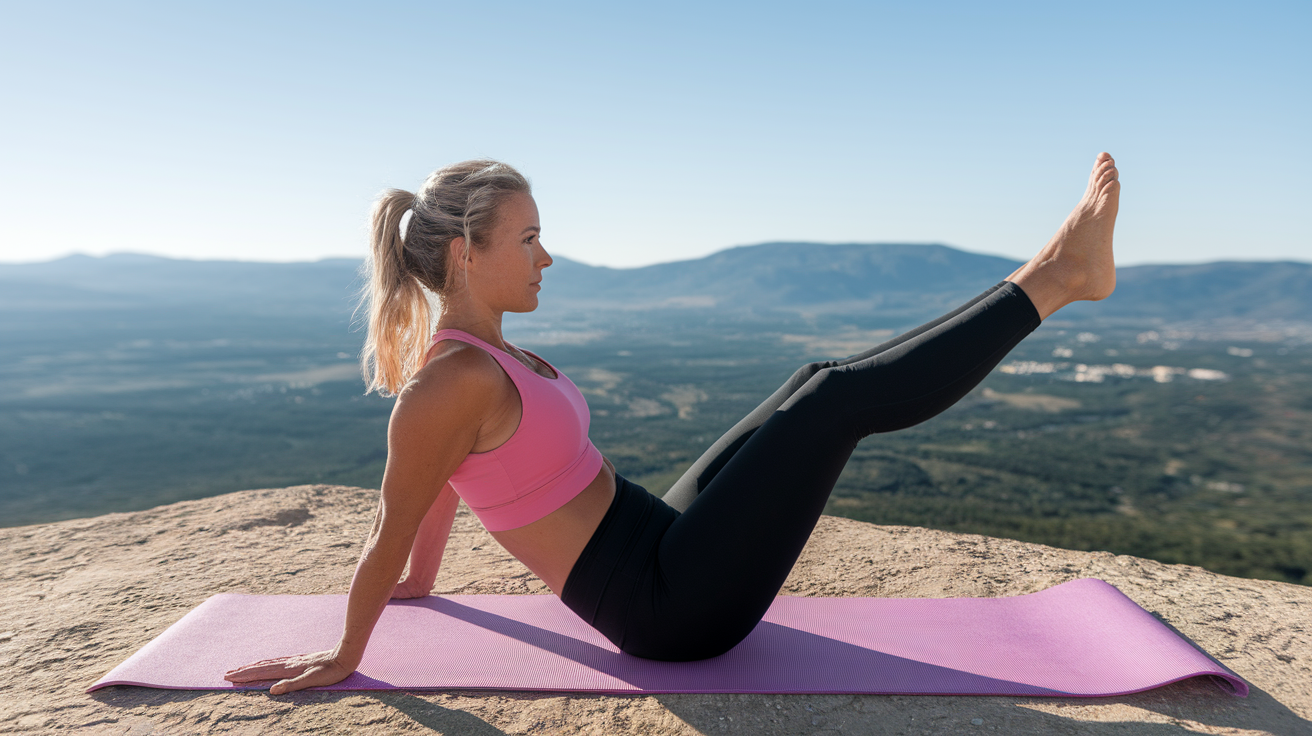
Let’s be real: Life after 30 doesn’t slow down—it speeds up. Between career demands, family responsibilities, social commitments, and trying to maintain some semblance of self-care, finding time for hour-long gym sessions feels impossible. Add in the metabolic shifts that happen naturally with age, and you might feel like your body is working against you.
Here’s the truth about core strength for women over 30: It’s not about chasing six-pack abs or fitting into your college jeans. It’s about building functional strength that makes everyday life easier. It’s about standing taller, moving confidently, and eliminating that nagging lower back pain that seems to appear out of nowhere.
The good news? You don’t need hours at the gym. Research consistently shows that short, focused workouts deliver powerful results when done consistently. Just 10 minutes of targeted core exercises can transform your strength, posture, and energy levels.
In this guide, you’ll discover effective exercises that work, proper form techniques that protect your body, and a realistic approach to building a stronger core without gym intimidation or time overwhelm. No gimmicks, no unrealistic expectations—just proven strategies that fit into your actual life.
Why Your Core Matters More After 30 (And It’s Not About Six-Packs)
The Real Benefits of Core Strength for Women Over 30
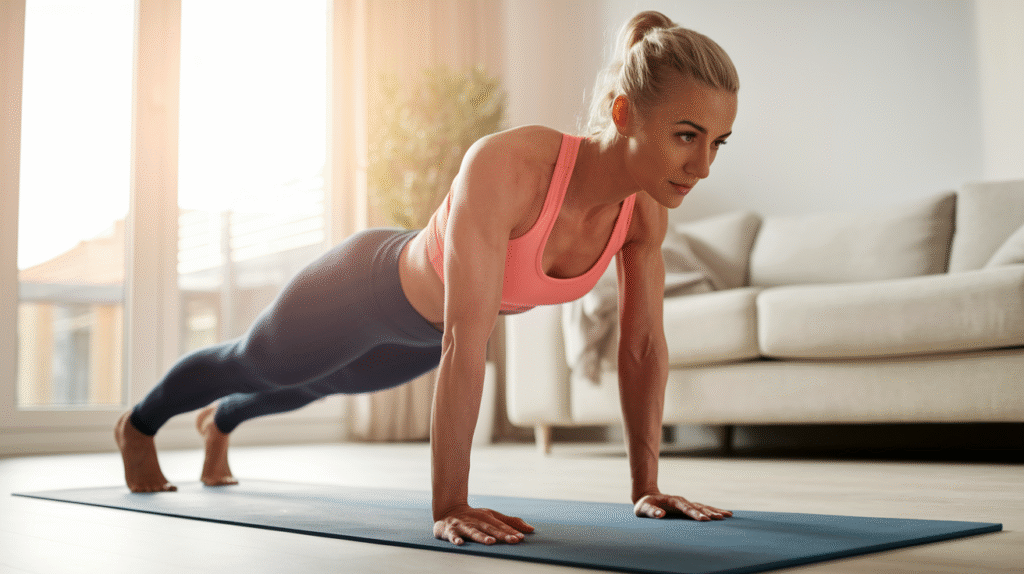
Your core does far more than make your stomach look flat. Think of it as your body’s powerhouse—the central link between your upper and lower body that stabilizes every movement you make.
Improved posture becomes critical when you’re spending hours hunched over a laptop or constantly bending down to pick up toys, groceries, or laundry. A strong core naturally pulls your shoulders back and aligns your spine, combating that forward slouch that ages your appearance and causes pain.
Lower back pain affects nearly 80% of adults at some point, and it becomes more common after 30. When your core muscles are weak, your lower back compensates, leading to strain and discomfort. Strengthening your deep core muscles provides natural support that reduces pain and prevents future injuries.
Better balance and stability might not sound exciting, but they’re game-changers for daily activities. Carrying heavy grocery bags, playing actively with your kids, navigating icy sidewalks, or simply getting out of bed without wincing—all of these require core strength. As we age, fall prevention becomes increasingly important, and a strong core is your first line of defense.
Enhanced metabolism is another benefit most women don’t realize. Muscle tissue burns more calories at rest than fat tissue. As hormonal changes shift where your body stores fat, building and maintaining muscle mass through core work helps keep your metabolism efficient.
What Actually Happens to Your Core After 30
Let’s address the elephant in the room: Yes, your body changes after 30, but these changes aren’t a life sentence.
Muscle mass naturally decreases by about 3-8% per decade after 30 if you don’t actively work to maintain it. This process, called sarcopenia, is completely reversible through consistent strength training. Your muscles respond to resistance training at any age—you just need to challenge them regularly.
Hormonal changes, particularly the gradual decline in estrogen that accelerates in your late 30s and 40s, affect where your body stores fat. You might notice more accumulation around your midsection even if your weight stays the same. While you can’t spot-reduce fat, building core muscle improves your body composition and how you feel in your clothes.
If you’ve had children, pregnancy may have impacted your core strength through diastasis recti (abdominal separation) or weakened pelvic floor muscles. These conditions require specific attention, and the exercises in this guide account for safe, effective rebuilding.
Here’s what this isn’t about: “Getting your body back.” That phrase suggests your current body is somehow wrong or less valuable. Instead, this is about building a stronger, more capable version of yourself moving forward. Your body has carried you through everything life has thrown at you—now you’re investing in making it even more resilient.
The 10-Minute Advantage: Why Less Can Be More
You might think 10 minutes can’t possibly deliver results, but science disagrees. Research published in the Journal of Physiology found that short bursts of intense exercise produce similar metabolic benefits to longer, moderate workouts. The key is consistency and intensity, not duration.
Higher adherence rates make short workouts more effective in the real world. You’re far more likely to complete a 10-minute workout daily than to skip a 60-minute session because you “don’t have time.” Consistency beats intensity every single time when it comes to long-term results.
Making every minute count means focusing on compound movements that engage multiple muscle groups simultaneously. The exercises in this guide don’t waste time on isolated movements that deliver minimal results. Instead, you’ll perform proven exercises that sculpt your entire core efficiently.
The compound effect is where transformation happens. One 10-minute workout feels small. But 10 minutes daily for 30 days equals 300 minutes—five hours of focused core work. Over 90 days, that’s 15 hours. Suddenly, those “just 10 minutes” add up to serious strength gains, visible tone, and measurable improvements in how you move and feel.
The Essential Core Exercise Formula (What Actually Works)
The Four Movement Patterns Your Core Needs
Effective core training isn’t about doing a hundred crunches. Your core muscles work in multiple directions, and a balanced routine addresses all of them.
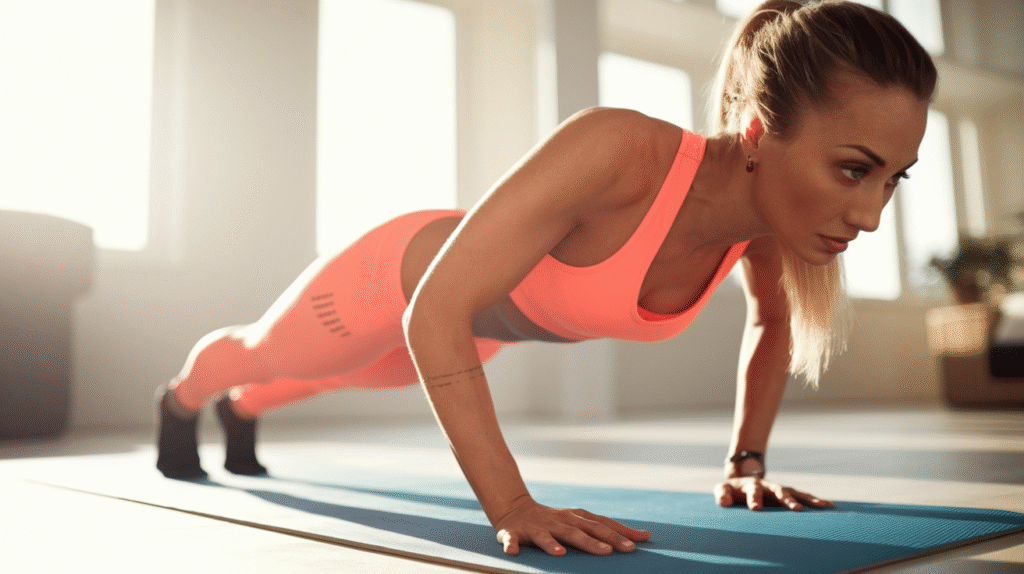
Anti-extension exercises like planks and dead bugs train your core to resist arching your lower back. This builds deep stability in your transverse abdominis—the deepest core muscle that acts like a natural weight belt. These movements protect your spine during daily activities like lifting, reaching, and bending.
Anti-rotation exercises such as side planks and pallof press variations strengthen your obliques (side abs) while teaching your core to resist twisting forces. This functional strength translates directly to activities like carrying a toddler on one hip, hauling a heavy bag, or maintaining stability during sports.
Flexion exercises including controlled crunches and toe taps target your rectus abdominis—the “six-pack” muscle. While these shouldn’t dominate your routine, they play an important role in complete core development and help tone the front of your midsection.
Anti-lateral flexion movements like suitcase carries and side plank variations challenge your core to resist sideways bending. This creates balanced strength and prevents the muscle imbalances that lead to injury and poor posture.
Equipment-Free vs. Minimal Equipment Options
You don’t need a single piece of equipment to build a powerful core. Bodyweight exercises deliver incredible results because your core’s primary job is stabilizing and moving your own body weight.
That said, adding minimal resistance can increase intensity without adding time. Household items work perfectly: fill water bottles for light weights, use a backpack loaded with books for added resistance, or grab a sturdy chair for support during modifications.
If you want to invest in equipment, these three items offer the best value: resistance bands (versatile and portable), a stability ball (adds instability that forces deeper core engagement), and a set of light dumbbells (5-15 pounds for most women). None are necessary, but they provide progression options as you get stronger.
The beauty of equipment-free training? You can work out anywhere—hotel rooms during travel, your living room, a park, even your office. No excuses, no barriers.
Form Over Speed: The Non-Negotiables
Quality of movement trumps quantity every single time. Doing 10 perfect dead bugs delivers more results than 50 sloppy ones. When you rush through movements, you disengage the target muscles and increase injury risk.
Breathing technique is the secret weapon most people ignore. Exhale during the exertion phase of each exercise—this naturally engages your deep core muscles. For example, exhale as you crunch up, inhale as you lower down. This simple adjustment dramatically increases effectiveness.
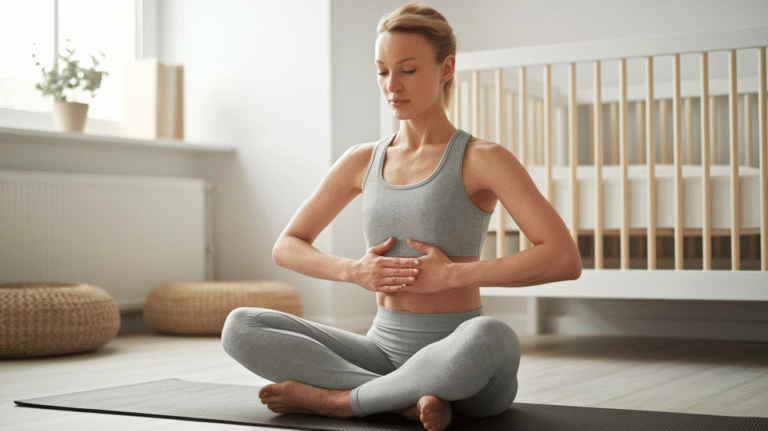
Engaging your pelvic floor, especially if you’ve had children, protects against issues like incontinence and provides foundational stability. Think about gently “lifting” your pelvic floor as you engage your core—imagine stopping the flow of urine without actually tensing your glutes or thighs.
Common form mistakes waste your time and risk injury: arching your lower back during planks, pulling on your neck during crunches, holding your breath, or using momentum instead of muscle control. The exercise descriptions below address these specifically.
Your Complete 10-Minute Core Circuit (Step-by-Step)
The Warm-Up (Minutes 0-2): Prime Your Core
Cat-Cow Stretches (30 seconds): Start on your hands and knees. Inhale as you drop your belly and lift your chest (cow). Exhale as you round your spine and tuck your chin (cat). This wakes up your spine and establishes the core-breath connection you’ll use throughout the workout.
Standing Torso Twists (30 seconds): Stand with feet hip-width apart, hands behind your head. Rotate your torso left and right, keeping your hips stable. This activates your obliques and increases spinal mobility, preparing your body for rotational movements.
Modified Bird Dogs (60 seconds): On hands and knees, extend your right arm forward and left leg back, keeping your hips level. Hold for 3 seconds, return to start, then switch sides. This builds the mind-muscle connection you need before increasing intensity. Focus on stability, not speed.
The Main Circuit (Minutes 2-9): Proven Exercises That Burn
Dead Bugs (60 seconds): Lie on your back, arms extended toward the ceiling, knees bent at 90 degrees. Slowly lower your right arm overhead while extending your left leg, keeping your lower back pressed to the floor. Return to start and switch sides. This ultimate anti-extension move builds deep core activation.
*Beginner modification:* Keep your feet on the floor and just lower your arms, or reduce the range of motion.
*Advanced progression:* Hold light weights in your hands or add a resistance band around your feet.
Side Plank Holds (45 seconds each side): Lie on your right side, propped on your right forearm with feet stacked. Lift your hips so your body forms a straight line. Hold steady, engaging your obliques to prevent sagging.
*Knee-down modification:* Bend your bottom knee for support while keeping your top leg straight.
*Advanced challenge:* Add hip dips—lower your hip toward the floor and lift back up for dynamic movement.
Bicycle Crunches (60 seconds): Lie on your back, hands behind your head. Bring your right elbow toward your left knee while extending your right leg. Switch sides in a controlled, cycling motion. Slow and controlled beats speed—focus on rotation, not how many you complete.
*Form tip:* Keep your lower back pressed down. If it arches, reduce your range of motion.
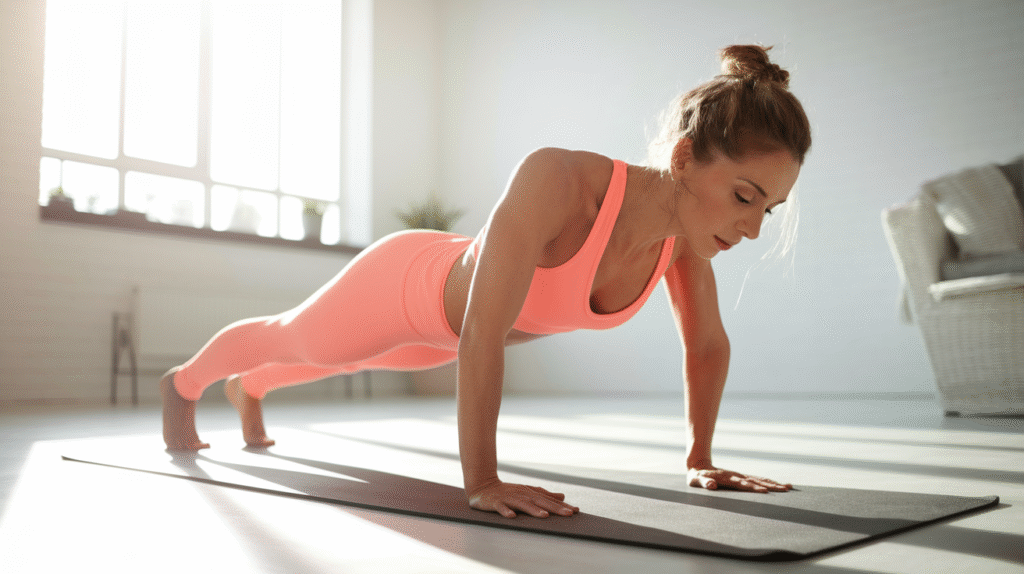
Plank to Down Dog (60 seconds): Start in a high plank position. Push your hips up and back into downward dog, then return to plank. This dynamic movement builds strength and flexibility while providing relief for tight hip flexors and a shoulder stability bonus.
*Modification:* Perform from your knees instead of toes.
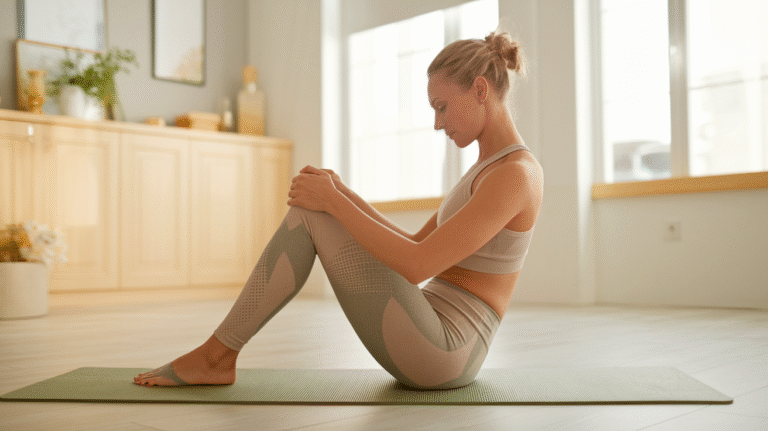
Reverse Crunches (60 seconds): Lie on your back, knees bent, feet lifted. Use your lower abs to curl your hips off the floor, bringing your knees toward your chest. Lower with control. This targets lower abs without neck strain—perfect for post-pregnancy core rebuilding.
*Form tip:* The movement is small. Focus on tilting your pelvis and lifting from your abs, not swinging your legs.
Hollow Body Hold (45 seconds): Lie on your back, arms extended overhead. Lift your shoulders and legs off the floor, pressing your lower back down. Hold this position, creating a “hollow” shape with your body. This advanced stability move transforms core strength.
*Regression:* Bend your knees or keep your arms by your sides instead of overhead.
*Where to feel it:* Your entire front core should be engaged and shaking—that’s good! If your back hurts, reduce the range or return to dead bugs.
The Cool-Down (Minutes 9-10): Seal in Your Results
Child’s Pose (30 seconds): Sit back on your heels, extending your arms forward and resting your forehead on the floor. This releases lower back tension and allows your muscles to relax after intense work.
Supine Twist (30 seconds): Lie on your back, knees bent and dropped to one side while extending your arms in a T-position. Hold for 15 seconds, then switch sides. This gentle spinal rotation promotes recovery and relaxation.
Making It Work in Real Life (Your 30-Day Action Plan)

How to Fit 10 Minutes Into Your Actual Schedule
The best workout is the one you’ll actually do. Here’s how to make these 10 minutes non-negotiable:
Morning routine: Complete your core circuit before your shower, before your coffee, before the chaos of the day begins. You’re fresh, your willpower is high, and it’s done before life gets in the way. Set your alarm 10 minutes earlier—you won’t miss that time, and you’ll feel accomplished before breakfast.
Lunch break core session: Use 10 minutes of your lunch hour to refresh your mind and strengthen your body. This breaks up sedentary time, boosts afternoon energy, and provides a mental reset. Close your office door, roll out a towel, and invest in yourself.
Evening wind-down: After the kids are in bed but before you collapse on the couch, knock out your circuit. It’s a productive transition between “parent mode” and “me time” that leaves you feeling strong rather than guilty about skipping exercise.
The habit stacking method: Attach your workout to an existing habit. “After I pour my morning coffee, I do my core circuit.” “Before I start dinner prep, I complete my workout.” This psychological trick makes the new habit stick faster.
Tracking Progress Without Obsessing
The scale doesn’t tell the whole story—often, it doesn’t tell any useful story at all when you’re building muscle.
Non-scale victories to celebrate: How do your jeans fit? Can you sit up straighter without thinking about it? Do you have more energy in the afternoon? Has your lower back pain decreased? These markers matter more than pounds.
Simple progress markers: Track how long you can hold a plank each week. Notice when exercises that felt impossible become manageable. Count your consistency streaks—how many days in a row have you shown up?
Weekly photos vs. daily mirror checks: Take a progress photo once a week in the same lighting and clothing. Your day-to-day reflection doesn’t show gradual changes, but comparing week 1 to week 4 will.
The 80% rule: Aim to complete your workout 5-6 days per week. Consistency beats perfection. Missing a day doesn’t erase your progress—quitting does.
When to Progress and How to Level Up
Signs you’re ready for more challenge: Exercises that felt difficult now feel easier. Your form is solid throughout the entire set. You’re not as sore after workouts. You can hold positions longer without shaking.
How to add difficulty without adding time: Slow down your tempo—take 3 seconds to lower, 1 second to lift. Add pauses at the hardest point of each movement. Incorporate light resistance bands or weights. Reduce rest time between exercises.
Sample 4-week progression plan: – Week 1: Master form, complete circuit as written – Week 2: Increase hold times by 5-10 seconds, reduce rest – Week 3: Add one advanced variation to each exercise – Week 4: Perform the entire circuit twice (20 minutes) once or twice this week
Listening to your body: Rest days are part of results, not obstacles to them. Muscle soreness that lasts more than 48 hours signals you need recovery. Sharp pain (different from muscle burn) means stop and assess. Your body adapts during rest, not during the workout itself.
Troubleshooting Common Obstacles
“I’m too tired”: Start anyway. Tell yourself you’ll do just 5 minutes. Nine times out of ten, you’ll finish the full 10 once you start. Exercise boosts energy more than it depletes it. If you’re genuinely exhausted, do a gentler version or take a rest day without guilt.
“I missed three days”: So what? You didn’t fail—you’re human. Start again today. One missed workout doesn’t erase your progress any more than one healthy meal creates a six-pack. Consistency over time matters, not perfection.
“I don’t feel it working”: Check your form. Are you engaging your core or just going through motions? Slow down and focus on the target muscles. Place your hand on your abs to feel them contract. Consider filming yourself to compare against proper form.
“My back/neck hurts”: Pain is a signal to modify. For neck pain during crunches, support your head with a towel or keep your gaze on the ceiling. For back pain, ensure you’re pressing your lower back down during floor exercises. If pain persists, consult a physical therapist—some conditions require professional guidance.
Transform Your Core, Transform Your Confidence
Your core strength matters more than ever after 30—not for aesthetics, but for function, confidence, and long-term health. A strong core means less pain, better posture, more energy, and the physical capability to live life fully.
Just 10 minutes of focused, effective exercises can deliver real, measurable results. You’ve seen the science, you have the specific movements, and you understand the progression. Consistency and proper form will always beat intensity and duration when it comes to sustainable transformation.
This isn’t about perfection. It’s about progress and showing up for yourself, even when life gets chaotic. Especially when life gets chaotic. You don’t need hours, expensive equipment, or a gym membership to build a stronger core. You need 10 minutes and the commitment to use them wisely.
Every 10-minute session is an investment in feeling more powerful, capable, and confident. It’s choosing yourself, your health, and your future. Start where you are, use what you have, and trust the process.
Your future self—the one with less back pain, better posture, and more energy to tackle everything life demands—will thank you for starting today. Not tomorrow, not Monday, not after the holidays. Today.
Save this workout for easy reference. Set a timer for 10 minutes right now and complete your first session. Track your first week and notice how you feel—physically, mentally, emotionally. Then share your journey and inspire other busy women to prioritize their strength.
You’ve got this. Your core is about to get stronger, and so are you.