Calisthenics vs Gym: Which Is Better for Women Over 40?
Let’s get real about fitness after 40. Your body has changed, and the workout routine that worked in your twenties doesn’t cut it anymore.
You need resistance training—that’s not up for debate. But here’s the question keeping you up at night: should you invest in a gym membership or master calisthenics at home?
I’m giving you the proven benefits and honest drawbacks of both approaches. No sugar-coating, no one-size-fits-all advice. Just science-backed information you can actually use.
Here’s what’s actually happening in your body after 40: declining estrogen impacts muscle mass and bone density. Your metabolism shifts. Recovery takes longer. These aren’t problems—they’re signals that your training strategy needs to evolve. The good news? Both calisthenics and gym training deliver powerful results when done correctly.
This article breaks down which method works best for bone density, muscle preservation, and fat loss. We’ll tackle the real-world considerations: time, cost, and sustainability. Because the “better” choice isn’t about which one sounds more impressive—it’s about which one you’ll actually stick with for the next decade.
Whether you’re a busy professional who needs efficient home workouts, a fitness beginner intimidated by gym culture, or someone ready to transform their strength at any age, you’ll walk away knowing exactly what your body needs. Let’s challenge the myths and build a training plan that actually fits your life.
Understanding Your Body After 40: What Actually Changes
The Hormonal Shift No One Prepared You For
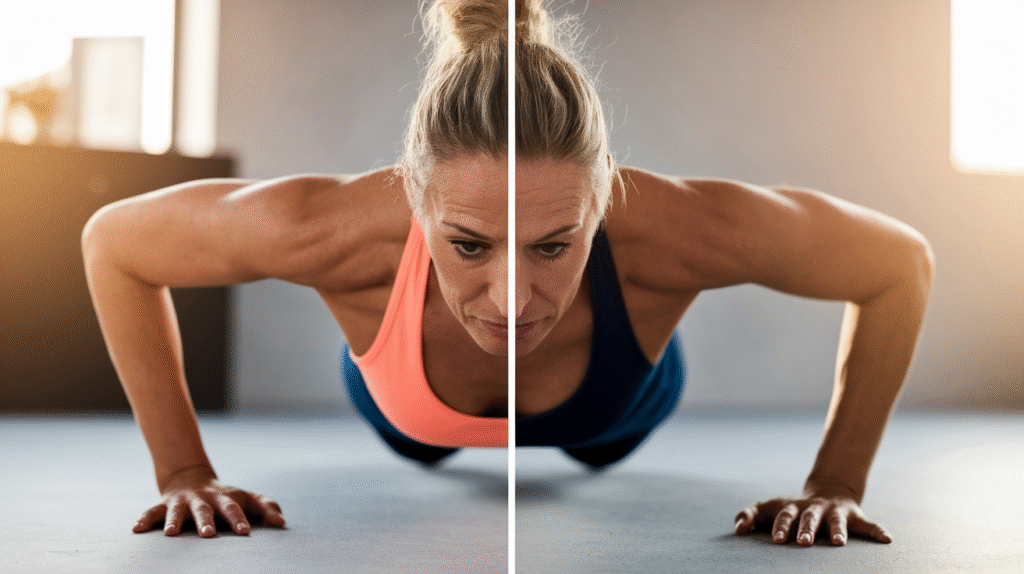
Estrogen doesn’t just disappear overnight—it declines gradually, taking your muscle-building advantage with it. This hormone plays a massive role in maintaining muscle mass and bone density. As it drops, you lose muscle more easily and build it more slowly. That’s not failure—that’s biology.
Your metabolism isn’t broken, despite what every clickbait article claims. It’s different. You burn fewer calories at rest because you have less muscle mass. The solution isn’t eating less—it’s building more muscle through resistance training. This is where both calisthenics and gym work shine.
Here’s the critical shift: cardio alone won’t cut it anymore. You need resistance training to maintain muscle, protect your bones, and keep your metabolism functioning efficiently. This isn’t optional for women over 40—it’s essential.
What Your Muscles Need Now vs. Your 20s
Sarcopenia—age-related muscle loss—starts around 40. You lose approximately 3-8% of muscle mass per decade after 30, and the rate accelerates after 60. Muscle preservation becomes your number one priority, not weight loss or achieving a specific body shape.
Recovery takes longer now, and that’s actually valuable information. Your body is telling you to train smarter, not just harder. You need adequate rest between sessions, proper nutrition, and progressive programming that respects your recovery capacity.
Joint health matters more than ever. High-impact exercises that felt effortless at 25 can cause problems at 45. Both calisthenics and gym training offer joint-friendly options, but you need to choose exercises that build strength without destroying your knees, shoulders, and hips.
The Bone Density Factor
Weight-bearing exercise is non-negotiable after 40. Osteoporosis risk increases significantly during and after menopause. The good news? Resistance training is one of the most effective strategies for maintaining and even building bone density.
Calisthenics provides bodyweight resistance that strengthens bones through natural movement patterns. Gym training offers progressive overload with external weights that create even greater bone-building stimulus. Both work—they just work differently.
The connection between strength training and osteoporosis prevention is rock-solid. Studies show that women who engage in regular resistance training maintain significantly better bone density than those who don’t. This isn’t about vanity—it’s about staying independent and active for decades to come.
Calisthenics for Women Over 40: The Complete Breakdown
What Makes Calisthenics Effective (The Science-Backed Benefits)
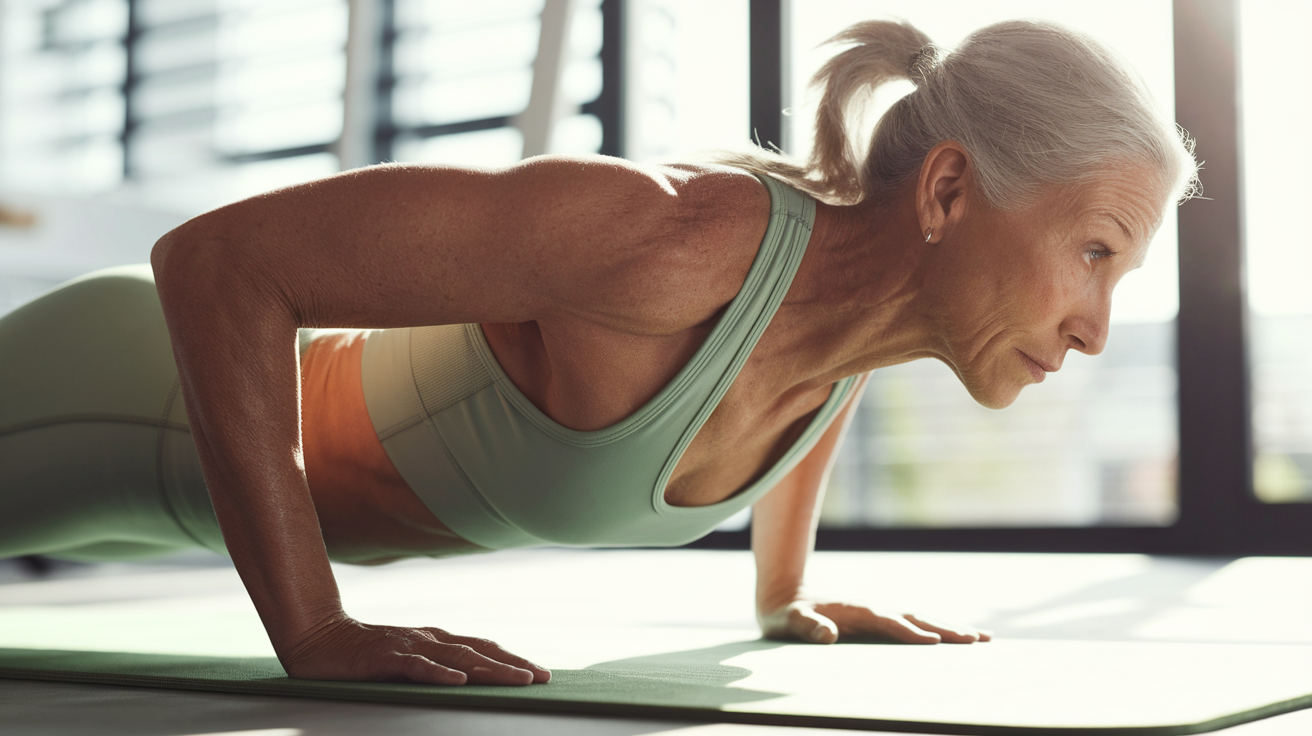
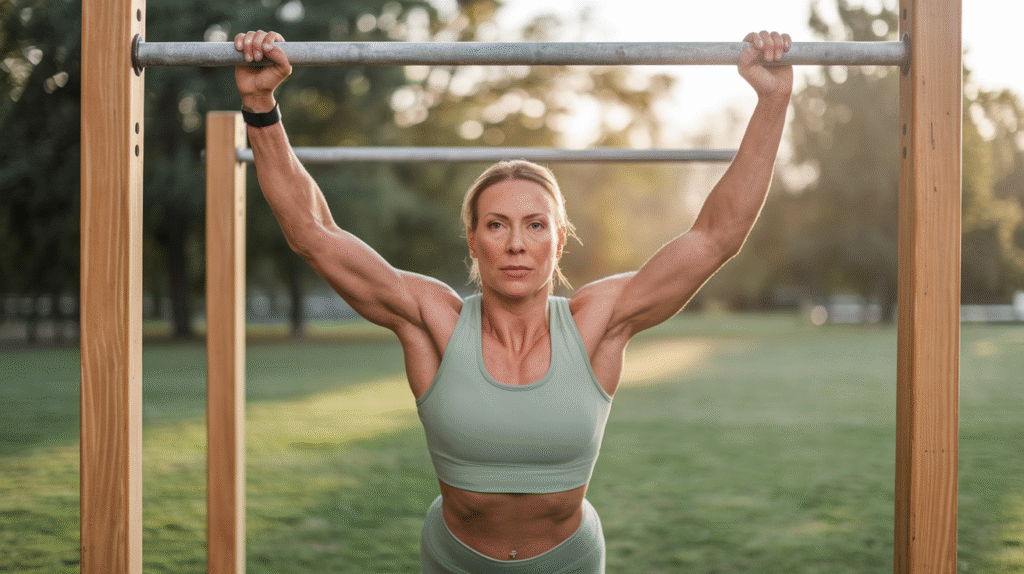
Calisthenics builds functional strength that translates directly to daily life. When you master a push-up, you’re not just working your chest—you’re training the exact movement pattern you use to get up from the floor. This matters more at 40 than it did at 20.
The natural progression system protects your joints while building muscle. You start with modified versions and gradually increase difficulty. No sudden jumps in weight that shock your system. Your body adapts safely, reducing injury risk while delivering consistent results.
Improved body awareness, balance, and coordination are critical for fall prevention. One in four women over 50 will experience a fall-related fracture. Calisthenics trains your proprioception—your body’s ability to know where it is in space. That’s powerful protection.
Zero equipment needed means you train anywhere, anytime. No gym commute. No membership fees. No waiting for equipment. You’re in complete control of your schedule, which dramatically increases the likelihood you’ll actually do the work.
The Honest Limitations You Should Know
Progression can feel slower with calisthenics. You can’t just add five pounds to the bar each week. Instead, you’re mastering movement patterns and increasing reps gradually. This requires patience, but the results are lasting and functional.
Lower body development may require creative variations. While upper body calisthenics offers endless progression (from push-ups to handstands), lower body work can plateau without added resistance. Single-leg variations help, but you might eventually need weights for continued growth.
Learning proper form without immediate feedback presents challenges. In a gym, trainers and mirrors provide instant correction. At home, you need to be more intentional about filming yourself or using form-check resources.
You may need to add weight eventually for continued bone density benefits. Bodyweight resistance has limits. Once exercises become too easy, you’re maintaining rather than building. That’s when strategic weight addition becomes valuable.
Best Calisthenics Exercises for Women Over 40
Upper body strength builders: Start with wall push-ups, progress to incline push-ups, then floor push-ups. Inverted rows using a sturdy table sculpt your back. Wall-assisted handstand holds build shoulder strength and bone density.
Lower body powerhouses: Single-leg squats (start with a chair for support) target each leg individually, preventing strength imbalances. Glute bridges protect your lower back while building hip strength. Step-ups mimic stair climbing—functional and effective.
Core stability essentials: Planks build anti-extension strength that protects your spine. Dead bugs teach core control without crunching. Bird dogs improve balance while strengthening your entire posterior chain.
Sample beginner routine: Monday—10 wall push-ups, 10 bodyweight squats, 20-second plank (3 rounds). Wednesday—8 inverted rows, 10 glute bridges per leg, 10 dead bugs per side (3 rounds). Friday—repeat Monday’s workout with slight increases.
Gym Training for Women Over 40: The Complete Breakdown

Why the Gym Delivers Powerful Results
Progressive overload becomes simple when you can just add weight to the bar. This week you squat 50 pounds, next week 55 pounds. Clear, measurable progress that keeps you motivated and builds strength efficiently.
Targeted muscle building with machines that support your joints makes gym training accessible even with existing injuries. The leg press removes spinal loading while still challenging your quads. The chest press machine guides your movement pattern, reducing injury risk.
Bone density benefits from loaded movements are significant. When you hold dumbbells or use barbells, you create greater mechanical stress on bones than bodyweight alone. This stimulus tells your body to maintain and build bone density.
Built-in accountability and structure work for many women. You made the trip to the gym—you’re already halfway there. The environment signals “workout time” to your brain, making it easier to follow through.
The Real Drawbacks (Beyond Cost and Commute)
Time commitment adds up quickly. Drive 15 minutes, work out 45 minutes, shower and change 20 minutes, drive home 15 minutes. That’s 95 minutes total for a 45-minute workout. For busy professionals and parents, this math doesn’t work.
Intimidation factor is real, especially in male-dominated weight rooms. You worry about using equipment wrong, taking up space, or being judged. These concerns are valid, though conquerable with the right mindset and maybe a training buddy.
Learning curve with equipment and gym etiquette takes time. Which machine works which muscle? How do you adjust the seat? Is someone using that bench or just resting nearby? These questions create friction that can derail beginners.
Membership costs range from $30 monthly for budget gyms to $100+ for premium facilities. That’s $360-$1,200+ annually, not counting potential personal training sessions. For some budgets, this investment makes sense. For others, it’s a non-starter.
Most Effective Gym Exercises for Women Over 40
Compound movements that build total-body strength: Goblet squats teach proper squat mechanics while loading your legs. Dumbbell deadlifts strengthen your entire posterior chain—glutes, hamstrings, and back. Chest press builds upper body pushing strength.
Machine-assisted work for targeted development: Leg press allows heavy loading without spinal compression. Lat pulldown builds back strength and prepares you for pull-ups. Cable rows sculpt your mid-back while protecting your lower back.
Accessory work that prevents imbalances: Hip thrusts specifically target glutes, critical for hip stability and injury prevention. Bicep curls aren’t just for show—they strengthen the elbow joint. Shoulder raises build deltoid strength that protects rotator cuffs.
Sample 3-day split for beginners: Monday (Lower)—Goblet squats 3×10, leg press 3×12, hip thrusts 3×15. Wednesday (Upper)—Chest press 3×10, lat pulldown 3×10, dumbbell rows 3×12. Friday (Full body)—Dumbbell deadlifts 3×8, shoulder press 3×10, planks 3×30 seconds.
Making the Right Choice: Your Personal Decision Framework
Match Your Method to Your Lifestyle (Not Someone Else’s)
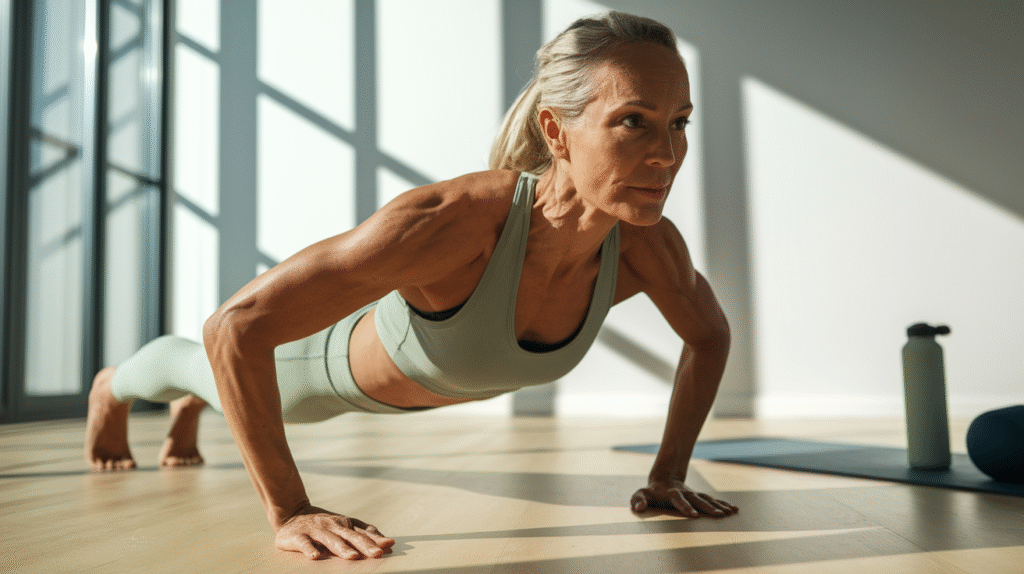
Choose calisthenics if you’re a busy professional with unpredictable schedules, prefer the privacy of home workouts, or travel frequently for work. You need flexibility more than fancy equipment. Your training should adapt to your life, not the other way around.
Choose gym training if you need external accountability to stay consistent, enjoy structured environments that separate “workout time” from home life, or want faster strength progression through clear weight increases. Some personalities thrive with external structure.
Choose both if you want the best of both worlds—and yes, you absolutely can combine them. This hybrid approach gives you flexibility when life gets crazy while maintaining access to progressive overload when you need it.
Budget Reality Check
Calisthenics costs $0-50 total. A pull-up bar runs $25-40. Resistance bands cost $15-30. That’s it. One-time investment, lifetime access. No recurring fees, no contracts, no surprise charges.
Gym memberships cost $360-1,200+ annually. Budget gyms start around $10-30 monthly. Mid-range facilities charge $40-80 monthly. Premium gyms with classes and amenities run $100+ monthly. Add personal training ($50-100 per session), and costs escalate quickly.
Home gym hybrid option costs $200-500 one-time. Adjustable dumbbells ($150-300), resistance bands ($20-40), pull-up bar ($30-40), and a stability ball ($20-30) create a powerful home setup. You get gym-like progression without the commute.
The hidden costs matter too. Time is money—and sanity. Convenience determines consistency. Sustainability beats intensity every time. The cheapest option that you never use costs more than the expensive option you use three times weekly.
The Hybrid Approach That Actually Works
Two days of calisthenics at home plus one day at the gym for heavy lower body work gives you flexibility and progression. Monday and Friday you train at home—push-ups, rows, single-leg work. Wednesday you hit the gym for loaded squats and deadlifts.
Use the gym for progressive overload on major lifts, calisthenics for mobility and skill work. The gym excels at making you stronger. Calisthenics excels at making you move better. Combined, they create complete fitness.
Structure a balanced week without burning out: Monday (home upper body), Tuesday (rest or walk), Wednesday (gym lower body), Thursday (rest or yoga), Friday (home full body), Saturday (active recovery), Sunday (complete rest). This schedule respects recovery while building consistent strength.
Red Flags That You’ve Chosen Wrong (And How to Pivot)
You’re dreading workouts instead of feeling energized by them. Exercise should be challenging, not torturous. If you hate every session, something’s wrong. Maybe calisthenics feels too isolated, or the gym feels too stressful. Listen to that signal.
You’re not seeing results after 8-12 weeks of consistency. If you’re truly consistent (not skipping, not half-assing) and seeing zero progress, your method isn’t working for your body. Time to pivot.
Your joints hurt more, not less. Some muscle soreness is normal. Joint pain is not. If your knees, shoulders, or hips hurt worse after weeks of training, you’re either using poor form or the wrong exercises for your body.
It doesn’t fit your life, so you keep skipping. The best program is the one you actually do. If you consistently skip gym sessions because of the commute, switch to home training. If you never work out at home because of distractions, get a gym membership. Adapt.
Final Thoughts
Your body after 40 demands intentional resistance training—whether that’s calisthenics, gym work, or a powerful combination of both. This isn’t about looking a certain way. It’s about staying strong, independent, and active for the next 40 years.
Calisthenics offers unmatched flexibility, functional strength that translates to daily life, and zero financial barrier to entry. For home workout enthusiasts, busy parents, and frequent travelers, it’s a game-changer. You’re building real-world strength that helps you live better.
Gym training provides structure, progressive overload that’s easy to track, and powerful bone-building benefits from loaded movements. For women who thrive with accountability, enjoy the gym environment, or want faster strength gains, it delivers proven results.
The “better” choice is the one you’ll actually stick with consistently for months and years. Not the one that sounds most impressive to your friends. Not the one your favorite influencer promotes. The one that fits your schedule, budget, personality, and goals.
Start with just one method for four weeks before judging results. Give your body time to adapt. Track strength gains—more reps, harder variations, heavier weights—not just scale weight. Progress over perfection. Consistency over intensity.
Your transformation starts with the first rep, not the perfect program. Choose your path, commit to the process, and trust that your body is capable of incredible strength at any age. The only wrong choice is choosing nothing at all.
Ready to start building real strength after 40? Pick one exercise from this article and do it today. Not tomorrow. Today. Your future self will thank you.