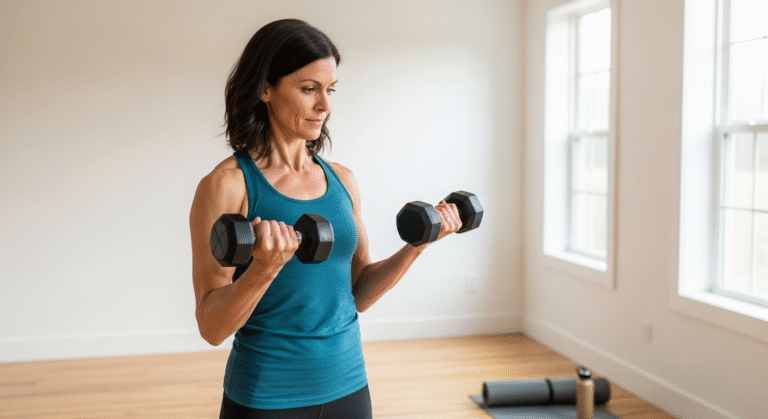
Abs Workout At Home | Belly Fat Workout

Here’s something that’ll make you rethink your fitness strategy: 73% of Americans who purchase gym memberships never use them, yet they spend an average of $696 annually on unused fitness facilities. That’s not just wasted money—it’s wasted potential.
Picture this: It’s 6 AM, your alarm screams, and the thought of driving to a crowded gym makes you hit snooze. Meanwhile, your core remains hidden under stubborn belly fat, and another day passes without progress. Sound familiar?
The home fitness revolution exploded by 430% since 2020, and it’s not just a pandemic trend. People discovered something the fitness industry doesn’t want you to know: effective ab workouts don’t require expensive equipment or gym commutes. Medical studies from the American Council on Exercise confirm that bodyweight core exercises can be equally or more effective than machine-based training.
This comprehensive guide reveals science-backed home ab workout routines that target visceral and subcutaneous belly fat simultaneously. We’ll explore the metabolic truth about spot reduction myths, proper nutrition timing for fat loss, and the hormonal factors affecting abdominal fat storage. You’ll discover 15+ equipment-free exercises with progressive difficulty levels, weekly workout schedules, and realistic timeline expectations.
But here’s the critical part most fitness influencers skip: 80% of ab definition comes from kitchen choices, not crunches. We’ll show you how to synchronize both for maximum results.
Why does this matter beyond aesthetics? Excess belly fat increases your risk of Type 2 diabetes by 87%, heart disease by 44%, and certain cancers by 31% according to Harvard Medical School. Home workouts save the average person 8-12 hours monthly in commute time while eliminating $50-150 monthly gym fees. Understanding proper core engagement prevents the lower back injuries that affect 65% of people who perform ab exercises incorrectly.
The Science Behind Belly Fat: Understanding What You’re Really Fighting

I. Introduction: The Truth About Sculpting Six-Pack Abs Without Leaving Your Living Room
Before you do another crunch, you need to understand what you’re actually fighting. Not all belly fat is created equal, and this distinction changes everything about your approach.
The Two Types of Abdominal Fat and Why It Matters
Subcutaneous fat sits directly under your skin—it’s the stuff you can pinch. It’s stubborn and frustrating, but relatively harmless from a health perspective. Visceral fat, on the other hand, surrounds your internal organs and releases inflammatory compounds called cytokines that increase disease risk by up to 300%.
Men typically store visceral fat in the belly (the classic apple shape) while women store subcutaneous fat in hips and thighs (pear shape) due to estrogen differences. This isn’t just trivia—it affects how quickly you’ll see results. Research from Johns Hopkins University shows visceral fat responds 67% faster to exercise and dietary changes than subcutaneous fat.
Here’s the encouraging part: belly fat is often the FIRST to go when you create a caloric deficit through proper training and nutrition. Your body preferentially mobilizes visceral fat because it’s metabolically active and easier to access for energy.
Hormonal Factors That Sabotage Your Six-Pack Goals
You can work out perfectly and still struggle with belly fat if your hormones are working against you. Cortisol, your stress hormone, increases belly fat storage by 34% when chronically elevated, according to Yale University research. That deadline stress and poor sleep aren’t just making you tired—they’re literally storing fat around your midsection.
Insulin resistance forces your body to store 3-5 times more abdominal fat from carbohydrate consumption. When your cells stop responding properly to insulin, your pancreas pumps out more, creating a vicious cycle of fat storage. Low testosterone in men (below 300 ng/dL) correlates with 42% more visceral fat accumulation regardless of exercise habits.
Poor sleep deserves special attention. Getting less than 6 hours nightly disrupts leptin and ghrelin hormones, increasing belly fat by 32% over five years. You’re not weak-willed when you crave junk food after a bad night’s sleep—your hormones are literally driving those cravings.
Thyroid dysfunction affects 12% of Americans and can slow metabolism by 20-40%, making fat loss nearly impossible without medical intervention. If you’ve been doing everything right without results, get your thyroid checked.
Why Spot Reduction is a Myth (But Targeted Training Still Matters)
Let’s kill this myth once and for all. A 2011 study published in the Journal of Strength and Conditioning Research proved that doing 5,000 sit-ups over 6 weeks produced zero reduction in abdominal fat. Zero. You cannot “burn” fat from specific body areas—fat loss occurs systemically based on genetics, hormones, and overall caloric deficit.
So why bother with ab exercises at all? Because strengthening abdominal muscles creates a tighter, more defined appearance even at higher body fat percentages. Building core muscle increases resting metabolic rate by 50-70 calories daily per pound of muscle gained. That adds up.
Strategic ab training improves posture, reduces waist circumference through better muscle tone, and enhances the visibility of abs once fat is reduced to 10-14% for men or 16-20% for women. Think of it this way: ab exercises build the sculpture, nutrition reveals it.
The Caloric Deficit Reality: Numbers That Actually Work
One pound of fat equals 3,500 calories. This means a 500-calorie daily deficit produces 1 pound of fat loss weekly. Math doesn’t lie, but it also doesn’t account for metabolic adaptation, water retention, and muscle gain—which is why the scale can be misleading.
Sustainable fat loss ranges from 0.5-2 pounds weekly. Faster rates typically indicate muscle loss or water weight, neither of which you want. Home ab workouts burn 180-400 calories per hour depending on intensity, but nutrition creates 70-80% of your deficit.
Combining HIIT-style ab circuits with a 300-500 calorie daily deficit can reveal visible abs in 8-16 weeks for most people starting at 20-25% body fat. Tracking apps like MyFitnessPal show users who log food consistently lose 2.5 times more weight than those who don’t. Consistency beats intensity every single time.
Essential Equipment-Free Ab Exercises: Your Complete Home Arsenal

II. The Science Behind Belly Fat: Understanding What You’re Really Fighting
You don’t need a single piece of equipment to build impressive abs. Your body provides all the resistance you need. Here’s your complete exercise arsenal, organized by difficulty level.
Foundation Moves for Beginners (Weeks 1-3)
Start with the Standard Plank Hold. Maintain neutral spine for 20-60 seconds, engaging your transverse abdominis—the deepest core layer that acts like a natural weight belt. This isn’t about how long you can suffer through a plank. It’s about quality tension. If your hips sag or pike up, you’re wasting your time.
The Dead Bug Exercise looks ridiculous but delivers results. Lie on your back, alternate extending opposite arm and leg while pressing your lower back into the floor. This targets coordination and prevents the lower back compensation that leads to injury. Most people rush through these. Slow down. Control matters more than speed.
Bird Dog builds from all fours. Extend opposite arm and leg for 5-10 seconds per side, building stability that translates to every daily movement. When you pick up your kid or carry groceries, this stability prevents injury.
Glute Bridge with Core Brace activates your often-neglected posterior chain. Elevate your hips while drawing your belly button toward your spine. Your glutes and abs work together in real life—train them that way.
Modified Bicycle Crunches performed slowly with 2-second holds at peak contraction focus on oblique engagement rather than speed or quantity. Fifty sloppy reps do nothing. Fifteen perfect reps transform your core.
Intermediate Progressions (Weeks 4-8)
Mountain Climbers combine core stability with cardiovascular conditioning. Drive your knees to chest in plank position at 30-40 reps per minute, burning 8-12 calories per minute. Your heart rate spikes, your abs burn, and fat melts.
Russian Twists increase oblique definition and rotational power. Sit with feet elevated, rotating your torso side-to-side while maintaining neutral spine. This movement pattern shows up in every sport and daily activity involving rotation.
Leg Raises target the lower abdominal region where fat often persists longest. Lie flat and raise your legs to 90 degrees without arching your lower back. The moment your back arches, you’ve shifted tension to your hip flexors and away from your abs.
Plank to Down Dog creates dynamic core engagement that burns 40% more calories than static holds. Flow between plank and downward dog position, maintaining tension throughout the movement.
V-Ups require simultaneous raising of arms and legs to meet in the middle. This demands full rectus abdominis contraction and hip flexor coordination. It’s brutally effective.
Advanced Variations for Maximum Challenge (Weeks 9+)
Dragon Flags, made famous by Bruce Lee, require full-body tension and develop incredible core strength when performed for 5-8 reps. You’ll need a sturdy bench or couch to anchor your hands behind your head, then lower your entire body as one rigid unit.
L-Sit Hold builds the deep core strength seen in gymnasts. Support your bodyweight on your hands with legs extended forward at 90 degrees. Start with bent knees if needed, but work toward the full position.
Single-Leg Plank removes one point of contact to increase instability and core activation by 67% compared to standard planks. Your entire core fires to prevent rotation and collapse.
Hollow Body Hold creates full anterior chain tension. Hold for 30-45 seconds with your lower back pressed to the floor. This gymnastics staple builds the foundation for advanced movements.
Ab Wheel Rollouts can be simulated using a towel on a smooth floor. Extend your arms overhead while maintaining core brace. EMG studies show 145% more activation than crunches, making this one of the most effective ab exercises available.
Oblique-Focused Movements for Complete Core Development
Side Plank Variations hold 30-45 seconds per side, adding hip dips or leg raises for progression. These are crucial for balanced core development and injury prevention. Neglect your obliques and you’ll develop imbalances that lead to pain.
Windshield Wipers target deep oblique layers. Lie on your back with legs raised, rotating them side-to-side like windshield wipers. Control the descent to maximize tension.
Standing Wood Chops use no weight or a water jug, performing diagonal chopping motion that mimics real-world movement patterns. Your core works in three-dimensional space—train it that way.
Copenhagen Plank creates intense adductor and oblique engagement. Perform a side plank with your top leg elevated on a chair or couch. Professional soccer teams use this exercise because it works.
Strategic Workout Programming: Weekly Schedules That Deliver Results

III. Essential Equipment-Free Ab Exercises: Your Complete Home Arsenal
Random ab workouts produce random results. Strategic programming delivers consistent progress. Here’s how to structure your week for maximum effectiveness.
The 3-Day Split for Busy Professionals
This schedule works if you have 30-40 minutes three times weekly. Monday focuses on Core Strength: 4 sets of planks (30-60 seconds), dead bugs (12-15 reps), bird dogs (10 per side), and glute bridges (15 reps) with 45-second rest periods. This builds the foundation everything else depends on.
Wednesday brings Dynamic Ab Circuits: 3 rounds of mountain climbers (30 seconds), Russian twists (20 reps), leg raises (12 reps), and bicycle crunches (20 reps) with minimal rest for cardiovascular benefits. Your heart rate stays elevated, burning more calories during and after the workout.
Friday delivers Advanced Challenge Day: 4 sets of V-ups (8-12 reps), dragon flag progressions (5 reps), hollow body holds (30 seconds), and Copenhagen planks (20 seconds per side). This is where you push your limits.
Include a 5-minute dynamic warm-up (arm circles, torso twists, cat-cow stretches) and 5-minute cool-down with cobra stretch and child’s pose. This schedule allows 48-72 hours recovery between sessions while hitting abs 3 times weekly—the optimal frequency according to a 2019 study in Sports Medicine.
The 5-Day Intensive Program for Faster Results
Monday and Thursday target Upper Abs and Stability. Focus on crunch variations, plank progressions, and anti-extension exercises for 25-30 minutes. This builds the top portion of your six-pack and overall core stability.
Tuesday and Friday hit Lower Abs and Hip Flexors. Leg raises, reverse crunches, and lying flutter kicks combined with hip mobility work address the area most people struggle with most.
Wednesday owns Obliques and Rotational Power. Side planks, Russian twists, wood chops, and windshield wipers create comprehensive lateral core development. This is where your V-taper comes from.
Weekend brings Active Recovery: 20-30 minute walks, yoga, or swimming maintain caloric burn without overtaxing core muscles. Recovery isn’t laziness—it’s when adaptation happens.
Apply progressive overload: Increase reps by 2-3 weekly, add 5-10 seconds to holds, or decrease rest periods by 5 seconds every two weeks. Without progression, you’re just maintaining.
HIIT Ab Circuits for Maximum Fat Burning
The 20-Second Work / 10-Second Rest Protocol delivers results fast. Perform 8 exercises (mountain climbers, plank jacks, bicycle crunches, leg raises, Russian twists, burpees, high knees, plank hold) for 4 total rounds. This Tabata-style approach burns 15-20 calories per minute during exercise and elevates metabolism for 24-38 hours post-workout through the EPOC effect.
This works ideally for morning workouts when cortisol is naturally elevated and fat mobilization is 23% higher according to chronobiology research. Complete 3-4 times weekly on non-consecutive days, requiring only 16 minutes plus warm-up and cool-down.
Track your heart rate to maintain 75-85% of maximum (220 minus your age) for optimal fat-burning zone. Below this range, you’re not working hard enough. Above it, you’re compromising form and risking injury.
Recovery and Progressive Overload Strategies
Core muscles recover faster than larger muscle groups (24-48 hours versus 48-72 hours), allowing more frequent training when volume is managed properly. This doesn’t mean train abs daily—it means you can handle 4-5 sessions weekly if volume per session is appropriate.
Implement deload weeks every 4-6 weeks by reducing volume by 40-50%. This prevents overtraining and maintains long-term progress. Your body adapts during recovery, not during workouts.
Use the RPE (Rate of Perceived Exertion) scale of 1-10, aiming for 7-8 on most sets. You should finish feeling challenged but capable of 2-3 more reps. Training to absolute failure every set burns you out without additional benefit.
Track workouts in a journal or app, noting reps, hold times, and perceived difficulty to ensure consistent progression. What gets measured gets managed.
Signs of overtraining include persistent soreness beyond 72 hours, decreased performance, irritability, and sleep disruption. If these occur, reduce frequency immediately. Pushing through overtraining leads to injury and regression.
Nutrition Strategies to Reveal Your Hard-Earned Abs

IV. Strategic Workout Programming: Weekly Schedules That Deliver Results
You can have the strongest core in your neighborhood, but nobody will see it if it’s covered in fat. Nutrition reveals what training builds.
The 80/20 Rule: Why Kitchen Choices Trump Crunches
You can perform 500 crunches daily, but a single 800-calorie restaurant meal erases an entire week’s caloric deficit. The math is brutal and unforgiving. Visible abs require men to reach 10-14% body fat and women 16-20%. This is achieved primarily through sustained nutritional discipline.
A 2017 obesity study found that exercise without dietary changes produced only 2-3 pounds of fat loss over 12 weeks compared to 12-15 pounds when combined with nutrition. Exercise builds fitness. Nutrition reveals it.
Focus on whole foods with high satiety index: lean proteins (chicken, fish, Greek yogurt), fibrous vegetables (broccoli, spinach, peppers), and complex carbs (sweet potatoes, quinoa, oats). These foods fill you up with fewer calories and provide nutrients your body needs for recovery.
Eliminate or drastically reduce liquid calories. Sodas, juices, and alcohol provide 400-800 empty calories daily for the average American. These calories don’t satisfy hunger and spike insulin, promoting fat storage.
Macronutrient Ratios for Optimal Fat Loss
Protein preserves muscle mass during caloric deficit. Consume 0.8-1.2 grams per pound of bodyweight (140-210 grams for a 175-pound person). This isn’t optional—lose muscle and you’ll look skinny-fat even at low body fat percentages.
Carbohydrates should be timed strategically. Consume 60-70% of daily carbs around workouts (1-2 hours before and within 30 minutes after) when insulin sensitivity is 40% higher. Your body uses these carbs for energy and recovery rather than storage.
Fats support hormone production. Maintain 0.3-0.5 grams per pound bodyweight (50-90 grams for a 175-pound person). Go too low and testosterone and thyroid function crash, making fat loss nearly impossible.
Fiber improves satiety, stabilizes blood sugar, and supports gut health. Target 25-35 grams daily from vegetables, fruits, and whole grains. Fiber slows digestion, keeping you fuller longer on fewer calories.
A popular ratio example: 40% protein, 30% carbs, 30% fat works well for most people in caloric deficit. Adjust based on individual response and activity level.
Meal Timing and Frequency Myths Debunked
Eating 6 small meals versus 3 larger meals produces identical metabolic effects when total calories and macros are equal. Choose what fits your lifestyle and preferences. Meal frequency doesn’t matter—total daily intake does.
Intermittent fasting (16:8 protocol) can reduce daily caloric intake by 300-500 calories through shortened eating windows, but it isn’t metabolically superior to traditional dieting. It’s a tool, not magic. Use it if it helps you control calories.
Pre-workout nutrition (100-200 calories of carbs and protein 60-90 minutes before training) improves performance by 12-18% according to the International Society of Sports Nutrition. Better performance means better results.
The post-workout “anabolic window” is actually 3-5 hours wide, not the mythical 30-minute deadline. Prioritize total daily protein over precise timing. As long as you eat quality protein every 4-5 hours, you’re optimizing muscle preservation.
Avoid eating within 2-3 hours of bedtime to optimize growth hormone release during sleep, which peaks 70-90 minutes after falling asleep and aids fat metabolism. Late-night eating also tends to be mindless snacking rather than planned nutrition.
Hydration’s Hidden Impact on Belly Fat
Drinking 16-20 ounces of water before meals reduces caloric intake by 75-90 calories per meal through increased satiety. That’s 225-270 fewer calories daily from this simple habit alone.
Chronic dehydration (consuming less than 64 ounces daily) slows metabolic rate by 2-3% and impairs fat oxidation by up to 15%. Your body literally can’t burn fat efficiently when dehydrated.
Cold water (40-50°F) requires 8-10 calories to heat to body temperature per 8-ounce glass. Drinking 80 ounces of cold water burns an extra 70 calories daily. Small advantages compound over time.
Proper hydration reduces water retention paradoxically. When dehydrated, your body stores extra water leading to bloating that obscures ab definition. Drink more water to hold less water.
Monitor urine color—pale yellow indicates optimal hydration. Aim for 0.5-1 ounce per pound of bodyweight daily, more if exercising intensely or in hot climates. This is one of the simplest, most effective strategies available.
Your Roadmap to Sustainable Ab Definition

V. Nutrition Strategies to Reveal Your Hard-Earned Abs
Let’s bring this together into actionable steps you can implement immediately.
Summary of Key Points
Visible abs require a two-pronged approach: strategic core training 3-5 times weekly using progressive bodyweight exercises combined with a nutritional plan creating a 300-500 calorie daily deficit. Neither works optimally without the other.
Understanding the difference between visceral and subcutaneous fat, plus the hormonal factors affecting storage patterns, allows you to address root causes rather than just symptoms. Manage stress, prioritize sleep, and balance hormones—these aren’t optional details.
Home workouts eliminate common barriers (cost, time, intimidation) while providing equal or superior results compared to gym-based training when executed with proper form and intensity. You have everything you need right now.
Realistic timelines range from 8-16 weeks for noticeable changes and 12-24 weeks to reach visible six-pack definition, depending on starting body fat percentage. Anyone promising faster results is selling something or lying.
Contemporary Relevance
The post-pandemic fitness landscape has permanently shifted toward home-based training. 67% of people prefer hybrid or fully home workout routines according to 2023 fitness industry reports. This isn’t a temporary trend—it’s the new normal.
Rising gym costs ($50-150 monthly) and time poverty (Americans work 47 hours weekly on average) make efficient home ab workouts more practical than ever. You’re not choosing the easy way—you’re choosing the smart way.
Social media’s unrealistic body standards create pressure, but this guide provides evidence-based expectations. Abs at 10-14% body fat for men and 16-20% for women represents healthy, sustainable goals. Those Instagram models are often dehydrated, using perfect lighting, and at unsustainably low body fat for photo shoots.
Core strength extends beyond aesthetics. It prevents the lower back pain affecting 80% of adults at some point and improves performance in every physical activity from playing with kids to recreational sports. You’re building functional fitness, not just vanity muscles.
Call to Action
Start tomorrow morning with the Beginner Foundation workout: 3 sets of 30-second planks, 12 dead bugs, 10 bird dogs per side, and 15 glute bridges. That’s 15-20 minutes. You have 15 minutes.
Download a free calorie tracking app (MyFitnessPal, Cronometer, or Lose It!) and log everything you eat for 3 days to establish your baseline before making changes. You can’t improve what you don’t measure.
Take “before” photos and measurements (waist at belly button, weight, body fat percentage if possible) to track progress objectively beyond the scale. The scale lies. Photos and measurements tell the truth.
Set a realistic 12-week goal: “I will complete ab workouts 4 times weekly and maintain a 400-calorie deficit to lose 10-12 pounds of fat.” Write it down. Put it somewhere visible. Make it non-negotiable.
Join online communities (r/bodyweightfitness on Reddit, YouTube channels like Athlean-X or FitnessBlender) for accountability, motivation, and troubleshooting. Community transforms individual effort into sustained success.
Further Resources
Apps: FitBod for workout programming, MyFitnessPal for nutrition tracking, Seconds Pro for interval timers during HIIT circuits. These tools remove guesswork and maintain consistency.
YouTube Channels: Athlean-X for exercise science, Chloe Ting for follow-along ab workouts, Jeff Nippard for evidence-based nutrition. Free, high-quality information is everywhere if you know where to look.
Books: “Bigger Leaner Stronger” by Michael Matthews for comprehensive muscle building and fat loss, “The Renaissance Diet 2.0” by Dr. Mike Israetel for advanced nutrition strategies. These provide depth beyond what any article can cover.
Websites: ExRx.net for exercise demonstrations and muscle anatomy, Examine.com for supplement research, Calculator.net for TDEE and macro calculations. Verify information from multiple sources.
Consider consulting a registered dietitian for personalized meal planning, a certified personal trainer for form checks via video, or your physician before starting if you have pre-existing health conditions. Professional guidance accelerates results and prevents mistakes.
Your six-pack is already there, waiting under layers of fat. You don’t need to build it from scratch—you need to reveal what’s already present. Start today. Your future self will thank you.