yoga for heart health and circulation
You’re climbing stairs and notice you’re winded. Your hands feel cold even indoors. Maybe you have a family history of heart disease, or your doctor mentioned your blood pressure is creeping up.
The instinct is usually the same: sign up for a gym, buy expensive equipment, or commit to high-intensity cardio you dread doing.
What if the most powerful thing you could do for your heart didn’t require a gym membership, fancy gear, or even leaving your living room?
Yoga isn’t just stretching. Research consistently shows that regular yoga practice delivers measurable improvements in blood pressure, heart rate variability, circulation, and stress hormones—the exact mechanisms that drive cardiovascular disease.
The barrier most people hit isn’t the lack of evidence. It’s the myth that you need intensity to get results. You don’t. You need consistency, the right poses, and an understanding of how your body actually works.
This guide gives you exactly that—specific, actionable sequences you can start today, backed by the physiology that makes them effective.
Yoga for Heart Health: How It Works

Your cardiovascular system responds to two competing nervous system states: sympathetic (fight-or-flight) and parasympathetic (rest-and-digest).
Most modern life keeps you locked in sympathetic mode—constant stress, shallow breathing, elevated cortisol. This state tightens blood vessels, raises heart rate and blood pressure, and promotes inflammation in your arteries. Over time, this is how cardiovascular disease develops.
Yoga for heart health works by doing the opposite. Restorative poses, gentle movement, and extended exhale breathing activate your parasympathetic nervous system.
Your heart rate drops. Blood vessels relax and dilate, improving blood flow. Cortisol levels decrease, reducing arterial inflammation.
Studies measuring heart rate variability—a key marker of cardiac resilience—show consistent improvements in people who practice yoga regularly.
When you hold a supported bridge pose for two minutes with focused breathing, you’re literally signaling your body that it’s safe to relax.
Your vagus nerve, the main parasympathetic highway, activates. Your heart doesn’t have to work as hard. Over weeks, your resting heart rate drops. Your blood pressure normalizes. Your body builds the capacity to recover from stress faster.
Here’s what stops most people: the belief that “gentle” means “ineffective.” It doesn’t. High-intensity cardio trains your heart to pump harder, but it also spikes cortisol and can stress joints.
Yoga for the heart addresses both the physical and nervous system components of cardiovascular health. You don’t need your heart to race to improve its function. You need it to learn to rest better, work more efficiently, and recover faster from demand.
The cumulative effect matters more than the intensity of any single session. Someone practicing 20 minutes of restorative yoga four times a week will see measurable improvements in blood pressure and resting heart rate within 4-6 weeks.
Traditional cardiovascular exercise trains your heart to work harder. Yoga trains your heart to work smarter and rest better.
Both have a place, but yoga is the only approach that simultaneously improves physical circulation, reduces stress hormones, enhances nervous system balance, and remains accessible to people who can’t tolerate high-impact exercise.
If you have high blood pressure, joint pain, anxiety, or a history of heart problems, high-intensity cardio might be contraindicated or unsustainable. Yoga for heart health works for all of these populations. You can practice safely even with existing cardiovascular conditions (with doctor approval). You don’t need to be young, athletic, or flexible. You can do it at home, on your schedule, with zero equipment.
Yoga for the Heart: Best Poses for Circulation

Inversion poses—where your heart is above or level with your hips—flip the usual demands on your circulatory system. Gravity now assists blood flow back to your heart from your extremities, reducing the workload on your cardiovascular system and improving venous return. This is why people with poor circulation, cold hands and feet, or varicose veins often benefit from gentle inversions.
Legs-Up-the-Wall (Viparita Karani) is the most accessible inversion and one of the most powerful for circulation. Lie on your back with your legs extended up a wall, hips close to the wall, arms at your sides. Stay for 5-15 minutes. Your legs receive improved blood flow without any muscular effort. This pose reduces swelling in the legs, improves circulation to the heart, and activates the parasympathetic nervous system. Beginners often find this the most relaxing pose they’ve ever held—and it’s doing serious circulatory work the whole time.
Downward-Facing Dog (Adho Mukha Svanasana) is a mild inversion that strengthens while improving circulation. From hands and knees, press your palms flat, step or hop your feet back, and form an inverted V shape with your body. Your head hangs below your heart, allowing fresh blood to flow to your brain and upper body. Hold for 30-60 seconds, rest, repeat 3-5 times. If wrists or shoulders feel strained, place your hands on an elevated surface like a chair or block.
Supported Bridge Pose (Setu Bandhasana) opens your chest, improves circulation to your heart, and calms your nervous system. Lie on your back, bend your knees, and press your feet flat on the floor hip-width apart. Lift your hips and slide a foam block or sturdy pillow under your sacrum. Rest your arms at your sides, palms up. Stay for 3-5 minutes, breathing deeply. The gentle chest opening combined with the supported position triggers a measurable drop in blood pressure within minutes.
Reclining Bound Angle (Supta Baddha Konasana) is a deep relaxation pose that opens your heart center and activates parasympathetic response. Lie on your back with a bolster or rolled blanket under your spine, running lengthwise from your tailbone to the back of your head. Bend your knees, bring the soles of your feet together, and let your knees fall open. Place blocks or pillows under your knees for support. Arms rest at your sides, palms up. Stay for 5-10 minutes. Your nervous system is learning to rest.
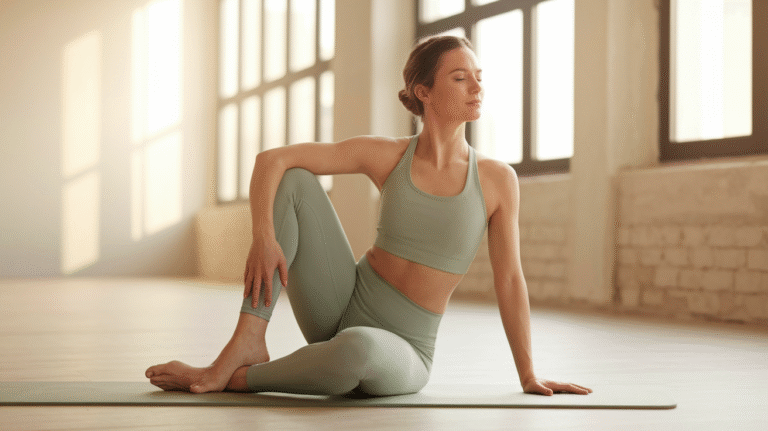
Seated Spinal Twist (Ardha Matsyendrasana) has a “wringing out” effect on your organs and improves circulation to your digestive system. Sit upright, extend your left leg, and bend your right knee, placing your right foot outside your left thigh. Inhale to lengthen your spine, exhale to twist gently to the right. Hold for 30-60 seconds each side. Gentle is more effective and safer than forcing the twist.
Standing Forward Fold (Uttanasana) calms your nervous system and improves circulation to your brain and upper body. Stand with feet hip-width apart, hinge at your hips, and let your head and arms hang. Bend your knees generously if hamstrings are tight. Stay for 1-2 minutes, breathing deeply. This pose reverses the usual blood flow pattern and signals safety to your nervous system.
Heart Exercise Through Breathwork

Your breath is the only automatic nervous system function you can consciously control. When you deliberately slow and deepen your breathing, you send a direct signal to your vagus nerve to activate parasympathetic response. This lowers heart rate, reduces blood pressure, and decreases stress hormones. Pranayama—yogic breathwork—is essentially heart medicine delivered through your lungs.
4-7-8 Breathing is one of the most effective techniques for immediate heart rate reduction. Inhale through your nose for a count of 4. Hold the breath for a count of 7. Exhale through your mouth for a count of 8. Repeat 4-8 cycles. The extended exhale is the key—it directly activates your vagus nerve and parasympathetic response. You can feel your heart rate drop within two minutes. Practice this before bed, during stressful moments, or as a warm-up before yoga for the heart.
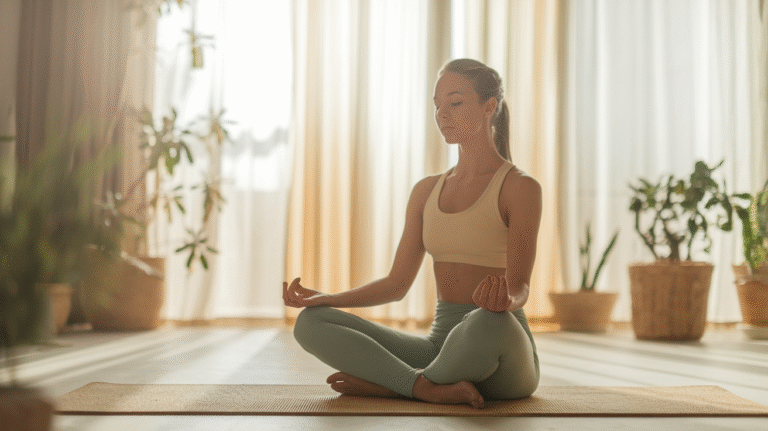
Alternate Nostril Breathing (Nadi Shodhana) balances your autonomic nervous system and improves heart rate variability. Sit upright. Close your right nostril with your right thumb and inhale through your left nostril for a count of 4. Close your left nostril with your right ring finger, release your thumb, and exhale through your right nostril for a count of 4. Inhale right, exhale left. Continue alternating for 5-10 minutes. This technique harmonizes the sympathetic and parasympathetic systems, improving your heart’s ability to adapt to stress.
Most people breathe shallowly, using only the upper chest. This keeps the nervous system in a mild state of alert, which over time raises resting heart rate and blood pressure. Diaphragmatic breathing—breathing that expands your belly—is deeper and more efficient. It delivers more oxygen per breath, meaning your heart doesn’t have to work as hard. It also directly activates the parasympathetic nervous system through the vagus nerve.
Heart rate variability (HRV) is a measure of how much your heart rate naturally fluctuates—a higher HRV indicates better cardiac resilience and stress recovery. Conscious breathing practices improve HRV measurably within weeks. This means your heart becomes more adaptive, more able to speed up when needed and slow down when safe. Start with just 5 minutes of focused breathing before your yoga for the heart practice. Most people report feeling calmer, more grounded, and more present afterward.
Easy Yoga Workouts: 15-Minute Heart-Healthy Sequence

This sequence wakes your body gently while improving circulation. It takes 15 minutes and requires only a mat and your own body weight. Do it every morning, or at least 4-5 times per week for measurable results.
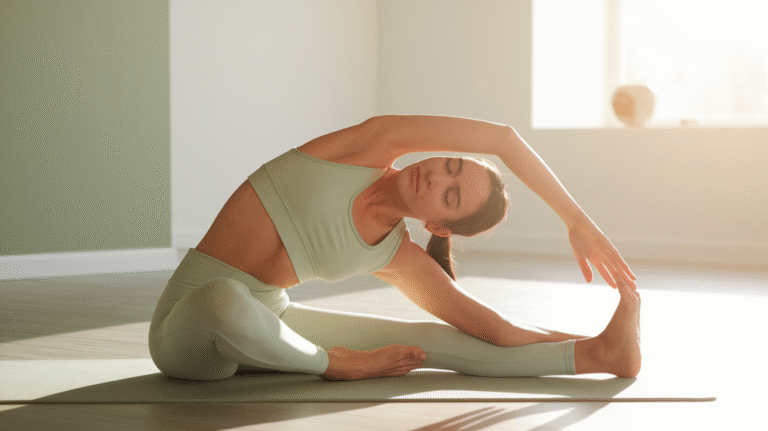
Warm-up (3 minutes): Start in a tabletop position (hands and knees). Move through Cat-Cow 8-10 times: inhale, drop your belly and lift your gaze (cow), exhale, round your spine and tuck your chin (cat). This mobilizes your spine and begins activating your parasympathetic response. Follow with 3-4 seated side stretches, reaching your right arm overhead and gently leaning left for 30 seconds each side.
Active poses (7 minutes): Move to Downward Dog and hold for 1 minute, breathing steadily. Step or hop to Standing Forward Fold and hold for 1 minute. Step your right foot forward into a Low Lunge, square your hips, and raise your arms overhead for a heart opener. Hold 1 minute each side. Flow through Warrior II on each side for 30 seconds each. These poses improve circulation, strengthen your cardiovascular system gently, and build the endurance that translates to real-world activities.
Cool-down (5 minutes): Return to a supine position. Set up Supported Bridge Pose (hips supported by a block) and hold for 2 minutes. Finish with Legs-Up-the-Wall for the remaining 3 minutes. Your heart rate comes down, your nervous system fully relaxes, and your body absorbs the benefits of the entire practice.
For evening practice 3-4 hours before bed, try this 15-minute restorative sequence: Begin with 2 minutes of 4-7-8 breathing. Move to Reclining Bound Angle with full prop support and hold for 5 minutes. Follow with Supported Child’s Pose (forehead resting on a block or bolster) for 3 minutes. Finish with Legs-Up-the-Wall for 7 minutes. Blood pressure measurably drops during and after this sequence.
Frequency matters more than duration. Aim for 20-30 minutes, 4-5 times per week. This is the minimum effective dose for measurable cardiovascular improvements. If that feels like too much, start with 10-15 minutes daily—consistency beats intensity every time.
Within 2-3 weeks, you’ll notice improved energy and better sleep. Within 4-6 weeks, your resting heart rate will drop (measure it first thing in the morning before getting out of bed). Within 8-12 weeks, blood pressure improvements become measurable, circulation symptoms like cold hands improve, and stress feels more manageable. Your body responds to regular, repeated stimulus, not sporadic intense effort. This is why yoga for heart health works so well for busy people—you can do it at home, on your schedule, in short bursts that fit real life.
Yoga for the Heart Chakra: The Mind-Body Connection
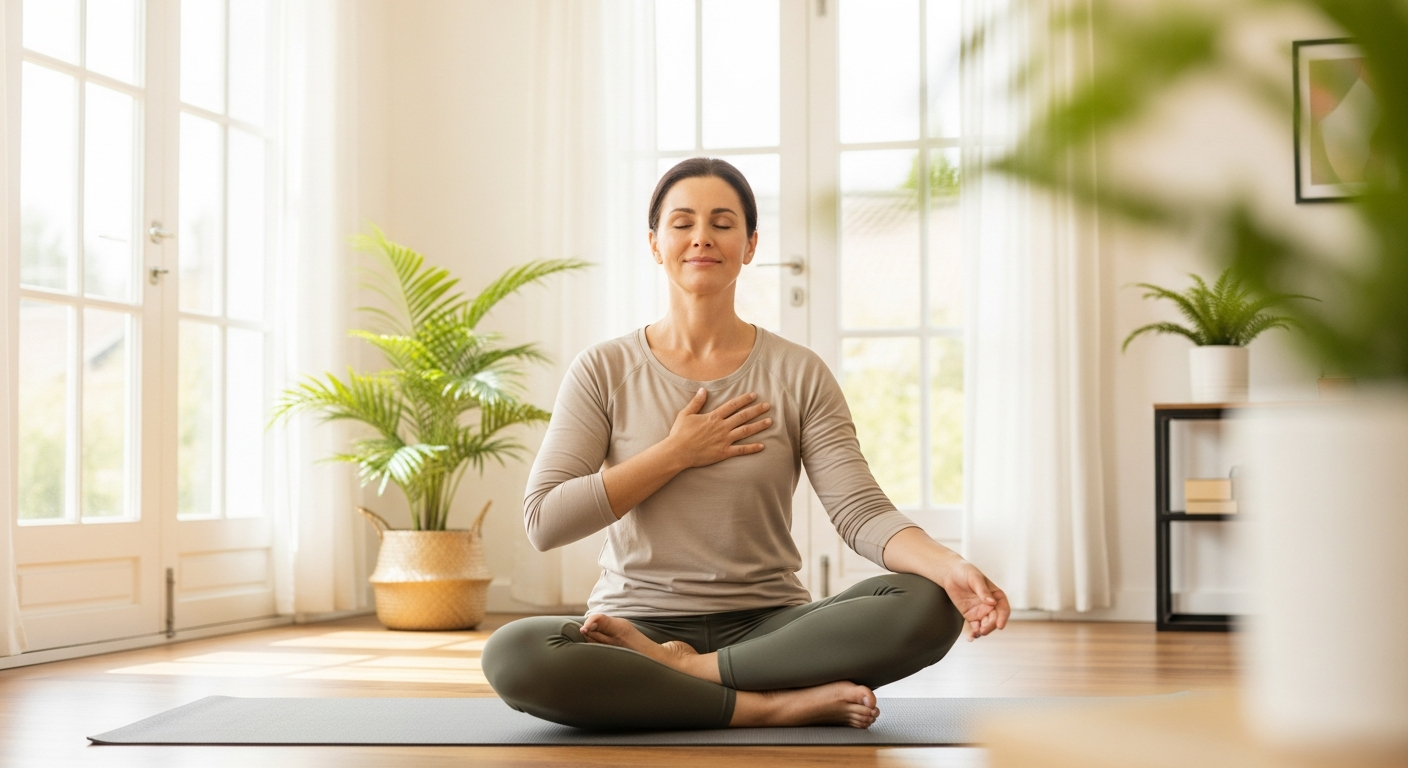
In yoga philosophy, the heart chakra (Anahata) is the energy center associated with compassion, emotional balance, and self-love. It’s located at your chest center—the exact same area where most people hold tension from stress, grief, and anxiety. This isn’t mystical; it’s anatomical. Your nervous system is wired to protect your heart, so when you’re under stress, you literally tighten your chest, shoulders, and upper back.
Over months and years, this protective tension becomes chronic. Your chest stays slightly collapsed. Your breathing stays shallow. Your heart works harder to pump against this physical restriction. Yoga for the heart chakra addresses both—you’re literally opening the physical space around your heart while creating psychological safety for emotional release.
The connection between emotional health and physical heart health isn’t metaphorical. Chronic stress, anxiety, and unprocessed grief increase cortisol and adrenaline, promote inflammation, and raise blood pressure. Practices that open your heart center—both physically and emotionally—directly counteract these mechanisms. When you open your chest in a backbend, you’re signaling your nervous system that it’s safe to be vulnerable, which is the opposite of the protective contraction stress creates.
Camel Pose (Ustrasana) is a powerful chest opener that often triggers emotional release. Kneel on your mat, place your hands on your lower back for support, and gently arch backward, opening your chest fully. If you’re flexible, you can reach your hands to your heels. Hold for 30-60 seconds. Many people feel emotions arise during or after this pose—that’s healthy. You’re releasing stored tension and creating space for healing.
Cobra Pose (Bhujangasana) is a gentler backbend that strengthens your back while opening your front body. Lie on your belly, place your hands under your shoulders, and press your chest forward and up. Your elbows stay slightly bent and close to your ribs. Hold for 20-30 seconds, rest, repeat 3-5 times. This pose is accessible for beginners and builds spinal strength while creating the chest opening that yoga for the heart requires.
Low Lunge with Arms Raised combines hip opening with heart opening. Step your right foot forward into a lunge, square your hips, and raise both arms overhead. Sink your hips slightly forward to deepen the hip stretch while your raised arms open your chest and shoulders. Hold 1 minute each side. This pose teaches your body that it’s possible to be open and grounded at the same time.
Your body holds stress physically. When you experience grief, anxiety, or chronic tension, your nervous system contracts your chest, shoulders, and diaphragm as a protective mechanism. Over time, this becomes your baseline. When you practice yoga for the heart chakra, you’re undoing this protective contraction. You’re opening the physical space, which signals safety to your nervous system. This often triggers emotional release—tears, sighs, or spontaneous feelings. This is therapeutic, not a sign something’s wrong. From a cardiovascular perspective, this matters enormously. Emotional stress is one of the biggest drivers of heart disease. Practices that allow you to process and release that stress reduce your risk measurably.
Safety Considerations and Modifications

Yoga for heart health is safe for almost everyone, but certain conditions require modifications or avoidance of specific poses. If you have uncontrolled high blood pressure, avoid full inversions (headstands, shoulderstands) where your head is below your heart—the sudden blood rush can be unsafe. Legs-Up-the-Wall is fine; full inversions are not. If you have glaucoma, avoid any inversion that increases pressure in your eyes. If you’ve recently had a stroke or have other serious cardiovascular conditions, consult your cardiologist before starting any new practice.
Deep backbends should be approached carefully if you have existing heart conditions. Camel Pose and deep chest openers can feel intense; listen to your body. If something feels genuinely wrong—sharp pain, dizziness, chest tightness—stop immediately. There’s a difference between the healthy sensation of a stretch and actual pain or distress. Intense twists should be avoided if you’re recovering from a recent cardiac event. Gentle twists are fine; deep wringing twists put demand on your heart that might not be appropriate during early recovery. Your doctor is your best guide here.
The golden rule: use props liberally. Blocks, bolsters, blankets, and walls are not signs of weakness—they’re tools that let you access the benefits of poses safely. If you have high blood pressure or heart conditions, keep your head at or above your heart level during practice. Supported Bridge instead of Shoulderstand: Both open your chest, but Supported Bridge keeps your head at heart level and requires zero neck strain. Legs-Up-the-Wall instead of Headstand: Both are inversions, but Legs-Up-the-Wall is gentler and safer for people with cardiovascular conditions. Modified Camel with hands on lower back instead of reaching to heels: Same chest opening, less intensity.
Beginners often worry they’re “not doing it right” if they use modifications. The opposite is true. Using props and modifications is how you access the real benefit of poses. A fully supported Reclining Bound Angle delivers better results than a barely-held unsupported version because your nervous system can actually relax. Comfort creates the conditions for transformation.
Before starting any new exercise program with existing cardiovascular disease, check with your cardiologist. Most will enthusiastically support yoga for heart health—it’s one of the few practices they consistently recommend. Be specific about what you plan to do: restorative poses, gentle movement, breathwork. They’ll let you know if any modifications are necessary for your specific condition.
If you experience chest pain, severe shortness of breath, dizziness, or palpitations during practice, stop and consult your doctor. These aren’t normal sensations to push through. Yoga for heart health is complementary medicine. It works beautifully alongside medical treatment, medications, and lifestyle changes. It’s not a replacement for medical care when you need it. Frame it as one tool in a comprehensive approach to cardiovascular health, and you’ll get the best results.
Your Next Move
The single most important thing you can do right now is this: pick one sequence from this guide and commit to practicing it 4-5 times this week. Not perfectly. Not for long. Just consistently. The 15-minute morning flow, the evening restorative sequence, or even just 5 minutes of breathing before bed—choose one and do it.
You don’t need to wait for the perfect time, the perfect mat, or the perfect body. You don’t need a gym membership or expensive classes. You need to start where you are, with what you have, and show up regularly. Yoga for heart health isn’t about becoming flexible or mastering advanced poses. It’s about using your body’s own physiology—your nervous system, your breath, your circulation—to build a stronger, more resilient heart.
Measure your progress in small ways: lower resting heart rate, better sleep, improved energy, warmer hands and feet, less anxiety. These markers matter more than any external achievement. Within 4-6 weeks of consistent practice, you’ll feel the difference. Within 3 months, your cardiovascular system will be measurably stronger. That’s not a promise—that’s physiology. Your body is designed to adapt and improve. Yoga for the heart simply gives it the right conditions to do so.
Start today. Your future self will thank you.