best stretches for women in menopause
You’re waking up stiff, your joints ache in ways they never used to, and that yoga pose you mastered five years ago? Now it feels impossible.
If you’re navigating menopause, you already know your body is going through profound changes—but here’s the empowering truth: the right stretching routine can transform how you feel every single day.
I’m not talking about becoming a contortionist or spending hours on a yoga mat. The science-backed stretches I’m sharing today take just 10-15 minutes and deliver real results for the specific challenges your body faces during this transition.
You’ll reduce that morning stiffness, protect your bone density, sleep better, and move through your day with confidence instead of caution.
The best part? You don’t need fancy equipment, a gym membership, or previous flexibility experience. These proven stretches work for busy professionals squeezing in movement between meetings, stay-at-home parents managing household demands, and anyone who’s simply tired of their body feeling like it’s working against them.
Let’s dive into exactly why stretching becomes your secret weapon during menopause—and which specific stretches deliver the biggest impact.
Why Menopause Makes Stretching More Important Than Ever

The Hormone-Flexibility Connection
Here’s what’s really happening inside your body: As estrogen levels decline during menopause, your collagen production drops by up to 30% in the first five years.
Collagen is the protein that keeps your connective tissues—tendons, ligaments, and joint capsules—supple and resilient. Less collagen means these tissues become stiffer and less elastic.
Your joints also produce less synovial fluid, the natural lubricant that allows smooth, pain-free movement. Think of it like your body’s oil change schedule getting disrupted. Without adequate lubrication, you experience that creaky, achy feeling when you first stand up or try to reach overhead.
Add in sarcopenia—the accelerated muscle mass loss that happens after 50—and you’re looking at a triple threat to your mobility.
Women can lose 3-8% of their muscle mass per decade after 30, and that rate increases during menopause. Weaker muscles mean less support for your joints, which creates a cycle of stiffness and discomfort.
But stretching directly counteracts these changes. Regular flexibility work stimulates circulation to your connective tissues, encourages synovial fluid production, and maintains the range of motion you need for everything from gardening to playing with grandchildren.
Beyond Physical Benefits: Mental Health and Sleep
The mental health benefits of stretching during menopause are just as powerful as the physical ones. When you stretch, your body releases endorphins—those natural mood-boosters that combat the anxiety, irritability, and mood swings that often accompany hormonal changes.
Research shows that gentle stretching before bed improves sleep quality by 35% in menopausal women. The slow, mindful movements activate your parasympathetic nervous system, signaling to your body that it’s safe to relax. This is especially valuable when hot flashes and night sweats are disrupting your rest.
Stretching also manages cortisol, your primary stress hormone. Elevated cortisol contributes to belly fat accumulation, sleep problems, and increased inflammation—all common complaints during menopause. A consistent stretching practice brings cortisol back into balance, creating a ripple effect of positive changes throughout your body.
Bone Density and Fall Prevention
Let’s talk about something that might worry you: osteoporosis. During the first five years after menopause, women can lose up to 20% of their bone density. This isn’t just about fracture risk—it’s about maintaining your independence and confidence in how you move through the world.
Stretching, particularly weight-bearing stretches, supports bone health by creating gentle stress on your skeletal system. This stress signals your body to maintain and even build bone density. But the balance benefits are equally crucial. Improved flexibility translates directly to better balance, reducing your fall risk by up to 37%.
When you can move fluidly, reach confidently, and recover quickly if you stumble, you maintain the freedom to live life on your terms. That’s what effective stretching delivers during menopause and beyond.
The 7 Most Effective Stretches for Menopausal Women
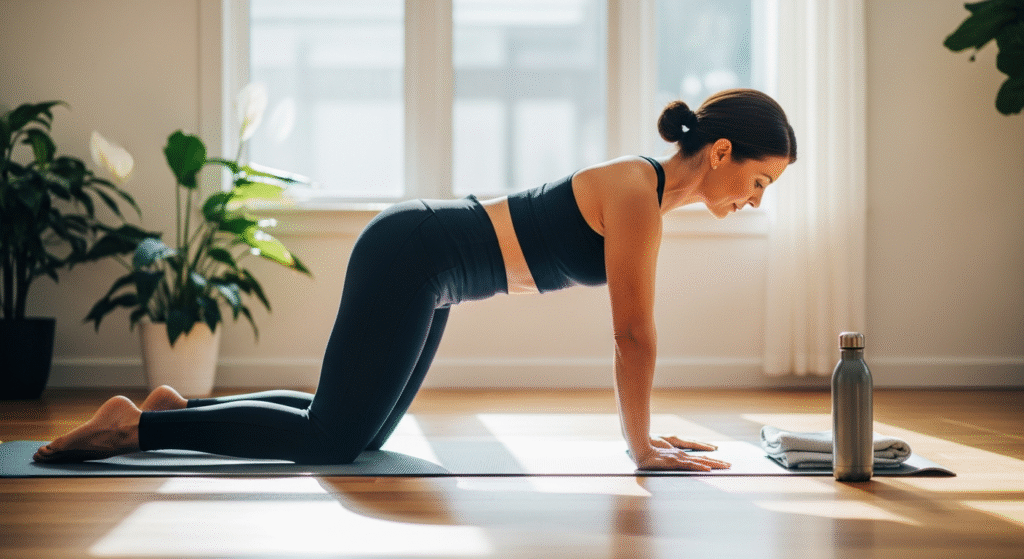
1. Cat-Cow Stretch (Spinal Mobility and Back Pain Relief)
Why it works: This dynamic stretch targets your entire spine, relieving the lower back tension that plagues so many women during menopause. It improves posture by counteracting the forward slump that develops from decreased core strength and increased abdominal weight.
How to perform: Start on your hands and knees with wrists under shoulders and knees under hips. For the “cow” position, inhale deeply as you drop your belly toward the floor, lift your chest and tailbone toward the ceiling, and gaze slightly upward. For the “cat” position, exhale completely as you round your spine toward the ceiling, tuck your tailbone, and draw your chin toward your chest. The movement should feel like a wave flowing through your spine.
Hold time: This is a dynamic movement—flow between positions for 8-10 complete cycles, coordinating each movement with your breath.
Modifications: If your wrists hurt, try it on your forearms instead. If your knees are uncomfortable on the floor, fold a blanket or towel underneath them. You can also perform a modified version while seated in a chair, placing your hands on your thighs and moving your spine through the same positions.
2. Seated Hip Opener (Joint Health and Flexibility)
Why it works: Your hips bear the brunt of daily activities and often become the tightest area of your body. This stretch opens those tight hip flexors and external rotators, reducing lower back strain and improving circulation to your pelvic region—important for managing pelvic floor changes during menopause.
How to perform: Sit on the floor with your legs extended. Bend your right knee and place your right ankle on your left thigh, just above your knee, creating a figure-4 shape. Keep your right foot flexed to protect your knee. Sit tall through your spine, then gently hinge forward from your hips, keeping your back straight. You should feel a deep stretch in your right hip and glute.
Hold time: Maintain this position for 30 seconds to 1 minute per side, breathing deeply throughout.
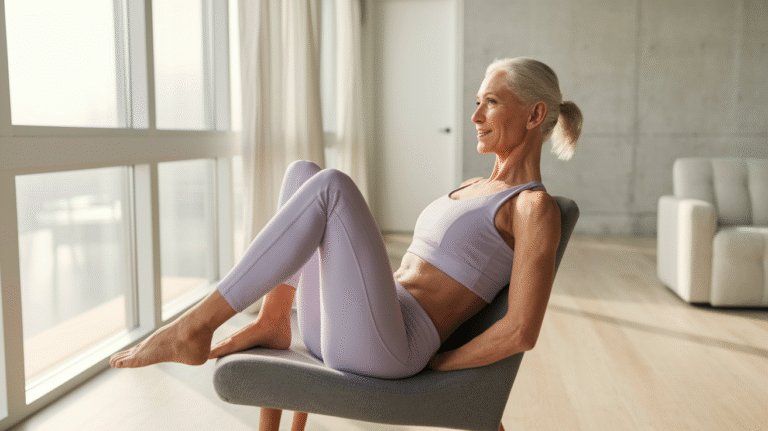
Modifications: If sitting on the floor is challenging, perform this stretch while seated in a chair. If the stretch feels too intense, place a cushion under your bent knee for support. You can also perform this lying on your back with your foot against a wall for extra stability.
3. Reclining Bound Angle Pose (Pelvic Floor and Relaxation)
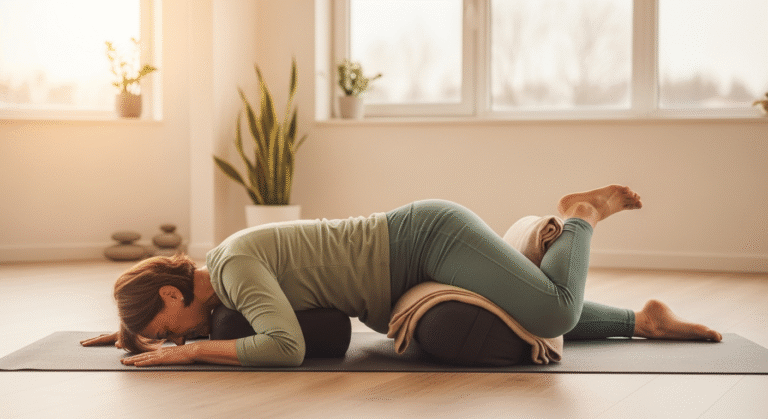
Why it works: This restorative stretch gently opens your hips while promoting deep relaxation—perfect for managing stress and preparing your body for quality sleep. It also supports pelvic floor health, which becomes increasingly important as estrogen decline affects these muscles.
How to perform: Lie on your back and bring the soles of your feet together, allowing your knees to fall open to the sides. Place pillows or folded blankets under each knee for support—don’t force your knees toward the floor. Rest your arms by your sides with palms facing up. Close your eyes and focus on slow, deep breathing.
Hold time: Stay in this position for 1-3 minutes, allowing gravity to do the work while you consciously relax.
Modifications: If this feels too intense on your inner thighs, bring your feet farther from your body or stack more support under your knees. You can also place a bolster or pillow under your entire spine for extra comfort and chest opening.
4. Standing Forward Fold (Hamstring Flexibility and Stress Relief)
Why it works: This stretch targets your entire posterior chain—hamstrings, calves, and lower back. It also has a powerful calming effect on your nervous system, making it excellent for managing anxiety and hot flashes. The gentle inversion increases blood flow to your brain, improving mental clarity.
How to perform: Stand with feet hip-width apart. Inhale and lengthen your spine. As you exhale, hinge forward from your hips (not your waist), keeping a slight bend in your knees. Let your upper body hang heavy, with your head and neck completely relaxed. You can rest your hands on your shins, ankles, or the floor—wherever they naturally reach.
Hold time: Remain in this fold for 30 seconds to 1 minute, taking slow, complete breaths.
Modifications: Keep a generous bend in your knees to protect your lower back—straight legs aren’t the goal here. Place your hands on blocks or rest them on a chair seat if you can’t comfortably reach the floor. If you have high blood pressure or feel dizzy, skip this one or keep your hands on your thighs and only fold halfway down.
5. Thread the Needle (Shoulder and Upper Back Release)
Why it works: Shoulder and upper back tension is incredibly common during menopause, often due to stress, poor posture, or tension in your neck and shoulders. This stretch releases that tightness while opening your chest and improving thoracic spine mobility.
How to perform: Start on your hands and knees. Reach your right arm underneath your left arm, threading it through until your right shoulder and ear rest on the floor. Your left hand can stay planted for stability or reach forward to deepen the stretch. You should feel a gentle twist through your upper back and a stretch across your right shoulder.
Hold time: Hold for 30-45 seconds per side, breathing steadily.
Modifications: If your shoulder doesn’t comfortably reach the floor, place a folded blanket or pillow under it. Reduce the depth of the twist if you feel any pinching. You can also perform a gentler version while seated, simply rotating your torso to one side and placing your opposite hand on your thigh.
6. Legs Up the Wall (Circulation and Sleep Support)
Why it works: This restorative pose reduces leg swelling, promotes lymphatic drainage, and signals your body to shift into rest-and-digest mode. It’s particularly effective for women experiencing circulation issues, restless legs, or difficulty winding down before bed.
How to perform: Sit sideways next to a wall, then swing your legs up as you lower your back to the floor. Your sitting bones should be close to the wall (but don’t need to touch it), with your legs extended straight up. Rest your arms by your sides with palms facing up. Let your entire body soften into the floor.
Hold time: Remain here for 5-10 minutes—this is your time to let go completely.
Modifications: If your hamstrings are tight, move your hips farther from the wall so your legs angle slightly away. Place a folded blanket or bolster under your hips for extra comfort and a gentle pelvic tilt. If you have glaucoma or high blood pressure, skip this inversion or keep your legs at a lower angle.
7. Gentle Neck Rolls (Tension Relief and Headache Prevention)
Why it works: Neck tension contributes to headaches, poor sleep, and that constant feeling of tightness across your shoulders. This simple stretch releases accumulated tension and improves range of motion in your cervical spine—essential for everyday activities like driving and looking over your shoulder.
How to perform: Sit or stand with your spine tall and shoulders relaxed. Slowly drop your right ear toward your right shoulder, feeling the stretch along the left side of your neck. Hold for a breath, then slowly roll your chin down toward your chest. Continue rolling your left ear toward your left shoulder, then back to center. Reverse the direction for the next set.
Hold time: Complete 5-8 slow, controlled rotations in each direction, never forcing the movement.
Modifications: If you feel any pinching or sharp pain, reduce your range of motion and move even more slowly. Avoid dropping your head all the way back, as this can compress your cervical spine. Perform this stretch while seated with back support if balance is a concern.
Building Your Personalized Menopause Stretching Routine
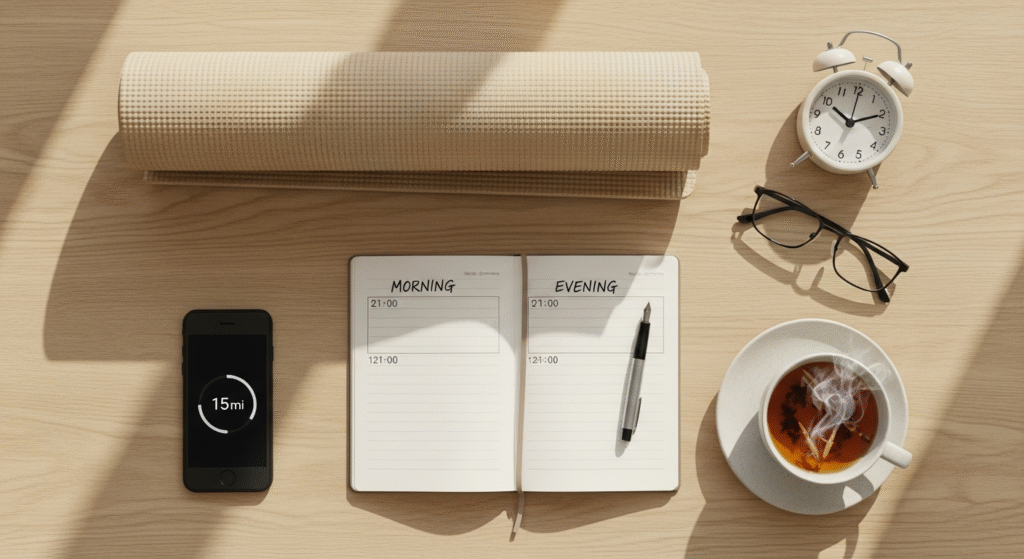
The 10-Minute Morning Flow
Start your day with a sequence designed to combat morning stiffness and energize your body. Begin with gentle neck rolls while still in bed, then move to cat-cow stretches to awaken your spine. Follow with the standing forward fold to stretch your entire posterior chain and increase blood flow.
Finish with the seated hip opener on each side. This combination lubricates your joints, increases circulation, and sets a positive tone for your entire day.
The key is performing this routine before your body has a chance to stiffen up from daily activities. Keep your movements slow and mindful during the first few minutes—your body needs time to warm up after hours of sleep.
Many women notice that consistent morning stretching reduces their need for pain medication and improves their energy levels throughout the day.
The Evening Wind-Down Routine
Your evening routine should focus on relaxation and preparing your body for restorative sleep. Start with thread the needle to release the shoulder tension accumulated during the day.
Move into the reclining bound angle pose, letting gravity open your hips while your nervous system downshifts. Finish with legs up the wall for 5-10 minutes—this is your time to completely disconnect from the day’s demands.
Incorporate deep breathing throughout this sequence: inhale for a count of four, hold for four, exhale for six. This breathing pattern activates your parasympathetic nervous system, lowering cortisol and preparing your body for quality sleep.
Many women report that this evening routine significantly reduces hot flashes during the night and helps them fall asleep faster.
The “Whenever You Need It” Quick Relief Stretches
Keep these in your back pocket for busy days when you need quick relief. At your desk, perform gentle neck rolls and seated hip openers right in your chair. During TV commercials, drop into cat-cow stretches on the floor. Before bed, spend just two minutes in legs up the wall.
The beauty of these quick routines is that they prevent stiffness from building up in the first place. Set a timer on your phone to remind yourself to stretch every two hours during the workday. Even 60 seconds of movement makes a measurable difference in how your body feels and functions.
Common Stretching Mistakes to Avoid During Menopause
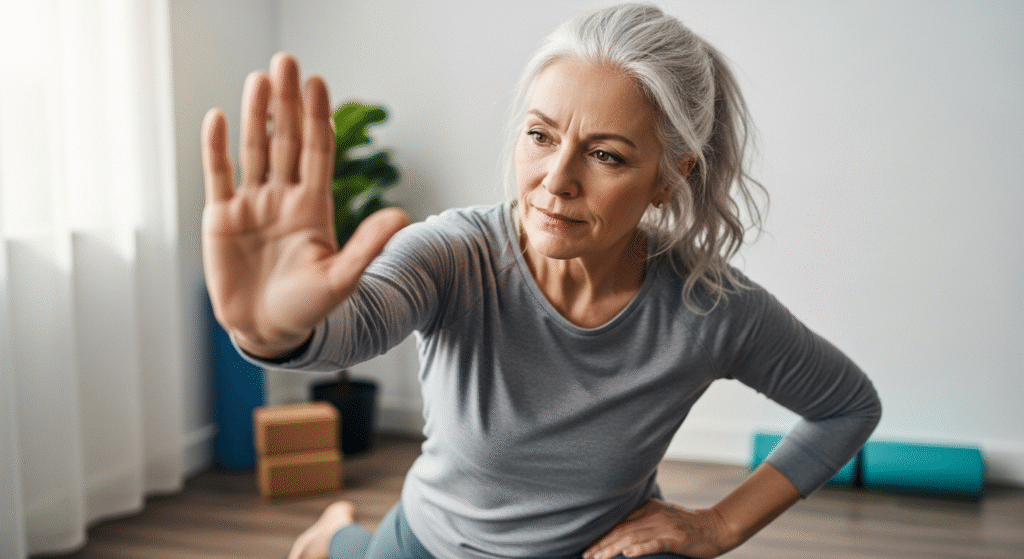
Pushing Through Pain vs. Working Through Discomfort
Understanding the difference between productive discomfort and harmful pain is crucial. A productive stretch feels like gentle tension or pulling—you should be able to breathe comfortably and relax into the sensation. Pain, on the other hand, feels sharp, pinching, or causes you to hold your breath and tense up.
Use this simple scale: If discomfort is a 3-4 out of 10, you’re in the right zone. If it jumps to 6 or above, you’ve gone too far. Your body during menopause has different tolerance levels than it did in your 30s, and that’s completely normal. Honor where you are today rather than where you used to be.
If a stretch causes pain that lingers after you release the position, you’ve overstretched. Back off the intensity next time and build gradually. Progress in flexibility happens over weeks and months, not in a single session.
Skipping the Warm-Up
Cold stretching is riskier during menopause because your tissues are less elastic and more prone to injury. Before stretching, spend 2-3 minutes warming up your body with gentle movement. March in place, do arm circles, or simply walk around your house. You want to increase your heart rate slightly and feel warmth spreading through your muscles.
Think of your connective tissues like taffy—when they’re cold, they’re brittle and can snap. When they’re warm, they’re pliable and stretch safely. This simple warm-up reduces your injury risk by up to 50% and makes your stretches more effective.
Holding Your Breath
Many women unconsciously hold their breath during stretches, especially when a position feels challenging. This creates tension throughout your body and actually limits how deeply you can stretch. Your breath is the key that unlocks deeper flexibility and greater benefits.
Practice this pattern: Inhale through your nose for a count of four, filling your belly with air. Exhale through your mouth for a count of six, releasing tension as you breathe out.
On each exhale, you may find you can sink slightly deeper into the stretch. This breathing pattern also maximizes the stress-relief benefits of your practice.
Maximizing Results: What to Combine with Stretching
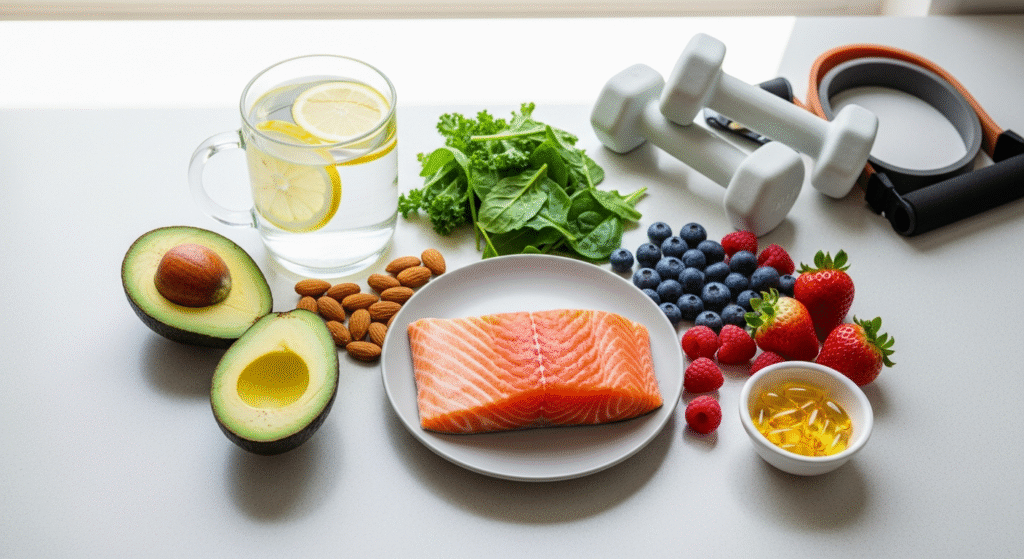
Strength Training for Bone Density
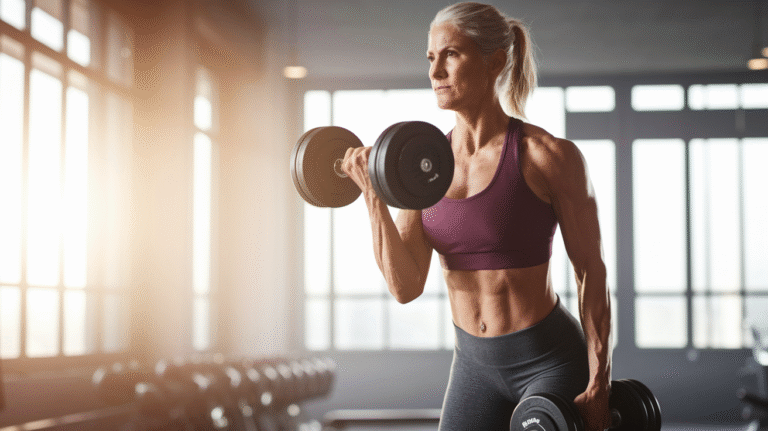
Stretching alone is powerful, but combining it with strength training creates transformational results for menopausal women. Resistance work builds the bone density that protects you from osteoporosis and maintains the muscle mass that supports your joints and metabolism.
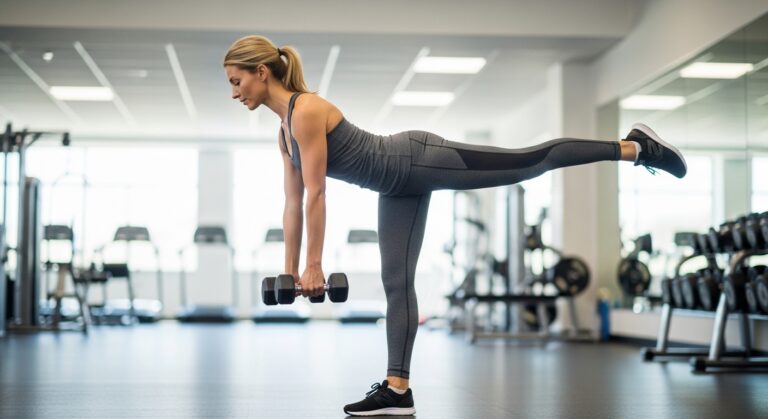
You don’t need heavy weights or complicated equipment. Bodyweight exercises like squats, modified push-ups against a wall, and standing leg lifts provide enough resistance to signal your body to maintain bone and muscle. Aim for 2-3 strength sessions per week, with stretching on the other days or as a cool-down after your strength work.
This combination addresses both flexibility and strength—the two pillars of maintaining independence and vitality as you age. Women who combine both types of movement report feeling stronger, moving more confidently, and experiencing less pain than those who focus on just one approach.
Hydration and Nutrition for Joint Health
Your flexibility is directly connected to how well hydrated you are. Dehydration makes your connective tissues stiff and increases your injury risk. Aim for half your body weight in ounces of water daily—so if you weigh 150 pounds, drink 75 ounces of water.
Nutrition also plays a crucial role. Focus on foods rich in omega-3 fatty acids (salmon, walnuts, flaxseeds) to reduce inflammation in your joints. Consider adding collagen peptides to your morning coffee or smoothie—studies show this supports connective tissue health during menopause. Vitamin D and calcium remain essential for bone health, so ensure you’re meeting your daily requirements through food or supplements.
Time your largest glass of water about 30 minutes before stretching. This gives your body time to hydrate your tissues, making your stretches more comfortable and effective.
Consistency Over Intensity
Here’s the truth that will set you free: A gentle 10-minute stretching session every single day delivers better results than an intense hour-long class once a week. Consistency rewires your nervous system, maintains your gains, and prevents the stiffness from building back up.
Think of stretching like brushing your teeth—it’s a non-negotiable part of your daily self-care routine. You wouldn’t skip brushing your teeth for six days and then do an intense seven-minute session on Sunday. Your body responds best to regular, moderate input rather than sporadic intense efforts.
Track your progress by noting how you feel rather than how far you can stretch. Can you tie your shoes more easily? Does your back feel better when you wake up? Are you sleeping more soundly? These real-world improvements matter far more than touching your toes.
Your Body Deserves This Care
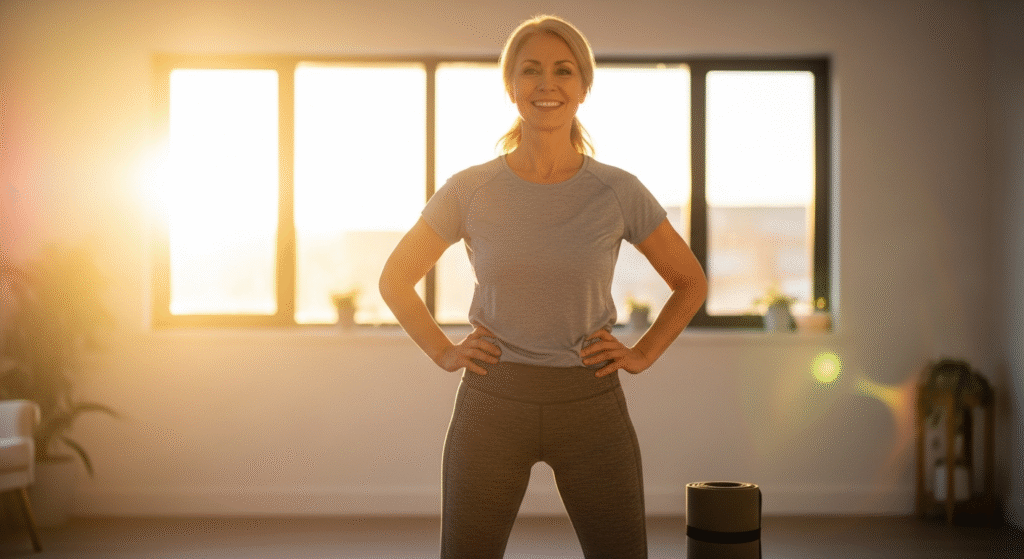
Menopause is a transition, not a destination—and how you move through it (literally) makes all the difference. These proven stretches aren’t about achieving perfect flexibility or looking like a yoga instructor. They’re about reclaiming comfort in your own body, maintaining your independence, and feeling strong and capable every single day.
The women who thrive during menopause are the ones who adapt their self-care to meet their body’s changing needs. You’re not the same person you were at 35, and that’s something to celebrate, not mourn. Your body has carried you through decades of life—now it’s asking you to slow down, listen, and provide the gentle, consistent care that stretching delivers.
Start with just one stretch today. Tomorrow, add a second. Within two weeks, you’ll have built a complete routine that fits seamlessly into your life. You’ll notice the stiffness easing, your sleep improving, and your confidence growing. This is your time to move better, feel stronger, and embrace this chapter with the vitality you deserve.
Your journey to greater flexibility and comfort starts with a single stretch. Which one will you try first?