Incontinence prevention exercises for women over 40
You’re Not Broken—Your Pelvic Floor Just Needs Training
You’re crushing your morning run when it happens again—that unexpected leak that makes you cut your workout short. Or maybe it’s during your HIIT class, when you’re mid-jumping jack and suddenly feel that familiar, frustrating sensation. You check your watch, make an excuse about a cramp, and head to the locker room, feeling defeated before you’ve even broken a real sweat.
Here’s what you need to know: You’re not alone, and more importantly, you’re not stuck with this reality.
Stress incontinence affects 1 in 3 women over 40. That’s millions of women who’ve quietly stopped doing the exercises they love, who plan their days around bathroom locations, who’ve accepted bladder leaks as an inevitable part of aging.
But here’s the truth that changes everything: This isn’t about getting older—it’s about strengthening specific muscles that have been neglected or weakened over time.
The shame and silence around this issue keep too many women suffering unnecessarily. You might feel embarrassed bringing it up with your doctor, or assume that surgery or expensive treatments are your only options. Meanwhile, you’re limiting your fitness journey, skipping activities you love, and losing confidence in your body’s ability to perform.
I’m here to tell you that this can be transformed with exercises you can do at home, starting today. No gym membership required. No special equipment needed. Just targeted movements that rebuild the strength your pelvic floor has lost.
In this guide, you’ll discover why incontinence happens (the science-backed explanation that makes everything click), proven exercises that deliver measurable results in as little as 12 weeks, and how to integrate these movements into your existing routine without adding hours to your day.
We’re talking about real solutions that work for busy professionals squeezing in lunchtime workouts and stay-at-home parents managing chaos between school runs.
Your pelvic floor is just another muscle group that needs attention—and you’re about to learn exactly how to build its strength from the comfort of home. Let’s get started.
Why Incontinence Happens (And Why It’s Not Your Fault)
The Science Behind Bladder Control
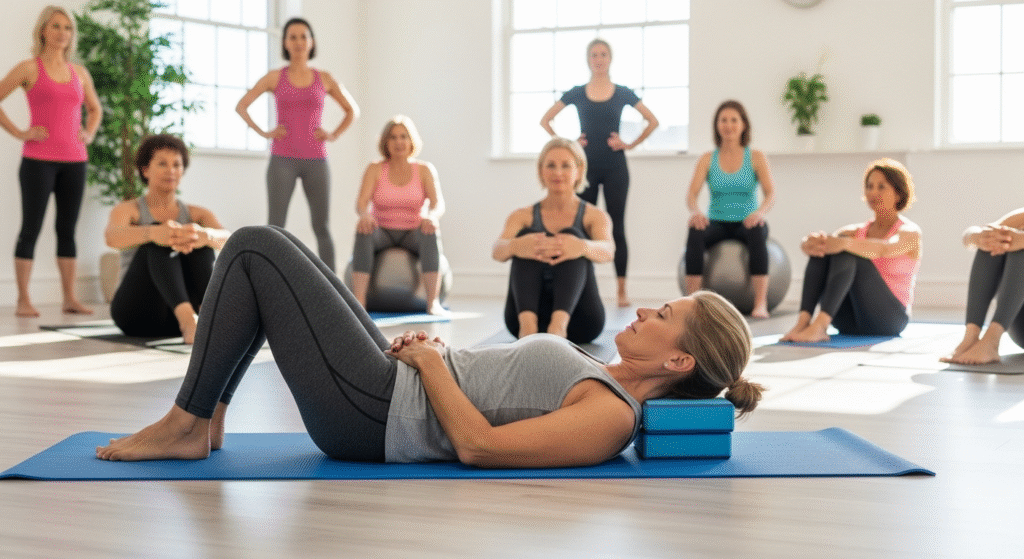
Think of your pelvic floor as a hammock of muscles stretched between your pubic bone and tailbone. This powerful network supports your bladder, uterus, and bowel, keeping everything in place while you move through life. When these muscles are strong, they work seamlessly with your abdominal muscles to control when you release urine. When they’re weak? That’s when leaks happen.
Several factors weaken these muscles over time. Childbirth is the obvious one—vaginal delivery stretches and sometimes tears pelvic floor tissues, and those effects can show up decades later. But pregnancy itself, even without vaginal birth, puts months of pressure on your pelvic floor. Hormonal changes after 40 compound the problem. As estrogen levels drop during perimenopause and menopause, your pelvic floor muscles lose some of their tone and elasticity.
Here’s something that surprises most women: a history of high-impact exercise can actually contribute to pelvic floor weakness. Years of running, jumping, and intense workouts create repeated downward pressure on these muscles. If you never trained them specifically to handle that stress, they gradually weaken.
This is why your regular workouts alone won’t fix this problem. You can have rock-solid abs and powerful legs, but if you haven’t specifically trained your pelvic floor, those muscles remain weak. They need direct, focused attention.
The Three Types of Incontinence Women Experience
Stress incontinence is the most common type, affecting about 50% of women with bladder control issues. This is when physical stress—laughing, coughing, sneezing, running, jumping—causes leaks. The pressure overwhelms your weakened pelvic floor, and urine escapes before you can stop it.
Urge incontinence feels different. You get a sudden, powerful need to urinate, and you might not make it to the bathroom in time. This happens when your bladder muscles contract involuntarily, often triggered by certain sounds (running water), situations (putting your key in the door), or without any trigger at all.
Mixed incontinence combines both types. You might leak during exercise and also experience sudden urges that are hard to control.
Identifying your type helps you choose the most effective exercises and strategies. Stress incontinence responds incredibly well to pelvic floor strengthening. Urge incontinence benefits from both strengthening and bladder retraining techniques.
The Good News: This Is Completely Reversible
Research delivers powerful evidence: women who commit to targeted pelvic floor exercises experience a 65% reduction in incontinence episodes after just 12 weeks. Stanford Medicine researchers found that both yoga-based programs and traditional strengthening exercises delivered these impressive results.
Your pelvic floor can be strengthened just like your biceps or core. The muscles respond to progressive overload, consistency, and proper technique. No surgery required. No medications needed. No expensive treatments for most women dealing with mild to moderate incontinence.
The key is understanding that these muscles need time to rebuild. You didn’t lose this strength overnight, and you won’t regain it overnight either. But with consistent practice—15 to 20 minutes daily—you’ll notice improvements within 4 to 6 weeks, with significant transformation by the 12-week mark.
The Foundation: Mastering Kegel Exercises
How to Find Your Pelvic Floor Muscles
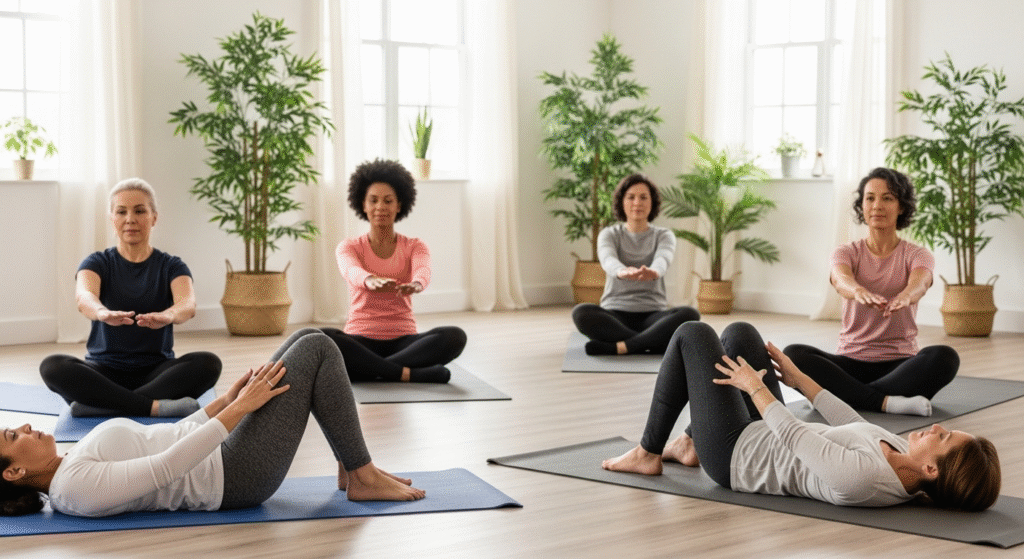
Before you can strengthen these muscles, you need to locate them. The classic “stop the flow” technique works: next time you urinate, try to stop mid-stream. The muscles you engage are your pelvic floor. Important note: only do this once to identify the muscles—don’t practice Kegels during actual urination, as this can disrupt your bladder’s natural emptying pattern.
Another effective method is visualization. Imagine you’re trying to lift a marble with your vaginal muscles, drawing it upward and inward. You should feel a “lift and squeeze” sensation internally, not in your buttocks or thighs.
Common mistakes derail most beginners. Don’t hold your breath—breathing naturally is essential. Don’t tighten your glutes, thighs, or abs instead of your pelvic floor. These compensations feel like you’re working hard, but they’re not targeting the right muscles. Focus on that internal lift and squeeze while keeping everything else relaxed.
The squeeze test confirms you’re doing it right: place a clean finger inside your vagina and perform a Kegel. You should feel pressure around your finger as the muscles contract. If you don’t feel anything, you’re not engaging the right muscles yet. Keep practicing with different cues until you find what works.
The Proven Kegel Technique That Delivers Results
Here’s the basic Kegel protocol that research supports: Squeeze and hold your pelvic floor muscles for 5 seconds, then release and rest for 5 seconds. As you build strength over the first few weeks, gradually increase your hold time to 10 seconds. Perform 3 sets of 10 repetitions daily.
The beauty of Kegels is you can do them anywhere. During your commute, sitting at red lights. While watching TV in the evening. Standing in line at the grocery store. Waiting for your coffee to brew. This flexibility makes consistency achievable even with the busiest schedule.
But don’t stop with slow Kegels. Add quick Kegels for power: rapid squeeze-and-release contractions, one per second, for 10 repetitions. These target different muscle fibers—the fast-twitch fibers that respond quickly when you sneeze or jump.
Why both types matter: Your pelvic floor contains slow-twitch muscle fibers (for endurance and sustained control) and fast-twitch fibers (for quick, powerful contractions). Training both types builds comprehensive strength that handles whatever your day throws at you.
Tracking Your Progress
Keep a simple log in your phone or notebook. Record the number of reps, hold duration, and how many sets you completed. This accountability keeps you consistent and lets you see your progression over weeks.
Notice changes in daily life—these matter more than the numbers. Are you experiencing fewer leaks during your workout? Can you hold your bladder longer when you need to? Do you feel more confident during high-impact activities? These real-world improvements confirm your training is working.
Timeline expectations: Most women see initial improvements within 4 to 6 weeks. You might notice you can hold a Kegel longer, or you leak less during specific activities. Significant results—being able to exercise without leaks, feeling truly confident in your bladder control—typically arrive around the 12-week mark.
Don’t expect overnight transformation. Your pelvic floor took years to weaken; it needs weeks to rebuild. Consistency is everything. Missing a few days won’t destroy your progress, but sporadic effort delivers sporadic results.
Beyond Kegels: Powerful Full-Body Exercises
Modified Plank for Core and Pelvic Floor Integration
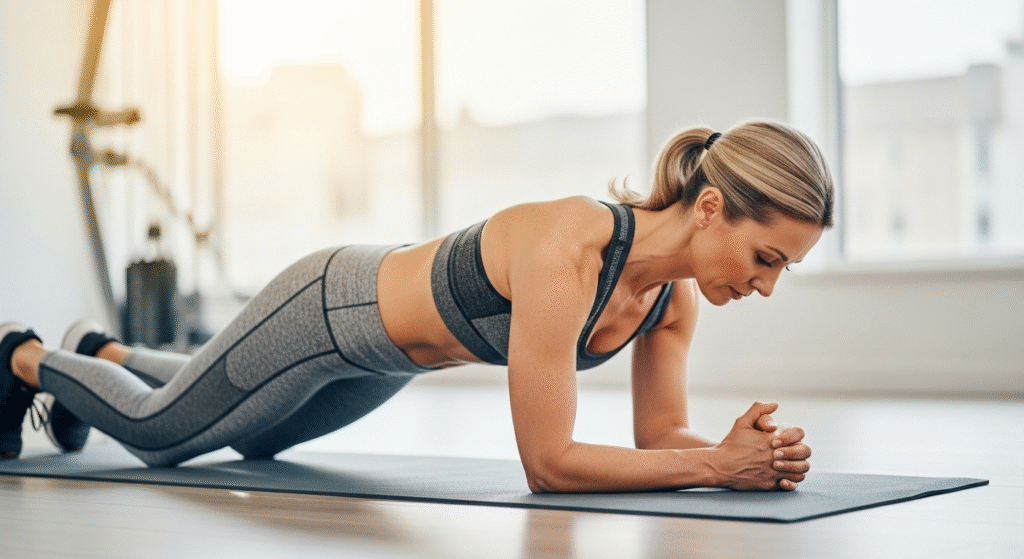
Traditional planks can actually worsen incontinence by creating too much downward pressure on a weak pelvic floor. Modified planks deliver the strengthening benefits without the risk.
Why it works: Your pelvic floor doesn’t function in isolation—it’s part of your deep core system. When you strengthen these muscles together, you build functional, integrated strength that translates to real-life movements.
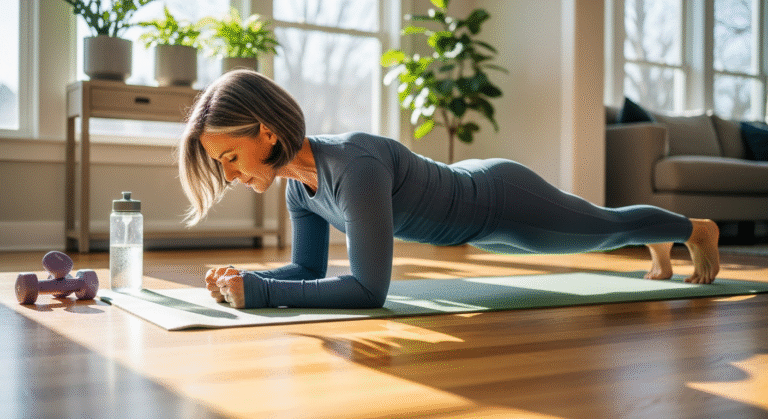
How to perform: Place your forearms on a counter or sturdy table, hands clasped. Step back until your body forms a straight line from head to heels. Now here’s the critical part: engage your abs AND your pelvic floor simultaneously. Draw your pelvic floor up and in while pulling your belly button toward your spine. Hold this position for 15 to 60 seconds, maintaining steady breathing. Rest, then repeat 3 times.
Progression: Start at counter height. As you build strength over weeks, move to a lower surface—a coffee table, then a step, gradually working toward a floor plank if desired. But there’s no rush. Counter planks deliver powerful results.
Common mistakes: Holding your breath defeats the purpose—your pelvic floor needs to function while you breathe. Letting your hips sag puts strain on your lower back instead of challenging your core. Keep that straight line.
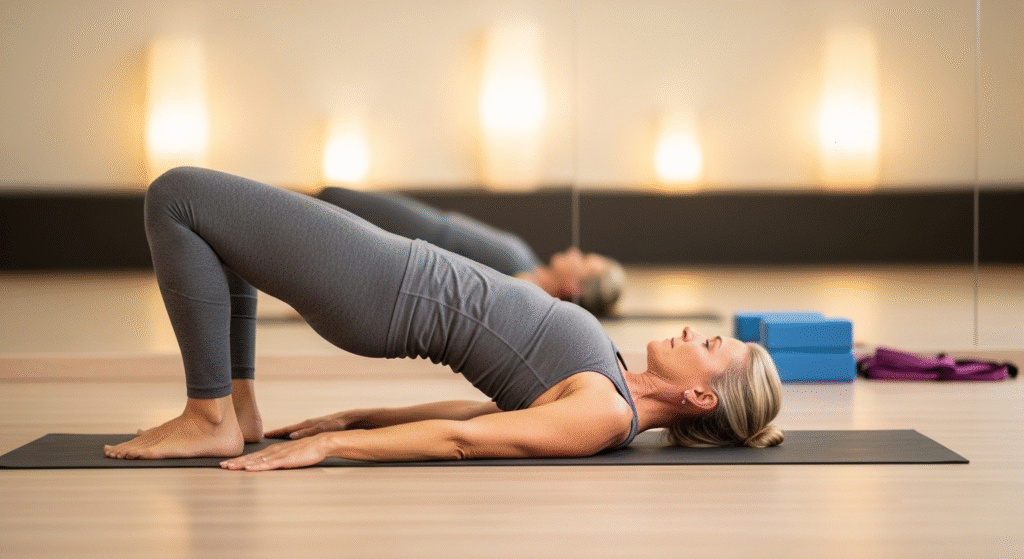
Bridge Pose: The Ultimate Pelvic Floor Strengthener
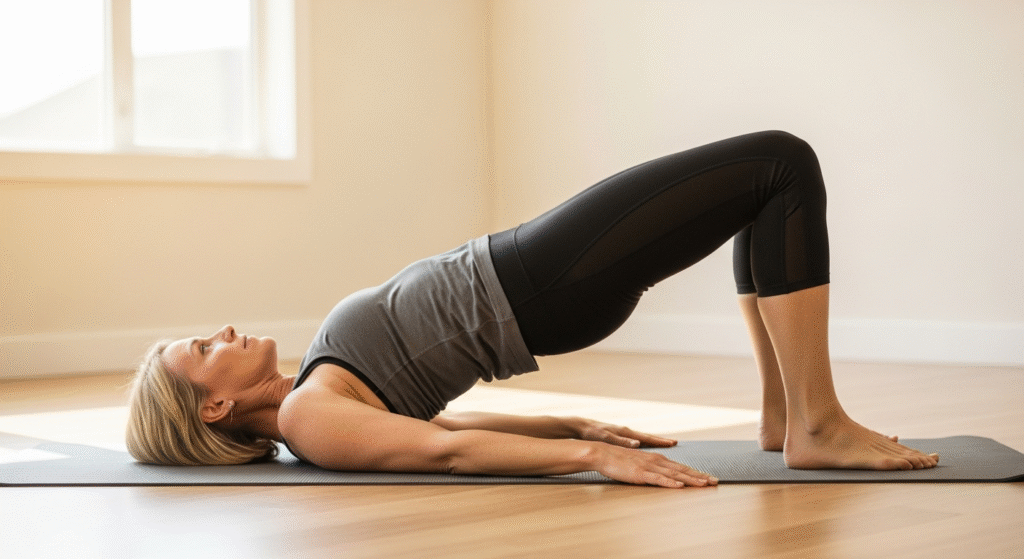
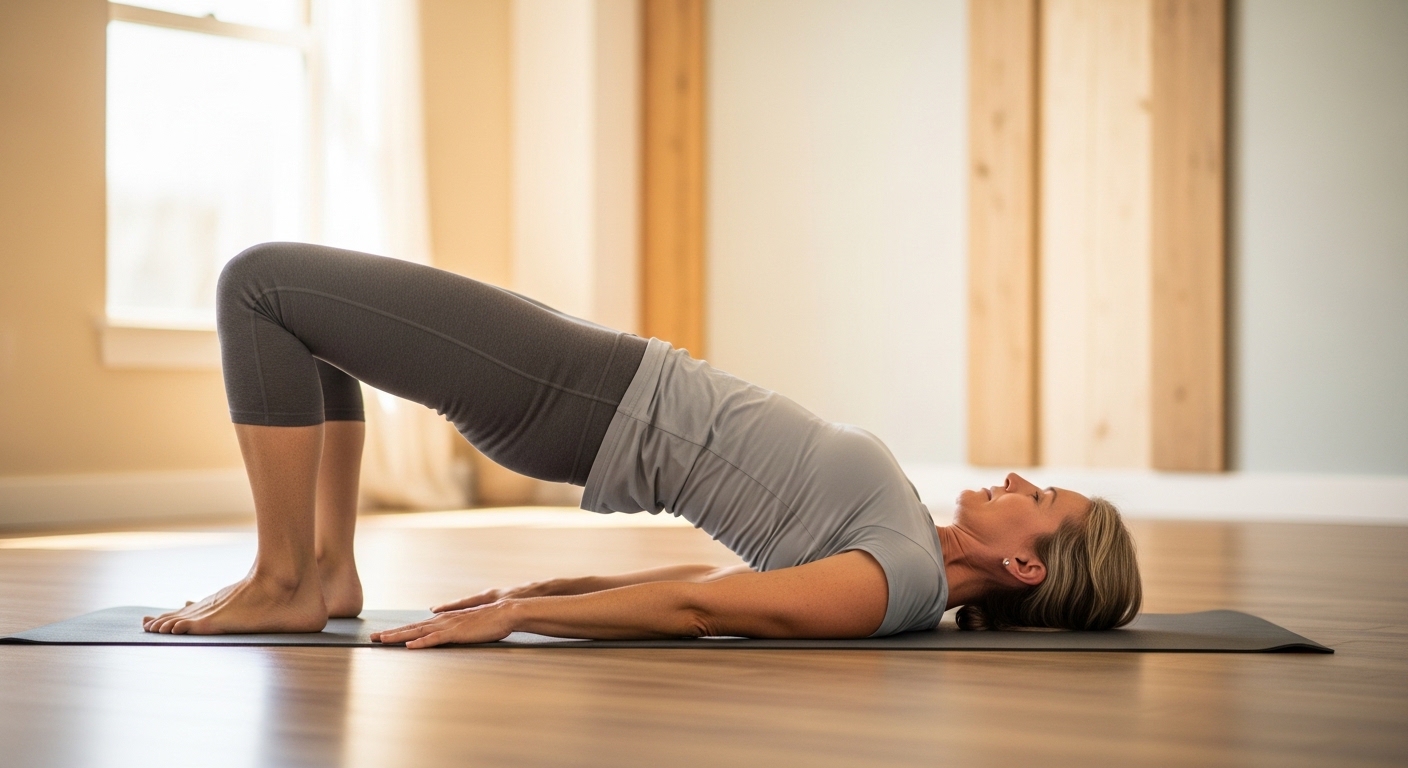
Bridges target your glutes, hamstrings, and pelvic floor in one efficient movement. This is functional strength—the kind that helps you lift groceries, climb stairs, and move through your day without leaks.
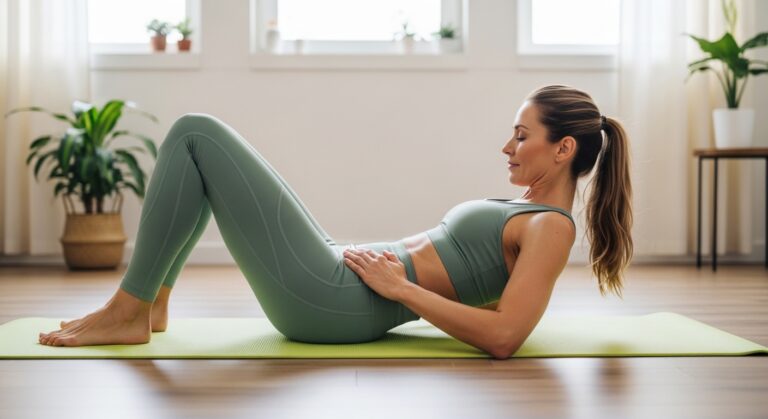
The technique: Lie on your back with knees bent and feet hip-width apart, flat on the floor. Before you lift, engage your pelvic floor with a Kegel. Then press through your heels to lift your hips toward the ceiling, squeezing your glutes at the top. Hold at the top position for 5 to 10 seconds, maintaining that pelvic floor engagement. Lower slowly with control, releasing your pelvic floor as you touch down.
Why it’s effective: This movement trains your pelvic floor to stay engaged during physical exertion—exactly what you need during daily activities and exercise.
Reps: Perform 3 sets of 12 to 15 repetitions. Rest 30 to 60 seconds between sets.
Bonus: You’re also toning your butt and strengthening your lower back. This is efficient training that delivers multiple benefits from one exercise.
Squats with Pelvic Floor Engagement
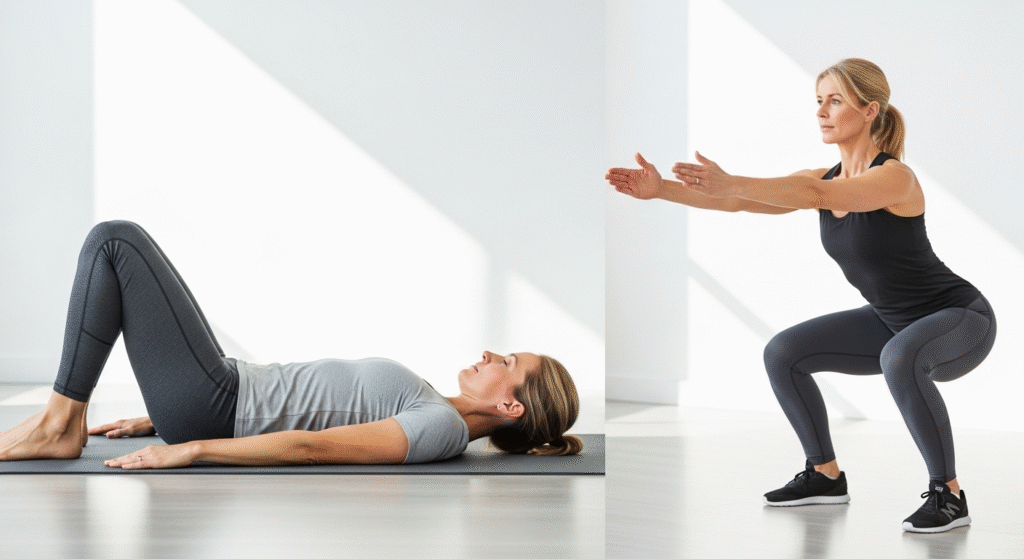
Traditional deep squats can increase pressure on a weakened pelvic floor, potentially making leaks worse. Modified squats build strength safely.
Modified approach: Perform shallow squats—quarter to half depth only. Before you lower, engage your pelvic floor with a Kegel. Maintain that engagement as you squat down. As you press back up, exhale and tighten your pelvic floor even more.
Why shallow squats: Deep squats create significant downward pressure. When your pelvic floor is weak, this pressure can overwhelm the muscles you’re trying to strengthen. Shallow squats build strength without excessive stress.
Progression: Start with 2 sets of 10 repetitions. Build to 3 sets of 15 as you gain strength over weeks. You can add light dumbbells once bodyweight squats feel easy.
This is how you build functional strength for daily activities—getting up from chairs, lifting items from low shelves, playing with grandchildren—all without leaks.
Wall Sits with a Twist
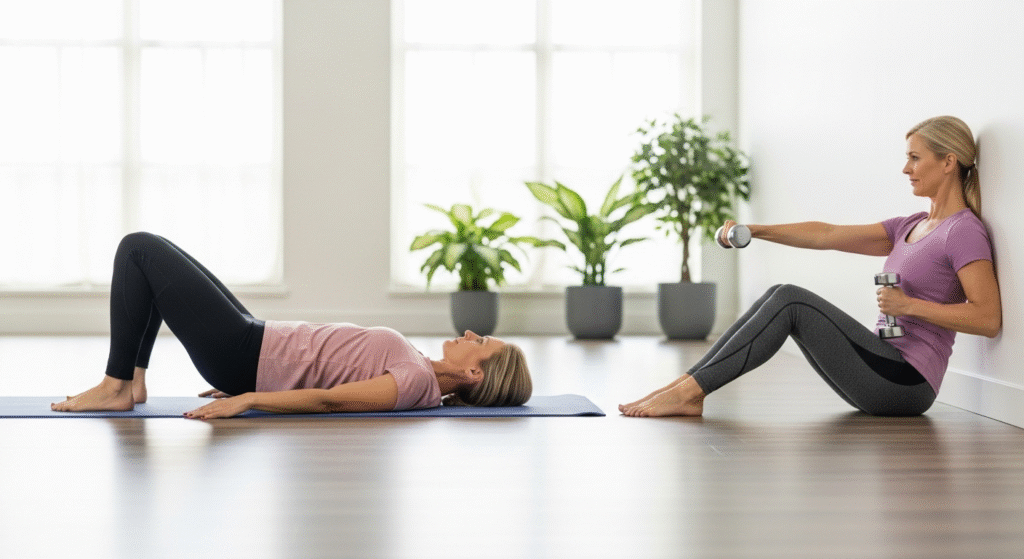
Standard wall sits build leg endurance. Adding pelvic floor pulses transforms them into a powerful incontinence-fighting exercise.
Position yourself with your back against a wall, feet hip-width apart and about two feet from the wall. Slide down until your knees are at 90 degrees. Now add pelvic floor pulses: squeeze and release your pelvic floor every 2 seconds while holding the position. Hold for 30 to 60 seconds total.
This combines endurance training with pelvic floor activation, teaching these muscles to maintain control during sustained physical stress. Your legs will burn—embrace it. That burn means you’re building the strength that translates to leak-free living.
Low-Impact Yoga Flows That Transform Your Pelvic Floor
Why Yoga Is a Game-Changer for Incontinence
Stanford researchers found that women who completed a 12-week yoga program specifically designed for pelvic floor health experienced a 65% reduction in incontinence episodes. This matches the results from traditional strengthening exercises, but yoga adds unique benefits.
Yoga combines strength, flexibility, and mind-body connection. You’re not just building muscle—you’re developing awareness of how your pelvic floor responds to different positions and movements. This awareness translates to better control in daily life.
The low-impact nature makes yoga safe for women at any fitness level. You don’t need to be flexible or experienced. The poses that help incontinence are accessible and modifiable.
Yoga also reduces stress, which matters more than you might think. Stress and anxiety can worsen urge incontinence. The relaxation and breathing techniques you practice during yoga calm your nervous system, reducing those sudden, powerful urges.
The Essential Poses for Bladder Control
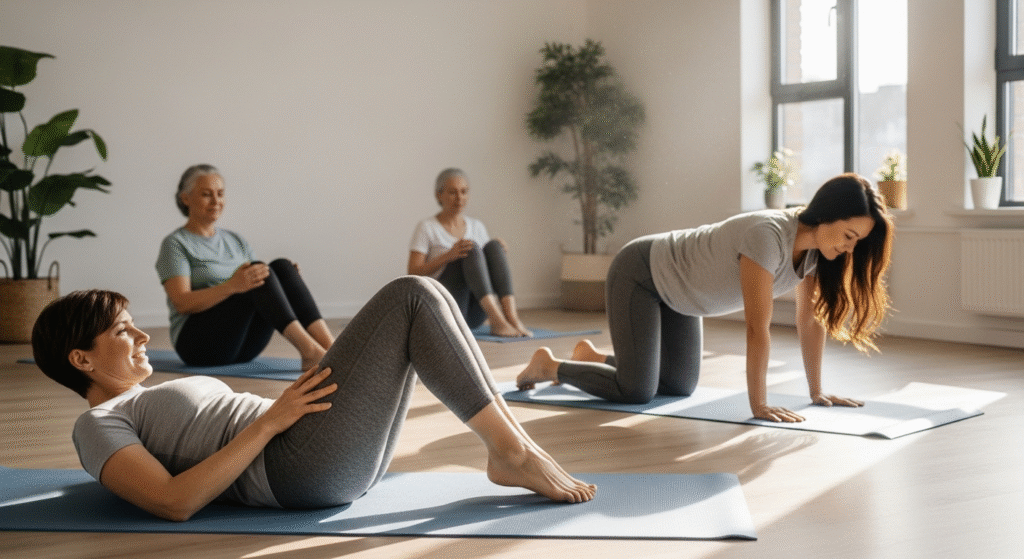
Cat-Cow Stretch improves pelvic floor awareness and mobility. Start on hands and knees. As you arch your back into cow pose (belly dropping, chest lifting), engage your pelvic floor with a Kegel. As you round into cat pose (spine curving up, chin to chest), release your pelvic floor completely. Perform 10 to 15 repetitions, coordinating movement with breath. Inhale into cow, exhale into cat.
This movement teaches your pelvic floor to contract and release with control. Many women with incontinence have pelvic floors that are constantly tight (not strong—just tense). Learning to fully release these muscles is as important as strengthening them.
Legs Up the Wall relieves pelvic pressure and promotes circulation. Lie on your back with your legs extended up a wall, hips close to the baseboard. Stay here for 5 to 10 minutes while practicing gentle Kegels—5-second holds followed by complete releases. This restorative pose is perfect for your evening routine before bed.
Child’s Pose with Pelvic Floor Release allows complete relaxation. Kneel on the floor, sit back on your heels, and fold forward with arms extended. Focus on releasing your pelvic floor completely—let it soften and relax. Hold for 2 to 3 minutes, breathing deeply into your belly.
This release is crucial. Over-tightening your pelvic floor (yes, that’s a real problem) can actually worsen symptoms. Your muscles need periods of complete relaxation to function optimally.
A Simple 15-Minute Yoga Routine for Daily Practice
Here’s a complete routine that delivers results:
Warm-up (3 minutes): Cat-Cow stretch, focusing on breath coordination and pelvic floor engagement.
Main sequence (8 minutes): – Bridge pose: 3 sets of 12 reps – Modified plank: 3 holds of 30 seconds each – Wall sits with pelvic floor pulses: 2 sets of 45 seconds
Cool-down (4 minutes): – Child’s pose: 2 minutes – Legs up the wall: 2 minutes
Do this routine 4 to 5 times per week for maximum results. You don’t need special equipment—just a wall and floor space. Roll out a yoga mat if you have one, or use a folded towel under your knees for comfort.
The consistency of this routine matters more than intensity. Fifteen minutes of focused practice beats an hour-long workout you only do once a week.
Your 12-Week Progressive Training Plan
Weeks 1-4: Building Your Foundation
Focus: Master the basics and establish your daily habit. These first four weeks are about learning proper technique and building consistency, not pushing for intensity.
Daily routine (15 minutes): – 3 sets of 10 Kegels with 5-second holds – 2 sets of 10 bridges – Modified plank: 15 to 30 seconds, 2 repetitions – Cat-Cow and Child’s pose for warm-up and cool-down
What to expect: You’ll develop better awareness of your pelvic floor muscles. You might not notice functional changes yet—this is completely normal. Your body is relearning movement patterns and building neural connections. Focus on perfect form over intensity. Quality repetitions beat rushed, sloppy ones every time.
Stay-at-home parent adaptation: Break your routine into three 5-minute sessions throughout the day. Morning Kegels while kids eat breakfast, bridges during naptime, evening yoga after bedtime.
Busy professional adaptation: Morning Kegels during your coffee, lunchtime bridges in your office (door closed), evening plank at home. Missing a session occasionally won’t destroy your progress—just get back to it the next day.
Weeks 5-8: Building Strength and Endurance
Focus: Increase intensity and add variations. Your pelvic floor is stronger now—time to challenge it.
Daily routine (20 minutes): – 3 sets of 10 Kegels with 8 to 10 second holds, plus 10 quick pulses – 3 sets of 15 bridges with 10-second holds at the top – Modified plank: 30 to 45 seconds, 3 repetitions – Wall sits with pulses: 2 sets of 45 seconds – Full yoga cool-down sequence
What to expect: This is when you start noticing real changes. Fewer leaks during specific activities. Better control when you cough or sneeze. More confidence during low-impact exercise. These small wins fuel your motivation.
Progression markers: Can you hold a Kegel for the full 10 seconds without your pelvic floor “giving out”? Can you complete wall sits for 45 seconds? These benchmarks tell you you’re ready for the next phase.
Weeks 9-12: Maximizing Your Results
Focus: Challenge yourself with longer holds, more reps, and integrated movements that mimic real life.
Daily routine (25 minutes): – 3 sets of 15 Kegels with 10-second holds, plus 2 sets of 20 quick pulses – 3 sets of 20 bridges, holding the top position for 15 seconds – Modified plank progressing toward lower surfaces: 45 to 60 seconds, 3 repetitions – Squats with pelvic floor engagement: 3 sets of 15 – Wall sits: 2 sets of 60 seconds with continuous pulses – Complete yoga sequence including all poses
What to expect: Significant improvement in bladder control. Many women can return to high-impact activities by week 12. You might still experience occasional leaks during very intense exercise, but they’re rare and minimal compared to where you started.
Maintenance plan: Once you reach week 12, you don’t stop—you maintain. Continue your routine 4 to 5 times per week. Your pelvic floor needs ongoing training just like any other muscle group. Skip it, and you’ll gradually lose the strength you’ve built.
Your Pelvic Floor Transformation Starts Today
You’ve just learned the complete system for rebuilding pelvic floor strength from home. No expensive equipment. No gym membership. Just targeted exercises backed by research and proven to deliver a 65% reduction in incontinence episodes within 12 weeks.
The women who succeed with this program share one characteristic: they commit to consistency. They show up for 15 to 20 minutes daily, even when progress feels slow. They trust the process during those first few weeks when they’re not seeing dramatic changes yet. They celebrate small wins—one less leak during a workout, a few extra seconds on a Kegel hold.
This is your invitation to stop accepting bladder leaks as inevitable. To reclaim the confidence that lets you run, jump, laugh, and sneeze without fear. To prove to yourself that your body is capable of transformation at any age.
Start with week 1 today. Set a phone reminder for your daily practice. Track your progress in a simple notebook. Notice how you feel four weeks from now, then eight weeks, then twelve.
Your pelvic floor is just another muscle group—and you’re about to make it powerful.
Ready to begin? Download our free 12-week tracking sheet and video demonstrations at [your website]. Share this guide with friends who need this information. Let’s end the silence around incontinence and empower women to take control of their pelvic floor health.