5 Evening Workouts for Women in Perimenopaus
It’s 2 AM, and you’re wide awake again, staring at the ceiling while hot flashes make you kick off the covers for the third time tonight. Sound familiar? You’re exhausted, but your body refuses to cooperate. You tried warm milk, meditation apps, blackout curtains—everything except the one thing that actually works.
Here’s what most women don’t realize: the right evening workout can transform your sleep quality the very same night. We’re not talking about grueling HIIT sessions or marathon runs that leave you wired at bedtime. We’re talking about science-backed, hormone-friendly movements specifically designed for perimenopausal bodies.
The research is clear. Studies show that just 30 minutes of moderate exercise can improve sleep quality that same night for women navigating perimenopause. But here’s the catch—timing and type matter enormously. The wrong workout at the wrong time will sabotage your sleep. The right one? It’ll have you sleeping like you did in your twenties.
I know you’re skeptical. You’ve tried everything, and nothing works. But stick with me here. The five workouts I’m about to share aren’t random exercises I pulled from thin air. They’re proven strategies that address the specific hormonal chaos happening in your body right now. They calm your overactive nervous system, regulate cortisol levels, and signal to your body that it’s safe to rest.
You don’t need expensive equipment, a gym membership, or hours of free time. These workouts take 15-30 minutes, can be done in your living room, and work even if you’ve never exercised consistently before. By the end of this article, you’ll have five powerful tools to reclaim your sleep—and your sanity.
Why Evening Exercise Works Differently During Perimenopause
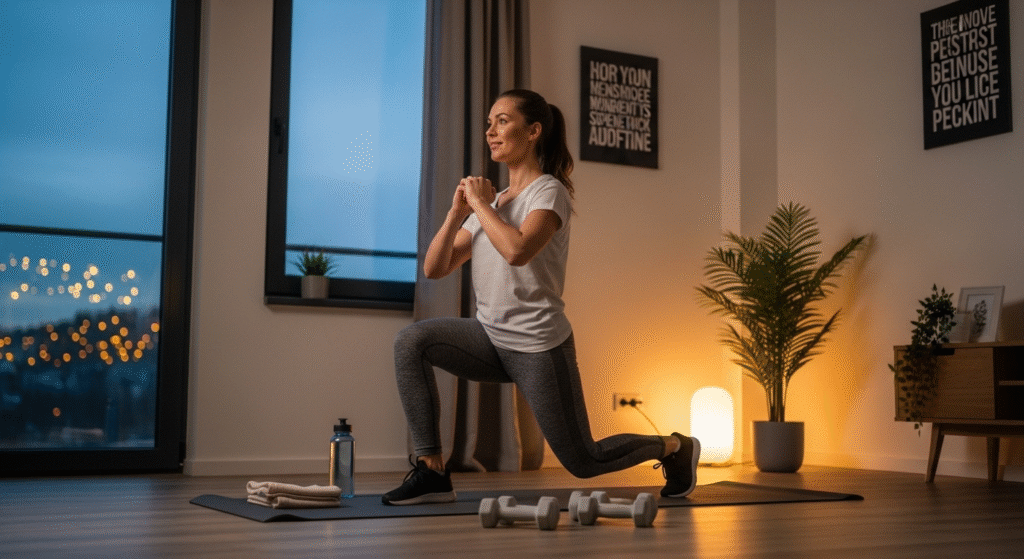
The Hormone-Sleep Connection You Need to Understand
Let’s talk about what’s actually happening inside your body. During perimenopause, your estrogen and progesterone levels don’t just decline—they fluctuate wildly, sometimes within the same day. These hormones play crucial roles in sleep regulation, and when they’re unstable, your sleep suffers dramatically.
Progesterone has a naturally calming effect on the brain. It promotes deep, restorative sleep by increasing GABA activity, your brain’s primary calming neurotransmitter. When progesterone drops, you lose this built-in sleep aid. Meanwhile, declining estrogen affects your body’s temperature regulation, leading to those miserable night sweats that jolt you awake.
But here’s where it gets interesting: cortisol, your stress hormone, tends to spike during perimenopause. Normally, cortisol should be highest in the morning and lowest at night. During perimenopause, this pattern gets disrupted. You end up with elevated cortisol at bedtime, which keeps your brain alert when it should be winding down.
The right evening exercise helps rebalance these hormones naturally. Mind-body exercises like yoga and qigong have been proven to reduce cortisol levels significantly. Gentle movement increases serotonin and endorphins, which help regulate mood and promote relaxation. You’re essentially using exercise as a natural hormone therapy—without the side effects.
The Science Behind Exercise Timing for Better Sleep
Here’s what the research tells us: moderate evening exercise can improve sleep quality the same night, but intense workouts too close to bedtime backfire spectacularly. A study of postmenopausal women found that those who exercised at moderate intensity for at least 30 minutes fell asleep easier—but timing was everything.
When you exercise vigorously within two hours of bedtime, your body temperature rises, your heart rate spikes, and your nervous system gets activated. This is the exact opposite of what you need for sleep. Your body needs time to cool down, both literally and physiologically.
The sweet spot? Exercising 2-3 hours before bed gives your body enough time to transition from activity to rest. Your core temperature rises during exercise, then drops afterward—and this temperature decline actually promotes sleep. It’s like your body gets a natural sleep signal.
But here’s what makes perimenopause different: your body is more sensitive to exercise intensity than it used to be. What felt like a moderate workout in your thirties might overstimulate your system now. This is why gentle, mindful movement works better than pushing yourself hard. You’re working with your changing body, not against it.
What Makes Perimenopause Sleep Different
Your sleep challenges aren’t just about falling asleep—they’re about staying asleep, managing anxiety, and dealing with physical discomfort that your younger self never experienced. Hot flashes can wake you multiple times per night. Racing thoughts keep your mind spinning. Your body feels restless and uncomfortable.
Traditional sleep advice—like “just relax” or “keep a consistent schedule”—doesn’t address the root cause: your nervous system is stuck in overdrive. Mind-body exercises work because they activate your parasympathetic nervous system, the part responsible for rest and digestion. They literally shift your body out of fight-or-flight mode.
This is why the workouts I’m sharing focus on gentle, controlled movements combined with breath work. They’re designed to calm your nervous system, not exhaust it. They release physical tension while quieting mental chatter. And they work specifically for perimenopausal bodies dealing with hormonal upheaval.
The 5 Most Effective Evening Workouts to Improve Your Sleep
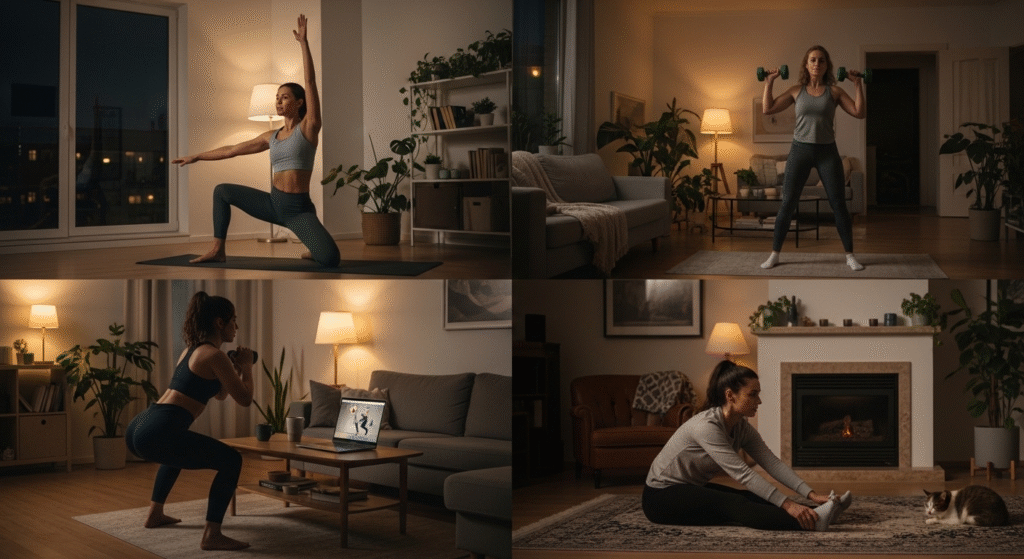
Let me introduce you to your new sleep toolkit. Each of these workouts addresses different aspects of perimenopause sleep struggles, so you can choose based on what you need most on any given night.
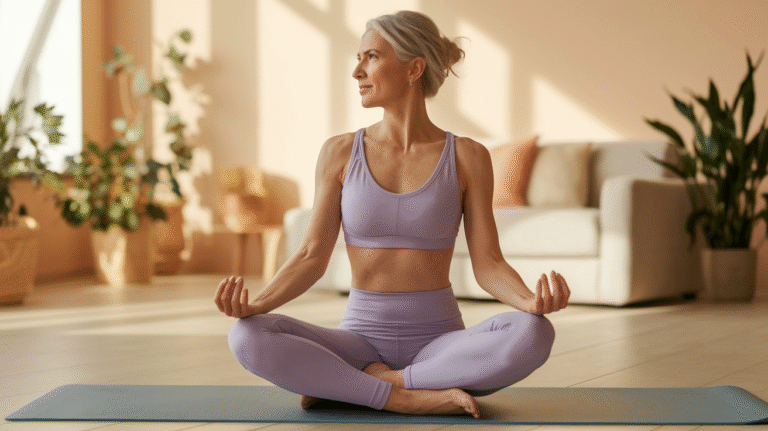
Restorative Yoga activates your parasympathetic nervous system through supported poses held for several minutes. It’s perfect for nights when anxiety is running high or your body feels wired. Research shows yoga significantly reduces insomnia severity in perimenopausal women.
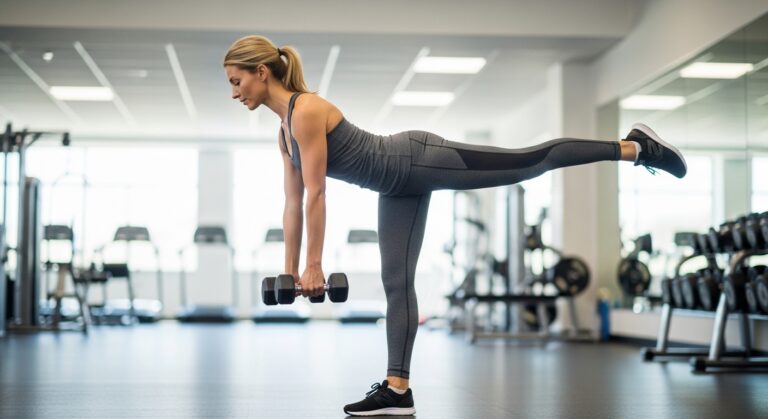
Pilates for Perimenopause offers gentle strength training that tones without overstimulating. It combines controlled movements with focused breathing, building strength while promoting relaxation. The mind-body connection helps quiet racing thoughts while supporting your changing metabolism.
Gentle Qigong Flow is an ancient Chinese practice proven to reduce cortisol and anxiety in menopausal women. It involves slow, flowing movements coordinated with breath that regulate your body’s energy and calm your nervous system. Studies show it significantly improves sleep quality.
Evening Walking Meditation combines the proven benefits of moderate cardio with mindfulness. It’s the simplest option on this list, requiring no equipment or special skills, yet it’s incredibly effective at clearing mental clutter and preparing your body for rest.
Bedtime Stretching Routine targets the physical tension that prevents sleep—tight hips, stiff shoulders, lower back discomfort. It signals to your body that the day is done and it’s time to rest. This is your go-to when you need something quick and simple.
You don’t need to do all five every night. Choose one based on how you’re feeling, what your body needs, and how much time you have. The key is consistency—doing something most evenings will deliver far better results than doing everything perfectly once a week.
Workout #1: Restorative Yoga for Deep Sleep
Why Restorative Yoga Works for Perimenopause Sleep
Restorative yoga isn’t about flexibility or strength—it’s about activating your body’s natural relaxation response. When you hold gentle, supported poses for several minutes, you trigger your parasympathetic nervous system, which counteracts the stress response keeping you awake.
The science backs this up powerfully. A systematic review of studies found that yoga exercises effectively enhance sleep quality in perimenopausal and postmenopausal women. The mechanism works through multiple pathways: it reduces cortisol, increases GABA activity, and helps regulate your autonomic nervous system’s response to stress.
For women dealing with hot flashes, restorative yoga offers specific relief. The gentle inversions and supported poses improve circulation and help regulate body temperature. The focused breathing activates your vagus nerve, which directly influences your body’s ability to calm down and cool off.
Your 20-Minute Evening Restorative Yoga Sequence
Legs-Up-The-Wall Pose (5 minutes): Sit sideways next to a wall, then swing your legs up as you lie back. Your hips should be close to the wall, legs extended upward. Place a folded blanket under your hips if that feels better. Rest your arms by your sides, palms up. This pose reverses blood flow, calms your nervous system, and signals rest time. Breathe slowly and deeply, focusing on lengthening your exhales.
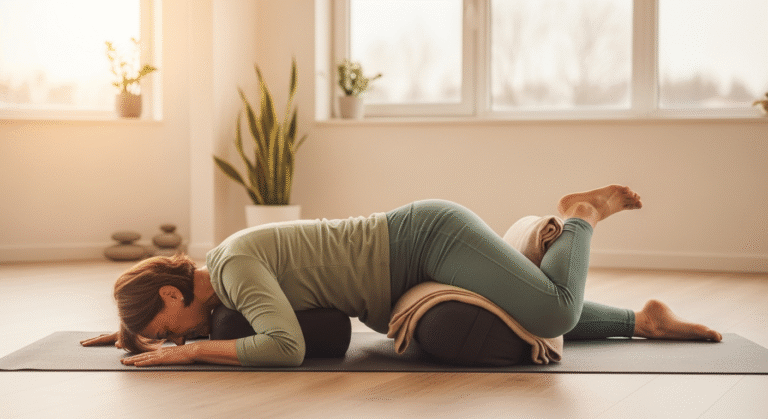
Supported Child’s Pose (5 minutes): Kneel on your mat and place a pillow or bolster lengthwise in front of you. Spread your knees wide, big toes touching. Fold forward, resting your torso completely on the pillow. Turn your head to one side (switch halfway through). This pose gently stretches your hips and back while creating a sense of safety and comfort. Let your breathing become natural and effortless.
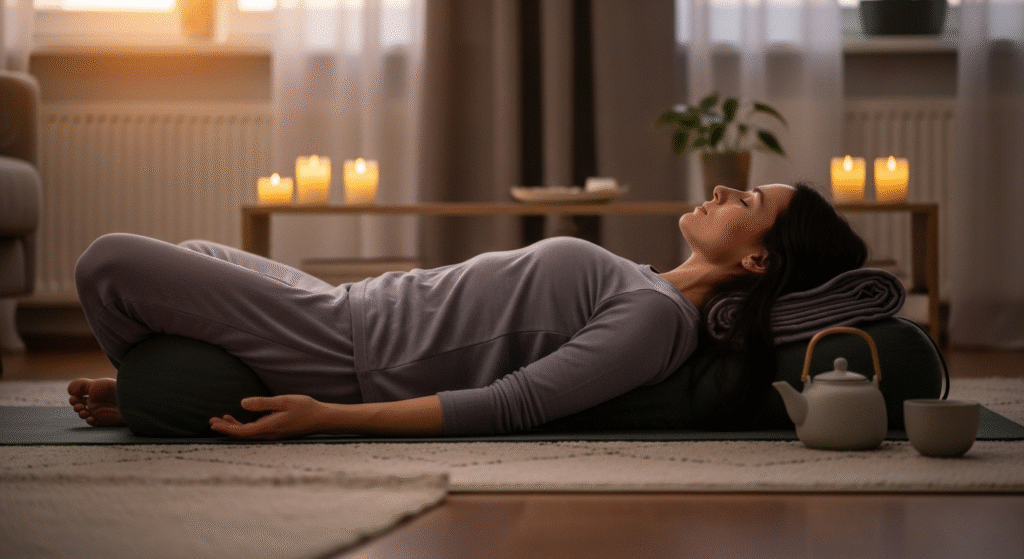
Reclining Bound Angle Pose (5 minutes): Lie on your back with a pillow under your head and upper back. Bring the soles of your feet together, letting your knees fall open. Place pillows under each knee for support. Rest your arms out to the sides, palms up. This pose opens your chest, promotes deep breathing, and has specific hormone-balancing benefits for the reproductive system. Focus on softening your belly with each breath.
Supine Twist (3 minutes each side): Lie on your back, hug your right knee to your chest, then guide it across your body to the left. Extend your right arm out to the side and look toward your right hand. Keep both shoulders grounded. This gentle twist massages your internal organs and releases tension from your spine. Switch sides halfway through. Breathe into any areas of tightness.
Savasana with Body Scan (5 minutes): Lie flat on your back, legs extended, arms by your sides. Close your eyes. Starting at your toes, mentally scan through your body, consciously relaxing each part. When thoughts arise, acknowledge them and return to the body scan. This meditation technique helps transition your mind from wakefulness to sleep readiness.
Tips for Success
You’ll need a yoga mat, 2-3 pillows (or a yoga bolster if you have one), and a blanket. The investment is minimal, but the returns are massive. Practice this sequence 1-2 hours before your target bedtime. Your body needs time to maintain the relaxation while still being awake enough to complete your bedtime routine.
If you’re a complete beginner, don’t worry about “doing it right.” The goal is relaxation, not perfection. If a pose feels uncomfortable, add more support or modify it. Your body will guide you. Some women prefer dimmed lighting and gentle music; others prefer silence. Experiment and find what helps you relax most deeply.
Workout #2: Pilates for Perimenopause (Tone & Sleep)
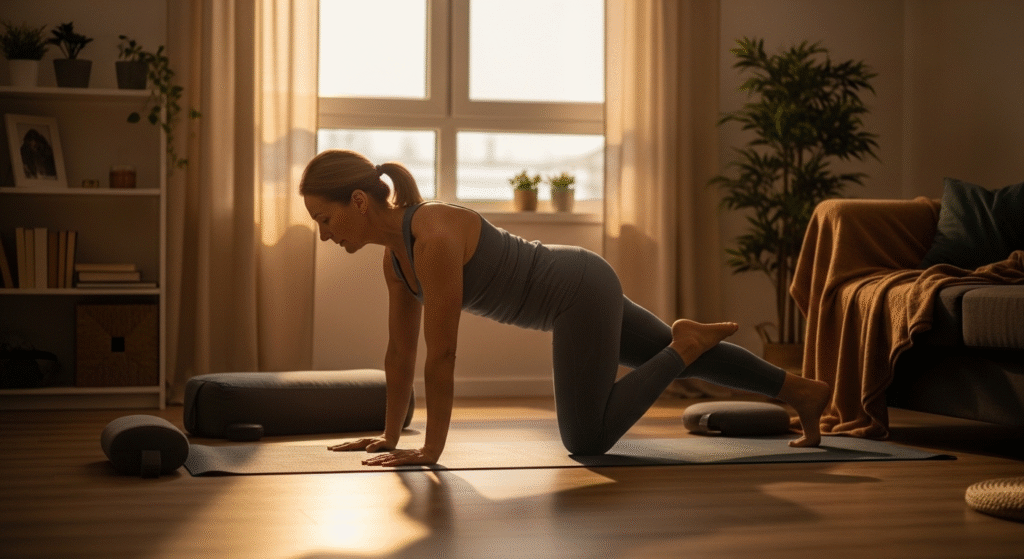
The Sleep-Strength Connection
Here’s something most women don’t realize: gentle strength training actually improves sleep quality by regulating your metabolism and supporting hormone balance. During perimenopause, your metabolism slows down, and maintaining muscle mass becomes crucial for metabolic health. Pilates delivers this benefit without the cortisol spike of intense strength training.
What makes Pilates ideal for evening workouts is the controlled, mindful nature of the movements. You’re not throwing weights around or doing explosive exercises. Every movement is deliberate, coordinated with breath, and focused on core stability. This mind-body connection naturally promotes relaxation while building strength.
The breathing technique used in Pilates—deep diaphragmatic breathing—activates your parasympathetic nervous system. You’re simultaneously strengthening your body and calming your mind. It’s efficient, effective, and perfectly suited for perimenopausal bodies that need both physical support and nervous system regulation.
25-Minute Evening Pilates Flow
Breathing Exercises (5 minutes): Lie on your back, knees bent, feet flat. Place one hand on your chest, one on your belly. Inhale deeply through your nose, feeling your belly rise while your chest stays relatively still. Exhale slowly through your mouth. This diaphragmatic breathing sets the tone for the entire practice, shifting you into rest mode from the start.
Pelvic Tilts & Bridge Variations (5 minutes): Continue lying on your back. Perform slow pelvic tilts, pressing your lower back into the mat, then releasing. Build to bridge pose: lift your hips while keeping your shoulders grounded, hold for three breaths, then lower slowly. These movements strengthen your core and pelvic floor while releasing lower back tension—common trouble spots during perimenopause.
Modified Hundred (3 minutes): Keep your knees bent, feet flat (easier than the traditional version). Lift your head and shoulders slightly, extend your arms by your sides, and pulse them up and down. Breathe in for five counts, out for five counts. This builds core strength without strain and teaches breath control that carries over to better sleep.
Leg Circles & Side-Lying Series (7 minutes): Extend one leg toward the ceiling, draw small circles in the air—five each direction per leg. Then transition to lying on your side for leg lifts and circles. These movements tone your lower body and hips while maintaining the calm, controlled energy that promotes relaxation.
Spine Stretch & Rolling Like a Ball (5 minutes): Sit tall, legs extended in front of you. Reach forward, rounding your spine gently. Then hug your knees to your chest and gently rock back and forth, massaging your spine. These finishing movements release any remaining tension and provide a gentle spinal massage that feels incredible before bed.
Making It Work for You
You don’t need any equipment—just a mat or soft surface. The beauty of Pilates is that you can adjust intensity based on your energy levels. Feeling exhausted? Move more slowly, take more breaks, modify everything. Feeling good? Add more repetitions or hold positions longer.
Consistency matters far more than perfection. Doing this routine three times a week will deliver noticeable results within two weeks. You’ll sleep better, feel stronger, and notice improved posture and core stability. These benefits compound over time, supporting your body through the perimenopause transition.
Bedtime Stretching Sequence: Your Sleep Secret Weapon
Why Stretching Is Your Sleep Secret Weapon
Let’s talk about the physical tension you’re carrying. After a day of sitting at a desk, taking care of others, or managing stress, your body holds tightness in predictable places: your neck, shoulders, hips, and lower back. This physical tension sends signals to your brain that you’re not safe to rest. Gentle stretching releases this tension and literally tells your nervous system it’s okay to sleep.
Research shows that stretching before bed reduces the time it takes to fall asleep and improves overall sleep quality. The mechanism is simple: stretching releases muscle tension, promotes circulation, and triggers a relaxation response. For perimenopausal women dealing with joint stiffness and muscle tension, this becomes even more important.
The beauty of a bedtime stretching routine is its simplicity and accessibility. You don’t need to be flexible, you don’t need equipment, and you can do it right in your bedroom. It’s the perfect transition activity between your day and your sleep, creating a ritual that signals to your body: the day is done, rest is coming.
Your 15-Minute Bedtime Stretching Sequence
Neck and Shoulder Release (3 minutes): Sit comfortably and slowly roll your shoulders backward five times, then forward five times. Gently tilt your head toward your right shoulder, hold for 30 seconds, then switch sides. Drop your chin to your chest and hold for 30 seconds. These movements release the tension you’ve been carrying all day in your upper body.
Seated Forward Fold (3 minutes): Sit with your legs extended in front of you. Inhale to lengthen your spine, then exhale and fold forward from your hips, reaching toward your feet. Don’t force it—let gravity do the work. This stretches your entire back body and has a naturally calming effect on your nervous system. Hold for several deep breaths.
Figure-Four Hip Stretch (3 minutes): Lie on your back, cross your right ankle over your left knee, then draw your left knee toward your chest. You’ll feel a stretch in your right hip. Hold for 90 seconds, then switch sides. Tight hips are incredibly common during perimenopause, and this stretch provides immediate relief.
Supine Spinal Twist (3 minutes): Lie on your back, draw both knees to your chest, then let them fall to your right side while extending your arms out. Look toward your left hand. This gentle twist releases spinal tension and massages your internal organs. Hold for 90 seconds per side, breathing deeply.
Final Relaxation (3 minutes): Lie flat on your back in a comfortable position. Close your eyes. Starting with your toes, consciously relax every part of your body, moving slowly upward. When you reach your head, take five deep breaths, then transition directly into bed.
Timing and Consistency Tips
Perform this sequence right before you get into bed—literally, you can do it in your pajamas. The goal is to move directly from stretching to sleep, maintaining the relaxed state you’ve created. Keep your bedroom cool and dim the lights before you start.
Make this a non-negotiable part of your bedtime routine. Your body will begin to associate these movements with sleep, strengthening the ritual’s effectiveness over time. Within a week, you’ll notice yourself naturally relaxing as soon as you begin the sequence. That’s the power of creating consistent sleep cues.
If you’re dealing with specific pain or tension, spend extra time on the stretches that target those areas. Your body knows what it needs—listen to it. Some nights you might need more hip stretches, other nights more shoulder work. Adjust based on what feels good and what releases tension.
—
Ready to reclaim your sleep? You now have five powerful, science-backed evening workouts designed specifically for perimenopausal bodies. These aren’t just exercises—they’re tools for hormone balance, stress reduction, and nervous system regulation.
Start tonight. Choose one workout that resonates with you and commit to trying it for one week. Track your sleep quality, energy levels, and how you feel. The results will speak for themselves. You deserve restful, restorative sleep, and these workouts will help you get there. Your body is changing, but that doesn’t mean you have to suffer through sleepless nights. Take control with movement that works with your hormones, not against them.
Sweet dreams are within reach—you just need to move your body in the right way, at the right time. Start tonight, and wake up tomorrow feeling like yourself again.