14-Day Barre Workout Challenge for Women Over 40

Remember when you thought your best fitness years were behind you? Think again. Women over 40 are discovering that barre workouts offer the perfect blend of strength, grace, and results—without the high-impact stress your joints don’t need anymore. This 14-day barre challenge is specifically designed for your body, your schedule, and your life right now.
Here’s what makes this different from every other workout program you’ve tried: it actually fits into your real life. No hour-long gym sessions. No expensive memberships. No movements that leave you hobbling around for three days afterward. Just 20-30 minutes of targeted, effective exercises that build the strength and confidence you deserve.
Whether you’re new to barre or returning after a break, this challenge meets you exactly where you are. You’ll discover that those small, controlled movements create serious results. Your core will get stronger. Your posture will improve. That nagging back pain? It starts to fade. And the best part? You’ll prove to yourself that you’re capable of so much more than you imagined.
Why Barre Workouts Are Perfect for Women Over 40

Low-Impact Doesn’t Mean Low-Results
Let’s clear up a massive misconception right now: you don’t need to jump around or pound your joints into submission to see real fitness results. Barre workouts protect your joints while building lean, functional muscle through controlled, precise movements. Research shows that isometric exercises—holding positions while muscles work against resistance—create incredible strength gains without the inflammatory stress of high-impact activities.
Your body after 40 needs a smarter approach. The small, deliberate pulses and holds in barre work target muscle fibers in ways that traditional strength training often misses. You’re not just moving weight from point A to point B. You’re creating tension, holding it, and forcing your muscles to adapt and grow stronger. This method builds the kind of strength that translates directly to your daily life—carrying groceries, playing with grandkids, maintaining your independence.
Targeting the Areas That Matter Most
Barre focuses on exactly what women over 40 need most: a rock-solid core, a strong pelvic floor, and movements that build bone density. Your core isn’t just about flat abs (though that’s a nice bonus). It’s about supporting your spine, eliminating back pain, and moving through life with stability and confidence. Every barre exercise engages your deep core muscles, the ones that truly matter for posture and function.
The pelvic floor work is essential and often overlooked in traditional workouts. After 40, especially if you’ve had children, pelvic floor strength becomes crucial for everything from preventing incontinence to maintaining core stability. Barre naturally incorporates pelvic floor engagement through its emphasis on proper alignment and controlled movement.
The weight-bearing nature of barre exercises also helps maintain and build bone density—critical for preventing osteoporosis as we age. Standing leg work, balancing exercises, and resistance training all signal your bones to stay strong and resilient.
Flexibility Meets Strength Training
Barre combines ballet-inspired stretches with muscle conditioning in a way that prevents injury while improving your daily function. You’re not just getting stronger; you’re getting more flexible and mobile at the same time. This combination is exactly what your body needs to move well and feel great.
The proven benefits for balance and stability as we age cannot be overstated. Falls become a serious concern after 40, but barre’s focus on single-leg work, core stability, and body awareness dramatically improves your balance. You’ll notice it when you’re walking on uneven surfaces, reaching for something on a high shelf, or simply moving through your day with more confidence and less fear.
Your Complete 14-Day Barre Workout Schedule

Week 1: Building Your Foundation (Days 1-7)
Day 1: Introduction to Basic Barre Positions and Alignment starts with learning proper posture at the barre (or your kitchen counter). You’ll spend 25 minutes understanding first and second position, how to engage your core correctly, and why alignment matters more than how many reps you do. This foundation prevents injury and maximizes every movement going forward.
Day 2: Lower Body Focus targets your legs and glutes with pliés, leg lifts, and standing work that’ll make you feel muscles you forgot existed. The 30-minute session uses your body weight to create serious burn without any jumping or joint stress. You’ll finish with a gentle stretch that leaves you energized, not exhausted.
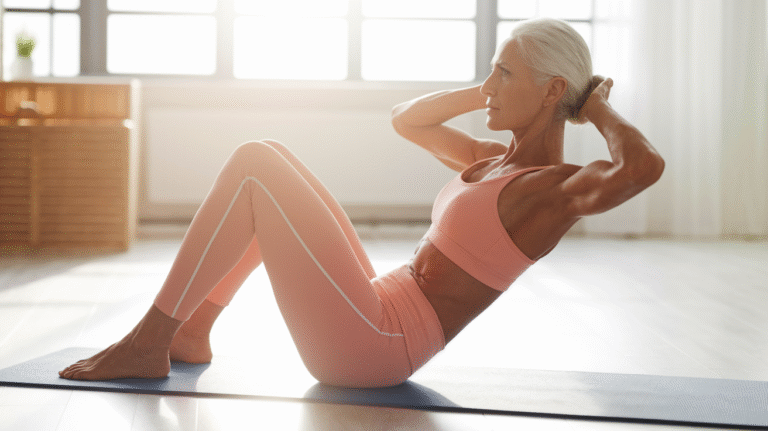
Day 3: Core and Pelvic Floor Activation brings 20 minutes of seated and mat work that builds deep core strength. These aren’t crunches—they’re targeted exercises that engage your entire core system, including those essential pelvic floor muscles. You’ll learn to connect breath with movement, making every exercise more effective.
Day 4: Active Recovery gives your muscles time to repair with gentle stretching and mobility work. This 20-minute session isn’t a day off—it’s active recovery that reduces soreness and improves flexibility. You’ll feel refreshed and ready for the rest of the week.
Day 5: Upper Body Toning uses light weights (or water bottles) for 25 minutes of arm circles, shoulder work, and back exercises that improve posture. You’ll build definition without bulk, creating that lean, toned look while strengthening the muscles that support good posture.
Day 6: Full Body Integration combines everything you’ve learned into a 30-minute workout that flows from lower body to core to upper body. You’ll see how barre creates a complete fitness system that works your entire body efficiently.
Day 7: Rest and Reflection is your true rest day. Take measurements, review your journal, and prepare mentally for week two.
Week 2: Increasing Intensity (Days 8-14)
Day 8: Advanced Lower Body Sculpting takes those basic movements and adds challenge—more reps, longer holds, smaller pulses. This 30-minute session shows you how much stronger you’ve already become.
Day 9: Deep Core Strengthening intensifies your core work with 25 minutes of advanced exercises that target every layer of abdominal muscles. You’ll feel powerful and stable.
Day 10: Cardio Barre Fusion brings your heart rate up with 30 minutes of flowing movements that combine strength with cardiovascular benefits—all low-impact. You’ll burn calories while building muscle.
Day 11: Active Recovery focuses on mobility and flexibility for 20 minutes, preparing your body for the final push.
Day 12: Total Body Toning Challenge tests everything you’ve learned in a 30-minute workout that’s challenging but completely doable. You’ll surprise yourself.
Day 13: Power Barre puts it all together in your most advanced 30-minute session yet. This is where you see how far you’ve come.
Day 14: Celebration Workout is 25 minutes of your favorite moves from the past two weeks, followed by measurements and photos. You’ve earned this victory lap.
Quick Modifications for Every Level
Every exercise has a simpler version and a more challenging option. Struggling with single-leg work? Keep your toe down for support. Finding it too easy? Add a resistance band or increase your range of motion. The key is listening to your body’s signals—muscle fatigue is good, joint pain is not. As you get stronger, naturally progress to the next level, but never sacrifice form for intensity.
The Essential Barre Moves Every Woman Over 40 Should Master
Lower Body Essentials That Build Real Strength
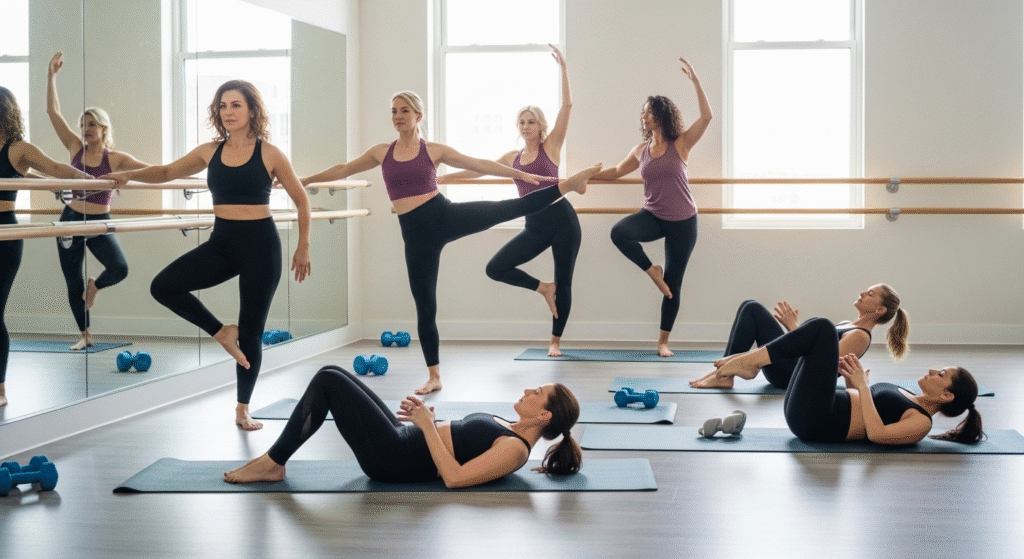
Plié variations form the foundation of barre work. Standing with heels together and toes turned out, you’ll bend your knees while keeping your back straight and core engaged. This simple movement builds leg strength, improves hip mobility, and works your inner thighs in ways traditional squats don’t. The second position plié (feet wider apart) targets your glutes and outer thighs while being completely gentle on your knees.
Leg lifts at the barre tone your thighs and glutes without any joint stress. Standing sideways to your support, you’ll lift one leg to the side, back, or front in small, controlled movements. The magic happens in the tiny pulses at the top of the movement—those small adjustments create serious muscle engagement. You’ll feel the burn, but your knees and hips stay protected.
Calf raises strengthen your ankles and improve balance, which becomes increasingly important as we age. Rising onto your toes and lowering back down builds the small stabilizing muscles in your feet and ankles that prevent falls and injuries.
Core and Pelvic Floor Power Moves
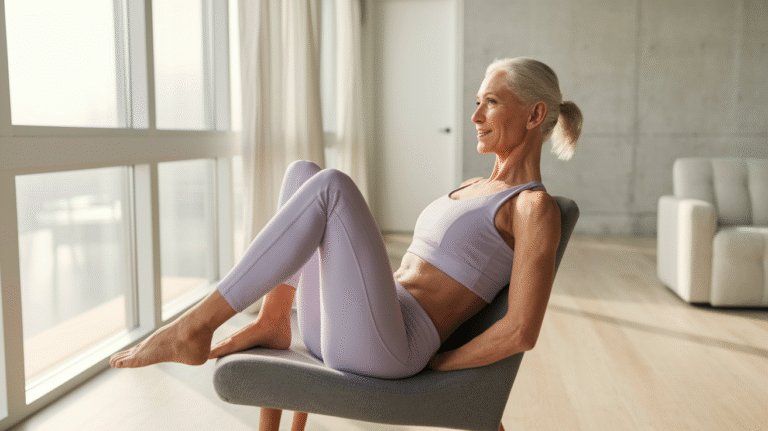
Seated core work provides safe, effective abdominal engagement without the neck strain of traditional crunches. Sitting tall with legs extended, you’ll lean back slightly and hold, engaging your deep core muscles. Adding small movements—arm reaches, leg lifts—intensifies the work while maintaining perfect form.
Pelvic tilts strengthen the deep core muscles that support your entire body. Lying on your back with knees bent, you’ll tilt your pelvis to press your lower back into the mat, then release. This simple movement activates your transverse abdominis and pelvic floor simultaneously, creating a strong foundation for all other exercises.
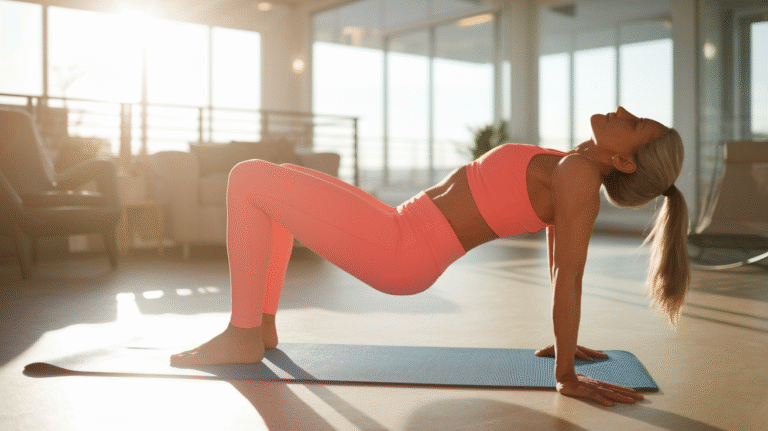
Modified planks at the barre build full-body stability without putting excessive pressure on your wrists or shoulders. Using your counter or chair for support, you’ll hold a plank position at an angle, engaging your core, shoulders, and legs together. This functional strength translates directly to better posture and easier daily movement.
Upper Body Sculpting Techniques
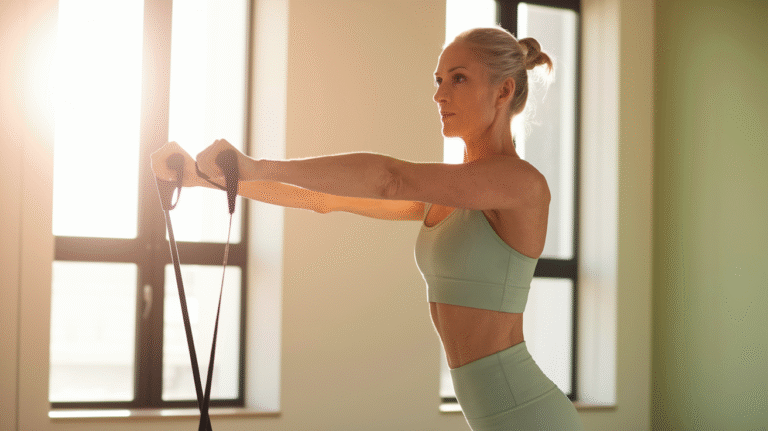
Arm circles with light weights tone your shoulders and arms without creating bulk. The sustained tension of holding your arms extended while making small circles creates lean, defined muscles. You’ll improve posture and eliminate that upper back tension from desk work.
Push-up variations at the barre build functional upper body strength at an angle that works for your body. You’ll develop chest, shoulder, and tricep strength that helps with everyday tasks like pushing open heavy doors or lifting objects overhead.
Posture-improving back exercises combat the forward slouch that comes from computer work and daily life. Strengthening your upper back muscles pulls your shoulders back naturally, eliminating pain and creating an instantly more confident appearance.
Proven Nutrition Tips to Maximize Your Results

Simple Eating Strategies That Actually Work
Your protein needs increase after 40 because your body becomes less efficient at building and maintaining muscle. Aim for 25-30 grams of protein at each meal—that’s a palm-sized portion of chicken, fish, or tofu, or a large Greek yogurt. This isn’t about complicated meal plans; it’s about making sure every meal includes a solid protein source.
Timing your meals around workouts matters more than you think. Eat a light snack with protein and carbs about an hour before your barre session—half a banana with almond butter works perfectly. Within 30 minutes after your workout, have another protein-rich snack to support muscle recovery. This simple timing strategy maximizes your results without requiring any special supplements or complicated protocols.
Hydration supports muscle function and reduces soreness. Drink half your body weight in ounces of water daily—if you weigh 150 pounds, that’s 75 ounces. Keep a water bottle with you during workouts and sip throughout the day. Proper hydration also helps with energy levels and reduces false hunger signals.
Foods That Support Muscle Recovery
Anti-inflammatory foods reduce soreness and speed recovery. Berries, fatty fish like salmon, leafy greens, and turmeric all fight inflammation naturally. Add a handful of blueberries to your morning yogurt or have salmon for dinner twice a week—small changes create real results.
Quick post-workout snacks take under five minutes: Greek yogurt with berries, a protein smoothie, hard-boiled eggs with whole grain crackers, or cottage cheese with fruit. The key is combining protein with some carbohydrates to replenish energy and repair muscle tissue.
Supplements worth considering include calcium (1,200mg daily for women over 40), vitamin D (2,000 IU or as recommended by your doctor), and magnesium (300-400mg) for muscle recovery and bone health. These aren’t magic pills, but they fill common nutritional gaps that affect women our age.
Avoiding Common Nutrition Mistakes
Extreme calorie restriction backfires after 40 because it signals your body to hold onto fat and break down muscle instead. You need adequate calories to fuel your workouts and build strength. Focus on eating whole, nutrient-dense foods rather than counting every calorie.
The truth about metabolism and muscle mass: muscle tissue burns more calories at rest than fat tissue does. Building muscle through barre workouts actually increases your metabolism over time. This is why the scale might not drop dramatically, but your clothes fit better and you look more toned.
Balance results with sustainable eating by following the 80/20 rule—eat nutritious, whole foods 80% of the time, and enjoy treats without guilt the other 20%. This challenge isn’t about perfection; it’s about creating habits you can maintain for life.
Tracking Your Progress Beyond the Scale

Effective Ways to Measure Your Transformation
Take before and after photos from the front, side, and back in the same lighting and clothing. These visual records often show changes the scale misses—better posture, more defined muscles, and a leaner appearance even when weight stays the same. Take photos on Day 1 and Day 14 at the same time of day for accurate comparison.
Body measurements tell the real story. Measure your waist at the narrowest point, hips at the widest point, each thigh mid-way between hip and knee, and each upper arm mid-way between shoulder and elbow. Write these numbers down and remeasure on Day 14. Many women lose inches even when the scale doesn’t budge because muscle is denser than fat.
How your clothes fit provides the most honest measurement of all. That pair of jeans that felt snug on Day 1? They’ll likely feel noticeably looser by Day 14. The waistband of your favorite skirt will sit more comfortably. These real-world changes matter more than any number on a scale.
Non-Physical Wins to Celebrate
Increased energy levels throughout the day happen within the first week. You’ll notice you’re not reaching for that afternoon coffee as desperately. You’ll have more stamina for evening activities instead of collapsing on the couch.
Better sleep quality and recovery improve as your body adapts to regular movement. Many women report falling asleep faster and sleeping more soundly once they establish a consistent workout routine.
Improved mood and reduced stress come from the endorphin release during exercise and the confidence boost of accomplishing your daily workout. You’ll handle daily frustrations more calmly and feel more positive overall.
Enhanced confidence and body awareness transform how you move through the world. You’ll stand taller, move with more grace, and feel genuinely proud of what your body can do.
Reduced joint pain and stiffness surprise many women. The controlled movements and strength building actually reduce pain by supporting joints better and improving overall mobility.
Keeping a Simple Workout Journal
Track just three things daily: which workout you completed, how you felt during it, and one win from the session. This takes two minutes but provides valuable insights into your progress and patterns.
Note how exercises feel, not just what you did. “Pliés felt stronger today” or “held plank 10 seconds longer” tells you more than just checking off a workout.
Record your wins, no matter how small. Completed a workout when you didn’t feel like it? That’s a win. Felt energized afterward? Write it down. These positive records keep you motivated when challenges arise.
Your 14-day journey starts now. Pick your start date, clear your calendar for those 20-30 minute sessions, set up your space, and commit to showing up for yourself. Take your “before” photos and measurements today—you’ll be amazed at your transformation in just two weeks. This isn’t about becoming someone else; it’s about becoming the strongest, most confident version of yourself. You’re not too old, too busy, or too out of shape to start. You’re exactly where you need to be, and these next 14 days will prove what you’re truly capable of achieving.