
Transverse Abdominis After 40: Are You Training It Wrong?

You have been doing the work. The planks. The crunches. The Pilates classes. The core section at the end of every gym session. And yet your lower back still aches by the end of the day. Your waist does not feel tighter. Your core still does not feel strong in the way you imagined it would.
Here is what nobody in the fitness industry is telling women over 40 clearly enough. The problem is almost certainly not the amount of work you are doing. It is the type of work. And more specifically — it is which muscle you are actually targeting versus which muscle you think you are targeting.
There is actually a group of hidden core muscles called the corset muscles — the deep transverse abdominis — that truly sculpt tighten and tone the waistline. These muscles fly under the radar but are essential to train, especially after the age of 40.
Most women are training their outer core — the visible muscles — while completely neglecting the deepest and most important layer. And after 40 that distinction becomes more critical than at any other point in your life.
This post covers the most common transverse abdominis training mistakes women make after 40 — and exactly what to do instead so every core session you do from this point forward actually delivers the results you have been working so hard for.
What the Transverse Abdominis Actually Is — And Why Most Women Are Ignoring It
Before we get into the mistakes, it helps to be completely clear about what the transverse abdominis is and why it is so different from every other core muscle.
The transversus abdominis is the deepest of the six abdominal muscles. It extends between the ribs and the pelvis, wrapping around the trunk from front to back. The fibres of this muscle run horizontally, similar to a back support belt. Along with providing postural support, the transverse abdominal muscle helps to contain and support the organs located inside the trunk.
The transversus abdominis or TVA is a thin sheet-like muscle that wraps around your abdomen like a corset, running horizontally from your lower ribs to your pelvis. When engaged, it draws in your waist and increases intra-abdominal pressure to help stabilise your spine and pelvis. This stability is crucial for maintaining proper posture, preventing lower back pain, and reducing the risk of injury during physical activities.
The critical difference between the transverse abdominis and every other core muscle is this: it does not flex the spine. Crunches, sit-ups and most traditional ab exercises work by flexing the spine, which activates the outer core muscles.
The transverse abdominis works by compressing the abdomen — drawing inward rather than crunching forward. This is why you can do hundreds of crunches every week and leave the transverse abdominis completely untrained.
Starting from around our mid-40s, we lose muscle mass at about 1% a year. Deep stabilising muscles often lose the most — not muscles that burn during crunches, but the ones constantly working in the background to keep our spines in the right position every time we move.
Mistake 1: Relying on Crunches and Sit Ups for Core Strength

This is the most widespread and most damaging transverse abdominis training mistake women over 40 make — and it is entirely understandable because crunches and sit ups have been the default core exercise for decades.
You can do ab exercises all day and still have a weak deep core. That is often why people get lower back tightness hip flexor takeover doming or coning or pelvic floor symptoms when they return to running or heavier lifting.
The fundamental problem with crunches for women over 40 is not just that they are ineffective for the transverse abdominis — it is that they can actively make things worse. Bracing or bulging the core actually pushes out on your abdominal wall multiple times a day or even all day long in some cases. It sends the opposite message to the transverse abdominis and directly causes conditions like diastasis recti abdominal hernias pelvic floor prolapse pelvic instability and flared rib cage.
When you perform a crunch you are training the rectus abdominis — the outermost muscle. Every time you strain and brace your way through a crunch while failing to activate the transverse abdominis first you are reinforcing the exact muscle imbalance that causes back pain weak pelvic floor and a protruding lower belly.
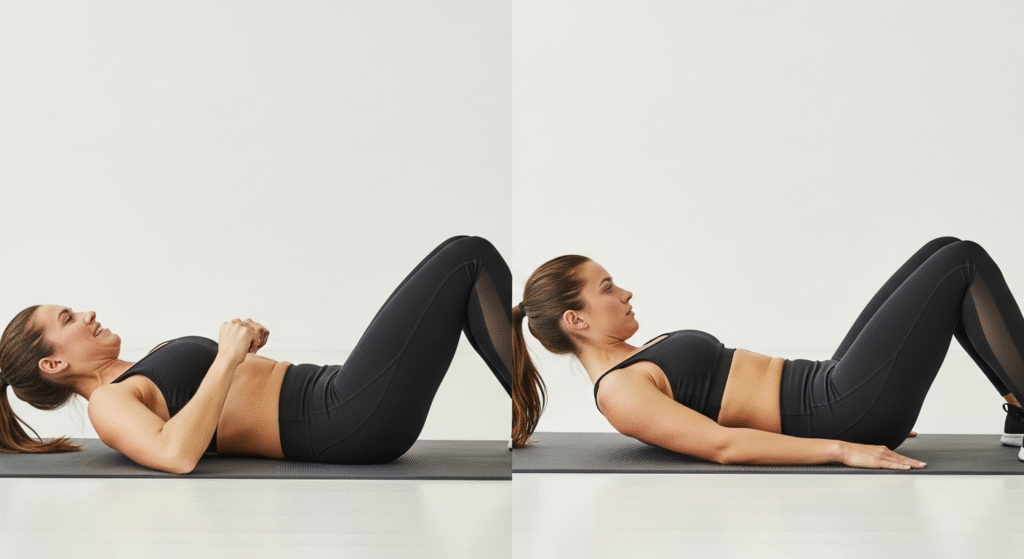
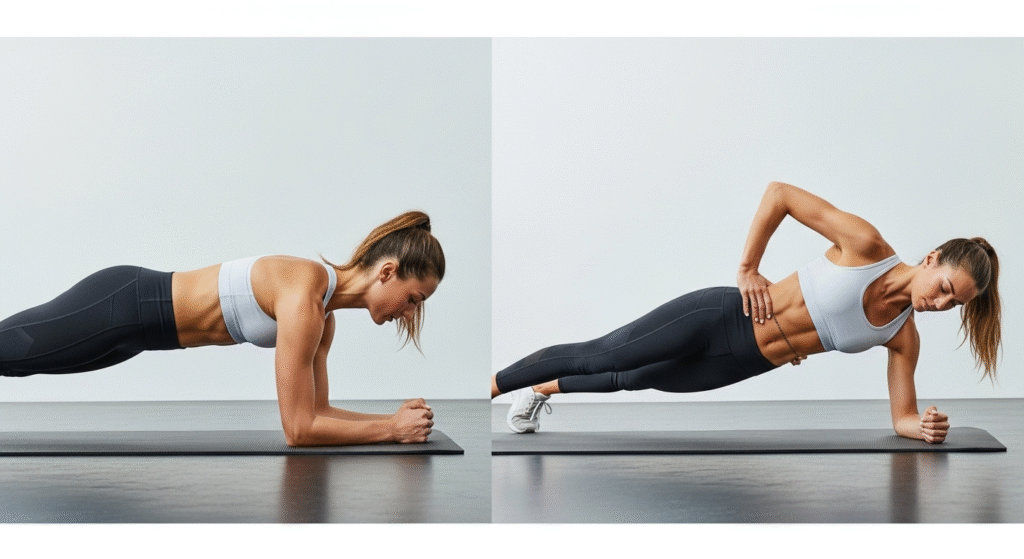
What to do instead: Replace crunches with exercises that train the transverse abdominis directly through compression rather than flexion. Dead bugs, heel slides, transverse abdominis activation breathing and modified bird dogs all target the deep layer without the spinal flexion that bypasses it entirely. The side plank and regular plank are arguably the best exercises for activating the TVA indirectly.
Mistake 2: Holding Your Breath During Core Exercises

This is the transverse abdominis training mistake that is happening inside almost every core exercise most women over 40 are currently doing — and it completely switches off the muscle you are trying to train.
A common mistake during transverse abdominis activation is breath holding or smashing the ribs down.
The transverse abdominis works in direct coordination with the diaphragm — your primary breathing muscle. Your TVA plays a role in the mechanics of breathing. By allowing it to lengthen as you inhale, the TVA helps regulate the diaphragm’s movement, enhancing your ability to take deep breaths and maintain optimal oxygen exchange during exercise and daily activities.
When you hold your breath during a core exercise, you override this coordination completely. Instead of the transverse abdominis activating through the exhale, the body defaults to bracing, which increases intra-abdominal pressure in exactly the wrong direction and recruits the outer core muscles instead of the deep layer.
An engaged core is when the pelvis and rib cage align, and we exhale and draw the belly button toward the spine while staying elongated. We often coach clients to exhale and visualise a zipper zipping up the core from the pubic bone to the sternum to engage the core. We are most effective when we exhale elongate and engage to help fully activate the transverse abdominis when we lift push carry pull and strain.
What to do instead: Every transverse abdominis exercise should be initiated on the exhale — never on the inhale and never with a held breath. Breathe in to prepare, exhale to activate and continue breathing normally throughout the hold.
Exhale and gently zip up the lower belly at 30 to 40 per cent effort. Do 5 to 8 reps of 3 to 5 second holds keeping breathing throughout. If you cannot maintain normal breathing during a transverse abdominis exercise, you are working at too high an intensity, and the deep core has already switched off.
Mistake 3: Working Too Hard — The Gripping Mistake
This is the transverse abdominis mistake that surprises most women because it runs directly counter to every fitness instinct they have developed — the idea that harder and more intense always means better results.
It is not valuable to live with an engaged core all day long. Engaging and holding the muscles tight beyond what is needed for the activity we are doing actually causes the entire body to tense for no apparent reason.
The intensity and duration of the exhale elongate and engage strategy is directly correlated with the intensity and duration demanded from the activity required. Wendy Perrin
The transverse abdominis is a postural muscle — it is designed to work at low intensity for long periods not at maximum effort for short ones.
When women over 40 try to engage their core as hard as possible, they typically recruit the outer core muscles through bracing and gripping, while the transverse abdominis — which requires a much subtler activation — fails to engage at all.
When your transversus abdominis contracts, the belly moves slightly inward not outward. Do not flatten the back, squeeze the buttocks or press the small of the back into the surface, which works the superficial abdominals. The preferred technique requires isolating the deep abdominals and not the superficial global muscle groups.
A typical sign of a weak transversus abdominis is toned abdominals above the navel but a bulge below it. If this describes your belly this is almost certainly what is happening — the outer muscles are trained while the deep layer remains weak and unresponsive.
What to do instead: The correct activation effort for transverse abdominis work is 30 to 40 percent — not maximum effort. Think of it as a gentle drawing inward rather than a forceful bracing outward. The activation should feel subtle and internal — like tightening the lowest part of a corset — not like a full body brace. If the exercise feels very hard you are almost certainly using the wrong muscles.
Mistake 4: Skipping the Activation Step Before Every Exercise
This is the transverse abdominis training mistake that costs the most results for the least obvious reason — because the exercises themselves are correct, but the crucial first step that makes them work has been skipped entirely.
Training the transverse abdominis is not about doing harder ab exercises — it is about restoring the brain to muscle connection so this deep core muscle can activate automatically. Over time stress sitting pregnancy injury and repetitive movement patterns can dull this connection.
When that happens, stronger muscles such as the hip flexors lower back or outer abdominals tend to take over even during exercises that are meant to target the core.
This means that if you go straight into a dead bug a plank or a bird dog without first consciously activating the transverse abdominis those exercises will be performed by whatever compensating muscles are already dominant — typically the hip flexors and the lower back.
You will feel the exercise working but you will be training the wrong muscles and reinforcing the exact imbalance you are trying to correct.
When activating the deep core keep in mind that the fibres of the TVA are predominantly horizontal, so there should not be much movement of the ribs or pelvis when activating this muscle.
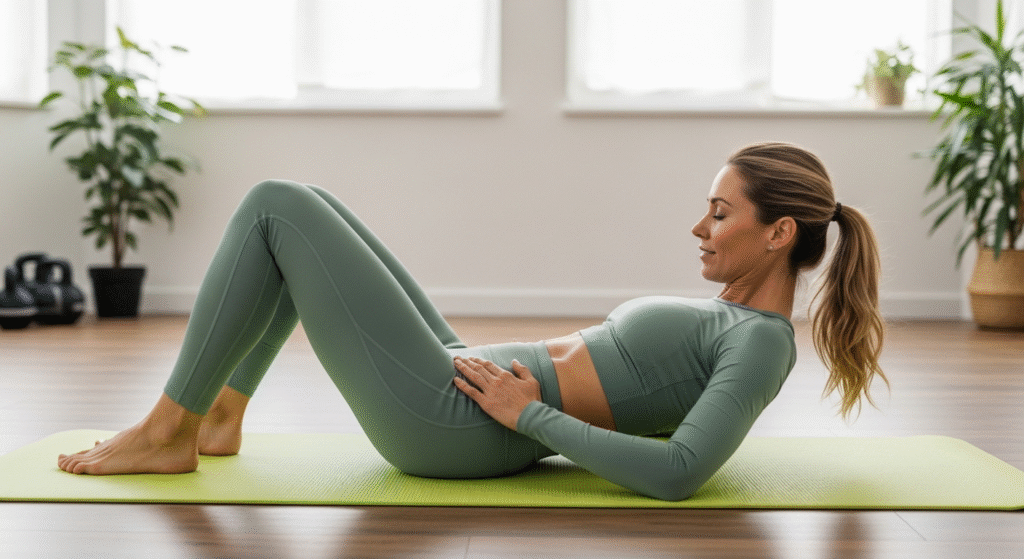
What to do instead: Spend 60 seconds on conscious transverse abdominis activation before every core session. Lie on your back with knees bent and feet flat.
Find the gentle zipping sensation — drawing the deep lower abdomen inward on the exhale at 30 to 40 percent effort while breathing normally.
Once you can feel that activation, carry it consciously into every exercise that follows. Mastery of the exercises that strengthen the core muscles and lead to lumbar stabilisation begins with learning to activate the transversus abdominis.
Mistake 5: Letting the Hips Rock and the Lower Back Arch
This is the most visible transverse abdominis training mistake and the clearest sign that the deep core has switched off during an exercise — but most women do not realise it is happening because they cannot see their own pelvis while exercising.
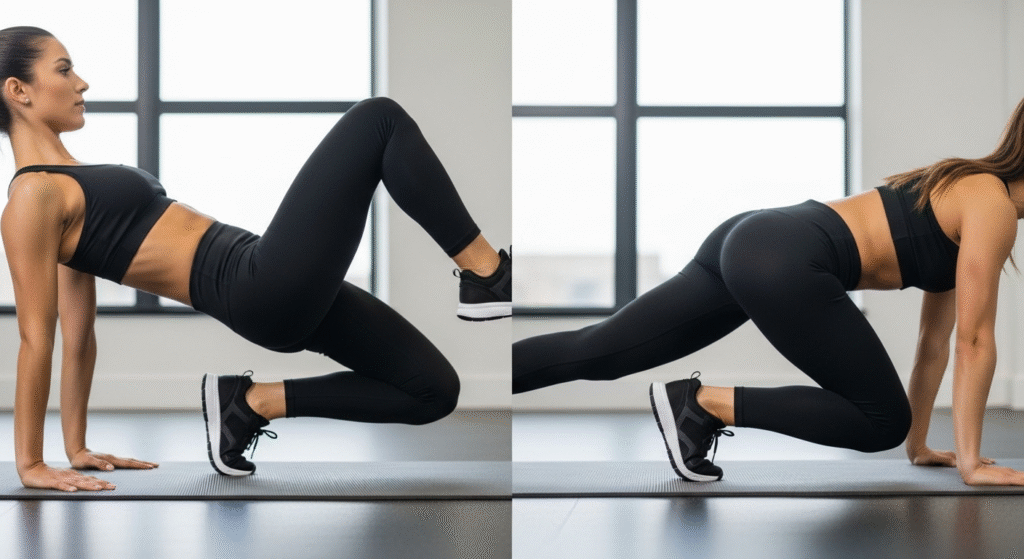
A common mistake during heel slides is hips rocking or the lower back arching. During dead bug exercises a common mistake is the hip flexors taking over and the ribs popping. During bird dog exercises a common mistake is the hips twisting or the lower back sagging.
When the transverse abdominis is activated correctly the pelvis and lower back remain completely stable as the limbs move. The moment the lower back arches away from the mat or the hips rock to one side the transverse abdominis has disengaged and the hip flexors or lower back muscles have taken over. At that point the exercise is no longer training the deep core — it is reinforcing poor movement patterns and often loading the lower back in exactly the way that causes pain.
Do not let the opposite hip drop. It happens because the quadratus lumborum and the glute medius are not doing their job so the pelvis tilts instead of staying level. Do not brace through the shoulders or press your arms hard into the floor to compensate. That is a sign the core is not holding the position on its own.
What to do instead: Use the lower back contact test for every transverse abdominis exercise you do. Before beginning any movement press your lower back gently toward the floor and maintain that contact throughout. The moment you lose it reduce the range of movement or the load until your transverse abdominis is strong enough to maintain stability through the full range. If the lower back arches away from the mat during heel slides make the slide range smaller and rebuild the connection before extending further.
Mistake 6: Only Training the Transverse Abdominis in Isolation

This is the most advanced transverse abdominis training mistake on this list and the one that separates women who plateau from women who continue to see results — training the deep core exclusively in isolation without progressing to functional movement.
Core stability training has been shown to significantly improve transversus abdominis activation and timing. Those with lower back pain who followed a core stability programme experienced greater improvements in TrA activation and timing compared to the healthy group, with strong effect sizes for both TrA activation and TrA timing.
Isolated transverse abdominis exercises — activation breathing, heel slides, dead bugs — are the essential foundation. Every woman over 40 needs to master them. But the transverse abdominis is designed to activate automatically before every movement you make — not just during dedicated exercise sessions.
The transversus abdominis acts as a corset and is activated before extremity movement in order to increase stiffness of the spine for stability. Individuals with lower back pain have a decrease in TrA activation as well as delayed muscle activation.
This means the ultimate goal is not just a strong transverse abdominis during floor exercises — it is a transverse abdominis that switches on automatically when you lift something from the floor stand up from a chair walk up stairs or reach overhead.
What to do instead: Once you have established a clear and reliable transverse abdominis activation in isolated exercises begin carrying that activation into functional movements. We are most effective when we exhale elongate and engage to help fully activate the transverse abdominis when we lift push carry pull and strain. Practise activating the transverse abdominis before you stand up from your desk before you lift your shopping bags and before you pick anything up from the floor. This is how the deep core rebuilds its automatic function after 40.
Mistake 7: Doing It Occasionally Instead of Daily

The final transverse abdominis training mistake is the simplest and the most honest — treating deep core work as an occasional addition to your routine rather than a daily practice.
Before jumping into a more advanced core workout routine start with these foundational exercises to ensure that you are building on a solid foundation. If you are concerned that you might not be targeting all the right muscles reach out to a physical therapist to help you learn to isolate and activate your deep core.
The transverse abdominis is a postural muscle. It is not designed to be trained once or twice a week like a bicep or a glute. It is designed to work every waking hour of every day — and rebuilding that function after years of weakness, pregnancy, injury or sedentary patterns requires daily deliberate practice until the activation becomes automatic again.
Make sure you perform at least one to three transverse abdominis exercises every week at minimum. The core consists of an inner and outer unit. These units always work together to enable us to accomplish simple daily tasks and achieve more advanced athletic performance.
The good news is that daily transverse abdominis practice does not require a gym, a class or even getting dressed. Ten minutes of activation work in bed before you get up covers the entire foundation. A brief activation check before you stand up from your desk covers the functional integration. A ten-minute routine three to four times a week covers the progressive strengthening.
What to do instead: Build a simple daily transverse abdominis habit that requires no barrier to entry. Morning bed activation takes ten minutes before your feet hit the floor. Functional activation reminders cost nothing and require no equipment. A dedicated deep core routine three to four times a week provides the progressive overload that drives continued improvement. The best deep core exercises focus on control and coordination not just burning your abs. Progressive overload is important for your core too — after years of training I know that a strong core is not defined by how sore you get from ab work or the number of crunches you can do.
How to Train the Transverse Abdominis Correctly After 40 — The Complete Method
Now that you know the seven mistakes here is exactly how to train the transverse abdominis correctly after 40 in four clear steps.
Step 1 — Find It First Lay on your back with knees bent and feet flat on the floor. Place your fingers on the muscles just below your belly button then contract those muscles by pulling them down and away from your fingers without holding your breath. Keep your upper abdominal muscles back muscles and hip muscles relaxed. Hold this position for 5 seconds making sure you continue to breathe.
Step 2 — Activate at the Right Intensity Exhale and gently zip up the lower belly at 30 to 40 percent effort. Do 5 to 8 reps of 3 to 5 second holds keeping breathing. The common mistake is breath holding or smashing the ribs down.
Step 3 — Progress to Movement Once the isolated activation is reliable progress to dead bugs heel slides bird dogs and modified planks — always initiating the transverse abdominis activation before the movement begins and monitoring for hip rocking or lower back arching throughout.
Step 4 — Integrate Into Daily Life Exhale elongate and engage to fully activate the transverse abdominis when you lift push carry pull and strain. The intensity and duration of the activation is directly correlated with the intensity and duration demanded from the activity required.
The Results You Can Expect When You Train It Correctly
Research shows that isolating and strengthening your transverse abdominis can have especially important benefits — a strong core and TVA has been shown to decrease back pain, improve your balance, reduce risk of injury and positively impact your posture and breathing.
Most women over 40 who correct these seven training mistakes notice the following in this order. In week one to two improved awareness of the deep core during daily movement and a subtle but noticeable reduction in lower back fatigue by the end of the day.
In week three to four a meaningful reduction in lower back discomfort as the transverse abdominis begins to take over the stabilising work that the back muscles have been compensating for. In weeks six to eight improved waist definition as the transverse abdominis functions more effectively as its natural corset, drawing the deep abdomen inward during regular daily movement.
We do not need external waist trainers to reduce our waist; we literally have a built-in corset. These muscles are essential to train, especially after the age of 40.
Final Thoughts
The transverse abdominis is the most important and most undertrained muscle in the female body after 40 — and the most common reason women are not getting the core results they have been working for is not lack of effort. It is these seven training mistakes happening silently inside every workout.
Fix the activation. Stop holding your breath. Reduce the intensity. Spend sixty seconds connecting to the muscle before every session. Monitor your pelvis for rocking and arching. Progress to functional movement. And do it every single day.
Save this post and share it with every woman over 40 who has ever wondered why their core work is not delivering the results it should.