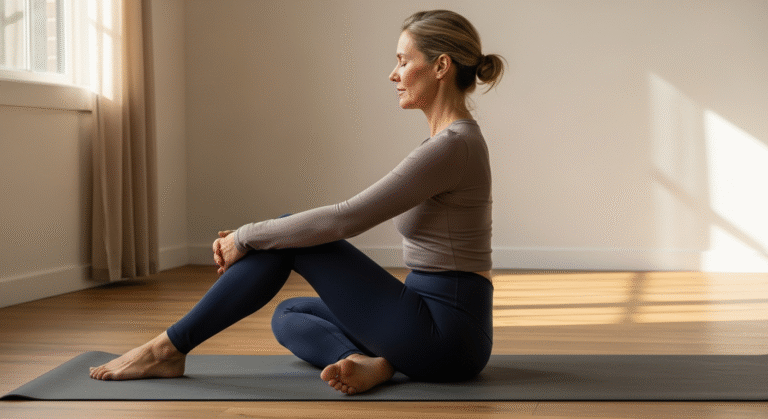
9 Pelvic Floor Safe Workouts You Can Do Every Day
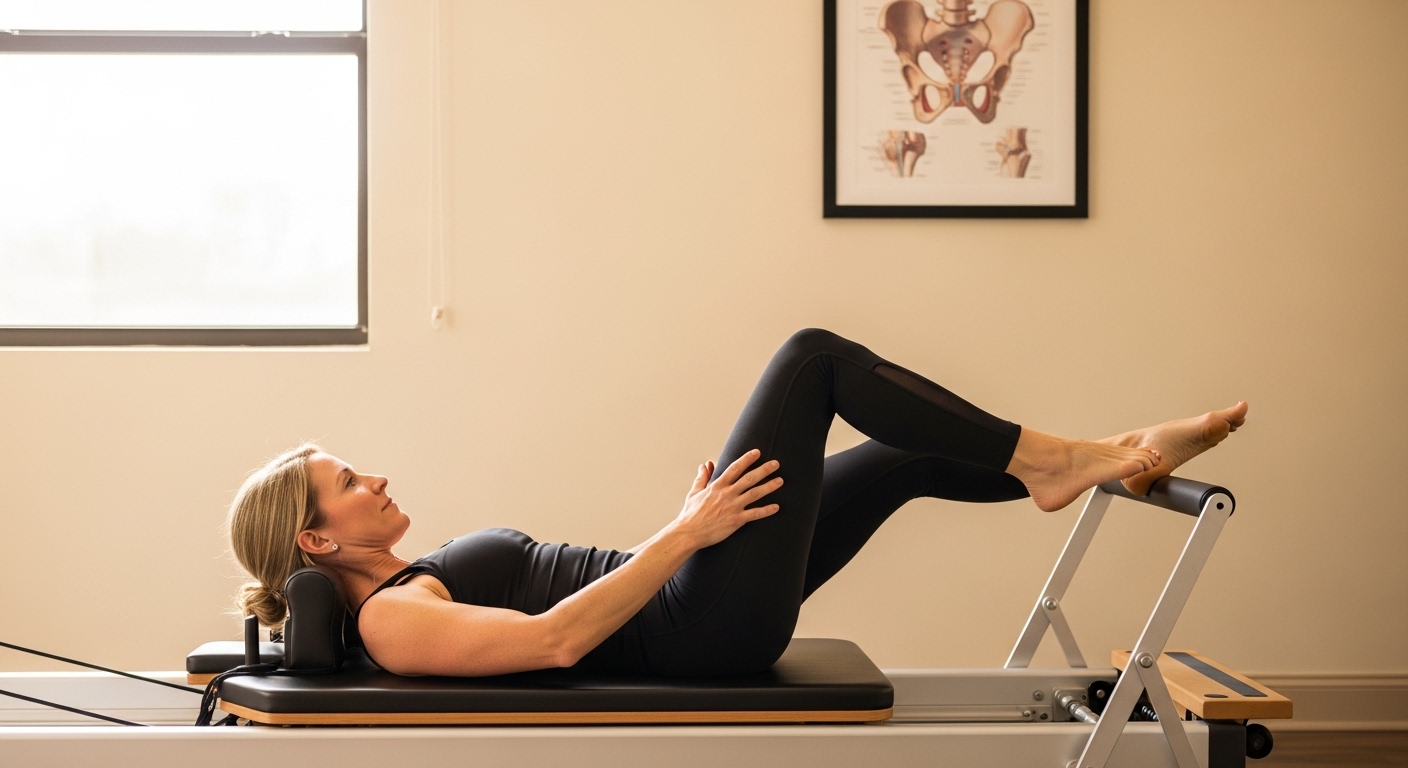
If you’ve ever leaked during a jumping jack, felt pressure or heaviness after a run, or quietly stopped doing certain workouts because you weren’t sure if they were making things worse — this post is for you.
Pelvic floor dysfunction is far more common than anyone talks about. Research suggests that more than one in three women experience some form of pelvic floor issue during their lifetime.
And yet, the default advice most women receive is either a list of Kegel exercises (which are not always the right answer) or a blanket instruction to avoid exercise — which is not only unnecessary but actively harmful to long-term health.
The truth is that staying active is one of the most important things you can do for your pelvic floor health. You just need to choose the right kinds of movement, understand how to modify when needed, and build a workout routine that strengthens your body without adding unnecessary downward pressure on your pelvic floor.
These 9 pelvic floor safe workouts are evidence-informed, physiotherapist-endorsed, and designed for women who want to keep moving — confidently, comfortably, and completely in control.
Understanding Your Pelvic Floor First
The pelvic floor is a group of muscles that form a hammock-like structure at the base of your pelvis, supporting your bladder, uterus, and bowel.
When these muscles are functioning well, they contract and relax in coordination with your breathing and movement. When they’re not functioning optimally — whether through weakness, tightness, or poor coordination — symptoms can include:
• Leaking urine when you cough, sneeze, jump, or exercise (stress urinary incontinence)
• A strong, sudden urge to urinate that’s difficult to delay (urgency incontinence)
• A feeling of heaviness, bulging, or pressure in the pelvic area (possible prolapse)
• Pelvic pain or discomfort during exercise
• Reduced sensation or discomfort during intercourse
Here’s the crucial point that pelvic floor physiotherapists emphasise: these symptoms are common but not inevitable. They are treatable. And the right exercise — not the avoidance of exercise — is a key part of the solution.
The Important Kegel Caveat
Kegel exercises — contracting and releasing the pelvic floor — are frequently recommended as the default treatment for any pelvic floor symptom. But pelvic floor specialists are increasingly clear that Kegels are not always the answer, and can sometimes make symptoms worse.
Many women experiencing leaking, urgency, or pelvic pressure actually have a hypertonic (overactive or overly tight) pelvic floor rather than a weak one. For these women, doing more contractions through Kegels adds tension to already-tense muscles and can worsen symptoms. Before embarking on a Kegel programme, a pelvic floor physiotherapist can assess whether your floor needs strengthening or releasing. This assessment is genuinely valuable and widely available.
What Makes a Workout ‘Pelvic Floor Safe’?
A workout is pelvic floor safe when it:
• Avoids high-impact repeated loading (running, jumping, box jumps, jumping jacks, skipping)
• Allows you to manage intra-abdominal pressure through breath — never holding breath during exertion
• Doesn’t require heavy lifting that causes bearing down or straining
• Keeps you in control of your movement rather than relying on momentum
• Can be modified if any symptom occurs during the workout
And importantly: ‘pelvic floor safe’ does not mean low-intensity, boring, or ineffective. Every single workout on this list delivers genuine fitness benefits. You are not compromising. You are choosing smarter.
THE 9 PELVIC FLOOR SAFE WORKOUTS
Workout 1: Walking 🚶♀️
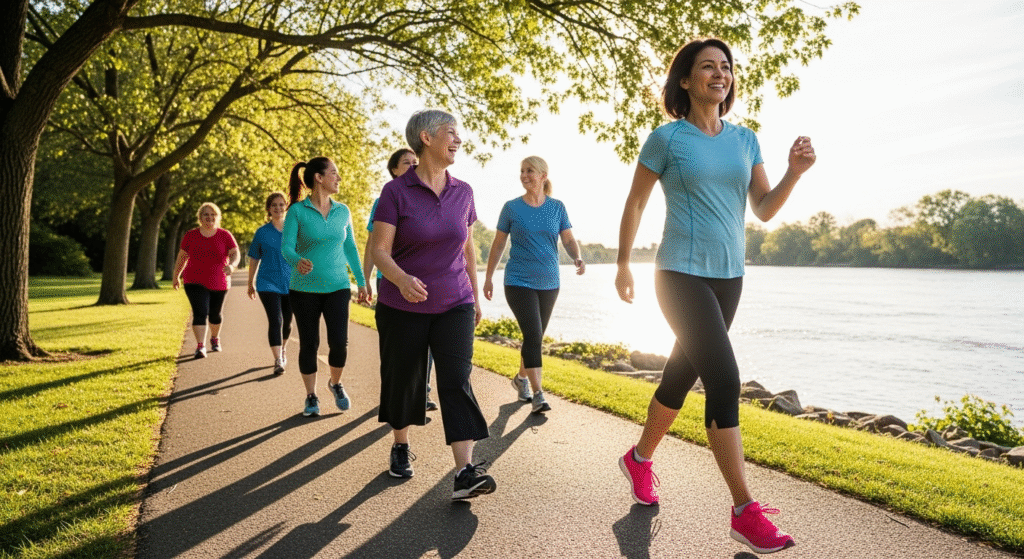
Walking is one of the most pelvic-floor-friendly workouts available and is frequently the first exercise recommended by physiotherapists as a foundation of recovery and maintenance. It is genuinely low-impact, rhythmic, and strengthens the deep stabilising muscles of the pelvis and hips without adding downward pressure.
How to do it safely for the pelvic floor: Walk on flat surfaces initially if you have active symptoms. Build up hill walking gradually — the incline engages the glutes and pelvic floor more. Maintain an upright posture rather than hunching forward. Swing your arms naturally. Aim for 20–30 minutes daily.
Best for: All levels of pelvic floor dysfunction. An excellent starting point.
Progression: Add gentle hills, increase pace in intervals, or add light hand weights for upper body engagement.
Workout 2: Swimming & Aqua Fitness 🏊♀️
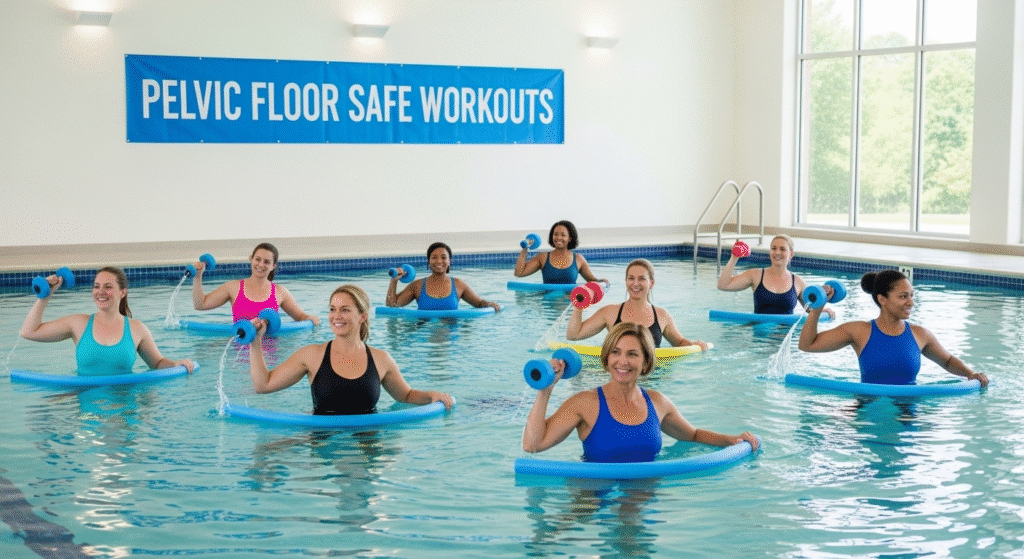
Swimming and aqua aerobics are among the most highly recommended exercises by pelvic floor physiotherapists. The water acts as a natural support for your pelvic organs — it reduces the gravitational load on your pelvic floor, allowing you to exercise more intensively than you might on land without the same downward pressure.
Why it works: Buoyancy removes gravity’s impact on the pelvic floor. Aqua aerobics can include movements that would normally be high-impact on land (like jumping jacks) with significantly reduced pelvic floor loading.
Best for: Prolapse, stress incontinence, early postpartum recovery, or any situation where land-based exercise causes symptoms.
How to progress: Aqua jogging (using a float belt), lap swimming, aqua aerobics classes. All are excellent options.
Workout 3: Clinical Pilates 🧘♀️
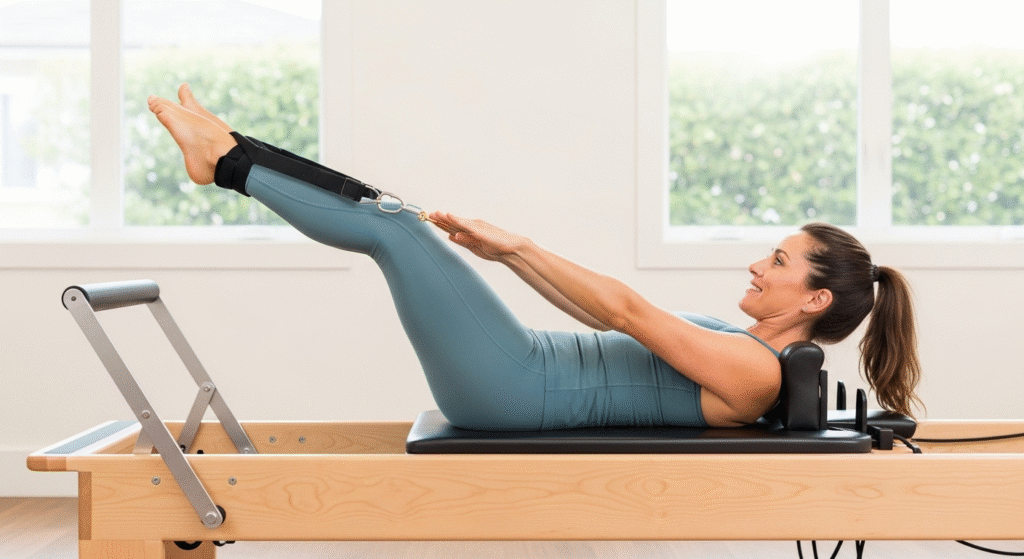
Clinical Pilates — Pilates taught or designed in coordination with physiotherapy principles — is widely considered the gold standard pelvic floor-safe workout. The focus on breath, deep core engagement, precise movement, and spinal alignment directly supports pelvic floor function rather than working against it.
Key difference from regular Pilates: Some standard Pilates exercises (like double leg lowering or the hundred) create significant intra-abdominal pressure and can worsen pelvic floor symptoms. Clinical Pilates uses modified versions or avoids these exercises entirely.
What to look for: A Pilates instructor with pelvic health training, or a physiotherapist-led Pilates class. Tell your instructor about your pelvic floor symptoms before starting.
Best for: Core restoration, prolapse management, postpartum recovery, all stages of pelvic floor rehabilitation.
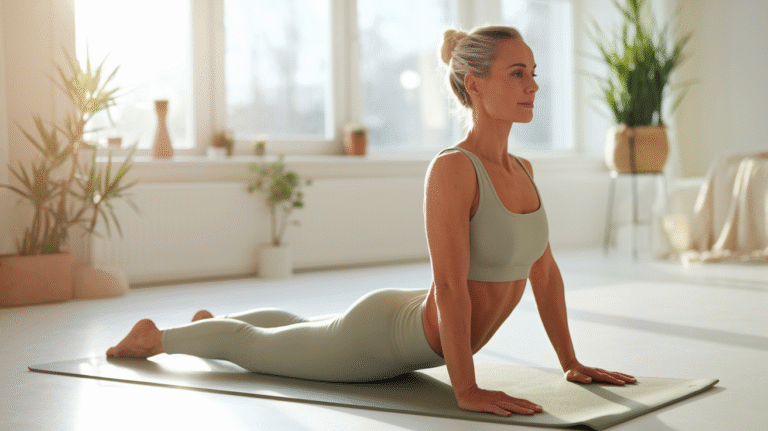
Workout 4: Yoga (Modified) 🧘
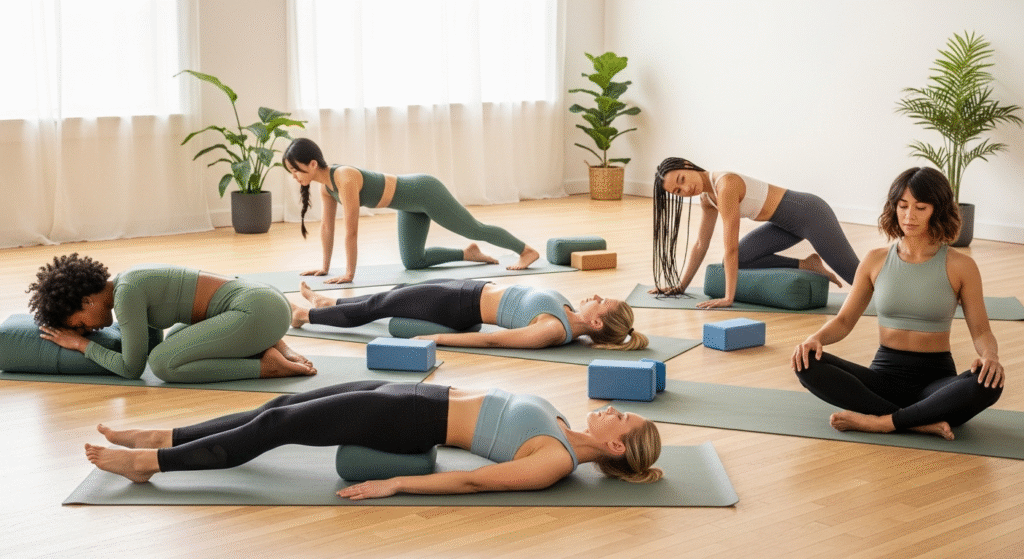
Many yoga classes are pelvic floor friendly — but not all poses are appropriate for all pelvic floor conditions. Gentle yoga classes (restorative, yin, or beginner hatha) are generally very safe. More intense classes (hot yoga, vinyasa, ashtanga) should be approached with awareness, as some poses create significant intra-abdominal pressure.
Pelvic-floor-friendly yoga poses: Cat-cow (excellent for pelvic floor mobility), child’s pose (promotes release of tight pelvic floor), seated forward fold, bridge pose (when done with breath coordination), supine hip circles.
Poses to approach with caution: Boat pose (navasana), intense core sequences, inversions if you have prolapse symptoms. Always tell your yoga instructor about your pelvic floor health.
Best for: Pelvic floor flexibility and release (important for hypertonic floor), stress management, overall mobility.
Workout 5: Cycling (Indoor or Outdoor) 🚴♀️
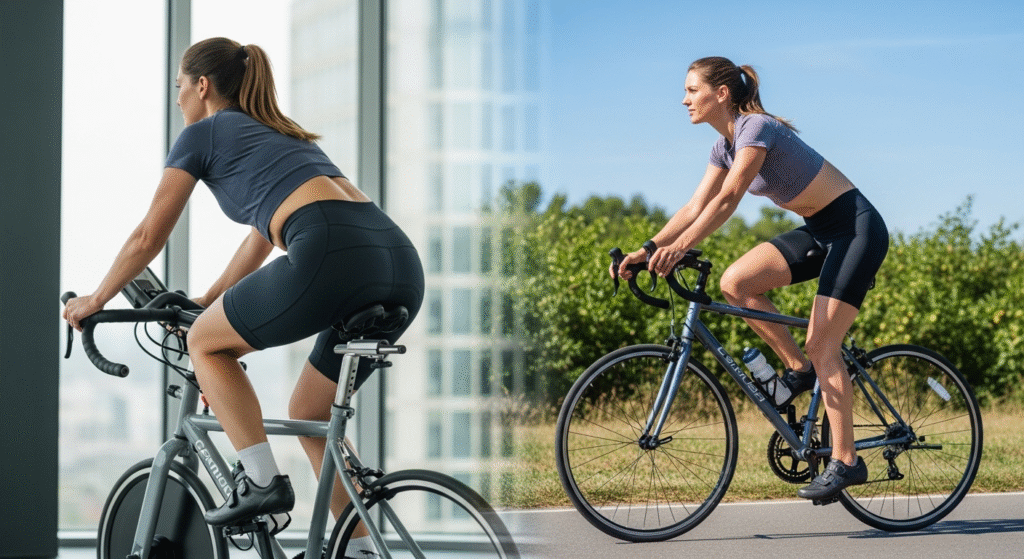
Cycling is an excellent cardiovascular workout with minimal pelvic floor impact when done correctly. The seated position during cycling actually reduces the gravitational load on the pelvic floor compared to upright activities.
Important note on saddle: An ill-fitting bike saddle can create perineal pressure that is uncomfortable for women with pelvic floor issues. A women-specific saddle with a centre cut-out significantly reduces this pressure.
Indoor vs outdoor: Both are excellent. Indoor cycling (Peloton, spin classes) allows easy intensity control. Standing out-of-saddle cycling in spin classes should be introduced gradually as it does increase pelvic floor loading compared to seated cycling.
Best for: Cardiovascular fitness, leg strength, and endurance — with very low pelvic floor impact.
Workout 6: The Elliptical Machine 🏃♀️
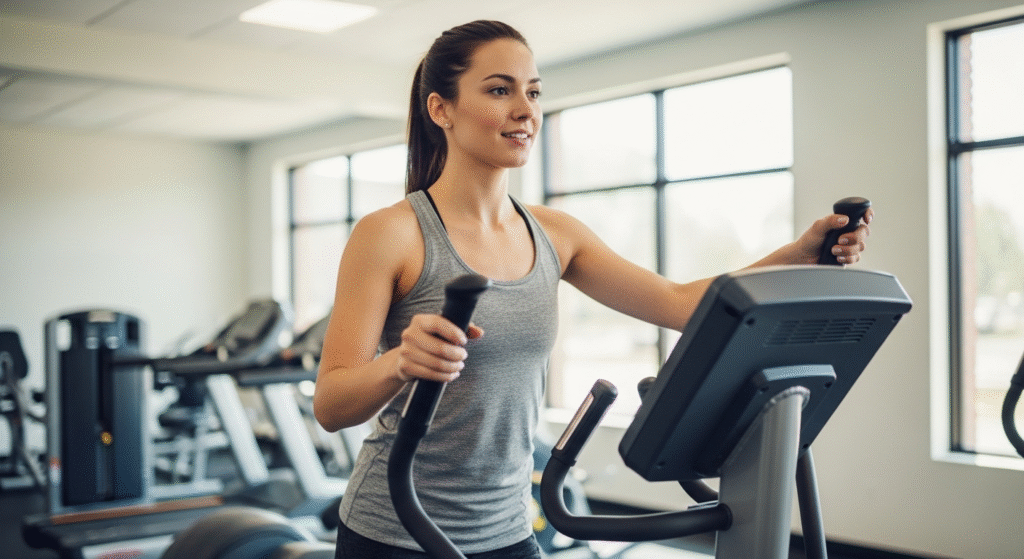
The elliptical trainer (cross trainer) is one of the most pelvic-floor-friendly cardio machines in the gym. Unlike the treadmill, which involves a repeated impact loading with each step, the elliptical creates a smooth, continuous gliding motion that maintains cardiovascular intensity without impact.
How to use pelvic-floor safely: Keep resistance levels moderate (high resistance increases intra-abdominal pressure). Maintain an upright posture rather than leaning heavily on the handlebars. Breathe continuously — do not hold breath.
Progression: Increase resistance and duration gradually. Incline settings add glute engagement — progress these slowly.
Best for: Women transitioning from walking into cardio, or those who find running or jumping aggravate symptoms.
Workout 7: Strength Training (Modified) 💪
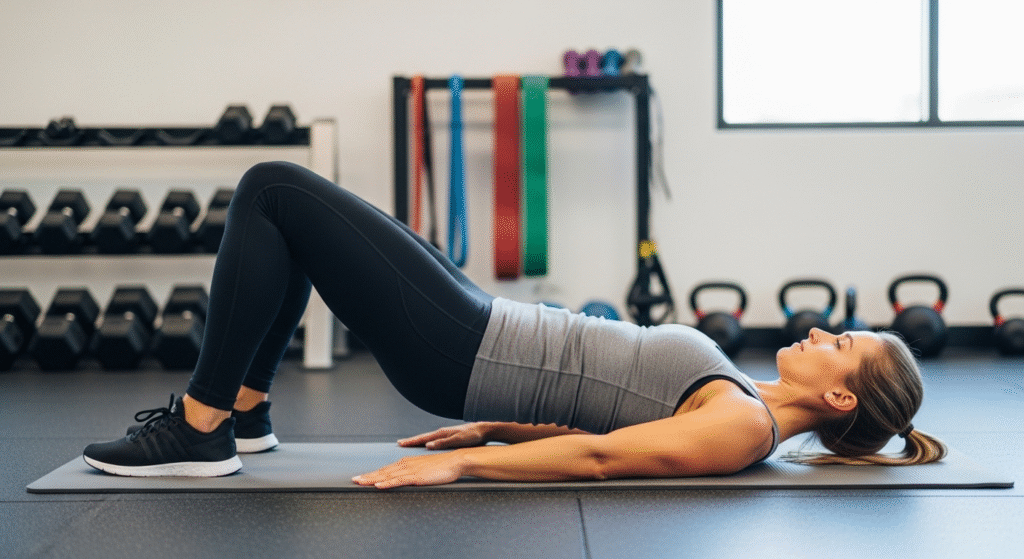
Strength training is not off-limits with pelvic floor dysfunction — and this is one of the most important messages in this post. Avoiding strength training long-term leads to muscle loss, bone density reduction, and metabolic changes that are far more harmful to long-term health than pelvic floor symptoms. The key is modification.
Pelvic-floor safe strength training principles:
• Always exhale on the effort (the hard part of the movement). Never hold your breath.
• Choose lighter weights that allow you to complete the movement without straining or bearing down.
• Prefer seated machine exercises over heavy standing free-weight exercises in early stages.
• Modify squats: feet hip-width apart, do not descend below knee height, focus on glute engagement.
• Replace crunches and sit-ups (which create downward abdominal pressure) with dead bugs, bird dogs, and pallof presses.
Best for: Bone density, metabolic health, muscle maintenance — all critical concerns for women over 40.
Workout 8: Barre 🩰
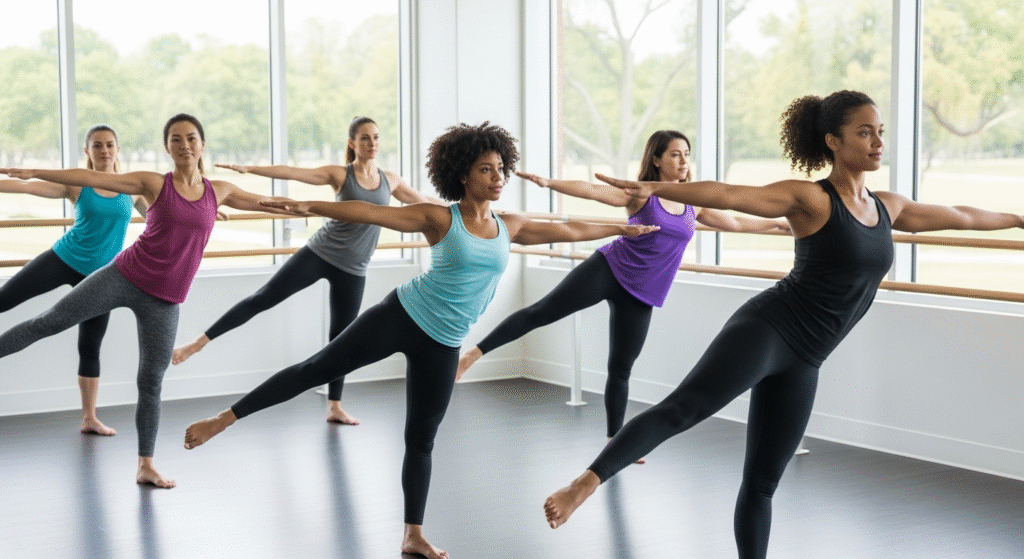
Barre classes — ballet-inspired workouts using a barre for balance support — are predominantly low-impact and very pelvic-floor friendly. The movements are precise, controlled, and muscle-fatiguing without high-impact loading. Many barre moves specifically target the glutes, pelvic floor, and deep hip stabilisers that support pelvic health.
What to watch: Some barre classes incorporate jumping, high kicks, or plié jumps. If your class includes these elements and you experience symptoms, simply step-tap instead of jumping — it is completely acceptable to modify.
Best for: Glute and hip strengthening (important supporting muscles for pelvic floor), posture, balance, and low-impact endurance.
Workout 9: Breath-Based Core Work (Diaphragmatic Breathing + Dead Bug) 🌬️
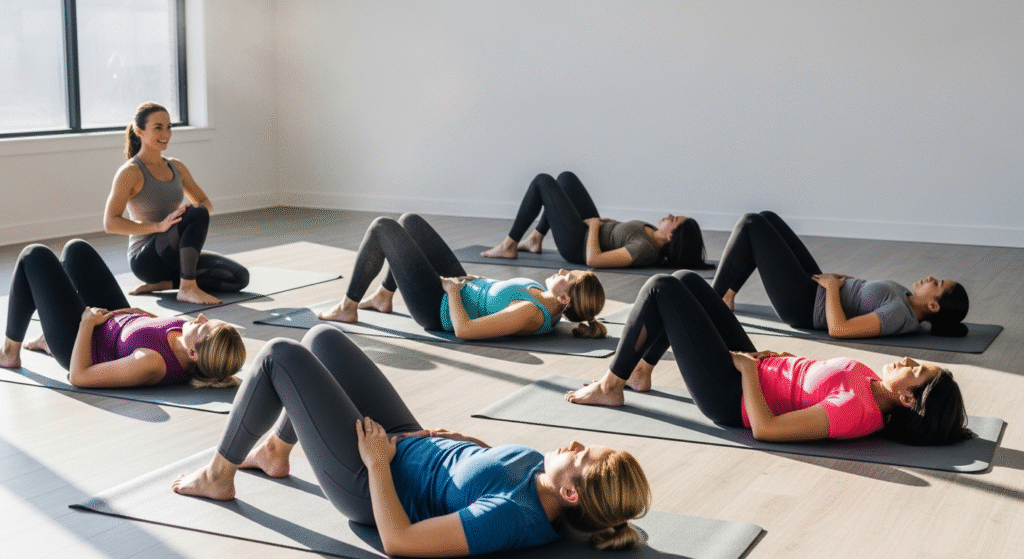
This final workout is the most foundational — and the most overlooked. Diaphragmatic (belly) breathing, coordinated with pelvic floor and deep core engagement, is the foundation of pelvic floor health. Many women experiencing pelvic floor symptoms are shallow-chest breathers who hold tension in their abdomen, pelvis, and floor without realising it.
The Dead Bug Exercise: Lie on your back with arms pointing to the ceiling and knees bent at 90°. Inhale to prepare. As you exhale, slowly lower one arm overhead and the opposite leg toward the floor without letting your lower back arch. Inhale to return. This is one of the most pelvic-floor-safe core exercises and is frequently used in physiotherapy rehabilitation.
Diaphragmatic Breathing: Lie comfortably with one hand on your chest and one on your belly. Inhale so that your belly rises (not your chest). Feel your pelvic floor gently descend on the inhale. On the exhale, feel the pelvic floor gently lift. This is pelvic floor coordination — and practising it for 5–10 minutes daily creates significant improvements.
Best for: Everyone with pelvic floor dysfunction, regardless of severity. This is the reset.
Exercises to Approach With Caution (or Avoid Initially)
These exercises can worsen pelvic floor symptoms for some women — particularly those with prolapse or active stress incontinence:
• Running and jogging: High repetitive impact. If you love running, work with a physiotherapist on a return-to-running programme rather than stopping entirely.
• Jumping exercises: Box jumps, jump squats, jumping jacks, burpees, skipping/jump rope — all create high pelvic floor impact.
• Heavy barbell lifting: Particularly deadlifts and heavy squats where bearing down is required.
• Sit-ups and crunches: Create significant downward abdominal pressure.
• Double leg lowering: A common Pilates move that should be avoided without pelvic health supervision.
This is not a permanent list. With proper pelvic floor rehabilitation, many women return to running, HIIT, and heavy lifting. The goal is to rebuild the foundation first.
Building Your Weekly Pelvic Floor Safe Workout Schedule
Here’s a sample weekly schedule using the 9 workouts:
• Monday: 30-minute walk + 10-minute diaphragmatic breathing and dead bug work
• Tuesday: 45-minute clinical Pilates or gentle yoga
• Wednesday: 30-minute cycling (indoor) + modified strength training (upper body focus)
• Thursday: Rest or gentle walking
• Friday: Barre class or 45-minute aqua fitness
• Saturday: 40-minute walk or swimming
• Sunday: Restorative yoga + breath work
Every body is different, and every pelvic floor situation is different. This schedule is a starting framework — a pelvic floor physiotherapist can tailor it specifically to your symptoms, your strength baseline, and your goals.
When to See a Pelvic Floor Physiotherapist
You should see a pelvic floor physiotherapist if:
• You are leaking urine during any exercise
• You feel pelvic heaviness or pressure after exercise
• You have been diagnosed with pelvic organ prolapse
• You are postpartum (regardless of whether you had a vaginal or caesarean birth)
• You are perimenopausal or menopausal and noticing new or worsening symptoms
• You are simply uncertain whether your pelvic floor is functioning well — a check-up is valuable even without symptoms
Pelvic floor physiotherapy is available on the NHS in the UK, through private practitioners worldwide, and increasingly via telehealth platforms for those with limited local access.
Which of these 9 workouts are you going to start with? Save this post to your pelvic floor health or fitness over 40 board — and if you’ve been working with a pelvic floor physio, drop your experience in the comments. Your story might be exactly what someone else needs to read.
Disclaimer: Always consult a qualified pelvic floor physiotherapist or your GP before beginning any new exercise programme, especially if you are experiencing pelvic floor symptoms.