5 Visceral Fat Exercises for Women Over 40
You’ve probably noticed it—the stubborn belly fat that wasn’t there in your thirties. You’re eating the same foods, maybe even exercising regularly, but something’s changed.
That frustrating weight around your middle isn’t just about aesthetics. It’s visceral fat, and it’s different from the fat you can pinch.
Here’s what you need to know: visceral fat wraps around your internal organs, creating real health risks. But there’s genuinely good news. Research shows that specific exercises can effectively target and reduce this dangerous fat, especially for women over 40.
The hormonal shifts during perimenopause and menopause change how your body stores fat. Your metabolism slows down. Estrogen levels decline. Cortisol increases. These aren’t excuses—they’re biological realities that require a smarter approach to fitness.
In this guide, you’ll discover five proven exercises specifically designed for women over 40. These aren’t complicated gym routines requiring expensive equipment.
They’re simple, effective movements that work with your changing body, not against it. You’ll learn exactly how to perform each exercise, how often to do them, and how to combine them into a complete weekly routine that delivers real results.
The best part? You can start today, right where you are. Whether you’re already active or haven’t exercised in years, these exercises meet you at your current fitness level and help you progress safely.
Why Visceral Fat Is Different (And Why Women Over 40 Should Care)

What Makes Visceral Fat So Dangerous
Visceral fat isn’t the soft, pinchable fat sitting just under your skin. That’s subcutaneous fat, and while you might not love how it looks, it’s relatively harmless. Visceral fat lives deeper—wrapped around your liver, pancreas, intestines, and other vital organs.
This location makes visceral fat metabolically active in dangerous ways. It releases inflammatory compounds and hormones that interfere with your body’s normal functions. Studies link excess visceral fat to increased risk of heart disease, type 2 diabetes, high blood pressure, and even certain cancers.
Here’s the frustrating part: the scale doesn’t tell you the complete story. You might maintain a “normal” weight but still carry too much visceral fat.
A woman weighing 140 pounds could have more visceral fat—and higher health risks—than someone weighing 160 pounds with more muscle mass and less internal fat.
The Over-40 Factor: Hormonal Changes and Metabolism
Your body changes fundamentally after 40, particularly during perimenopause and menopause. Declining estrogen levels shift where your body stores fat, favoring your midsection instead of your hips and thighs. This isn’t vanity—it’s biology.
Cortisol, your stress hormone, tends to increase during this life stage. Higher cortisol levels directly promote visceral fat storage, especially when combined with poor sleep and chronic stress. You’re dealing with a perfect storm of hormonal changes that make fat accumulation easier and fat loss harder.
Your metabolism naturally slows by about 2-8% per decade after age 40. You’re also losing muscle mass—approximately 3-8% per decade—which further reduces your calorie-burning capacity. The diet and exercise routine that worked perfectly in your thirties simply doesn’t deliver the same results anymore.
The Ultimate Goal: Health First, Aesthetics Second
Reducing visceral fat improves your energy levels, sleep quality, and overall wellbeing. Women who successfully reduce visceral fat report feeling stronger, more energetic, and more confident in their daily activities.
Exercise does more than burn fat—it helps rebalance your hormones. Regular physical activity improves insulin sensitivity, reduces inflammation, and helps manage cortisol levels. These changes create a positive cycle where your body becomes better at managing weight naturally.
Set realistic expectations for your journey. You won’t lose decades of accumulated fat in two weeks. But you will notice improvements in how you feel within the first month. Better sleep, more energy, improved mood—these changes happen before you see dramatic physical changes.
Exercise #1: Brisk Walking with Intervals (The Perfect Starting Point)
Why Walking Is Your Secret Weapon
Walking doesn’t sound revolutionary, but research proves it’s one of the most effective exercises for reducing visceral fat. A study published in Nutrients found that postmenopausal women who walked briskly significantly reduced their visceral fat levels, even without dramatic dietary changes.
You don’t need a gym membership, expensive equipment, or complicated techniques. Walking is accessible regardless of your current fitness level. It’s low-impact, protecting your joints while delivering serious fat-burning benefits.
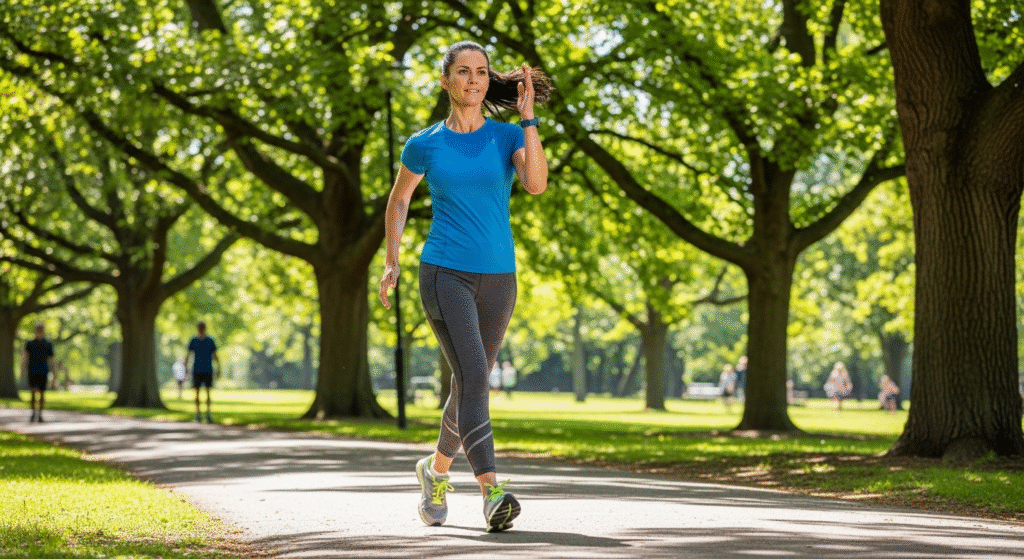
The key word is “brisk.” We’re not talking about a leisurely stroll through the mall. Brisk walking means you’re moving fast enough that holding a conversation requires effort, but you’re not gasping for breath.
How to Do It Right: The Essential Technique
Start with 20-30 minutes of brisk walking, five days per week. This baseline creates the foundation for fat loss. Once you’re comfortable with this routine (usually after one to two weeks), add simple intervals to maximize fat burning.
Here’s your interval pattern: alternate two minutes of fast-paced walking with two minutes of moderate pace. During your fast intervals, push yourself to about 70-80% of your maximum effort. You should feel challenged but not exhausted. During moderate intervals, recover while maintaining steady movement.
Proper form matters more than you think. Engage your core by pulling your belly button toward your spine. Keep your shoulders back and down, not hunched forward. Swing your arms naturally—this actually increases calorie burn. Maintain an upright posture, looking ahead rather than down at your feet.
Follow this four-week progression plan: Week 1-2, walk 20 minutes without intervals. Week 3, add intervals for 25 minutes. Week 4, increase to 30 minutes with intervals. This gradual approach prevents injury and builds sustainable habits.
Making It Work for Your Lifestyle
Morning walks offer unique benefits for fat burning. Your body has depleted its glycogen stores overnight, meaning it taps into fat reserves more quickly. Morning exercise also sets a positive tone for your entire day, making you more likely to make healthy choices.
Track your progress without obsessing over numbers. Notice how you feel after walks. Do you have more energy? Are you sleeping better? Can you walk farther without feeling winded? These qualitative improvements matter as much as pounds lost.
Stay motivated by varying your routes, walking with friends, or listening to podcasts and audiobooks. Many women find that walking becomes their cherished “me time”—a daily ritual that benefits both body and mind.
Exercise #2: Strength Training with Compound Movements
Why Lifting Weights Changes Everything After 40
Strength training is the ultimate game-changer for women over 40. Building muscle mass boosts your metabolism, helping you burn more calories even while resting. Every pound of muscle you add burns approximately 6-10 calories per day at rest, compared to just 2-3 calories for fat.
Compound exercises work multiple muscle groups simultaneously, delivering amazing efficiency. Instead of isolating one muscle with repetitive movements, you’re training your body to work as an integrated system. This approach burns more calories during your workout and creates greater metabolic benefits afterward.
Women over 40 naturally lose muscle mass through a process called sarcopenia. Strength training directly combats this age-related decline, helping you maintain strength, balance, and independence as you age.
The 3 Most Effective Compound Exercises
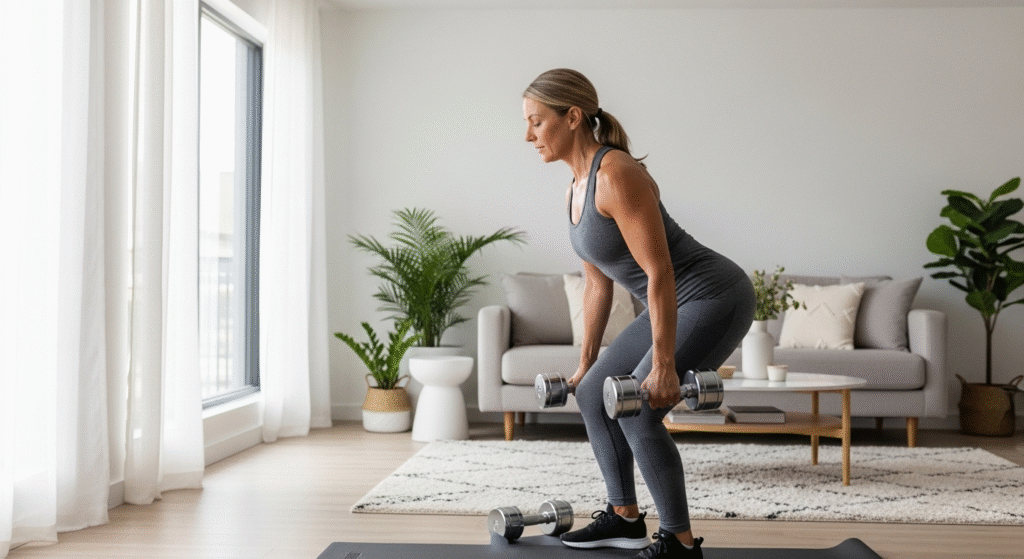
Squats are the foundation of functional strength. Stand with feet shoulder-width apart, toes slightly pointed out. Lower your body as if sitting in a chair, keeping your chest up and knees tracking over your toes. Push through your heels to stand. Start with bodyweight squats, performing 10-12 repetitions. As you get stronger, hold dumbbells at your shoulders or use a resistance band around your thighs.
Deadlifts (or modified versions) build total-body strength while specifically targeting your core and posterior chain. For a beginner-friendly version, use dumbbells or kettlebells. Stand with weights in front of your thighs, feet hip-width apart. Hinge at your hips, keeping your back straight and core engaged, lowering weights toward the floor. Push through your heels to return to standing. Start with 8-10 repetitions using light weights to perfect your form.
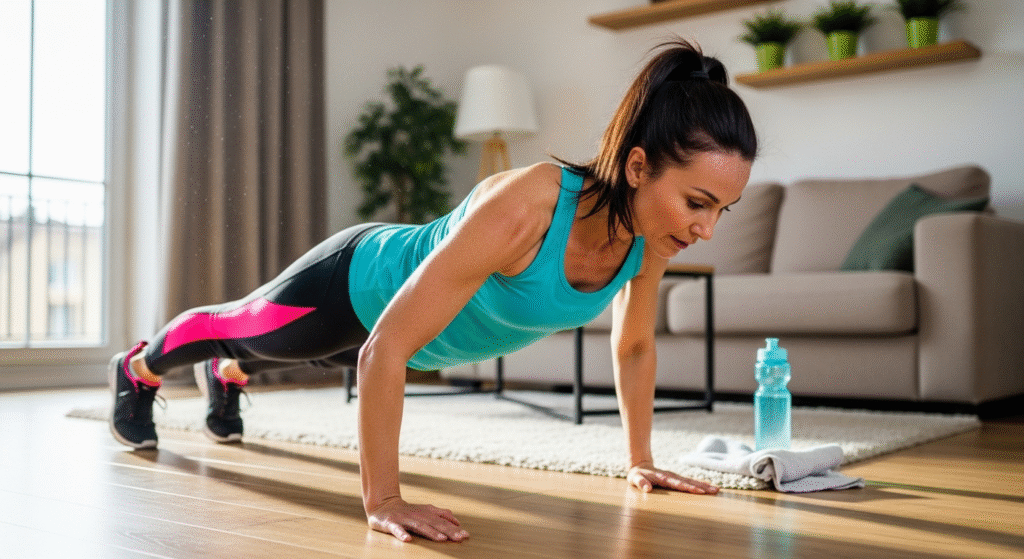
Push-ups strengthen your chest, shoulders, triceps, and core simultaneously. If standard push-ups feel too challenging, start with wall push-ups or counter push-ups. Progress to knee push-ups, then eventually full push-ups. Focus on maintaining a straight line from head to heels (or knees), lowering your chest toward the floor with control. Aim for 8-10 repetitions with perfect form.
Your Simple Strength Training Schedule
Begin with two sessions per week, allowing at least two days between sessions for recovery. Each session should take 20-30 minutes, including warm-up and cool-down. Perform 2-3 sets of each exercise, resting 60-90 seconds between sets.
Start with weights that allow you to complete all repetitions with good form while feeling challenged on the last 2-3 reps. When you can easily perform 12 repetitions, increase the weight by 5-10%. This progressive overload principle drives continuous improvement.
Rest and recovery become increasingly important after 40. Your muscles need time to repair and grow stronger. Adequate sleep, proper nutrition, and rest days aren’t optional—they’re essential components of your fat-loss strategy.
Exercises #3, #4, and #5: The Complete Fat-Burning Trio
Exercise #3: High-Intensity Interval Training (HIIT) Made Easy
Research published in Medicine & Science in Sports & Exercise confirms that HIIT reduces visceral fat more effectively than steady-state cardio. The intense bursts followed by recovery periods create an “afterburn effect,” where your body continues burning calories for hours after your workout ends.
Don’t let “high-intensity” intimidate you. For women over 40, HIIT means working at your personal maximum effort, not competing with 25-year-olds at the gym. A beginner-friendly routine takes just 15-20 minutes, two to three times per week.
Here’s a simple HIIT routine: Start with a 3-minute warm-up of marching in place. Then alternate 30 seconds of intense exercise with 60 seconds of active recovery (walking or marching). Repeat this cycle 6-8 times. Finish with a 3-minute cool-down.
Sample exercises include modified jumping jacks (step side to side instead of jumping), mountain climbers (step one foot forward at a time rather than jumping), and modified burpees (step back to plank position instead of jumping). Choose exercises that challenge you without causing pain.
You’re working at the right intensity when you can speak only in short phrases during intense intervals. If you can hold a conversation, push harder. If you can’t speak at all, dial it back slightly.
Exercise #4: Core Strengthening Movements
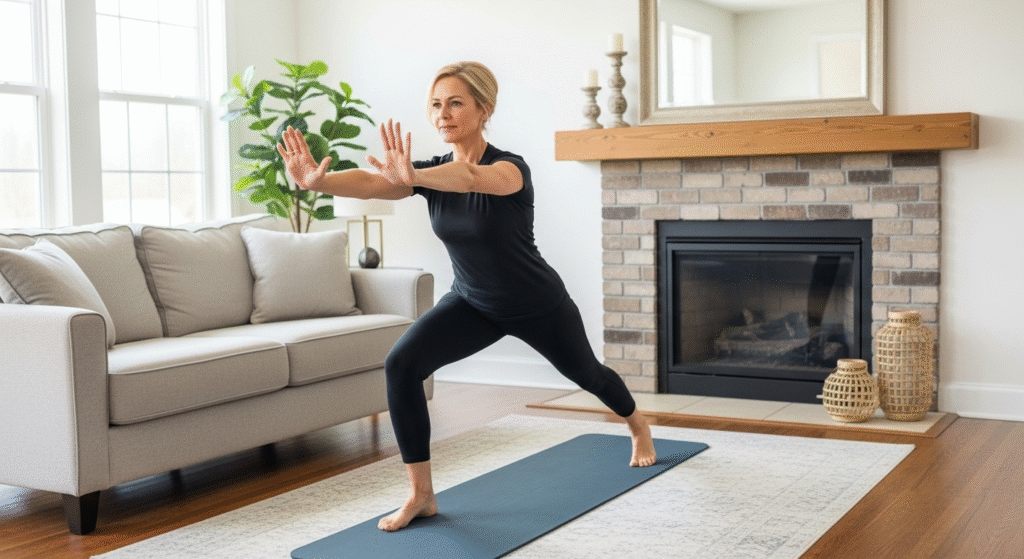
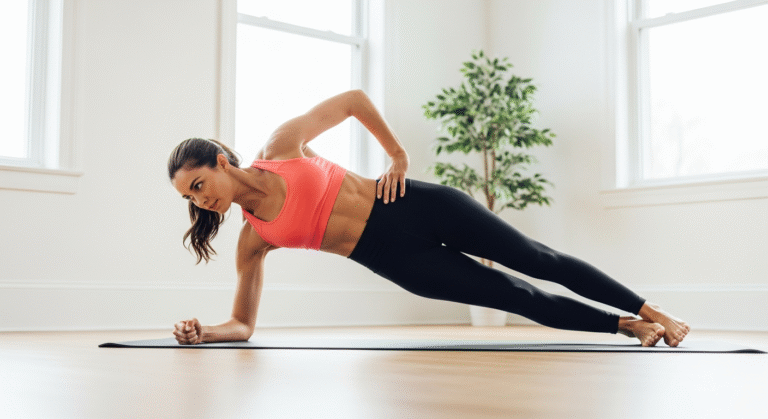
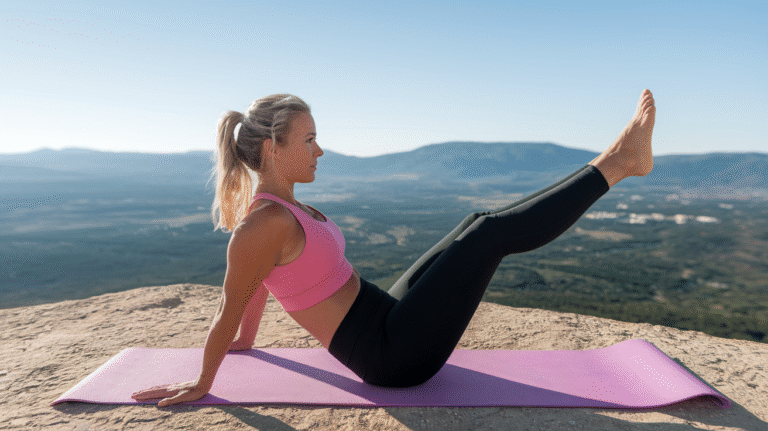
Traditional crunches aren’t the answer for visceral fat. They work superficial abdominal muscles but don’t effectively target deep core muscles or burn significant fat. These three exercises deliver superior results.
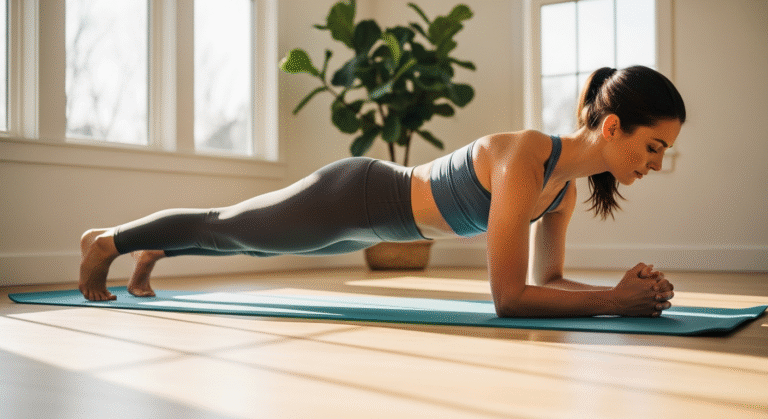
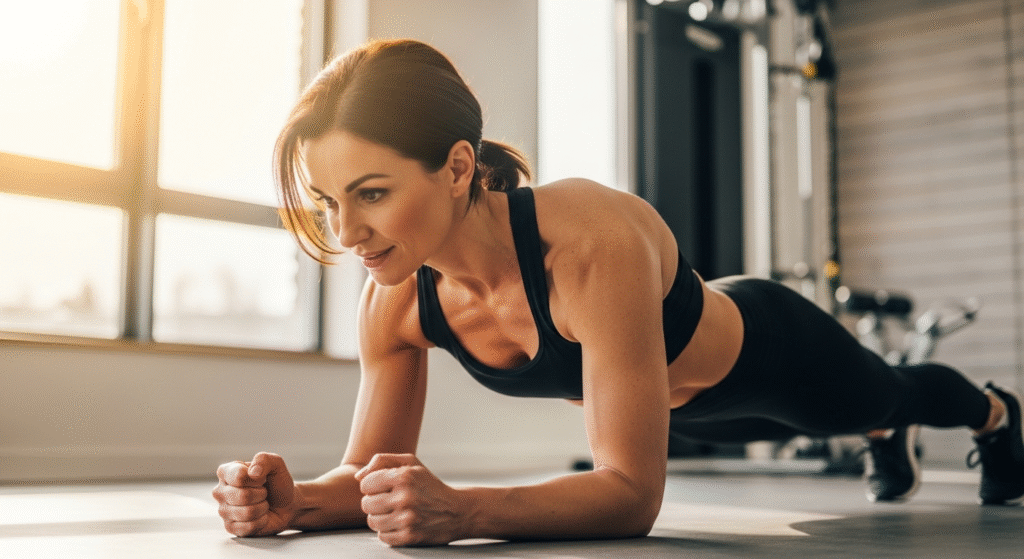
Planks are the ultimate core exercise. Start with forearm planks: rest on your forearms and toes, maintaining a straight line from head to heels. Engage your core by pulling your belly button toward your spine. Hold for 20-30 seconds initially, building up to 60 seconds. If standard planks feel too challenging, start with knee planks or wall planks.
Dead bugs activate your deep core muscles while improving coordination. Lie on your back, arms extended toward the ceiling, knees bent at 90 degrees. Slowly lower your right arm overhead while extending your left leg, keeping your lower back pressed to the floor. Return to start and repeat on the opposite side. Perform 10-12 repetitions per side.
Bird dogs improve stability while burning belly fat. Start on hands and knees, spine neutral. Extend your right arm forward and left leg back simultaneously, creating a straight line. Hold for 2-3 seconds, return to start, then repeat with opposite limbs. Perform 10-12 repetitions per side, focusing on controlled movement rather than speed.
Perform these core exercises three times per week, either as part of your strength training sessions or on alternate days. Quality matters more than quantity—perfect form with fewer repetitions delivers better results than sloppy form with high volume.
Exercise #5: Swimming or Water Aerobics (The Joint-Friendly Option)
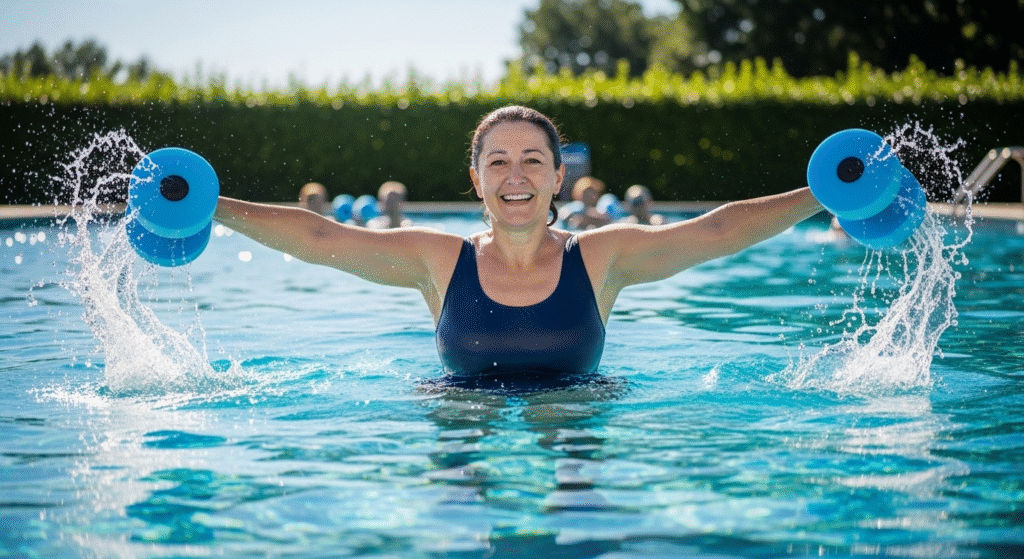
Swimming provides a perfect low-impact alternative for women dealing with joint pain, arthritis, or injuries. The water’s buoyancy supports your body weight, eliminating stress on joints while providing natural resistance that challenges your muscles.
Water-based exercise delivers a full-body workout that torches visceral fat. Swimming laps, water aerobics classes, or even water walking all burn significant calories while building strength and endurance. The resistance of water makes every movement more challenging than the same movement on land.
For optimal results, swim or participate in water aerobics 2-3 times per week for 30-45 minutes per session. Vary your strokes—freestyle, backstroke, breaststroke—to work different muscle groups. If you’re new to swimming, start with water walking or join a beginner water aerobics class.
Most community centers, YMCAs, and gyms with pools offer water aerobics classes specifically designed for older adults. These classes provide social connection along with exercise, making them easier to stick with long-term. The instructor modifies movements for different fitness levels, ensuring everyone can participate safely.
Your Action Plan: Putting It All Together
The Complete Weekly Exercise Schedule
Here’s your proven weekly routine combining all five exercises. This schedule balances intensity with recovery, delivering maximum fat-burning benefits while preventing burnout and injury.
Monday: Brisk walking with intervals (30 minutes) + Core exercises (15 minutes)
Tuesday: Strength training—compound movements (30 minutes)
Wednesday: HIIT workout (20 minutes) or Swimming (30 minutes)
Thursday: Brisk walking with intervals (30 minutes)
Friday: Strength training—compound movements (30 minutes) + Core exercises (15 minutes)
Saturday: Swimming or longer walk (45 minutes)
Sunday: Active recovery—gentle yoga, stretching, or leisurely walk
Mix and match based on your fitness level and time constraints. If you’re just starting, begin with three days per week: one walking day, one strength day, and one swimming or HIIT day. Gradually add sessions as your fitness improves.
Consistency beats perfection every time. Three workouts per week done consistently for three months delivers better results than six workouts per week for two weeks followed by burnout. Build sustainable habits, not unsustainable intensity.
Beyond Exercise: Supporting Your Success
Exercise alone won’t eliminate visceral fat if your nutrition undermines your efforts. You don’t need strict dieting or complicated meal plans. Focus on eating more whole foods—vegetables, fruits, lean proteins, whole grains—and fewer processed foods high in sugar and refined carbohydrates.
Sleep quality directly impacts visceral fat accumulation. Women who consistently get 7-9 hours of quality sleep lose visceral fat more easily than those who sleep poorly. Prioritize your sleep schedule just as seriously as your workout schedule.
Stress management becomes crucial after 40. Chronic stress elevates cortisol, which promotes visceral fat storage. Incorporate stress-reduction practices like meditation, deep breathing, or simply taking daily walks in nature. These aren’t luxuries—they’re essential components of your fat-loss strategy.
Measure progress beyond the scale. Take waist measurements every two weeks—visceral fat loss shows up as reduced waist circumference even when weight changes slowly. Notice improvements in energy, sleep quality, mood, and strength. These changes indicate you’re succeeding even before dramatic physical transformations occur.
Your Empowering Next Steps
Start with just one exercise this week. Choose the one that feels most doable given your current fitness level and schedule. Walking requires nothing but comfortable shoes and 20 minutes. That’s your starting point if you’re completely new to exercise.
Set a simple 30-day challenge for yourself. Commit to three workouts per week for one month. Mark them on your calendar like important appointments. Track how you feel after each workout—not just physical sensations, but emotional and mental benefits too.
Remember this truth: every woman over 40 can reduce visceral fat with the right approach. Your age isn’t a barrier—it’s simply a factor requiring smarter training strategies. The exercises in this guide work with your changing body, addressing the specific challenges you face after 40.
You’re not just exercising to look better in your clothes (though that’s a nice bonus). You’re investing in your health, energy, and future self. You’re reducing your risk of serious diseases. You’re building strength that helps you live independently as you age. You’re creating habits that compound over time, delivering benefits for decades to come.
Your body is capable of remarkable changes at any age. Start today with one small step. That first walk, that first squat, that first plank—these simple actions begin a transformation that extends far beyond reducing visceral fat. You’re becoming stronger, healthier, and more vibrant. And that journey starts right now.