incline walking for beginners over 40
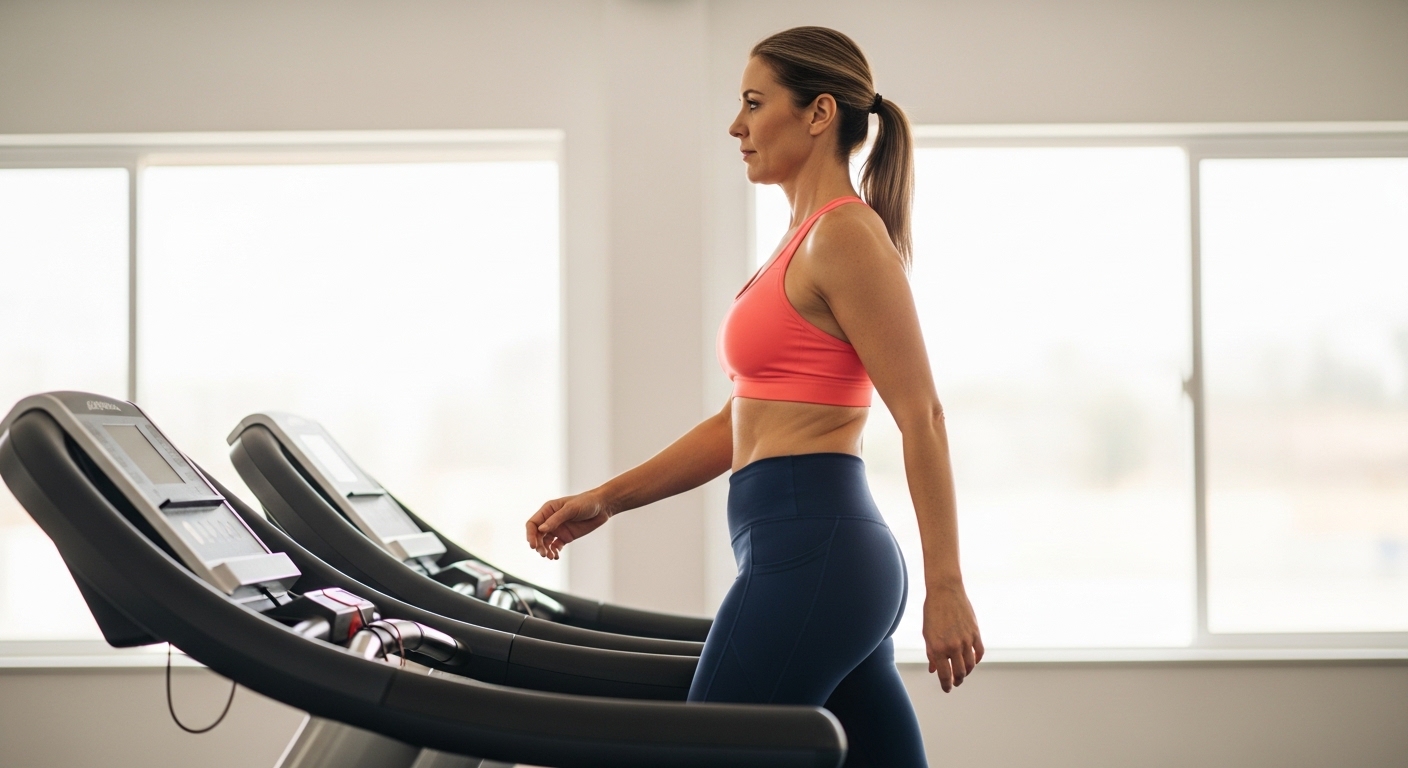
You’ve probably scrolled past those viral incline walking videos and wondered if they’re worth the hype. Here’s the truth: incline walking delivers real results, especially if you’re over 40 and looking for a workout that actually fits your body’s needs.
This isn’t another fitness trend that demands you jump around or risk injury. Incline walking is the ultimate low-impact exercise that builds strength, burns fat, and protects your joints—all while feeling manageable enough to stick with long-term.
What makes this simple exercise so powerful? Research shows that walking on an incline burns significantly more calories than flat walking (we’re talking about 5 times more in some cases), strengthens your glutes and legs naturally, and improves the balance and stability that become critical as we age. The best part? You don’t need previous gym experience or fancy equipment to get started.
In this complete guide, you’ll learn exactly how to begin incline walking safely, avoid common beginner mistakes, and build up to proven routines like the famous 12-3-30 method. Whether you have access to a treadmill or prefer outdoor hills, you’ll discover how to make incline walking work for your schedule, your fitness level, and your goals. Let’s get you moving with confidence.
Why Incline Walking Is Perfect for Beginners Over 40
The Easy-on-Your-Joints Advantage
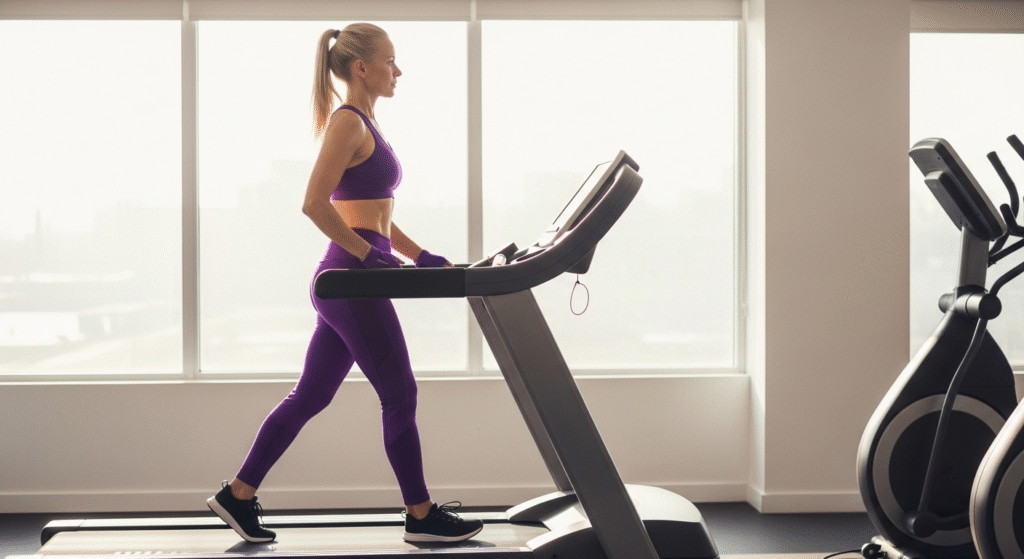
Your knees, hips, and ankles deserve better than the pounding they take from running or high-impact exercises. Incline walking delivers proven cardiovascular and strength benefits without the harsh impact that damages joints over time.
When you walk on an incline, you’re working harder and burning more calories, but your feet never leave the ground. This means zero impact shock traveling through your joints with each step. Compare this to running, where your body absorbs 2-3 times your body weight with every foot strike. That difference matters tremendously when you’re over 40 and want to stay active for decades to come.
If you’ve dealt with previous injuries—a bad knee from your tennis days, a hip that acts up occasionally, or ankles that aren’t what they used to be—incline walking lets you build fitness without aggravating old problems. You’re strengthening the muscles around vulnerable joints while keeping stress levels manageable. This protective effect makes incline walking the smart choice for anyone who wants results without risking setbacks.
Amazing Health Benefits You’ll Actually Notice
The calorie-burning advantage of incline walking is substantial. Walking at a 10-12% incline burns approximately the same calories as jogging, but without feeling nearly as difficult. Your heart rate elevates into the fat-burning zone, your metabolism kicks into higher gear, and you maintain this intensity for longer because the workout feels sustainable.
But the benefits extend far beyond weight loss. Incline walking builds essential leg and glute strength naturally, targeting your hamstrings, quads, calves, and especially your glutes—muscles that tend to weaken as we age. Stronger legs mean easier daily activities, from climbing stairs to playing with grandchildren. You’re building functional fitness that translates directly to real life.
The balance and stability improvements are equally important. As we get older, maintaining good balance becomes critical for preventing falls and staying independent. Incline walking challenges your balance gently, forcing your stabilizer muscles to engage and strengthen. You’re essentially fall-proofing your future while getting a great workout.
Quick Results That Keep You Motivated
Here’s what beginners love most about incline walking: you see changes fast. Within 2-3 weeks of consistent walking, you’ll notice your legs feel stronger, your endurance improves, and your clothes fit differently. These quick wins keep you motivated during those crucial early weeks when building a new habit.
The metabolism boost continues even after you finish walking. Your body burns additional calories for hours post-workout as it recovers and adapts. This “afterburn effect” means you’re getting more fat-burning benefits than the treadmill display shows.
And the time commitment? Totally manageable. Effective incline walking sessions take just 30-45 minutes, including warm-up and cool-down. You can fit this into your morning before work, during lunch breaks, or in the evening while watching your favorite show. No lengthy gym sessions required, no complicated routines to memorize—just straightforward walking that delivers results.
Getting Started: Essential Equipment and Setup
What You Need (It’s Simpler Than You Think)
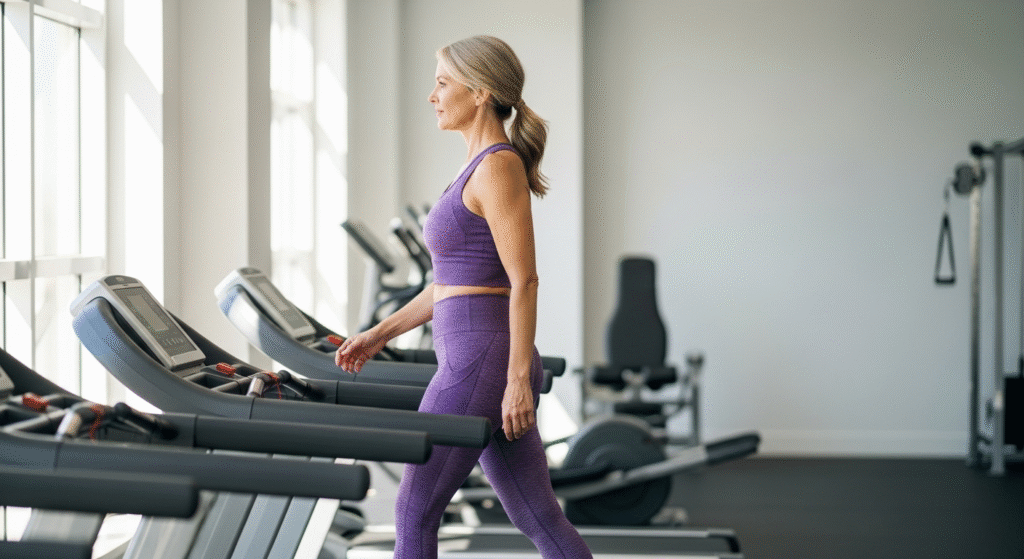
The beauty of incline walking is its simplicity. You have two main options: a treadmill or outdoor hills. Each has distinct advantages for beginners over 40.
Treadmills offer consistency and control. You set the exact incline and speed, track your progress precisely, and walk regardless of weather. The cushioned belt reduces impact even further than pavement. If you have access to a gym or can invest in a home treadmill, this option gives you the most reliable setup. Look for a treadmill with incline capability up to at least 12-15%.
Outdoor hills provide variety and fresh air. Walking outside engages more stabilizer muscles because terrain naturally varies, and sunshine boosts your mood and vitamin D levels. The downside? You can’t control the exact incline, and weather sometimes interferes. If you choose outdoor walking, scout routes in your neighborhood with steady, gradual hills—avoid steep, uneven terrain while you’re building foundational strength.
The only essential gear is proper walking shoes. Invest in quality athletic shoes with good arch support, cushioning, and stability. Your shoes should feel comfortable immediately—no “breaking in” period required. Replace them every 300-400 miles of walking to maintain proper support.
Comfortable, moisture-wicking clothing makes your walks more enjoyable. Skip the cotton and choose synthetic fabrics that pull sweat away from your skin. Women need a supportive sports bra, and everyone benefits from socks designed specifically for athletic activity.
Optional items that enhance your experience include a fitness tracker or smartwatch to monitor heart rate and calories, a water bottle to stay hydrated, and wireless earbuds for music or podcasts. These aren’t necessary, but they make incline walking more effective and enjoyable.
Understanding the Settings: The Famous 12-3-30 Method
You’ve probably heard about the 12-3-30 method that went viral on social media. Here’s what those numbers actually mean and why this formula works brilliantly for beginners over 40.
The “12” represents a 12% incline on your treadmill. This significant slope engages your glutes, hamstrings, and calves intensely while keeping the movement low-impact. It’s steep enough to deliver results but not so extreme that you can’t maintain it.
The “3” means 3 miles per hour—a comfortable walking pace for most people. You’re not speed-walking or struggling to keep up. This moderate pace lets you maintain proper form throughout your workout and hold a conversation if needed.
The “30” refers to 30 minutes of continuous walking at these settings. This duration puts you solidly in the cardiovascular and fat-burning zone without requiring excessive time commitment.
Why does this proven formula work so well for the 40+ crowd? It combines sufficient intensity to drive results with sustainability that prevents burnout. The settings challenge your body enough to create positive adaptations—stronger muscles, improved cardiovascular fitness, increased calorie burn—while remaining achievable for people without extensive fitness backgrounds.
That said, 12-3-30 is a goal to work toward, not where you necessarily start. Most beginners over 40 need to build up gradually to these settings over several weeks. We’ll cover that progression in the workout plan section.
Setting Up for Success and Safety
Proper form on a treadmill makes all the difference between an effective workout and potential injury. Stand tall with your shoulders back and down, core engaged, and eyes looking straight ahead—not down at your feet or the console. Your posture should mirror how you’d walk confidently down the street.
Hand placement is a common question. Initially, lightly holding the side rails for balance is perfectly acceptable while you get comfortable with the incline. However, work toward walking hands-free as soon as possible. Gripping the rails tightly reduces calorie burn, compromises your posture, and prevents your core muscles from engaging properly. If you must hold on, use a light touch with your fingertips rather than a death grip.
Your stride should remain natural. Don’t overreach or take exaggerated steps. Let the incline do the work while you maintain your normal walking pattern. Your foot should land heel-first and roll through to your toes with each step.
Common mistakes beginners make include starting with too steep an incline or too fast a speed, leaning forward excessively (which strains your lower back), and holding the rails throughout the entire workout. Avoid these pitfalls by starting conservatively, focusing on upright posture, and gradually reducing your dependence on the handrails.
Safety basics: always use the safety clip attached to your clothing. If you stumble, the treadmill stops immediately. Start and stop the treadmill while standing on the side rails, not the moving belt. And never, ever step off a moving treadmill backward—always stop it completely first.
Your Complete Beginner’s Workout Plan

Week 1-2: The Gentle Start
Your first two weeks establish the foundation for everything that follows. Start with a 5-7% incline at 2-2.5 mph for 15-20 minutes. This feels almost too easy, and that’s exactly right. You’re teaching your body the movement pattern, conditioning your muscles gradually, and building the habit without overwhelming yourself.
Begin each session with a 3-5 minute warm-up at zero incline and a comfortable pace. This prepares your muscles and joints for the work ahead. After your incline walking segment, cool down for 3-5 minutes at zero incline again, allowing your heart rate to return to normal gradually.
How often should you walk? Aim for 3-4 sessions per week with at least one rest day between walks. This schedule gives your muscles time to recover and adapt. Consistency matters more than frequency during these early weeks—three walks every week beats seven walks one week and zero the next.
What to expect: you might feel some muscle soreness in your calves, glutes, and hamstrings. This is normal and indicates your muscles are adapting. The soreness should feel like a gentle ache, not sharp pain. If you experience sharp pain, especially in joints, reduce your incline or take an extra rest day.
Why starting slow is actually faster: rushing the progression leads to burnout, injury, or both. When you start conservatively, you build confidence, establish the habit, and create a sustainable foundation. People who start too aggressively often quit within weeks. Those who start gently are still walking months later with impressive results.
Week 3-4: Building Your Foundation
Now you’re ready to increase the challenge. Gradually raise your incline to 8-10% and your speed to 2.5-3 mph. Make these adjustments over the course of week 3—don’t jump to the new settings all at once. For example, increase incline one week and speed the next, or add 1-2% incline each session.
Extend your walking time to 20-30 minutes at these settings. Again, progress gradually. If you’ve been walking 15 minutes, try 18 minutes for a few sessions, then 22 minutes, then 25 minutes. Your body needs time to adapt to both increased intensity and duration.
Continue your warm-up and cool-down routines. These become even more important as intensity increases. Consider adding gentle stretching after your cool-down, focusing on your calves, hamstrings, and hip flexors. Hold each stretch for 20-30 seconds without bouncing.
Simple ways to track your progress: keep a workout journal (digital or paper) noting your incline, speed, duration, and how you felt. Take progress photos every two weeks. Measure your waist, hips, and thighs monthly. Notice how daily activities feel—are stairs easier? Do you have more energy?
You might experience increased appetite during these weeks as your metabolism ramps up. This is normal. Focus on eating balanced meals with adequate protein to support muscle recovery. Hydrate well before, during, and after your walks.
Week 5+: Working Toward Your Goals
By week 5, you’re ready to approach or reach the effective 12-3-30 routine—or establish your personal best if that’s too aggressive for your current fitness level. There’s no shame in finding your optimal settings are 10-2.5-25 or 11-2.8-28. The goal is consistent challenge, not arbitrary numbers.
If you’re ready for 12-3-30, build up to it over 2-3 weeks. Try 10% incline at 3 mph for 30 minutes, then 11% at 3 mph, then finally 12%. Or reach 12% incline at 2.5 mph before increasing to 3 mph. Listen to your body and progress at your own pace.
Adding variety keeps your workouts interesting and challenges your body in new ways. Try interval inclines: alternate between your target incline and a lower incline every 5 minutes. Or incorporate speed intervals: walk at 3.5 mph for 2 minutes, then 2.5 mph for 3 minutes, repeating throughout your session.
How do you know when you’re ready to level up? You should be able to complete your current routine while maintaining proper form, breathing steadily (you can talk but not sing), and finishing with energy left in the tank. If your current settings feel genuinely easy for three consecutive sessions, it’s time to increase the challenge slightly.
Some people reach 12-3-30 within 6-8 weeks. Others need 12-16 weeks or longer. Both timelines are perfectly valid. Your journey is unique to your starting fitness level, injury history, and how your body responds to training. Progress is progress, regardless of speed.
Quick Tips for Maximum Results and Staying Injury-Free

Making Every Walk Count
The best time of day to do incline walking is whenever you’ll actually do it consistently. That said, many people over 40 find morning walks energizing and easier to protect from scheduling conflicts. Morning exercise also kickstarts your metabolism for the day. However, if you’re not a morning person, afternoon or evening walks work equally well. Some research suggests evening exercise doesn’t interfere with sleep quality as previously thought.
Combine incline walking with other activities you enjoy for a well-rounded fitness approach. Add 2-3 days of light strength training focusing on upper body and core—your incline walking handles lower body. Include flexibility work like yoga or stretching on rest days. Consider swimming or cycling once weekly for variety and additional cardiovascular benefits.
Easy nutrition tips that support your walking routine: eat a light snack 30-60 minutes before walking if you exercise first thing in the morning—a banana with peanut butter or a small smoothie works well. Post-workout, consume protein within an hour to support muscle recovery. Stay hydrated throughout the day, not just during exercise. Aim for balanced meals with lean protein, vegetables, whole grains, and healthy fats to fuel your increasingly active lifestyle.
Don’t underestimate the power of sleep. Your body adapts and grows stronger during rest, not during the workout itself. Aim for 7-9 hours of quality sleep nightly to maximize your results and recovery.
Avoiding Common Pitfalls
Warning signs you’re doing too much too soon include persistent muscle soreness that doesn’t improve with rest, sharp joint pain during or after walking, extreme fatigue that lasts all day, disrupted sleep patterns, or decreased motivation. If you experience any of these, scale back your intensity or frequency for a week.
Prevent shin splints by ensuring your shoes provide adequate support, increasing incline and duration gradually, and incorporating calf stretches into your routine. Shin splints feel like pain along the front of your lower leg and often result from doing too much too fast.
Sore calves are common when starting incline walking. Reduce soreness by stretching your calves thoroughly after each walk, staying hydrated, and ensuring you’re not walking on your toes (your heel should strike first). If calf soreness persists beyond the first few weeks, reduce your incline slightly.
Lower back pain often indicates you’re leaning forward too much or gripping the handrails and compromising your posture. Focus on standing tall, engaging your core, and letting the incline do the work. If back pain continues, consult a healthcare provider to rule out underlying issues.
The importance of rest days cannot be overstated. Your muscles need time to repair and strengthen between workouts. Rest days don’t mean sitting on the couch all day—gentle activities like walking on flat ground, stretching, or yoga are perfect. Just avoid intense incline sessions. Schedule at least 2-3 complete rest days weekly, especially when you’re building up to more challenging routines.
Staying Motivated for the Long Haul
Simple tracking methods that actually work: use a basic fitness app to log your workouts, or keep a paper calendar and mark each completed session with a satisfying checkmark. Seeing your consistency builds momentum. Track metrics that matter to you—maybe it’s total miles walked, average heart rate, or how you feel afterward.
Finding your walking buddy or online community transforms your experience. A workout partner provides accountability and makes sessions more enjoyable. Can’t find someone local? Join online communities dedicated to incline walking where people share progress, challenges, and encouragement. The support and inspiration keep you going when motivation dips.
Celebrate small wins along your fitness journey. Reached 10% incline? Celebrate. Completed four consecutive weeks without missing a session? Celebrate. Noticed your jeans fit better? Definitely celebrate. These acknowledgments reinforce positive behavior and remind you that progress isn’t just about reaching the final goal—it’s about honoring every step forward.
Mix up your entertainment during walks to prevent boredom. Create energizing playlists, download engaging podcasts, watch shows you love, or use the time for meditation and mindfulness. Some people solve problems or get their best creative ideas during incline walks. Experiment to find what makes your sessions something you look forward to.
Remember that motivation fluctuates naturally. You won’t feel excited about every single walk, and that’s completely normal. Discipline and habit carry you through the days when motivation is low. Show up anyway, do what you can, and trust that motivation will return. The consistency you maintain during low-motivation periods builds the unshakeable habit that transforms your health long-term.
Your Next Steps to Incline Walking Success
Incline walking stands out as the ultimate low-impact, high-reward exercise for anyone over 40 who wants real results without risking injury. You’ve learned that this simple activity burns significantly more calories than flat walking, builds essential leg and glute strength, improves balance and stability, and protects your joints—all while fitting into a busy schedule.
The key to success is starting slow and building gradually. Begin with manageable settings like 5-7% incline at 2-2.5 mph for 15-20 minutes, and progress over weeks to more challenging routines like the proven 12-3-30 method. There’s no rush. Your body needs time to adapt, and sustainable progress always beats aggressive sprints that lead to burnout.
Listen to your body throughout this journey. Some soreness is normal; sharp pain is not. Rest days are essential, not optional. Proper form matters more than hitting specific numbers. Your perfect routine might look different from someone else’s, and that’s exactly right—fitness is personal.
Celebrate every step of progress, from your first walk to the day you complete 30 minutes at your goal settings. Each session strengthens your body, builds your confidence, and moves you closer to the active, energetic life you deserve.
Ready to start? Lace up those walking shoes, set a manageable incline, and take your first step today. Your future self—stronger, more energetic, and confidently active—will thank you for beginning this journey. You’ve got this.