3-Minute Full-Body Workout For Plus-Size Women Over 40
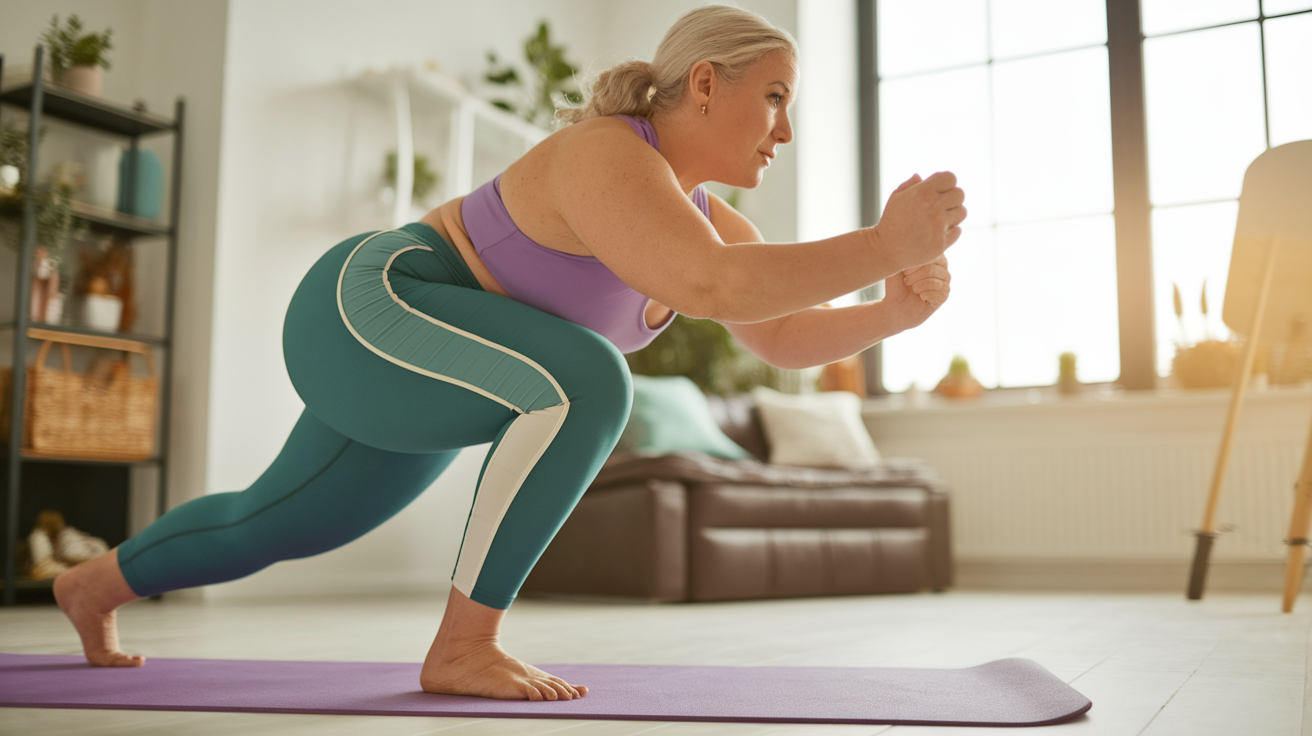
Let’s get real for a moment. You’re over 40, you’re plus size, and you’ve probably been told—directly or indirectly—that fitness isn’t “for you.” Maybe you’ve tried workout programs that left you exhausted, intimidated, or nursing sore joints.
Perhaps you’ve invested in gym memberships you never used because the atmosphere felt unwelcoming. Or maybe you’re just so busy juggling work, family, and everything else that the thought of adding one more thing feels impossible.
Here’s what I know: Those barriers are valid, but they don’t define what’s possible for you.
This isn’t another article promising you’ll “transform your body in 30 days” or look like a fitness model by next month. This is about something more powerful—building genuine strength, boosting your energy levels, and reclaiming confidence in what your body can do. This proven 3-minute full body workout respects where you are right now while challenging you to grow stronger every single day.
Three minutes. That’s less time than it takes to scroll through social media or brew your morning coffee. Yet these focused, effective movements can sculpt your muscles, burn calories, and build the foundation for lasting health changes. No gym required. No expensive equipment. No judgment.
The workout you’re about to discover addresses your body’s unique needs after 40—protecting your joints while strengthening your muscles, working with your metabolism rather than against it, and building momentum without overwhelming you. This isn’t about conforming to unrealistic standards. This is about showing up for yourself, honoring your body, and proving that fitness truly is for every body.
Ready to discover what 3 minutes of intentional movement can do? Let’s begin.
Why 3-Minute Workouts Are Perfect For Plus-Size Women Over 40
The Science Behind Short, Effective Training Sessions
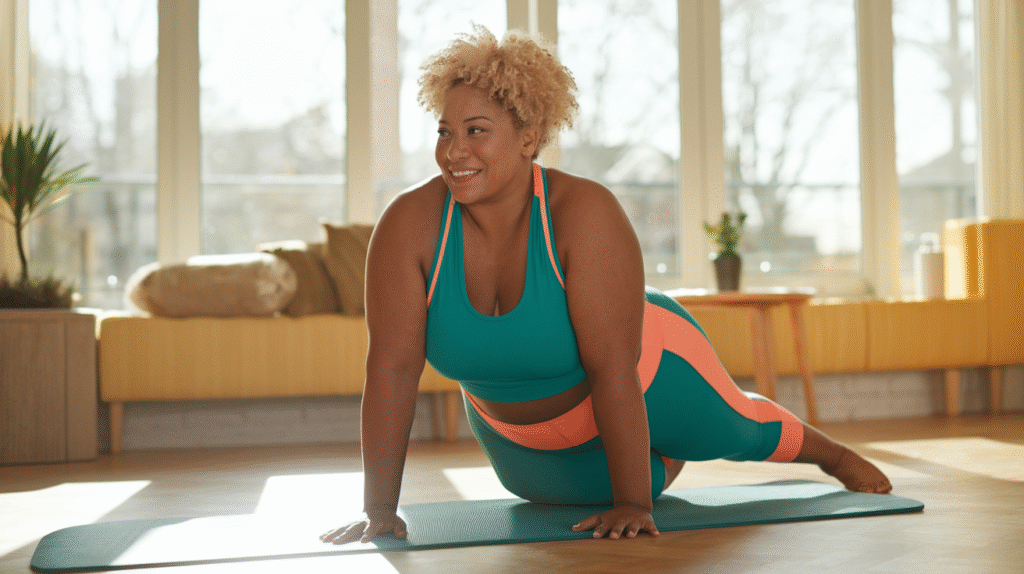
You don’t need hour-long gym sessions to see real results. Research consistently shows that micro-workouts—brief, focused exercise sessions—deliver powerful benefits without the time commitment or physical overwhelm that derails most fitness journeys.
Here’s what happens when you commit to just 3 minutes of movement: Your heart rate elevates, your metabolism gets a boost, and your muscles engage in ways that build strength and endurance over time.
Studies demonstrate that short bursts of activity throughout the day can improve cardiovascular health, enhance insulin sensitivity, and support healthy weight management just as effectively as longer sessions.
The magic lies in consistency. Three minutes doesn’t exhaust your willpower or leave you too sore to move the next day. Instead, it creates a sustainable habit that compounds over time. You’re not trying to do everything at once—you’re building a foundation that lasts.
This approach also prevents the burnout that comes from ambitious workout plans. When you start small, you remove the mental barrier of “I don’t have time” or “I’m too tired.” You prove to yourself that movement is accessible, doable, and genuinely energizing rather than depleting.
Addressing Your Body’s Unique Needs After 40
Your body after 40 works differently than it did at 25, and that’s not a problem—it’s just reality. Hormonal shifts, particularly the decline in estrogen during perimenopause and menopause, affect how your body stores fat, builds muscle, and recovers from exercise. Your metabolism naturally slows, and your joints may feel less forgiving than they once did.
Short, targeted workouts work *with* these changes instead of fighting them. Three-minute sessions give your body enough stimulus to build strength and improve mobility without overtaxing joints that need extra care. The movements in this workout specifically protect your knees, hips, and lower back—the areas most vulnerable to discomfort in plus size women.
You’re also building functional strength that matters in daily life. This isn’t about aesthetics alone; it’s about carrying groceries without strain, playing with grandchildren without exhaustion, and maintaining the independence that keeps you active and engaged for decades to come.
Breaking Free From The “All-Or-Nothing” Mindset
How many times have you thought, “If I can’t do a full workout, why bother?” That perfectionist thinking keeps more women stuck than any physical limitation ever could.
Here’s the truth that will set you free: Three minutes of movement beats zero minutes of perfection every single time. Your body doesn’t care if you did a 60-minute session or a 3-minute one—it responds to the stimulus you give it. Small, consistent actions create powerful transformations that sporadic “perfect” workouts never achieve.
This approach eliminates gym anxiety entirely. You’re moving in your own space, at your own pace, with no one watching or judging. There’s no intimidation factor, no comparing yourself to others, no feeling like you don’t belong.
Real women who’ve embraced this method report incredible changes: better sleep, improved mood, reduced joint pain, and a sense of accomplishment that spills into other areas of life. They’re not winning bodybuilding competitions—they’re winning at life by showing up for themselves consistently. That’s the transformation that truly matters.
The Complete 3-Minute Full Body Workout Breakdown
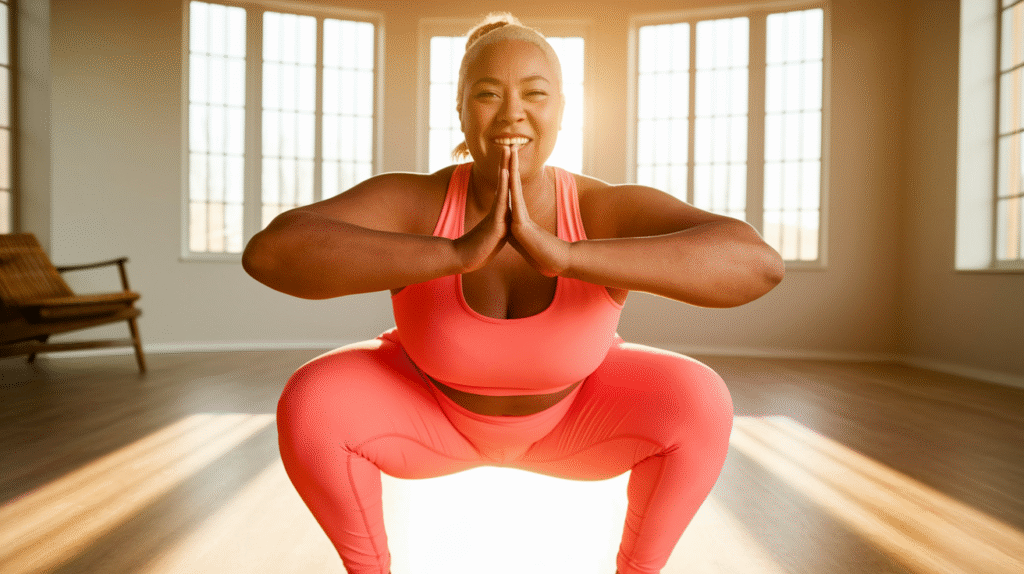
Exercise 1: Modified Standing March (30 seconds)
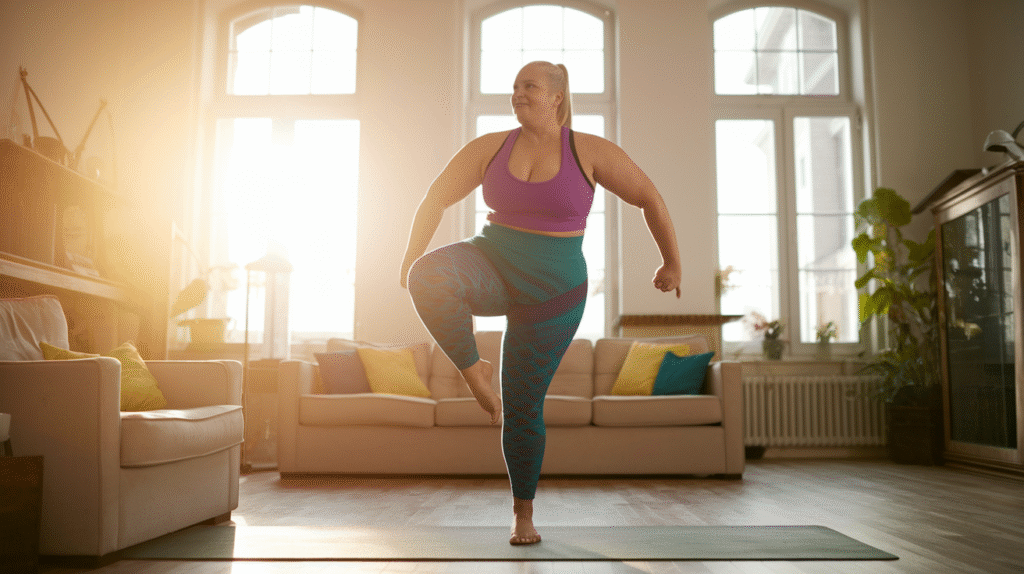
Start standing with your feet hip-width apart, hands resting on your hips or a chair for balance if needed. Begin marching in place, lifting each knee to a comfortable height—this isn’t about getting your knees to your chest; it’s about controlled, rhythmic movement that warms your body.
Focus on engaging your core by pulling your belly button gently toward your spine. Keep your shoulders relaxed and your gaze forward. If you want more intensity, lift your knees slightly higher or add a gentle arm swing. If you need less, keep the movement small and focus on steady breathing.
This exercise warms up every major joint in your body, elevates your heart rate safely, and improves balance—crucial for preventing falls as you age. You’re preparing your body for the work ahead while building cardiovascular endurance.
Exercise 2: Wall Push-Ups (30 seconds)
Stand facing a wall, about two feet away (closer for easier, farther for harder). Place your hands flat on the wall at shoulder height and width. Keeping your body in a straight line from head to heels, bend your elbows to bring your chest toward the wall, then push back to starting position.
This movement is deceptively effective. Wall push-ups build upper body strength in your chest, shoulders, and triceps while engaging your core for stability. Many women underestimate this exercise because it’s not done on the floor, but proper wall push-ups deliver serious results.
Keep your core tight throughout the movement—don’t let your hips sag or stick out. Breathe in as you lower toward the wall, breathe out as you push away. As you get stronger over weeks, step farther from the wall to increase the challenge.
Exercise 3: Supported Squats (30 seconds)
Stand facing a sturdy chair or counter, holding onto it lightly for balance. Position your feet slightly wider than hip-width, toes pointing slightly outward. Lower your hips back and down as if sitting into a chair, keeping your chest lifted and weight in your heels.
Only go as low as feels comfortable—this might be a small bend at first, and that’s perfectly fine. The key is proper form: knees tracking over toes (not caving inward), back staying neutral, and core engaged. Push through your heels to return to standing.
Squats are the ultimate lower body sculptor, working your glutes, quadriceps, and hamstrings while protecting your knees when done correctly. This functional movement directly improves your ability to get up from chairs, climb stairs, and move through daily activities with ease and confidence.
Exercise 4: Standing Side Reaches (30 seconds)
Stand with feet hip-width apart, arms at your sides. Reach your right arm up and over your head, leaning gently to the left side. You should feel a stretch along your right side from hip to shoulder. Return to center and repeat on the other side, alternating for 30 seconds.
Keep the movement controlled and deliberate—this isn’t about how far you can reach, but about engaging your obliques (side abdominal muscles) and improving lateral flexibility. Your hips should stay facing forward; the movement comes from your waist.
This exercise supports better posture, reduces lower back tension, and strengthens the muscles that stabilize your spine. Women who sit for long periods especially benefit from this movement’s ability to counteract the hunched position that creates back pain.
Exercise 5: Seated or Standing Arm Circles (30 seconds)
Extend your arms out to the sides at shoulder height (or slightly lower if needed). Make small circles forward for 15 seconds, then reverse direction for 15 seconds. Keep your shoulders relaxed down away from your ears.
If standing feels unstable, sit in a chair with your feet flat on the floor. The movement remains effective either way. Focus on controlled circles that engage your shoulder muscles and upper back rather than just swinging your arms.
This simple movement improves shoulder mobility, strengthens your upper back, and directly translates to easier daily tasks like reaching overhead, carrying bags, or lifting objects. Many women notice reduced shoulder tension and better posture within weeks of consistent practice.
Exercise 6: Cool-Down Marching With Deep Breathing (60 seconds)
Return to gentle marching in place, gradually slowing your pace. As you march, practice deep breathing: inhale through your nose for four counts, exhale through your mouth for four counts. Let your arms hang naturally or rest on your hips.
This intentional cool-down brings your heart rate down safely while reducing stress through mindful breathing. Use this minute to check in with your body—notice which muscles you worked, appreciate what you just accomplished, and stretch gently if any areas feel tight.
Proper cool-down supports recovery and reduces muscle soreness. It’s also a moment of self-care that reinforces the positive experience of movement, making you more likely to show up again tomorrow.
Maximizing Results: How To Progress And Stay Consistent
Creating Your Sustainable Workout Schedule
The best workout schedule is the one you’ll actually follow. For most busy women, that means strategically placing your 3-minute session where it naturally fits into your existing routine.
Morning sessions energize your day and get your workout done before life gets chaotic. Try doing your 3 minutes right after brushing your teeth—you’re already in the bathroom, so transition straight to your workout space. This habit stacking makes consistency almost automatic.
Lunch break sessions provide a powerful midday reset. If you work from home or have access to a private space, this 3-minute movement breaks up prolonged sitting and improves afternoon energy and focus. You’ll return to work feeling refreshed rather than sluggish.
Evening sessions help you wind down from the day’s stress. Doing your workout before dinner or while dinner cooks gives you a mental transition from work mode to home mode. Many women find this timing improves their sleep quality.
Track your progress without obsessing over numbers. Notice how you feel—are you sleeping better? Do you have more energy? Are daily activities getting easier? Pay attention to strength gains: Can you do more repetitions? Go deeper in your squats? These victories matter more than any scale number.
Progressive Overload For Beginners
Your body adapts to exercise, which means what challenges you today won’t challenge you in four weeks. Progressive overload—gradually increasing the difficulty of your workouts—ensures you keep building strength rather than plateauing.
Start by mastering proper form for each exercise. For the first two weeks, focus solely on technique and consistency. Once movements feel natural, add repetitions. If you’re doing 8 squats in 30 seconds, work toward 10, then 12.
After four to six weeks of consistent practice, consider adding light resistance. Water bottles work perfectly as beginner weights for arm circles. A resistance band adds challenge to squats. You don’t need expensive equipment—creativity and consistency deliver results.
Listen to your body carefully. There’s a difference between the productive challenge of working muscles and the warning sign of pain. Challenge feels like effort, burning muscles, and elevated breathing. Pain feels sharp, localized, or wrong. Honor that distinction and adjust accordingly.
Combining Movement With Nutrition For Powerful Results
Exercise and nutrition work together synergistically. You don’t need restrictive dieting or complicated meal plans—you need sustainable nutrition that supports your active lifestyle.
Focus on protein at each meal to support muscle recovery and keep you satisfied. Aim for lean proteins, but don’t stress about perfection. Staying hydrated is crucial for joint health and recovery—plus size women especially benefit from adequate water intake to support metabolism and reduce inflammation.
Before your workout, you don’t need special fuel for a 3-minute session. Just avoid exercising immediately after a large meal. After your workout, eat a balanced meal within an hour or two that includes protein and vegetables. This supports recovery and muscle building.
Remember: You cannot out-exercise a poor diet, but you also shouldn’t use nutrition as punishment for your body. Food is fuel and pleasure. Movement is self-care and strength. Both deserve respect and balance.
Overcoming Mental Barriers And Building Confidence
Redefining What “Fit” Looks Like
Fitness culture has sold us a lie: that “fit” looks one specific way. The truth? Fit looks like a plus size woman who can carry her groceries, play with her kids, and move through her day with energy and strength. Fit looks like you showing up for yourself consistently, regardless of your size.
Your worth isn’t determined by your weight, and your health isn’t defined by your dress size. You can be plus size and healthy. You can be plus size and strong. You can be plus size and athletic. These aren’t contradictions—they’re realities that the fitness industry often ignores.
Celebrate non-scale victories religiously. Did you sleep better this week? That’s a victory. Did you complete all seven days of workouts? That’s a victory. Can you squat lower than last month? Victory. Do you feel more confident in your body? Major victory. These changes matter infinitely more than numbers on a scale.
Body positivity and health goals coexist beautifully. You can love and accept your body exactly as it is today while also wanting to feel stronger, more energetic, and more capable. These aren’t opposing forces—they’re complementary paths to holistic wellbeing.
Dealing With Doubt And Comparison
Social media shows you everyone’s highlight reel, not their behind-the-scenes struggles. That fitness influencer didn’t start with a six-pack—she started exactly where you are, feeling uncertain and possibly intimidated. Every expert was once a beginner who refused to quit.
When comparison creeps in, redirect your focus immediately. Your only competition is the person you were yesterday. Are you stronger than last week? More consistent than last month? That’s the only comparison that matters.
Create a supportive environment that reinforces your commitment. Join online communities specifically for plus size women in fitness. Find a workout buddy who shares your goals. Practice positive self-talk—speak to yourself with the same kindness you’d offer a dear friend.
When motivation dips—and it will—remember that discipline matters more than motivation. Motivation is a feeling that comes and goes. Discipline is the decision to show up regardless of how you feel. Three minutes is short enough that you can do it even when motivation is zero. Start the workout, and motivation often shows up midway through.
Building A Mindset That Lasts
The mental shift from viewing exercise as punishment to embracing it as self-care changes everything. You’re not working out because your body is wrong. You’re moving because your body is valuable and deserves care.
Showing up imperfectly beats not showing up at all. Did you only do 2 minutes instead of 3? That’s still a win. Did you modify every exercise? Still a win. Did you take two days off but come back on day three? Win. Progress isn’t linear, and perfection isn’t the goal.
These 3 minutes of movement are an act of self-respect. You’re telling yourself, “I matter. My health matters. My strength matters.” That message, repeated daily, transforms not just your body but your entire relationship with yourself.
Consistency creates compound interest for your health. Each 3-minute session might feel small, but they accumulate into weeks, months, and years of strength building, confidence growing, and health improving. Small daily actions create powerful transformations that dramatic sporadic efforts never achieve.
Start Now
You have everything you need to start right now. No gym membership required. No fancy equipment needed. No excuses left standing between you and the stronger, more energized version of yourself that’s waiting just three minutes away.
This science-backed workout respects your body’s unique needs as a plus size woman over 40 while challenging you to build genuine strength and confidence. The movements protect your joints, work with your metabolism, and fit into the busiest schedule. Most importantly, they prove that fitness truly is for every body—including yours.
Three minutes is enough. It’s enough to elevate your heart rate, engage your muscles, and create momentum toward lasting change. It’s enough to shift your mindset from “I can’t” to “I did.” It’s enough to build the consistency that transforms lives.
Here’s your challenge: Commit to trying this workout every day for seven days. Just seven days. Notice how you feel—physically, mentally, emotionally. Pay attention to your energy levels, your sleep quality, your confidence. Track the small victories that matter more than any scale number.
Share your journey with other women who need encouragement. Your story of showing up, of starting where you are, of refusing to let age or size define your capabilities—that story has the power to inspire someone else to take their first step.
Remember this truth: Every expert was once a beginner who refused to quit. Every strong woman was once someone taking her first uncertain steps toward fitness. Every transformation started with a single decision to try.
You are capable of more than you know. Your body is stronger than you think. And three minutes of intentional, respectful movement is the powerful beginning of your fitness journey.
Start today. Your future self will thank you.
Ready to begin? Set a timer for 3 minutes, press play on your favorite energizing song, and move through the workout right now. No waiting for Monday. No “I’ll start tomorrow.” Just you, three minutes, and the decision to show up for yourself. You’ve got this.