20 minute leg workout for women over 40
Let’s be honest—most leg workouts you find online were designed for 25-year-olds with unlimited time and knees that don’t talk back. You know the ones: endless jumping exercises, hour-long gym sessions, and movements that leave you hobbling for days.
That approach doesn’t work for us anymore. And honestly? It doesn’t need to.
Here’s what I’ve discovered after years of training women over 40: focused, 20-minute strength sessions deliver better results than those marathon workouts ever did. Your body is smarter now. It responds to quality over quantity, and it needs workouts that build strength while respecting the changes you’re experiencing.
This isn’t about turning back the clock. It’s about building a stronger, more capable version of yourself right now—in just 20 minutes, two to three times per week.
The science backs this up completely. Research shows that short, intense strength sessions boost metabolism, preserve bone density, and build functional muscle more effectively than long cardio slogs. Plus, when you’re juggling work, family, and everything else life throws at you, a workout that fits into your lunch break or before the kids wake up is actually one you’ll do consistently.
In this guide, you’ll learn exactly why women over 40 need a different approach to leg training, discover the six most effective exercises that target every major muscle group, and get a complete workout structure you can start using today. No complicated equipment. No gym membership required. Just proven results that fit your real life.
Ready to transform your lower body strength? Let’s build legs that carry you confidently through every adventure ahead.
Why Women Over 40 Need a Different Approach to Leg Workouts
Understanding Your Changing Body
Your body after 40 isn’t broken—it’s evolved. But pretending nothing has changed sets you up for frustration and injury.
Starting around age 40, declining estrogen levels trigger a gradual loss of muscle mass. Without intervention, you lose about 3-5% of your muscle mass per decade. That might not sound dramatic, but it directly impacts your metabolism, bone density, and overall strength. Your legs contain the largest muscle groups in your body, which means they’re your most powerful tool for fighting back against this natural decline.
Here’s the good news: strength training completely reverses this trend. When you challenge your leg muscles with resistance exercises, you don’t just maintain muscle—you build it. This process triggers metabolic benefits that extend far beyond your workout, keeping your metabolism active and your bones dense.
Bone density deserves special attention. Weight-bearing leg exercises create the exact stimulus your bones need to stay strong. Every squat, lunge, and deadlift sends signals to your skeletal system to reinforce itself. This isn’t just about fitness—it’s about maintaining independence and preventing fractures as you age.
The Amazing Benefits of Focused Leg Training
Traditional cardio has its place, but strength training delivers benefits that hours on the treadmill simply can’t match.
When you build muscle in your legs, you’re installing a metabolic furnace that burns calories 24/7. Muscle tissue requires energy just to exist, which means every pound of lean muscle you add increases your resting metabolic rate. This matters enormously when hormonal changes are working against your metabolism.
Balance and stability become non-negotiable priorities after 40. Single-leg exercises and compound movements strengthen the stabilizer muscles around your hips, knees, and ankles. This translates directly to better balance when you’re hiking, playing with grandkids, or simply navigating icy sidewalks. Fall prevention isn’t glamorous, but it’s absolutely critical.
Beyond the physical benefits, there’s something deeply empowering about feeling strong. When you can lift heavy grocery bags without strain, climb stairs without fatigue, or squat down and stand up effortlessly, you move through the world differently. That confidence radiates into every area of your life.
Common Mistakes to Avoid
The biggest mistake I see? Skipping the warm-up because you’re short on time. Your joints need preparation now more than ever. Cold muscles and stiff joints don’t respond well to immediate heavy loads. Those three minutes of dynamic movement aren’t optional—they’re insurance against injury.
Another trap: doing endless cardio while avoiding weights. Many women fear that strength training will make them “bulky,” so they stick to cardio classes and elliptical sessions. The reality? Building significant muscle mass requires specific training and nutrition that won’t happen accidentally. What will happen is you’ll get stronger, leaner, and more capable.
Finally, neglecting recovery between leg workouts sabotages your results. Your muscles don’t grow during workouts—they grow during recovery. Training legs every day doesn’t accelerate progress; it prevents it. Two to three focused sessions per week, with rest days in between, delivers optimal results.
The Complete 20-Minute Leg Workout Breakdown
Essential Equipment You’ll Need
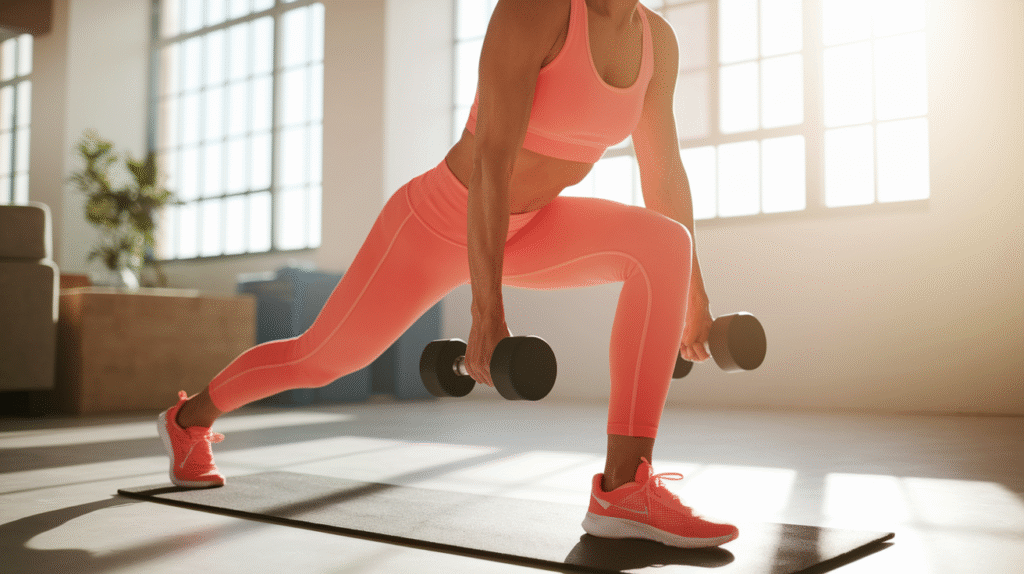
You don’t need a garage full of equipment to build strong legs. A pair of dumbbells is your primary tool, and choosing the right weight matters more than you think.
Start with dumbbells you can control through full range of motion while maintaining proper form. For most women beginning this program, that’s 10-15 pounds for upper body exercises and 15-25 pounds for lower body movements. You should feel challenged by the last few reps of each set, but never so heavy that your form breaks down.
If you’re working out at home without equipment, bodyweight modifications still deliver amazing results. Squats, lunges, and glute bridges performed with proper form and tempo create significant muscle stimulus. You can increase difficulty by slowing down the movement, adding pulses, or incorporating isometric holds.
Optional accessories that enhance your experience include a yoga mat for floor exercises, resistance bands for added challenge, and a sturdy chair or bench for balance support during single-leg movements. None of these are required, but they’re nice to have.
The Perfect Workout Structure
This 20-minute session breaks down into three essential phases, each serving a specific purpose.
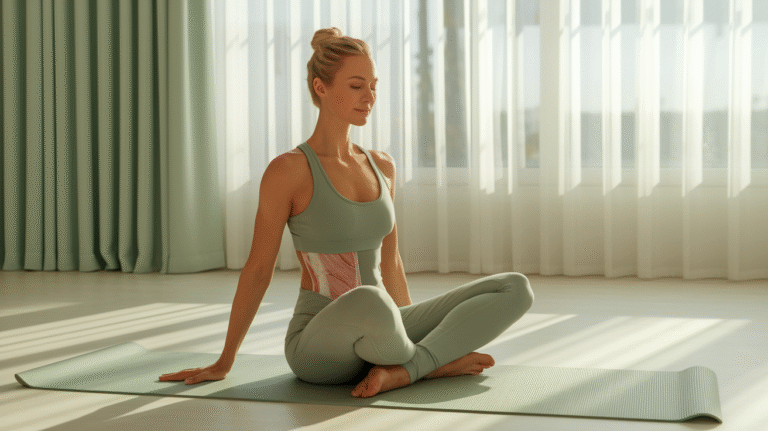
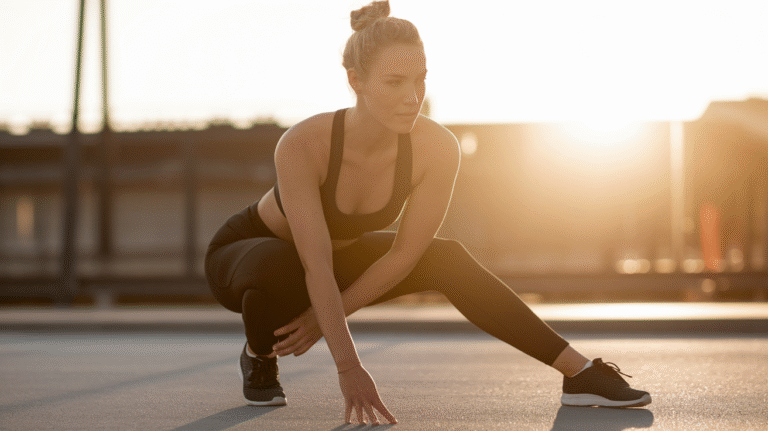
Your warm-up (3 minutes) uses dynamic movements to increase blood flow, lubricate joints, and activate the muscles you’re about to challenge. Think leg swings, bodyweight squats, and walking lunges without weights. This isn’t wasted time—it’s preparation that makes everything else more effective and safer.
The main circuit (15 minutes) contains six proven exercises targeting your quads, hamstrings, glutes, and calves. You’ll perform each exercise for 45 seconds, followed by 15 seconds of transition time. Complete three full rounds of all six exercises. This structure maintains intensity while allowing brief recovery between movements.
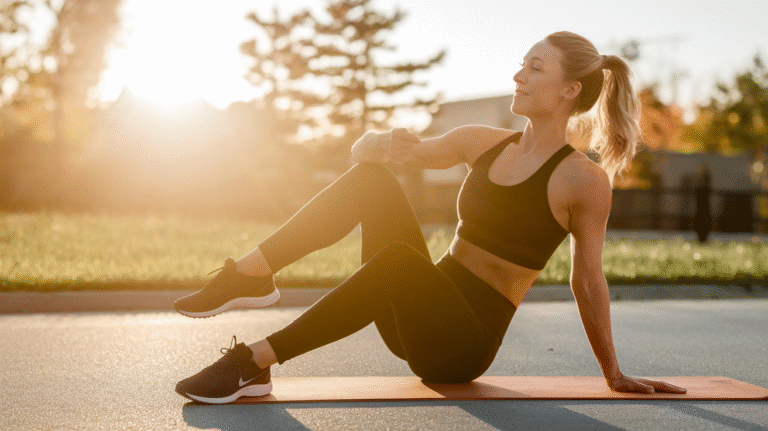
Your cool-down (2 minutes) includes essential stretches for flexibility and recovery. Focus on quad stretches, hamstring stretches, and hip flexor stretches. These final minutes help reduce soreness and maintain mobility.
Exercise Order That Maximizes Results
The sequence of exercises isn’t random—it’s strategically designed for optimal performance and safety.
Starting with compound movements like goblet squats makes sense because you’re freshest at the beginning. These exercises require the most energy and coordination, so you tackle them when your form is sharpest and your muscles aren’t fatigued.
The smart progression from bilateral exercises (both legs working together) to unilateral movements (single-leg work) follows natural fatigue patterns. Your legs work together efficiently at first, then you challenge each leg individually when they’re partially fatigued. This approach builds balanced strength and exposes any side-to-side weaknesses.
Maintaining intensity throughout the full 20 minutes requires mental commitment. When you feel like slowing down, remember that these brief moments of challenge create the adaptation you’re seeking. Push through with proper form, and the results will follow.
The 6 Most Effective Exercises for Legs Over 40
Exercise 1: Dumbbell Goblet Squats
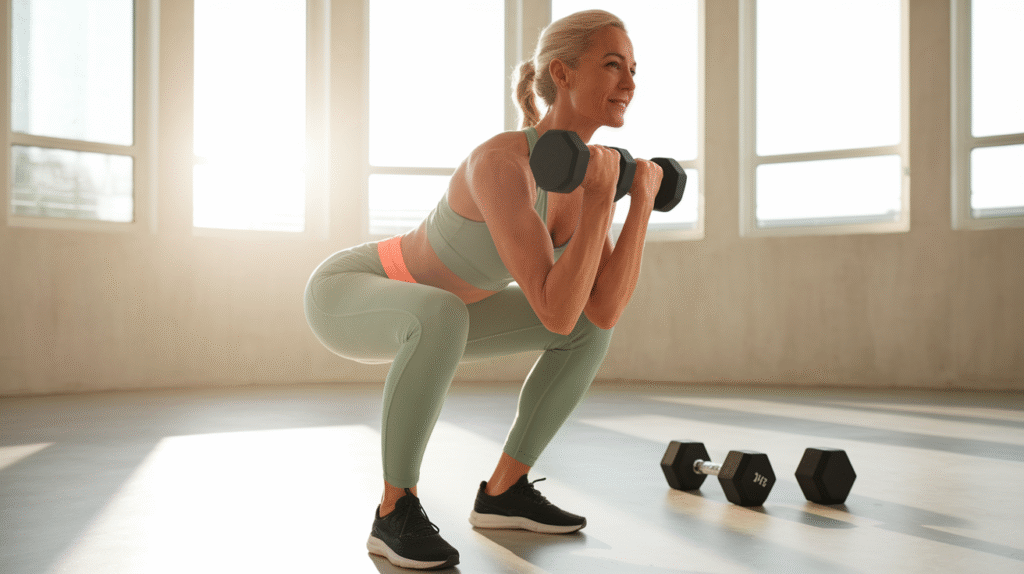
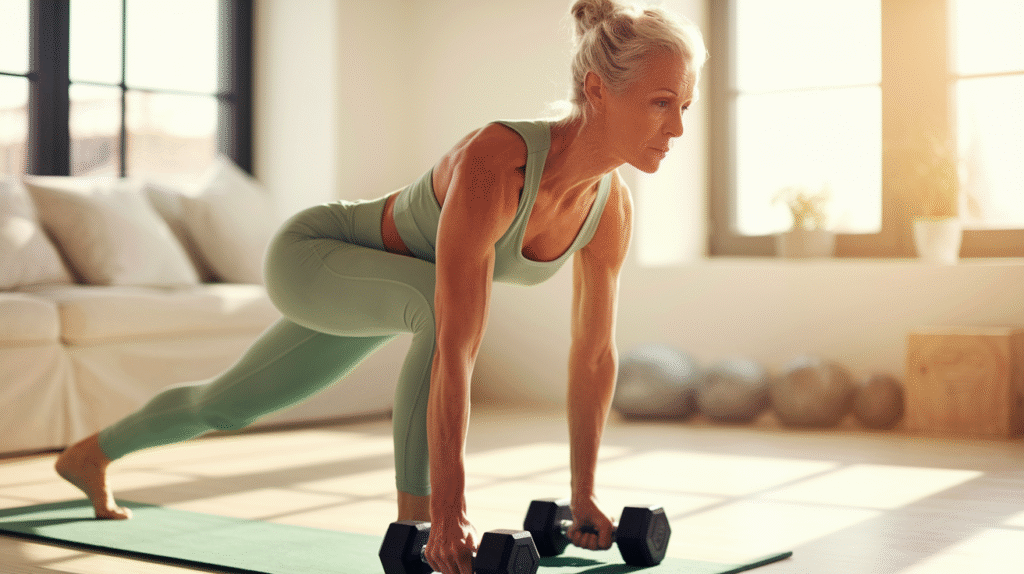
Hold a single dumbbell vertically at chest height, gripping the top end with both hands. Stand with feet slightly wider than hip-width, toes pointed slightly outward. This is your power position for building incredible lower body strength.
Lower yourself by pushing your hips back and bending your knees, keeping your chest proud and core engaged. Descend until your thighs are parallel to the floor—or as low as you can go while maintaining a neutral spine. The dumbbell position actually helps you maintain proper posture by counterbalancing your weight.
This movement builds your glutes, quads, and core simultaneously while being remarkably knee-friendly. The goblet position encourages you to sit back into your hips rather than letting your knees travel too far forward, which protects your knee joints.
If you have knee sensitivity, reduce your range of motion. Quarter squats or half squats still provide significant benefits while you build strength and mobility. Never push through sharp pain—work within your comfortable range and gradually expand it over time.
Perform 12-15 repetitions per set, focusing on controlled movement both down and up. The lifting phase should be powerful but never rushed.
Exercise 2: Romanian Deadlifts
Romanian deadlifts target your hamstrings and glutes with laser precision, and these muscles desperately need attention after 40. Hours of sitting weakens your posterior chain, creating imbalances that affect everything from your posture to your lower back health.
Hold dumbbells in front of your thighs with palms facing your body. Stand tall with feet hip-width apart and a slight bend in your knees. This starting position is crucial—lock it in before every rep.
Hinge at your hips, pushing them straight back while keeping your back flat and core tight. The dumbbells should travel straight down your legs, staying close to your body. You should feel a powerful stretch in your hamstrings. Lower until you feel that stretch intensify, typically just below your knees, then drive your hips forward to return to standing.
The simple cue that makes all the difference: imagine closing a car door with your hips. That backward hip hinge movement is exactly what you’re looking for. Your knees stay mostly straight (soft, not locked), and all the movement comes from your hips.
Protect your lower back by maintaining a neutral spine throughout the movement. If you feel your back rounding, you’ve gone too low. Reduce your range of motion and focus on the hip hinge pattern.
Complete 10-12 repetitions per set, emphasizing the stretch and squeeze at each end of the movement.
Exercise 3: Walking or Reverse Lunges
Lunges build single-leg strength, improve balance, and create functional power for everyday activities. But choosing the right variation matters for your knees and confidence level.
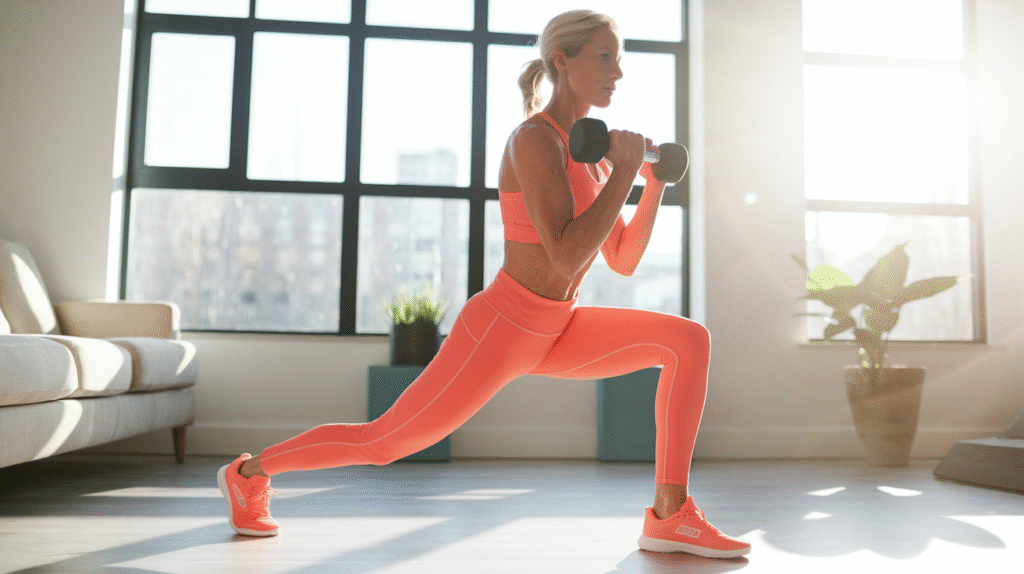
Walking lunges require more space and balance but feel more natural for many people. Step forward with one leg, lowering your back knee toward the ground while keeping your front shin vertical. Push through your front heel to step forward with the opposite leg, continuing this pattern.
Reverse lunges are gentler on the knees and easier to control. Step backward instead of forward, lowering into the lunge position, then push through your front heel to return to standing. This variation reduces the impact on your front knee while still delivering excellent results.
For both variations, maintain an upright torso and engage your core. Your front knee should track over your toes, never caving inward. If balance is challenging, perform stationary lunges instead, stepping back to the same starting position after each rep.
The key to knee-friendly execution is controlling your descent. Don’t drop quickly into the bottom position—lower yourself with control, and your knees will thank you.
Perform 10-12 lunges per leg (20-24 total repetitions), alternating sides or completing all reps on one leg before switching.
Exercise 4: Lateral Lunges
Most leg workouts ignore side-to-side movement, but your body moves in multiple directions in real life. Lateral lunges strengthen your inner and outer thighs while building hip stability that prevents injuries.
Stand tall with feet together. Step your right foot directly to the side, keeping your left leg straight. Bend your right knee and push your hips back, lowering into a side lunge. Your right knee should track over your right toes while your left leg stays extended. Push through your right heel to return to standing, bringing your feet back together.
This movement challenges muscles that rarely get targeted in traditional forward-and-back exercises. Your adductors (inner thighs) and abductors (outer hips) work hard to control the lateral motion, building stability that improves your balance and prevents common hip injuries.
If you have tight hips or limited space, modify by reducing your step width and range of motion. Even a small lateral movement provides benefits. You can also keep your hands on your hips instead of holding dumbbells until you master the movement pattern.
Focus on keeping your chest up and your weight in your heel as you lower into each lateral lunge. This positioning protects your knees and maximizes glute activation.
Complete 8-10 lunges per side (16-20 total repetitions), moving with control and intention.
Exercise 5: Single-Leg Deadlifts or Split Squats
Unilateral training reveals and corrects strength imbalances that bilateral exercises can hide. Your dominant leg often compensates for your weaker side during regular squats and deadlifts, but single-leg work forces each leg to pull its own weight.
For single-leg deadlifts, hold a dumbbell in your right hand and balance on your left leg. Hinge at your hip, extending your right leg behind you for balance while lowering the dumbbell toward the ground. Your back should stay flat and your core engaged. Return to standing by driving your left hip forward. This movement improves coordination, strengthens your glutes and hamstrings, and challenges your balance.
Split squats offer an alternative that’s easier to master. Place your back foot on a chair or bench, keeping most of your weight on your front leg. Lower yourself by bending your front knee until your thigh is parallel to the floor, then push through your front heel to stand. This variation builds serious quad and glute strength while improving balance.
Both exercises require patience as you develop the coordination and strength they demand. Start without weights or with light dumbbells, focusing on smooth, controlled movement. You might wobble at first—that’s your stabilizer muscles learning to fire properly.
Perform 8-10 repetitions per leg for either exercise, maintaining strict form throughout.
Exercise 6: Glute Bridges or Hip Thrusts
We’re finishing with the ultimate glute builder—a movement that directly counteracts all the sitting you do and sculpts strong, powerful hips.
For glute bridges, lie on your back with knees bent and feet flat on the floor, hip-width apart. Your feet should be close enough that you can nearly touch your heels with your fingertips. Press through your heels to lift your hips toward the ceiling, squeezing your glutes hard at the top. Your body should form a straight line from shoulders to knees. Lower with control and repeat.
Hip thrusts elevate the intensity by placing your upper back on a bench or sturdy chair. This increased range of motion allows for greater glute activation. Position yourself so your shoulder blades rest on the bench edge, feet flat on the floor. Drive through your heels to lift your hips until your thighs are parallel to the floor, squeeze your glutes intensely, then lower back down.
These exercises activate muscles that sitting all day essentially turns off. Weak glutes contribute to lower back pain, poor posture, and decreased athletic performance. Strengthening them transforms how you move.
Add resistance safely by placing a dumbbell across your hips, holding it in place with your hands. Start light and increase weight as you get stronger. The burn you feel in your glutes is exactly what you want—that’s your muscles working hard.
Complete 15-20 repetitions, focusing on the squeeze at the top of each rep. That peak contraction is where the magic happens.
Essential Tips for Success and Sustainable Results
Creating Your Weekly Routine
Consistency beats intensity every time, and building a sustainable schedule ensures you’ll stick with this program long enough to see transformation.
Perform this leg workout two to three times per week, with at least one rest day between sessions. Your muscles need 48 hours to recover and rebuild after challenging strength work. Training Monday, Wednesday, and Friday works perfectly, or choose Tuesday and Saturday if you prefer twice-weekly sessions.
Balance your leg days with upper body work and complete rest days. A simple weekly schedule might include two leg days, two upper body days, one full-body day, and two rest days. This approach builds total-body strength while preventing overtraining.
For women juggling careers, family responsibilities, and personal commitments, the beauty of 20-minute workouts is their flexibility. Early morning before the household wakes up, during lunch breaks, or after dinner—these sessions fit into real life. Block them in your calendar like important appointments, because they are.
Nutrition and Recovery Strategies
Your workout is only half the equation. What you do between sessions determines your results.
Protein becomes increasingly important after 40 for maintaining and building muscle. Aim for 20-30 grams of protein within an hour after your workout, and distribute protein throughout your day. Simple options include Greek yogurt, eggs, chicken, fish, protein shakes, or plant-based alternatives like lentils and tofu. You don’t need to obsess over exact numbers, but prioritizing protein at each meal supports your strength goals.
Hydration matters more than you might realize. Water helps transport nutrients to your muscles, removes waste products, and maintains joint lubrication. Drink water before, during, and after your workout, and aim for half your body weight in ounces daily. If you weigh 150 pounds, that’s 75 ounces of water spread throughout your day.
Easy recovery practices speed up your results and reduce soreness. Gentle movement on rest days—walking, stretching, or yoga—promotes blood flow without taxing your muscles. Quality sleep is non-negotiable; your body repairs and builds muscle while you sleep. Aim for 7-9 hours nightly, and notice how much better you feel and perform.
Tracking Progress Without Obsessing
The scale tells an incomplete story, especially when you’re building muscle while losing fat. Your weight might stay the same or even increase slightly while your body composition dramatically improves.
Practical ways to measure strength gains include tracking the weights you use for each exercise, noting how many reps you can complete with good form, and paying attention to how exercises feel over time. If goblet squats with 15-pound dumbbells felt challenging four weeks ago but feel manageable now, that’s measurable progress.
Celebrate non-scale victories that matter more than numbers: climbing stairs without breathing hard, carrying groceries with ease, noticing muscle definition in your legs, feeling more energetic throughout the day, or simply feeling proud of your consistency. These wins compound into life-changing transformation.
Increase weights or difficulty when you can complete all prescribed reps with good form and feel like you could do 2-3 more. That’s your signal to progress. Add 2-5 pounds to your dumbbells, increase reps by 2-3, or advance to a more challenging variation of the exercise.
Overcoming Common Challenges
Joint discomfort doesn’t mean you can’t build strength—it means you need to work smarter. Reduce your range of motion, decrease weights, or choose exercise variations that feel better. Quarter squats still build strength. Romanian deadlifts with lighter weights still activate your hamstrings. Honor your body’s signals while staying committed to movement.
Working around injuries or limitations requires creativity but not surrender. If your knee hurts during lunges, try step-ups or wall sits instead. If your back bothers you during deadlifts, focus on glute bridges and split squats. There’s always a way to train effectively within your current capabilities.
Staying motivated when progress feels slow requires shifting your perspective. Building strength is a long game, not a sprint. Every workout makes you stronger, even when you can’t see immediate changes. Trust the process, show up consistently, and remember that you’re investing in your health for decades to come.
In Closing
This complete 20-minute leg workout delivers exactly what you need: effective results without demanding hours you don’t have. The six essential exercises—goblet squats, Romanian deadlifts, lunges, lateral lunges, single-leg work, and glute bridges—target every major muscle group in your lower body while respecting your joints and building functional strength you’ll use every single day.
You don’t need expensive gym memberships, complicated equipment, or endless time commitments. You need consistency with a proven routine that works with your changing body, not against it. Two to three sessions per week, performed with focus and proper form, create amazing transformation over time.
The strength you build extends far beyond your legs. You’re investing in bone density that protects you from fractures, metabolism that keeps you energized, balance that prevents falls, and confidence that radiates into every area of your life. You’re proving that 40 isn’t a limitation—it’s an opportunity to become the strongest version of yourself.
Remember, this journey isn’t about achieving perfection or comparing yourself to anyone else. It’s about showing up for yourself, honoring your body’s needs, and building strength that serves you for decades to come. Your body is capable of incredible things, regardless of what the calendar says.
Start with one workout this week. Feel how empowering it is to move with intention and challenge yourself. Notice how your legs feel stronger, how everyday activities become easier, how your confidence grows with each session. That’s the transformation you’re creating—20 powerful minutes at a time.
Your strongest legs are ahead of you, not behind you. Let’s build them together.