15 minute core strength women over 40
Let’s talk about what nobody mentions at your annual checkup: that feeling when you reach for something on the top shelf and your back protests. Or when you’re playing with your kids or grandkids and realize you’re holding back because you’re not sure your body can keep up.
Here’s the truth: after 40, your core isn’t just about looking good in jeans. It’s about moving through life with confidence, strength, and zero back pain. And the best part? You don’t need hours at the gym to transform your core strength.
Hormonal changes shift how your body stores fat and builds muscle. Your metabolism doesn’t work quite like it did at 25. Your posture might be suffering from years at a desk or caring for others. These are real changes, and they require a real solution—not some trendy workout that leaves you exhausted and injured.
This guide delivers exactly that: proven 15-minute routines designed specifically for your body’s needs right now. You’ll discover exercises that work *with* your changing physiology, not against it. We’re focusing on movements that build genuine functional strength—the kind that makes everyday activities easier and keeps you active for decades to come.
Set your expectations right here: consistent core work won’t give you a six-pack overnight (and honestly, who has time for that?). What it *will* do is boost your energy, improve your posture, reduce pain, and give you the confidence that comes from feeling strong in your own body. That’s worth way more than any magazine cover.
Why Core Strength Is Essential for Women Over 40

The Real Benefits Beyond a Flat Stomach
Your core supports literally everything you do. Every time you lift groceries, pick up a toddler, garden, or even just stand up from your desk—your core is working. After 40, strengthening these muscles becomes absolutely critical for maintaining your quality of life.
During perimenopause and menopause, your body goes through massive shifts. Estrogen levels drop, which affects muscle mass and bone density. A strong core helps stabilize your entire body during this transition, providing the foundation you need to stay active and pain-free.
If you sit at a desk for work, you already know about back pain. Research shows that targeted core exercises reduce chronic lower back pain more effectively than many medical interventions. Your core muscles—when properly strengthened—support your spine and take pressure off your lower back. This means fewer afternoon aches and more energy to do what you love.
Balance becomes increasingly important as we age. Falls are a leading cause of injury in women over 50, and your core is central to maintaining stability. Strong core muscles improve your proprioception (your body’s awareness in space) and help you catch yourself before a stumble becomes a fall.
And yes, let’s talk about metabolism. While core exercises alone won’t melt away fat, building lean muscle mass absolutely supports healthy weight management. Muscle tissue burns more calories at rest than fat tissue, so strengthening your core contributes to a more efficient metabolism overall.
What Happens to Your Core After 40
Starting around age 40, women naturally lose muscle mass at a rate of about 3-8% per decade. This process, called sarcopenia, accelerates after 60 if you don’t actively work against it. Your midsection is particularly vulnerable because these muscles often get neglected in daily activities.
Hormonal shifts during perimenopause and menopause change where your body prefers to store fat. Many women notice increased belly fat even without changes to their diet or activity level. This isn’t your fault—it’s biology. But strengthening your core muscles helps counteract this tendency by improving your body composition and supporting metabolic health.
Here’s something frustrating: those traditional ab exercises you did in your 20s and 30s might not deliver the same results anymore. Crunches and sit-ups can actually strain your neck and back, especially if you’ve had children or experienced diastasis recti (abdominal separation). Your body needs different, smarter exercises now.
The connection between core strength and bone density is powerful. Weight-bearing exercises that engage your core help maintain bone strength, reducing your risk of osteoporosis. This is especially crucial as estrogen levels decline, since estrogen plays a protective role in bone health.
The Perfect Timing: Why 15 Minutes Works
Science backs up what busy women already know: consistency beats duration every single time. Research published in sports medicine journals shows that focused, high-quality exercise sessions of 10-20 minutes produce significant strength gains when performed regularly.
Your muscles don’t know if you’ve been working out for 15 minutes or 60 minutes—they only respond to the stimulus you provide. Fifteen minutes of targeted, intentional core work creates enough challenge to trigger adaptation and strength building without overtaxing your recovery systems.
Let’s be honest about your life: you’re juggling work, possibly caring for aging parents, maybe raising kids, maintaining relationships, and trying to have five minutes to yourself. A 15-minute commitment is realistic. It fits before work, during lunch, after the kids are in bed, or while dinner cooks. You can actually stick with it, which means you’ll actually see results.
The sweet spot for building strength without overtraining is crucial after 40. Your recovery takes a bit longer than it used to, and that’s completely normal. Fifteen-minute sessions allow you to train intensely enough to build strength while giving your body adequate time to repair and adapt. This prevents burnout, reduces injury risk, and keeps you motivated for the long haul.
Essential Core Exercises for Women Over 40
Low-Impact Moves That Deliver Amazing Results
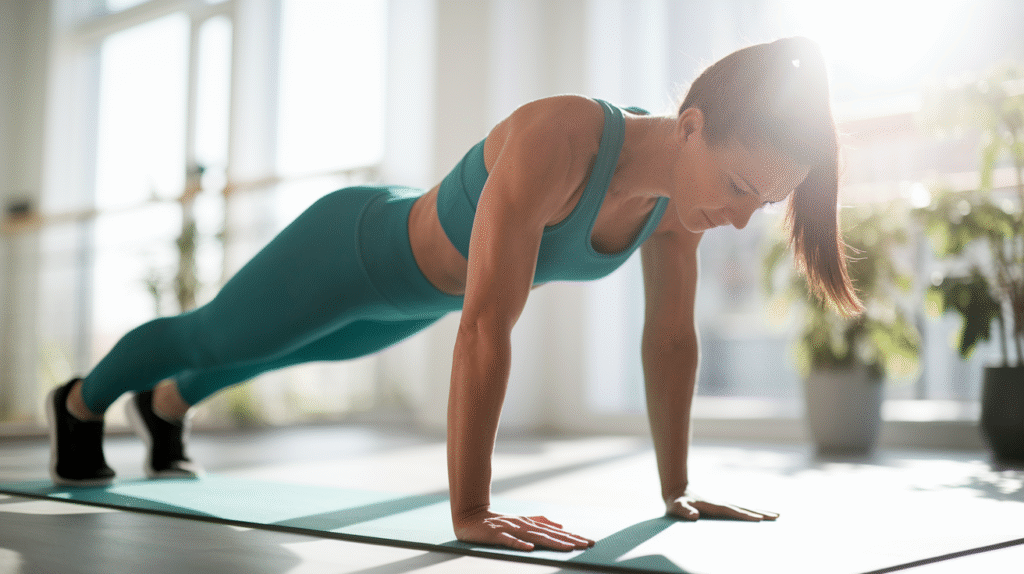
Modified planks are your foundation. Forget holding a perfect plank for three minutes—that’s not the goal. Start on your knees instead of your toes, or elevate your hands on a couch or counter. Hold for 20-30 seconds with perfect form, focusing on keeping your core engaged and your back neutral. This builds deep core stability without stressing your joints.
Dead bugs might have a silly name, but they’re seriously effective for deep core activation. Lie on your back with your arms extended toward the ceiling and knees bent at 90 degrees. Slowly lower one arm overhead while extending the opposite leg, keeping your lower back pressed to the floor. This exercise targets your transverse abdominis—the deep core muscle that acts like a natural corset—without any neck strain.
Bird dogs improve balance and coordination while strengthening your entire core and back. Start on hands and knees, then extend one arm forward and the opposite leg back. The challenge isn’t just the extension—it’s maintaining stability without rotating your hips or shoulders. This functional movement mimics real-life activities and builds the kind of strength that prevents injuries during daily tasks.
Bridges target your entire posterior chain—glutes, hamstrings, and lower back—while engaging your lower core. Lie on your back with knees bent and feet flat. Lift your hips toward the ceiling, squeezing your glutes at the top. This exercise is particularly valuable for counteracting the effects of sitting all day and strengthening the muscles that support your lower back.
Standing Core Exercises (Joint-Friendly Options)
Standing oblique crunches are easy on your neck and back while effectively targeting your side abdominal muscles. Stand with feet hip-width apart, hands behind your head. Bring one elbow down toward the same-side knee, crunching your obliques. These are perfect if you have neck issues or find floor exercises uncomfortable.
Woodchops mimic functional movements you do every day—reaching, twisting, lifting. Hold a light weight (or water bottle) with both hands. Start with the weight at one hip, then rotate your torso and bring it diagonally up across your body to above the opposite shoulder. This rotational movement builds real-world core strength and improves mobility.
Standing knee-to-elbow exercises combine cardio with core strengthening. Stand tall, bring one knee up while bringing the opposite elbow down to meet it. This gets your heart rate up while engaging your obliques and improving coordination. It’s efficient and effective—exactly what you need in a 15-minute workout.
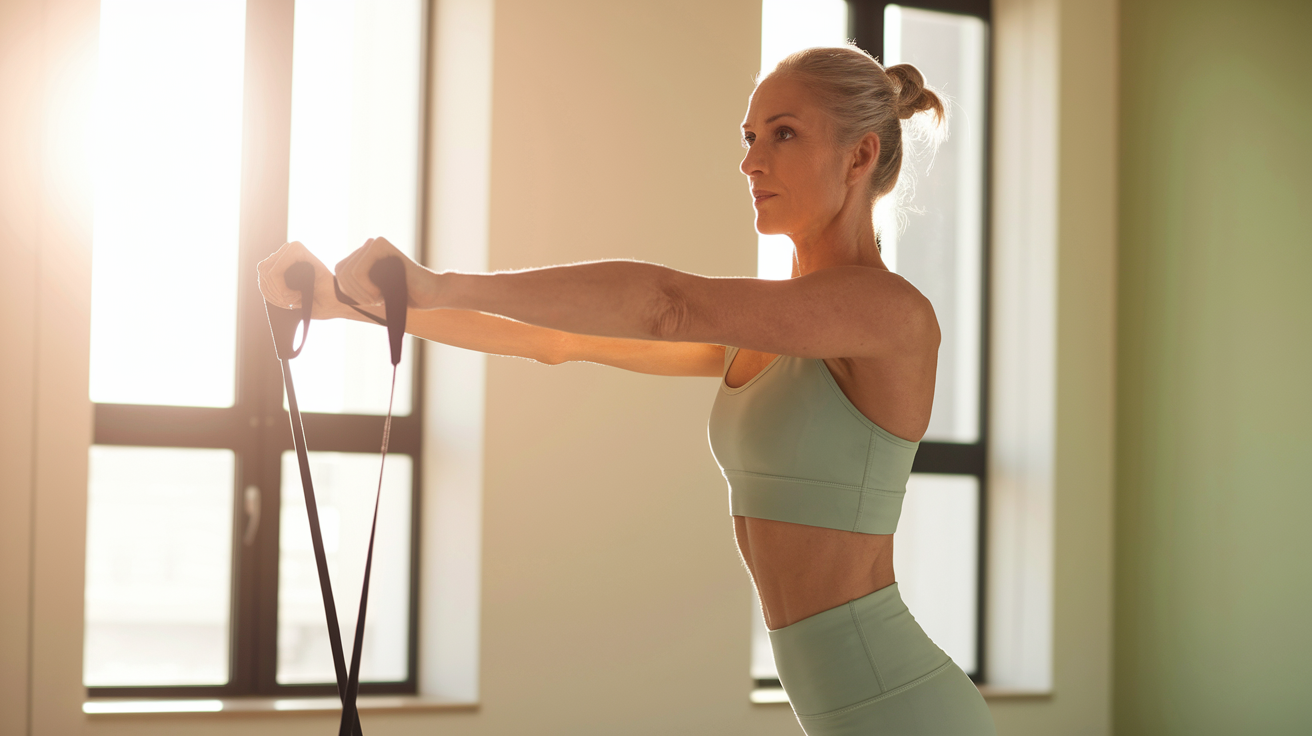
Pallof press variations build rotational stability, which protects your spine during twisting movements. Attach a resistance band to a sturdy anchor point at chest height (or hold a weight). Stand sideways to the anchor, hold the band at your chest, then press it straight out in front of you, resisting the rotation. This exercise strengthens your core’s ability to resist unwanted movement—crucial for preventing injuries.
Gentle Modifications for Every Fitness Level
If you’re just starting out, reduce the range of motion. Don’t worry about extending your leg fully in a dead bug—go halfway. Don’t hold a plank for 60 seconds—start with 10 and build up. Progress happens through consistency, not through pushing yourself to exhaustion on day one.
Simple props make movements more accessible and safer. Use a pillow under your knees during floor exercises. Lean against a wall for standing exercises if balance is challenging. Perform planks with your hands on a chair or counter instead of the floor. These aren’t “cheating”—they’re smart modifications that let you build strength gradually.
Learn the difference between challenge and pain. Your muscles should feel fatigued and might burn during the last few repetitions—that’s normal and productive. Sharp pain, joint discomfort, or pain that lingers after your workout means you need to modify further or consult a healthcare provider. Listen to your body’s signals.
Progressive options keep you advancing over weeks and months. Once you can comfortably perform 12-15 reps of an exercise with good form, you’re ready to progress. This might mean holding a plank longer, extending your range of motion in dead bugs, or adding light resistance to standing exercises. Small, incremental increases build impressive strength over time.
Your Complete 15-Minute Core Workout Plan

The Quick Warm-Up (2-3 Minutes)
Gentle spinal movements prepare your body and reduce injury risk. Start with cat-cow stretches on hands and knees, slowly arching and rounding your back. This mobilizes your spine and activates the connection between your brain and core muscles.
Hip circles and torso twists increase mobility in your mid-section. Stand with feet hip-width apart and make slow circles with your hips in both directions. Then gently twist your torso side to side, letting your arms swing naturally. These movements wake up your core muscles and improve your range of motion.
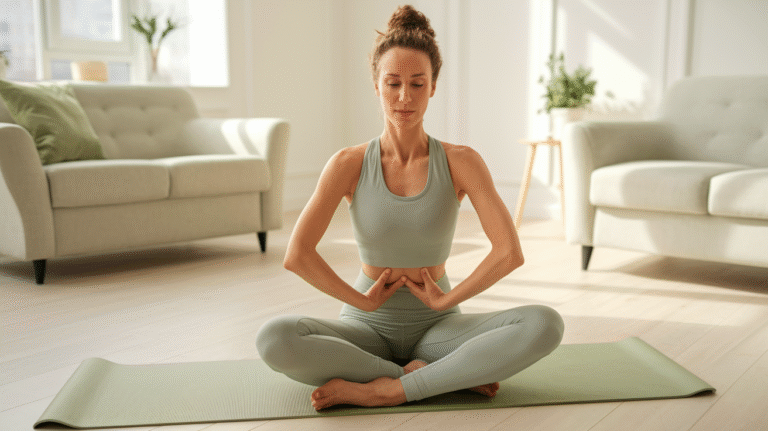
Breath work engages your deep core muscles before you even start exercising. Place your hands on your belly and take slow, deep breaths. Feel your abdomen expand on the inhale and draw in on the exhale. This simple practice activates your transverse abdominis and establishes the mind-body connection you’ll need during your workout.
These simple movements prevent injury and enhance results. Your body performs better when it’s properly prepared, and just two minutes of intentional warm-up can make the difference between a productive workout and a frustrating one.
The Main Workout Sequence (10-12 Minutes)
Circuit-style training maximizes your limited time. Perform each exercise for 30-45 seconds, then move immediately to the next. Complete the full circuit, rest for 60 seconds, then repeat 2-3 times depending on your fitness level and available time.
Here’s your recommended exercise order for maximum effectiveness: 1. Modified plank (30-45 seconds) 2. Dead bugs (30-45 seconds, alternating sides) 3. Standing oblique crunches (30-45 seconds each side) 4. Bridges (30-45 seconds) 5. Bird dogs (30-45 seconds, alternating sides) 6. Woodchops (30-45 seconds each side)
Rest periods matter. Take that 60-second break between circuits—use it to grab water, catch your breath, and mentally prepare for the next round. If you need to pause during an exercise, that’s perfectly fine. Quality always beats quantity.
Your sample weekly schedule should include core work 3-4 times per week. This gives you adequate recovery time while providing enough stimulus for strength gains. Try Monday, Wednesday, Friday, plus an optional Saturday session if you’re feeling energetic. Your muscles grow during rest, not during the workout itself.
Cool Down and Stretching (2-3 Minutes)
Essential stretches for your abs, back, and hips prevent tightness and promote recovery. Lie on your stomach and press up into a gentle cobra stretch, feeling the lengthening through your abdominals. Then shift back into child’s pose to stretch your lower back.
Gentle twists release tension that builds up during core work. Lie on your back, bend your knees, and let them fall to one side while keeping your shoulders on the floor. Hold for 20-30 seconds, then switch sides. This feels amazing and helps maintain spinal mobility.
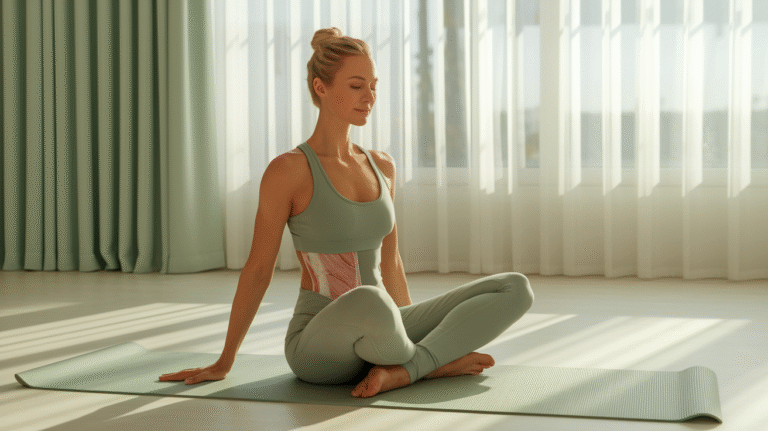
Breathing exercises calm your nervous system and signal to your body that the workout is complete. Sit comfortably and take five slow, deep breaths, making your exhale longer than your inhale. This activates your parasympathetic nervous system and supports recovery.
Setting yourself up for next-day success means you’ll actually want to work out again. A proper cool-down reduces muscle soreness and helps you feel accomplished rather than depleted.
Tracking Your Progress Without Obsessing
Simple ways to notice improvements go beyond the scale. Can you hold a plank five seconds longer than last week? Do dead bugs feel more controlled? These are genuine victories worth celebrating.
Your daily activities become easier indicators of real progress. Notice when you can carry all the groceries in one trip without your back protesting. Pay attention when you play with kids or pets and realize you’re not holding back. These moments prove your core work is paying off in the ways that actually matter.
Taking progress photos and measurements is optional but can be motivating. If you choose this route, take photos and measurements every 4-6 weeks in the same lighting and clothing. Remember, you’re looking for overall changes in posture and how you carry yourself, not just size changes.
Celebrate non-scale victories: better posture when you’re sitting at your desk, less pain when you wake up in the morning, more energy throughout the day. These improvements are far more valuable than any number on a scale and they happen faster than you might expect.
Making It Work: Tips for Staying Consistent

Creating Your Perfect Workout Space
Minimal equipment needed means you can start today. All you truly need is a yoga mat or soft surface and your own body weight. Nice-to-have items include a resistance band, a set of light dumbbells (3-8 pounds), and a chair for modifications. That’s it.
Finding your spot at home works even in small spaces. You need roughly the space of a yoga mat—about 6 feet by 3 feet. Your bedroom, living room, or even a cleared corner of your home office works perfectly. The key is choosing a spot where you won’t be interrupted for 15 minutes.
Quick setup solutions make consistency easier. Keep your mat rolled in a corner where you’ll see it daily. Store your resistance band and weights in a small basket nearby. The less friction between you and starting your workout, the more likely you are to actually do it.
Creating a routine that sticks doesn’t require complicated preparations. Pick the same time each day when possible—your body and mind will begin to expect and prepare for your workout. Morning, lunch break, or evening all work; choose what fits your energy and schedule.
Overcoming Common Obstacles
“I’m too tired” is real, and you need to work with your energy levels, not against them. On low-energy days, do a gentler version of your workout. Reduce the number of circuits or the duration of each exercise. Some movement always beats no movement, and you’ll often feel more energized after starting.
Dealing with motivation dips is part of the process. You won’t feel motivated every single day—that’s normal and expected. This is where discipline and routine carry you through. Show up anyway, even if you only do one circuit. The habit matters more than perfection.
Fitting workouts around work, family, and other commitments requires creativity. Break your 15 minutes into three 5-minute sessions if needed. Do your workout while watching your favorite show. Wake up 20 minutes earlier. There’s always a way when it’s truly a priority.
What to do when you miss a day: absolutely nothing special. Don’t punish yourself with extra workouts or guilt. Just return to your regular schedule the next day. Consistency over time matters infinitely more than perfection in any single week.
Nutrition and Recovery for Core Strength
Simple eating habits support muscle building after 40. Focus on getting protein at each meal—aim for 25-30 grams of protein three times daily. This provides your muscles with the building blocks they need to repair and grow stronger. Greek yogurt, eggs, chicken, fish, beans, and protein smoothies are all excellent options.
Protein needs increase slightly as we age because our bodies become less efficient at using protein for muscle synthesis. You don’t need to obsess or track every gram, but being intentional about including protein sources throughout your day makes a genuine difference in your results.
Hydration impacts your workouts more than you might realize. Even mild dehydration reduces strength and endurance. Aim for half your body weight in ounces of water daily—so if you weigh 150 pounds, target 75 ounces. Keep a water bottle visible as a reminder.
Sleep and stress management are the missing pieces of the puzzle for many women. Your muscles repair and grow during sleep, and chronic stress elevates cortisol, which can interfere with both muscle building and fat loss. Prioritize 7-8 hours of sleep and find stress management techniques that work for you—whether that’s meditation, walking, reading, or time with friends.
Your Core Strength Journey Starts Now
Your core strength after 40 is completely within your control with just 15 minutes a day. This isn’t about perfection or looking like a fitness model—it’s about feeling strong, capable, and confident in your body as you move through life.
Consistency and proper form matter infinitely more than intensity or duration. The woman who does three 15-minute workouts weekly for six months will see dramatically better results than the woman who does two brutal hour-long sessions and then quits from exhaustion or injury. Sustainable always wins.
The proven exercises in this guide work with your body’s changes, not against them. They respect your joints, challenge your muscles appropriately, and build functional strength that translates directly to easier daily activities and better quality of life.
Starting today—even with modified movements—is better than waiting for the “perfect” time. There will never be a perfect time. Your schedule won’t magically clear. You won’t suddenly feel 100% motivated. You simply need to begin where you are, with what you have, right now.
Choose your first workout day and time this week. Put it in your calendar like any other important appointment. Prepare your space the night before. Tell someone about your commitment for accountability.
Bookmark or save this guide for easy reference. You’ll want to review the exercise descriptions as you learn proper form. Come back to the modification suggestions when you need to adjust for energy levels or physical limitations.
Start with the beginner modifications and progress at your own pace. There’s zero rush. Building genuine, lasting core strength is a marathon, not a sprint. Every single workout makes you stronger, even if you can’t see it yet.
Remember: every woman over 40 who’s strong now started exactly where you are—uncertain, maybe a little intimidated, but willing to take that first step. You have everything you need to transform your core strength. The only question is: when will you start?
Your 15 minutes begins now. You’ve got this.