Postpartum Core Exercises & Strength Workouts
Let me tell you something that might surprise you: those intense ab workouts you see plastered all over social media could actually set back your postpartum recovery by months.
I know—when you’re staring at that postpartum belly in the mirror, the urge to jump into crunches and planks feels overwhelming. But here’s the truth: your core just completed the most incredible transformation of your life, and it deserves a recovery plan that actually works.
You don’t need fancy equipment or hours at the gym. What you need is a proven progression plan that starts with simple breathing exercises and gradually builds strength as your body heals. We’re talking 10-15 minutes a day, right in your living room, while your baby naps or plays on their activity mat.
Before you start any postpartum exercise routine, you need to check for diastasis recti—the separation of your abdominal muscles that happens during pregnancy. This two-minute self-check could be the difference between healing properly and making things worse.
I’ll walk you through exactly how to do it, what those results mean, and when you should reach out to a pelvic floor therapist for extra support.
This guide follows a progression plan that grows with your recovery journey. We’ll start with foundational exercises you can begin in those early weeks (with your doctor’s clearance, of course), then move into more challenging movements as your core reconnects and strengthens.
No guesswork, no confusion—just a clear path forward that respects where your body is right now and helps you build real, functional strength for all those baby-lifting, stroller-pushing, toddler-chasing moments ahead.
Understanding Your Postpartum Core (What’s Really Happening)

What Pregnancy Does to Your Core Muscles
Your core muscles stretched and separated to make room for your growing baby—that’s not a flaw in your body, it’s exactly what was supposed to happen. Your rectus abdominis (those “six-pack” muscles) literally separated down the middle to accommodate your uterus. Your transverse abdominis, the deep corset-like muscle that stabilizes your spine, got stretched to nearly twice its original length. And your pelvic floor muscles? They supported the weight of your baby for months, then stretched dramatically during delivery.
This is why your “mom pooch” has nothing to do with willpower or laziness. Your muscles need time to come back together and regain their tension. The connective tissue between those abdominal muscles (called the linea alba) stretched thin during pregnancy and needs to rebuild its strength and elasticity. This process takes time—typically six months to a year for most women, and sometimes longer depending on factors like multiple pregnancies, larger babies, or how your body carries weight.
Timeline expectations matter here. You didn’t gain your pregnancy body overnight, and you won’t lose it overnight either. Most women see their abdominal separation begin to close naturally in the first 8-12 weeks postpartum, but complete healing takes much longer. Be patient with yourself. Your body is doing incredible repair work behind the scenes, even when you can’t see visible changes yet.
Diastasis Recti: The Essential Self-Check
Here’s how to check yourself for diastasis recti in about two minutes: Lie on your back with your knees bent and feet flat on the floor. Place your fingers horizontally just above your belly button, with your fingertips pointing toward your toes. Gently lift your head and shoulders off the ground, like you’re doing a tiny crunch. Feel for a gap or softness between your abdominal muscles.
What the finger-width gap really means: One to two finger-widths of separation is considered normal and usually heals on its own with proper exercises. Two to three finger-widths indicates moderate diastasis that will benefit from targeted exercises. More than three finger-widths, or a very deep gap where your fingers sink down significantly, suggests you should work with a professional.
But here’s what most online guides don’t tell you: the width of the gap matters less than the tension and depth. A two-finger gap with good tension (where the tissue feels firm when you engage your core) is actually better than a one-finger gap with very soft, deep tissue. If you’re unsure about what you’re feeling, or if you have symptoms like lower back pain, pelvic pain, or urinary leaking, seek guidance from a pelvic floor physical therapist. They’re the real experts in postpartum core recovery, and one or two sessions can give you clarity and confidence about your specific situation.
Why Traditional Crunches Can Make Things Worse
Watch for the “doming” effect—when you do an exercise and your belly pushes outward in a cone or dome shape along the midline, that’s a red flag. It means you’re creating too much intra-abdominal pressure and actually pushing your abdominal muscles further apart instead of bringing them together. Traditional crunches, sit-ups, and even some plank variations can cause this doming, especially in the early postpartum months.
Exercises to avoid in early recovery include: full sit-ups, bicycle crunches, Russian twists, straight-leg raises, and any exercise where you lie on your back and lift both legs at once. Also skip exercises that require you to hold your breath or bear down (like heavy overhead presses without proper core engagement). These movements create downward pressure on your pelvic floor, which is still healing and regaining strength.
How to protect your healing core during daily activities: When you get up from lying down, roll to your side first, then push yourself up with your arms. When you lift your baby or the car seat, engage your core first by doing a gentle exhale, then lift. When you cough or sneeze, try to do a small kegel or pelvic floor lift at the same time to counteract the downward pressure. These small adjustments throughout your day matter just as much as your dedicated exercise time.
The Perfect Starting Point: Foundational Core Exercises
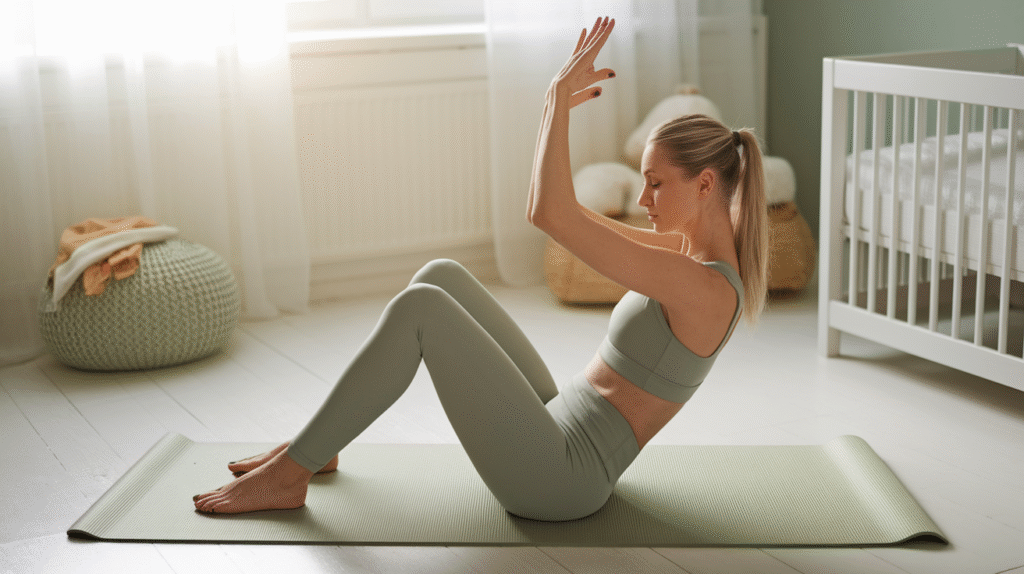
Breathing and Reconnection Exercises (Weeks 0-6)
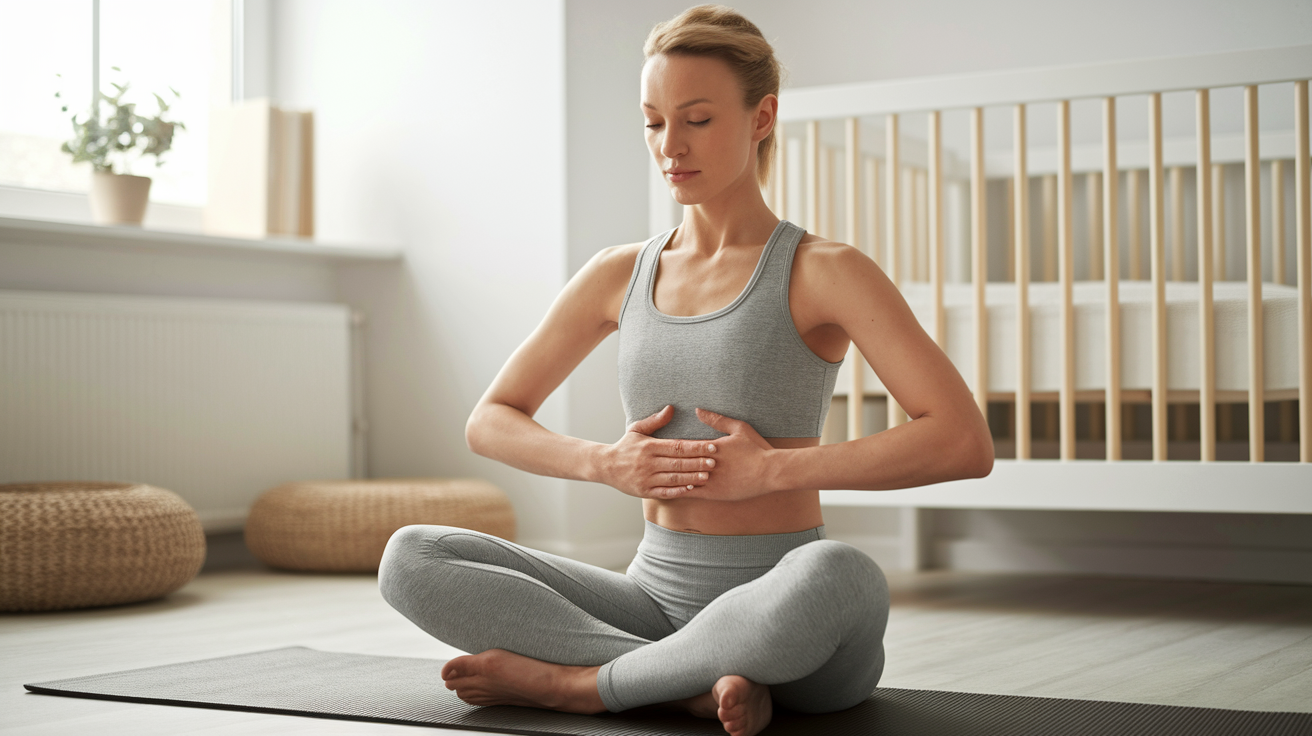
Diaphragmatic breathing is the ultimate foundation exercise, and you can start it as soon as you feel ready after delivery. Lie on your back with your knees bent, or sit comfortably in a chair. Place one hand on your chest and one on your belly. As you breathe in through your nose, let your belly expand like a balloon—your bottom hand should rise while your top hand stays relatively still. Exhale slowly through your mouth, feeling your belly naturally deflate. This simple breathing pattern helps you reconnect with your deep core muscles and promotes relaxation and healing.
Pelvic floor engagement without traditional Kegels looks like this: As you exhale during your diaphragmatic breathing, imagine you’re stopping the flow of urine and lifting your pelvic floor up and in, like you’re pulling a marble up through a straw. But here’s the key—you should also feel your lower belly gently draw in at the same time. That’s your transverse abdominis working in coordination with your pelvic floor. Hold this gentle engagement for 3-5 seconds, then fully release and take a relaxed breath. Do 10 repetitions, 2-3 times per day.
Gentle transverse abdominis activation while lying down: Start in the same position as your breathing exercises. As you exhale, imagine you’re gently zipping up a tight pair of jeans, drawing your hip bones toward each other and your belly button toward your spine. This shouldn’t be a forceful suck-in—it’s more like a gentle hug around your waist. Hold for 5-10 seconds while continuing to breathe normally (don’t hold your breath!), then release completely. Repeat 8-10 times.
Easy Beginner Movements You Can Do Anywhere
Pelvic tilts are your new best friend for core activation. Lie on your back with knees bent and feet flat. Your lower back should have a natural small arch—you could slide your hand under it. As you exhale, gently tilt your pelvis so your lower back presses flat against the floor (or your hand). Your tailbone will lift slightly. Hold for 3-5 seconds, then release back to neutral. This movement is tiny—your hips barely move—but you should feel your lower abs working. Do 10-15 repetitions, focusing on smooth, controlled movements.
Heel slides for safe lower ab engagement: Stay in that same lying position. Engage your core with a gentle exhale, then slowly slide one heel away from your body, keeping your foot on the floor. Only slide as far as you can while keeping your lower back flat against the floor—for some women, that might only be a few inches at first, and that’s perfectly fine. Slide your heel back in, then repeat with the other leg. Do 8-10 slides per leg, and if you feel any strain in your lower back or see doming in your belly, reduce your range of motion.
Modified dead bug is the proven postpartum staple. Lie on your back with your knees bent and lifted so your shins are parallel to the floor (tabletop position). Press your lower back into the floor. Extend one leg out, hovering a few inches off the ground, while the other knee stays bent. Return to tabletop, then switch legs. Keep your movements slow and controlled. If this feels too challenging or causes doming, keep both feet on the floor and just march your knees up and down one at a time. Work up to 10 repetitions per leg.
Building the Mind-Muscle Connection
Why “feeling” your core matters more than reps: In these early weeks, you’re not trying to exhaust your muscles or work up a sweat. You’re rebuilding the neural pathways between your brain and your core muscles. Pregnancy and delivery can disrupt these connections, making it harder to engage specific muscles on command. When you do these exercises slowly and mindfully, really focusing on what you’re feeling, you’re teaching your nervous system to fire those muscles effectively again. Five high-quality repetitions with full concentration beat 20 mindless reps every single time.
Effective form tips: Keep your movements small and controlled. Your core should feel like it’s working, but you shouldn’t feel strain in your neck, shoulders, or lower back. If you do, that means other muscles are compensating because your core isn’t quite ready for that movement yet—and that’s okay. Scale back to an easier variation. Always exhale during the hardest part of the exercise (this naturally engages your core), and never hold your breath. And remember: no doming. If you see that cone shape forming down the middle of your belly, stop and choose an easier exercise.
How to incorporate core engagement into feeding and holding baby: Before you pick up your baby, take a breath and do that gentle “zipping up” engagement of your transverse abdominis. Hold that engagement as you lift. When you’re sitting and nursing or bottle-feeding, sit up tall with your shoulders back, and imagine that gentle corset tightening around your waist. You don’t need to hold it the entire time (that would be exhausting), but checking in with your posture and core engagement every few minutes throughout the day adds up to significant training time.
Progressive Core Strengthening Exercises (6 Weeks and Beyond)

Essential Exercises for Closing the Gap
Standing core compressions for busy moms: Stand with your feet hip-width apart. Place your hands on your belly, fingers pointing toward each other along the midline. Take a deep breath in, then as you exhale, gently use your hands to compress your abs toward the center while simultaneously engaging your core muscles. Think of it like you’re manually helping your muscles remember where they belong. Hold for 5 seconds, release, and repeat 10 times. You can do this while waiting for your coffee to brew or standing at the changing table.
Wall push-ups with core engagement: Stand facing a wall, arms extended, hands flat against the wall at shoulder height. Step your feet back so you’re at a slight angle. Engage your core (exhale and zip up), then bend your elbows to bring your chest toward the wall. Keep your body in a straight line—don’t let your hips sag or your belly pooch forward. Push back to start. Do 10-15 repetitions. As you get stronger, step your feet further back to increase the challenge. This builds upper body strength (essential for all that baby carrying) while teaching your core to stabilize your spine.
Modified planks—when and how to progress safely: Don’t rush into planks. Wait until you can do all the foundational exercises without any doming, and you feel confident in your core engagement. Start with wall planks (just like the wall push-up position, but hold it). Progress to countertop planks, then to planks on your knees on the floor. Only move to full planks on your toes once you can hold a knee plank for 45-60 seconds with perfect form (no doming, no sagging hips, breathing normally). When you do progress, hold for just 10-15 seconds at first, and gradually build up your time.
Amazing Functional Movements for Real-Life Strength
Glute bridges with core activation are perfect for lifting baby and building lower body strength. Lie on your back with knees bent and feet flat, hip-width apart. Engage your core, then press through your heels to lift your hips toward the ceiling. Squeeze your glutes at the top and make sure you’re lifting with your glutes and hamstrings, not arching your lower back excessively. Hold for 2-3 seconds, then lower with control. Do 12-15 repetitions. This exercise strengthens your posterior chain, which helps protect your lower back during all those daily lifting tasks.
Bird dog variations for stability: Start on your hands and knees (tabletop position). Your hands should be directly under your shoulders, knees under your hips. Engage your core so your back is flat like a table—not sagging or arched. Extend one arm forward and the opposite leg back, both parallel to the floor. Hold for 5-10 seconds, keeping your hips level (don’t let the extended side hike up). Return to start, then switch sides. Do 8-10 repetitions per side. This exercise challenges your core to prevent rotation and builds the stability you need for carrying your baby on one hip.
Side-lying leg lifts for oblique engagement: Lie on your side with your legs stacked and your head resting on your bottom arm. Engage your core to keep your body in a straight line. Lift your top leg up about 12 inches, keeping your toe pointing forward (not toward the ceiling). Lower with control. Do 12-15 repetitions, then switch sides. This targets your obliques and hip muscles, which are crucial for lateral stability and help close diastasis recti by pulling from the sides.
Quick 10-Minute Routines You’ll Actually Do
Morning energizer sequence (5 moves, 2 minutes each): Start with diaphragmatic breathing (10 breaths), move into pelvic tilts (15 reps), then heel slides (10 per leg), glute bridges (12 reps), and finish with bird dogs (8 per side). This sequence wakes up your core and gets blood flowing without exhausting you before your day even starts.
Naptime power routine for maximum results: When you have a bit more energy and time, try this: wall push-ups (15 reps), modified dead bugs (10 per leg), side-lying leg lifts (12 per side), standing core compressions (10 reps), and hold a modified plank (20-30 seconds). Rest for 30 seconds between exercises. This hits all the major core muscles and builds functional strength.
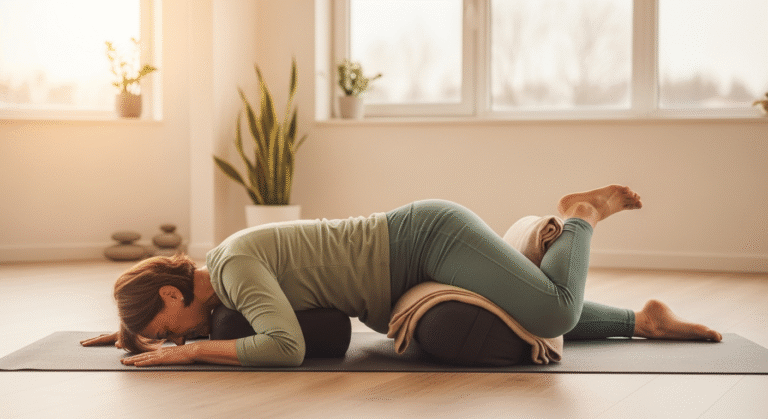
Evening wind-down core work before bed: Keep it gentle in the evening with movements that promote relaxation: diaphragmatic breathing (15 breaths), gentle pelvic floor lifts (10 reps), pelvic tilts (12 reps), and child’s pose stretch (hold for 1 minute). This routine helps you reconnect with your body and release tension from the day while still strengthening your core.
Common Mistakes and How to Avoid Them
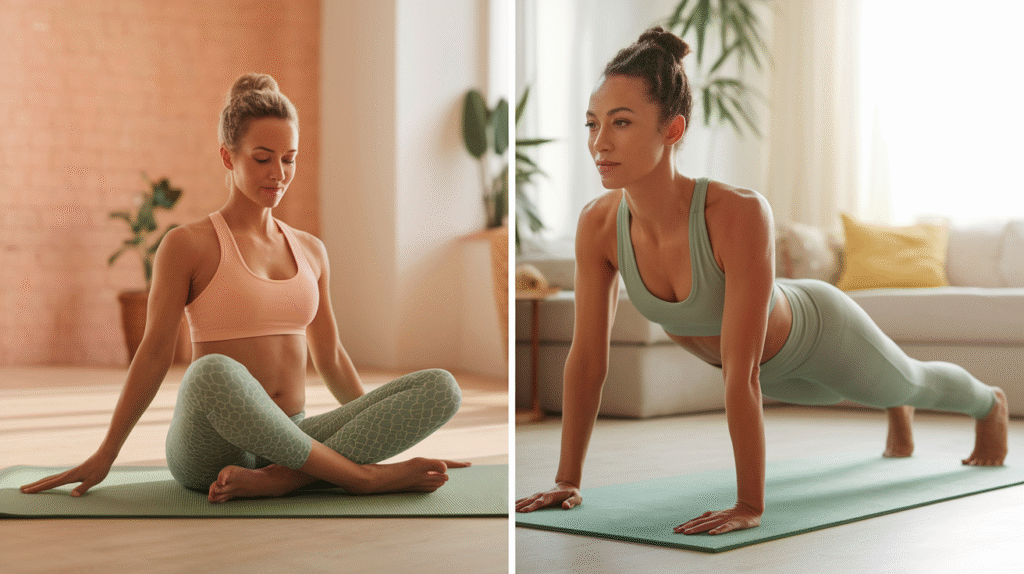
The Top Mistakes New Moms Make
Starting too intense, too soon is the number one mistake I see. You feel ready, you want your body back, and you dive into advanced workouts before your foundation is solid. Here’s how to pace yourself properly: spend at least 2-4 weeks on the foundational breathing and gentle engagement exercises before adding any movement. Then spend another 2-4 weeks on the beginner movements before progressing. Yes, this feels slow. But building a solid foundation now means faster progress later and significantly lower risk of injury or setback.
Ignoring pelvic floor symptoms like leaking or pressure is a huge red flag. If you leak urine when you cough, sneeze, laugh, or exercise, that’s not “just part of being a mom”—it’s a sign your pelvic floor needs more support. If you feel heaviness or pressure in your vagina, especially at the end of the day, that could indicate pelvic organ prolapse. If you experience pain during sex or have difficulty controlling gas, these are all pelvic floor issues that deserve attention. Don’t push through these symptoms. See a pelvic floor physical therapist who can give you specific exercises and strategies for your situation.
Holding your breath during exercises is an easy mistake to make, especially when an exercise feels challenging. The simple fix: count out loud or exhale forcefully during the hardest part of each movement. If you can’t breathe normally during an exercise, it’s too difficult for your current strength level. Scale back to an easier variation. Holding your breath creates downward pressure on your pelvic floor and works against the core engagement you’re trying to build.
Warning Signs to Watch For
When to stop and reassess your routine: Stop immediately if you see doming or coning along your midline during any exercise. Stop if you feel pain (not muscle fatigue, but actual pain) in your abdomen, pelvis, or lower back. Stop if you experience any leaking during exercise. Stop if you feel that heaviness or pressure in your pelvic floor. These signs tell you that the exercise is too advanced for your current recovery stage.
Symptoms that require professional evaluation: Persistent lower back pain that doesn’t improve with rest, pain during sex that lasts beyond the typical 6-8 week recovery period, inability to control gas or bowel movements, visible bulging in your vaginal area, or a diastasis recti gap that’s wider than three fingers or very deep. A pelvic floor physical therapist can assess these issues and create a personalized treatment plan. Many insurance plans cover pelvic floor PT, and it’s worth checking your benefits.
The difference between good muscle fatigue and problematic pain: Good muscle fatigue feels like a gentle burning or shaking in the muscles you’re working—your abs, glutes, or thighs. It goes away quickly when you rest, and you feel stronger over time. Problematic pain is sharp, stabbing, or aching. It might radiate to other areas. It doesn’t improve with rest, or it gets worse over time. It prevents you from doing daily activities comfortably. Trust your instincts here. You know your body better than anyone else.
Realistic Expectations and Timelines
What “healed” really looks like—hint, it’s not Instagram: Your belly might never look exactly like it did before pregnancy, and that’s completely normal and okay. You might have some loose skin, some stretch marks, a slightly softer middle. Your abdominal muscles can be incredibly strong and functional even if they don’t look “perfect.” Healed means you can lift your toddler without back pain, carry groceries without leaking, and play with your kids without feeling like your core is going to give out. That’s the real goal.
Celebrating small wins along your recovery journey: Did you make it through one full set of exercises today? That’s worth celebrating. Did you remember to engage your core before lifting your baby? Win. Did you notice your diastasis gap is a quarter-inch narrower than last month? Huge win. Progress isn’t always visible in the mirror, but these functional improvements matter so much more than how your abs look in a photo.
How nutrition and sleep impact core recovery: Your muscles need protein to rebuild—aim for 80-100 grams per day if you’re breastfeeding, slightly less if you’re not. Stay hydrated because your connective tissue needs water to maintain elasticity. And sleep, though I know it’s in short supply, is when your body does most of its repair work. Do what you can to prioritize rest when possible. Your core recovery isn’t just about exercises—it’s about giving your whole body the resources it needs to heal.
Your Path Forward: Building a Stronger Core for Motherhood
Your postpartum core recovery is a journey, not a race. While everyone around you seems to be “bouncing back” in six weeks, the truth is that real, sustainable recovery takes months. Start with those gentle breathing and foundational exercises, even if they feel almost too easy. That foundation is everything. You’re not just strengthening muscles—you’re rebuilding the neural connections, restoring tension to stretched connective tissue, and teaching your body to function as an integrated unit again.
Always check for diastasis recti before progressing to more challenging movements, and keep checking every few weeks as you advance through the exercises. That simple two-minute self-assessment can save you from months of frustration and setback. And remember, the gap width matters less than the tension and function. If you’re unsure about what you’re feeling or if you have any concerning symptoms, invest in a session or two with a pelvic floor physical therapist. They’re worth their weight in gold.
Consistency with simple exercises beats sporadic intense workouts every time. Ten minutes of focused, intentional core work five days a week will get you further than two intense hour-long workouts when you can find the time. Build these exercises into your daily routine—during naptime, while your baby plays on their mat, or in the evening after your partner takes over. Make it sustainable, not heroic.
Listen to your body and don’t ignore warning signs. Pain, leaking, pressure, and doming are all messages from your body telling you to slow down or modify. There’s no prize for pushing through symptoms. Your body just grew and birthed a human being—give it the respect and patience it deserves.
You’ve got this, mama. Your core is stronger than you think, and with the right approach, you’ll build the functional strength you need for all the incredible adventures of motherhood ahead. Start where you are, progress at your own pace, and trust the process. Your body knows how to heal—you just need to give it the right tools and support.
Ready to begin your postpartum core recovery journey? Start with just five minutes of diaphragmatic breathing today. That’s it. One small step that will set the foundation for everything that follows. Your stronger, more functional core is waiting—and you’re absolutely capable of getting there.