5 minute ab workout for women 40+
Let’s be real—your body at 40+ isn’t the same as it was at 25, and that’s completely okay. Actually, it’s more than okay. Your body has carried you through life, maybe even through pregnancy, career demands, and countless other challenges. It deserves a workout approach that honors where you are right now, not where you were two decades ago.
Here’s the amazing truth: you don’t need hour-long gym sessions to build a strong, functional core. This 5-minute ab workout is specifically designed for women over 40, taking into account hormonal changes, time constraints, and the need for exercises that protect your back and joints while delivering real results.
You’re about to learn a complete routine that fits into the busiest schedule—because let’s face it, you’ve got enough on your plate. We’ll walk through each exercise with clear instructions, show you easy modifications for any fitness level, and share proven tips that make this short workout incredibly effective. No gimmicks, no unrealistic promises—just a simple, science-backed approach to core strength that actually works.
The best part? You can do this workout anywhere, anytime, with zero equipment. Before your morning coffee, during your lunch break, or while dinner is in the oven—five minutes is all you need to invest in your strength, stability, and confidence.
Why Women Over 40 Need a Different Ab Approach
Understanding Your Changing Core
Your body after 40 operates under different rules, and understanding this changes everything. Hormonal shifts—particularly declining estrogen levels during perimenopause and menopause—directly affect how your body builds and maintains muscle. This isn’t about making excuses; it’s about working smarter with your body’s natural changes.
Estrogen plays a crucial role in muscle tone and fat distribution. As levels fluctuate and eventually decrease, you might notice fat accumulating around your midsection more easily than before. Your metabolism slows down by approximately 5% per decade after age 40, which means your body burns fewer calories at rest. This combination creates the perfect storm for that stubborn belly fat many women struggle with.
But here’s what matters more: core strength becomes absolutely essential for daily life after 40. A strong core protects your lower back when you’re lifting groceries, playing with grandkids, or simply getting out of bed. It improves your posture, reduces injury risk, and supports every single movement you make throughout the day. This isn’t about vanity—it’s about maintaining independence and vitality as you age.
The Amazing Benefits of Quick, Targeted Ab Workouts
Research proves that short, focused workouts can be more effective than long, unfocused sessions—especially for busy women juggling multiple responsibilities. When you concentrate on quality movements for just five minutes, you engage your muscles more intensely than during a distracted 30-minute routine where you’re checking your phone between sets.
Consistency beats intensity every single time. You’re far more likely to stick with a 5-minute daily routine than commit to three hour-long workouts per week. This regularity creates cumulative benefits that compound over time. Your nervous system learns the movement patterns, your muscles adapt and strengthen, and before you know it, everyday activities feel easier.
The connection between core strength and overall wellness after 40 is profound. Strong abs improve your balance, reducing fall risk. They support better breathing and digestion. They even help alleviate lower back pain that plagues so many women in this age group. When you strengthen your core, you’re investing in your entire body’s functionality.
Common Mistakes to Avoid
Many women waste time and energy on outdated ab exercises that can actually cause harm. Traditional sit-ups and crunches put tremendous strain on your neck and spine—strain your body doesn’t need at this stage of life. Hundreds of repetitions won’t give you a flat stomach; they’ll just give you a sore neck and potential injury.
Speed is another trap. Racing through exercises might make you feel productive, but it completely misses the point. Proper form—moving slowly and deliberately while engaging the correct muscles—delivers results. One perfectly executed plank beats twenty sloppy ones every single time.
The truth about visible abs? They’re made in the kitchen as much as the gym. No amount of ab work will reveal muscle definition if there’s a layer of fat covering them. But that doesn’t mean core work is pointless—far from it. Strong abs improve your posture, making you look taller and more confident regardless of body fat percentage. They support your spine and make every physical activity safer and more effective.
The Complete 5-Minute Ab Workout Routine
Exercise 1: Modified Plank Hold (45 seconds)
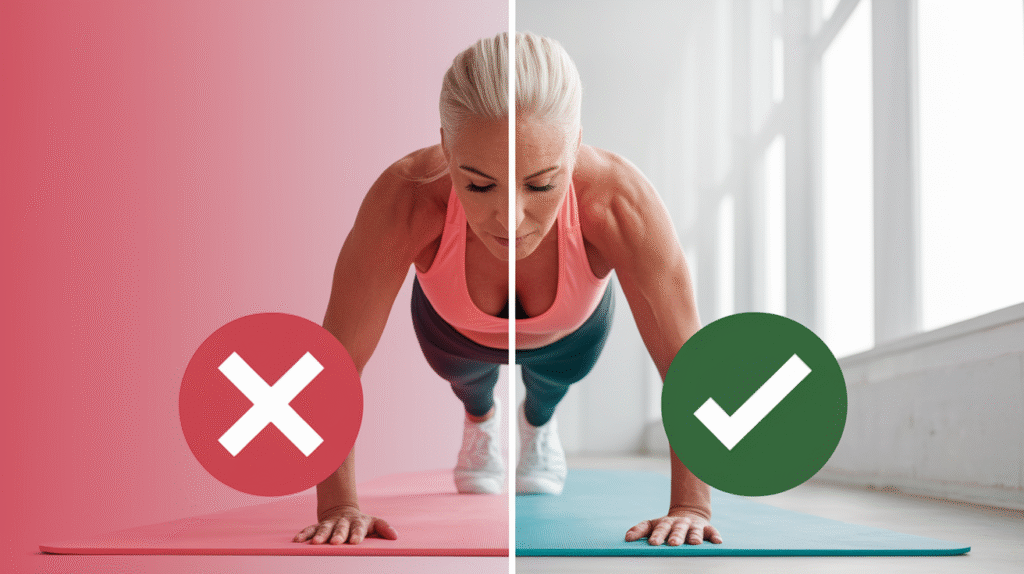
Start on your forearms and knees, with your elbows directly under your shoulders. Your forearms should be parallel to each other, and your body should form a straight line from your head to your knees—no sagging hips or lifted butt. Engage your core by pulling your belly button toward your spine, and breathe steadily.
If you’re ready for more challenge, extend your legs so you’re on your forearms and toes. The key is maintaining that straight line—imagine a broomstick resting along your spine from head to tailbone. If your hips drop or your back arches, return to the knee modification. There’s zero shame in modifying; proper form is everything.
You should feel this in your entire core—front, sides, and back. Your shoulders will work too, but if you feel strain in your neck, check that you’re not hunching your shoulders toward your ears. Press the floor away and keep your gaze slightly forward, not directly down.
Common mistakes include holding your breath (breathe naturally!), letting your hips sag (engage those abs!), and gritting through pain in your lower back (modify immediately if this happens). Quality over duration—if you can only hold proper form for 20 seconds, that’s your starting point. Build from there.
Exercise 2: Dead Bug (45 seconds)
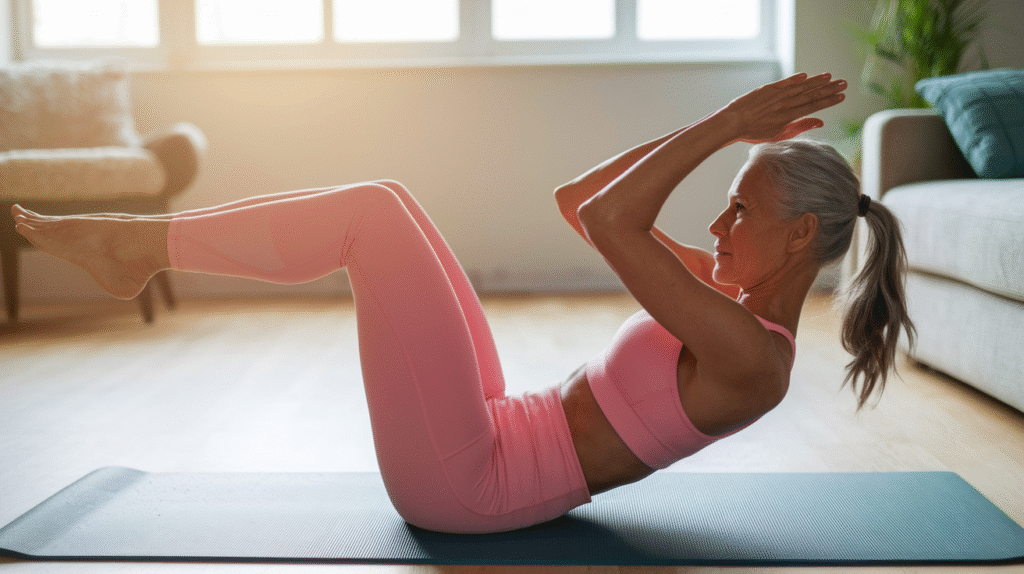
Lie on your back with your arms extended straight up toward the ceiling and your knees bent at 90 degrees, shins parallel to the floor. Press your lower back firmly into the floor—this is crucial for protecting your spine. Slowly extend your right arm overhead while straightening your left leg, hovering it just above the floor. Return to start and repeat on the opposite side.
This exercise is the ultimate core stabilizer because it forces your abs to work against the movement of your limbs. The challenge is keeping your lower back glued to the floor throughout the entire movement. If your back arches, you’re extending your limbs too far—keep them higher until you build strength.
Breathe out as you extend your arm and leg, breathe in as you return to center. This breathing pattern helps engage your deep core muscles more effectively. Move slowly and deliberately—this isn’t a race. Each rep should take about 4-5 seconds total.
You’ll know you’re doing it right when you feel your abs working hard to keep your torso stable. If you feel pulling in your hip flexors or strain in your lower back, reduce your range of motion. Start with smaller movements and gradually increase as your core strengthens.
Exercise 3: Standing Oblique Crunches (45 seconds)
Stand with your feet hip-width apart, hands behind your head with elbows wide. Shift your weight to your left leg and lift your right knee toward your right elbow, crunching your obliques (side abs) as you bring them together. Lower with control and repeat for about 22 seconds, then switch sides.
This standing variation is perfect if getting up and down from the floor is challenging. It also works your balance and coordination while targeting those side abs that help define your waistline. The movement should be controlled—don’t just kick your leg up.
Focus on actually crunching your side body, not just lifting your knee. Imagine bringing your ribs and hip closer together on the working side. You can hold onto a chair or wall with one hand if you need balance support—there’s no award for wobbling through exercises.
Keep your core engaged throughout, even when your foot is on the ground. This constant tension makes the exercise more effective. If you have knee issues, lift your leg lower—you’ll still get the oblique work without stressing your joints.
Exercise 4: Seated Knee Tucks (45 seconds)
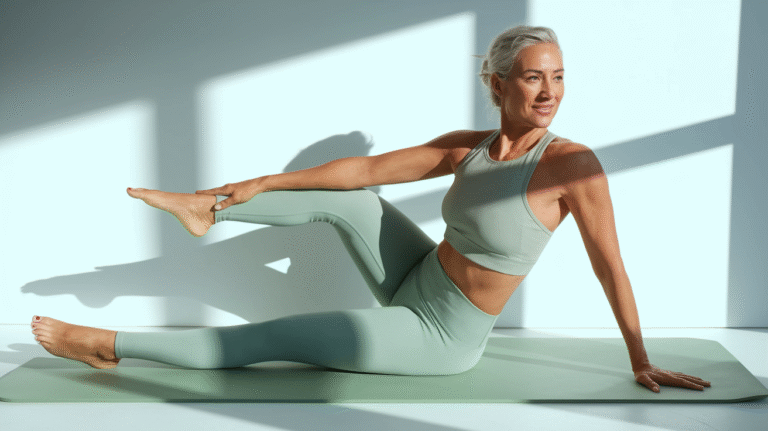
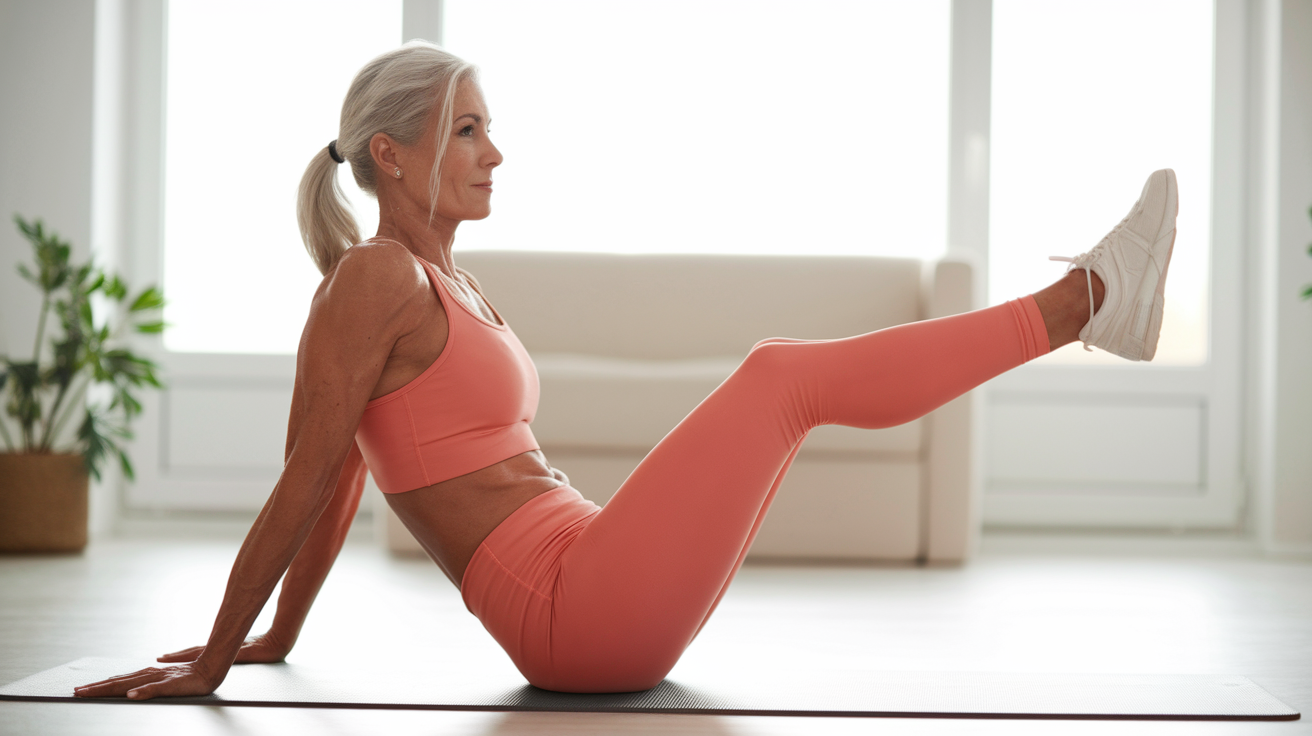
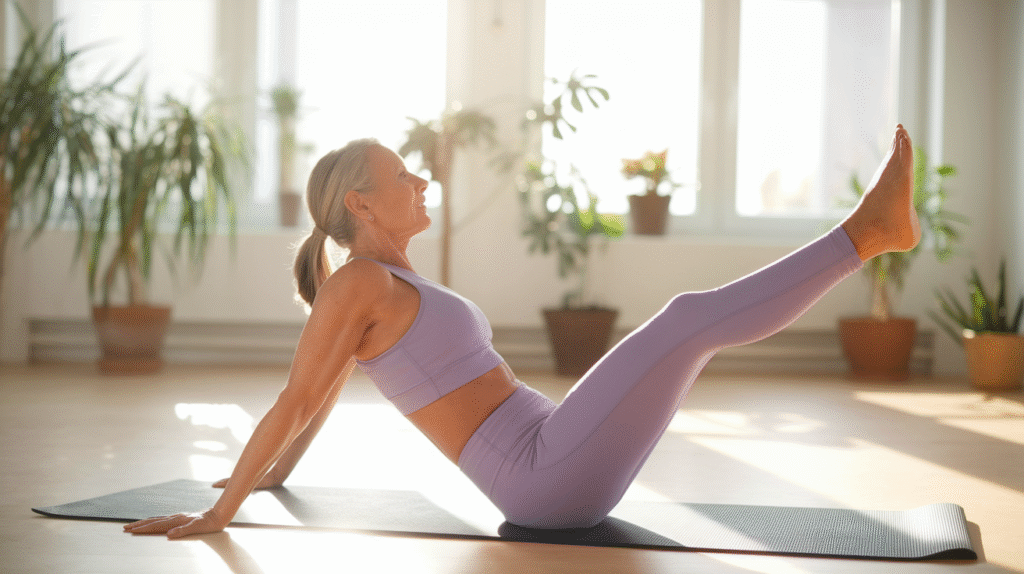
Sit on the floor or in a sturdy chair with your hands beside your hips for support. Lean back slightly, engage your core, and extend your legs out in front of you (they can hover above the floor or rest lightly on it). Pull your knees toward your chest, then extend them back out. That’s one rep.
This proven move engages your entire core, especially your lower abs. The key is maintaining that slight backward lean throughout—your core should be working to keep you balanced, not just your arms. If you’re in a chair, hold the sides for stability and perform the same tucking motion.
Pace yourself based on your fitness level. Beginners might move slower with more deliberate control. As you get stronger, you can increase speed slightly, but never sacrifice form for speed. Your lower back should stay neutral—no rounding or excessive arching.
Exhale as you pull your knees in, inhale as you extend them. This breathing rhythm helps you maintain the rhythm and engages your deep core muscles more effectively. If this bothers your lower back, keep your movements smaller or place your hands slightly behind you for more support.
Exercise 5: Bridge Hold with Belly Breathing (45 seconds)
Lie on your back with your knees bent and feet flat on the floor, hip-width apart. Press through your heels to lift your hips until your body forms a straight line from shoulders to knees. Hold this position while practicing deep belly breathing—inhale deeply through your nose, letting your belly expand, then exhale fully through your mouth, pulling your belly button toward your spine.
This amazing exercise delivers dual benefits: it strengthens your glutes (which support your lower back and posture) while the breathing technique activates your deep core muscles. The combination makes this deceptively simple move incredibly effective.
Keep your shoulders relaxed on the floor and avoid arching your lower back. Your hips should be level—imagine balancing a cup of water on your pelvis. Squeeze your glutes at the top and maintain that squeeze throughout the hold.
To make it easier, lower your hips slightly so you’re not at full extension. To increase challenge, lift one foot slightly off the floor (just an inch or two) while maintaining level hips. The breathing is what makes this exercise special for core work, so focus on those deep, controlled breaths.
Essential Tips for Maximum Results

Creating Your Perfect Workout Schedule
The best time for ab workouts after 40 is whenever you’ll actually do them consistently. That said, many women find morning works best—you get it done before life gets in the way, and you start your day feeling accomplished and energized. Your core muscles are also fresh, making it easier to maintain proper form.
Do this routine 5-6 times per week for optimal results. Yes, you can work your abs daily because these exercises are designed for frequent training without overworking your muscles. The variety of movements means you’re not hammering the same muscles in the same way every single day.
This workout pairs beautifully with walking, swimming, yoga, or any other activities you love. It’s short enough to add onto another workout or stand alone on busy days. Some women do it right after waking up, others during a work break, and some before bed. Find your rhythm and stick with it—consistency is your ultimate secret weapon.
Form and Safety First
Before you start each session, run through this quick alignment checklist: shoulders relaxed, core engaged (pull belly button toward spine), spine neutral (natural curves maintained), and breathing steady. These four elements should be present in every single exercise.
Know when to modify and when to push yourself. If an exercise causes sharp pain, stop immediately and try the easier modification. Muscle burning and fatigue are normal; joint pain and sharp sensations are not. Listen to your body—it’s giving you important information.
Watch for these signs you should stop or adjust: dizziness, sharp pain anywhere, inability to maintain form, or excessive breathlessness. There’s a difference between working hard and pushing into danger. You’re building sustainable strength, not proving anything to anyone.
Nutrition and Lifestyle Support
You can’t out-exercise a poor diet, but you also don’t need to eat like a bodybuilder to see results. Focus on adequate protein (aim for 25-30 grams per meal) to support muscle maintenance and growth. Protein becomes even more important after 40 as your body becomes less efficient at using it.
Hydration matters more than most people realize. Water helps your muscles contract properly, supports recovery, and even aids in reducing bloating that can hide your hard-earned core strength. Aim for at least eight glasses daily, more if you’re active or it’s hot.
Sleep is your secret weapon for results. During deep sleep, your body repairs muscle tissue and regulates hormones that affect fat storage and muscle building. Seven to nine hours per night isn’t lazy—it’s essential for the results you’re working toward. Poor sleep sabotages your efforts in ways no amount of exercise can overcome.
Troubleshooting and Modifications
Making It Easier When You’re Just Starting
Every exercise in this routine has a beginner-friendly modification. For planks, stay on your knees and even reduce the hold time to 20-30 seconds. For dead bugs, keep your movements smaller and your limbs higher. For standing oblique crunches, hold onto something stable and lift your knee lower. For seated knee tucks, keep your feet on the ground and just practice the leaning-back position. For bridges, hold for shorter periods or lower your hips slightly.
Build up gradually by adding 5 seconds to each exercise every week. This progressive approach prevents frustration and injury while ensuring steady improvement. Track your progress in a simple notebook—seeing improvement, even small gains, is incredibly motivating.
Celebrate every single win. You held plank for 5 seconds longer this week? That’s progress. You completed all five exercises without stopping? Victory. You showed up three days in a row? That’s building a habit. Small wins compound into major transformations over time.
Leveling Up When You’re Ready
When the routine feels comfortable, increase intensity without adding time by slowing down your movements. Slower reps mean more time under tension, which builds strength more effectively. You can also add pulses at the end of holds—tiny movements that create serious burn.
Light ankle weights (1-2 pounds) can increase challenge for dead bugs and standing oblique crunches. A small resistance band around your thighs during bridges adds glute activation. These simple additions keep your muscles adapting and growing stronger.
Progressive challenges might include: holding plank on your toes for the full 45 seconds, extending your limbs fully in dead bugs while maintaining back contact with the floor, performing standing oblique crunches without any support, adding a leg lift during bridge holds, or completing the entire circuit twice through. Set new goals every 4-6 weeks to maintain momentum.
Working Around Common Concerns
If you have back sensitivity, focus on the modifications and never push through pain. Dead bugs and bridges are particularly back-friendly when done correctly. Skip or heavily modify any exercise that doesn’t feel right for your body. You can substitute gentle cat-cow stretches or pelvic tilts for exercises that bother you.
For limited mobility, the standing oblique crunches and seated knee tucks are your friends. You can do an entire effective ab workout without ever getting on the floor. Chair-based modifications work beautifully—your muscles don’t know the difference between floor and chair exercises.
When results feel slow, remember that visible changes take time, but functional improvements happen quickly. Notice how your posture improves, how your back feels better, how everyday movements become easier. These are real results, even if they don’t show up in the mirror immediately. Most women notice visible changes around the 6-8 week mark with consistent effort.
Final Thoughts
This simple 5-minute routine is your tool for building the strong, functional core you need to thrive after 40. You don’t need fancy equipment, expensive gym memberships, or hours of free time. You just need five minutes and the commitment to show up for yourself consistently.
Remember: consistency is your ultimate secret weapon. Doing this workout five times per week will deliver far better results than sporadic hour-long sessions. You’re investing just five minutes in your strength, health, and confidence—that’s less time than scrolling social media or waiting for your coffee to brew.
This effective workout fits any schedule, no excuses needed. Do it in your pajamas before your shower, in your office during lunch, or in your living room while watching TV. The beauty of this routine is its flexibility and accessibility.
Proper form beats speed every single time. Move with intention, engage your core consciously, and respect your body’s signals. Quality repetitions build strength; rushed, sloppy ones build nothing but frustration.
Results come from showing up regularly, not from being perfect. Some days you’ll feel strong and powerful. Other days you’ll struggle through the five minutes. Both days count. Both days build strength. Progress isn’t linear, but it is inevitable when you stay consistent.
You’ve got this—age is just a number when you have the right tools! Your body is capable of amazing things at 40, 50, 60, and beyond. This workout respects where you are while challenging you to grow stronger. Start today—your future self will thank you for every plank hold, every dead bug, every single five-minute session you complete.
Your core strength journey begins now. Set a timer, clear a small space, and commit to these five minutes. No preparation needed, no perfect conditions required. Just you, this proven routine, and the decision to invest in yourself. Let’s do this!