How to Stop Bladder Leaks With Pelvic Floor Exercises
Let’s talk about something that affects millions of women but rarely gets discussed at dinner parties: bladder leaks. If you’ve ever crossed your legs before a sneeze, avoided trampolines at your kid’s birthday party, or strategically planned bathroom stops before leaving the house, you’re not alone.
Research shows that one in three women experiences bladder leakage, yet most suffer in silence, thinking it’s just an inevitable part of ageing or motherhood.
Here’s the truth: bladder leaks are common, but they’re not something you have to live with forever.
Pelvic floor exercises offer a proven, natural solution that doctors recommend as the first line of defense against stress incontinence. These simple exercises strengthen the muscles that support your bladder, giving you back the control you thought you’d lost.
The best part? You can do them anywhere—while sitting at your desk, watching TV, or waiting in line at the grocery store. No special equipment required, no gym membership needed.
In this complete guide, you’ll learn exactly why bladder leaks happen, how to perform the most effective pelvic floor exercises with perfect form, and follow a simple 4-week action plan that delivers real results.
We’re talking about regaining your confidence to laugh without worry, exercise without fear, and live your life without constantly thinking about where the nearest bathroom is located.
This isn’t about managing leaks—it’s about stopping them completely. Thousands of women have successfully strengthened their pelvic floors and eliminated bladder leakage, and you can too.
The journey to freedom and confidence starts with understanding your body and committing to just a few minutes of daily exercise. Let’s get started.
Understanding Why Bladder Leaks Happen (And Why It’s Not Your Fault)
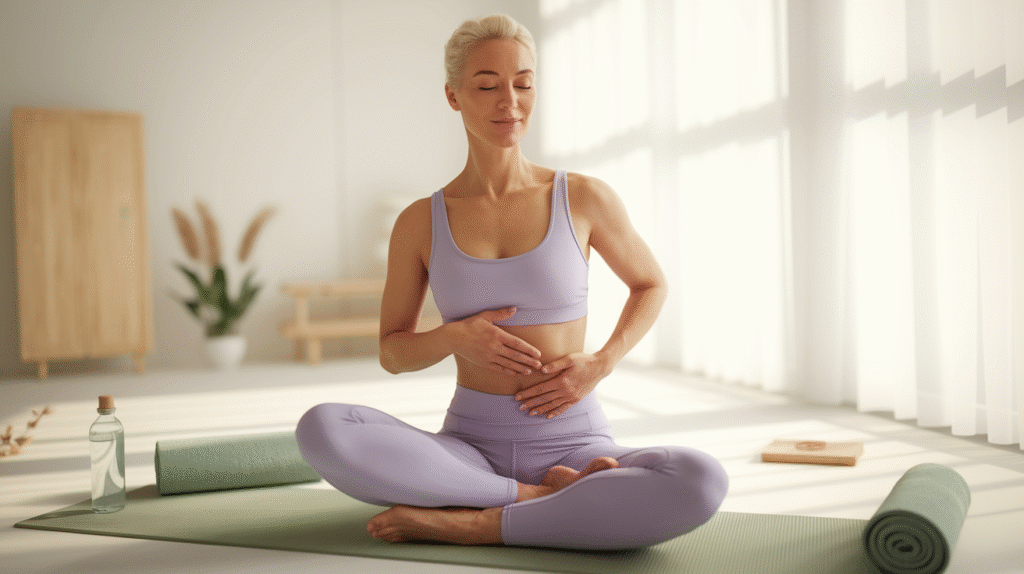
What Causes Bladder Leakage?
Bladder leaks don’t happen because you’re weak or because you’ve done something wrong. They occur when the muscles supporting your bladder become weakened or damaged, and this can happen for several legitimate reasons that have nothing to do with your willpower or character.
Pregnancy and childbirth top the list of causes. Carrying a baby for nine months puts significant pressure on your pelvic floor muscles, and vaginal delivery can stretch or even tear these essential muscles.
Studies show that women who’ve had vaginal births are twice as likely to experience bladder leakage compared to those who haven’t given birth. Even C-sections don’t eliminate the risk, since pregnancy itself affects pelvic floor strength.
Aging and menopause create another perfect storm for bladder control issues. As estrogen levels drop during menopause, the tissues in your pelvic floor lose elasticity and strength.
The muscles become less responsive, and the urethral lining thins, making it harder to maintain a tight seal. This hormonal shift affects nearly every woman to some degree, which explains why bladder leaks become more common after age 50.
High-impact activities like running, jumping, or even chronic coughing from allergies or smoking create repeated pressure on your pelvic floor.
Every time you land from a jump or cough forcefully, your bladder experiences a sudden increase in abdominal pressure. If your pelvic floor muscles aren’t strong enough to counteract that pressure, leaks happen.
Weight and lifestyle factors also play a role. Carrying extra weight increases the constant pressure on your pelvic floor, while chronic constipation forces you to strain regularly, weakening these muscles over time.
The Essential Role of Your Pelvic Floor
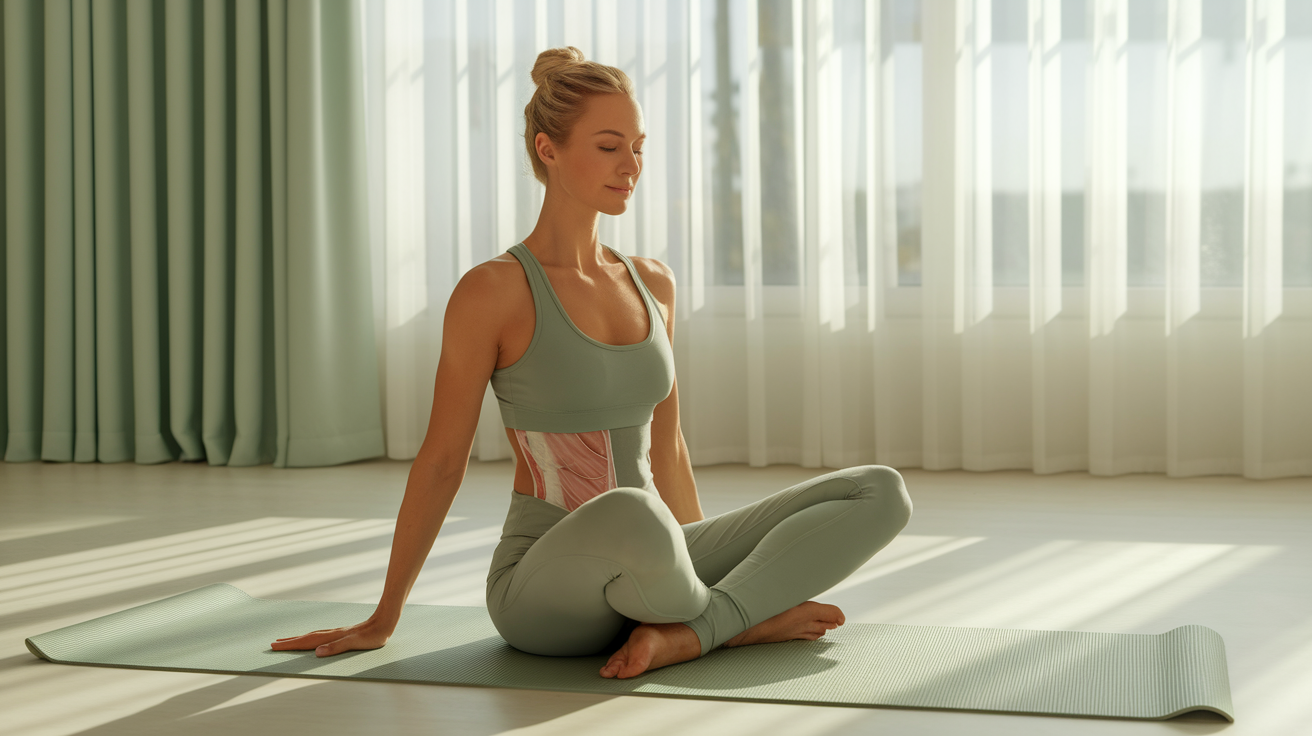
Think of your pelvic floor as a hammock of muscles stretching from your pubic bone to your tailbone. These muscles support your bladder, uterus, and rectum, keeping everything in its proper place.
When you laugh, sneeze, cough, or lift something heavy, your pelvic floor muscles automatically contract to prevent leakage.
This system works beautifully when your muscles are strong and responsive. They squeeze the urethra shut at exactly the right moment, maintaining continence even when abdominal pressure suddenly increases.
But when these muscles become weakened, stretched, or damaged, they can’t respond quickly or forcefully enough. The result? Stress incontinence—those frustrating leaks that happen during physical activity or sudden movements.
The amazing news is that your pelvic floor muscles respond to exercise just like any other muscle group. Strengthening them through targeted exercises restores their ability to support your bladder and control leakage. This natural solution addresses the root cause rather than just managing symptoms.
Signs Your Pelvic Floor Needs Attention
Leaking during exercise, laughing, or sneezing represents the classic sign of stress incontinence. If you notice even small amounts of urine escaping during these activities, your pelvic floor needs strengthening.
Difficulty controlling urgency—that sudden, desperate need to reach a bathroom immediately—indicates weakness in different pelvic floor muscles. You might feel like you can’t hold it long enough to get to the toilet.
Lower back pain or pelvic discomfort often accompanies pelvic floor dysfunction. These muscles connect to your core stability system, and weakness in one area affects the others. If you experience unexplained lower back pain along with bladder issues, your pelvic floor likely needs attention.
The Complete Guide to Pelvic Floor Exercises That Actually Work
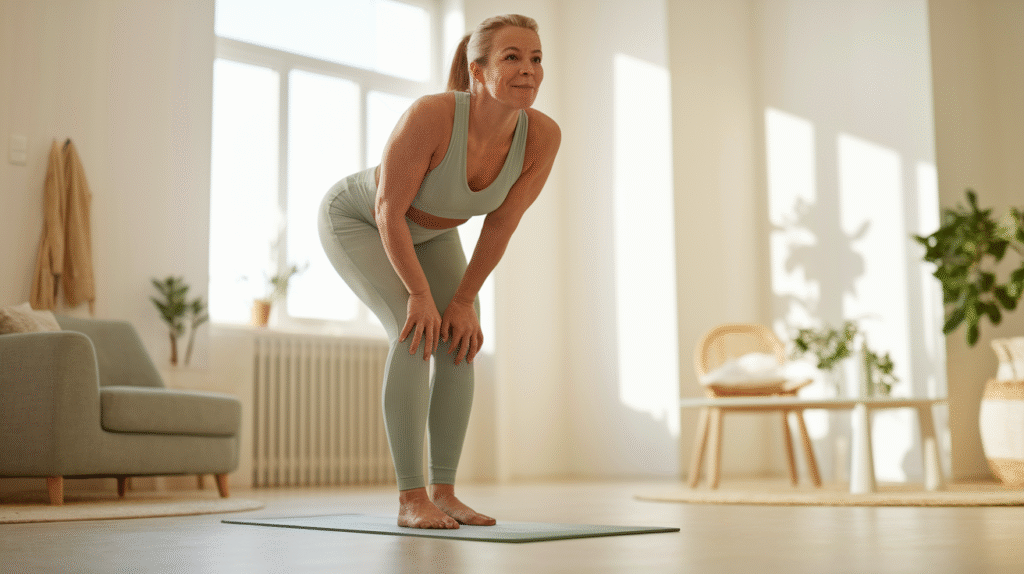
How to Find Your Pelvic Floor Muscles (The Easy Way)
Before you can strengthen your pelvic floor, you need to identify exactly which muscles you’re working with. Many women struggle with this initially, but these simple techniques make it easy.
The “stop the flow” method provides the quickest way to locate your pelvic floor muscles. Next time you’re urinating, try to stop the stream midway. The muscles you engage to do this are your pelvic floor muscles. However, don’t make this a regular exercise—use it only as a one-time identification tool, since repeatedly stopping urine flow can actually weaken your bladder control over time.
Visualization techniques offer another effective approach. Imagine you’re trying to stop yourself from passing gas and hold in urine at the same time. The muscles that tighten are your pelvic floor. Or picture yourself in an elevator, and as you lift your pelvic floor, you’re rising from the ground floor to the top floor.
Common mistakes to avoid: Don’t hold your breath, tighten your stomach muscles, or squeeze your buttocks or thighs. The movement should be internal and subtle. You shouldn’t see any external movement when you contract your pelvic floor correctly. If you’re tensing your abs or glutes, you’re using the wrong muscles.
The Perfect Kegel Exercise Technique
Kegel exercises form the foundation of pelvic floor strengthening. Here’s exactly how to perform them with proper form for maximum results.
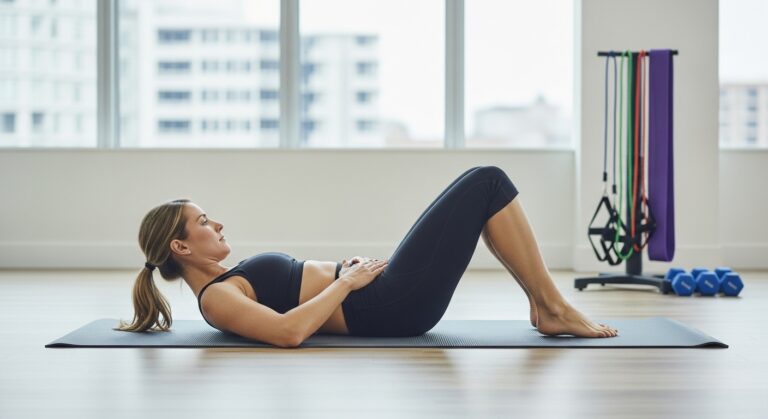
Start by emptying your bladder and finding a comfortable position—sitting, standing, or lying down all work equally well. Contract your pelvic floor muscles as if you’re stopping urine flow and holding in gas simultaneously. Pull up and in, imagining you’re lifting your pelvic floor toward your belly button.
Hold this contraction for 5 seconds, breathing normally throughout. Don’t hold your breath—this is crucial for proper technique. Then relax completely for 5 seconds. This rest period is just as important as the contraction, allowing blood flow and recovery.
Repeat this cycle 10 times for one complete set. Aim for 3 sets daily—morning, afternoon, and evening. The beauty of Kegels is that you can do them anywhere: at your desk, in your car, while watching TV, or standing in line at the store. No one can tell you’re exercising.
Your amazing results timeline: Most women notice initial improvements within 3-4 weeks of consistent daily practice. By 8-12 weeks, you should see significant reduction in leakage. Maximum benefits typically appear around 6 months of regular exercise. The key word here is consistent—daily practice delivers results, while sporadic efforts won’t.
Beyond Basic Kegels: Effective Advanced Exercises
Once you’ve mastered basic Kegels, these advanced exercises add functional strength and target your pelvic floor from different angles.
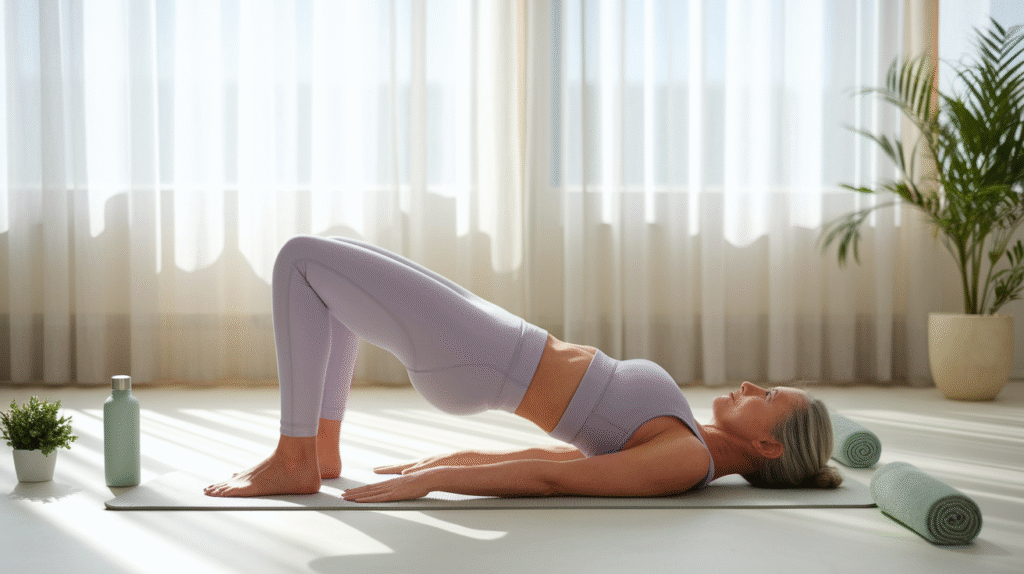
Bridge Pose for Pelvic Floor Strength: Lie on your back with knees bent and feet flat on the floor, hip-width apart. As you lift your hips toward the ceiling, engage your pelvic floor muscles. Hold the bridge position for 10 seconds while maintaining the pelvic floor contraction, then lower slowly. Perform 10 repetitions. This exercise strengthens your pelvic floor while building glute and core strength.
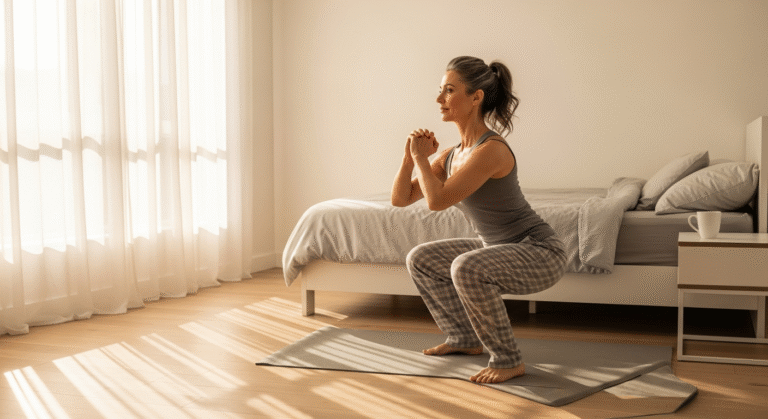
Squats with Pelvic Floor Engagement: Stand with feet shoulder-width apart. As you lower into a squat, engage your pelvic floor muscles. Hold the contraction as you rise back to standing. Start with 10 squats and gradually increase. This functional exercise trains your pelvic floor to work during real-life movements.
Bird Dog Exercise for Core and Pelvic Stability: Start on hands and knees. Engage your pelvic floor, then extend your right arm forward and left leg back, keeping your spine neutral. Hold for 5 seconds, return to start, and repeat on the opposite side. Complete 10 repetitions per side. This exercise builds the connection between your pelvic floor and core muscles.
The One Exercise You Need for Quick Results
The elevator Kegel technique delivers faster results because it targets all layers of your pelvic floor muscles in one powerful exercise.
Here’s how it works: Imagine your pelvic floor as a five-story building. Contract your muscles gently (first floor), then squeeze a bit tighter (second floor), continuing until you reach maximum contraction (fifth floor). Hold at the top for 3 seconds, then slowly release floor by floor, controlling the descent. This technique builds both strength and control throughout your entire pelvic floor.
Why this exercise proves so effective: It trains your muscles through their full range of motion, building strength at every level. The controlled release teaches your muscles to respond with precision, which translates directly to better bladder control during daily activities.
Incorporate elevator Kegels into your routine by replacing one set of regular Kegels with elevator Kegels. Start with 5 repetitions and work up to 10 as you build strength and control.
Your Easy 4-Week Action Plan to Stop Leaks

Week 1: Building Your Foundation
Your first week focuses on establishing proper technique and building the habit of daily practice. Start with 3 sets of 10 basic Kegels daily—morning, afternoon, and evening. Set phone reminders if needed to help you remember.
During this foundation week, concentrate on form over intensity. Make sure you’re isolating your pelvic floor muscles without engaging your abs, glutes, or thighs. Hold each contraction for 5 seconds with 5 seconds of rest between repetitions.
Track your progress using a simple method: mark a calendar each day you complete all three sets, or use a notes app on your phone. This visual record keeps you motivated and accountable. Don’t worry if you don’t notice results yet—you’re building the foundation for success.
Week 2-3: Increasing Strength and Endurance
Now that you’ve mastered the basics, it’s time to challenge your muscles. Increase your hold time to 8 seconds with 8 seconds of rest. Continue with 3 sets of 10 repetitions daily.
Add one advanced exercise to your routine. Choose the bridge pose, squats with pelvic floor engagement, or bird dog exercise. Perform 10 repetitions of your chosen exercise once daily, in addition to your regular Kegels.
Incorporate functional movements by consciously engaging your pelvic floor before and during activities that previously caused leaks. Before you sneeze, cough, lift something, or jump, contract your pelvic floor muscles. This trains your muscles to respond automatically in real-life situations.
What improvements you should notice: Many women report less frequent leaks during this period. You might find you can hold urine longer when you need to, or that small leaks during sneezing become less common. These early wins motivate you to continue.
Week 4 and Beyond: Maintaining Your Results
By week four, increase your hold time to 10 seconds with 10 seconds of rest. You’re now performing the full, effective version of Kegel exercises that delivers lasting results.
Create a sustainable long-term routine by maintaining 3 sets of 10 Kegels daily, even after your symptoms improve. Think of this as essential maintenance, like brushing your teeth. Once you’ve built strength, you can’t abandon the exercises without risking a return of symptoms.
Exercises to avoid that can make leaks worse include sit-ups, crunches, and heavy lifting with poor form. These exercises increase abdominal pressure without proper pelvic floor support, potentially worsening your condition. If you enjoy core work, focus on exercises that engage your pelvic floor simultaneously, like planks with pelvic floor contraction.
When to increase intensity safely: Once you can easily complete 10-second holds for all repetitions, add one more set to your daily routine (moving from 3 to 4 sets). Or incorporate elevator Kegels more frequently. The goal is progressive overload—gradually increasing the challenge as your muscles adapt.
Essential Tips for Maximum Effectiveness
The perfect time of day to practice is whenever you can be most consistent. Many women find success by linking Kegels to existing habits: during their morning coffee, at lunch, and before bed. Others prefer doing them during their commute or while watching TV.
Breathing techniques enhance results significantly. Never hold your breath during Kegels. Breathe naturally and steadily, which ensures proper oxygen flow to your muscles and prevents you from engaging your abs instead of your pelvic floor. Some women find it helpful to exhale gently during the contraction and inhale during the rest period.
How to stay consistent even when you’re busy: Remember that Kegels take only 5 minutes per set—15 minutes total daily. You can do them anywhere, anytime. If you miss a set, don’t skip the entire day. Do the remaining sets and get back on track tomorrow. Consistency over perfection wins every time.
Lifestyle Changes That Boost Your Success
Simple Daily Habits That Support Bladder Health
Hydration plays a crucial role in bladder health, but finding the right balance is key. Don’t restrict fluids thinking it will reduce leaks—dehydration actually irritates your bladder and can worsen symptoms. Aim for 6-8 glasses of water daily, spreading intake throughout the day rather than drinking large amounts at once. Reduce fluids 2-3 hours before bedtime to minimize nighttime bathroom trips.
Foods that help bladder control include fiber-rich options that prevent constipation (a major contributor to pelvic floor weakness). Load up on fruits, vegetables, and whole grains. Foods high in magnesium, like almonds, spinach, and black beans, support muscle function including your pelvic floor.
Foods that hurt bladder control include caffeine, alcohol, artificial sweeteners, spicy foods, and acidic foods like citrus and tomatoes. These bladder irritants can trigger urgency and frequency, making your symptoms worse. You don’t need to eliminate them completely, but notice if reducing them improves your symptoms.
The weight management connection is undeniable. Research shows that losing just 5-10% of your body weight can significantly reduce bladder leakage. Extra weight creates constant pressure on your pelvic floor, making it harder for these muscles to function properly. Combine pelvic floor exercises with healthy weight management for optimal results.
Activities to Embrace and Avoid
Low-impact exercises strengthen your body without stressing your pelvic floor. Walking, swimming, cycling, and yoga all provide excellent cardiovascular benefits while being gentle on your pelvic floor. These activities actually support your recovery by improving overall muscle tone and circulation.
High-impact activities require modification if you’re dealing with bladder leaks. Running, jumping rope, and high-intensity interval training create significant pelvic floor stress. This doesn’t mean you must avoid them forever, but wait until your pelvic floor strength improves. When you do return to high-impact exercise, always engage your pelvic floor before and during the activity. Consider wearing supportive compression shorts and working with a trainer who understands pelvic floor health.
The amazing benefits of yoga for pelvic health go beyond low-impact movement. Specific yoga poses like child’s pose, cat-cow, and happy baby pose gently stretch and strengthen your pelvic floor. Yoga also teaches breath awareness and body connection, helping you better control these muscles. Many yoga instructors now incorporate pelvic floor cues into their classes, making it an ideal complementary practice.
When to Seek Professional Help
Signs you might need a pelvic floor physical therapist include persistent symptoms after 12 weeks of consistent exercise, pain during pelvic floor exercises, or severe leakage that significantly impacts your quality of life. If you’re unsure whether you’re performing exercises correctly, a specialist can provide hands-on guidance.
What to expect from professional treatment: A pelvic floor physical therapist will perform an internal exam to assess your muscle strength, coordination, and any areas of tension or weakness. They’ll create a personalized exercise program and may use biofeedback devices that help you visualize your muscle contractions. Most women see significant improvement within 8-12 sessions.
Additional treatment options that complement exercises include vaginal pessaries (supportive devices), electrical stimulation therapy, and in severe cases, surgical options. However, pelvic floor exercises remain the first-line treatment that doctors recommend, and many women achieve complete resolution without needing additional interventions.
Conclusion
Your Path to Confidence Starts Today
You now have the complete roadmap to stop bladder leaks and reclaim your freedom. Pelvic floor exercises deliver proven results when performed consistently with proper technique. These aren’t temporary fixes or band-aid solutions—they address the root cause of stress incontinence by rebuilding the strength and responsiveness of your pelvic floor muscles.
The key takeaway: Small daily efforts lead to amazing, life-changing results. Just 15 minutes a day spent strengthening your pelvic floor can eliminate the leaks that have been holding you back from living fully. You can laugh without crossing your legs, exercise without fear, and enjoy activities you’ve been avoiding.
Remember that bladder leaks don’t define you, and they don’t have to be your reality. You have complete control over your bladder health through these simple, effective exercises. Every contraction you perform brings you one step closer to the confidence and freedom you deserve.
Your Quick Action Steps
Start today with these immediate steps:
1. Right now: Do one set of 10 Kegels to begin building your habit 2. Today: Set three daily reminders on your phone for your Kegel sessions 3. This week: Complete all three sets daily and mark your progress on a calendar 4. This month: Add one advanced exercise to your routine and notice your improvements
Don’t wait for the perfect moment or until symptoms worsen. The best time to start strengthening your pelvic floor is right now, whether you’re experiencing occasional leaks or more frequent issues.
Final Encouragement
You’re taking an essential step toward better health and improved quality of life. This isn’t just about stopping leaks—it’s about reclaiming your confidence, freedom, and peace of mind. Join the millions of women who’ve successfully strengthened their pelvic floors and eliminated bladder leakage through consistent exercise.
Your journey won’t always be perfect. You might miss a day or struggle with technique initially. That’s completely normal. What matters is getting back on track and continuing forward. Every woman who’s successfully stopped bladder leaks started exactly where you are right now, wondering if it would really work for them.
The answer is yes—it works. Your freedom and confidence are absolutely worth the 15 minutes daily investment. You deserve to live without constantly worrying about leaks, planning your life around bathroom locations, or avoiding activities you love. That life is waiting for you, and it starts with your first set of pelvic floor exercises today.
Take control, stay consistent, and trust the process. Your stronger, leak-free future begins now.