Somatic Yoga For The Beginner: What It Is And How to Start
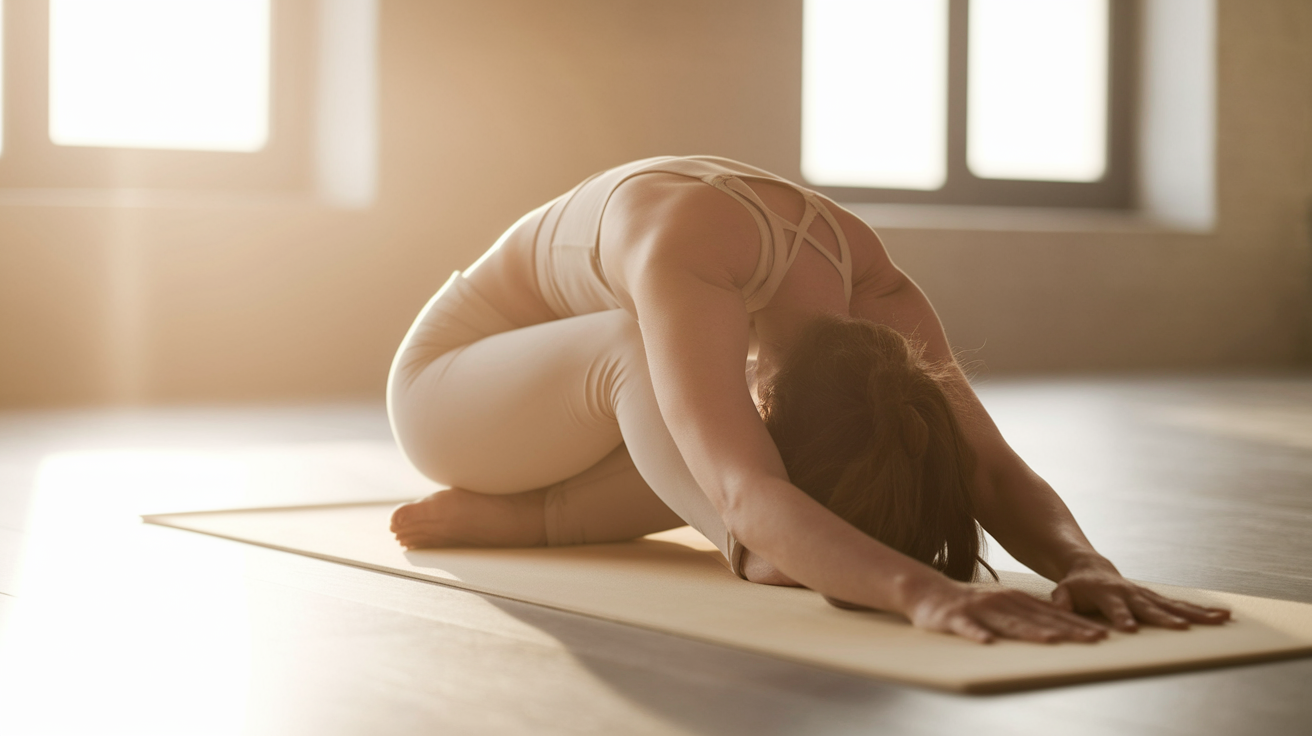
You know that feeling when your shoulders are practically glued to your ears, your hips feel like they’re locked in place, and no matter how much you stretch, the tension just won’t budge? That’s your body holding onto stress—and traditional stretching alone won’t fix it.
This is where somatic yoga changes everything. Unlike the yoga classes where you’re trying to nail the perfect pose or keep up with everyone else, somatic yoga asks you to slow down, tune in, and actually *feel* what’s happening in your body. It’s not about flexibility or strength. It’s about reconnecting with yourself and releasing the stress that’s been living in your muscles for way too long.
If you’re tired of carrying tension around like an unwanted backpack, this guide will walk you through exactly what somatic yoga is, why it works so well for stress relief, and how you can start your practice today—even if you’ve never done yoga before.
What Is Somatic Yoga? Understanding This Mind-Body Practice
The Simple Explanation
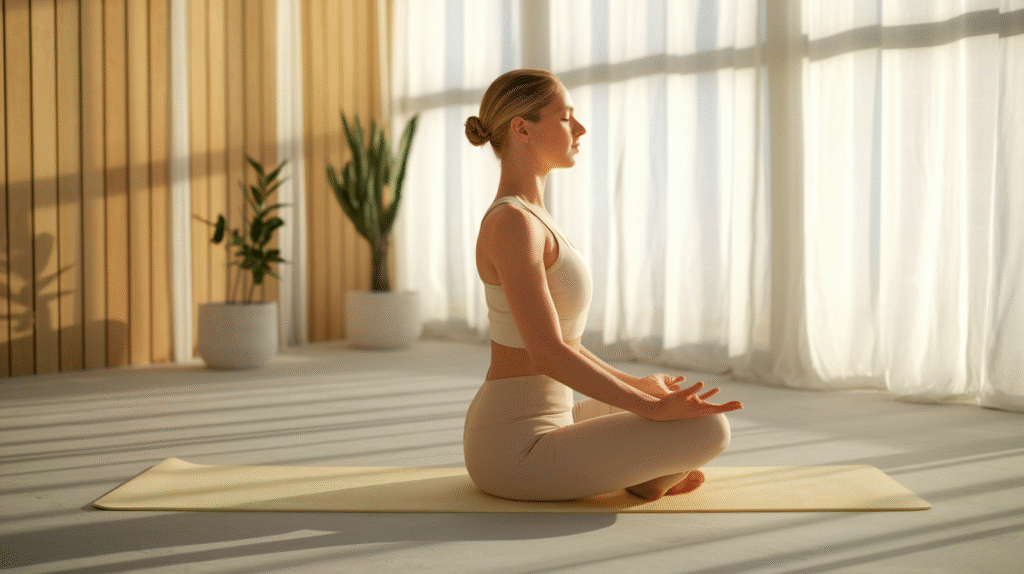
Somatic yoga is a gentle movement practice that focuses on your internal experience rather than how your poses look from the outside. The word “somatic” comes from the Greek word “soma,” meaning “the body as experienced from within.” This isn’t about achieving picture-perfect alignment or impressing anyone with your flexibility.
Here’s the key difference: Traditional yoga often emphasizes external form—are your hips square, is your spine straight, can you touch your toes? Somatic yoga flips this entirely. It asks: How does this movement *feel* to you? What sensations are you noticing? Where do you feel tension or ease?
The philosophy behind somatic movement centers on body awareness and consciousness. You’re not just moving through poses; you’re actively paying attention to the messages your body sends. Think of it as a conversation with your nervous system, where you’re finally listening instead of just talking.
Why Somatic Yoga Is Different (And Why That Matters)
The beauty of somatic yoga lies in its complete rejection of the “no pain, no gain” mentality. These movements are slow, deliberate, and designed to retrain your nervous system rather than force your body into submission.
You won’t find any pressure to achieve perfect alignment or compete with the person next to you. There’s no such thing as “doing it wrong” in somatic yoga—because the entire practice revolves around *your* unique experience in *your* body. If a movement doesn’t feel right, you modify it. Simple as that.
This approach matters because many of us have spent years disconnecting from our bodies. We push through pain, ignore discomfort, and treat our bodies like machines that should just work. Somatic yoga teaches us to do the opposite: to listen, respect, and work *with* our bodies instead of against them.
The Amazing Mind-Body Connection
Somatic yoga creates a direct pathway between your conscious mind and your physical body. When you practice, you’re not just stretching muscles—you’re actively engaging your awareness to notice sensations, tensions, and patterns you’ve probably been ignoring for years.
This consciousness piece is what makes somatic yoga so effective for healing. Your body has been keeping score of every stressful meeting, every difficult conversation, every moment of anxiety. These experiences create physical holding patterns that become so familiar you don’t even notice them anymore.
Through mindful movement, you start recognizing these patterns. You notice that your jaw clenches when you’re stressed, or that your shoulders rise when you’re anxious. This awareness is the first step toward change. You can’t release what you don’t know you’re holding.
The relationship you build with your body through somatic yoga transforms how you move through the world. You become more attuned to your needs, more responsive to stress signals, and more capable of taking care of yourself before tension becomes chronic pain.
The Proven Benefits: Why Somatic Yoga Works For Stress Relief
Physical Benefits You’ll Notice
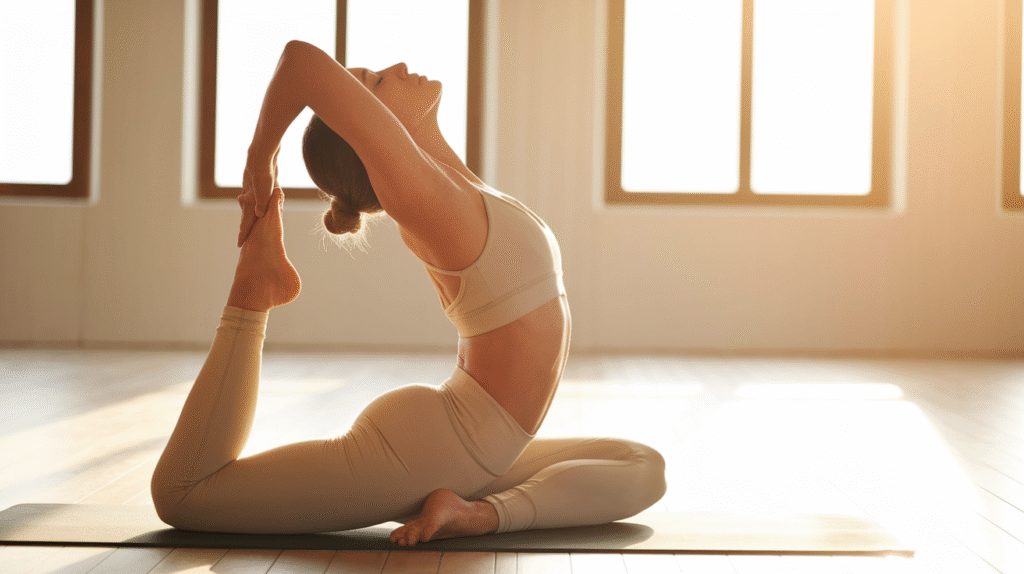
Let’s talk about what somatic yoga actually does for your body. First and foremost, it releases chronic muscle tension—the kind that doesn’t respond to regular stretching or massage. This happens because somatic movements work directly with your nervous system, teaching tight muscles to let go at a neurological level.
Research shows that somatic practices naturally reduce cortisol, your body’s primary stress hormone. When cortisol levels stay elevated for too long, you experience what many call “cortisol belly”—that stubborn weight around your midsection that won’t budge no matter what you eat. Somatic yoga addresses this by calming your stress response, allowing your body to stop operating in emergency mode.
If you wake up feeling stiff and sore every morning, somatic yoga provides genuine relief. Those gentle, mindful movements increase circulation, release adhesions in your fascia, and remind your muscles how to relax. You’ll notice the difference within days—mornings become easier, movement feels smoother, and that constant background ache starts to fade.
Emotional And Mental Health Benefits
Here’s something most people don’t realize: your body stores emotions. That tightness in your chest isn’t just physical—it’s holding onto anxiety. Those perpetually tense shoulders are carrying the weight of responsibility you’ve been shouldering for years.
Somatic yoga creates a safe space for these stored emotions to release. You might find yourself feeling unexpectedly emotional during practice—that’s completely normal and actually a sign that the work is happening. Your body is finally letting go of what it’s been holding.
This practice supports deep emotional healing and trauma release without requiring you to relive painful experiences. The movements themselves facilitate processing, allowing your nervous system to complete stress responses that got stuck. You’re essentially giving your body permission to finish what it started.
The result? A profound sense of inner safety and wholeness. You feel more grounded, more present, and more comfortable in your own skin. Your overall mood improves, anxiety decreases, and you develop a resilience you didn’t know you had.
Essential Nervous System Regulation
Your nervous system has two main modes: sympathetic (fight-or-flight) and parasympathetic (rest-and-digest). Most of us spend way too much time in sympathetic mode, which keeps us wired, tense, and unable to truly relax.
Somatic yoga directly activates your parasympathetic nervous system. Those slow, gentle movements signal to your brain that you’re safe, turning off the alarm bells and allowing your body to shift into repair mode. This isn’t just relaxation—it’s actual physiological change.
The long-term benefits for stress management are remarkable. You’re not just dealing with today’s stress; you’re building resilience for future challenges. Your nervous system becomes more flexible, better able to handle stress without getting stuck in high-alert mode. You recover faster, sleep better, and maintain your equilibrium even when life gets chaotic.
Understanding Where Your Body Holds Stress
The Ultimate Stress Map Of Your Body
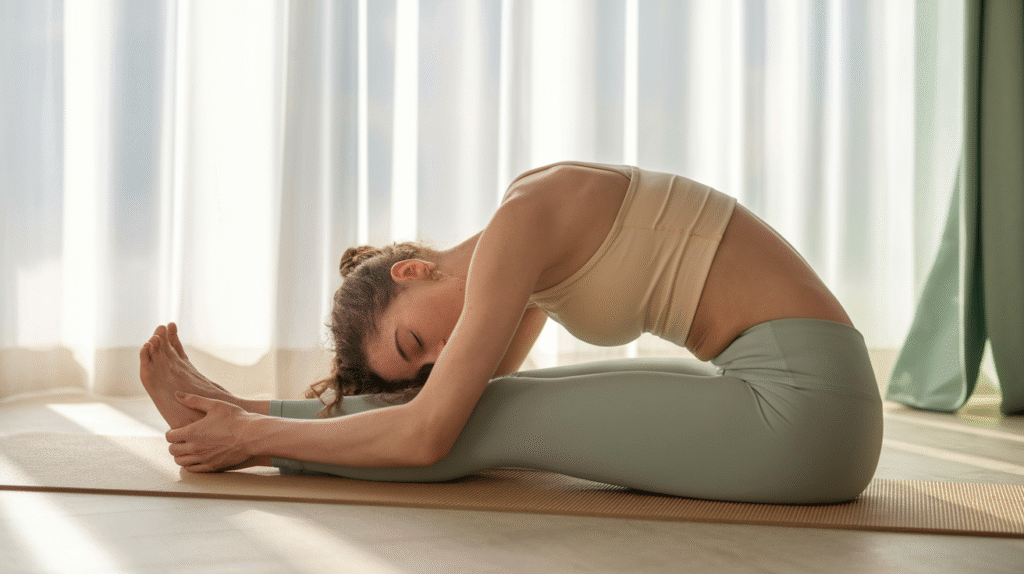
Your body is incredibly specific about where it stores different types of stress and emotions. Understanding this stress map helps you recognize what your tension is trying to tell you.
Your hips are the storage unit for emotional trauma and unexpressed feelings. Ever wonder why hip openers in yoga make people cry? It’s not random—your hips have been holding onto emotions you didn’t know how to process. Old grief, suppressed anger, and unresolved experiences all settle here.
Shoulders and neck tension tells a different story. This area holds responsibility, burden, and the weight of everything you’re carrying. When you say you’re “shouldering” a lot, your body takes that literally. Chronic shoulder tension often reflects taking on too much or feeling like everything depends on you.
Your jaw is where suppressed communication lives. If you can’t say what you really think or feel, your jaw clenches to hold those words in. This creates tension that radiates through your entire face and head, often leading to headaches and TMJ issues.
Each area of your body speaks a different language of stress, and learning to interpret these signals gives you powerful information about what needs attention in your life.
Recognizing Your Personal Tension Patterns
Start with a simple body scan. Lie down or sit comfortably and mentally travel through your body from head to toe. Notice where you feel tight, where you feel relaxed, and where you feel nothing at all (numbness is information too).
Common signs your body is holding stress include: persistent muscle tightness that doesn’t improve with stretching, areas that feel “stuck” or immobile, chronic pain without clear injury, digestive issues, shallow breathing, and that general sense of being “wound up” all the time.
Pay attention to when your tension increases. Does your jaw clench during work calls? Do your shoulders rise when you’re driving? Does your stomach tighten when you check email? These patterns reveal your personal stress triggers and how your body responds to them.
Awareness is genuinely the first step to release. You can’t change what you don’t notice. Once you start recognizing your patterns, you can intervene earlier—using somatic movements to release tension before it becomes chronic pain.
The Connection Between Emotions And Physical Tension
Your body’s holding patterns aren’t random—they’re created by past experiences. When you experience something overwhelming, your body contracts to protect you. If that experience never gets fully processed, the contraction stays.
This is your body’s protective mechanism at work. It’s trying to keep you safe by maintaining a defensive posture. The problem is, these patterns become unconscious. You’re walking around with muscles perpetually braced for impact, even when there’s no actual threat.
Muscle memory isn’t just about learning physical skills—it’s also about remembering emotional experiences. Your body literally remembers that time you felt unsafe, or when you had to suppress your feelings, or when you experienced loss. These memories live in your tissues.
Breaking free from unconscious tension patterns requires both awareness and gentle movement. Somatic yoga provides the perfect combination, allowing you to recognize patterns and then teach your body that it’s safe to let them go. You’re essentially updating your body’s software, replacing old protective programs with new ones based on present reality rather than past experiences.
How To Start Your Somatic Yoga Practice: Easy Steps For Beginners
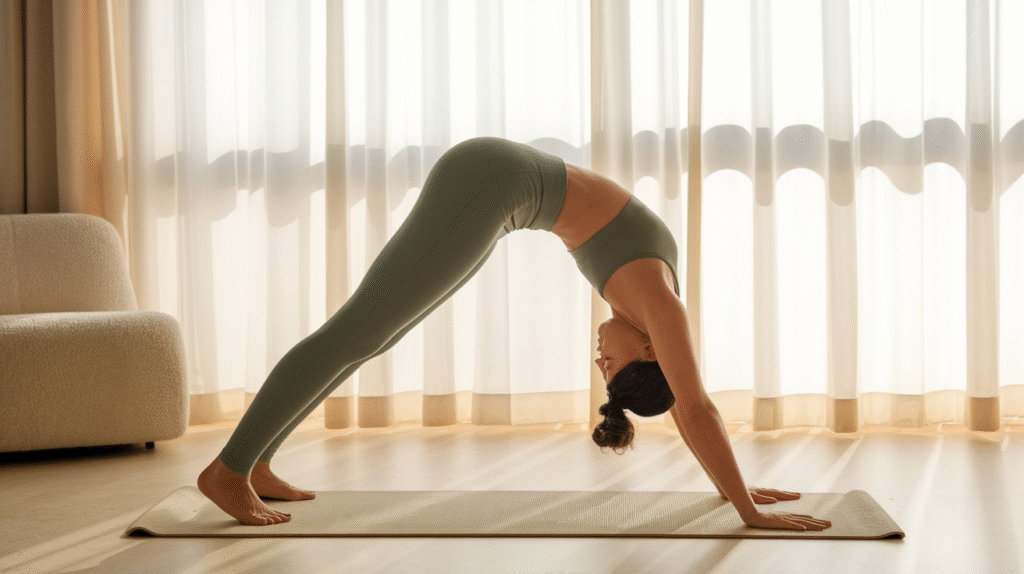
Getting Started: What You Need (Hint: Not Much!)
The beautiful thing about somatic yoga is that you don’t need expensive equipment or a fancy studio membership. All you need is comfortable clothing that doesn’t restrict movement, a yoga mat or soft surface, and enough space to lie down and stretch your arms out.
For free resources, YouTube is your best friend. Channels like Sarah Beth Yoga offer excellent beginner-friendly somatic yoga videos that guide you through gentle sequences. Look for videos specifically labeled “somatic yoga for beginners” or “gentle somatic flow.” These typically run 10-30 minutes and require zero previous experience.
Creating your practice space matters more than you might think. Find a quiet area where you won’t be interrupted. Dim the lights if possible, and consider playing soft music or nature sounds. The environment should feel safe and calming—this signals to your nervous system that it’s okay to relax and release.
You might also want a pillow or bolster for support under your knees or head, and a blanket for warmth during final relaxation. But honestly? You can start with absolutely nothing except your body and your attention.
Your First Somatic Yoga Session: A Quick Guide
Begin with simple somatic yoga poses that emphasize awareness over achievement. Cat-Cow is perfect for beginners—moving between arching and rounding your spine while paying attention to how each vertebra feels. This isn’t about making big movements; it’s about moving slowly enough to notice everything.
A beginner-friendly somatic yoga flow might include: gentle neck rolls (noticing any catching or stiffness), shoulder circles (feeling where movement is smooth versus restricted), pelvic tilts (connecting with your lower back and hips), and side-lying spinal twists (allowing gravity to help you release).
The essential principle: focus on sensation over perfection. There’s no goal pose you’re trying to achieve. Instead, you’re exploring how movement feels. Does this stretch feel good? Where do you notice tension? Can you breathe more deeply into tight areas?
Start with just 10-15 minutes. Seriously. This isn’t about marathon sessions. Somatic yoga works through quality of attention, not quantity of time. Fifteen minutes of truly mindful movement beats an hour of going through the motions while thinking about your to-do list.
Essential Principles For Effective Practice
Moving slowly is non-negotiable in somatic yoga. We’re talking glacially slow—much slower than feels natural at first. This slowness allows your nervous system to register what’s happening and make real changes. When you move fast, you’re working on autopilot. When you move slowly, you’re actually retraining your neuromuscular patterns.
Listening to your body’s signals means respecting your limits without judgment. If something hurts (sharp pain, not gentle stretching sensation), stop. If you need to rest, rest. Your body knows what it needs—your job is to listen and respond accordingly.
Breath awareness amplifies everything. Notice how your breath changes with different movements. Can you breathe smoothly and deeply, or does your breath catch? Restricted breathing often indicates you’re pushing too hard. Let your breath guide your movement—if you can’t breathe easily, back off.
Making this a daily habit transforms results. Consider a 30-day somatic workout challenge: commit to just 10 minutes every morning. Set a reminder, pick a consistent time, and show up even when you don’t feel like it. The consistency matters far more than the duration.
Common Beginner Mistakes To Avoid
Don’t push too hard or expect immediate results. Somatic yoga works through accumulation—small, gentle changes that build over time. You’re retraining patterns that took years to develop; they won’t disappear overnight. Trust the process and stay consistent.
Stop comparing your practice to others. What you see in videos or classes is someone else’s body, someone else’s experience. Your practice is about you—your sensations, your discoveries, your pace. There’s no competition here.
The biggest mistake? Skipping the awareness component and just “doing the movements.” Somatic yoga without awareness is just slow stretching. The magic happens when you bring your full attention to what you’re feeling. This is a meditation practice as much as a movement practice—the mindfulness is what creates the change.
Conclusion
Somatic yoga offers something genuinely different from traditional exercise or yoga—a gentle, accessible path to releasing the stress and tension your body has been storing for years. This isn’t about achieving perfect poses or building impressive flexibility. It’s about coming home to your body, learning its language, and finally giving it permission to let go.
The practice works because it addresses stress at its source: your nervous system. By moving slowly, mindfully, and with complete attention to your internal experience, you’re literally retraining your body’s stress responses. You’re teaching tight muscles to relax, calming your fight-or-flight system, and creating space for emotional healing.
You can start today with nothing more than comfortable clothes and 10 minutes. Find a free video on YouTube, roll out your mat, and begin exploring. Focus on how movement feels rather than how it looks. Listen to your body’s signals. Move slowly enough to notice everything.
Consistency matters more than perfection. Even 10-15 minutes daily creates profound change over time. Your body has been waiting for this attention, this kindness, this opportunity to release what it’s been holding. Give it that gift.
Start your somatic yoga journey today. Your body—and your nervous system—will thank you. The tension you’ve been carrying doesn’t have to be permanent. Release is possible, healing is available, and it all begins with gentle, mindful movement and the courage to truly feel what’s happening inside.