Gentle Yoga Flow for Beginners: 15-Minute Morning Routine
You know that feeling when your alarm goes off, and your body feels like a rusty robot? Your back aches, your neck is stiff, and the thought of jumping straight into your day makes you want to hit snooze for the tenth time. I get it—mornings can be rough.
Here’s the good news: you don’t need an hour-long workout or complicated fitness routine to transform your mornings. A gentle yoga flow designed specifically for beginners changes everything. This 15-minute practice wakes up your body naturally, releases tension, and sets you up for an amazing day—without requiring you to twist yourself into a pretzel or master advanced poses.
This complete guide walks you through exactly what you need: a simple sequence anyone can follow, essential tips for success, and proven modifications that make every pose accessible. No yoga experience required. No fancy equipment needed. Just you, a mat (or even a towel), and 15 minutes of your morning.
Ready to feel energized, flexible, and centered before your day even begins? Let’s dive in.
Why Morning Yoga Is the Ultimate Game-Changer
The Proven Benefits of Starting Your Day with Movement
Morning yoga delivers results that coffee simply can’t match. When you move your body first thing, you increase circulation and oxygen flow to your muscles and brain. This natural energy boost lasts for hours, helping you tackle your to-do list with clarity and focus instead of relying on caffeine to drag you through.
The flexibility benefits are real and noticeable. Your muscles naturally stiffen during sleep as you stay in one position for hours. Gentle stretching counteracts this stiffness, lubricating your joints and lengthening tight muscles. Within just a few days of consistent practice, you’ll notice easier movement throughout your entire day—bending down to tie your shoes becomes effortless, and that nagging lower back tension starts to fade.
Mental clarity is where morning yoga truly shines. The combination of mindful breathing and intentional movement quiets your racing thoughts and grounds you in the present moment. Research shows that even brief yoga sessions reduce cortisol levels and activate your parasympathetic nervous system, which means you approach your day from a calm, centered place rather than jumping straight into stress mode.
How Just 15 Minutes Creates Lasting Impact
Here’s what makes this routine so effective: it’s perfectly calibrated to fit into your real life. Fifteen minutes is short enough that you won’t need to wake up at 4 AM or sacrifice your morning shower. You can practice before anyone else in your household wakes up, before you check your phone, before the demands of the day start piling up.
Despite the brevity, 15 minutes provides enough time to move through all the essential components of a complete practice. You’ll warm up your body gradually, build strength and flexibility through core poses, and cool down properly. This isn’t a rushed sequence—it’s a thoughtfully designed flow that respects your body’s need for gentle progression.
The sustainability factor matters most. Quick routines become daily habits because they don’t feel overwhelming. When you commit to just 15 minutes, you actually show up consistently. That consistency compounds over weeks and months, creating transformative changes in your flexibility, strength, and overall well-being that hour-long sessions attempted once a week simply can’t match.
Perfect Timing: Why Mornings Work Best for Beginners
Your body is naturally primed for yoga after a night’s rest. While you might feel stiff initially, your muscles are actually receptive to gentle stretching because they’re relaxed rather than fatigued from daily activities. You’re also working with a clean slate—no accumulated stress or tension from meetings, traffic, or household chaos.
Morning practice sets an intentional tone that ripples through your entire day. When you start with mindful movement and breathing, you’re more likely to make conscious choices about nutrition, stress management, and self-care throughout the day. You’ve already done something positive for yourself, which creates momentum for more healthy decisions.
Practically speaking, mornings offer fewer interruptions. Your phone isn’t blowing up with messages yet. Work emails haven’t started flooding in. Kids might still be sleeping. This quiet window creates the perfect environment for focusing on yourself without guilt or distraction—something that becomes nearly impossible to find as the day progresses.
Essential Preparation: Setting Yourself Up for Success
Creating Your Simple Morning Yoga Space
You don’t need a dedicated yoga studio or Instagram-worthy setup. A quiet corner of your bedroom, living room, or even a cleared space in your hallway works perfectly. The key is having enough room to extend your arms and legs in all directions without hitting furniture—roughly six feet by three feet gives you plenty of space.
A yoga mat provides cushioning and grip, but don’t let the lack of one stop you. A large towel, blanket, or even a carpeted floor works for this gentle practice. If you do invest in a mat, choose one that’s at least 5mm thick for comfortable joint support. Budget-friendly options from major retailers perform just as well as premium brands for beginners.
Optional props enhance comfort but aren’t required. A yoga block (or a thick book) helps bring the floor closer to you in certain poses. A cushion or folded blanket provides extra padding for your knees. A wall offers invaluable support for balance poses. Look around your home—you already have everything you need to modify poses and make them accessible.
What to Wear and When to Practice
Comfort trumps style every single time. Choose stretchy clothing that moves with your body—leggings or loose pants paired with a fitted top that won’t ride up during downward dog. Avoid anything with buttons, zippers, or restrictive waistbands that dig into your skin when you bend and twist.
Practice on an empty stomach for maximum comfort. Trying to fold forward with breakfast sloshing around feels awful and limits your range of motion. If you absolutely need something before practice, stick to a small glass of water or herbal tea. Save your full breakfast for after your routine when your digestion is activated and ready.
Waking up 20 minutes earlier sounds daunting, but here’s the trick: go to bed 20 minutes earlier too. Your body adjusts to new sleep schedules within a few days. Set your alarm across the room so you have to physically get up to turn it off. Once you’re vertical, rolling out your mat becomes much easier than crawling back under the covers.
Quick Mindset Tips for Complete Beginners
Release any mental image of what yoga “should” look like. Those Instagram photos showing people in perfect splits and impossible balances? Those practitioners have trained for years. Your practice looks exactly how it should for your body right now. Touching your toes doesn’t make you better at yoga—showing up consistently does.
Listen to your body with genuine attention. You should feel a comfortable stretch, never sharp pain. If something hurts, back off immediately. Your flexibility will improve naturally over time without forcing it. Some days you’ll feel more open than others, and that’s completely normal. Honor where you are each morning.
Breathing matters more than the physical poses themselves. When you find yourself holding your breath or breathing shallowly, that’s your signal to ease up on the intensity. Deep, steady breaths through your nose signal to your nervous system that you’re safe, allowing your muscles to release tension and stretch more effectively.
Your Complete 15-Minute Gentle Yoga Flow Sequence
Warm-Up Poses (Minutes 1-5): Awakening Your Body
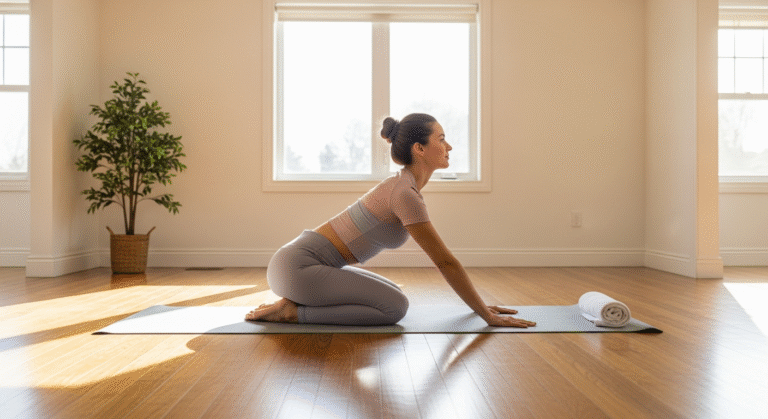
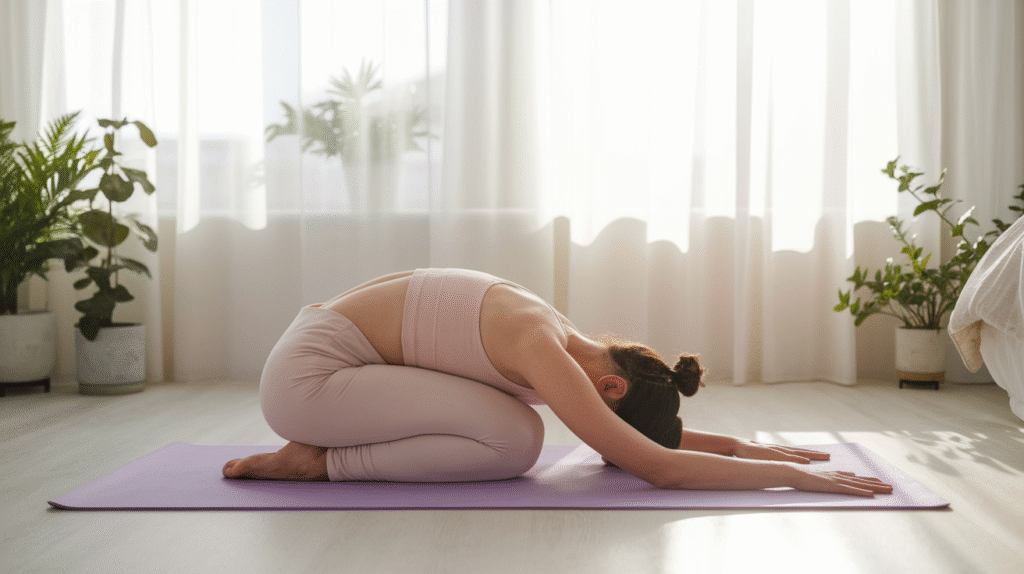
Child’s Pose (1 minute): Start by kneeling on your mat with your big toes touching and knees spread comfortably wide. Sit your hips back toward your heels and extend your arms forward, resting your forehead on the mat. Take five deep breaths here, feeling your back expand with each inhale. This pose gently stretches your hips, thighs, and lower back while calming your mind. Set an intention for your practice—maybe it’s simply “I’m taking care of myself today.”
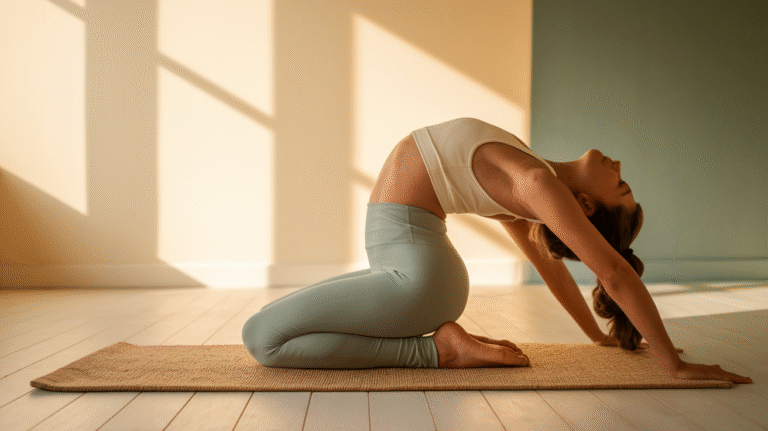
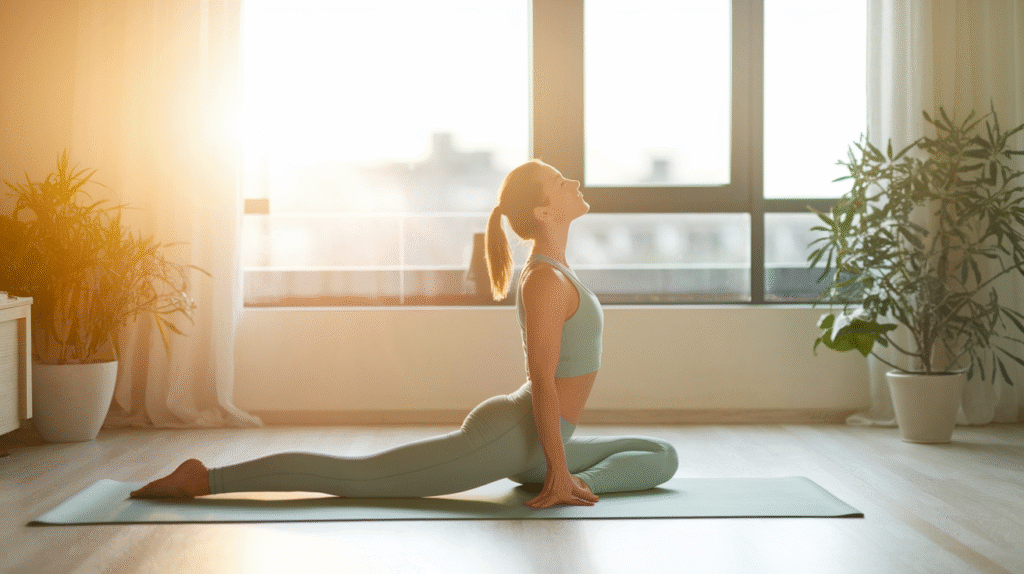
Cat-Cow Stretch (2 minutes): Come to hands and knees with wrists under shoulders and knees under hips. Inhale as you drop your belly, lift your chest, and gaze slightly upward (cow pose). Exhale as you round your spine, tuck your chin, and draw your belly button toward your spine (cat pose). Flow between these positions smoothly, matching each movement to your breath. This mobilizes every segment of your spine, releases back tension, and establishes the crucial breath-movement connection that defines yoga.
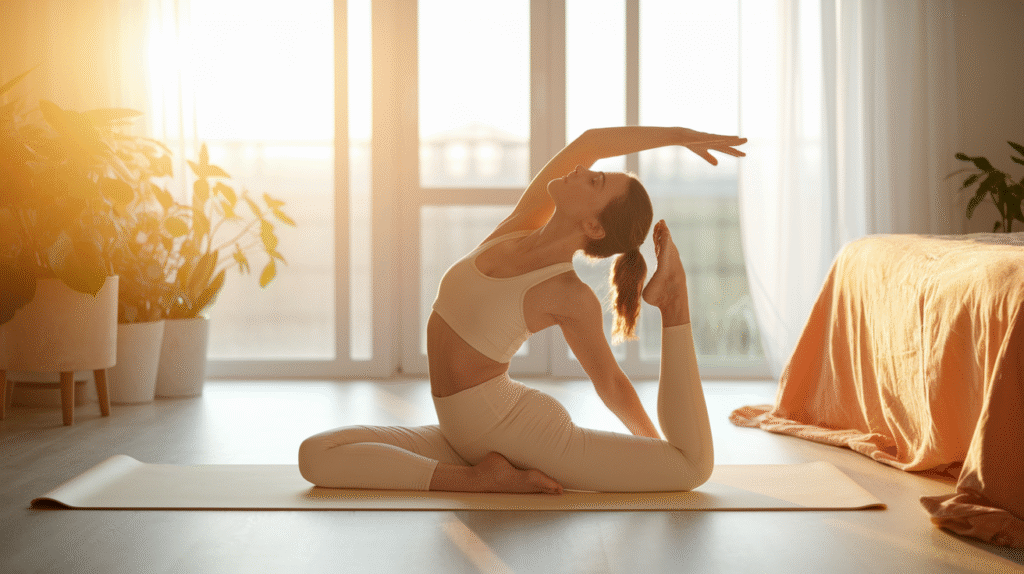
Seated Side Stretches (2 minutes): Sit cross-legged (or with legs extended if that’s more comfortable). Inhale to lengthen your spine, then exhale as you reach your right arm overhead and lean to the left, feeling a stretch along your right side. Keep both sitting bones grounded. Hold for three breaths, then switch sides. Repeat twice on each side. These lateral bends wake up the often-neglected muscles between your ribs, improving breathing capacity and releasing tension you didn’t know you were holding.
Core Flow Poses (Minutes 6-12): Building Energy and Strength
Downward-Facing Dog (2 minutes): From hands and knees, tuck your toes and lift your hips up and back, forming an inverted V-shape with your body. Keep your knees bent if your hamstrings are tight—this isn’t about straightening your legs. Press firmly through your hands, spread your fingers wide, and let your head hang heavy. Pedal your feet gently, bending one knee then the other. This essential pose strengthens your arms and shoulders while stretching your entire back body. Don’t worry if your heels don’t touch the floor—they don’t need to.
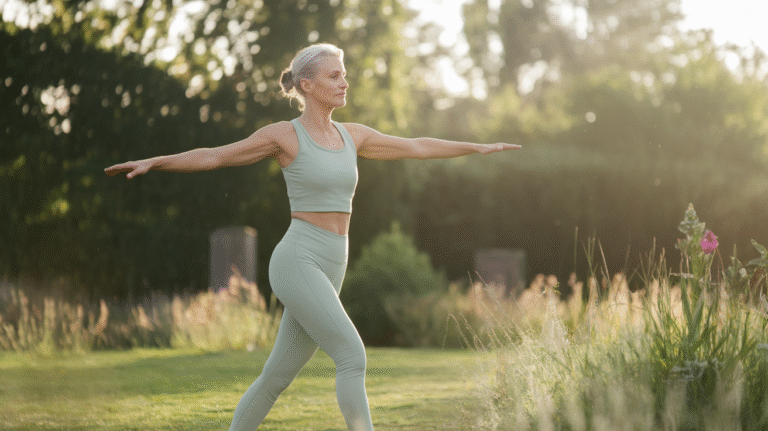
Gentle Warrior I (2 minutes): Step your right foot forward between your hands, turning your left heel down at a 45-degree angle. Bend your right knee directly over your ankle while keeping your back leg strong. Lift your torso upright and reach your arms overhead, palms facing each other. Square your hips toward the front of your mat. Hold for five breaths, feeling strength building in your legs. Switch sides. This pose builds leg strength, opens your hip flexors (which get tight from sitting), and improves balance and focus.
Triangle Pose (2 minutes): Straighten your right leg and extend your arms out to the sides at shoulder height. Reach your right hand forward, then down to your shin, ankle, or a block—wherever you can reach comfortably. Extend your left arm toward the ceiling and gaze up at your left thumb if your neck allows. Keep both legs strong and your chest open. Hold for five breaths, then switch sides. Triangle effectively stretches your hamstrings, opens your hips, and strengthens your legs while improving balance.
Bridge Pose (1 minute): Lie on your back with knees bent and feet flat on the floor, hip-width apart. Press into your feet and lift your hips toward the ceiling, keeping your thighs parallel. Interlace your fingers under your back or keep your arms alongside your body. This gentle backbend energizes your entire body, strengthens your glutes and back muscles, and opens your chest and shoulders. Hold for five deep breaths, then slowly lower down one vertebra at a time.
Cool-Down Poses (Minutes 13-15): Closing with Calm
Supine Twist (1 minute): Hug your knees into your chest, then let both knees fall to the right while extending your arms out to the sides in a T-shape. Turn your head to the left if comfortable. Breathe deeply for five breaths, feeling the gentle twist release any remaining tension from your spine. Switch sides. This pose aids digestion, releases lower back tension, and signals to your body that it’s time to transition into relaxation mode.
Final Relaxation (2 minutes): Extend your legs long and let your feet fall open naturally. Rest your arms alongside your body with palms facing up. Close your eyes and allow your entire body to become heavy, sinking into the mat. Scan your body from head to toe, consciously releasing any remaining tension. Breathe naturally. This final rest, called Savasana, integrates all the benefits of your practice and allows your nervous system to fully absorb the work you’ve done. Set an intention for your day ahead before slowly transitioning back to seated.
Expert Tips to Make Your Practice Amazing
Common Beginner Mistakes and How to Avoid Them
Breath-holding is the number one mistake beginners make. When a pose feels challenging, your instinct is to hold your breath and muscle through it. This actually makes everything harder because oxygen fuels your muscles. The simple fix: if you notice you’re holding your breath, that’s your signal to ease up on the intensity of the pose. Breathing smoothly and steadily always takes priority over going deeper into a stretch.
Pushing too hard too fast leads to injury and discouragement. Your flexibility improves gradually over weeks and months, not in a single session. Forcing yourself into a deeper stretch than your body is ready for can strain muscles and damage connective tissue. Progress in yoga comes from consistent gentle practice, not from aggressive pushing. Honor your edge—that sweet spot where you feel a good stretch but can still breathe comfortably.
Comparison kills your practice before it even starts. Scrolling through yoga content online, you’ll see people doing incredible things with their bodies. Remember: you’re seeing their highlight reel after years of practice, not their first week. Your body is unique, with its own structure, history, and current capabilities. The only comparison that matters is you today versus you last week. Celebrate small improvements in how you feel rather than what your poses look like.
Modifications That Make Every Pose Accessible
Walls are your best friend for balance poses. Practicing Warrior I near a wall lets you touch it for stability whenever needed. This builds your confidence and allows you to hold poses longer, which actually improves your balance faster than wobbling and falling repeatedly. There’s zero shame in using support—smart modifications prevent injury and accelerate progress.
Bent knees make forward folds and downward dog accessible for everyone. If your hamstrings are tight (and most people’s are), keeping a generous bend in your knees protects your lower back and lets you focus on lengthening your spine rather than straining to straighten your legs. As your flexibility improves over time, your legs will naturally straighten more. Forcing it achieves nothing except potential injury.
Taking breaks isn’t quitting—it’s practicing intelligently. If you need to return to Child’s Pose in the middle of the sequence, do it. If you need to skip a pose entirely one day, that’s fine. Your practice should energize you, not exhaust you. Building a sustainable daily habit means listening to your body and adjusting accordingly rather than rigidly following a routine that doesn’t serve you.
How to Stay Motivated and Build Your Daily Habit
Track your practice with a simple calendar or habit tracker app. Put an X on each day you complete your 15 minutes. This visual representation of your consistency is incredibly motivating—you won’t want to break your streak. After just one week of daily practice, you’ll notice the habit forming. After a month, it becomes part of your morning routine like brushing your teeth.
Notice small improvements rather than waiting for dramatic transformations. Maybe your back feels less stiff when you get out of bed. Perhaps you’re breathing more deeply throughout your day. Your pants might feel looser around the waist. These subtle shifts are the real benefits of yoga—they compound over time into significant improvements in how you feel and function.
Join online communities for support and inspiration. Free yoga groups on social media connect you with other beginners who share your challenges and celebrate your progress. Seeing others commit to their practice inspires you to show up for yours. Sharing your own journey, even just posting “completed day 5!” creates accountability that keeps you consistent when motivation wanes.
Transform Your Mornings Starting Tomorrow
This gentle 15-minute yoga flow gives you everything you need to start your day feeling energized, flexible, and centered. The sequence moves your entire body through essential stretches and strengthening poses without requiring experience, expensive equipment, or complicated techniques. You simply show up on your mat and follow the flow.
The beauty of this practice is its accessibility. Whether you’re completely new to yoga or returning after years away, these poses meet you exactly where you are. The modifications ensure everyone can participate safely and effectively. Your flexibility level today doesn’t determine your ability to benefit from this routine—your willingness to try does.
Start tomorrow morning. Set your alarm 20 minutes earlier tonight. Place your mat somewhere visible before you go to bed. When your alarm goes off, resist the urge to scroll through your phone. Roll out your mat, take a deep breath, and begin with Child’s Pose. That’s it. That’s the only commitment you need to make right now.
Consistency creates transformation, not perfection. You don’t need to execute every pose flawlessly or practice for an hour. You need to show up for 15 minutes each morning and move your body with intention and breath. Some days will feel amazing. Other days will feel harder. Both are valuable. Both are progress.
Your challenge: Commit to this routine for just seven days. One week of 15-minute morning practices. Notice how you feel on day seven compared to day one. Notice your energy levels, your flexibility, your mental clarity, your stress response. The changes will convince you to continue far better than any article ever could.
Your journey to a more energized, flexible, and centered life doesn’t require a massive overhaul of your schedule or lifestyle. It starts with just 15 minutes tomorrow morning. Your mat is waiting. Your body is ready. All you need to do is begin.