13 Stress Release Yoga Poses That Actually Work
You know that feeling when your shoulders are practically touching your ears, your jaw is clenched tight enough to crack a walnut, and your mind won’t stop racing? That’s stress taking up residence in your body—and it’s time to evict it.
Here’s the truth: stress isn’t just in your head. It lives in your tight hips, your stiff neck, and your shallow breathing. The good news? You can release it with simple yoga poses that take just minutes and require zero flexibility.
I’ve spent years testing every stress-relief technique out there, and these 13 yoga poses consistently deliver real results. No complicated sequences. No pretzel-like flexibility needed. Just proven poses that calm your nervous system and melt tension away.
Whether you have five minutes between meetings or twenty minutes before bed, this guide gives you exactly what you need to feel calmer, breathe deeper, and finally release that tension you’ve been carrying around.
Understanding the Stress-Yoga Connection: Why These Poses Actually Work
How Stress Affects Your Body
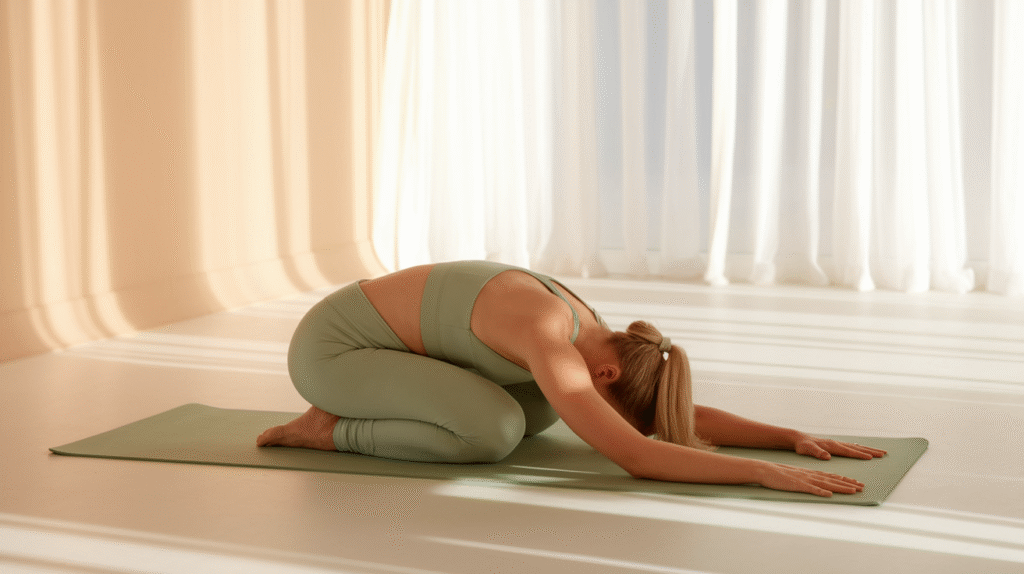
Stress doesn’t just make you feel anxious—it creates real physical changes in your body. When you’re stressed, your muscles tighten defensively, especially in your shoulders, neck, and jaw. Your breathing becomes shallow and rapid, which only signals more danger to your brain. Your hip flexors clench from sitting hunched over your desk or phone.
This is your fight-or-flight response, and it’s designed to save you from actual danger. The problem? Your body can’t tell the difference between a charging bear and a stressful email. Chronic stress keeps you stuck in this heightened state, which leads to headaches, poor sleep, digestive issues, and that exhausted-but-wired feeling you can’t shake.
The Science Behind Stress-Relief Yoga
Yoga works because it directly counteracts these physical stress responses. When you move into gentle poses and breathe deeply, you activate your parasympathetic nervous system—your body’s natural “rest and digest” mode. This is the opposite of fight-or-flight.
Research shows that slow, mindful movement combined with deep breathing lowers cortisol levels (your main stress hormone) within minutes. Holding poses releases muscular tension that you’ve been carrying for hours, days, or even years. The physical stretching literally helps your body let go of stored stress.
The breath work is equally powerful. Deep, intentional breathing increases oxygen to your brain, slows your heart rate, and sends a clear message to your nervous system: “We’re safe. We can relax now.”
What Makes These 13 Poses Different
These aren’t advanced yoga poses that require years of practice. Every single pose in this guide is accessible, effective, and specifically targets the areas where stress accumulates most.
I’ve chosen poses that open your hips (where emotional tension lives), release your shoulders and neck (where physical tension builds), and encourage the deep breathing that calms anxiety. You’ll feel results during your first session—not weeks from now.
You don’t need special equipment, a yoga studio membership, or the ability to touch your toes. Just a quiet spot, a few minutes, and the willingness to breathe deeply and move gently.
Essential Preparation: Setting Yourself Up for Success
Creating Your Calming Space
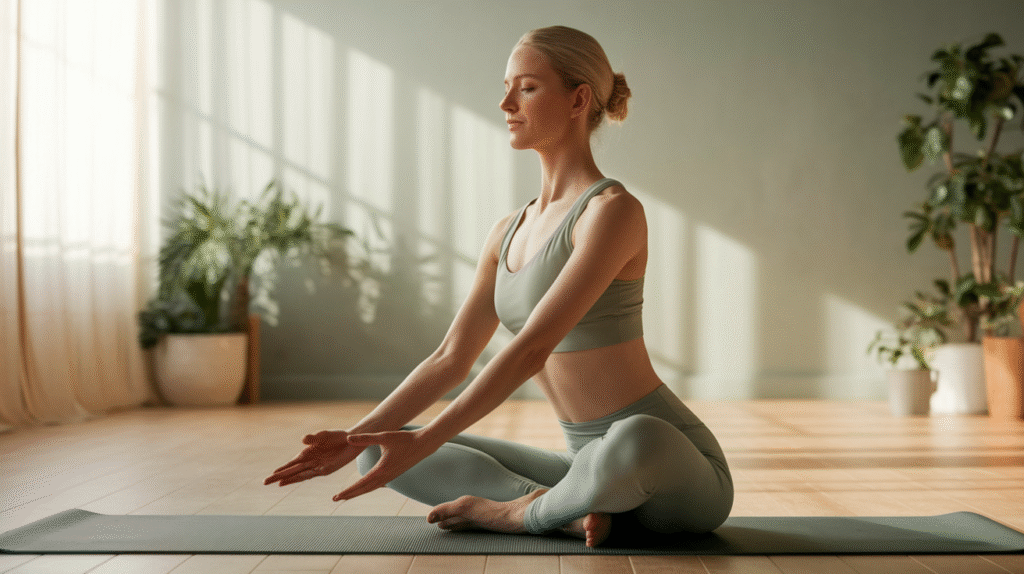
You don’t need a dedicated yoga room to practice stress relief. Find any quiet corner where you can stretch out comfortably—your bedroom, living room, or even a patch of grass outside.
Enhance your space with simple touches that signal relaxation to your brain. Dim the overhead lights or light a candle. Play soft instrumental music or nature sounds if silence feels too intense. A drop of lavender oil on your wrists creates an instant calming effect.
All you truly need is a yoga mat or a soft blanket on carpet. Having a couple of pillows nearby helps with supported poses, and a folded blanket works perfectly as a cushion for your knees or head.
The Perfect Timing for Stress-Relief Yoga
Morning practice sets a calm tone for your entire day. Just 10 minutes of gentle stretching and breathing before you check your phone can transform how you handle daily challenges.
Midday sessions work wonders when stress peaks. Take a quick break from your desk and spend five minutes in Child’s Pose or Cat-Cow. You’ll return to work noticeably calmer and more focused.
Evening sequences prepare your body and mind for quality sleep. Practicing 15-20 minutes before bed releases the day’s accumulated tension and signals your nervous system that it’s time to wind down.
For emergency stress relief, these poses work anytime anxiety strikes. Feeling overwhelmed during the day? Drop into Forward Fold for two minutes. Your nervous system will thank you.
Breathing Basics That Amplify Results
The secret to stress-relief yoga isn’t just the poses—it’s the breathing. Deep belly breathing activates your relaxation response faster than anything else.
Place one hand on your chest and one on your belly. Breathe in slowly through your nose, letting your belly expand while your chest stays relatively still. Exhale slowly through your nose, feeling your belly soften. This simple technique immediately calms your nervous system.
Try this breath counting method: inhale for four counts, hold for four, exhale for six. The longer exhale is key—it triggers your parasympathetic nervous system and creates instant calm.
As you move through the poses, coordinate your breath with movement. Inhale as you expand or open, exhale as you fold or twist. This connection between breath and body creates the stress-melting magic.
The Complete Guide to 13 Stress-Melting Yoga Poses
Poses 1-4: Grounding & Centering (Foundation Poses)
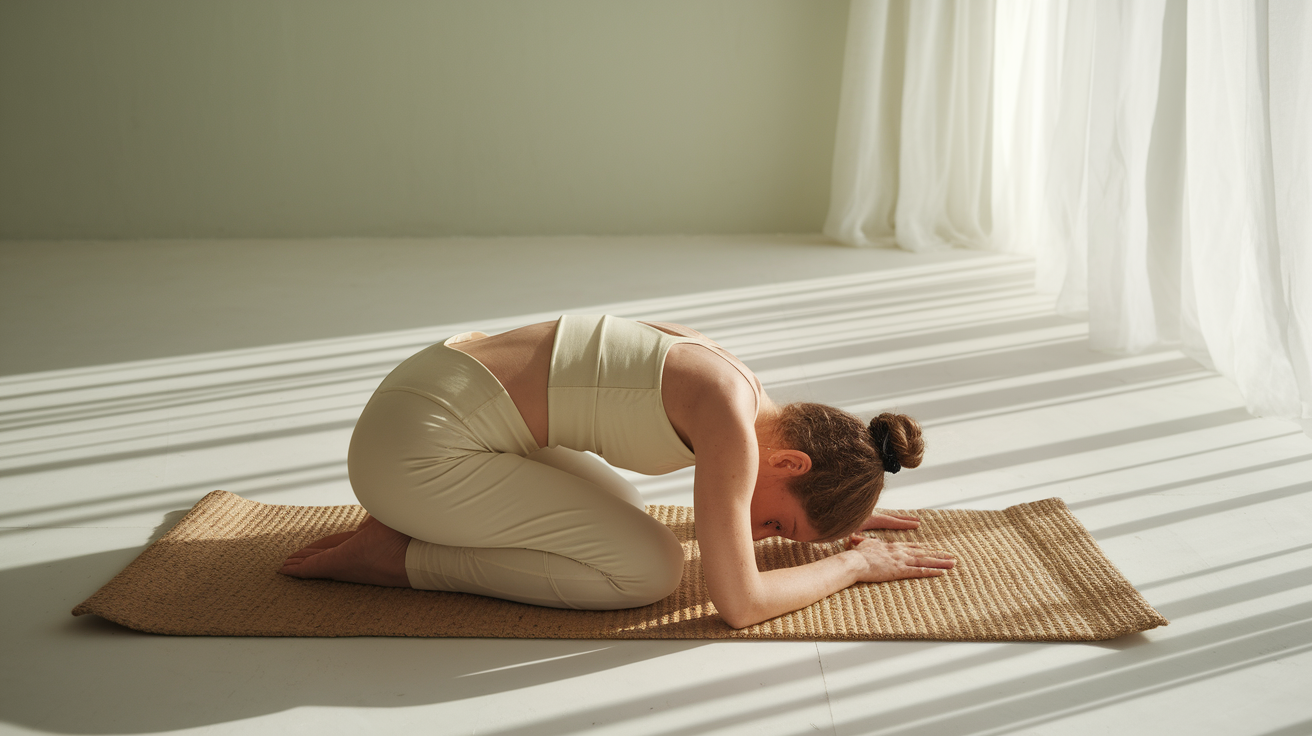
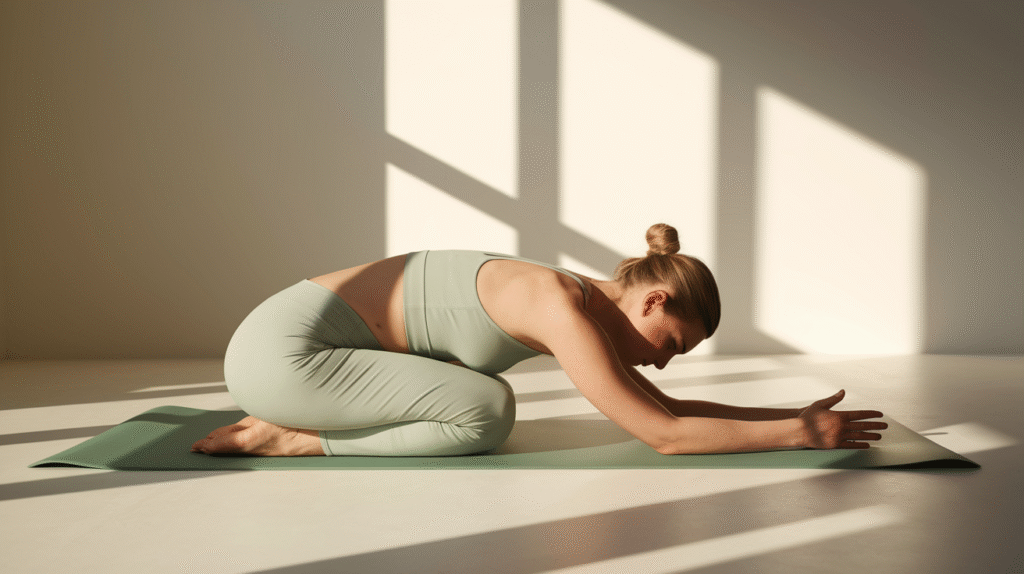
1. Child’s Pose (Balasana)
This is your home base—the pose you return to whenever you need instant comfort. Kneel on your mat with your big toes touching and knees spread wide. Sit back on your heels and fold forward, extending your arms in front of you or resting them alongside your body.
Child’s Pose opens your hips, gently stretches your lower back, and encourages the deep breathing that calms anxiety. The forward fold naturally turns your attention inward and away from external stressors.
If your hips are tight, place a folded blanket between your bottom and heels. Rest your forehead on stacked fists or a block if it doesn’t reach the floor. Stay here for at least five deep breaths—or five minutes when you really need it.
2. Cat-Cow Pose (Marjaryasana-Bitilasana)
Start on all fours with your wrists under your shoulders and knees under your hips. Inhale as you drop your belly, lift your chest and tailbone, and gaze gently upward (Cow). Exhale as you round your spine, tuck your tailbone, and drop your head (Cat).
This flowing movement releases spine tension that builds from sitting all day. The coordinated breathing and gentle movement tells your nervous system to shift from stress mode to calm mode.
Move slowly—this isn’t a race. Take at least 8-10 rounds, focusing on making your breath longer and smoother with each repetition. Notice how your body softens and your mind quiets.
3. Standing Forward Fold (Uttanasana)
Stand with your feet hip-width apart. Bend your knees generously and fold forward from your hips, letting your upper body hang heavy. Grab opposite elbows or let your hands dangle toward the floor.
This pose releases your hamstrings and lower back while calming your nervous system. The inverted position (head below heart) has an instant soothing effect on your mind.
Keep your knees bent—this isn’t about touching your toes. Sway gently side to side. Nod your head yes and no to release neck tension. Stay for 8-10 deep breaths, feeling gravity do the work of releasing your spine.
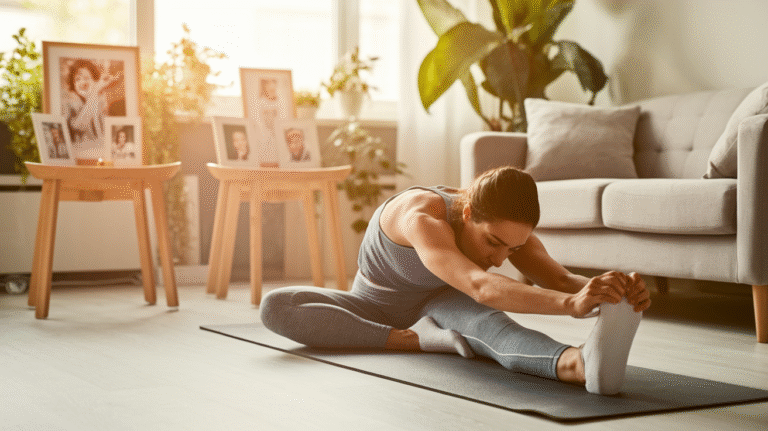
4. Seated Forward Bend (Paschimottanasana)
Sit on your mat with your legs extended straight in front of you. Sit up tall, then hinge forward from your hips, reaching toward your feet. Rest your hands on your shins, ankles, or feet—wherever they comfortably land.
This deep stretch releases the entire back body where stress accumulates. The forward fold is inherently calming and introspective, perfect for quieting an anxious mind.
Use blocks under your hands or a folded blanket under your hips if your hamstrings are tight. Bend your knees as much as needed. The goal is gentle stretching and deep breathing, not achieving a perfect pose. Hold for 10-15 breaths.
Poses 5-8: Tension Release (Upper Body Focus)
5. Seated Spinal Twist (Ardha Matsyendrasana)
Sit with your legs extended. Bend your right knee and place your right foot outside your left thigh. Keep your left leg straight or bend it with your foot near your right hip. Place your right hand on the floor behind you and twist to the right, using your left elbow against your right knee for leverage.
This gentle twist releases shoulder and upper back tension—exactly where stress loves to hide. Twisting also aids digestion, which often suffers during stressful periods.
Keep your spine long as you twist. Inhale to lengthen, exhale to twist a bit deeper. Don’t force it. Hold for 5-8 breaths on each side, feeling the release between your shoulder blades.
6. Eagle Arms (Garudasana Arms)
You can do this seated or standing. Extend your arms forward at shoulder height. Cross your right arm over your left, bend your elbows, and wrap your forearms to bring your palms together (or as close as they’ll come).
This targets the exact spot between your shoulder blades where stress creates that painful knot. The arm wrap creates gentle pressure that releases deep tension.
If your palms don’t touch, hold opposite shoulders instead. Lift your elbows slightly and draw your hands away from your face to deepen the stretch. Hold for 5 breaths, then switch sides.
7. Neck Rolls
Sit comfortably with your shoulders relaxed. Slowly drop your right ear toward your right shoulder. Gently roll your head forward, bringing your chin to your chest, then continue rolling to the left. Reverse direction after a few rounds.
These simple movements are incredibly effective because your neck holds massive amounts of stress. Moving slowly and mindfully releases tension and increases circulation to tight muscles.
Breathe deeply throughout. Never force your head backward—keep the movement in the front and side ranges. Spend at least a minute on these rolls, moving slower than you think you should.
8. Puppy Pose (Uttana Shishosana)
Start on all fours. Walk your hands forward while keeping your hips over your knees. Lower your chest and forehead toward the mat, creating a deep stretch through your spine and shoulders.
This pose opens your chest and shoulders beautifully while providing the calming benefits of a forward fold. It’s more active than Child’s Pose but equally soothing.
Place a folded blanket under your forehead if it doesn’t reach the floor. Keep your arms active, pressing your palms down. Hold for 8-12 breaths, feeling your chest open and your stress melt away.
Poses 9-11: Deep Relaxation (Hip & Lower Body)
9. Reclined Bound Angle Pose (Supta Baddha Konasana)
Lie on your back and bring the soles of your feet together, letting your knees fall open to the sides. Place your hands on your belly or extend your arms to the sides, palms up.
This hip opener is proven to reduce anxiety and fatigue. Your hips store emotional tension—when you open them, you often release feelings you didn’t even know you were holding.
Support your knees with blocks or folded blankets if the stretch feels too intense. Close your eyes and focus on your breath. Stay for 3-5 minutes, allowing your hips to soften naturally.
10. Legs Up the Wall (Viparita Karani)
Sit sideways next to a wall. Swing your legs up the wall as you lower your back to the floor. Your bottom should be touching or close to the wall, with your legs resting vertically.
This is one of the most powerful stress-relief poses you can do. It reverses the effects of sitting and standing all day, calms your nervous system, and provides gentle rejuvenation without any effort.
Stay here for 5-15 minutes—seriously, longer is better with this pose. Place a folded blanket under your hips for extra comfort. Let gravity do all the work while you simply breathe and relax.
11. Garland Pose (Malasana)
Stand with your feet slightly wider than hip-width. Turn your toes out slightly and lower into a deep squat. Bring your palms together at your heart and use your elbows to gently press your knees open.
This deep hip opener creates a grounding effect that instantly calms anxiety. The squatting position also releases lower back tension and encourages deep belly breathing.
If your heels lift, place a rolled blanket under them. If the squat feels too intense, sit on a block. Hold for 5-8 breaths, feeling your hips open and your mind settle.
Poses 12-13: Final Relaxation & Integration
12. Supine Spinal Twist (Supta Matsyendrasana)
Lie on your back and hug your knees to your chest. Extend your arms out to the sides. Lower both knees to the right while keeping your shoulders on the floor. Turn your head to the left.
This gentle twist detoxifies your system and releases lower back tension. The twisting motion also massages your internal organs, promoting better digestion and elimination of stress hormones.
Use a pillow between or under your knees if the twist feels too intense. Stay for 8-10 breaths on each side, breathing into any tight spots.
13. Corpse Pose (Savasana)
Lie flat on your back with your legs extended and arms by your sides, palms facing up. Close your eyes and let your body become completely heavy.
This “simple” pose is the most important and most skipped. Savasana allows your nervous system to integrate all the benefits of your practice. Without it, you miss the complete stress-relief effect.
Do a mental body scan: relax your toes, ankles, calves, knees, thighs, hips, belly, chest, fingers, arms, shoulders, neck, jaw, face, and scalp. Stay for at least 5 minutes—10 is even better. This is where the real stress relief happens.
Creating Your Personal Stress-Relief Practice
Quick 5-Minute Sequences for Busy Days
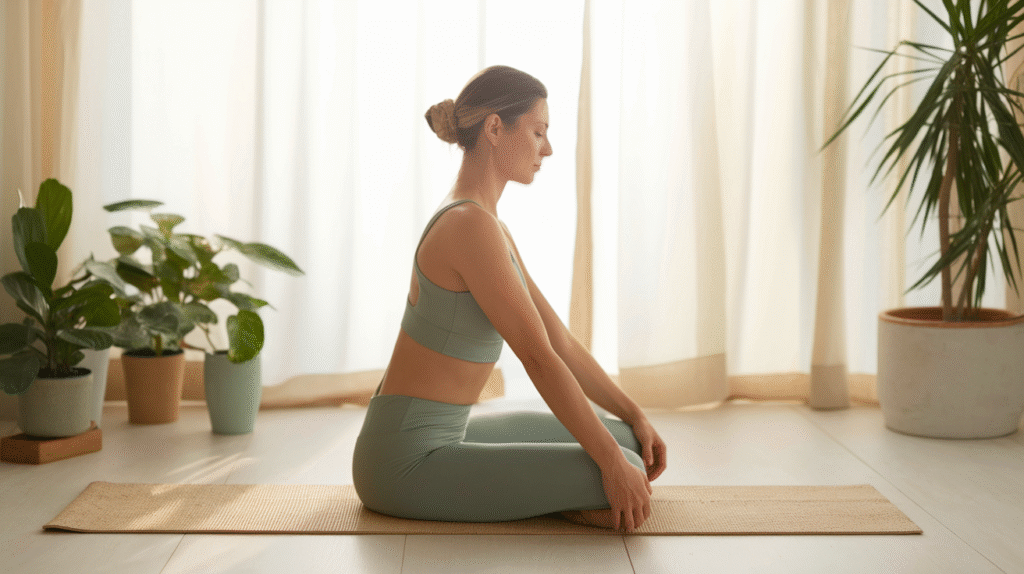
Morning Energizer: Start your day with Cat-Cow (10 rounds), Child’s Pose (5 breaths), and Standing Forward Fold (8 breaths). This quick sequence releases overnight stiffness and sets a calm tone for your day.
Desk Break Relief: You can do these in office clothes. Try Neck Rolls (1 minute), Eagle Arms (5 breaths each side), and Seated Spinal Twist (8 breaths each side). Your coworkers won’t even notice, but you’ll feel remarkably different.
Before-Bed Wind-Down: The ultimate combination for better sleep is Reclined Bound Angle Pose (3 minutes), Supine Spinal Twist (10 breaths each side), and Corpse Pose (5 minutes). This sequence tells your body it’s safe to rest.
Building a Complete 15-20 Minute Practice
When you have more time, flow smoothly between poses for maximum stress relief. Start seated in easy pose with five deep breaths. Move through Cat-Cow, then Puppy Pose. Come to standing for Forward Fold, then flow through your upper body releases.
Finish on your back with Reclined Bound Angle, Legs Up the Wall, Supine Twist, and always—always—end with Savasana.
The key is avoiding rushing. Move slowly and intentionally. Pause between poses to notice how you feel. This mindful approach amplifies the stress-relief benefits exponentially.
Making It Stick: Simple Habits for Consistency
Start small to build a lasting habit. Choose just 2-3 poses and practice them daily for a week. Child’s Pose and Legs Up the Wall are perfect starting points—they’re easy, effective, and feel amazing.
Link your practice to an existing habit. After your morning coffee, before your evening shower, or right when you get home from work. These triggers help you remember without relying on motivation.
Track your stress levels on a simple scale of 1-10 before and after practice. Watching your numbers improve provides powerful motivation to continue. Most people notice a 2-3 point decrease after just one session.
Be gentle with yourself on tough days. Even two minutes in Child’s Pose counts. Perfect practice doesn’t exist—consistent practice does.
When to Seek Additional Support
Yoga is a powerful stress-management tool, but it’s not a replacement for professional help when you need it. If your stress includes persistent feelings of hopelessness, interferes with daily functioning, or involves thoughts of self-harm, reach out to a mental health professional.
Yoga complements therapy beautifully. Many therapists recommend combining talk therapy with body-based practices like yoga for complete stress management. Think of yoga as one essential tool in your wellness toolkit, alongside professional support, social connection, healthy sleep, and proper nutrition.
Building a holistic approach to stress gives you multiple strategies to draw from depending on what you need each day.
Your Path to Lasting Stress Relief
These 13 yoga poses give you real power over your stress response. You now have specific, proven techniques that work in minutes, not months. You can practice them anywhere, anytime stress shows up—which means you’re never without relief.
The poses that target your hips release emotional tension you didn’t even know you were carrying. The upper body stretches melt away physical tightness from your shoulders and neck. The breathing techniques calm your racing mind and anxious thoughts.
Start with just one pose today. Right now, actually. Try Child’s Pose for two minutes and notice how different you feel. That’s the power of stress-relief yoga—simple, accessible, and genuinely effective.
Save this guide so you always have these poses at your fingertips. Bookmark the sequences that match your schedule. Screenshot your favorite poses for quick reference during stressful moments.
Your stress doesn’t have to control you. These poses put you back in charge of how you feel in your body and mind. The relief you’re seeking is just a few deep breaths and gentle stretches away.
Which pose will you try first? Start now, and feel the difference that actually working stress relief makes in your life.