The Ultimate Somatic Stretching Routine: 15 Exercises for Tension Release
You know that feeling when your shoulders are practically glued to your ears? Or when your lower back feels like it’s carrying the weight of every stressful meeting, difficult conversation, and sleepless night you’ve ever had?
That tension isn’t just in your head—it’s literally stored in your muscles, your fascia, and your nervous system. And here’s the thing: regular stretching might give you temporary relief, but it rarely addresses the root cause of why your body holds onto tension in the first place.
That’s where somatic stretching changes everything.
Somatic stretching is a proven, gentle approach that works *with* your nervous system to release deeply held tension patterns. Unlike traditional stretching where you push and pull your muscles into submission, somatic movements use slow, mindful awareness and a simple contract-release technique to help your body remember how to let go.
In this complete guide, you’ll discover 15 essential somatic stretching exercises that target the exact areas where stress loves to hide. These movements are perfect for beginners, require zero special equipment, and take just 5-15 minutes to create lasting relief. You’ll learn the easy breathing technique that makes each exercise incredibly effective, and you’ll understand exactly why this approach works when everything else has fallen short.
Ready to feel lighter, calmer, and more at ease in your own body? Let’s dive in.
What Makes Somatic Stretching Different (And Why It Works)
Understanding the Mind-Body Connection
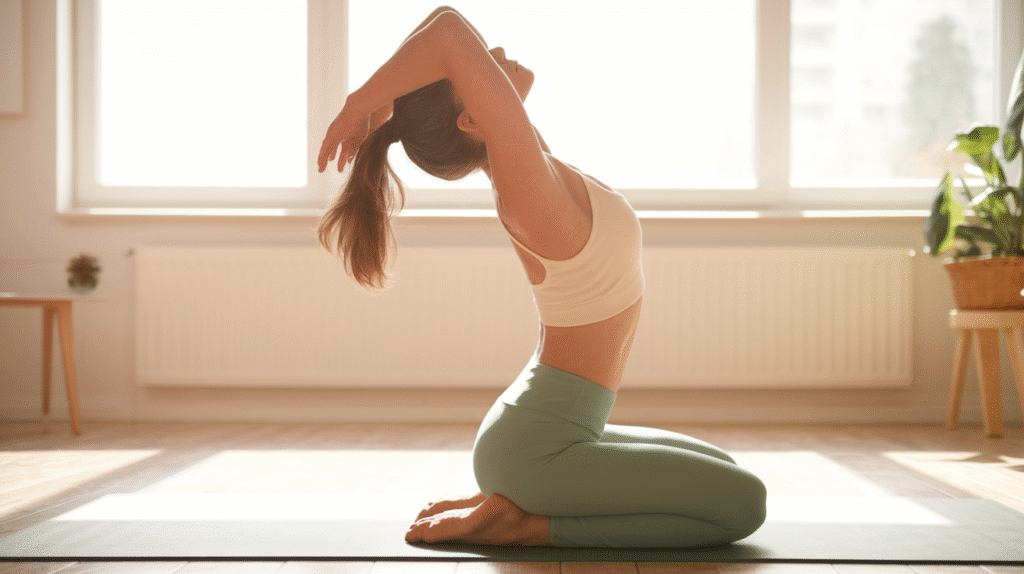
Your body is brilliant at keeping score. Every deadline you’ve rushed to meet, every argument you’ve held back from having, every moment of anxiety you’ve pushed through—your muscles remember all of it.
When you experience stress or strong emotions, your nervous system triggers a protective response. Your shoulders tense up, your jaw clenches, your hip flexors tighten. This is completely normal and actually helpful in the moment. The problem happens when these tension patterns become your new normal, and your muscles literally forget how to relax.
Research shows that chronic stress creates what scientists call “sensory-motor amnesia”—your brain loses awareness of certain muscle groups and can’t send proper signals to release them. This is why you can stretch your tight hamstrings every single day and still wake up with the same tightness tomorrow. You’re addressing the symptom, not the underlying neurological pattern.
Traditional stretching works from the outside in—you manually lengthen muscles and hope they stay that way. Somatic stretching works from the inside out, retraining your nervous system to recognize and release unnecessary tension. This creates lasting change because you’re literally rewiring the brain-body connection.
The Essential Principles of Somatic Movement
The magic of somatic stretching lies in three simple but powerful principles that make it completely different from your typical yoga class or stretching routine.
First, slow wins the race. Somatic movements are deliberately gentle and unhurried because your nervous system needs time to register new information. When you move slowly with full awareness, you give your brain the chance to notice exactly what’s happening in your body. This mindful attention is what creates the neurological shift.
Second, the contract-release technique is your secret weapon. Instead of passively stretching a tight muscle, you’ll first gently contract it for 2-3 seconds, then completely release on a long exhale. This technique—called “pandiculation”—is the same thing your body does naturally when you yawn and stretch in the morning. It resets the resting length of your muscles at a neurological level, which is why the relief lasts so much longer.
Third, your breath is the bridge between your conscious mind and your autonomic nervous system. Deep, intentional breathing—especially long, slow exhales—activates your parasympathetic nervous system (your “rest and digest” mode) and signals to your body that it’s safe to let go. Every somatic exercise becomes exponentially more effective when you pair movement with conscious breathing.
Perfect for Beginners: No Experience Needed
Here’s what makes somatic stretching incredibly accessible: you don’t need to be flexible, strong, or coordinated. You don’t need expensive equipment, a gym membership, or even much space.
All you need is a quiet spot where you can lie down or sit comfortably, 5-15 minutes of uninterrupted time, and a willingness to pay attention to your body’s sensations. That’s it.
These movements are so gentle that they’re suitable for almost everyone, regardless of age or fitness level. You’re not trying to achieve a specific position or push through pain. You’re simply exploring how your body moves and helping it remember its natural, relaxed state.
The quick sessions fit perfectly into your busy life—do five exercises in the morning before you start your day, practice a few movements during your lunch break, or wind down with a full routine before bed. Consistency matters more than duration, and even a few minutes of daily practice creates noticeable results.
Preparing for Your Somatic Stretching Practice
Creating Your Ideal Space
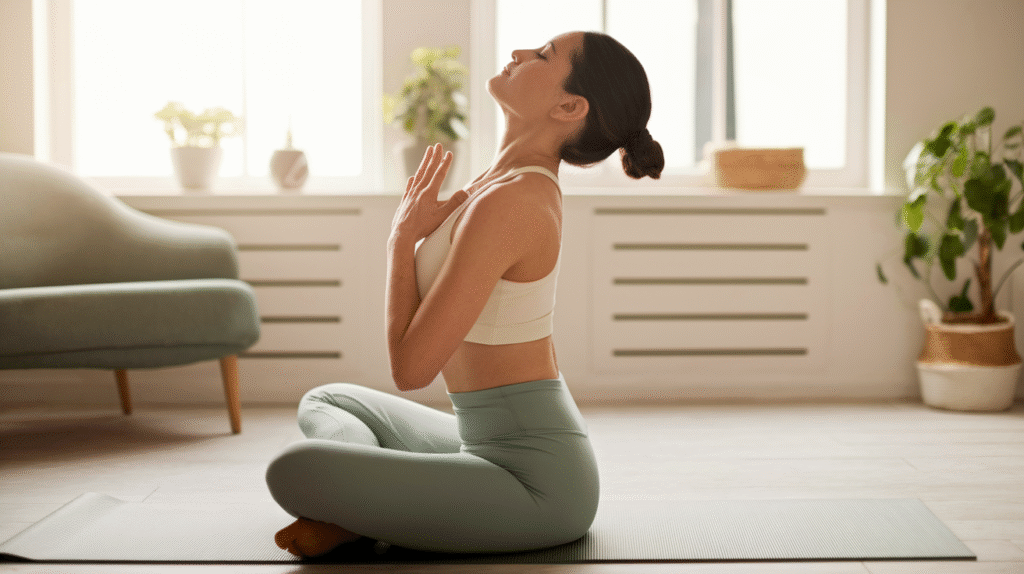
You don’t need a fancy home studio to practice somatic stretching, but creating a comfortable, peaceful environment helps you get the most from each session.
Find a quiet area in your home where you won’t be interrupted for at least 10-15 minutes. This might be your bedroom, living room, or even a cleared corner of your office. The key is choosing a space where you feel safe and relaxed.
For equipment, keep it simple: a yoga mat or soft rug provides cushioning for floor exercises, and comfortable clothing that doesn’t restrict your movement is essential. Leggings, sweatpants, or loose-fitting clothes work perfectly. You might also want a small pillow or folded blanket nearby for extra support under your head or knees.
Setting the mood enhances your practice. Dim the lights or close the curtains to create a calming atmosphere. Some people love practicing in complete silence, while others prefer gentle instrumental music or nature sounds. Experiment to discover what helps you tune into your body most effectively.
Turn off your phone notifications. This is your time to reconnect with yourself, and those messages can wait.
The Proven Somatic Breathing Technique
Breathing is the foundation of effective somatic practice, and mastering this simple technique transforms every movement you make.
Start by placing one hand on your chest and one on your belly. Take a normal breath and notice which hand moves more. Most people breathe shallowly into their chest, especially when stressed. For somatic work, you want to breathe deeply into your belly, allowing your diaphragm to fully expand.
Practice this: Inhale slowly through your nose for a count of four, feeling your belly rise like a balloon filling with air. Your chest should move minimally. Pause briefly at the top of your inhale. Then exhale slowly through your mouth for a count of six to eight, feeling your belly deflate completely.
The exhale is where the magic happens. That long, slow exhale activates your vagus nerve and tells your nervous system it’s safe to release tension. During somatic exercises, you’ll contract muscles on the inhale and release them completely on the exhale. This pairing of breath and movement is what creates the profound release.
Before starting your routine, spend two to three minutes just breathing this way. Notice how your body feels. This simple breathing exercise alone can shift your nervous system from stressed to relaxed.
Essential Tips Before You Begin
Somatic stretching requires a different mindset than traditional exercise. You’re not trying to achieve, accomplish, or push yourself. You’re exploring and noticing.
Tune into your body’s signals by paying attention to sensations without judgment. Does your right shoulder feel different from your left? Is there a subtle ache in your lower back? Where do you notice tension or tightness? This awareness is the starting point for all somatic work.
Embrace the “less is more” approach. In somatic practice, gentle movements create better results than forceful ones. You should never feel pain—only mild to moderate sensation. If something hurts, back off significantly. Your nervous system learns best when it feels safe, not threatened.
Set realistic expectations for your first session. You might experience immediate relief in some areas and notice nothing at all in others. That’s completely normal. Somatic awareness develops over time, and some people need several sessions before they really feel the difference. Trust the process and stay consistent.
Remember: this isn’t a performance. There’s no right or wrong way to experience these movements. Your only job is to pay attention and allow your body to respond naturally.
The Complete 15-Exercise Somatic Stretching Routine
Upper Body Tension Release (Exercises 1-5)
Exercise 1: Chest Opening with Spinal Awareness
This movement releases the rounded-shoulder posture that comes from hours at a desk or scrolling on your phone.
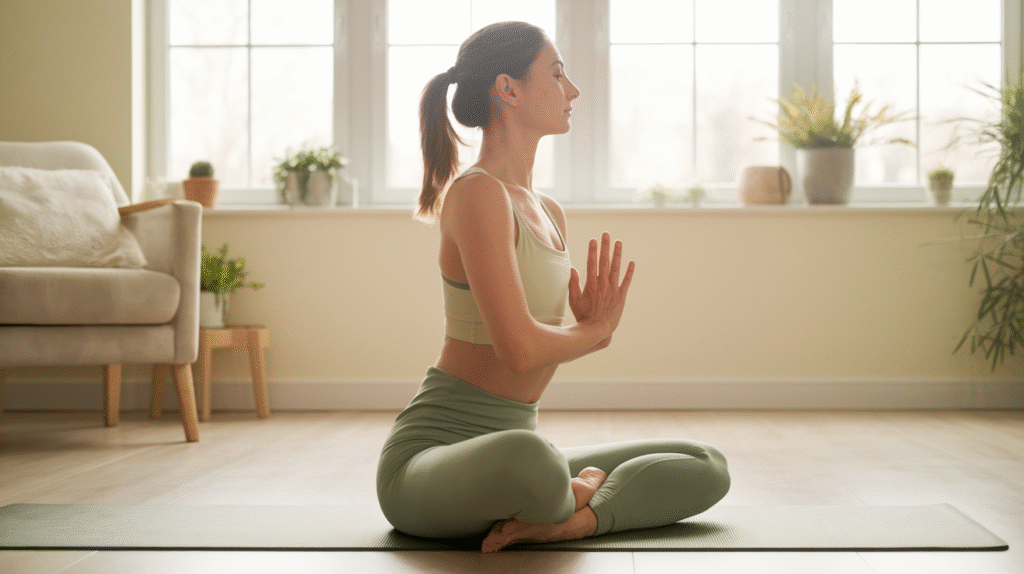
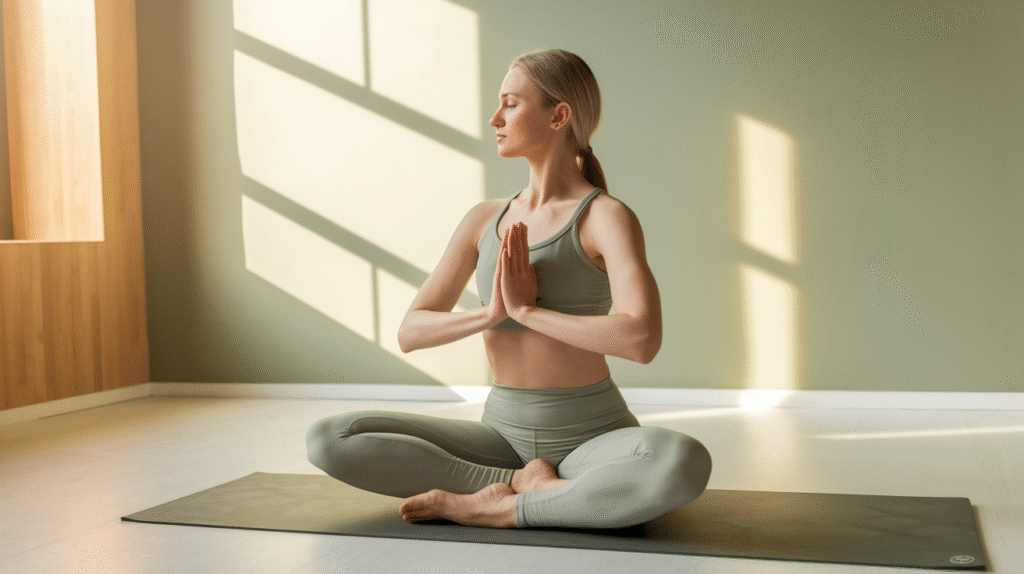
Sit comfortably in a chair or cross-legged on the floor. Place your hands on your knees. Inhale slowly and pull your chest upward and forward, allowing your shoulder blades to draw together. Your shoulders will naturally pull back. If comfortable, lift your chin slightly to include the front of your neck in the stretch.
Hold this expanded position for 2-3 seconds, feeling the gentle contraction across your chest and upper back. Then exhale completely, drop your chin to your chest, and round your shoulders and upper back inward, forming a gentle C-curve with your spine. Let everything soften and release.
Repeat this inhale-expand, exhale-round movement five times, moving slowly and deliberately. Notice how each round allows you to expand and release a little more fully.
Exercise 2: Shoulder Lifts with Contract-Release
Perfect for stress-related shoulder tension that makes you feel like you’re constantly shrugging.
Sit or stand comfortably with your arms relaxed at your sides. Inhale and slowly lift both shoulders straight up toward your ears—but only use about 50% of your maximum effort. This isn’t about creating more tension; it’s about bringing awareness to existing tension.
Hold for 2-3 seconds, then exhale with a big sigh and let your shoulders drop completely. Imagine the tension melting down your arms and out through your fingertips. Pause and notice how your shoulders feel.
Repeat five times, and with each release, see if you can let your shoulders drop even lower than their starting position. This exercise resets the resting position of your shoulder muscles.
Exercise 3: Slow Head Turns
This gentle movement provides quick relief for tension headaches and neck stiffness.
Sit comfortably with your spine long and shoulders relaxed. Inhale, and as you exhale, slowly turn your head to look over your right shoulder. Move only as far as feels comfortable—this isn’t about achieving maximum range of motion.
Pause here and take three slow breaths, allowing your neck muscles to soften with each exhale. Notice any sensations without trying to change them. Then slowly return your head to center.
Repeat on the left side. Do two to three rounds on each side, and you might notice your range of motion naturally increasing as your nervous system recognizes it’s safe to move.
Exercise 4: One-Arm Chest Release
Working one arm at a time allows maximum effectiveness for releasing upper back and shoulder blade tension.
Lie on your back with your knees bent and feet flat on the floor. Extend your right arm out to the side at shoulder height, palm facing up. Inhale and gently press your right arm into the floor, engaging your chest and shoulder muscles slightly.
Hold for 2-3 seconds, then exhale completely and allow your arm to become heavy and relaxed. Imagine your shoulder blade melting into the floor. Take three slow breaths here, letting gravity do the work.
Repeat three times on the right side, then switch to your left arm. Notice if one side feels different from the other—this asymmetry is completely normal and shows you where you hold more tension.
Exercise 5: Seated Cat-Cow Variation
This seated version opens your entire upper body chain and can be done anywhere, even at your desk.
Sit toward the front edge of a chair with your feet flat on the floor and hands resting on your thighs. Inhale and arch your back gently, lifting your chest and looking slightly upward (cow position). Feel the front of your body expand.
Exhale and round your spine, dropping your chin to your chest and drawing your belly button toward your spine (cat position). Let your shoulders round forward.
Flow between these two positions for eight to ten rounds, matching each movement to your breath. Move slowly enough that you can feel every vertebra of your spine articulating. This creates amazing relief for the entire upper body.
Core and Hip Tension Release (Exercises 6-10)
Exercise 6: Pelvic Tilts with Gentle Rocking
Essential for anyone who sits all day, this movement releases lower back tension through gentle, rhythmic motion.
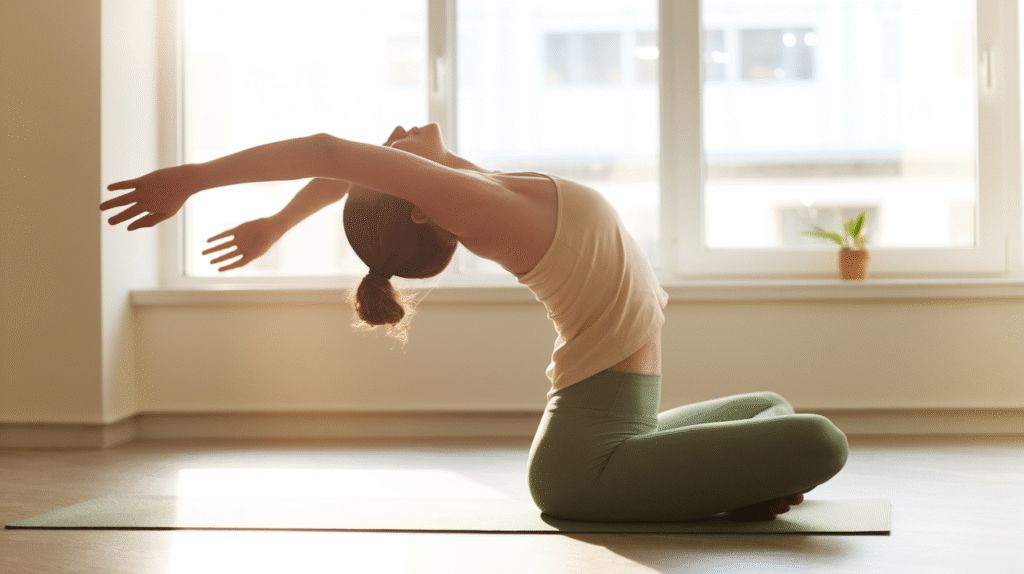
Lie on your back with your knees bent and feet flat on the floor, hip-width apart. Place your hands on your lower belly. Inhale and allow your lower back to arch slightly, creating a small space between your back and the floor.
Exhale and gently tilt your pelvis, pressing your lower back into the floor and feeling your abdominal muscles engage slightly. Rock slowly between these two positions for 10-12 repetitions, letting the movement be small and effortless.
The rocking motion is soothing to your nervous system and helps release chronic tension patterns in your lower back and hips.
Exercise 7: Hip Flexor Release in Lying Position
Your hip flexors are where emotional stress often hides, especially anxiety and fear. This gentle release can feel incredibly freeing.
Lie on your back and hug both knees toward your chest. Then extend your left leg long on the floor while keeping your right knee drawn in. Inhale and gently press your right knee away from you (against your hands) for 2-3 seconds, engaging your hip flexor.
Exhale and release all effort, allowing your hands to draw your knee closer to your chest naturally. The muscle releases more fully after the gentle contraction. Hold this relaxed position for three breaths.
Switch legs and repeat. Do three rounds on each side, noticing if one hip feels tighter than the other.
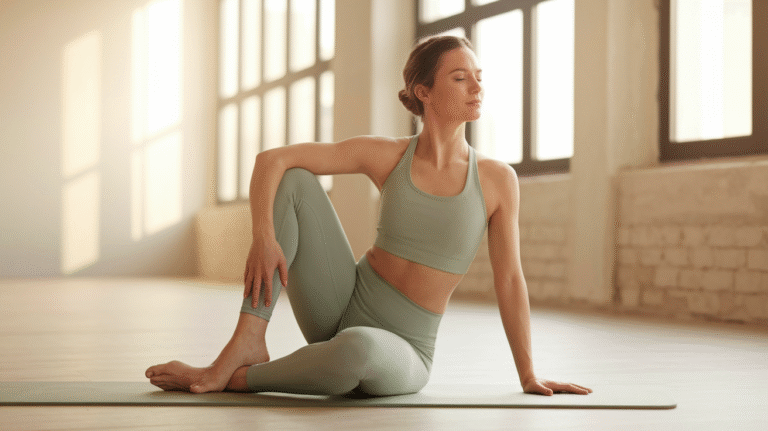
Exercise 8: Supine Spinal Twist
Slow, mindful rotation releases tension through your entire torso and is effective for digestive stress.
Lie on your back with your arms extended out to the sides in a T position, palms facing down. Bend your right knee and place your right foot flat on the floor. Inhale to prepare.
Exhale and slowly drop your right knee over to the left side of your body, twisting your spine. Turn your head to look toward your right fingertips. Don’t force the knee all the way to the floor—let it rest wherever it naturally falls.
Stay here for five to eight slow breaths, allowing gravity to deepen the twist naturally with each exhale. Slowly return to center and repeat on the other side.
Exercise 9: Side-Lying Lateral Stretch
This movement opens the often-forgotten lateral muscles and creates space and ease in breathing.
Lie on your right side with your legs stacked and your right arm extended overhead. Rest your head on your right arm. Place your left hand on the floor in front of your chest for support.
Inhale and reach your left arm up and overhead, creating a gentle side-bend that stretches the entire left side of your body. Exhale and release. Repeat five times, then switch to lie on your left side.
This simple movement releases tension in your intercostal muscles (between your ribs) and can dramatically improve your breathing capacity.
Exercise 10: Knees-to-Chest with Contract-Release
Instant relief for lower back tightness using the proven contract-release method.
Lie on your back and hug both knees toward your chest. Inhale and gently press your knees away from you (against your hands) while simultaneously pulling with your hands—creating gentle opposing forces. Hold this isometric contraction for 2-3 seconds.
Exhale with a sigh and release all effort, allowing your knees to settle closer to your chest. Rock gently side to side if it feels good. Repeat five times, and notice how your lower back releases more fully with each round.
Lower Body and Full Body Integration (Exercises 11-15)
Exercise 11: Hamstring Release with Awareness
This gentle leg extension is different from traditional hamstring stretches because you’re working with awareness, not force.
Lie on your back with both knees bent. Hug your right knee toward your chest, then place both hands behind your right thigh. Inhale and slowly begin to straighten your right leg toward the ceiling, only going as far as feels comfortable.
Pause when you feel a gentle stretch in your hamstring. Exhale and soften. Don’t push or pull—just hold the position and breathe for five to eight breaths. With each exhale, see if your leg naturally straightens a little more.
Lower your leg and repeat on the left side. The goal isn’t to get your leg perfectly straight; it’s to notice sensations and allow natural release.
Exercise 12: Ankle Circles and Foot Flexion
These simple movements ground your entire body and are often overlooked but incredibly effective for releasing tension in your lower legs.
Sit or lie comfortably. Extend your right leg and begin making slow circles with your right ankle—five circles in one direction, then five in the other. Move slowly enough that you can feel every part of the circle.
Then alternate between flexing your foot (toes toward shin) and pointing your foot (toes away). Do this 10 times, breathing naturally. Repeat with your left ankle and foot.
This movement improves circulation, releases tension in your calves and feet, and helps you feel more grounded and present.
Exercise 13: Full-Body Pandiculation
This is the ultimate tension-releasing movement that engages your entire nervous system—it’s basically a conscious, full-body yawn and stretch.
Lie on your back with your arms extended overhead. Inhale deeply and stretch your entire body—reach your arms overhead, point your toes, lengthen your spine. Engage everything gently for 2-3 seconds.
Then exhale completely with an audible sigh and release everything all at once. Let your body become completely heavy and relaxed. Pause and notice the tingling, warmth, or softness you feel.
Repeat three times. This powerful movement resets your entire nervous system and often creates an immediate sense of relief and relaxation.
Exercise 14: Single-Leg Somatic Release
Working one leg at a time creates balanced release through your hip, knee, and ankle.
Lie on your back with both legs extended. Bend your right knee and slide your right foot along the floor toward your buttocks, keeping your foot in contact with the ground. Pause when your knee is bent.
Inhale and gently press your right foot into the floor, engaging your leg muscles. Hold for 2-3 seconds. Exhale and slowly slide your foot back down to the starting position, releasing all effort.
Repeat five times on the right leg, then switch to the left. This simple movement releases tension throughout your entire leg and hip.
Exercise 15: Final Body Scan Integration
This gentle full-body awareness scan seals in all the benefits of your practice and helps you notice the changes.
Lie comfortably on your back with your legs extended and arms at your sides, palms facing up. Close your eyes and take three deep breaths.
Beginning at the top of your head, slowly scan down through your entire body: forehead, jaw, neck, shoulders, arms, chest, belly, hips, legs, and feet. Notice any sensations—warmth, tingling, heaviness, lightness—without trying to change anything.
Spend three to five minutes in this awareness, simply observing how your body feels after your practice. This integration time is when your nervous system consolidates all the learning from your session.
Making Somatic Stretching Part of Your Daily Routine
Easy Ways to Fit It Into Your Day
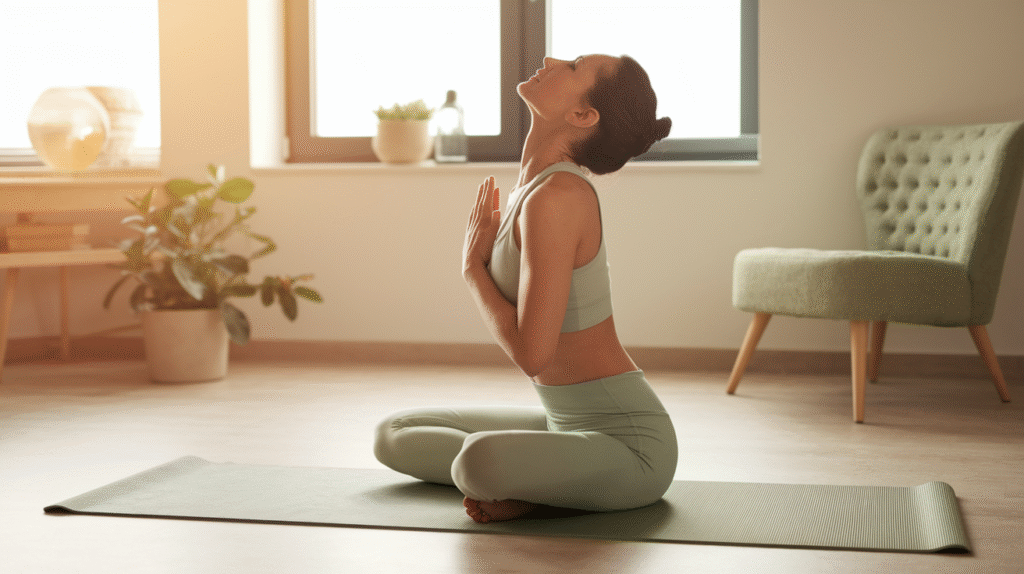
The beauty of somatic stretching is its flexibility—you can practice the full 15-exercise routine when you have time, or choose just a few movements that target your biggest tension areas.
Create a simple morning routine with five exercises to start your day tension-free: chest opening, shoulder lifts, pelvic tilts, full-body pandiculation, and the final body scan. This takes just 7-10 minutes and sets a calm, grounded tone for your entire day.
For a midday reset during work breaks, try these quick desk-friendly movements: seated cat-cow variation, slow head turns, and shoulder lifts. You can do these right in your office chair in under five minutes. Set a reminder on your phone for mid-morning and mid-afternoon to build the habit.
Your evening wind-down routine is perfect for the complete practice. Do all 15 exercises before bed to release the accumulated tension of the day and prepare your body for deep, restorative sleep. Many people find that consistent evening practice dramatically improves their sleep quality.
Tracking Your Progress and Body Awareness
Somatic changes are often subtle at first, so tracking your progress helps you notice the shifts that might otherwise go unnoticed.
Pay attention to how your body feels throughout the day, not just during practice. Do you notice yourself naturally sitting up straighter? Are your shoulders less tense during stressful moments? Can you take deeper breaths more easily? These everyday changes are the real markers of progress.
Journaling enhances your mind-body connection. After each practice session, jot down a few notes: Which areas felt the tightest? Which exercises created the most relief? How does your body feel different now compared to before you started? Over time, you’ll see patterns and progress that motivate continued practice.
Celebrate small wins. Maybe you can turn your head a little further during the slow head turns, or your lower back feels less achy after the pelvic tilts. These incremental improvements add up to significant, lasting change in how you feel and move through the world.
Common Mistakes to Avoid
Even though somatic stretching is gentle and accessible, there are a few pitfalls that can limit your results.
Don’t push too hard or force movements. This isn’t a flexibility competition. The moment you feel pain (not just sensation, but actual pain), you’ve gone too far. Back off and work within a comfortable range. Your nervous system learns best when it feels safe, not threatened.
Rushing through exercises defeats the entire purpose. Somatic work requires slow, mindful movement to create neurological change. If you’re moving quickly or thinking about your to-do list, you’re just going through the motions without getting the benefits. Slow down and stay present.
Never skip the breathing component. Your breath is what activates your parasympathetic nervous system and allows deep release. Holding your breath or breathing shallowly keeps you stuck in tension. Make conscious breathing the foundation of every movement.
Combining Somatic Stretching with Other Practices
Somatic stretching complements almost any other wellness practice you’re already doing.
Pair it with meditation or mindfulness for a powerful mind-body practice. Many people do 10 minutes of somatic movement followed by 10 minutes of seated meditation. The somatic work releases physical tension, making it easier to sit still and focus during meditation.
Use somatic stretching to complement your existing workout routine. Practice it as a warm-up before strength training or cardio to prepare your nervous system for movement. Or use it as a cool-down after intense exercise to help your body transition back to a relaxed state.
Somatic movements work beautifully before or after yoga or Pilates. The slow, mindful awareness of somatic practice enhances your body awareness during other movement practices, helping you get more from every session.
Conclusion
Somatic stretching offers something truly different from every other tension-relief method you’ve tried. Instead of temporarily forcing your muscles to relax, you’re retraining your nervous system to release patterns of chronic tension that you’ve been carrying for months or even years.
These 15 simple exercises work with your body’s natural wisdom, using the proven contract-release technique and mindful breathing to create lasting change. You don’t need special equipment, years of flexibility training, or hours of free time. You just need a quiet space, a few minutes, and a willingness to tune into your body’s signals.
The real power of somatic stretching reveals itself through consistent practice. As you return to these movements daily or several times per week, you’ll notice profound shifts: your shoulders naturally sit lower, your breath comes easier, your lower back stops aching, and you move through your day with more ease and less tension.
Start with just five exercises today. Notice how your body responds. Pay attention to the subtle shifts. Trust that even small, gentle movements are creating real neurological change.
Your body has been holding onto tension for so long—it’s finally time to let it go. Begin your somatic stretching practice today, and discover what it feels like to move through life feeling lighter, calmer, and truly at ease in your own skin.