Trauma Healing Yoga: 9 Gentle Poses to Release Stored Tension
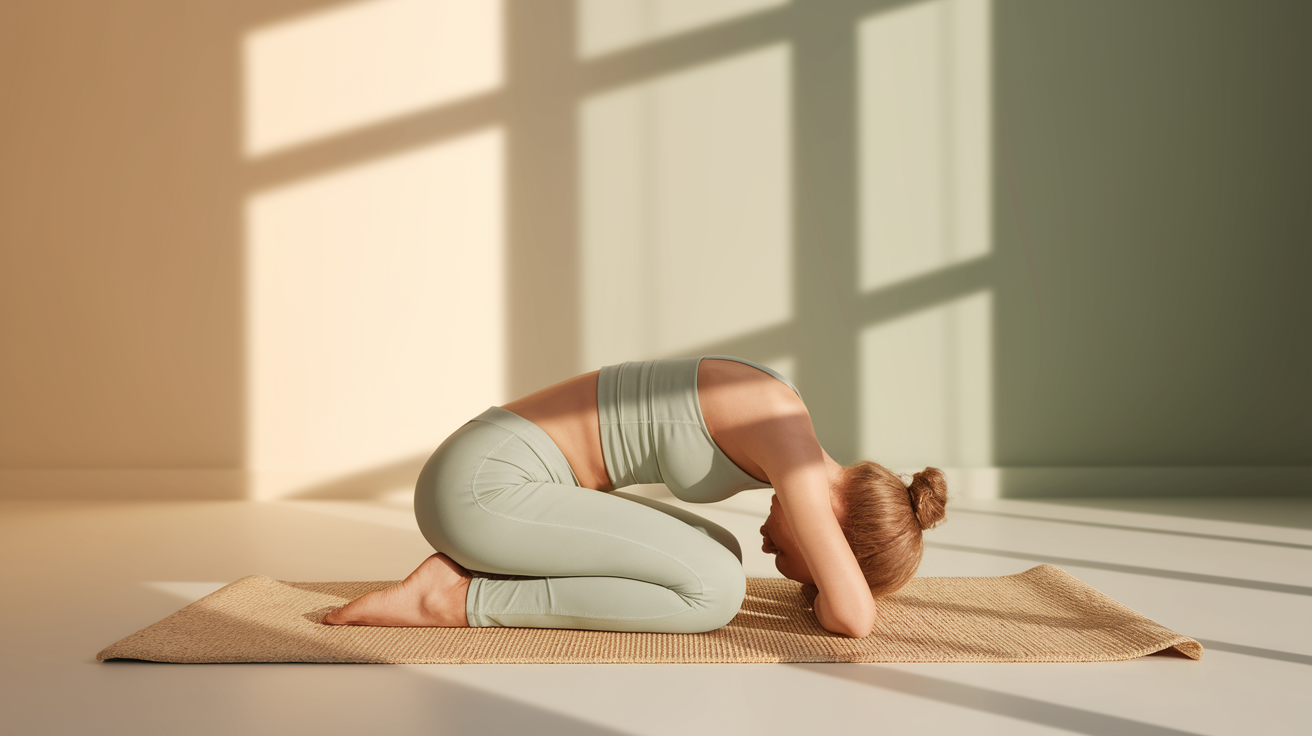
Have you ever felt tension in your shoulders that no amount of stretching seems to touch? Or noticed that your hips feel impossibly tight, even though you’ve never had an injury there?
Here’s what most people don’t realize: that tension isn’t just physical. It’s your body’s way of holding onto experiences your mind hasn’t fully processed yet.
The mind-body connection isn’t just some wellness buzzword—it’s backed by neuroscience. When you experience trauma (whether that’s a major event or accumulated stress), your nervous system doesn’t always get the signal that the threat has passed.
Instead, it stores that unprocessed energy in your muscles, joints, and connective tissue. Your body literally becomes a filing cabinet for emotional experiences.
This is why traditional stretching often falls short. You can foam roll your hips until you’re blue in the face, but if you’re not addressing the emotional component, you’re only treating the symptom, not the cause.
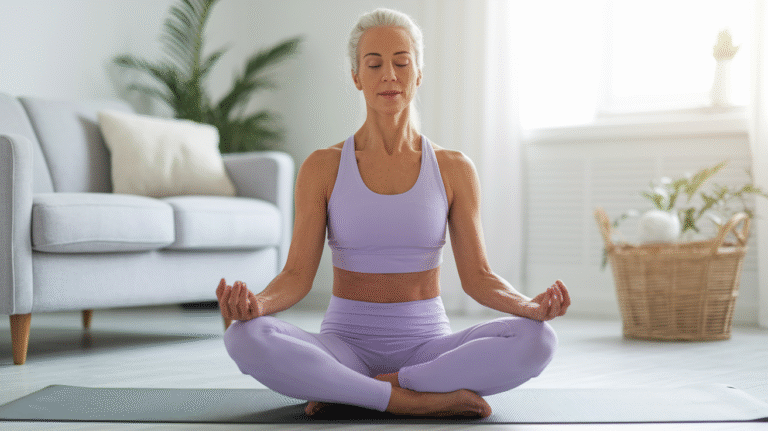
Trauma-informed yoga works differently. It combines gentle movement with breathwork and mindful awareness to help your nervous system feel safe enough to release what it’s been holding.
This isn’t about forcing your body into pretzel shapes or pushing through pain. It’s about creating the conditions for natural, organic release.
In this complete guide, you’ll discover nine proven poses specifically designed to access areas where trauma commonly settles.
You’ll learn exactly how to practice them safely, what to expect during emotional releases, and how to build a sustainable routine that supports genuine healing. Whether you’re dealing with recent stress or long-held tension, these gentle practices offer a pathway to freedom from stored trauma.
Understanding Trauma Storage in the Body: Why Yoga Works
The Science Behind Stored Tension
Your nervous system is designed to protect you. When you face a threat, it triggers the fight-or-flight response, flooding your body with stress hormones and tensing your muscles for action. Under normal circumstances, once the threat passes, your system completes the stress cycle and returns to baseline.
But trauma disrupts this natural process. When you can’t fight or flee—or when stress becomes chronic—that activation energy gets trapped. Research shows the nervous system holds onto these incomplete responses, creating patterns of chronic tension in specific areas.
The hips are emotional storage units. They house the psoas muscle, which contracts during the fight-or-flight response. Years of unprocessed stress create chronic tightness here that no amount of simple stretching can fully address.
Your shoulders and upper back carry the weight of responsibility and protection. When you’re in survival mode, these muscles reflexively tense to shield your vital organs. Over time, this creates knots and restriction that feel impossible to release.
The jaw and throat hold unexpressed emotions—words you couldn’t say, screams you had to swallow. Tension here connects directly to your ability to speak your truth and set boundaries.
Your chest and diaphragm restrict when you’re protecting your heart, both literally and figuratively. Shallow breathing becomes habitual, limiting oxygen flow and keeping your nervous system in a state of low-level anxiety.
The proven connection between somatic release and emotional healing is simple: your body and mind aren’t separate systems. When you release physical tension through trauma-informed movement, you’re also processing the emotional content stored there. This is why people sometimes cry during hip openers or feel sudden relief after holding a restorative pose—the body is completing what the mind couldn’t finish.
Why Gentle Yoga is the Perfect Approach
Here’s the counterintuitive truth: forcing doesn’t work for trauma release. When you push your body aggressively, you activate the same threat response that created the tension in the first place. Your nervous system interprets intense stretching as another thing to defend against, and you end up creating more armor instead of releasing it.
Slow, mindful movement works because it accesses the parasympathetic nervous system—your body’s natural relaxation response. When you move gently and breathe deeply, you send a clear signal: “We’re safe now. It’s okay to let go.”
The difference between forcing and allowing is everything. Forcing says, “I need to fix this broken thing.” Allowing says, “I’m creating space for natural healing.” Trauma-informed yoga is about the latter. You’re not breaking through resistance; you’re softening around it until it naturally dissolves.
Being gentle with yourself isn’t weakness—it’s essential for true healing. Your body developed these protective patterns for good reasons. They kept you safe when you needed protection. Approaching them with compassion and patience honors that history while creating new possibilities.
What to Expect During Your Practice
Physical sensations during trauma release can feel unusual, but they’re completely normal. You might experience tingling, warmth, or waves of energy moving through your body. Some people feel temporary intensification of tension before it releases. Others notice areas they’ve never felt before suddenly “waking up.”
These sensations indicate your nervous system is processing and releasing. They’re signs the practice is working, not signs something is wrong.
Emotional releases can take many forms. Tears are common—sometimes gentle, sometimes intense. You might feel sudden laughter, anger, or grief that seems to come from nowhere. Some people experience memories or images. Others simply feel lighter without knowing exactly what shifted.
All of these responses are valid and healthy. Your body knows what it needs to release and when. Your job is simply to create the safe space for that to happen.
Creating that safe space means having an exit strategy. You need to know, deep in your bones, that you can stop any pose at any time, no questions asked. This permission to pause or exit is what allows your nervous system to actually relax. Healing happens when you feel in control, not when you’re forcing yourself through something that feels threatening.
Preparing for Your Trauma Release Practice
Creating Your Safe Space
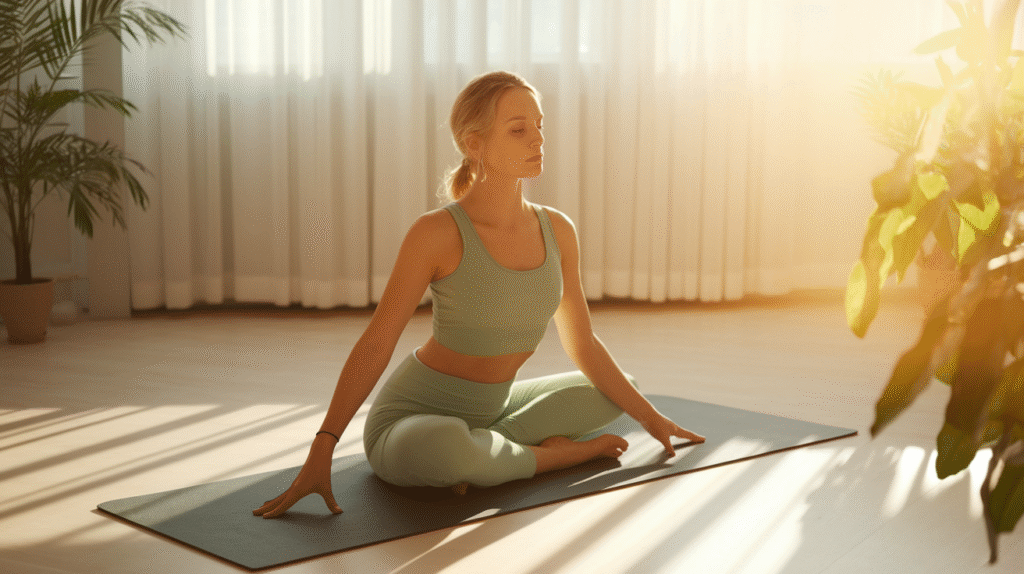
The environment you practice in matters more than you might think. Your nervous system picks up on subtle cues of safety or threat, so setting up a calm, private space is essential for effective release work.
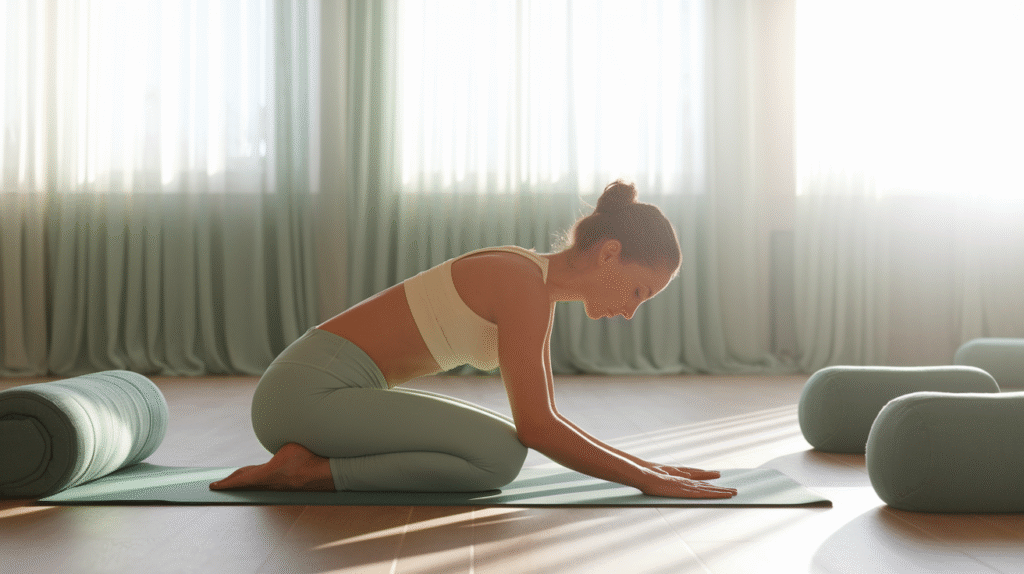
You’ll need a few props to make these poses truly restorative. Yoga blocks provide stable support and help you modify poses to your body’s needs. Bolsters (or firm couch cushions) create the cushioning necessary for deep relaxation. Blankets offer warmth and comfort—temperature regulation is important because trauma release can temporarily affect your body’s thermostat.
Don’t have official yoga props? No problem. Stacked books work as blocks. Couch cushions substitute for bolsters. Regular bed pillows and blankets are perfectly effective. The goal is comfort and support, not Instagram-worthy aesthetics.
Privacy is non-negotiable. Choose a time and place where you won’t be interrupted. Turn off your phone notifications. Let family members know you need uninterrupted time. Lock the door if that helps you feel safer.
Consider the sensory environment too. Harsh lighting can keep your nervous system activated, so dim the lights or practice by natural light. Some people find gentle music helpful; others prefer silence. Temperature matters—have a blanket nearby in case you get cold during deep relaxation.
The ultimate preparation is mental: give yourself complete permission to stop at any time. This isn’t about completing all nine poses or holding them for a specific duration. It’s about honoring your body’s wisdom in each moment.
Mindset and Breathing Basics
Your breath is the bridge between your conscious mind and your autonomic nervous system. Simple breathing techniques can anchor you when emotions arise and help you stay grounded throughout your practice.
Start with this easy technique: Breathe in through your nose for a count of four, hold for a count of two, then exhale through your nose for a count of six. The longer exhale activates your parasympathetic nervous system, signaling safety to your body.
Practice this breathing pattern for a few minutes before you begin your poses. Return to it anytime you feel overwhelmed or disconnected during your practice.
Listening to your body’s signals is a skill you’ll develop over time. Your body communicates through sensation. A gentle stretch that feels like “good discomfort”—the kind that makes you want to breathe into it—is different from sharp pain or the feeling of bracing against something.
Good discomfort feels like opening, expansion, or productive challenge. Triggering pain feels threatening, scary, or like too much. When you notice the latter, back off immediately. There’s no prize for pushing through.
The ultimate rule for trauma-sensitive practice: You’re in complete control. You decide how deep to go, how long to stay, and when to stop. This autonomy is what allows healing to happen. Your body has experienced enough situations where it didn’t have choice. This practice is about reclaiming that power.
When to Practice and How Often
Timing matters for trauma release work. Many people find morning practice helpful because your nervous system is naturally calmer after sleep, making it easier to access deeper relaxation. Others prefer evening practice as a way to process the day’s stress before bed.
Avoid practicing when you’re already dysregulated—extremely anxious, angry, or emotionally flooded. Trauma release works best when you’re starting from a relatively stable baseline. If you’re in crisis, reach out to a mental health professional instead.
Start with quick 10-15 minute sessions. This isn’t about duration; it’s about consistency and safety. Short, regular practices are more effective than occasional marathon sessions. Your nervous system needs time to integrate what you’re releasing.
Building a sustainable routine means starting small and being realistic. Two to three times per week is effective for most people. You can always add more as your practice develops, but starting with an achievable goal prevents burnout and builds confidence.
Remember: healing happens in layers. You’re not trying to release everything at once. Each gentle practice peels back one layer, creating space for the next one to surface when you’re ready.
The 9 Gentle Poses for Releasing Stored Tension
Poses for Shoulder and Upper Body Release
Thread the Needle (Parsva Balasana)
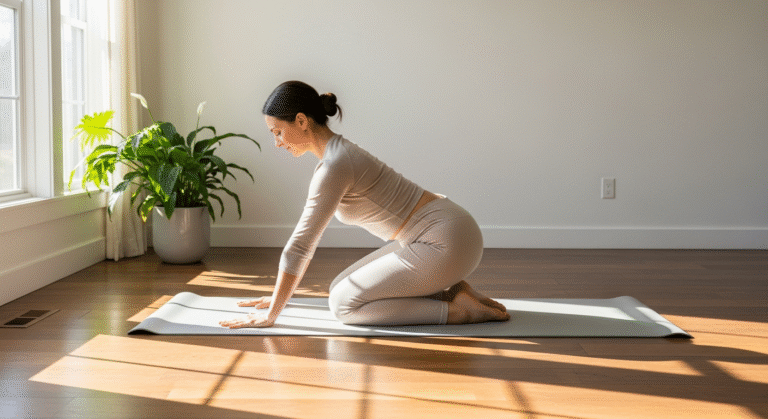
Start on your hands and knees in tabletop position. Slide your right arm underneath your left arm, bringing your right shoulder and ear to rest on the floor. Your left hand can stay planted, or you can extend it overhead for a deeper stretch.
This pose releases tension stored in your shoulders and upper back—areas that bear the weight of responsibility and protection. The gentle twist also creates space between your shoulder blades where stress commonly settles.
Hold for 1-2 minutes on each side, breathing deeply into the areas of tightness. If your shoulder doesn’t comfortably reach the floor, place a folded blanket underneath for support. There’s no benefit to forcing this pose deeper than your body wants to go.
Supported Fish Pose (Matsyasana)
Place a yoga block or firm cushion lengthwise under your spine, positioned between your shoulder blades. A second block can support your head if that feels better. Let your arms rest out to the sides, palms facing up.
This gentle backbend opens your chest and throat—where unexpressed emotions live. Many people hold their breath or breathe shallowly in daily life, creating chronic tension across the chest. This pose reverses that pattern.
The bolster setup makes this completely restorative rather than active. You’re not muscling into the backbend; you’re allowing gravity to create the opening. Stay for 3-5 minutes, focusing on slow, deep breaths that expand your ribcage.
If you feel any strain in your lower back, place a rolled blanket under your knees. If the chest opening feels too intense, use a lower prop or lie flat on your back with arms extended.
Eagle Arms (Garudasana Arms)
Sit comfortably or stand with feet hip-width apart. Extend your arms forward, then cross your right arm over your left. Bend your elbows and try to bring your palms together (or hold opposite shoulders if palms don’t meet). Lift your elbows slightly while drawing your shoulder blades down your back.
This pose targets the precise spot where shoulder tension accumulates—between your shoulder blades and across the tops of your shoulders. The compression followed by release creates a flushing effect that brings fresh blood flow to chronically tight areas.
Hold for 30-60 seconds, breathing into the stretch across your upper back. Release and shake out your arms, noticing the difference in sensation. Repeat on the second side, crossing left arm over right.
Poses for Hip Opening and Emotional Release
Reclined Butterfly (Supta Baddha Konasana)
Lie on your back and bring the soles of your feet together, letting your knees fall open to the sides. Place blocks or folded blankets under each knee for support—this is essential for making the pose restorative rather than straining.
The hips store emotional tension more than any other area in your body. This ultimate hip opener for beginners is gentle enough for sensitive hips while still accessing deep release.
The key is making it completely comfortable with props. Your knees should feel fully supported, with no sense of pulling or straining in your inner thighs or groin. If you feel any discomfort, add more height under your knees.
Stay for 5-10 minutes, breathing deeply into your belly and hips. You might feel emotions arise—this is your body releasing what it’s been holding. Let tears come if they need to. This is healing.
Supported Pigeon Pose (Eka Pada Rajakapotasana)
From hands and knees, bring your right knee forward between your hands. Your right ankle can be near your left hip (easier) or more parallel to the front of your mat (deeper). Extend your left leg straight behind you.
Place a bolster, folded blankets, or cushions under your right hip until your pelvis feels level and supported. You can stay upright, rest on your forearms, or fold completely forward over your front leg.
This pose accesses deep hip tension that simple stretching can’t reach. The external rotation of your front leg targets the piriformis and deep hip rotators where trauma commonly settles.
Signs you’re going too deep: sharp pain, holding your breath, or feeling like you need to brace against the sensation. If you notice these, add more props under your hip or try the reclined version on your back instead.
Hold for 3-5 minutes on each side. When you’re ready to release, do so slowly and mindfully. Notice what you feel—physically and emotionally.
Low Lunge with Props (Anjaneyasana)
From hands and knees, step your right foot forward between your hands. Keep your left knee on the ground (place a blanket underneath for cushioning). Your right knee should be directly over your ankle.
Place blocks under your hands for support. This allows you to stay more upright and control the intensity of the hip flexor stretch in your back leg.
The hip flexors are intimately connected to your psoas muscle, which contracts during stress and trauma. Releasing this area can feel emotionally intense because you’re accessing the body’s primary fight-or-flight mechanism.
Combine breath with movement: Inhale to lengthen your spine, exhale to gently sink deeper into the stretch. Hold for 1-2 minutes, then switch sides.
Easy variations: Keep your hands on blocks the entire time, or place a bolster under your front thigh for additional support. There’s no need to push deeper than feels safe and manageable.
Poses for Full-Body Nervous System Calming
Legs Up the Wall (Viparita Karani)
Sit sideways next to a wall, then swing your legs up as you lower your back to the floor. Your hips can be touching the wall or a few inches away—whatever feels comfortable. Rest your arms out to the sides, palms facing up.
This is the most simple yet effective restorative pose in yoga. The gentle inversion reverses blood flow, taking pressure off your heart and signaling your nervous system that it’s safe to rest.
This pose calms your entire nervous system by activating the parasympathetic response. It’s perfect for when you feel overwhelmed, anxious, or emotionally flooded from your practice or daily life.
Stay for 5-15 minutes. If your hamstrings are tight, move your hips farther from the wall. If your lower back feels strained, place a folded blanket under your hips.
Supported Bridge Pose (Setu Bandha Sarvangasana)
Lie on your back with knees bent and feet flat on the floor, hip-width apart. Lift your hips and slide a yoga block underneath your sacrum (the flat bone at the base of your spine). The block can be on low, medium, or high height depending on what feels best.
This gentle backbend releases tension in your chest and hips simultaneously while supporting your body completely. The block placement creates the opening without requiring any muscular effort.
Hold for 3-5 minutes, breathing slowly and deeply. Focus on releasing any gripping in your glutes, thighs, or abdomen. This is about allowing, not doing.
Duration and breathing patterns matter here: Aim for breaths that are slow and even, with exhales slightly longer than inhales. This breathing pattern enhances the calming effect of the pose.
Savasana (Corpse Pose)
Lie flat on your back with legs extended and arms resting alongside your body, palms facing up. Place a bolster or rolled blanket under your knees to release lower back tension. Cover yourself with a blanket for warmth.
This is the essential finishing pose where integration happens. After releasing stored tension through the previous poses, Savasana gives your nervous system time to reorganize and absorb the changes.
Set up for complete relaxation: Consider placing a folded blanket under your head, an eye pillow over your eyes, and a weighted blanket over your body if you have one. These additions help your nervous system feel safe and contained.
Stay for at least 5-10 minutes. This is where the real healing happens—not in the active poses, but in the stillness that follows. Your body is processing everything you’ve released, creating new neural pathways and patterns.
When you’re ready to finish, transition slowly. Roll to your side and pause there for a few breaths before pressing yourself up to sitting. Notice how you feel—different from when you started.
Practicing Safely: Important Tips for Trauma-Sensitive Yoga
Listening to Your Body’s Wisdom
Your body speaks in sensations, and learning to distinguish between different types of discomfort is essential for safe trauma release work.
“Good” discomfort feels productive. It’s the sensation of stretching, opening, or releasing. You can breathe into it. It might be intense, but it doesn’t feel threatening. You find yourself wanting to stay with it, exploring the edges.
Triggering pain feels different. It’s sharp, scary, or overwhelming. It makes you want to hold your breath or brace against it. It might bring up feelings of panic, anger, or the urge to escape. This type of sensation means you’ve gone too far.
How to modify or skip poses that don’t feel right: Trust your instinct immediately. If a pose feels wrong, it is wrong for you in this moment. Come out of it without judgment or explanation. Try a gentler variation, or skip it entirely and move to the next pose.
Honoring your body’s “no” is just as important as honoring its “yes.” In fact, for trauma survivors, learning to recognize and respect your own boundaries is part of the healing process. Every time you listen to your body’s “no,” you’re building trust with yourself.
Working with Emotional Releases
Emotions arising during practice aren’t a sign that something is wrong—they’re a sign that something is finally right. Your body is releasing what it’s been holding, and emotions are part of that release.
What to do if tears or emotions arise: Let them come. Don’t try to stop, analyze, or explain them. Just breathe and allow. You might sob intensely for a few moments, then feel completely calm. You might feel waves of sadness, anger, or even joy. All of it is valid.
Quick grounding techniques if you feel overwhelmed:
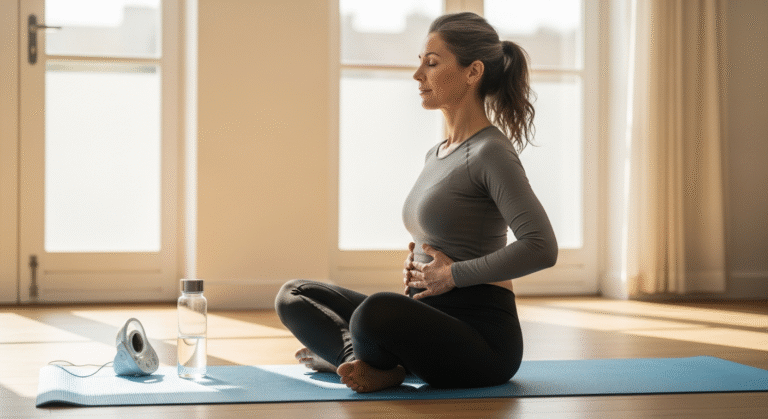
Place your hands on your heart and belly, feeling the warmth and pressure. This physical touch activates your parasympathetic nervous system.
Press your feet firmly into the floor and notice the solid support beneath you. Name five things you can see in the room. This brings you back to present reality.
Return to the simple breathing pattern: Four count inhale, two count hold, six count exhale. Repeat until you feel more settled.
Why emotional release is a sign the practice is working: Your body has been holding these emotions because it didn’t feel safe enough to process them when they first arose. The fact that they’re surfacing now means your nervous system finally feels secure enough to let them go. This is progress, not a problem.
When to Seek Additional Support
Yoga is powerful medicine, but it’s not a replacement for professional trauma therapy. Recognizing when you need additional support is a sign of wisdom, not weakness.
Consider seeking professional help if you experience flashbacks, dissociation, or emotional overwhelm that doesn’t resolve after your practice. If practicing consistently brings up material that feels too big to process alone, that’s valuable information. A trauma-informed therapist can help you work through these experiences in a safe, supported way.
How yoga complements therapy: The two work beautifully together. Therapy helps you understand and process your experiences cognitively, while yoga helps you release them somatically. Many therapists now incorporate somatic practices into their work, recognizing that talking alone doesn’t always resolve trauma stored in the body.
Amazing resources for trauma-informed practitioners: Look for yoga teachers certified in trauma-sensitive yoga through organizations like the Trauma Center Trauma-Sensitive Yoga program. Seek therapists trained in somatic experiencing, EMDR, or sensorimotor psychotherapy. These professionals understand the body-mind connection and can support your complete healing journey.
Your Journey to Gentle Healing
The proven power of trauma-informed yoga for releasing stored tension isn’t just theoretical—it’s something thousands of people experience in their bodies every day. By combining gentle movement, mindful breathing, and compassionate awareness, these nine poses create the conditions for your nervous system to finally let go of what it’s been holding.
You don’t need to do all nine poses at once. In fact, starting simple is more effective. Choose two or three poses that feel most accessible to you. Practice them consistently for a week or two. As you build confidence and safety in your body, you can gradually add more.
The essential truth about trauma healing: It happens in layers, not overnight. Each time you practice, you’re peeling back one layer of protection, releasing one pocket of stored tension, building one more degree of trust with your body. Some sessions will feel deeply releasing. Others might feel subtle or even frustrating. Both are part of the process.
Your body has been protecting you, holding onto these tensions because it didn’t feel safe enough to let them go. Every gentle pose you practice is a message to your nervous system: “We’re safe now. It’s okay to release.”
Create your first quick 15-minute practice sequence by choosing one pose from each category: one shoulder release, one hip opener, and Savasana. That’s it. Simple, achievable, and effective.
Set a realistic practice schedule—two to three times per week is perfect for most people. Put it in your calendar like any other important appointment. This is your time to heal, and you deserve to protect it.
Trust the process and be patient with yourself. Healing isn’t linear. Some days you’ll feel amazing progress. Other days you’ll wonder if anything is working. Keep showing up anyway. Your body is doing exactly what it needs to do, at exactly the pace it needs to do it.
You’re not broken—you’re healing. Every stored tension in your body is evidence of your resilience, your survival, your strength. These gentle poses aren’t fixing something wrong with you; they’re honoring everything right about you while creating space for even more freedom.
Every gentle pose is a step toward freedom from stored tension. Each breath is a choice to be present with yourself. Each moment of allowing instead of forcing is a radical act of self-compassion.
Your body knows how to release; yoga just gives it permission. You’ve survived 100% of your worst days. Now it’s time to help your body understand that the threat has passed, and it’s safe to finally, gently, let go.
Start today. Choose one pose. Take one breath. Begin your journey home to yourself.