The Ultimate Kettlebell Workout Guide for Women: Transform Your Core
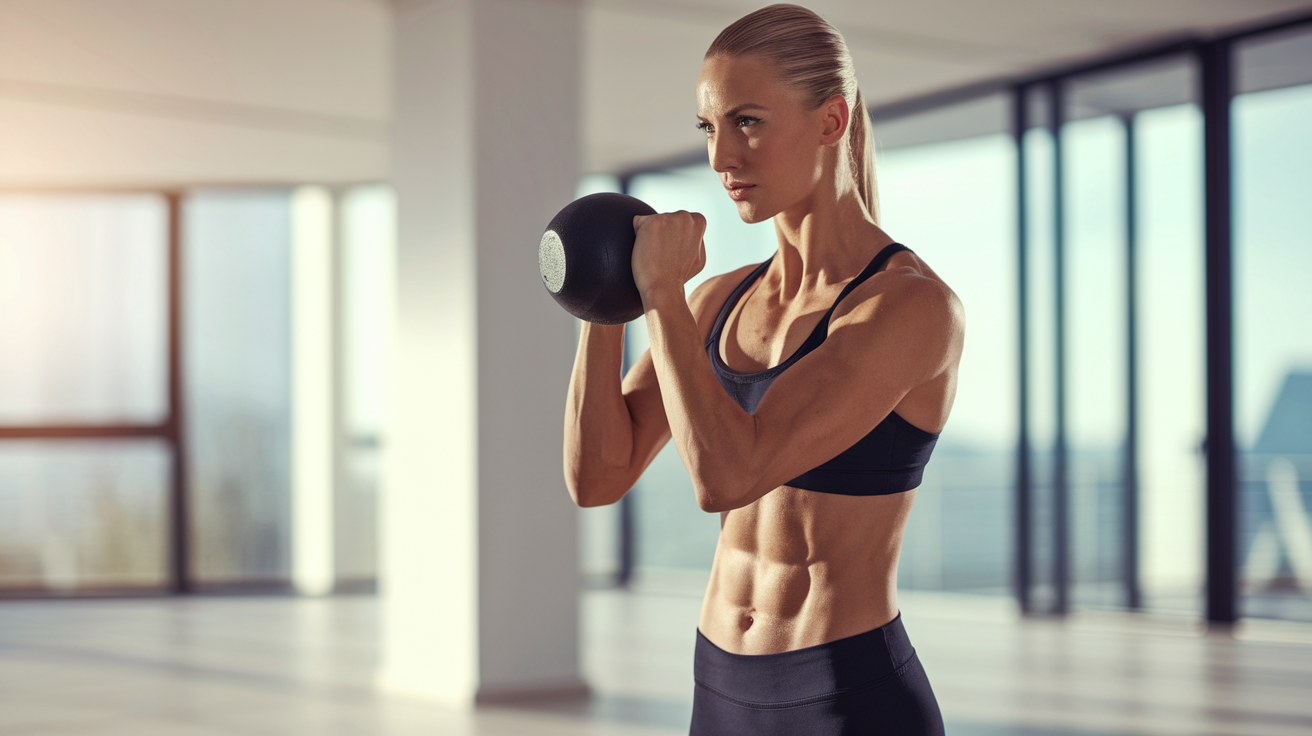
You’ve done the crunches. You’ve held those endless planks. You’ve scrolled through countless “get abs fast” videos, yet your core still feels weak and undefined.
Meanwhile, the gym feels intimidating, packed with complicated machines and judgmental eyes. I get it—you’re busy, frustrated, and ready for something that actually works.
Here’s the truth: you don’t need a gym membership or fancy equipment to build a powerfully strong core. You need one kettlebell and 20 minutes.
Kettlebells deliver what traditional ab exercises can’t—functional strength that transforms how you move, look, and feel. These dynamic movements engage your entire core system, from the deep stabilizing muscles to the visible abs everyone wants. Better yet? You’ll burn serious calories while sculpting a stronger midsection, all from the comfort of your living room.
In this guide, I’m breaking down exactly how to use kettlebells to build core strength that shows. You’ll discover five proven exercises, a complete 20-minute workout plan, and the science-backed strategies that deliver real results. No intimidation. No wasted time. Just effective training that fits your busy life and respects where you’re starting from.
Why Kettlebells Are a Game-Changer for Women’s Core Training

I. Introduction
The Science Behind Kettlebell Core Activation

II. Why Kettlebells Are a Game-Changer for Women’s Core Training
Traditional crunches work your rectus abdominis—those surface-level “six-pack” muscles. That’s fine, but it’s incomplete. Your core is a complex system of muscles that stabilize your spine, transfer power between your upper and lower body, and protect you during everyday movements. Kettlebell training activates this entire system.
When you perform dynamic kettlebell movements, your transverse abdominis (your deepest core muscle) fires constantly to stabilize your spine against the shifting weight. Your obliques engage to control rotation and prevent unwanted movement. Your erector spinae muscles work overtime to maintain proper posture. This comprehensive activation builds functional strength that translates to real life—lifting your kids, carrying groceries, maintaining good posture at your desk.
Research confirms what kettlebell enthusiasts have known for years: these workouts deliver superior results. Studies show that kettlebell exercises burn approximately 20.2 calories per minute—comparable to running a 6-minute mile. That’s 400+ calories in a 20-minute session, making kettlebell training one of the most efficient fat-burning workouts available.
The magic lies in the offset center of gravity. Unlike dumbbells, kettlebells force your core to work harder throughout every movement to maintain balance and control. This constant engagement builds strength and endurance simultaneously while torching calories long after your workout ends.
Perfect for Your Busy Lifestyle

III. Essential Kettlebell Core Exercises That Deliver Results
Between work deadlines, family responsibilities, and trying to maintain some semblance of personal time, who has two hours for the gym? Kettlebell training respects your schedule.
One kettlebell provides a complete workout system. You can target your core, build full-body strength, improve cardiovascular fitness, and enhance flexibility—all with a single piece of equipment that fits in your closet. No commute to the gym. No waiting for equipment. No monthly membership draining your bank account.
These workouts compress maximum results into minimal time. A focused 20-minute kettlebell session delivers more core activation and calorie burn than an hour of traditional ab exercises. You can squeeze in a powerful workout during your lunch break, before the kids wake up, or after they’re in bed.
The versatility is unmatched. Your kettlebell becomes your personal training studio, ready whenever you are. Traveling? Bring it along. Bad weather? No problem. Prefer working out in your pajamas? Go for it. This flexibility removes the excuses that derail traditional gym routines.
Safe and Scalable for All Fitness Levels

IV. Your Complete 20-Minute Kettlebell Core Workout Plan
Let’s address the elephant in the room: kettlebells look intimidating. That cannonball with a handle seems like something only CrossFit athletes should touch. Wrong.
Kettlebell training is actually more accessible and safer than many traditional exercises when you learn proper form. Unlike heavy barbell lifts that compress your spine, kettlebells use natural movement patterns that strengthen your body the way it’s designed to move. The ballistic nature of kettlebell exercises teaches you to generate power from your hips and core—not your lower back.
Every exercise in this guide includes beginner modifications. Starting with a lighter weight (even 8-10 pounds) allows you to master technique before progressing. As your strength builds, you simply increase the weight or add repetitions. This scalability means the same exercises that challenge beginners continue delivering results for advanced athletes.
Working out at home eliminates the intimidation factor that stops many women from strength training. You can learn at your own pace, make mistakes without judgment, and build confidence before ever stepping into a gym. This privacy is powerful—it lets you focus on your form and progress without self-consciousness.
Essential Kettlebell Core Exercises That Deliver Results

V. Maximizing Your Results: Tips for Success and Progress
Kettlebell Russian Twist

VI. Conclusion
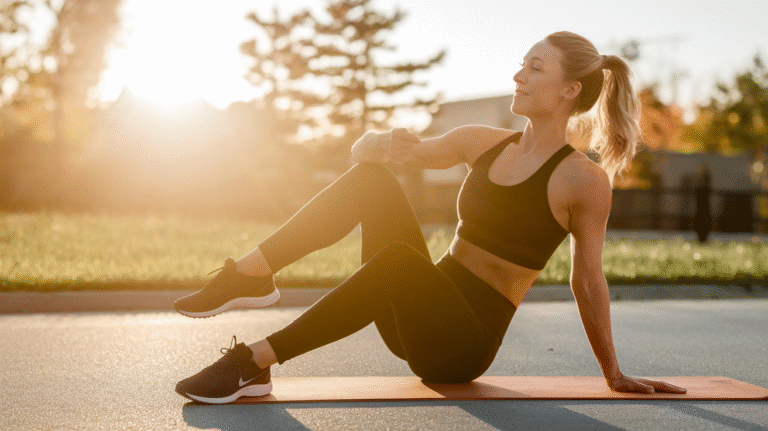
The Russian twist transforms your obliques and builds rotational power that improves everything from your tennis game to how you reach for items in your car.
Proper Form: Sit on the floor with knees bent and feet elevated slightly off the ground. Hold the kettlebell at chest height with both hands. Lean back until your torso is at a 45-degree angle—this is your starting position. Rotate your torso to the right, bringing the kettlebell beside your hip. Return to center, then rotate left. That’s one complete rep.
Common Mistakes: Don’t just move your arms—rotate from your core. Keep your chest lifted and spine neutral throughout. Many people round their backs or drop their chest, which reduces effectiveness and risks injury. Your feet should stay relatively still; the movement comes from your torso rotation.
Progressions: Beginners start with feet on the ground and no weight, focusing on the twisting motion. Intermediate exercisers lift their feet and add a light kettlebell (8-15 pounds). Advanced athletes increase weight, slow down the tempo for time under tension, or add a pause at each side for intensity.
Kettlebell Windmill
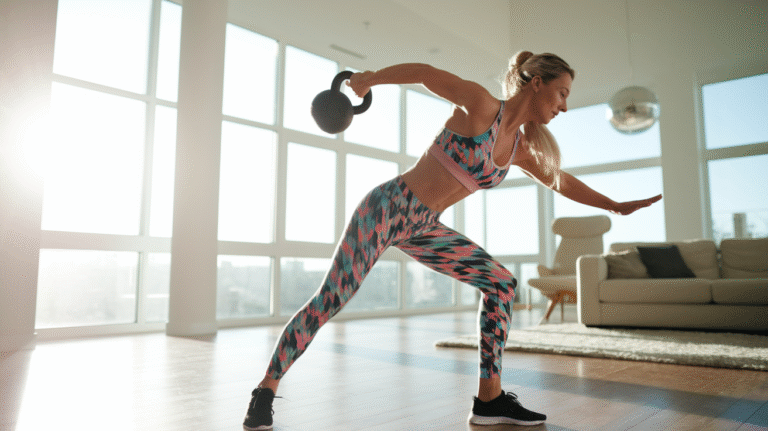
This exercise looks complex but delivers incredible results for lateral core strength and shoulder stability. It’s also a powerful posture corrector for those of us who spend too much time hunched over computers.
Step-by-Step Technique: Stand with feet wider than hip-width. Hold the kettlebell overhead in your right hand, arm fully extended. Keep your eyes on the kettlebell throughout the movement. Push your right hip out to the side as you hinge at the waist, lowering your left hand toward your left foot. Your right arm stays vertical, holding the kettlebell overhead. Return to standing. Complete all reps on one side before switching.
Benefits: Windmills strengthen your obliques, improve shoulder mobility, and build incredible core stability. They also enhance the mind-muscle connection—you have to stay focused and controlled throughout each rep.
Modifications: Start without weight to learn the movement pattern. Keep your bottom hand on your thigh instead of reaching for the floor. As you advance, increase the kettlebell weight and work toward touching the ground with your bottom hand.
Kettlebell Plank Pull-Through
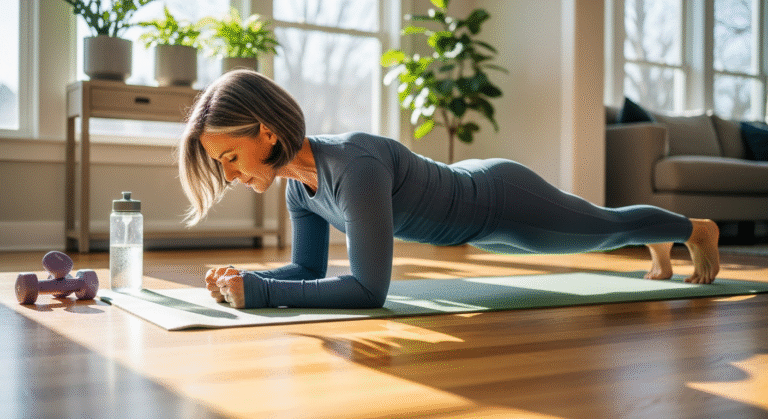
This dynamic plank variation builds anti-rotation strength—your core’s ability to resist unwanted movement. This translates directly to injury prevention and functional fitness.
Execution: Start in a plank position with a kettlebell placed just outside your right hand. Reach under your body with your left hand and pull the kettlebell across to the left side. Return your left hand to plank position. Reach under with your right hand and pull the kettlebell back. Continue alternating.
Why It Works: Your core works overtime to prevent your hips from rotating as you reach and pull. This builds stability that protects your spine during everyday activities and other exercises.
Alignment Tips: Keep your hips level—don’t let them rotate or pike up. Maintain a straight line from head to heels. Engage your glutes and quads to support the plank position. If this is too challenging initially, perform the exercise from your knees.
Kettlebell Halo
Don’t let the gentle name fool you—halos build serious core strength while improving shoulder mobility and upper body function.
Technique Guide: Stand with feet hip-width apart, holding the kettlebell upside down by the horns (sides of the handle) at chest level. Circle the kettlebell around your head in a controlled motion, keeping it close to your head. Complete the circle and reverse direction.
Core Engagement: Your abs and obliques work constantly to stabilize your spine as the weight moves around your head. This exercise also strengthens the often-neglected muscles that support your neck and upper back.
Common Errors: Moving too fast reduces effectiveness and increases injury risk. Arching your lower back compensates for weak core engagement—keep your ribs down and abs tight. Starting with too much weight compromises form; begin with 8-12 pounds and focus on smooth, controlled circles.
Kettlebell Swing (Core Focus)
The swing is the foundational kettlebell exercise, and when performed correctly, it’s a core-sculpting powerhouse that also torches fat.
Hip Hinge Pattern: The swing isn’t a squat—it’s a hip hinge. Stand with feet shoulder-width apart, kettlebell on the floor in front of you. Hinge at your hips (not your waist), keeping your back flat as you grab the kettlebell. Hike it back between your legs, then explosively drive your hips forward to swing the kettlebell to chest height. Let momentum bring it back down and repeat.
Core Connection: Your core acts as the link between your powerful hip drive and the kettlebell. As you snap your hips forward, your abs brace hard to transfer that power through your arms to the weight. This bracing action builds incredible core strength and endurance.
Breathing Technique: Exhale forcefully as you drive your hips forward (the power phase). This forced exhalation engages your deep core muscles maximally. Inhale as the kettlebell swings back down. This breathing pattern—called power breathing—amplifies core activation and protects your spine.
Your Complete 20-Minute Kettlebell Core Workout Plan
Warm-Up Routine (5 minutes)
Never skip your warm-up. These five minutes prepare your body for intense work and dramatically reduce injury risk.
Dynamic Stretches: Start with arm circles (10 forward, 10 backward) to warm up your shoulders. Perform 10 torso twists, rotating from your core with arms extended. Do 10 standing side bends on each side to prepare your obliques.
Mobility Work: Hip circles (10 each direction) prepare your hips for swings and other movements. Cat-cow stretches (10 reps) warm up your spine and enhance core awareness. Perform 10 deep bodyweight squats to activate your lower body and core.
Activation Drills: Hold a plank position for 30 seconds to wake up your core muscles. Do 10 glute bridges to activate your posterior chain. Finish with 10 dead bugs (lying on your back, alternating opposite arm and leg extensions) to establish core stability before adding weight.
The Main Workout Circuit
This circuit delivers maximum results in minimum time. Perform each exercise back-to-back with minimal rest between movements. Rest 90 seconds after completing all five exercises, then repeat the circuit 2-3 times total depending on your fitness level.
The Circuit:
- Kettlebell Swings: 15 reps (focus on explosive hip drive and core bracing)
- Russian Twists: 20 total reps (10 per side, controlled rotation)
- Kettlebell Halos: 10 total reps (5 each direction, smooth and controlled)
- Plank Pull-Throughs: 12 total reps (6 per side, maintain stable hips)
- Kettlebell Windmills: 8 total reps (4 per side, focus on form over speed)
Timing Breakdown: Each circuit takes approximately 4-5 minutes. Three complete circuits with rest periods fit perfectly into a 20-minute session. Beginners start with 2 circuits and build up to 3 as endurance improves.
Safety Notes: Maintain proper form throughout. If your technique breaks down, reduce the weight or take an extra rest. Quality repetitions build strength; sloppy reps build injuries. Keep water nearby and sip between circuits.
Cool-Down and Recovery
These final five minutes are crucial for recovery and long-term progress. Your muscles are warm and pliable—perfect for improving flexibility.
Essential Stretches: Child’s pose (hold 60 seconds) releases tension in your lower back and shoulders. Seated spinal twist (30 seconds per side) stretches your obliques and back. Cat-cow stretches (10 slow reps) restore spinal mobility. Lying knee-to-chest stretch (30 seconds per side) releases hip tension.
Breathing Exercises: Lie on your back with hands on your belly. Practice deep diaphragmatic breathing—inhale for 4 counts, feeling your belly rise. Exhale for 6 counts, feeling your belly fall. Repeat for 2 minutes. This activates your parasympathetic nervous system, enhancing recovery.
Recovery Tips: Foam roll your back, hips, and shoulders if you have a roller available. Stay hydrated—drink 16-20 ounces of water post-workout. Consider a protein-rich snack within 30 minutes to support muscle recovery. Track your workout in a journal or app to monitor progress.
Maximizing Your Results: Tips for Success and Progress
Choosing the Right Kettlebell Weight
Starting with the appropriate weight makes the difference between effective training and frustration or injury.
Beginner Recommendations: If you’re new to strength training, start with 8-12 pounds for upper-body-focused movements (halos, windmills) and 12-15 pounds for lower-body movements (swings). If you have some fitness background, begin with 12-15 pounds for upper body and 15-20 pounds for lower body exercises.
Weight Progression Signals: You’re ready to increase weight when you can complete all prescribed reps with perfect form and the last few reps don’t feel challenging. Generally, add 4-8 pounds when progressing. Don’t rush—building strength on a lighter weight with flawless form delivers better results than struggling with weight that’s too heavy.
Budget-Friendly Options: You don’t need a full kettlebell set. Start with one medium-weight kettlebell (15-20 pounds for most women) that challenges you across multiple exercises. As you progress, add one lighter (8-12 pounds) for skill work and one heavier (25-30 pounds) for swings and lower-body movements. Quality adjustable kettlebells offer versatility at a lower cost than multiple fixed-weight bells.
Nutrition and Recovery Strategies
You can’t out-train a poor diet, but you also don’t need restrictive eating to see results.
Simple Nutrition Guidelines: Focus on protein at every meal to support muscle recovery and growth. Aim for 0.7-1 gram per pound of body weight daily. Include complex carbohydrates (oats, sweet potatoes, quinoa) around your workouts to fuel performance. Don’t fear healthy fats—avocados, nuts, and olive oil support hormone production and keep you satisfied.
Hydration Matters: Drink half your body weight in ounces of water daily. During intense kettlebell sessions, you’ll sweat significantly—replace those fluids. Dehydration compromises performance and recovery.
Rest and Recovery: Your muscles grow stronger during rest, not during workouts. Schedule at least one full rest day between kettlebell sessions. Active recovery (walking, yoga, swimming) on off days enhances circulation without taxing your system. Prioritize 7-9 hours of sleep—this is when your body repairs and builds muscle tissue.
Realistic Expectations: You’ll feel stronger within 2-3 weeks. Visible changes in muscle definition typically appear around 6-8 weeks with consistent training and solid nutrition. Significant transformation takes 12+ weeks. This isn’t a quick fix—it’s sustainable strength building that lasts.
Tracking Progress and Staying Motivated
The scale doesn’t tell the whole story. Track metrics that actually matter.
Meaningful Measurements: Record the weight you use for each exercise and your rep counts. Notice when you can increase weight or reps—this proves strength gains. Take progress photos every 4 weeks in the same lighting and clothing. Measure your waist, hips, and other areas monthly. Pay attention to how your clothes fit—this often changes before the scale moves.
Non-Physical Wins: Notice improvements in daily life. Can you carry groceries more easily? Does your back hurt less at your desk? Do you have more energy throughout the day? These functional improvements matter more than aesthetics.
Building Consistency: Schedule workouts like important appointments. Lay out your workout clothes the night before. Keep your kettlebell visible as a reminder. Find an accountability partner or join an online community. Celebrate small wins—every completed workout is a victory.
Beating Plateaus: When progress stalls, change variables. Increase weight, add reps, reduce rest periods, or try new exercises. Sometimes your body needs a deload week—reduce volume by 50% to allow full recovery. Plateaus are normal; they’re opportunities to reassess and adjust, not reasons to quit.
Transform Your Core, Transform Your Life
Kettlebell training delivers what traditional ab workouts promise but rarely provide: a strong, functional core that looks great and performs even better. You’ve learned five powerful exercises that engage your entire core system, not just surface muscles. You have a complete 20-minute workout that fits your busy schedule and delivers research-backed results.
The beauty of this approach? You don’t need a gym membership, complicated equipment, or hours of free time. One kettlebell and commitment to consistency will transform your core strength, improve your posture, boost your confidence, and enhance how you move through daily life.
Starting is the hardest part. Your first workout won’t be perfect—and that’s completely fine. Every expert was once a beginner who showed up and tried. Your core strength, your fitness level, and your confidence will build with each session. Progress isn’t linear, but it’s inevitable when you stay consistent.
You have everything you need right now. Grab your kettlebell, clear some space in your living room, and begin with today’s workout. Start with two circuits if three feels overwhelming. Use a lighter weight than you think you need while you master form. Track your progress and celebrate small victories.
Your stronger, more confident self is waiting on the other side of consistency. Take the first step today—your core transformation starts with a single swing.
Ready to build serious core strength? Download your free printable workout tracker and join our community of women transforming their fitness with kettlebells. Drop a comment below sharing which exercise you’re most excited to try!