6 Living Room Workouts That Won’t Annoy Your Neighbors
You know that sinking feeling when you’re mid-workout and hear the dreaded ceiling knock? Or worse, the passive-aggressive note slipped under your door about “excessive noise during evening hours”?
I get it. You want to stay fit, build strength, and torch calories—but you also want to keep the peace with the people living around you. The struggle is real: no gym membership, limited space, paper-thin walls, and a schedule that only allows for workouts when everyone else is home.
Here’s the truth: You don’t need to choose between your fitness goals and being a considerate neighbor. The workouts I’m sharing today are proven to deliver powerful results without a single jump, stomp, or equipment crash. These six neighbor-friendly workout styles will help you burn fat, build lean muscle, and sculpt your body—all in complete silence.
No more guilt. No more compromises. Just effective training that works for your life.
Why Low-Impact Doesn’t Mean Low Results
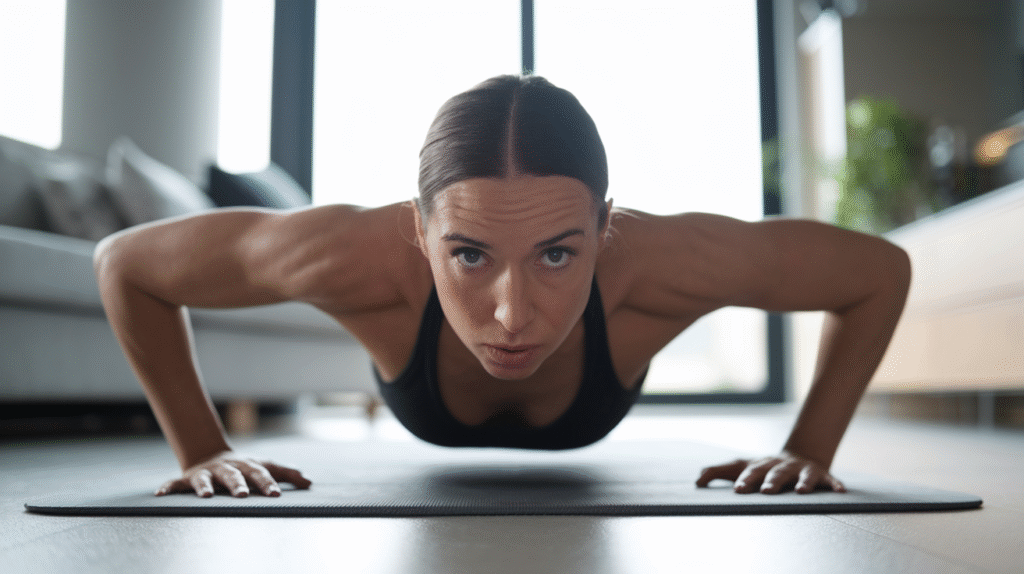
Let’s crush a dangerous myth right now: quiet workouts are not “easier” or less effective than their high-impact counterparts.
Understanding the Science Behind Quiet Workouts
When you remove momentum and explosive movements, something powerful happens—your muscles work harder, not easier. Controlled, deliberate movements create what exercise scientists call “time under tension.” This extended muscle engagement triggers serious strength gains and muscle development.
Research shows that slow, controlled exercises activate more muscle fibers than fast, bouncy movements. When you perform a push-up over five seconds instead of one, your muscles can’t rely on momentum. They’re forced to engage continuously, creating micro-tears that rebuild stronger.
Isometric holds—where you maintain a static position—increase muscle endurance by up to 45% according to strength training studies. Your body adapts by recruiting stabilizer muscles and building functional strength that translates to real-world activities.
The bonus? These controlled movements protect your joints from the repetitive stress that leads to injury. You’re building sustainable fitness that lasts decades, not just weeks.
The Neighbor-Friendly Fitness Advantage
Here’s where quiet workouts become game-changers for your routine. You can train at 6 AM before work without waking anyone. You can squeeze in a session at 10 PM after the kids are asleep. No gym hours to work around, no commute eating your time.
The psychological benefit is huge. When you eliminate the guilt and stress of disturbing others, you actually show up more consistently. You’re not negotiating with yourself about “acceptable” workout times or skipping sessions because it’s too late or too early.
Consistency beats intensity every single time. The best workout is the one you’ll actually do—repeatedly, without barriers or excuses.
What Makes a Workout “Quiet”?
A truly neighbor-friendly workout has three key characteristics. First, it keeps your feet on or very close to the floor. No jumping jacks, burpees, or box jumps that create impact noise.
Second, it uses controlled movements rather than explosive power. Think slow squats instead of jump squats, step-backs instead of jumping lunges.
Third, it leverages bodyweight and silent equipment strategically. Resistance bands are whisper-quiet. Yoga mats cushion any sound. Even light dumbbells placed carefully on a mat make zero noise.
These aren’t limitations—they’re parameters that force creativity and effectiveness.
The 6 Silent Sculpting Workouts
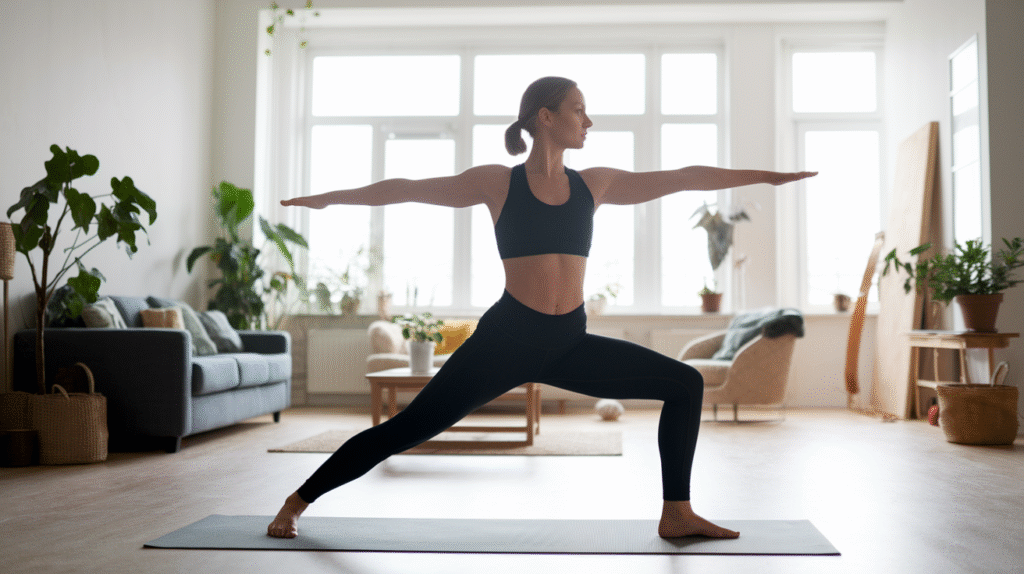
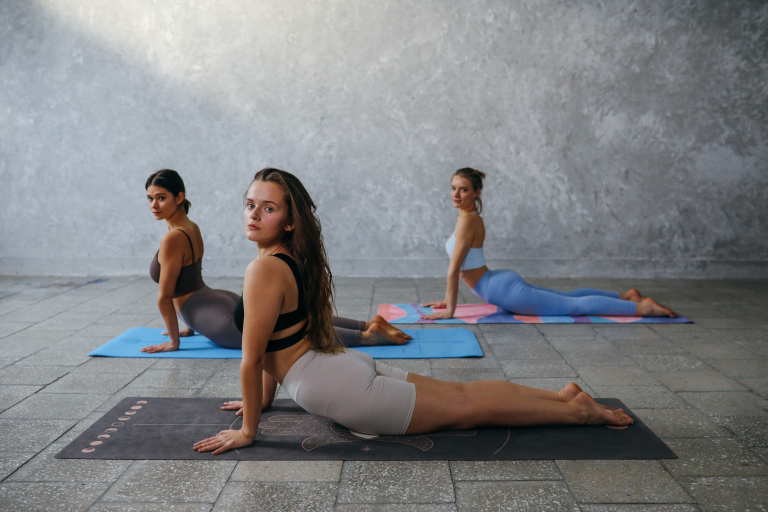
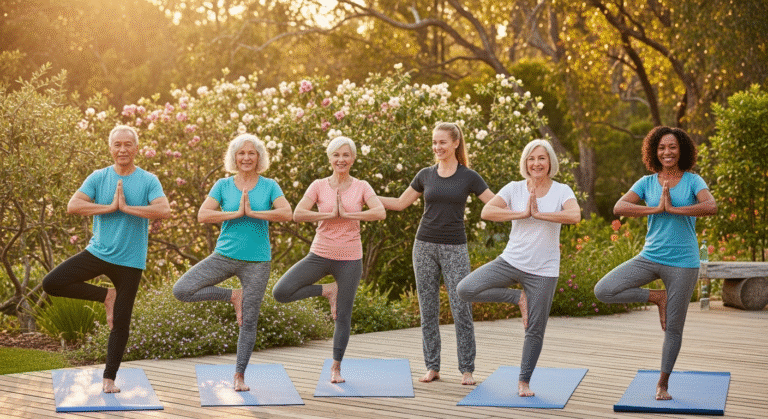
Workout #1: Yoga Flow for Strength and Flexibility
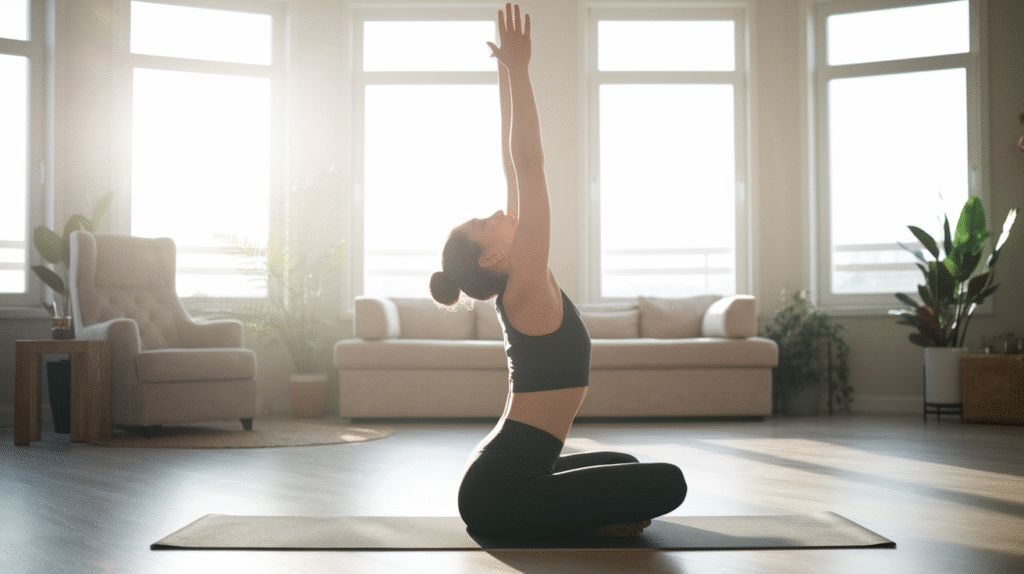
What it is: Yoga isn’t just stretching—it’s a powerful strength-building practice that challenges your entire body through sustained holds and flowing sequences. A proper yoga flow combines balance work, isometric strength positions, and flexibility training into one complete session.
Why it’s quiet: Every movement in yoga emphasizes control and awareness. You’re barefoot on a mat, transitioning smoothly between poses without impact. The only sound is your breath—which actually enhances the practice.
Results you’ll see: Within four weeks of consistent practice, you’ll notice improved flexibility that makes daily movements easier. Your core strength will skyrocket from holding plank variations and balance poses. Stress melts away as you focus on breath and movement. You’ll develop lean, toned muscles with improved definition—especially in your arms, core, and legs.
Sample moves to include: Start with Sun Salutations to warm up your body. Move into Warrior I and II sequences that sculpt your legs and glutes while building shoulder strength. Hold Chair Pose for 30-60 seconds to feel your quads burn. Add plank variations—forearm planks, side planks, and plank-to-downward dog flows. Finish with Bridge Pose to strengthen your glutes and open your chest.
The beauty of yoga is its scalability. Beginners can modify every pose, while advanced practitioners can deepen stretches and extend holds for serious muscle challenge.
Workout #2: Pilates Mat Work
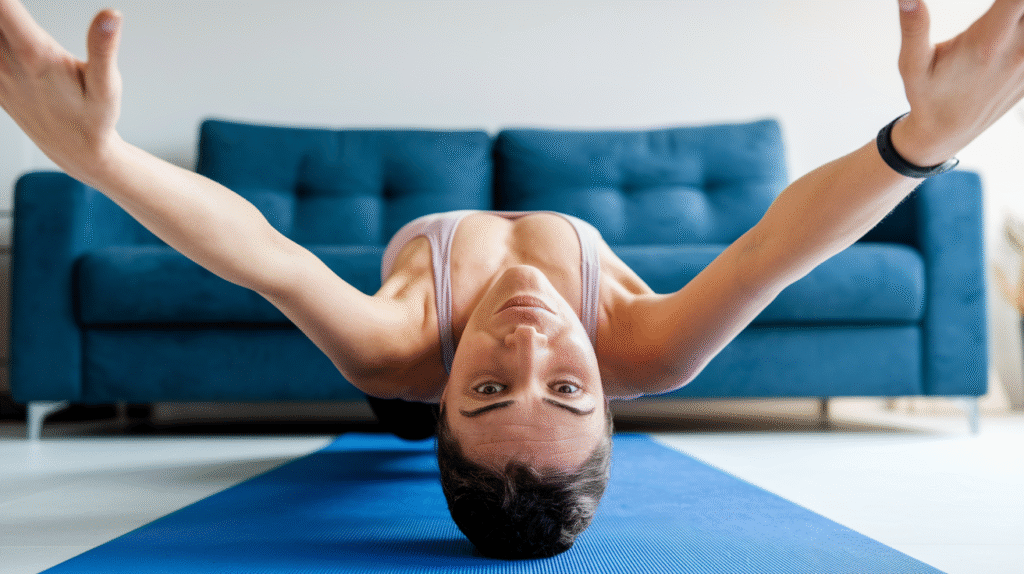
What it is: Pilates is the ultimate core-focused training system that works your body from the inside out. Every exercise emphasizes core engagement, precise movement, and controlled breathing. This isn’t about speed—it’s about quality and muscle connection.
Why it’s quiet: Pilates happens entirely on your mat with slow, deliberate movements. There’s zero impact, no equipment clanging, and complete control over every motion. Your neighbors won’t hear a thing.
Results you’ll see: Your core will transform into a powerhouse of strength. Better posture becomes automatic as your deep stabilizing muscles engage properly. You’ll see visible definition in your abs, obliques, and lower back. Your glutes will tone and lift. Balance and stability improve dramatically, making you stronger in all other activities.
Sample moves to master: The Hundred is your cardio-core combo—lie on your back, lift your head and shoulders, extend legs, and pulse your arms for 100 counts. Leg Circles challenge hip stability while toning inner thighs. Roll-Ups build serious abdominal strength through spinal articulation. Side-lying leg lifts sculpt your outer thighs and glutes. Single-leg stretches work your lower abs while improving coordination.
Three 30-minute Pilates sessions per week will completely reshape your midsection. The results are undeniable.
Workout #3: Resistance Band Training
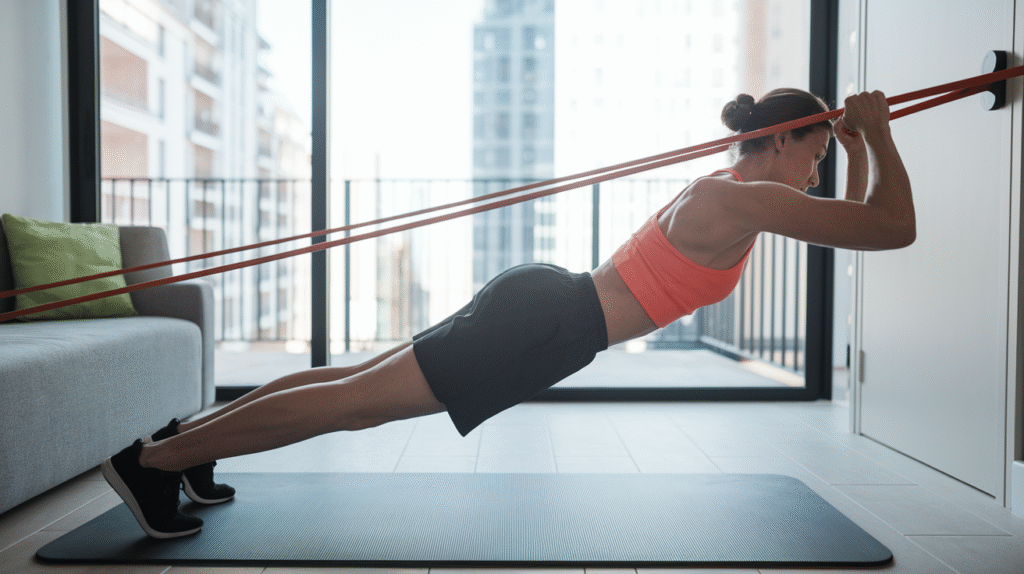
What it is: Resistance bands provide progressive tension that challenges your muscles throughout the entire range of motion. Unlike weights that rely on gravity, bands create constant resistance that forces your muscles to work harder. You can train every muscle group with just a few bands.
Why it’s quiet: Bands are completely silent. No weights dropping, no metal clanking, no impact sounds. You control the tension and tempo, making this the perfect apartment workout tool.
Results you’ll see: You’ll build lean muscle definition across your entire body. Strength increases rapidly because bands force your stabilizer muscles to engage. Calorie burn stays elevated even after your workout ends. Your body will look toned and sculpted—not bulky—with consistent training.
Sample moves for full-body transformation: Banded squats build powerful legs and glutes—stand on the band, hold handles at shoulders, and squat deep. Chest presses develop your pecs and triceps—anchor the band behind you and press forward. Rows strengthen your back and improve posture—anchor the band in front and pull toward your ribs. Bicep curls sculpt your arms—stand on the band and curl handles to shoulders. Lateral raises define your shoulders—stand on the band and lift handles to the sides.
Loop bands add another dimension. Use them for glute bridges, clamshells, and monster walks that set your lower body on fire.
Workout #4: Isometric Strength Holds
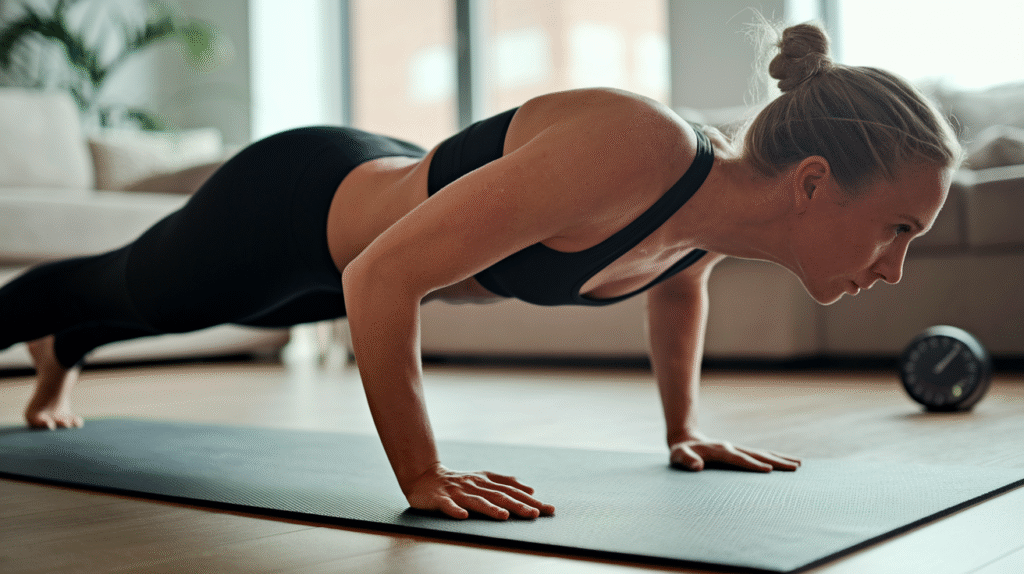
What it is: Isometric exercises challenge your muscles to generate force without moving. You hold a position while your muscles contract intensely to maintain that posture. This creates serious strength gains and muscular endurance.
Why it’s quiet: Static holds produce zero noise. You’re not moving, so there’s no impact, no equipment sounds, nothing. Just you versus gravity and time.
Results you’ll see: Strength gains happen fast with isometrics—studies show 15-20% strength increases in just six weeks. Your muscular endurance skyrockets, making other workouts feel easier. Your core becomes rock-solid from sustained engagement. Mental toughness improves as you learn to push through discomfort.
Sample moves that deliver: Wall sits destroy your quads—slide down a wall until thighs are parallel to the floor and hold for 30-60 seconds. Planks are the ultimate core builder—hold a perfect plank position for 30-90 seconds, keeping your body in a straight line. Hollow body holds target your deep core—lie on your back, lift shoulders and legs slightly, and hold. Glute bridges strengthen your posterior chain—lift hips, squeeze glutes hard, and hold at the top. Static lunges build single-leg strength—hold the bottom position of a lunge for 30-45 seconds per leg.
The key is progressive overload. Each week, add 5-10 seconds to your holds. Your body will adapt and transform.
Workout #5: Slow-Tempo Bodyweight Circuits
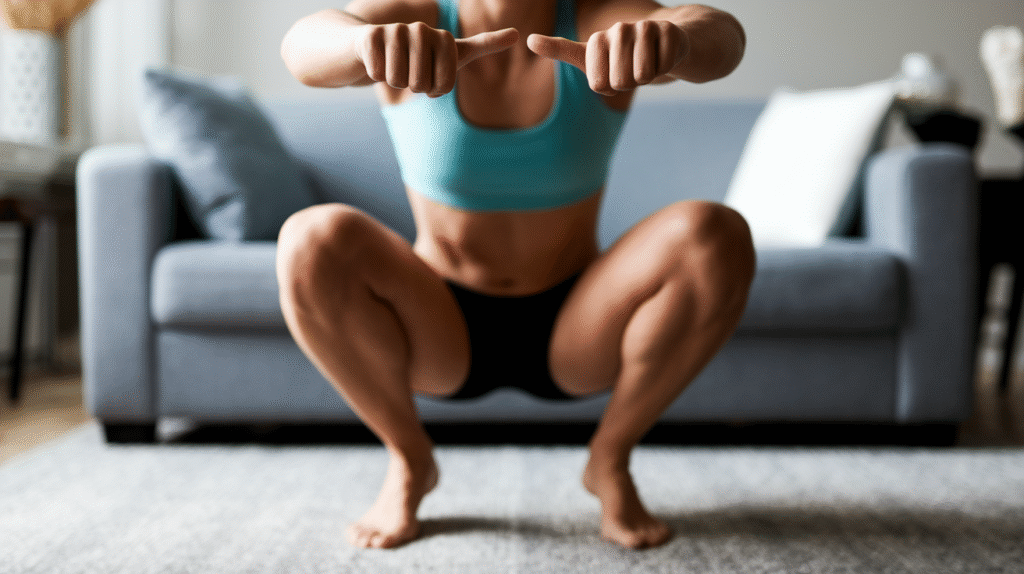
What it is: Take traditional bodyweight exercises and perform them with deliberate, controlled tempo. Instead of rushing through reps, you’ll slow down each phase—typically 3-5 seconds on the lowering phase, a brief pause, and 1-2 seconds on the lifting phase.
Why it’s quiet: Eliminating momentum means eliminating noise. When you lower yourself slowly into a push-up, there’s no impact. When you rise from a squat with control, your feet stay planted silently.
Results you’ll see: Slow-tempo training enhances muscle growth because of extended time under tension. Your form improves dramatically when you can’t rely on momentum. Fat burning increases as your muscles work harder for longer. Functional strength develops because you’re building real control over your body.
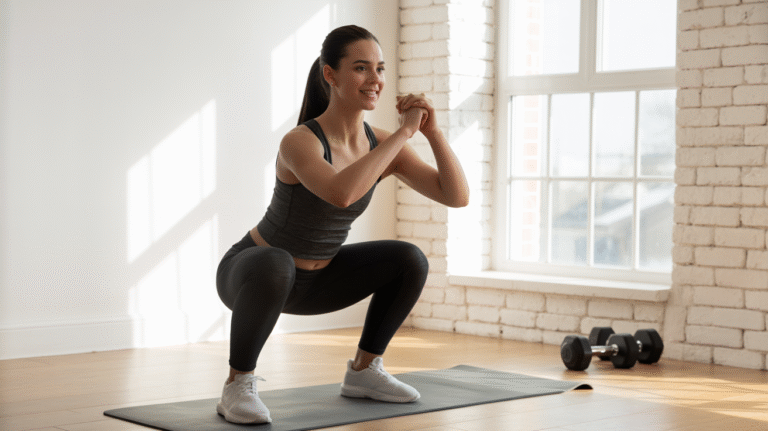
Sample moves with tempo guidelines: Slow push-ups—take 4 seconds to lower your chest to the floor, pause for 1 second, push up in 2 seconds. Tempo squats—descend for 4 seconds, pause at the bottom for 2 seconds, rise in 2 seconds. Controlled lunges—step back slowly, lower for 3 seconds, pause, return in 2 seconds. Slow mountain climbers—bring each knee forward deliberately, focusing on core engagement rather than speed.
A 30-minute slow-tempo circuit will leave you shaking and sweating—proof that quiet doesn’t mean easy.
Workout #6: Barre-Inspired Toning
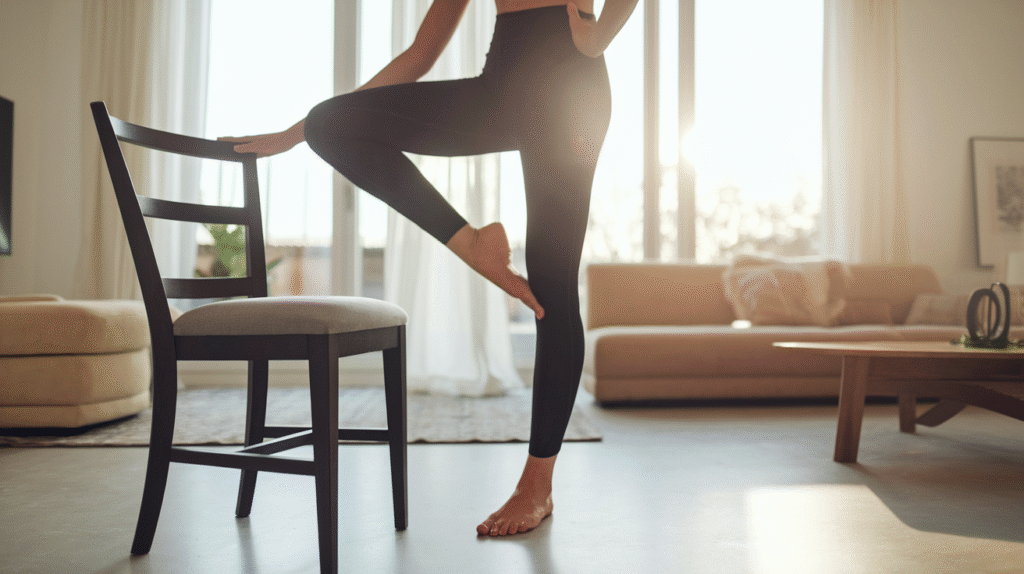
What it is: Barre workouts use small, pulsing movements to target specific muscle groups until they fatigue. You’ll work in positions that challenge your balance while performing tiny movements that create serious burn. Your living room furniture becomes your barre.
Why it’s quiet: The movements are so small and controlled that they’re virtually silent. You’ll use a chair or wall for support, standing in place while your muscles do all the work.
Results you’ll see: You’ll develop long, lean muscles with beautiful definition. Balance improves as you work in challenging positions. Your legs and glutes will tone and lift noticeably. Core strength increases because every movement requires stabilization.
Sample moves that sculpt: Chair-supported leg lifts—hold a chair, lift one leg behind you, and pulse up for 30-60 seconds. Pulsing squats—lower into a squat and pulse up and down just a few inches for 60 seconds. Standing glute work—lift one leg behind you and pulse while squeezing your glute. Second position squats—stand with feet wide, toes out, lower halfway, and pulse. Arm sculpting—extend arms to the sides and make small circles for 60 seconds.
The burn you feel is real muscle fatigue. That’s growth happening.
Creating Your Noise-Free Workout Space
Essential Equipment for Silent Training
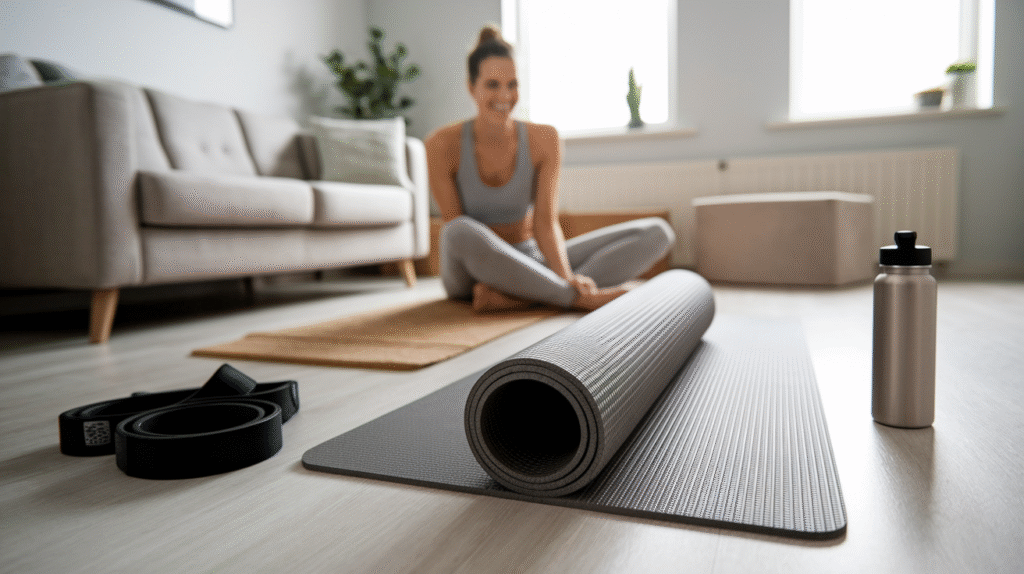
Your workout space starts with the right foundation. A quality yoga mat is non-negotiable—it cushions your body and muffles any sound. Look for mats at least 6mm thick for extra cushioning. If you’re on the second floor or higher, consider interlocking puzzle mats that cover more floor area and provide serious sound dampening.
Resistance bands are your best friend for silent strength training. Get a set with varying resistance levels—light, medium, and heavy. Loop bands add versatility for lower body work. These pack away in seconds and cost less than a single personal training session.
Furniture sliders transform your floors into a workout tool. Place them under your hands for plank variations or under your feet for lunges and mountain climbers. They’re whisper-quiet and incredibly effective.
What should you avoid? Heavy kettlebells on hard floors create impact noise when you set them down. Jump ropes are obviously out. Even dumbbells need careful handling—if you use them, place them gently on a folded towel.
Optimizing Your Living Room Layout
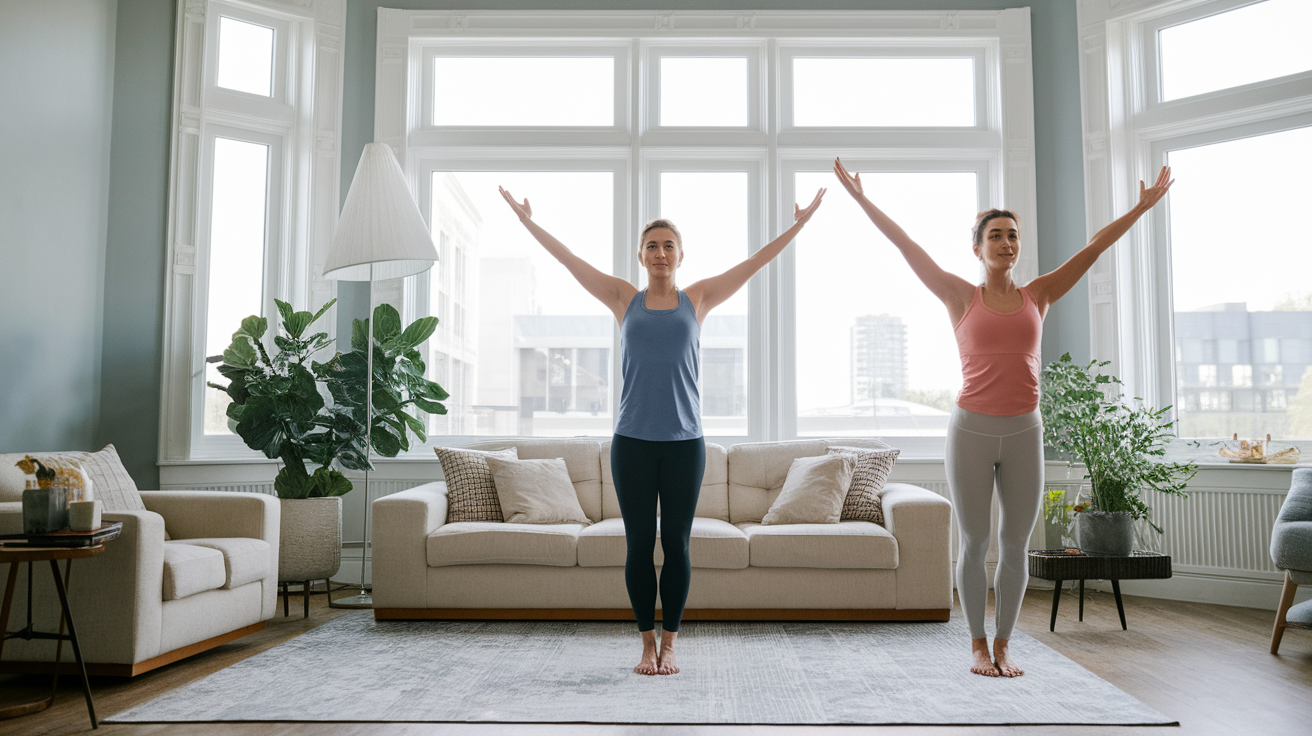
Your furniture isn’t in the way—it’s workout equipment. A sturdy chair becomes your barre for leg work and support during balance exercises. Your couch works for elevated push-ups, tricep dips, and step-ups. Walls are perfect for wall sits, handstands (if you’re advanced), and support during stretches.
Clear a space about 6 feet by 6 feet—enough room to lie down with arms extended. This is your training zone. Store your mat rolled up behind the couch or in a closet. Keep resistance bands in a small basket that tucks away easily.
Create a motivating environment even in small spaces. A small plant, a motivational print, or simply a clean, organized area makes you want to show up. Natural light helps if you’re working out during the day.
Timing Your Workouts Strategically
While these workouts are quiet, being strategic about timing shows respect for shared living spaces. Early morning (6-8 AM) and late evening (after 9 PM) are when most people are home. Stick to the quietest workouts during these times—yoga, Pilates, and isometric holds are perfect.
Midday and early evening (3-7 PM) give you more flexibility if you work from home or have a flexible schedule. This is when you can incorporate slightly more movement-based workouts without worry.
If you want to be extra considerate, have a quick conversation with your neighbors. Let them know you’re committed to quiet workouts and ask if they have any concerns about timing. Most people appreciate the heads-up and respect the effort.
Building a routine that respects shared spaces means you’ll never feel guilty about prioritizing your health.
Your 4-Week Neighbor-Friendly Transformation Plan
Week 1-2: Building Your Foundation
Start with 20-minute sessions, three to four times per week. Your body needs time to adapt to these movement patterns, and your mind needs time to develop the focus required for controlled exercise.
Focus obsessively on form and mind-muscle connection. Slow down. Feel each muscle working. If you’re doing a resistance band row, feel your back muscles pulling the band, not just your arms moving. This awareness builds better results faster.
Here’s your Week 1-2 rotation: Monday—Yoga Flow (20 minutes), Wednesday—Resistance Band Training (20 minutes), Friday—Pilates Mat Work (20 minutes), Sunday—Slow-Tempo Bodyweight Circuit (20 minutes).
Between workout days, stay active with walking, stretching, or gentle movement. Recovery is when your muscles actually grow stronger.
Week 3-4: Increasing Intensity Silently
You’re ready to extend sessions to 30-40 minutes and add progressive overload. This doesn’t mean adding noise—it means adding challenge through tempo, longer holds, and increased resistance.
In yoga, hold poses five seconds longer. In Pilates, add more reps or slow down your tempo. With resistance bands, move to the next resistance level or perform exercises with a wider stance for more challenge. For isometric holds, add 10 seconds each week.
Your Week 3-4 schedule incorporates all six workout styles: Monday—Yoga Flow (35 minutes), Tuesday—Isometric Strength Holds (25 minutes), Thursday—Barre-Inspired Toning (30 minutes), Friday—Resistance Band Training (35 minutes), Saturday—Pilates Mat Work (30 minutes), Sunday—Slow-Tempo Bodyweight Circuit (30 minutes).
This variety prevents boredom and ensures balanced muscle development.
Tracking Your Progress Without the Scale
The scale doesn’t tell the whole story—especially when you’re building muscle while losing fat. Track what actually matters.
Measure your strength gains. Can you hold a plank 20 seconds longer than Week 1? Can you complete more reps with the same resistance band? These are real progress markers.
Take measurements of your waist, hips, thighs, and arms. Write them down and remeasure every two weeks. You’ll see inches disappear even when the scale doesn’t budge.
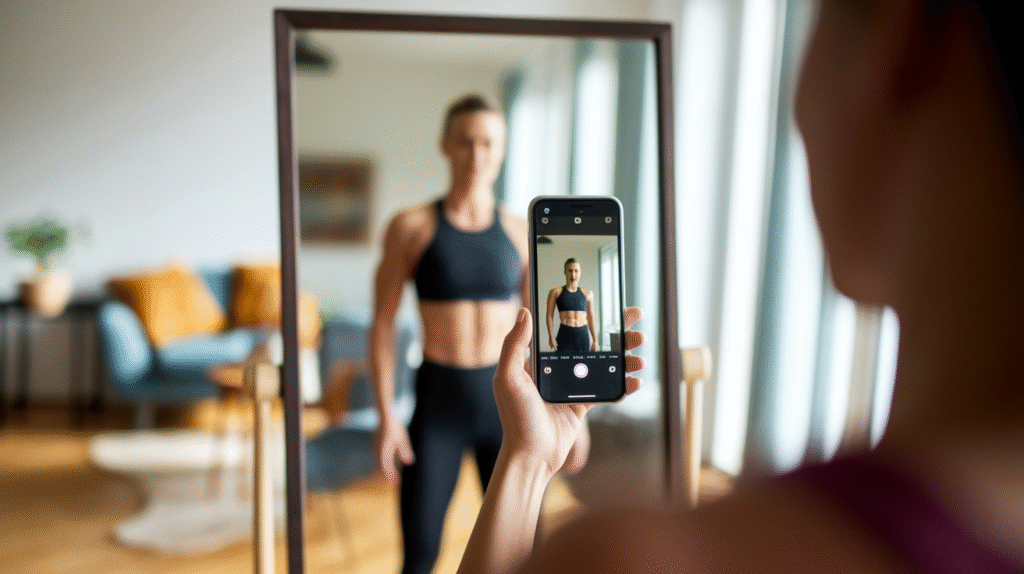
Progress photos are powerful. Take front, side, and back photos in the same outfit, same lighting, same location every two weeks. The visual changes will motivate you when you need it most.
Notice how your clothes fit. That’s the ultimate real-world measurement. When your jeans feel looser and your shirts fit better, you’re winning.
Staying Motivated in Your Home Space
Create workout playlists that energize you—use headphones for late-night sessions so your music doesn’t become someone else’s problem. Music transforms your mindset and makes workouts fly by.
Find online communities focused on home fitness. Share your progress, ask questions, and celebrate wins with people who understand the journey. Accountability partners make you show up even when motivation is low.
Mix up your routines every few weeks. Swap the order of exercises, try new variations, or focus on a different workout style for a week. Your body adapts to routine, so variety keeps results coming.
Remember why you started. Write down your fitness goals and read them before each workout. Visualize the strong, healthy person you’re becoming. That vision pulls you forward.
Your Quiet Fitness Revolution Starts Now
You now have six proven workout styles that deliver real, measurable results without disturbing a single neighbor. No more excuses about noise, space, or gym access. No more guilt about when you can train or what exercises you can do.
These neighbor-friendly workouts can transform your body, build serious strength, and improve your fitness level dramatically. Yoga flows will make you flexible and strong. Pilates will sculpt your core. Resistance bands will build lean muscle. Isometric holds will forge mental and physical toughness. Slow-tempo circuits will burn fat and build control. Barre work will tone and define your entire body.
The power is in your consistency, not your volume. Quiet doesn’t mean ineffective—it means strategic, controlled, and sustainable.
Your action step is simple: Choose one workout from this list and commit to trying it this week. Set a specific day and time. Clear your space. Put on comfortable clothes. Press play on your playlist. Show up for yourself.
You have everything you need right in your living room. Your fitness journey doesn’t have to be loud to be powerful. It doesn’t have to disrupt others to transform you.
Start today. Your neighbors—and your body—will thank you.