10 Home Workouts That Need Zero Equipment (And Actually Work!)
Let’s be honest—how many times have you told yourself you’d start working out if only you had a gym membership? Or if you could afford that fancy home equipment? Or if you just had more time in your day?
Here’s the truth: You don’t need any of that.
The freedom and convenience of equipment-free workouts means you can exercise anywhere, anytime. Your living room, bedroom, backyard, or even a hotel room becomes your personal fitness studio. No monthly fees, no waiting for machines, no judgment from other gym-goers.
I’m sharing 10 proven workouts that deliver amazing results without requiring a single piece of gear. These simple routines work whether you’re a complete beginner or someone getting back into fitness after a break. You’ll build strength, boost your cardiovascular health, and feel more energized—all from the comfort of your own space.
This isn’t about complicated fitness science or trendy workout fads. You’re getting practical, actionable advice you can start using today. Right after reading this, you could knock out your first workout in less than 15 minutes. That’s the beauty of bodyweight training—it meets you exactly where you are.
Ready to ditch the excuses and discover how effective home workouts can be? Let’s get started.
Why Equipment-Free Workouts Are Perfect for Everyone
The Essential Benefits of No-Equipment Workouts
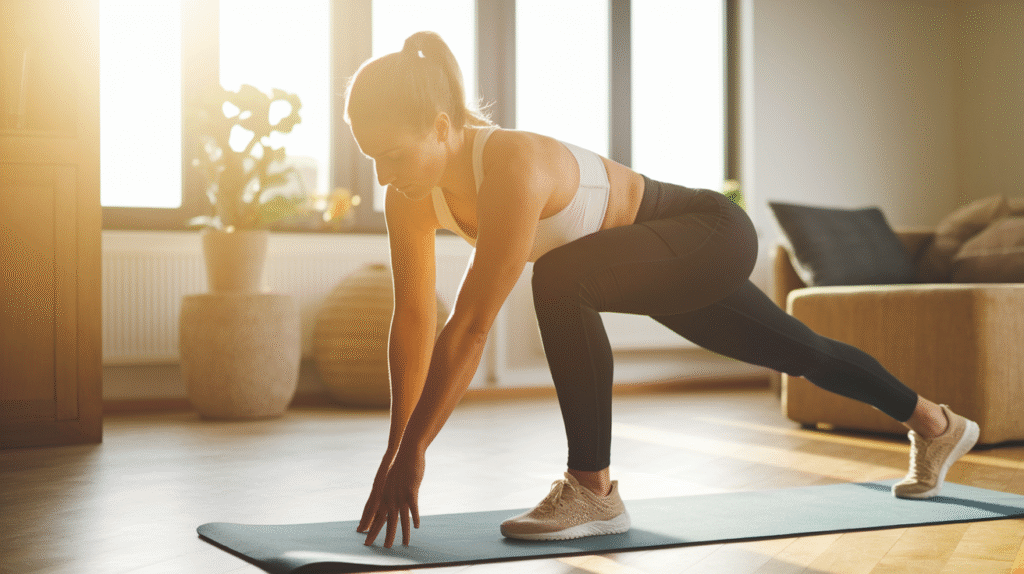
Think about all the money you’d save by skipping the gym membership, personal training sessions, and expensive equipment. Equipment-free workouts eliminate these financial barriers completely. You’re investing nothing but your time and effort, which makes fitness accessible to everyone regardless of budget.
The complete flexibility to exercise anywhere transforms your relationship with fitness. Traveling for work? Your hotel room works perfectly. Kids running around? You can squeeze in sets between activities. Bad weather outside? No problem—you’re already home. This convenience removes the most common obstacles people face when trying to stay consistent with exercise.
Natural, functional movements form the foundation of bodyweight training, and these movements reduce injury risk compared to heavy weights or complicated machines. Your body moves the way it’s designed to move—pushing, pulling, squatting, and rotating through natural ranges of motion. This builds practical strength you’ll use in everyday life, not just isolated muscles that look good but don’t function well.
Science-Backed Effectiveness
Bodyweight training builds real-world strength and endurance that translates directly to daily activities. Research consistently shows that progressive bodyweight exercises deliver proven results for weight loss, muscle toning, and cardiovascular health. You’re not sacrificing effectiveness by training without equipment—you’re simply using a different tool (your own body) to achieve the same goals.
The beauty of equipment-free workouts lies in progressive difficulty. You adjust reps, tempo, and intensity to match your fitness level. Beginners start with easier variations and fewer repetitions, while advanced athletes increase speed, add explosive movements, or extend time under tension. This quick adaptation means the same exercises work for everyone from complete beginners through experienced athletes.
Time-Saving Advantages
No commute to the gym means more time for actual exercise. Think about it—a 30-minute gym session often requires an hour when you factor in driving, parking, changing, and showering in their facilities. At home, that entire hour becomes available for your workout and recovery.
You can easily squeeze in 10-30 minute sessions throughout the day. Morning person? Knock out a quick routine before your shower. Lunch break? Perfect time for a midday energy boost. Evening free time? Wind down with some movement. This flexibility makes consistency achievable even during your busiest weeks.
Minimal setup and cleanup required means you transition from thinking about exercise to actually doing it in seconds. No packing a gym bag, no setting up equipment, no putting weights away. This removes friction from the process, making it perfect for travel, small spaces, or busy households where time and space are premium resources.
The 10 Most Effective Equipment-Free Home Workouts
Full-Body Burners
1. Burpees
Burpees deliver an amazing full-body workout that targets your legs, core, chest, and shoulders while elevating your heart rate. Here’s the proper technique: Start standing, drop into a squat position with hands on the floor, kick your feet back into a plank, perform a push-up, jump your feet back to your hands, then explode upward into a jump.
For beginners, modify by stepping back instead of jumping, eliminating the push-up, or removing the final jump. Start with just 5 reps and build up gradually—this movement is intense. Advanced athletes can add a tuck jump at the top or increase speed for maximum cardiovascular benefits.
Common mistakes include sagging hips during the plank portion and not fully extending during the jump. Focus on maintaining a tight core throughout the entire movement for optimal results.
2. Mountain Climbers
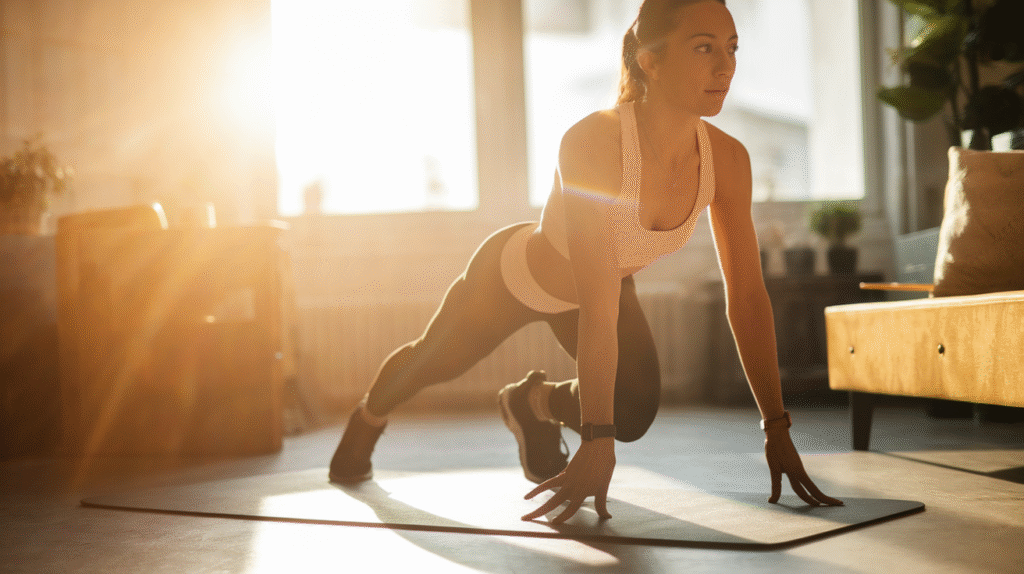
This exercise combines core stability with cardiovascular endurance in one powerful movement. Begin in a plank position with hands directly under shoulders. Drive one knee toward your chest, then quickly switch legs in a running motion while maintaining a strong plank.
The step-by-step technique breakdown: Keep your core engaged, hips level, and shoulders stable. Your hands should stay planted while your legs do all the work. This targets your abs, shoulders, and hip flexors while getting your heart rate up fast.
Start with a slow tempo to master form—aim for 20 seconds of controlled movement. As you improve, increase speed for a more intense cardio challenge. Simple progression: slow mountain climbers become fast mountain climbers, then add a twist by bringing your knee to the opposite elbow.
3. Jump Squats
Jump squats combine strength training with explosive power for amazing results in your legs and glutes. Stand with feet shoulder-width apart, lower into a squat with thighs parallel to the floor, then explode upward into a jump, landing softly back in the squat position.
Detailed form instructions: Keep your chest up, weight in your heels, and knees tracking over your toes. The power comes from your glutes and quads, not your knees. Land as softly as possible to protect your joints.
For a low-impact alternative, perform regular bodyweight squats without the jump. This works perfectly for beginners or anyone with joint concerns. Effective rep ranges vary by goal: 8-12 reps for strength, 15-20 for endurance, or 30-second intervals for cardio conditioning.
Upper Body Strength Builders
4. Push-Ups
The classic push-up remains one of the most effective upper body exercises ever created. Proper form starts in a plank position with hands slightly wider than shoulder-width. Lower your body until your chest nearly touches the floor, keeping elbows at a 45-degree angle, then push back up.
Easy modifications include wall push-ups (standing, pushing against a wall) or knee push-ups (dropping to your knees for less resistance). These allow beginners to build strength progressively. Advanced variations challenge experienced athletes: diamond push-ups target triceps, wide-grip emphasizes chest, and decline push-ups (feet elevated) increase difficulty.
Push-ups target your chest, triceps, shoulders, and core simultaneously, making them an essential exercise for complete upper body development.
5. Tricep Dips
Using just a chair or couch, tricep dips sculpt the back of your arms effectively. Sit on the edge of your chair with hands gripping the edge beside your hips. Slide forward off the chair, supporting your weight with your arms. Lower your body by bending your elbows to 90 degrees, then press back up.
Proper positioning protects your shoulders: keep elbows pointing straight back, not flaring out to the sides. Your shoulders should stay down and back throughout the movement. This proven technique delivers sculpted arms without any weights.
Rep recommendations for beginners: start with 8-10 reps for 2-3 sets. As you build strength, increase to 15-20 reps or slow down the tempo for greater challenge.
6. Plank to Down Dog
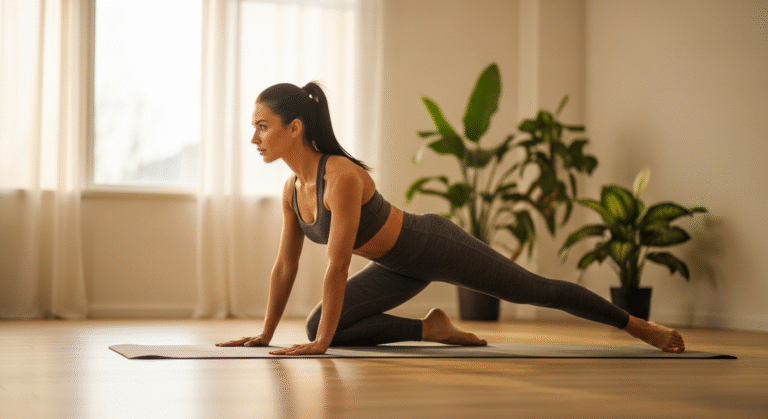
This dynamic movement combines core stability with arm strength and shoulder mobility. Start in a plank position, then press your hips up and back into a downward dog position (forming an inverted V with your body), hold briefly, then return to plank.
The complete movement breakdown strengthens your core, shoulders, and arms while improving flexibility. Benefits extend beyond muscle building—this exercise enhances core stability and functional strength you’ll use in daily activities.
Quick tip for maintaining proper form: keep your core engaged throughout both positions. Your hands should stay planted and stable. Scaling options range from 5 slow reps for beginners to 15-20 continuous reps for advanced practitioners.
Core and Abs Essentials
7. Bicycle Crunches
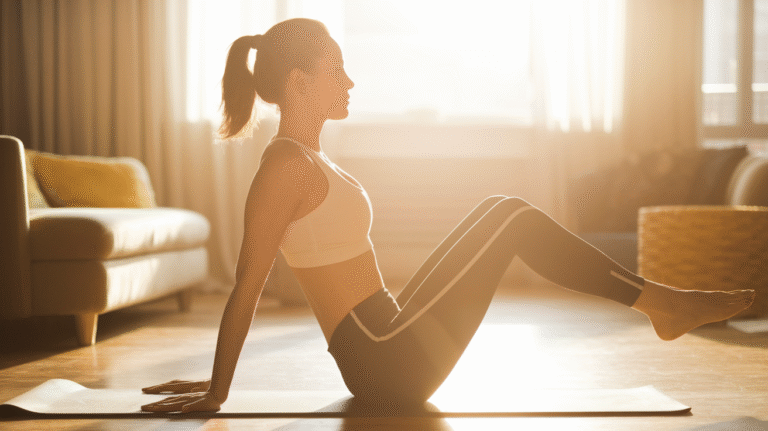
Bicycle crunches deliver effective results by targeting all your abdominal muscles simultaneously. Lie on your back with hands behind your head and legs lifted. Bring your right elbow toward your left knee while extending your right leg, then switch sides in a pedaling motion.
This movement engages your rectus abdominis (six-pack muscles), obliques (side abs), and deep core stabilizers. Breathing tips for better results: exhale as you crunch, inhale as you switch sides. This rhythm helps maintain proper engagement.
An easy starting point for beginners: 10-15 reps per side, focusing on controlled movement over speed. As you progress, increase reps or slow down the tempo to maximize time under tension.
8. Planks
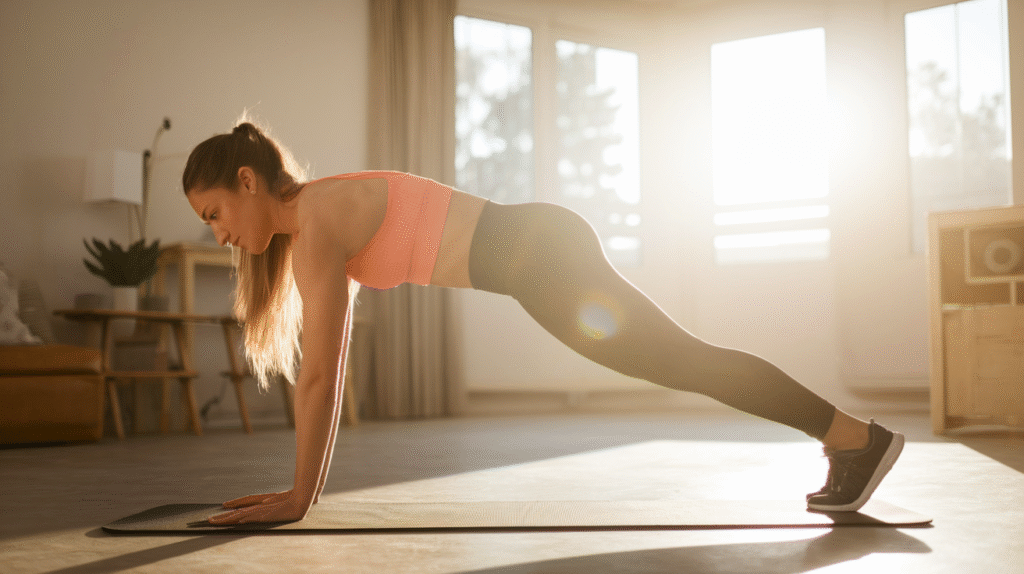
The plank is the ultimate core exercise, building strength throughout your entire midsection. Proper alignment starts with forearms on the floor, elbows under shoulders, body forming a straight line from head to heels. Engage your core, squeeze your glutes, and hold.
Time goals vary by fitness level: beginners aim for 20-30 seconds, intermediate for 45-60 seconds, and advanced for 90 seconds or more. Simple variations include side planks (targeting obliques) and plank rocks (shifting forward and back while maintaining position).
Amazing benefits extend beyond just abs—planks strengthen your shoulders, back, glutes, and improve posture. This single exercise builds full-body stability that supports every other movement you do.
Lower Body and Cardio
9. Lunges
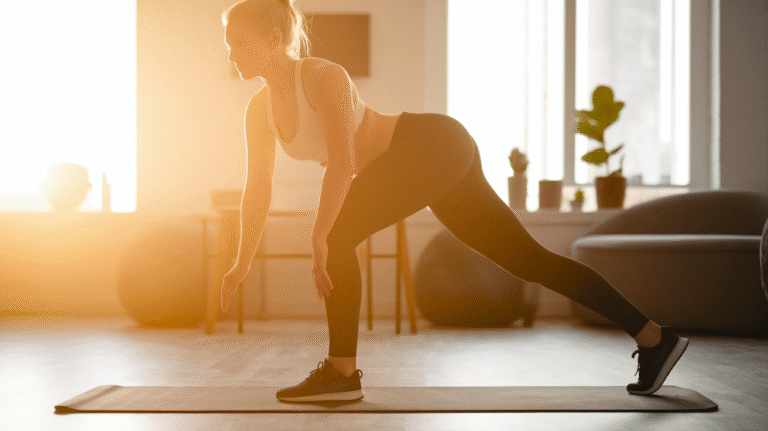
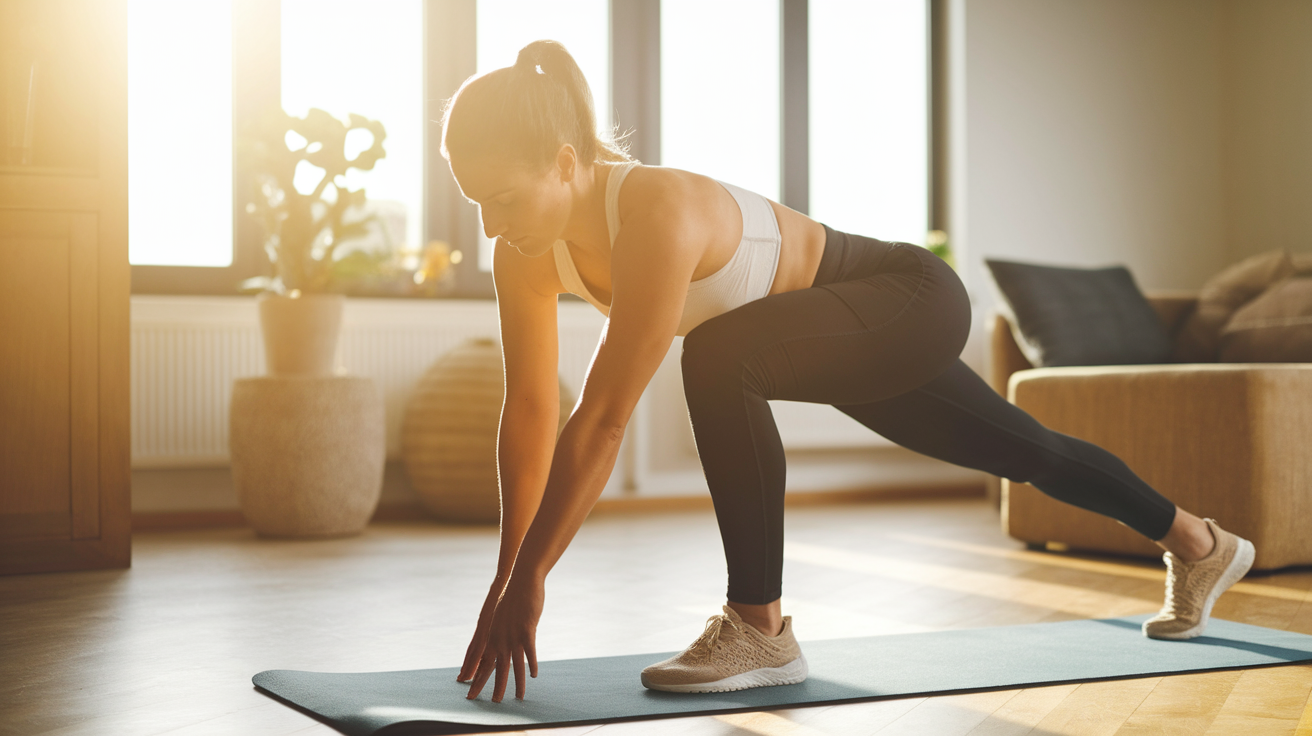
Lunges offer multiple variations to keep your lower body workouts interesting and effective. Forward lunges involve stepping forward and lowering your back knee toward the ground. Reverse lunges step backward. Walking lunges move you forward through space.
Balance tips for beginners: start with stationary lunges, holding onto a wall or chair for support if needed. As balance improves, progress to alternating lunges and eventually walking lunges.
Muscle targeting includes quads, hamstrings, and glutes, making lunges essential for complete leg development. Quick progression strategy: start with 8 reps per leg, increase to 12, then 15, then add tempo variations like pause lunges or pulse lunges.
10. High Knees
High knees combine cardio conditioning with lower body strength in one simple movement. Stand tall and run in place, driving your knees up toward your chest as high as possible. Pump your arms naturally as if sprinting.
Proper form maximizes effectiveness: stay on the balls of your feet, maintain an upright posture, and drive your knees up explosively. This exercise delivers serious heart rate benefits and calorie burn in a short time.
Modifications accommodate different fitness levels: march in place with high knees for lower impact, or increase speed for maximum intensity. High knees work perfectly as warm-ups before strength training or as part of HIIT circuits for complete workouts.
Creating Your Perfect At-Home Workout Routine
Simple Workout Structures That Work
Circuit training delivers amazing results with minimal time investment. Choose 5 exercises from the list above and perform them back-to-back with minimal rest. Complete 3-4 rounds of the entire circuit, resting 60-90 seconds between rounds. This structure keeps your heart rate elevated while building strength.
A sample circuit: 10 push-ups, 15 squats, 20 mountain climbers, 10 lunges per leg, 30-second plank. That’s one round. Rest one minute, then repeat 2-3 more times. Total workout time: 15-20 minutes for a complete full-body session.
The HIIT approach maximizes calorie burn and cardiovascular benefits. Work for 30 seconds at maximum effort, rest for 15 seconds, then move to the next exercise. This proven format delivers results efficiently. Choose 4-5 exercises and repeat the circuit 3-4 times.
For strength-focused workouts, perform higher reps with slower tempo. Instead of rushing through 20 push-ups, do 10 with a 3-second lowering phase and 1-second pause at the bottom. This increases time under tension, building more muscle without adding weight.
Quick 10-minute routines save the day when you’re busy. Pick 3 exercises, set a timer, and perform as many quality reps as possible in 10 minutes, resting only when needed. You’ll be amazed how effective these short sessions become when performed consistently.
Essential Warm-Up and Cool-Down Tips
A 5-minute warm-up prevents injury and prepares your body for exercise. Start with light cardio: march in place, do arm circles, perform gentle torso twists. Gradually increase your heart rate and body temperature.
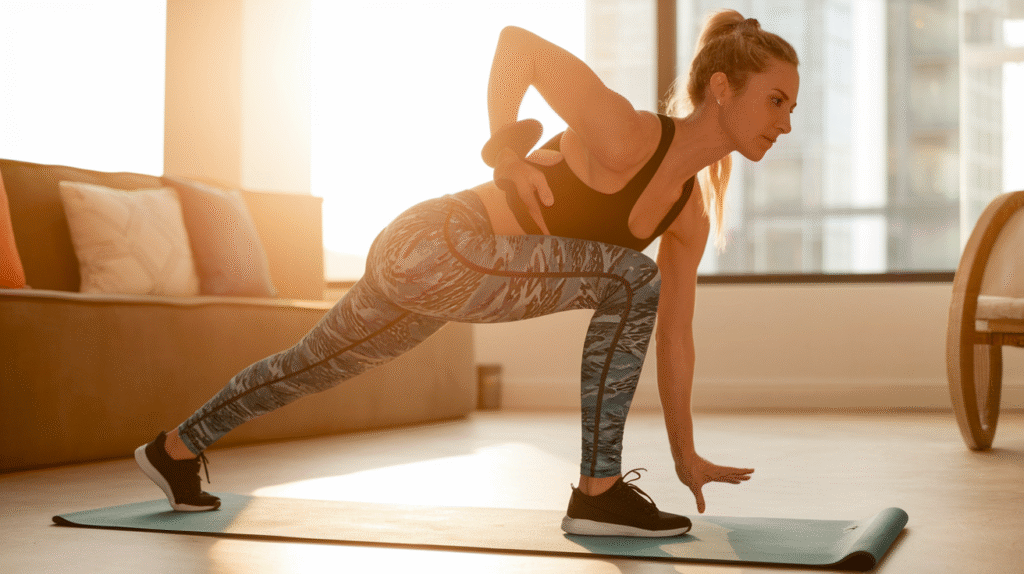
Dynamic stretches prep your muscles better than static stretching before workouts. Leg swings, arm circles, hip rotations, and gentle lunges with a twist activate the muscles you’re about to use. These movements improve range of motion and reduce injury risk.
Cool-down stretches aid recovery and reduce next-day soreness. After your workout, spend 5 minutes stretching the major muscle groups you worked. Hold each stretch for 20-30 seconds, breathing deeply. This simple step proves crucial for long-term success and consistency.
Progression Strategies for Continuous Results
Increasing difficulty without equipment requires creativity but delivers proven results. Add more reps, increase sets, reduce rest periods, or slow down the tempo. Each method makes exercises harder without needing weights.
Track your progress effectively using a simple notebook, phone app, or calendar. Write down which exercises you performed, how many reps, and how you felt. This data shows your improvement over time and keeps you motivated.
The proven approach for sustainable progress: increase volume or intensity by roughly 10% weekly. If you did 10 push-ups this week, aim for 11 next week. This gradual progression builds strength safely while preventing plateaus.
Listen to your body—some weeks you’ll feel stronger, others you’ll need extra recovery. That’s completely normal. Consistency matters more than perfection, and small improvements compound into major transformations over months.
Tips for Staying Motivated and Consistent
Creating Your Easy Home Workout Space
You don’t need an entire room dedicated to fitness. Designate a small area in any room where you have enough space to lie down with arms extended. This becomes your workout zone, and having a consistent spot creates a mental trigger that it’s time to exercise.
Simple setup requires just a yoga mat or large towel for comfort during floor exercises. That’s it. No fancy equipment needed. Some people add a small speaker for music, but even that’s optional—your phone works perfectly fine.
Remove distractions and barriers before you start. Turn off the TV, silence your phone notifications, and let family members know you need 20 minutes uninterrupted. These small steps dramatically improve workout quality and consistency.
Make your space inviting and energizing. Open a window for fresh air, play motivating music, or position yourself where natural light streams in. These environmental tweaks make you actually want to exercise rather than dreading it.
Building a Sustainable Routine
Start with realistic goals that match your current lifestyle. Commit to 2-3 sessions per week rather than attempting daily workouts when you’re just beginning. Success builds momentum, and hitting achievable targets motivates you to continue.
Schedule workouts like important appointments you wouldn’t cancel. Block the time in your calendar, set reminders, and treat this commitment to yourself with the same respect you’d give a work meeting or doctor’s appointment.
Find your perfect time of day through experimentation. Morning workouts energize some people, while others prefer evening sessions to decompress from work stress. There’s no universal best time—only what works consistently for your schedule and energy levels.
Quick accountability tricks that work include workout buddies (even virtual ones), posting your goals publicly, or using habit-tracking apps. External accountability increases follow-through dramatically, especially during those first few weeks when motivation naturally fluctuates.
Tracking Progress and Celebrating Wins
Simple methods for tracking include a basic journal where you note exercises, reps, and how you felt. Fitness apps offer more detailed tracking if you prefer digital solutions. Even marking workout days on a calendar creates visual motivation as you see your consistency streak grow.
Measure beyond the scale because weight doesn’t tell the complete story. Notice increased energy throughout your day, improved sleep quality, better mood, and enhanced strength. Can you do more push-ups than last month? That’s real progress worth celebrating.
Celebrate small victories to maintain motivation during your fitness journey. Completed your first full plank? That’s amazing! Did 10 push-ups without stopping? Huge win! These milestones matter more than you realize—they prove you’re capable of more than you thought.
Amazing transformations happen with consistency, not perfection. Missing one workout doesn’t derail your progress. What matters is getting back to it the next day. The people who succeed aren’t those who never struggle—they’re the ones who keep showing up despite challenges.
Conclusion
You now have 10 proven exercises that deliver real results without requiring a single piece of equipment. Burpees, mountain climbers, jump squats, push-ups, tricep dips, plank to down dog, bicycle crunches, planks, lunges, and high knees—these movements build strength, boost cardiovascular health, and transform your fitness level.
The accessibility of equipment-free workouts means no more excuses, no financial barriers, and no limits to where or when you can exercise. Your body is the only tool you need to get stronger, healthier, and more energized.
Here’s your challenge: Start with just one workout today. Don’t overthink it, don’t wait for the perfect moment, and don’t convince yourself you’ll start Monday. Choose your favorite exercise from this list and do 5 reps right now. Seriously—put down your phone and knock out 5 push-ups or 5 squats.
That simple action transforms you from someone who reads about fitness to someone who actually does it. The perfect workout routine isn’t the most advanced program or the trendiest new method—it’s the one that fits your life and that you’ll actually do consistently.
Remember: Consistency beats perfection every single time. Five minutes of exercise today beats zero minutes of the “perfect” workout you keep postponing. Your fitness journey starts with a single rep, and you’re completely capable of taking that first step right now.
Ready? Let’s make it happen. Your stronger, healthier self is waiting—and it all begins with movement you can do anywhere, anytime, with zero equipment required.