5 Living Room Workouts for Beginners (No Equipment Needed)
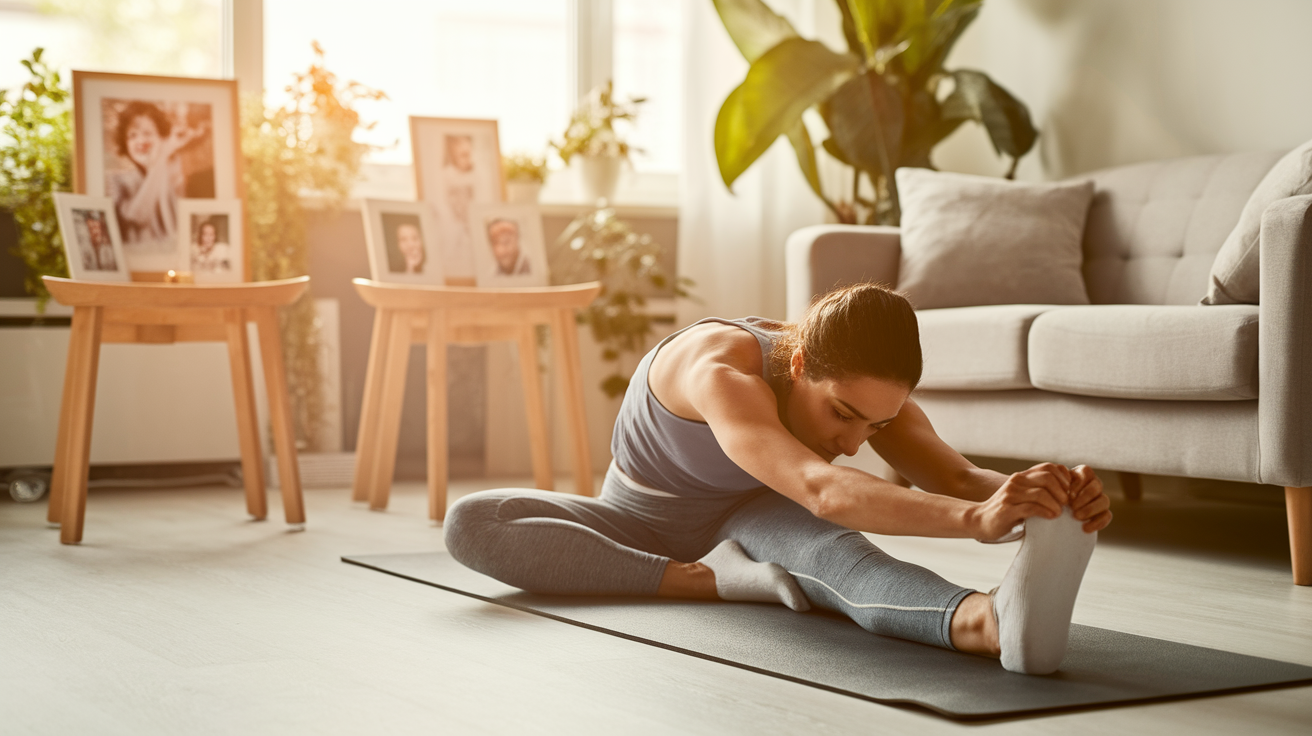
Your living room is about to become your favorite gym.
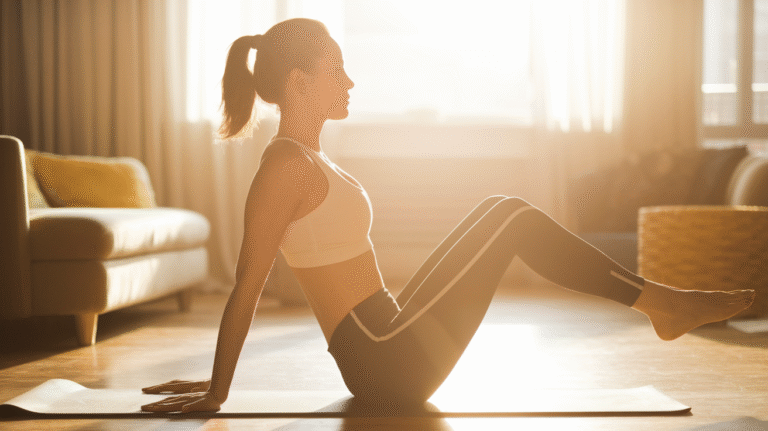
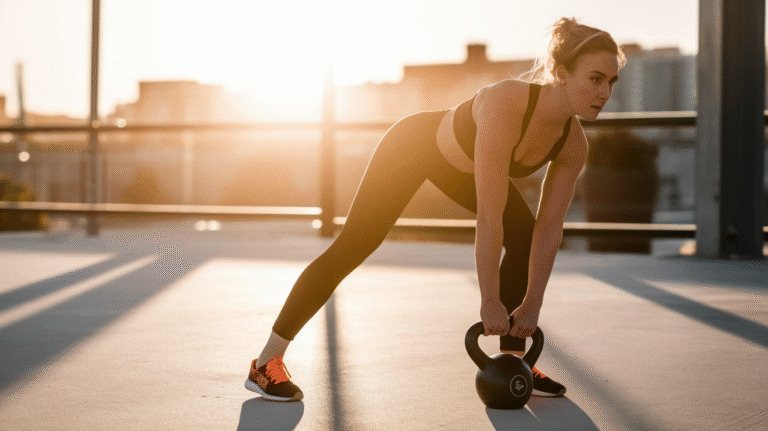
You don’t need a fancy membership, expensive equipment, or even shoes to transform your fitness. The space where you binge Netflix and relax with family holds everything you need to start building strength, burning calories, and feeling incredible in your own body.
Here’s the truth: Living room workouts eliminate every excuse that’s been holding you back. No commute time. No judgment from gym regulars. No monthly fees draining your bank account. Just you, your commitment, and proven exercises that deliver real results.
The benefits go beyond convenience. Working out at home gives you complete privacy to learn movements at your own pace. You control the music, the temperature, and the vibe. You can pause for a sip of water or to check on the kids without feeling self-conscious. This is your space, and that mental comfort translates into better workouts and faster progress.
This guide delivers five complete workouts designed specifically for beginners. Each routine targets different fitness goals—from building full-body strength to sculpting your core to improving flexibility. You’ll know exactly what to do, how many reps to complete, and how to modify exercises as you get stronger.
Before you start, set yourself up for success with these quick prep steps:
Clear a workout zone about 6 feet by 6 feet—enough space to lie down and extend your arms without hitting furniture. Move the coffee table aside and roll up any rugs that might slip.
Wear comfortable clothes that let you move freely. Old t-shirts and stretchy pants work perfectly. Skip the restrictive jeans.
Keep water nearby because staying hydrated boosts your performance and recovery. A towel helps too, especially as you build intensity.
Choose your workout time wisely. Morning sessions energize your entire day. Lunch breaks provide a powerful mental reset. Evening workouts help you decompress from work stress. The best time is whatever time you’ll actually do it consistently.
Your transformation starts right here, right now. These five workouts prove you already have everything you need to build the strong, healthy body you deserve.
Workout #1: The Complete Beginner’s Body Blast (20 Minutes)
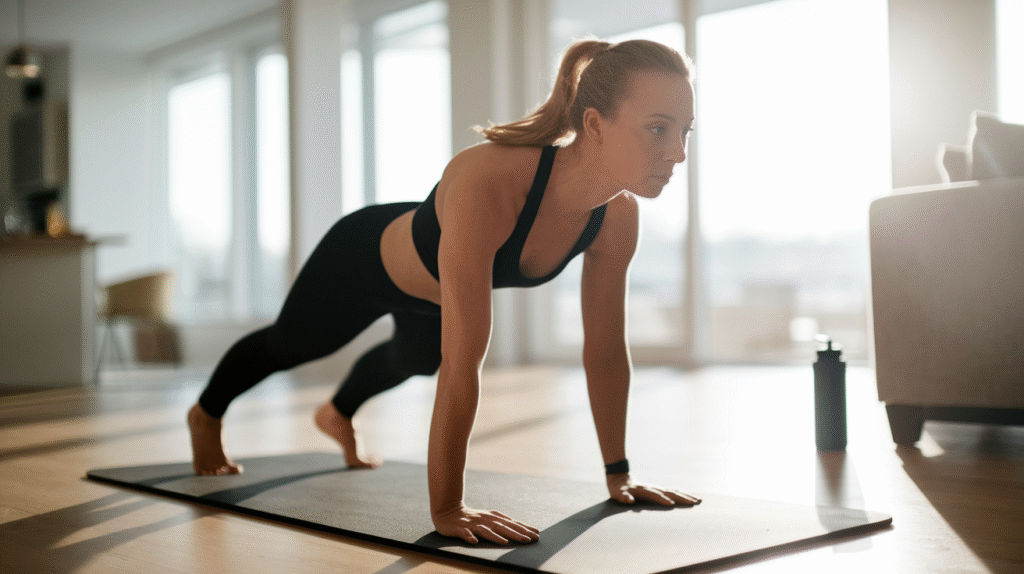
This workout is your perfect starting point if you’re new to exercise or returning after a long break. It targets every major muscle group with simple, effective movements that build a solid fitness foundation.
The beauty of this routine? It proves you can challenge your entire body without complicated equipment or confusing techniques. You’ll burn calories, build essential strength, and boost your cardiovascular endurance—all in just 20 minutes.
The Exercise Breakdown
Marching in Place (3 minutes): Start with this easy warm-up to increase blood flow and prepare your muscles. Stand tall, engage your core, and lift your knees to hip height with each step. Swing your arms naturally as if you’re walking briskly. This simple movement raises your heart rate gradually and safely.
Wall Push-Ups (10 reps): Stand about two feet from a wall, place your palms flat against it at shoulder height, and lean in until your nose nearly touches the wall. Push back to starting position. This modified push-up builds upper body strength in your chest, shoulders, and triceps without the intensity of floor push-ups. Keep your body in a straight line from head to heels throughout the movement.
Bodyweight Squats (15 reps): Stand with feet shoulder-width apart, toes pointing slightly outward. Lower your body as if sitting in a chair, keeping your chest up and knees tracking over your toes. Go as low as comfortable, then push through your heels to stand. Squats strengthen your quads, hamstrings, and glutes while improving balance and mobility for everyday activities like climbing stairs.
Standing Knee Raises (20 reps): Stand tall and lift one knee toward your chest, then lower it and repeat with the other leg. This alternating movement engages your core muscles and hip flexors. Place your hand on a wall for balance if needed—there’s no shame in using support while you build stability.
Arm Circles (30 seconds each direction): Extend your arms straight out to the sides at shoulder height. Make small circles, gradually increasing the size. After 30 seconds, reverse direction. This movement loosens tight shoulders, improves mobility, and provides a gentle cool-down for your upper body.
Tips for Success
Start with 2 complete rounds of this circuit, resting 60 seconds between exercises. As you get stronger over the next few weeks, add a third round.
Focus on proper form over speed. Slow, controlled movements deliver better results and prevent injury. If you feel sharp pain (different from muscle fatigue), stop and adjust your form.
Rest 60 seconds between exercises to catch your breath and prepare for the next movement. This isn’t a race—it’s about building sustainable fitness habits.
Track your progress in a notebook or phone app. Write down how many rounds you completed and how you felt. Watching your improvement motivates you to keep going when enthusiasm wanes.
Workout #2: Quick Core & Cardio Combo (15 Minutes)
Short on time but serious about results? This 15-minute powerhouse combines fat-burning cardio with core-strengthening exercises that sculpt your midsection and boost your metabolism for hours after you finish.
The strategic combination works because cardio intervals spike your heart rate and burn calories while core exercises build the strong, stable center that supports every movement you make. You get maximum impact in minimum time.
The best part? No jumping required. If you live in an apartment or work out while kids are napping, this quiet routine won’t disturb anyone. You’ll still feel the burn and see results.
The Exercise Sequence
Step-Touch Side to Side (2 minutes): Step your right foot to the right, then bring your left foot to meet it. Tap your left foot, then step left and bring your right foot over. Continue this side-to-side movement, adding arm swings to increase intensity. This gentle cardio warm-up prepares your body without overwhelming you.
Standing Oblique Crunches (12 each side): Stand with feet hip-width apart, hands behind your head. Lift your right knee toward your right elbow as you crunch sideways. Lower and repeat 12 times, then switch sides. This standing variation targets the oblique muscles that create that defined waistline you’re working toward—without the neck strain of floor crunches.
Modified Burpees (8 reps): Stand tall, then place your hands on the floor and step back into a plank position (don’t jump). Step your feet back forward and stand up. This low-impact version delivers the full-body challenge of traditional burpees without the joint stress. You’re building explosive power and endurance simultaneously.
Plank Hold (20-30 seconds): Get into a forearm plank position with elbows under shoulders, body in a straight line from head to heels. Engage your entire core—imagine pulling your belly button toward your spine. This isometric hold strengthens deep core muscles that protect your back and improve posture. Start with 20 seconds and add 5 seconds each week.
High Knees March (1 minute): March in place, lifting your knees as high as comfortable. Pump your arms to increase intensity. This cardio burst elevates your heart rate for maximum calorie burn. If high knees feel too intense, stick with regular marching—you’re still getting benefits.
Making It Your Own
Adjust intensity by controlling your speed. Move faster during cardio segments for a bigger challenge, or slow down when you need to catch your breath. This workout adapts to your current fitness level.
Add extra rest periods as needed. Taking 30 seconds between exercises isn’t failure—it’s smart training that prevents burnout and keeps you coming back.
Track your progress week by week. Can you hold the plank 5 seconds longer? Complete one more modified burpee? These small victories prove you’re getting stronger, even when the scale doesn’t move as fast as you’d like.
Workout #3: Lower Body Strength Builder (20 Minutes)
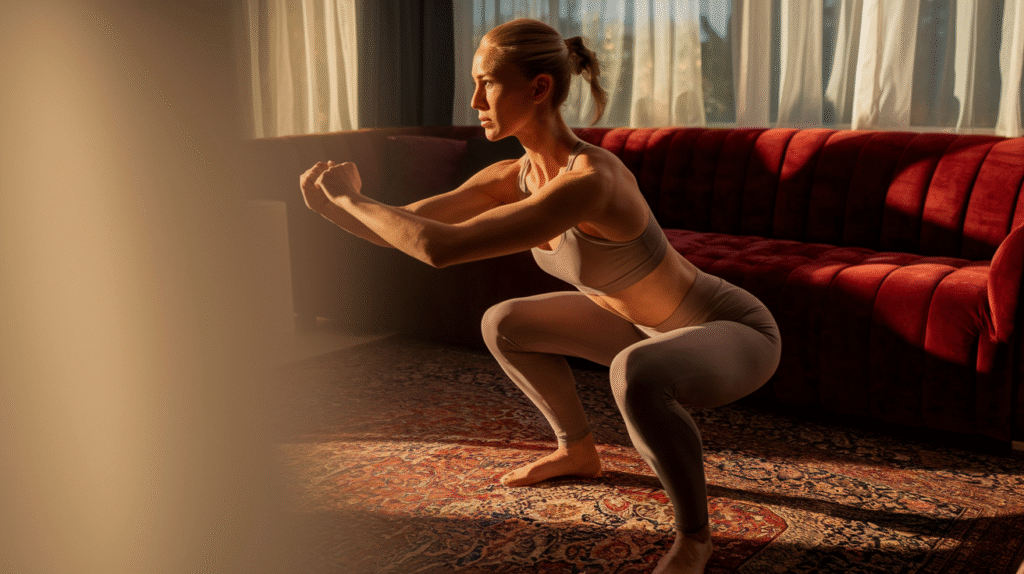
Your legs contain the largest muscle groups in your body, which means training them delivers powerful results. This 20-minute routine tones and strengthens your legs, glutes, and hips while improving the balance and stability that make daily activities easier.
Strong legs change your life. Climbing stairs becomes effortless. Playing with kids stops leaving you exhausted. You move through your day with confidence and energy that radiates from a powerful foundation.
This workout uses proven bodyweight exercises that build lean muscle and endurance without requiring a single piece of equipment. The science-backed movements target every angle of your lower body for comprehensive development.
Essential Lower Body Exercises
Forward Lunges (10 each leg): Step your right foot forward into a lunge, lowering until both knees form 90-degree angles. Your front knee should stay behind your toes. Push through your front heel to return to standing. Repeat 10 times, then switch legs. Lunges develop powerful quads and glutes while challenging your balance and coordination.
Glute Bridges (15 reps): Lie on your back with knees bent, feet flat on the floor hip-width apart. Push through your heels to lift your hips toward the ceiling, squeezing your glutes at the top. Lower slowly and repeat. This movement is amazing for strengthening your backside and lower back—crucial for good posture and preventing pain.
Calf Raises (20 reps): Stand tall, then rise up onto the balls of your feet, lifting your heels as high as possible. Hold for a second, then lower slowly. Use a wall for balance if needed. This simple exercise strengthens your lower legs and improves ankle stability. Strong calves support every step you take and every workout you do.
Side Leg Raises (12 each side): Lie on your right side, legs stacked, supporting your head with your right hand. Lift your left leg toward the ceiling, keeping your foot flexed and toe pointing forward. Lower slowly and repeat 12 times before switching sides. This targets the outer thighs and hip abductors—muscles that stabilize your pelvis and prevent injury.
Wall Sit (30 seconds): Lean your back against a wall and slide down until your thighs are parallel to the floor, as if sitting in an invisible chair. Hold this position for 30 seconds, focusing on breathing steadily. Wall sits build incredible leg endurance and mental toughness. Your quads will burn, but that burn means you’re building strength.
Progressive Challenge Tips
Hold positions longer as you get stronger. Add 5 seconds to your wall sit each week. The progressive overload forces your muscles to adapt and grow stronger.
Increase repetitions gradually. Once you can complete all exercises with good form, add 2-3 reps to each movement. This systematic progression prevents plateaus and keeps delivering results.
Focus on slow, controlled movements for maximum benefit. Lowering slowly during lunges and glute bridges creates more time under tension—the key to building lean, toned muscle. Fast, bouncy reps might feel easier, but they deliver fewer results and increase injury risk.
Complete 3 rounds of this circuit with 90 seconds rest between rounds. Your legs will feel worked, but that satisfying fatigue signals you’re building the strong, sculpted lower body you deserve.
Workout #4: Full Body Flow & Flexibility (25 Minutes)
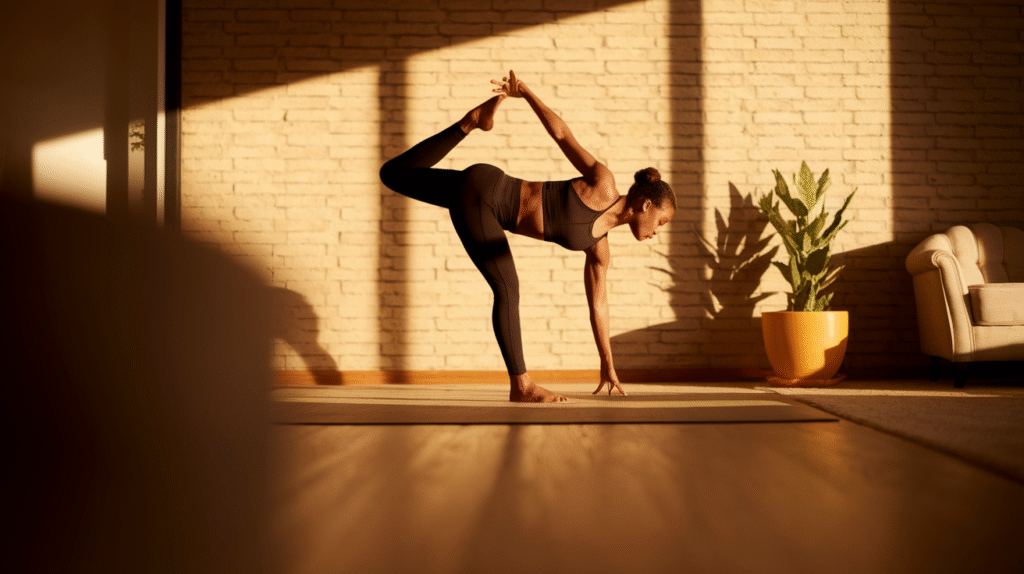
This 25-minute routine takes a different approach—combining strength training with essential stretching to create the perfect balance your body craves. You’ll build fitness while reducing stress and improving the flexibility that keeps you moving freely through life.
The flow approach works because it respects that fitness isn’t just about intense, sweat-dripping workouts. Your body needs variety—days when you challenge yourself hard and days when you move gently while still making progress.
This workout is ideal for recovery days between more intense sessions, gentle morning routines that energize without exhausting you, or evening wind-downs that release the day’s tension. You’re still working, still building strength, but in a way that feels restorative rather than depleting.
Movement Sequence
Cat-Cow Stretches (10 reps): Start on hands and knees, wrists under shoulders, knees under hips. Arch your back, dropping your belly and lifting your head (cow). Then round your spine, tucking your chin and tailbone (cat). Flow between these positions 10 times. This gentle movement wakes up your spine, improves flexibility, and releases tension in your back—especially valuable if you sit at a desk all day.
Downward Dog Hold (30 seconds): From hands and knees, lift your hips toward the ceiling, forming an inverted V-shape with your body. Press your chest toward your thighs and your heels toward the floor (they don’t have to touch). This yoga staple stretches your hamstrings, calves, and shoulders while building upper body and core strength. Bend your knees slightly if the stretch feels too intense.
Warrior Pose Series (5 each side): Step your right foot forward into a lunge, keeping your left leg straight behind you. Raise your arms overhead, palms facing each other. Hold for 30 seconds, feeling the stretch in your hip flexors and the strength in your legs. This powerful pose builds leg strength while improving flexibility and balance. Repeat 5 times each side, holding each rep for 30 seconds.
Seated Forward Fold (1 minute): Sit on the floor with legs extended straight in front of you. Hinge at your hips and reach toward your toes, keeping your back as straight as possible. Don’t worry if you can’t touch your toes—the stretch happens wherever you are. This releases tension in your back and hamstrings while calming your nervous system. Breathe deeply and let gravity do the work.
Child’s Pose (1 minute): Kneel on the floor, sit back on your heels, and fold forward, extending your arms in front of you or resting them alongside your body. Rest your forehead on the floor. This restorative pose allows your body to relax and reset between rounds. It gently stretches your hips, thighs, and ankles while giving you a moment to breathe and center yourself.
Breathing and Mindfulness
Coordinate your breath with movement for better results. Inhale during expansive movements, exhale during contractions or folds. This breathing pattern enhances the mind-body connection and helps you move deeper into stretches safely.
Listen to your body’s signals. Stretching should feel like gentle tension, never sharp pain. If something hurts, back off. Flexibility develops gradually—pushing too hard too fast leads to injury, not progress.
Embrace the mind-body connection. This workout isn’t just physical—it’s mental and emotional too. The slower pace gives you space to notice how you feel, release stress, and reconnect with yourself. That mental benefit is just as valuable as the physical gains.
Complete 2-3 rounds of this flow sequence. You’ll finish feeling energized yet calm, strong yet flexible—the perfect balance for sustainable fitness.
Conclusion
Your Living Room Fitness Journey Starts Now
You’ve just discovered five powerful workouts that prove you don’t need a gym, equipment, or hours of free time to transform your fitness. Each routine delivers specific benefits:
The Complete Beginner’s Body Blast builds full-body strength and endurance from scratch. The Quick Core & Cardio Combo maximizes results in just 15 minutes. The Lower Body Strength Builder sculpts powerful legs and glutes. The Full Body Flow & Flexibility routine balances strength with essential stretching and stress relief.
Here’s the simple truth that changes everything: Consistency beats perfection every single time. You don’t need to execute flawless form or complete every rep to see results. You just need to show up regularly and do the work. Three 20-minute sessions per week will transform your body more than one “perfect” two-hour workout.
Create your weekly workout schedule using these routines. Try this proven approach: Monday—Body Blast, Wednesday—Core & Cardio, Friday—Lower Body Strength, Sunday—Flow & Flexibility. This schedule provides variety, prevents boredom, and gives your muscles time to recover between sessions.
Quick Action Steps
Choose one workout to try today. Not tomorrow, not next Monday—today. Right now, you have 15-25 minutes to invest in yourself. Clear your space, put on comfortable clothes, and complete that first workout. The hardest part is always starting.
Set a realistic goal of three sessions per week. That’s manageable even with a packed schedule. Block the time in your calendar like any important appointment. Your health deserves the same priority as work meetings and family obligations.
Track your progress and celebrate small wins. Did you hold the plank 5 seconds longer? Complete two rounds instead of one? These victories matter. They prove you’re getting stronger, building endurance, and transforming your body one workout at a time.
Final Encouragement
You have everything you need to start right now. Your living room provides the space. These five workouts provide the plan. Your commitment provides the results.
Your living room is the ultimate judgment-free fitness zone. No one’s watching. No one’s judging your form or fitness level. You can learn, make mistakes, and grow stronger in complete privacy. That freedom is powerful—embrace it.
Small, consistent efforts lead to amazing transformations. The person who works out 20 minutes three times per week for six months will see dramatically better results than the person who waits for the “perfect” time to start. Your perfect time is now. Your perfect space is right where you’re sitting.
Roll up that rug, clear some floor space, and show yourself what you’re capable of. Your transformation starts with a single workout. Make today that day.