The Complete Beginner’s Guide to HIIT Workouts at Home
You’ve scrolled past those impressive workout transformations on Pinterest, watched friends rave about their quick morning routines, and wondered if there’s a way to get fit without spending hours at the gym or investing in expensive equipment. Here’s the truth: High-Intensity Interval Training (HIIT) at home is the game-changer you’ve been looking for.
I started my HIIT journey three years ago in my cramped apartment living room, tripping over my coffee table and worrying about disturbing my downstairs neighbors. Fast forward to today, and those 15-minute sessions have completely transformed not just my body, but my entire relationship with fitness. The best part? You can start right now, exactly where you are.
This guide walks you through everything you need to know about beginning your HIIT journey at home. We’re covering the fundamentals, setting up your space, learning three proven beginner routines, and avoiding the mistakes that trip up most newcomers. By the end, you’ll have a clear roadmap to start burning fat, building strength, and feeling amazing—all from the comfort of your home.
What is HIIT and Why It’s Perfect for Beginners
Understanding the HIIT Basics
HIIT stands for High-Intensity Interval Training, and the concept is brilliantly simple: you alternate between short bursts of intense exercise and brief recovery periods. Think 30 seconds of jumping jacks followed by 15 seconds of rest, repeated in a structured pattern.
Unlike traditional steady-state cardio where you maintain the same pace for 30-60 minutes, HIIT workouts compress maximum effort into minimal time. A typical beginner session lasts just 10-20 minutes, making it perfect for busy schedules. The “high intensity” part means you’re pushing yourself during work intervals—not to exhaustion, but to a challenging pace that elevates your heart rate significantly.
Here’s what makes HIIT different from other workouts: the intensity creates an “afterburn effect” scientifically known as Excess Post-Exercise Oxygen Consumption (EPOC). Your body continues burning calories for hours after you finish exercising. Research shows you can burn up to 25-30% more calories with HIIT compared to other forms of exercise in the same timeframe.
For beginners, HIIT offers incredible flexibility. You control the intensity, choose exercises that match your fitness level, and modify movements as needed. Starting with bodyweight exercises means zero learning curve for complicated equipment—you already know how to do squats, marches, and arm circles.
The Amazing Benefits of HIIT for Newbies
HIIT delivers results that seem almost too good to be true, but the science backs up every claim. Studies consistently show that just 15 minutes of HIIT three times per week produces measurable improvements in cardiovascular health, fat loss, and muscle tone within four weeks.
The time efficiency is unbeatable. You can complete an effective workout during your lunch break, before your morning shower, or while your kids are occupied. This matters tremendously for beginners who often abandon fitness routines because “there’s never enough time.” With HIIT, that excuse disappears.
Your metabolism gets a significant boost that lasts 24-48 hours post-workout. While you’re sitting at your desk or sleeping, your body continues burning extra calories. This metabolic advantage makes HIIT particularly effective for fat loss without requiring you to spend hours exercising.
HIIT improves your cardiovascular health faster than traditional cardio. Research from the American College of Sports Medicine shows that HIIT increases VO2 max (your body’s ability to use oxygen) by 10-15% in just eight weeks. Translation: everyday activities like climbing stairs or playing with your kids become easier.
The variety prevents boredom, which is the silent killer of most fitness routines. You can mix exercises endlessly, try different workout formats, and keep your body guessing. This constant variation not only maintains your interest but also prevents fitness plateaus.
Why Home HIIT Workouts Are Essential Right Now
Home workouts eliminate every excuse that typically derails fitness goals. No commute to the gym, no monthly membership fees, no waiting for equipment, and no self-consciousness about exercising in front of others. You roll out of bed, work out in your pajamas if you want, and start your day energized.
The financial savings are substantial. Gym memberships average $50-100 monthly, plus the hidden costs of gas, workout clothes suitable for public spaces, and time spent traveling. Home HIIT requires zero ongoing costs. Your living room, bedroom, or even a hotel room becomes your personal training studio.
Privacy matters more than people admit. As a beginner, you might feel awkward learning new movements or working at a slower pace. At home, you can focus entirely on your form and effort without comparing yourself to the ultra-fit person on the treadmill next to you. This psychological freedom accelerates your progress.
Flexibility to work out anytime transforms consistency from a struggle into a natural habit. Whether you’re an early bird who prefers 5 AM sessions or a night owl who exercises at 10 PM, your home gym is always open. This accessibility is crucial for beginners establishing a routine.
The current reality of our busy, unpredictable schedules makes home workouts not just convenient but necessary. You can squeeze in a session between meetings, during nap time, or whenever a 15-minute window opens. This adaptability ensures you maintain consistency even during chaotic weeks.
Getting Started: Essential Prep for Your First HIIT Session
What You Actually Need (Spoiler: Not Much!)
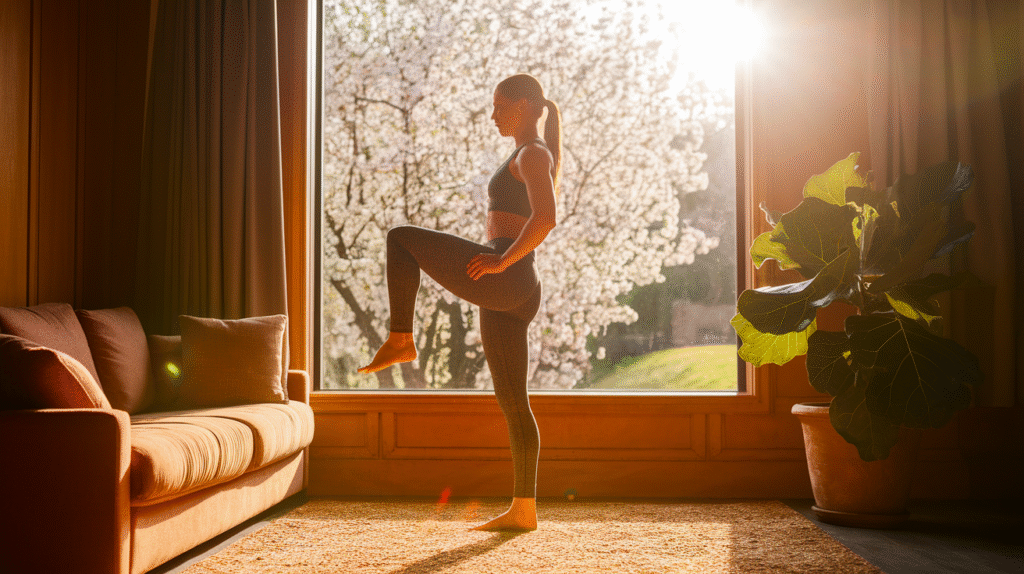
One of the most liberating aspects of home HIIT is the minimal equipment requirement. For your first month, you need exactly zero equipment. Your bodyweight provides all the resistance necessary to build strength, burn fat, and improve cardiovascular fitness. This simplicity removes the intimidation factor that stops many beginners before they start.
Comfortable clothing is your only true requirement. You don’t need expensive athletic wear—any clothes that allow you to move freely work perfectly. I started in old t-shirts and shorts from my college days. What matters is comfort and range of motion, not fashion.
Supportive athletic shoes are essential for jumping movements, but many beginners start with low-impact modifications that work well in socks or barefoot. If you have hardwood floors, shoes provide better traction and cushioning. For carpet, barefoot often feels more stable.
A yoga mat or exercise mat is your first smart investment, costing $15-30. It provides cushioning for floor exercises, protects your knees during planks, and defines your workout space psychologically. I use mine as a visual cue that it’s time to focus—stepping onto the mat shifts my mindset from “regular life” to “workout mode.”
A water bottle, towel, and smartphone for timing complete your setup. Free interval timer apps eliminate the need to watch a clock, allowing you to focus entirely on your movements. I recommend the “Tabata Timer” or “Interval Timer” apps—both are free and simple to use.
As you progress, you might add resistance bands ($10-20) or light dumbbells (5-10 pounds, $15-30), but these are optional enhancements, not requirements. The beauty of HIIT is that increasing intensity—not adding equipment—drives your progress.
Creating Your Perfect Workout Space
Your workout space doesn’t need to be large or elaborate. A 6×6 foot area provides enough room for all beginner HIIT movements. I’ve successfully completed workouts in spaces smaller than a standard parking spot. Look around your home with fresh eyes—that space between your couch and TV, the area at the foot of your bed, or a cleared corner of your basement all work perfectly.
Clear the area of furniture, toys, and obstacles. You’re going to be moving dynamically, and the last thing you need is to stub your toe on a coffee table leg mid-jumping jack. I learned this lesson the hard way during my second workout when I kicked my dog’s water bowl across the room. Create a safety buffer around your workout zone.
Consider your downstairs neighbors if you live in an apartment. Low-impact modifications work just as effectively as jumping movements and eliminate noise concerns. I’ve designed entire routines around quiet exercises that still deliver incredible results. Your neighbors will appreciate the consideration, and you’ll avoid workout anxiety.
Ventilation and temperature matter more than you might think. HIIT elevates your heart rate quickly, and you’ll heat up fast. A fan, open window, or good air circulation keeps you comfortable and allows you to push harder during work intervals. I position a small fan at the edge of my workout space—it’s a game-changer during intense sessions.
Minimize distractions by putting your phone on “Do Not Disturb” (except for your timer app), turning off the TV, and letting household members know you need 15 minutes of uninterrupted time. This mental space is as important as the physical space. Your workout deserves your full attention.
Simple Warm-Up and Cool-Down Routines
Never skip your warm-up—this five-minute investment prevents injuries and improves your workout performance. Your muscles need gradual activation, your heart rate needs to rise progressively, and your joints need lubrication before high-intensity work. Think of it like warming up your car on a cold morning before driving.
Start with dynamic movements that mimic your workout exercises at lower intensity. March in place for 60 seconds, gradually lifting your knees higher. Move into arm circles—10 forward, 10 backward—to activate your shoulders and upper back. These simple movements increase blood flow and body temperature.
Add leg swings (10 per leg) to loosen your hips, followed by torso rotations (10 each direction) to warm up your core. Finish with 30 seconds of light jogging in place or high knees at 50% effort. Your warm-up should leave you slightly breathless but not tired—you’re preparing for the main event, not depleting your energy.
The proper warm-up sequence looks like this: march in place (60 seconds) → arm circles (20 total) → leg swings (20 total) → torso rotations (20 total) → light cardio (30 seconds). Total time: five minutes. This pattern prepares every muscle group you’ll use during your HIIT session.
Your cool-down is equally critical for recovery and reducing muscle soreness. After your final work interval, don’t just stop and sit down. Walk in place for 2-3 minutes, allowing your heart rate to gradually decrease. This prevents blood from pooling in your legs and reduces dizziness.
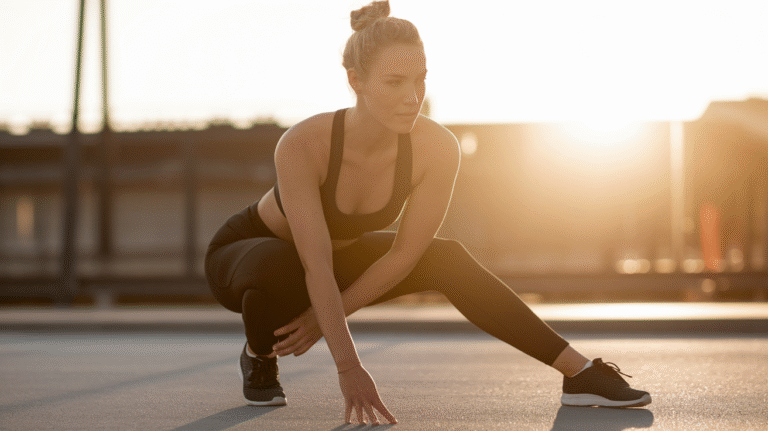
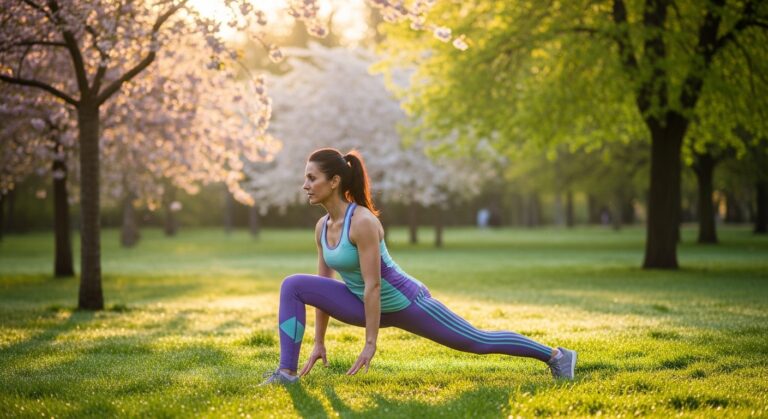
Follow your walking with static stretches—hold each for 20-30 seconds. Focus on hamstrings, quadriceps, hip flexors, and shoulders. These are the muscle groups that work hardest during HIIT. Proper stretching improves flexibility, reduces next-day soreness, and signals to your body that the workout is complete. I’ve noticed significantly less muscle stiffness since I started taking my cool-down seriously.
Your Complete Beginner HIIT Workout Routines
The Quick 10-Minute Starter Routine
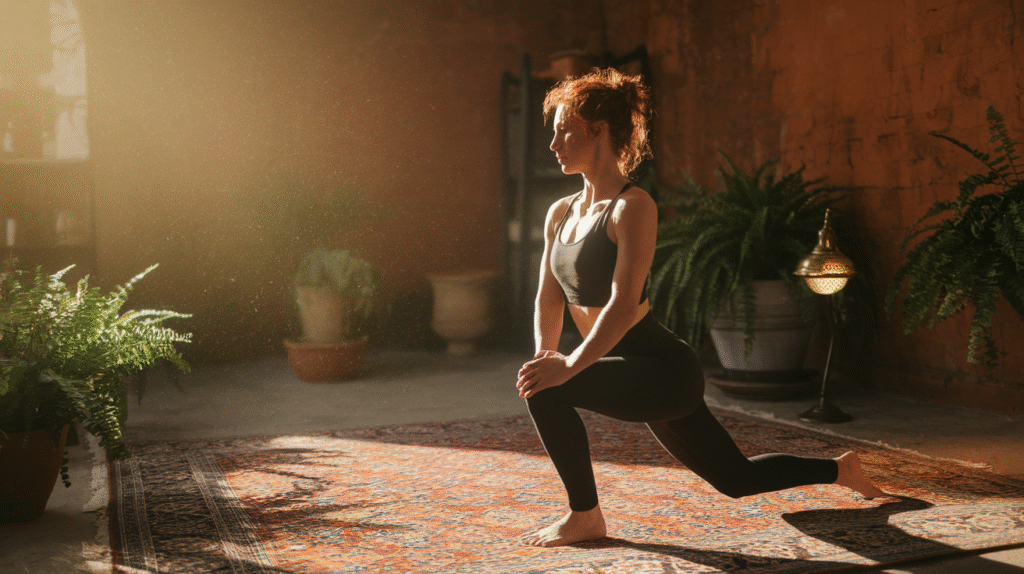
This routine is perfect for your first two weeks of HIIT training. It introduces you to the interval format without overwhelming your system. The work-to-rest ratio is beginner-friendly: 20 seconds of work followed by 40 seconds of rest. This gives you plenty of recovery time while still providing cardiovascular benefits.
The Workout Structure:
Complete 2 rounds of the following 5 exercises. Work for 20 seconds, rest for 40 seconds between each exercise. Rest 1 minute between rounds.
Exercise 1: Modified Jumping Jacks (or Step-Out Jacks)
Start with feet together, arms at your sides. Step your right foot out while raising your arms overhead, then step it back. Repeat with your left foot. This low-impact version delivers the same cardiovascular benefit as traditional jumping jacks without the impact. If you’re comfortable jumping, go for regular jumping jacks.
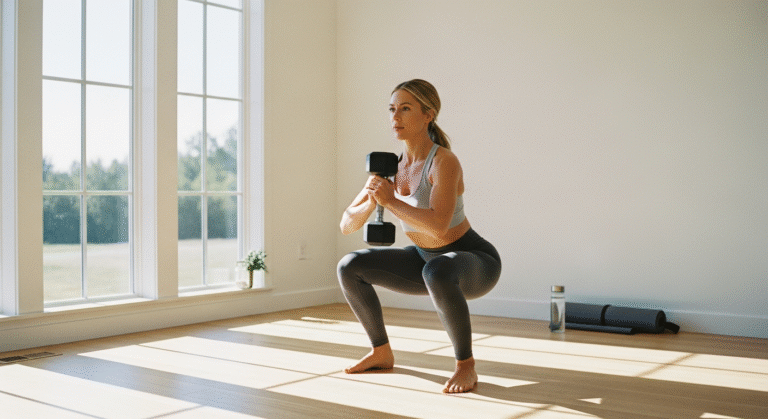
Exercise 2: Bodyweight Squats
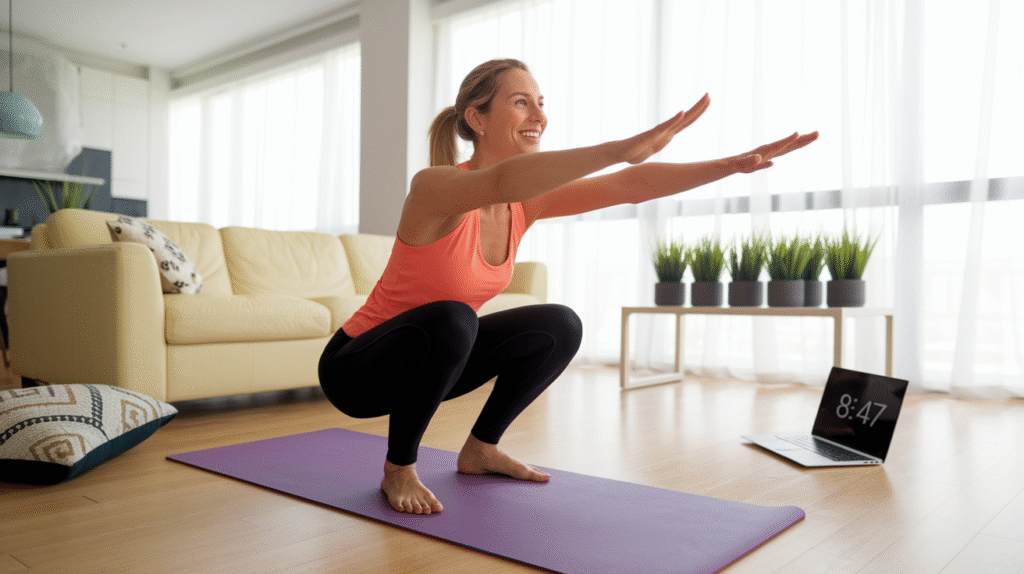
Stand with feet shoulder-width apart, toes slightly pointed out. Lower your hips back and down as if sitting in a chair, keeping your chest up and weight in your heels. Push through your heels to stand. Focus on controlled movement rather than speed. Quality repetitions build proper form that prevents injuries as you progress.
Exercise 3: Modified Push-Ups (Knee or Wall)
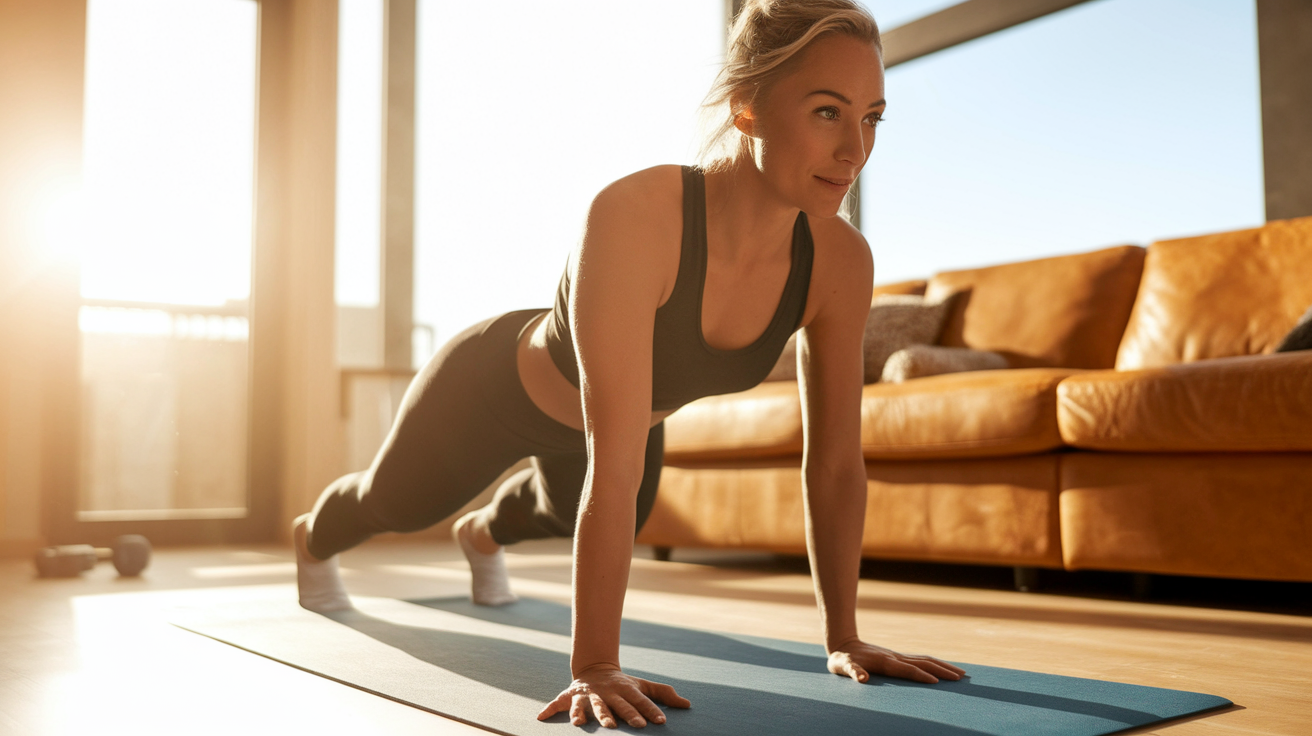
Start on your knees with hands slightly wider than shoulder-width. Lower your chest toward the floor, keeping your core tight and back straight. Push back up. If knee push-ups are too challenging, do wall push-ups—stand arm’s length from a wall, place your hands on the wall, and perform push-ups at an angle. This builds the strength you’ll need for full push-ups.
Exercise 4: High Knees March
March in place, bringing your knees up toward your chest with each step. Engage your core and pump your arms. This is essentially running in place at a controlled pace. If you want more intensity, speed up the march or transition to actual high knees where you’re jogging in place with exaggerated knee lifts.
Exercise 5: Plank Hold (Modified if Needed)
Hold a plank position on your forearms and knees (or toes if you’re comfortable). Keep your body in a straight line from head to knees, engaging your core. Don’t let your hips sag or pike up. If 20 seconds feels too long, hold for 10 seconds, rest briefly, then hold for another 10 seconds. Building core strength is a process.
This routine takes exactly 10 minutes including rest periods. You’ll complete 10 total work intervals with ample recovery. The exercises target your full body—legs, core, chest, and cardiovascular system. After two weeks of consistency, you’ll notice improved endurance and strength.
The 15-Minute Fat-Burning Sequence
Once you’re comfortable with the starter routine, this 15-minute sequence increases intensity and complexity. The work-to-rest ratio shifts to 30 seconds of work and 30 seconds of rest—equal intervals that challenge you more while still providing adequate recovery.
The Workout Structure:
Complete 3 rounds of the following 5 exercises. Work for 30 seconds, rest for 30 seconds between each exercise. Rest 1 minute between rounds.
Exercise 1: Squat to Front Kick
Perform a bodyweight squat, then as you stand, kick your right leg forward at hip height. Squat again, then kick with your left leg. Alternate legs with each rep. This combination movement elevates your heart rate while building leg strength and improving balance. The kicking motion engages your core and hip flexors.
Exercise 2: Mountain Climbers (Modified)
Start in a plank position on your hands. Bring your right knee toward your chest, then return it to starting position. Repeat with your left knee. Move at a pace you can maintain for 30 seconds—this isn’t a sprint. Mountain climbers work your core, shoulders, and cardiovascular system simultaneously. If full mountain climbers are too intense, slow down the pace or perform standing mountain climbers (bring knees up while in a standing position with hands on a chair).
Exercise 3: Reverse Lunges
Stand with feet hip-width apart. Step your right foot back, lowering your back knee toward the floor. Your front knee should stay above your ankle. Push through your front heel to return to standing. Alternate legs with each rep. Reverse lunges are easier on your knees than forward lunges while effectively targeting your glutes, quads, and hamstrings.
Exercise 4: Shoulder Taps
Hold a plank position on your hands. Lift your right hand and tap your left shoulder, then return it to the floor. Repeat with your left hand tapping your right shoulder. Keep your hips stable—don’t let them rock side to side. This exercise builds core stability and shoulder strength. If it’s too challenging, perform the movement from your knees.
Exercise 5: Burpees (Modified)
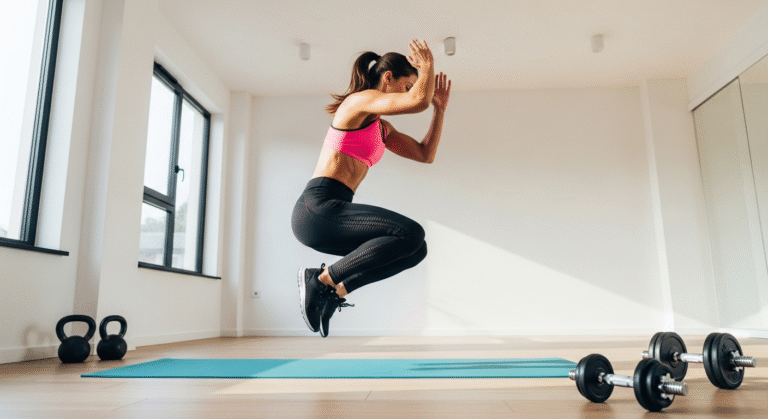
Here’s the exercise everyone loves to hate, but modified for beginners. Place your hands on the floor, step your feet back into a plank position (don’t jump), step your feet forward, and stand up. That’s one rep. As you build strength, you can add a push-up in the plank position and a jump at the top. Burpees are incredibly effective full-body movements that burn serious calories.
This 15-minute routine delivers 15 total work intervals across three rounds. The increased work time and reduced rest elevate the challenge significantly. You’ll burn approximately 150-200 calories during the workout, plus the afterburn effect continues for hours. Stick with this routine for 3-4 weeks before progressing to more advanced variations.
Low-Impact HIIT for Joint-Friendly Training
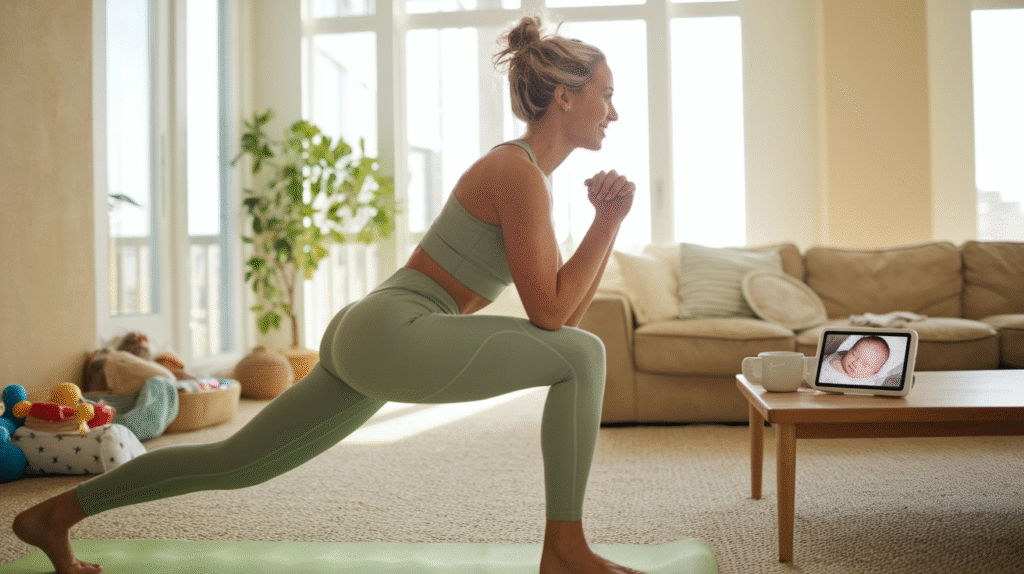
This routine proves that HIIT doesn’t require jumping or high-impact movements to be effective. It’s perfect if you live in an apartment, have joint concerns, or simply prefer quieter workouts. The intensity comes from controlled movements and time under tension rather than explosive power.
The Workout Structure:
Complete 3 rounds of the following 6 exercises. Work for 30 seconds, rest for 20 seconds between each exercise. Rest 1 minute between rounds.
Exercise 1: Speed Skaters (No Jump)
Step your right foot diagonally behind your left leg, reaching your right hand toward your left foot. Push off and step your left foot diagonally behind your right leg, reaching your left hand toward your right foot. Move continuously, focusing on the lateral motion and balance challenge. This works your legs, glutes, and cardiovascular system without any impact.
Exercise 2: Plank to Down Dog
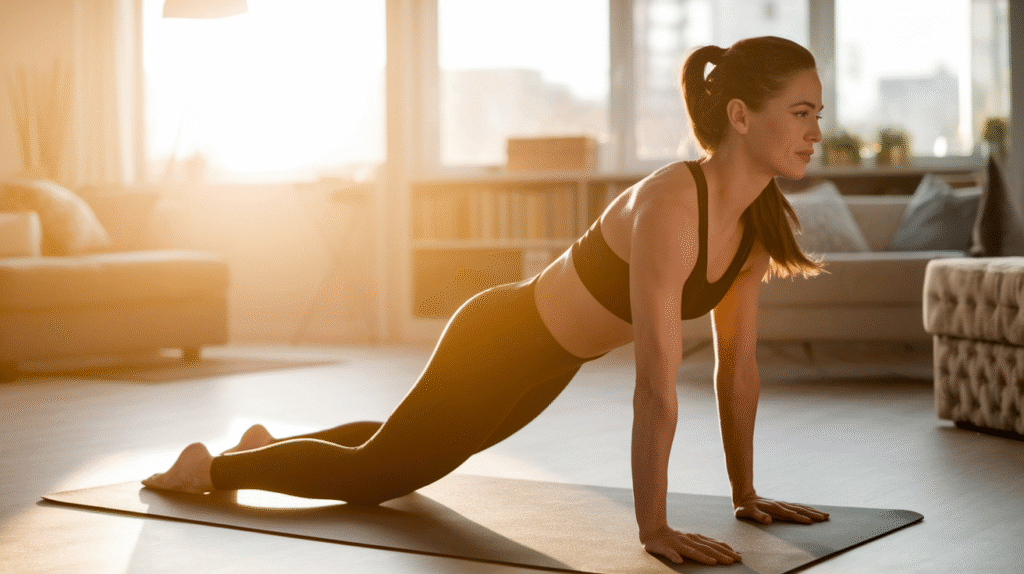
Start in a plank position on your hands. Press your hips up and back into a downward dog position (inverted V-shape), then return to plank. This flowing movement engages your entire core, shoulders, and legs while providing a gentle stretch. The continuous motion elevates your heart rate effectively.
Exercise 3: Static Squat with Arm Raises
Lower into a squat position and hold it. While maintaining the squat, raise your arms overhead, then lower them. Continue raising and lowering your arms for the full 30 seconds while holding the squat. This isometric leg work combined with arm movement creates serious muscle burn and cardiovascular challenge without any impact.
Exercise 4: Standing Oblique Crunches
Stand with feet hip-width apart, hands behind your head. Lift your right knee toward your right elbow, crunching your obliques. Lower and repeat on the left side. Alternate sides continuously. This standing core exercise is surprisingly challenging and completely joint-friendly. Focus on engaging your core rather than just moving your limbs.
Exercise 5: Glute Bridges with Leg Extension
Lie on your back with knees bent and feet flat on the floor. Lift your hips into a bridge position. While holding the bridge, extend your right leg straight out, then lower it. Repeat with your left leg. Continue alternating. This targets your glutes, hamstrings, and core while being completely low-impact. The single-leg variation increases the challenge significantly.
Exercise 6: Bear Crawl Hold with Shoulder Taps
Start on your hands and knees, then lift your knees about two inches off the floor. Hold this position while performing shoulder taps—right hand to left shoulder, left hand to right shoulder. Keep your hips stable and core engaged. This exercise builds incredible core strength and shoulder stability without any impact.
This low-impact routine delivers the same cardiovascular and strength benefits as high-impact HIIT. The reduced rest time (20 seconds instead of 30) compensates for the lower impact, keeping your heart rate elevated. You’ll complete 18 work intervals across three rounds in approximately 15 minutes. Your joints will thank you, and your muscles will feel the burn.
Pro Tips for Success and Avoiding Common Beginner Mistakes

Mastering Form Over Speed
The single biggest mistake beginners make is sacrificing form for speed or more repetitions. I see it constantly—people rushing through movements, bouncing through squats, or letting their back sag during planks because they’re focused on doing more rather than doing it right. This approach leads to injuries and poor results.
Quality repetitions build the foundation for long-term progress. When you perform a perfect squat—chest up, weight in your heels, knees tracking over your toes—you engage the right muscles and develop movement patterns that prevent injury. When you rush through sloppy squats, you reinforce bad habits and risk knee or back problems.
During your work intervals, focus on controlled, deliberate movements for the first few reps. Establish proper form, then gradually increase your speed while maintaining that quality. If you notice your form breaking down, slow down immediately. It’s better to do 8 perfect squats than 15 sloppy ones.
Watch yourself in a mirror when possible. This visual feedback helps you identify form issues before they become ingrained habits. I record myself occasionally on my phone—it’s humbling but incredibly valuable. You’ll notice things the mirror doesn’t catch, like your shoulders hiking up during planks or your knees caving inward during squats.
The “form check” rule: every few reps during your work interval, do a quick mental scan. Are your shoulders back? Is your core engaged? Are your knees aligned? This momentary awareness keeps you honest and prevents the gradual form degradation that happens when you’re tired.
Pain is different from discomfort. Muscle burn and breathlessness are normal during HIIT—that’s the workout doing its job. Sharp pain, especially in joints, is your body signaling a problem. Stop immediately if you feel joint pain. Modify the exercise or skip it entirely. Pushing through joint pain doesn’t make you tough; it makes you injured.
Creating Your Easy Weekly Schedule
Consistency beats intensity when you’re building a new habit. Starting with three HIIT sessions per week provides optimal results without overwhelming your system or your schedule. This frequency allows adequate recovery while building cardiovascular fitness and strength progressively.
The perfect beginner schedule looks like this: Monday (HIIT), Wednesday (HIIT), Friday (HIIT), with rest or light activity on the other days. This pattern distributes your workouts evenly across the week and provides 48 hours of recovery between sessions. Your muscles need this recovery time to repair and strengthen.
Choose specific times for your workouts and treat them like important appointments. I work out at 6:30 AM Monday, Wednesday, and Friday. This consistency removes decision fatigue—I don’t debate whether to work out or when to do it. My body and mind know exactly what’s happening at 6:30 AM on those days.
Prepare the night before to eliminate morning obstacles. Lay out your workout clothes, fill your water bottle, and queue up your timer app. These small preparations remove friction points that might derail your workout when you’re tired or busy. I even sleep in my workout clothes sometimes—I wake up and I’m already dressed.
Active recovery on rest days enhances your results rather than hindering them. Take a 20-minute walk, do gentle yoga, or go for an easy bike ride. This light movement promotes blood flow, reduces muscle soreness, and maintains momentum without taxing your system. Rest days don’t mean couch days.
The “never miss twice” rule saves your consistency when life gets chaotic. If you miss Monday’s workout, make absolutely sure you do Wednesday’s session. Missing one workout is life; missing two is the beginning of a broken habit. This rule has kept me consistent through travel, illness, and busy work periods.
Tracking Progress and Staying Motivated
Tracking your progress transforms abstract effort into concrete achievement. Start a simple workout journal—paper or digital, whatever you’ll actually use. Record the date, which workout you completed, how you felt, and any modifications you made. This log becomes incredibly motivating as you flip back and see how far you’ve come.
Take baseline measurements and photos before you start. Measure your waist, hips, and thighs. Take front, side, and back photos in the same outfit and lighting. I resisted this initially because I hated how I looked, but these photos became my most powerful motivation. The scale doesn’t always reflect your progress—body composition changes that photos capture clearly.
Set performance goals rather than just weight loss goals. “Complete the 15-minute routine without stopping” or “do push-ups from my toes instead of knees” gives you something to work toward that’s entirely within your control. Weight loss involves many variables, but your performance improvement is directly tied to your effort.
Celebrate small wins immediately. Completed your first week of three workouts? Acknowledge that achievement. Did a full plank instead of a modified one? That’s progress worth celebrating. These small victories build momentum and reinforce the habit you’re developing. I treat myself to a fancy coffee after completing each week—it’s a ritual I look forward to.
Find an accountability partner or join an online community. Share your workout schedule with a friend or post your progress in a fitness group. External accountability increases your commitment significantly. I text my sister after every workout—knowing she’s expecting that message keeps me honest on days when motivation is low.
Track how you feel, not just what you do. Note your energy levels, sleep quality, and mood in your journal. You’ll notice patterns—better sleep after evening workouts, more energy throughout the day, improved mood. These non-physical benefits often appear before visible body changes and provide powerful motivation to continue.
Expect progress to be non-linear. Some weeks you’ll feel strong and crush your workouts. Other weeks you’ll struggle with exercises that felt easy before. This is completely normal. Progress happens in waves, not straight lines. The trend over months matters more than any single workout.
Conclusion
You now have everything you need to start your HIIT journey today. Not tomorrow, not next Monday—today. You’ve learned what HIIT is and why it works so effectively for beginners. You understand how to set up your space with minimal equipment. You have three complete workout routines that progress logically from starter to intermediate level. And you know the critical tips that separate successful beginners from those who quit after two weeks.
The transformation that HIIT offers goes beyond physical changes. Yes, you’ll burn fat, build strength, and improve your cardiovascular health. But you’ll also gain confidence, energy, and the profound satisfaction of keeping a commitment to yourself. Those 10-15 minutes become your daily reminder that you’re capable of more than you thought possible.
Start with the 10-minute starter routine. Do it three times this week. Don’t worry about being perfect or doing every rep exactly right. Just show up, press play on your timer, and move your body. That’s the only requirement for success—consistent effort over time.
Remember that every fitness expert, every Instagram transformation, every person who makes HIIT look easy started exactly where you are right now. They were beginners who felt awkward, got breathless quickly, and wondered if they could really do this. The only difference between them and people who gave up is that they kept showing up.
Your living room is waiting. Your timer app is ready. Your body is capable of incredible things. The only question is: are you ready to discover what you can achieve in just 15 minutes a day?
Grab your water bottle, clear some space, and let’s do this. Your first HIIT workout starts now.